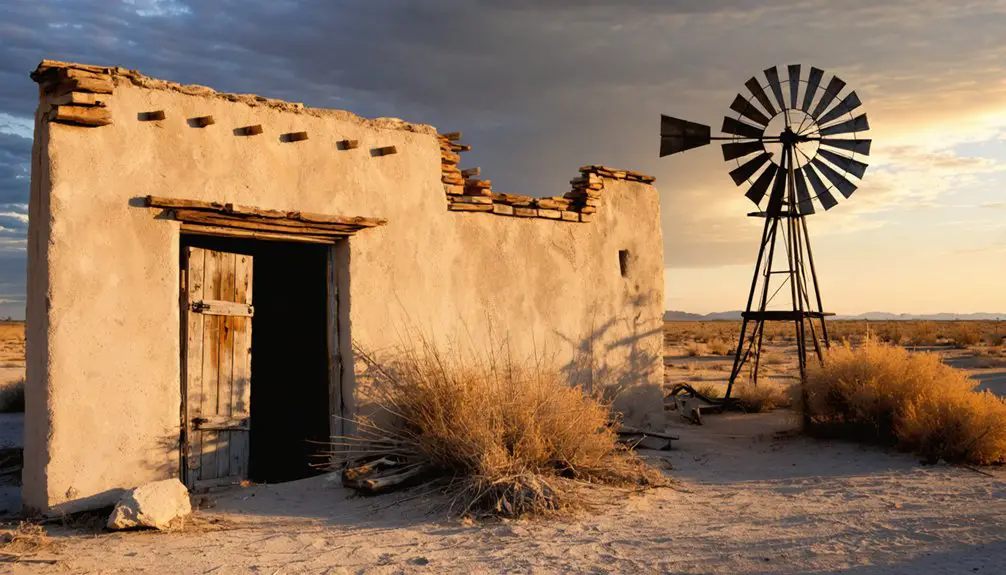
Take Interstate 10 to Exit 595 and head south into Zuehl, where Ferdinand Zuehl’s 1872 store still stands along historic Wood Road. You’ll find yourself at the crossroads of authentic German-Texan heritage—from the rare ninepin bowling at Germania Club to St. Paul Lutheran Church’s festivals. The drive through Guadalupe County’s hills connects you to nearby ghost towns like Bexar, with Cibolo Creek crossings and rustic dance halls dotting your route. Your itinerary expands considerably once you explore what lies beyond that first highway exit.
Key Takeaways
- Take Interstate 10 Exit 595 south on farm-to-market roads to reach Zuehl near the historic Cibolo Creek crossing.
- Visit the 1872 store building with its open-air bar, outdoor patio, pool tables, and horseshoe pits.
- Explore historic landmarks including Clemens School, St. Paul Lutheran Church, and Germania Bowling Club from the 1880s.
- Experience authentic ninepin bowling on Saturday league nights at Germania Bowling Club, preserving German-Texan heritage.
- Enjoy nearby Texas dining at Harmons BBQ and attend annual church festivals featuring traditional food and music.
From Perryman’s Crossing to Modern-Day Ghost Town
The story of Zuehl begins along the gentle banks of Cibolo Creek in Guadalupe County, where travelers once forded the waters at a critical junction known as Perryman’s Crossing. This original Perryman’s Crossing served pioneers traveling the Wood Road before 1830, connecting Gonzales to San Antonio when Texas was still wild territory.
You’ll find its transformation remarkable—Ferdinand Zuehl purchased the land in 1870 and opened a store two years later, marking Zuehl’s commercial evolution from frontier ford to settlement hub. The Clemens School opened in 1882, establishing education as a cornerstone of the growing community.
The post office shifted names from School to Zuehl by 1906, though it closed just four years later. Interstate 10 runs just north of town with access from Exit 595, making this historic settlement easily reachable for modern visitors. Today, you’ll discover a genuine ghost town where population dwindled from 175 residents in the 1940s to around 45, with occupied homes and the Germania Bowling Club still standing monument to its stubborn survival.
What to Expect When You Arrive
When you pull into Zuehl, you’ll find yourself standing before a weathered 1872 building that’s witnessed Texas transform from frontier wilderness to modern suburbia. The rustic architecture immediately transports you back—this former meat market turned saloon is one of only two surviving structures from the original settlement.
Inside, the saloon atmosphere strikes a perfect balance between historic authenticity and comfortable escape. You’ll discover an open-air bar cooled by fans catching that Hill Country breeze, cold beer and wine waiting, and locals who’ve flown in from nearby airfields mingling with San Antonio visitors. The outdoor patio beckons with pool tables, dartboards, and horseshoe pits. Most weekends, backyard barbecues fill the air with smoke and stories. After working up an appetite, you can head to nearby spots like Harmons BBQ for authentic Texas barbecue or grab a bite at Ggs Corner Cafe. Like many Texas settlements, Zuehl’s story reflects the broader pattern of railroad towns that prospered when trains arrived but faded as automobiles and improved roads drew residents elsewhere. This isn’t a preserved museum—it’s a living piece of Texas that refuses to fade.
Driving Directions and Road Access
Getting to Zuehl requires traversing a network of farm-to-market roads that wind through the Texas Hill Country between San Antonio and Seguin. You’ll find Interstate 10 running just north of town—take Exit 595 and head south. The backroads accessibility here welcomes standard vehicles; 2WD roads with a GRID rating of 5 mean you won’t need specialized equipment for your adventure.
From FM 2538 South, you’ve got options: turn left onto Shay Pass for a direct route through Bexar ghost town, or continue to Blacksmith Way as your alternative. Both paths cross Cibolo Creek before entering Zuehl proper. The site originally served as Perrymans Crossing, a ford on Cibolo Creek along the Gonzales to San Antonio Road built well before the Texas Revolution. Seasonal driving conditions remain favorable year-round—typical Texas weather won’t derail your plans. Texas has numerous ghost towns scattered across the state, making this region ideal for exploring multiple sites in one trip.
if you’re looking for a unique adventure, plan your road trip to adobe walls, taking in the stunning landscapes and historical landmarks along the way. Don’t forget to check out the local attractions that highlight the rich culture and heritage of the area. Each stop promises to offer a glimpse into the past while providing endless opportunities for exploration and enjoyment.
Continue on Gin Road to reach Santa Clara Cemetery and complete your exploration.
Historic Buildings and Landmarks Worth Seeing
You’ll spot Ferdinand Zuehl’s original 1872 store standing among the remnants, a weathered sentinel that once anchored this Cibolo Creek settlement when 175 residents called it home.
Just beyond, the 1882 Clemens School building marks where the community’s children learned their lessons during Zuehl’s peak years.
The Germania Bowling Club adds unexpected life to these historic sites, offering a glimpse of the social traditions that kept small Texas towns connected across generations.
Nearby, St. Paul Lutheran Church traces its roots to 1883, when German settlers organized the congregation that would build its first church in 1896.
The settlement’s location 14 miles southwest of Seguin places it along the historic Wood Road that connected Gonzales and San Antonio before 1830.
Original Store and School
A handful of weathered structures stand as silent witnesses to Zuehl’s early days, when German settlers transformed empty prairie into a thriving community. You’ll discover Fromme’s Store, built in 1867 by George Schlather before Charles Fromme purchased it in 1882, representing the original commercial infrastructure that sustained pioneer life.
The Clemens School from 1883 and stripped-down Goebel School near St. Hedwig embody forgotten rural schoolhouses where single teachers educated settler children. Goebel School operated from 1842 to 1964, serving grades 1 through 10 before high school students finished their education in San Antonio.
These landmarks reveal Zuehl’s evolution:
- Clemens School anchored the 1888 post office, initially named “School, Texas”
- Fromme’s Store became the community’s namesake gathering point
- Goebel School’s brick walls remain after windows and furniture vanished
- Together they formed infrastructure supporting 100 residents by 1890
Each structure offers you tangible connections to fearless settlers who carved civilization from wilderness. The US Post Office opened in nearby Cibolo in 1883, establishing official federal presence in the region as these communities developed alongside the Southern Pacific Railroad.
Germania Bowling Club History
Deep in the heart of Zuehl’s German-Texan heritage, the Germania Bowling Club stands as one of the last bastions of ninepin bowling in America. You’ll discover authentic bowling club traditions here that date back to 19th-century German settlers, where families gather just as they did generations ago.
Unlike modern tenpin alleys, ninepin bowling emphasizes camaraderie over competition—pins reset only when an inning ends or the kingpin alone remains standing.
The club operates alongside San Antonio’s Bexar, Turnverein, and neighboring community leagues in what’s become the nation’s only active ninepin network. You’ll find it near the Double Ringer Lounge at Zuehl’s crossroads, where cultural preservation efforts keep these German folk festival traditions alive.
These clubs survived when most Texas establishments converted to tenpins by World War I, making your visit a genuine step back in time.
Germania Bowling Club and Local Events

You’ll find echoes of German immigrant traditions at the Germania Bowling Club, where generations have gathered since the community’s founding days.
The highlight of Zuehl’s social calendar remains the annual church festival, drawing locals and visitors to celebrate with food, music, and fellowship that captures the town’s enduring spirit.
Throughout the year, the Rio Cibolo Nature Center organizes events that connect you to the region’s landscape, from guided hikes along the creek beds to stargazing sessions under Texas’s vast night sky.
Active Germania Bowling Heritage
Just beyond Loop 1604 on San Antonio’s eastern fringe, the Germania Bowling Club keeps alive a tradition that German immigrants carried across the Atlantic nearly two centuries ago. Here, ninepin bowling thrives with its distinctive diamond-shaped rack and red kingpin centerpiece—a stark contrast to modern tenpin scoring system comparisons.
You’ll discover pin placement traditions that haven’t changed since 1837:
- Pin boys reset manually only after complete innings
- Nine pins arranged in diamond formation around the kingpin
- Players roll wooden balls down weathered lanes
- Socializing takes precedence over competition
Walking distance from Teddy’s lounge and near the Zuehl crossroads shooting range, this club maintains what’s virtually extinct elsewhere in America. The $150 annual tax imposed by the Republic of Texas still applies, connecting you directly to frontier-era heritage.
Annual Church Festival Gathering
The same German communities that preserved ninepin bowling also anchored their social calendars around church festivals that continue today. You’ll find Immanuel Lutheran’s annual gathering each August at La Vernia’s C of C Hall, where roast beef dinners fuel an afternoon of live auctions and dancing. These celebrations thrive on church community donations—from cake walk desserts to raffle prizes locals contribute throughout the year.
Resurrection Church hosts gospel music events that draw crowds across the Zuehl area, while Seguin’s festival circuit features bands like Gary Glenn and the Jonas Lorence Band. During December, New Braunfels’ Wassailfest brings seasonal music performances from school choirs downtown, where First Protestant and Saint Paul Lutheran share their spiced apple wassail recipes. It’s grassroots tradition meeting authentic Texas hospitality.
Rio Cibolo Group Events
Crossing the Rio Cibolo creek near Zuehl, you’ll spot two competing ninepin bowling clubs positioned so close they’re practically within musket range of each other—Germania Bowling Club on the eastern bank and Bexar Bowling Alley just across the water. These authentic German social hubs preserve 150-year-old traditions while hosting the only active ninepin leagues in America.
Plan your visit around their group events:
- Saturday league nights featuring diamond-rack bowling with the signature red kingpin
- Traditional folk music performances at adjacent dance halls like the century-old Fischer venue
- Weekend gatherings at Double Ringer Lounge (Teddy’s), within walking distance
- Outdoor activities including public shooting ranges and bouldering opportunities along the creek
These family-friendly casinos welcome newcomers seeking genuine Old World experiences beyond typical tourist traps.
Best Time to Visit and Weather Considerations
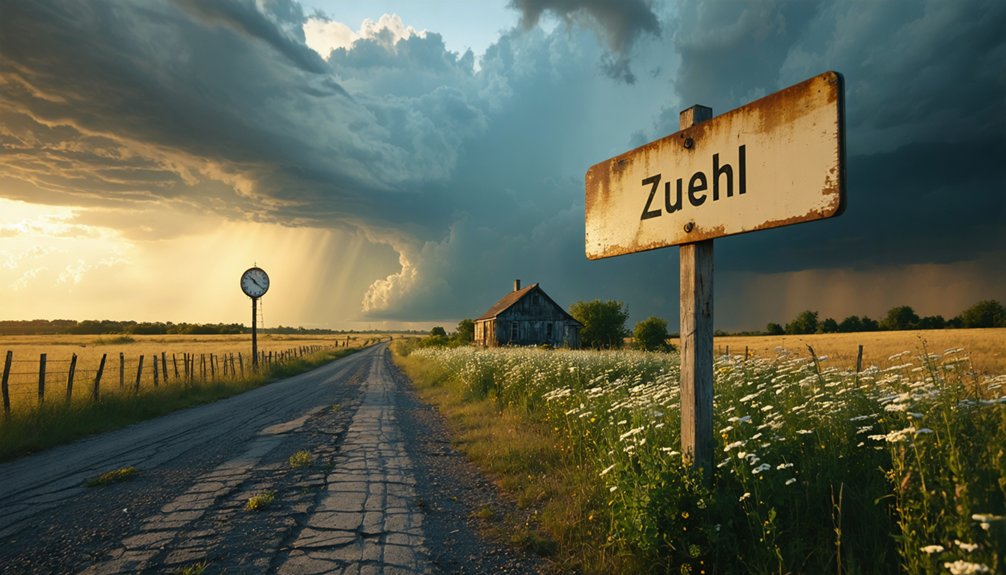
When should you venture to Zuehl for your ghost town exploration? Comprehending seasonal weather fluctuations helps you maximize your journey through this abandoned settlement. Fall emerges as one of the ideal visitation periods, offering comfortable temperatures between 60-84°F from October through November. You’ll escape summer’s relentless 90°F+ heat while enjoying clear skies for photography and exploration.
Spring presents another excellent window, particularly March and April, before May’s 5.01-inch rainfall peaks. Winter months deliver the least humidity and coolest conditions, perfect if you’re comfortable with 40-50°F mornings. Avoid June through August unless you thrive in 95-97°F temperatures. Your ghost town adventure demands mobility, and moderate weather guarantees you’ll freely roam Zuehl’s historic remnants without battling extreme elements that could cut your exploration short.
Nearby Ghost Towns to Add to Your Route
Expanding your ghost town exploration beyond Zuehl transforms a single-site visit into an immersive journey through Central Texas’s vanished communities. The regional ghost town network offers remarkable variety within striking distance of your base route. Traveling to ghost towns near Zuehl, Texas opens the door to hidden histories and fascinating stories waiting to be uncovered. Each town reflects the unique charm and challenges of its past, providing a vivid tableau for history enthusiasts and casual explorers alike. As you wander through these remnants of a bygone era, you’ll encounter the remnants of community life that once thrived in these now-silent streets.
In your quest for adventure, consider exploring ghost towns near Kent, Texas, where you can discover isolated settlements and intriguing artifacts left behind. Each location paints a picture of survival and resilience, offering a glimpse into the lives of those who once called these places home. The hauntingly beautiful landscapes surrounding these towns only add to the allure, making them a must-visit for any avid traveler.
Strategic additions to maximize your expedition:
- Bexar Ghost Town sits directly on FM 2538 South, serving as your natural first stop before reaching Zuehl proper.
- Santa Clara Cemetery Community along Gin Road preserves the final remnants of a once-thriving settlement near the I-10 corridor.
- Mill Creek in Guadalupe County provides localized exploration among small communities nearby.
- Luckenbach in Gillespie County (30-40 miles northwest) offers semi-abandoned charm with maintained visitor accessibility.
Each site reveals distinct chapters of settlement history, creating a detailed picture of Texas’s rural evolution.
Planning Your Day Trip Itinerary

Your ghost town adventure requires thoughtful timing and route coordination to capture the full character of Zuehl and its surroundings. Begin with ideal departure timing—an early morning start from San Antonio gives you maximum daylight for exploration.
Fuel up in Seguin since services availability becomes sparse once you head south on FM 2538. The 15-mile scenic drive parallels Cibolo Creek toward Zuehl’s remnants, where you’ll discover the historic cemetery and abandoned homesites that speak to German settler heritage.
Sparse services and winding roads await beyond Seguin—prepare accordingly before venturing into Zuehl’s forgotten landscape along Cibolo Creek.
Pack a creek-side picnic to extend your stay, then explore nearby Cibolo Nature Area’s trails. Budget 8-10 hours total, allowing time for photography and unexpected discoveries.
Return via FM 2538 as sunset paints the valley, building in a 30-minute buffer for spontaneous stops.
Frequently Asked Questions
Are There Any Restaurants or Places to Buy Food in Zuehl?
You’ll find Gg’s Corner Cafe, Harmon’s BBQ, and Zuehl Tavern serving hearty meals. Beyond restaurants, you can explore local produce stands and small convenience stores—perfect pit stops where you’ll fuel your adventure without following anybody’s predetermined itinerary.
Can I Enter the Old Store and School Buildings?
No documented store or school buildings remain standing in Zuehl for entry. You’ll find scattered remnants and historical markers instead. Respect private property boundaries while exploring, and investigate historical significance through local records before venturing onto any sites.
Is Camping Allowed Near Cibolo Creek or in Zuehl?
Zuehl itself doesn’t offer designated campgrounds, but you’ll find nearby camping areas within driving distance. Cibolo Creek water access exists at various points, though you’ll want to check current regulations and property boundaries before setting up camp anywhere.
Do I Need Permission to Visit Private Property in Town?
Yes, you’ll need permission before exploring Zuehl’s private structures. Understanding trespassing laws protects your freedom to roam responsibly. Obtaining landowner’s consent opens doors—literally—to Rio Cibolo Ranch events, the church, and historic buildings otherwise off-limits to wanderers.
Are There Gas Stations Between Zuehl and Nearby Ghost Towns?
You won’t find major gas stations between Zuehl and neighboring ghost towns—just open roads and abandoned buildings accessibility varies. Fuel up beforehand in larger towns, then you’re free to explore these forgotten Texas outposts without worrying about running empty.
References
- https://www.ghosttowns.com/states/tx/zuehl.html
- https://kids.kiddle.co/List_of_ghost_towns_in_Texas
- https://www.youtube.com/watch?v=Vni5ZVY-MKo
- https://en.wikipedia.org/wiki/List_of_ghost_towns_in_Texas
- https://authentictexas.com/texas-ghost-towns/
- https://texashighways.com/travel-news/four-texas-ghost-towns/
- https://www.texasescapes.com/CentralTexasTownsSouth/Zuehl-Texas.htm
- https://www.findmall.com/threads/kingsbury-texas-almost-a-ghost-town.94079/
- https://en.wikipedia.org/wiki/Zuehl
- https://texashistory.unt.edu/ark:/67531/metapth162510/m1/341/