Planning a ghost town road trip to Waterloo, Louisiana means heading to Pointe Coupee Parish, where you’ll travel northwest from Baton Rouge along Louisiana Highway 1 toward New Roads. There aren’t any welcome signs or historic markers waiting for you — just a levee, the Mississippi River, and modern subdivisions sitting quietly atop a buried 19th-century boomtown. Road conditions near the levee can shift seasonally, so plan accordingly. Stick around, and Waterloo’s forgotten story gets even more fascinating.
Key Takeaways
- Waterloo, Louisiana, is located in Pointe Coupee Parish, accessible via Louisiana Highway 1 northwest from Baton Rouge through New Roads.
- No signs mark the site; modern subdivisions now occupy the original town footprint, so research the area before visiting.
- Waterloo declined after an 1884 flood and subsequent arson, leaving only buried artifacts and foundations beneath residential yards.
- Pair your visit with nearby ghost towns like Red River Landing and Sherburne for a fuller regional road trip experience.
- Road conditions near the levee vary seasonally, so check local conditions before planning your trip to Waterloo.
What’s Left of the Waterloo, Louisiana Ghost Town Today
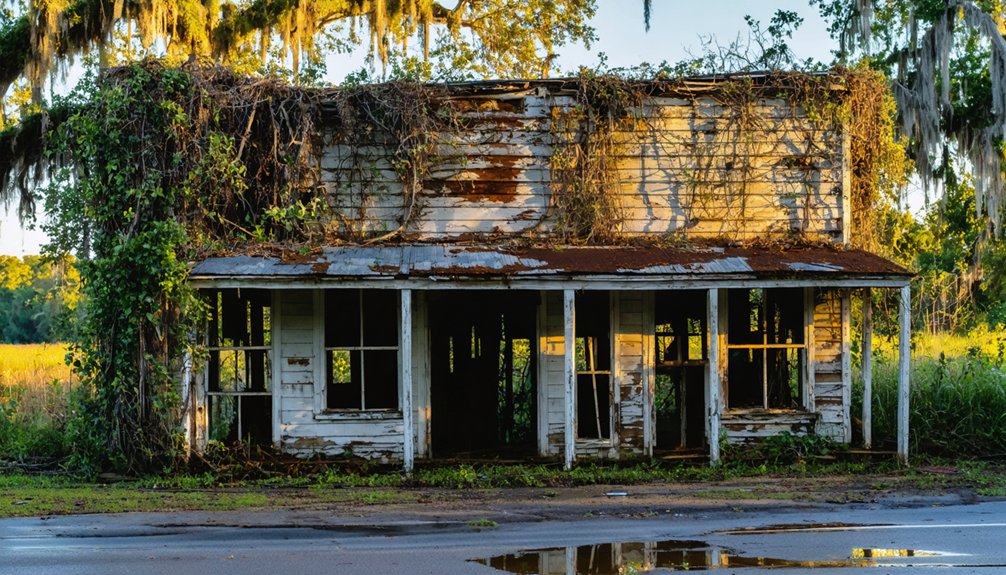
Where Waterloo once thrived as a bustling 19th-century sugar cane and cotton hub, you’ll now find nothing but earth, levee, and the slow pulse of the Mississippi River.
No standing buildings mark the site. No signs announce its historical significance. The town sits quietly between the river and its levee, swallowed by time and flood.
Yet ghost town exploration here isn’t entirely without reward. Modern subdivisions now occupy the old footprint, and beneath their yards, Waterloo’s bones remain.
Waterloo’s ghost town rewards the patient — its bones buried beneath modern yards, waiting to be discovered.
Residents occasionally unearth foundations, tools, and domestic artifacts from the 19th century during routine yard work. Archaeological surveys have even confirmed the original settlement’s layout underground.
It’s a ghost town you feel more than see — a place where the land itself carries the weight of a vanished world.
How Waterloo Became a Ghost Town
Waterloo didn’t fade quietly — it was hit hard and fast. In 1884, a devastating flood tore through the settlement, and the flood impact was immediate and brutal. The Mississippi swallowed what it could, leaving the town fractured and vulnerable.
Then arsonists finished the job, burning whatever the water had spared. Residents didn’t linger. Town relocation happened quickly, with most families pulling up roots and heading to nearby New Roads.
You can almost picture it — wagons loaded, backs turned, a whole community walking away from the wreckage. What once thrived as a sugar cane and cotton export hub simply ceased to exist.
No rebuilding, no recovery. Waterloo became a memory pressed beneath the soil, waiting for curious travelers like you to come looking.
What Artifacts and Archaeological Remnants Can You Still Find on Site?
Beneath the subdivisions that now occupy Waterloo’s former footprint, the past hasn’t fully surrendered. Residents routinely uncover fragments of 19th-century life during yard work — tools, domestic items, and structural foundations emerging from the soil like quiet confessions.
Each artifact discovery carries real historical significance, connecting you directly to a thriving sugar cane and cotton export hub that floods and arsonists erased in 1884.
Archaeological surveys have confirmed the original settlement’s layout still exists underground, preserved beneath modern construction.
If you’re serious about exploration, local museums in Pointe Coupee Parish display recovered pieces that paint a vivid picture of Waterloo’s former commerce and community.
The site rewards the curious traveler who understands that history doesn’t always stand upright — sometimes it waits just below your feet.
How Do You Get to Waterloo in Pointe Coupee Parish?
Getting to Waterloo means guiding to Pointe Coupee Parish, Louisiana, where the ghost town‘s former footprint sits compressed between the Mississippi River and the present river levee.
Your access routes typically run through New Roads, the parish’s main town, which lies just miles from the original settlement site. From Baton Rouge, you’ll head northwest along Louisiana Highway 1, crossing the False River region before reaching the parish interior.
Head northwest from Baton Rouge along Louisiana Highway 1, passing through the False River region toward New Roads.
Travel tips worth remembering: road conditions near the levee can shift seasonally, so check local advisories before you go. You won’t find marked signs pointing toward Waterloo since nothing standing remains, but modern subdivisions occupy the land.
Coordinate with Pointe Coupee Parish local historical offices beforehand to pinpoint the exact coordinates and navigate the site confidently.
Which Other Pointe Coupee Parish Ghost Towns Are Worth Visiting?
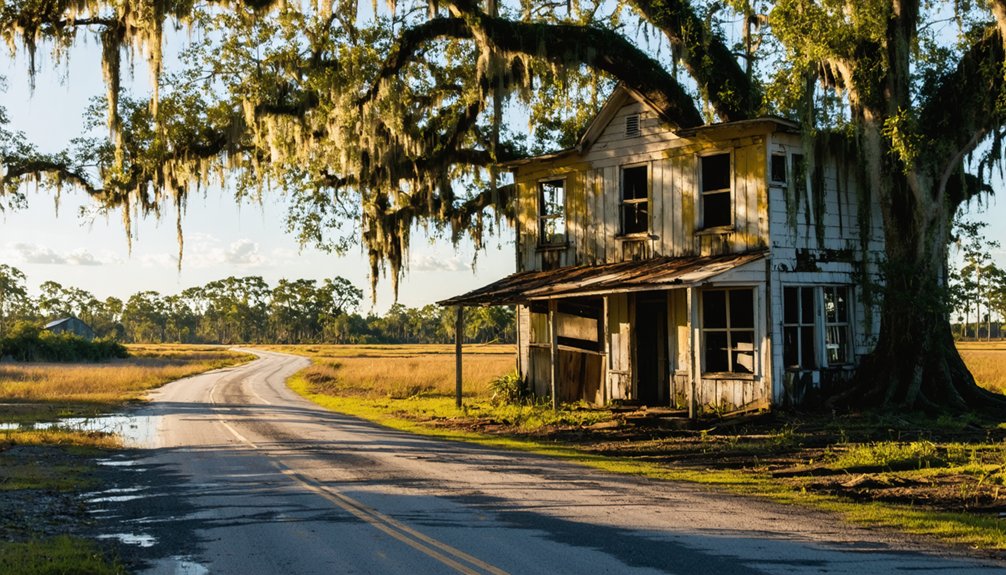
Beyond Waterloo, Pointe Coupee Parish holds other ghost towns worth tracking down, each carrying its own story of rise and collapse.
You’ll find forgotten communities scattered across this stretch of Louisiana, each rewarding curious travelers willing to explore off the beaten path.
- Red River Landing – Once a critical river port, its historical significance stems from Civil War-era activity and river trade that shaped the entire region.
- Sherburne – A former sawmill town that vanished when the timber ran out, leaving behind faint traces of industry.
- Livonia – A quiet agricultural settlement that faded as farming economies shifted.
- Grosse Tete – A once-active community whose decline mirrors broader rural Louisiana struggles.
Each site deepens your understanding of a region that refuses to let its past disappear quietly.
Frequently Asked Questions
When Is the Best Time of Year to Visit Waterloo, Louisiana?
You’ll have the time of your life exploring Waterloo’s ghost town history in fall or spring! You’ll enjoy cooler temperatures, perfect for seasonal activities like outdoor excavation tours and uncovering Louisiana’s hauntingly beautiful abandoned past.
Are There Guided Ghost Town Tours Available in Pointe Coupee Parish?
You’ll find local museums in Pointe Coupee Parish offering resources on ghost stories and historic significance. While formal guided tours aren’t confirmed, you can freely explore the region’s haunting past through self-guided adventures and knowledgeable locals.
What Local Museums Near Waterloo Display 19TH Century Artifacts?
You’ll find local artifacts from the 19th century displayed at museums throughout Pointe Coupee Parish. These collections bring Waterloo’s vanished world alive, connecting you directly to the sugar, cotton, and river commerce that once defined this free-spirited region.
Where Can Researchers Access Historical Archives About Waterloo’s 1820 Founding?
You’ll find archival resources about Waterloo’s 1820 founding in Lower Louisiana’s historical archives. Though the town’s gone, its historical significance lives on—dive into these records and you’re uncovering forgotten freedom, rich stories, and a vanished community’s remarkable beginnings.
Are There Accommodation Options Near the Waterloo Ghost Town Site?
You’ll find nearby lodging options in New Roads, Louisiana, the town where Waterloo’s former residents relocated. Ghost town accommodations aren’t on-site, but New Roads offers you comfortable stays while you freely explore this hauntingly rich historical landscape.
References
- https://en.wikipedia.org/wiki/Waterloo
- https://thecourier.com/news/349934/program-unearths-lost-hancock-county-history/
- https://www.youtube.com/watch?v=yxoiGQrwtas
- https://www.youtube.com/watch?v=8PyqThDbJPM
- https://www.youtube.com/watch?v=e1irqDV55w8
- https://classicrock1051.com/17-ghost-towns-louisiana/
- https://en.wikipedia.org/wiki/List_of_ghost_towns_in_Louisiana
- https://www.reddit.com/r/Louisiana/comments/15vkkwl/what_are_some_ghost_towns_in_louisiana/
- https://kids.kiddle.co/List_of_ghost_towns_in_Louisiana
- https://www.nytimes.com/1988/06/17/arts/music-and-history-at-waterloo-village.html