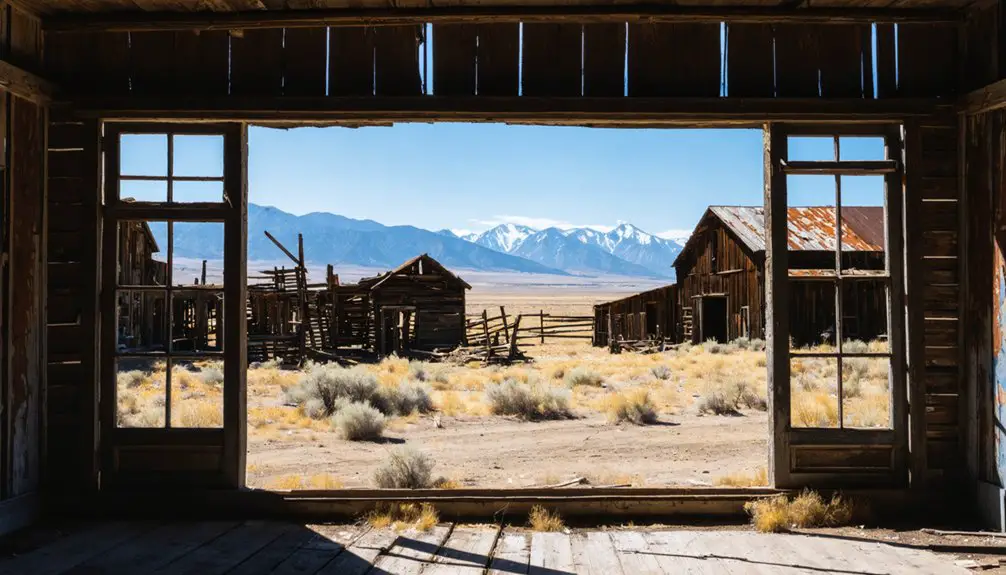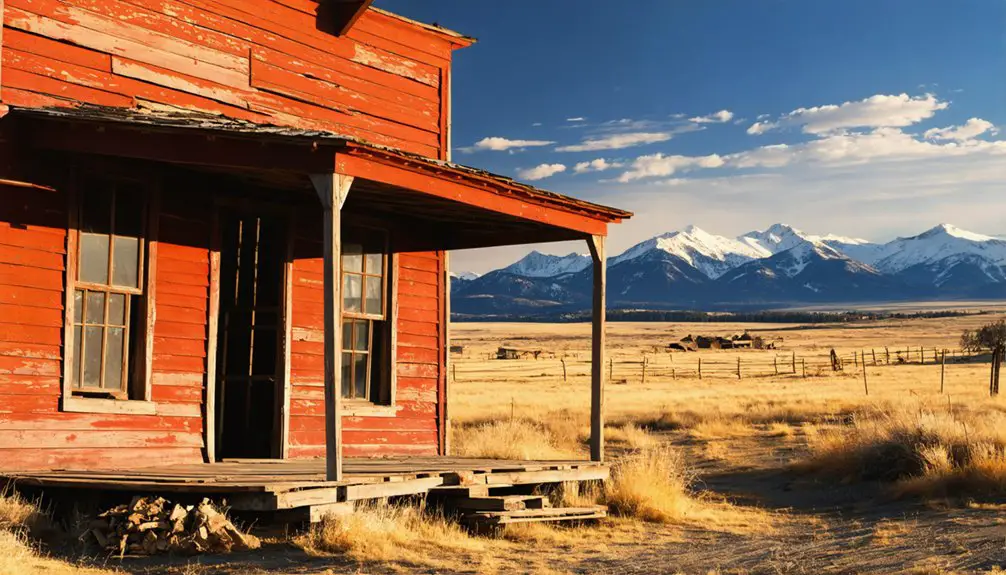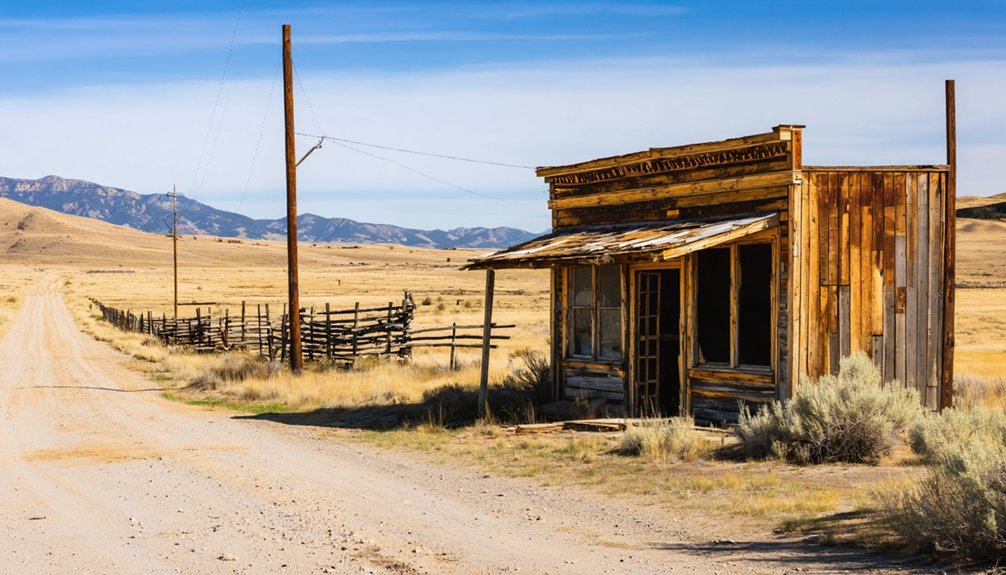
Planning a ghost town road trip to Kirkville, Montana, starts in Philipsburg, about 75 miles southeast of Missoula. You’ll follow Douglas Creek to reach this former silver boomtown, established in 1888 and once powered by a massive 50-stamp mill employing 500 workers. Twin chimneys and stone ruins are visible right from the road, so you won’t need to trespass. Visit between late spring and early fall for the best access, and there’s plenty more to uncover about Kirkville’s fascinating story.
Key Takeaways
- Kirkville, Montana, sits near Philipsburg along Douglas Creek, roughly 75 miles southeast of Missoula in Granite County.
- Visit between late May and early September for mild temperatures, clear roads, and reliable weather conditions.
- High-clearance vehicles are recommended, as terrain leading to the old townsite can be rough and uneven.
- Remnants include twin chimneys, stone foundations, a brick office, assay office, retort building, and two company houses.
- Ruins are visible from the road, eliminating any need to trespass on surrounding private property.
Where Is Kirkville, Montana?
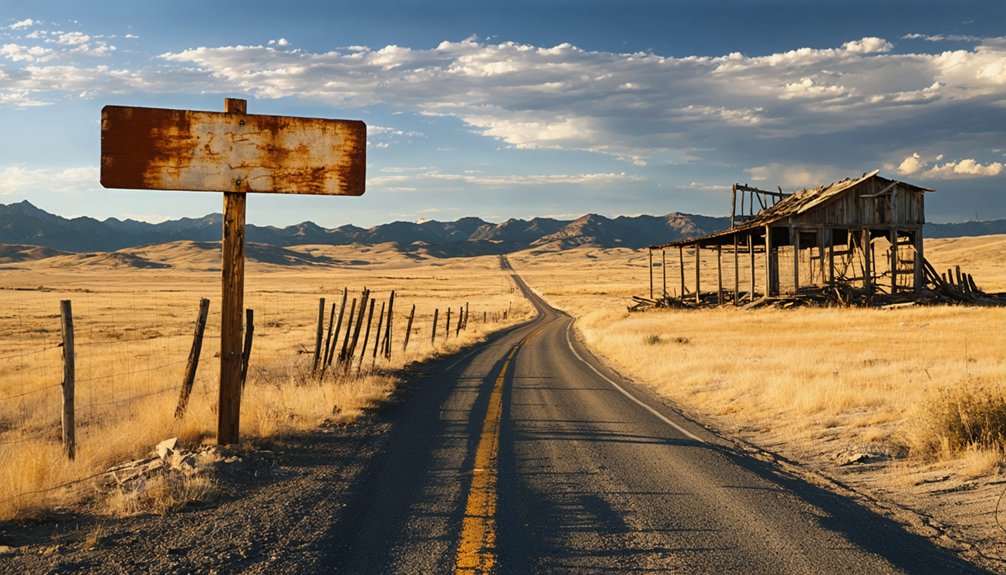
Tucked away near Philipsburg, Montana, Kirkville sits along Douglas Creek, where it first took shape in 1888 as a small but industrious mining settlement.
Originally called Clark, the town’s name shifted to Kirkville as its mining operations expanded and its identity solidified around the booming silver industry.
You’ll find this ghost town nestled in Granite County, a region rich with Kirkville history and the remnants of Montana’s ambitious mining era.
The settlement grew rapidly after workers constructed the Bi-Metallic 50-stamp mill, drawing hundreds of people seeking opportunity in the rugged mountain landscape.
At its peak, Kirkville housed 125 residents, most of them mill workers.
Today, the old townsite sits on private property, but you can still spot its remarkable ruins clearly from the road.
How the Bi-Metallic Mill Made Kirkville a Silver Boomtown
When the Bi-Metallic 50-stamp mill rose along Douglas Creek, it transformed Kirkville from a modest settlement into a thriving silver boomtown almost overnight.
The Bi-Metallic significance becomes clear when you consider its scale — a 360-by-150-foot structure processing 200 tons of ore daily, employing 500 workers, and connecting to the Blaine Shaft via a two-mile tramway.
At 360 by 150 feet, the Bi-Metallic mill processed 200 tons of ore daily, employing 500 workers.
Silver mining here wasn’t small-time. By 1890, crews had added 50 more stamps to the original mill, dramatically increasing production capacity.
The operation’s prestige peaked when it produced a remarkable 4,307-pound silver bullion bar displayed at the 1893 Chicago World’s Fair.
At its height, Kirkville supported 125 residents whose livelihoods depended entirely on the mill’s relentless, thundering output powering one of Montana’s most productive silver operations.
What Survived Kirkville’s 1967 Mill Fire?
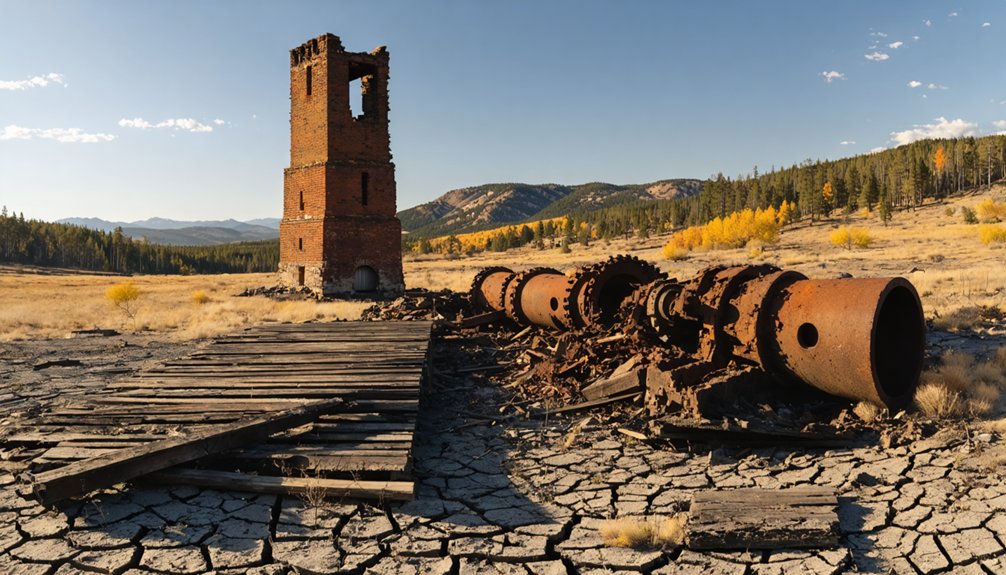
Despite the U.S. Forest Service burning down Kirkville’s Bi-Metallic Mill in 1967 for safety reasons, you’ll still find remarkable mill remnants standing strong today. The twin chimneys pierce the sky, and substantial stone portions of the massive 360-by-150-foot structure refused to surrender to the flames.
As you explore from the roadside, you’ll spot two company houses, a brick office building, an assay office, and the retort building—each carrying deep historical significance that connects you to Kirkville’s silver-rush past.
The boarding house also remains intact on the private property. You can’t walk the grounds, but the ruins are clearly visible from the road.
A modern flotation mill even operates periodically nearby, blending Kirkville’s past with its present-day mining legacy.
Best Time to Visit Kirkville’s Ruins
You’ll want to plan your visit to Kirkville between late spring and early fall, when Montana’s mountain roads are clear of snow and easily navigable.
Summer months offer the most reliable weather, giving you dry conditions to explore the ruins of the Bi-Metallic Mill and the surrounding townsite without fighting muddy or icy roads.
If you’re heading out in late May or early September, you’ll still enjoy mild temperatures while avoiding the peak summer crowds that often draw other ghost town enthusiasts to the area.
Ideal Visiting Seasons
Summer offers the most rewarding window for exploring Kirkville’s ghost town, typically from late June through early September, when the roads near Philipsburg are clear and the weather stays cooperative.
You’ll move freely around the visible ruins, taking in the twin chimneys, stone foundations, and surviving structures that speak to the site’s historical significance.
Spring and fall visits are possible but unpredictable. Mountain weather near Granite shifts quickly, and muddy roads can limit your access to roadside viewing areas.
Winter fundamentally closes the experience off entirely, burying remnants under snow.
If you want the full picture — the mill foundations, the Deidesheimer smelter, the standing company houses — aim for midsummer.
You’ll get longer daylight hours and the clearest sightlines to everything that remains.
Weather And Road Conditions
Weather around Philipsburg shifts fast, and if you’re planning a trip to Kirkville’s ruins, timing your visit matters more than you might expect.
Summer months offer the most reliable weather patterns, with warm days keeping the dirt roads leading to the old townsite dry and navigable.
Spring snowmelt can turn road conditions treacherous, leaving routes muddy and impassable for standard vehicles.
Fall brings unpredictable early storms that close access quickly.
Winter fundamentally cuts off the area entirely.
You’ll want to check local forecasts and road conditions before heading out, since the site sits on private property visible from the road — getting stuck nearby isn’t ideal.
A high-clearance vehicle gives you the best chance of reaching the ruins without complications.
How to Get to Kirkville, Montana
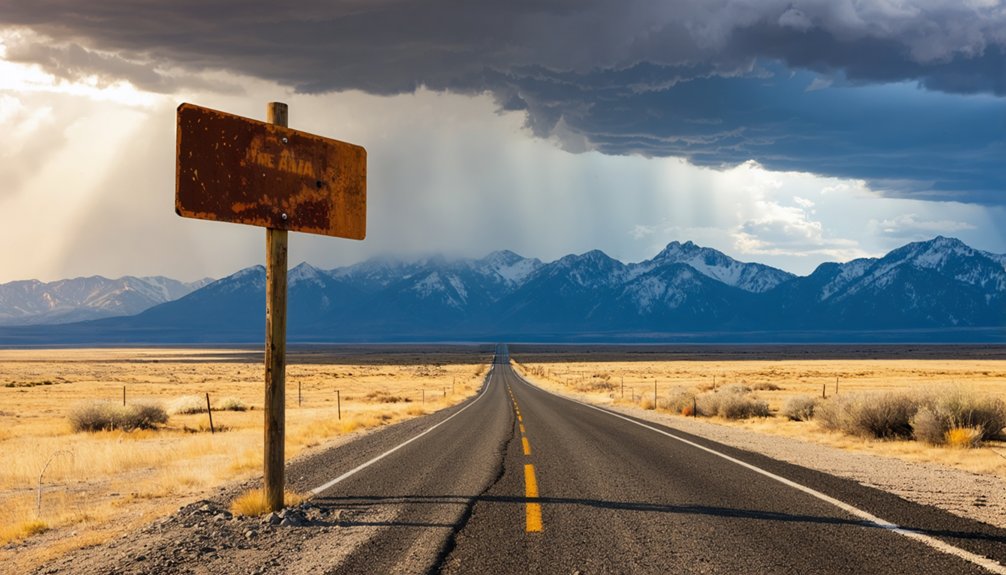
Getting to Kirkville is straightforward once you’re near Philipsburg, Montana, a small town roughly 75 miles southeast of Missoula along Highway 1.
From Philipsburg, head toward Douglas Creek, following the access routes that wind through this scenic mountain corridor. The old townsite sits on private property, but you can view the ruins clearly from the road without trespassing.
From Philipsburg, follow the winding access routes toward Douglas Creek, where Kirkville’s ruins are visible from the road.
A few essential travel tips before you go: check road conditions seasonally, as mountain routes can become impassable after heavy snowfall.
A high-clearance vehicle gives you added flexibility on rougher stretches. You’ll spot the twin chimneys and stone mill remnants rising from the landscape, making Kirkville relatively easy to identify.
No formal trailhead or parking area exists, so pull off responsibly and respect the surrounding private land boundaries.
What You Can Actually See From the Road?
Although Kirkville sits on private property, you’ll find the roadside view surprisingly rich with historical detail. This ghost town rewards curious travelers with visible remnants that speak directly to its historical significance.
From the road, you’ll spot the twin chimneys rising dramatically from the ruins of the massive Bi-Metallic Mill. Stone walls and foundations hint at the mill’s enormous 360-by-150-foot footprint.
Two company houses and a brick office building stand clearly visible, giving you a real sense of the town’s working-class character. You can also see the assay office and the Deidesheimer ore smelter nearby.
The boarding house structure remains standing as well. Slow down, take it in, and let these surviving pieces tell the story of a once-thriving silver mining community.
Frequently Asked Questions
What Was Kirkville’s Original Name Before It Became a Mining Town?
Clark was Kirkville’s original name. You’ll find its historic significance fascinating — early settlers shaped it, named it, and transformed it into a thriving mining hub before renaming it Kirkville during its bustling mining operations.
How Many Workers Did the Bi-Metallic Mill Employ at Its Peak?
At its peak, you’d find 500 workers driving the Bi-Metallic Mill’s production, laboring under demanding worker conditions to process ore transported via a two-mile tramway, fueling one of Montana’s most impressive silver mining operations.
What Famous Event Featured Kirkville’s Massive Silver Bullion Bar in 1893?
You’d be amazed to know the Chicago World’s Fair showcased Kirkville’s incredible silver bullion bar! This 4,307-pound marvel captured 1893 significance, reflecting the Bi-Metallic Mill’s extraordinary power and the freedom found in Montana’s bold mining spirit.
Why Was the Larger Granite Mill Unable to Operate Near Kirkville?
Water scarcity created serious mill challenges, preventing you from running a larger operation at the Granite site. Without sufficient water to harness those granite resources, the bigger mill simply couldn’t function, pushing activity down to Kirkville instead.
When Did Bi-Metallic and Granite Mountain Mining Officially Consolidate Operations?
Like two rivers merging into one powerful current, Bi-Metallic and Granite Mountain Mining officially consolidated in 1898. You’ll find this pivotal moment in mining history left a massive economic impact, producing a million dollars in bullion annually.
References
- https://www.legendsofamerica.com/kirkville-montana/
- https://www.youtube.com/watch?v=ufRI-Y3mObk
- https://www.calameo.com/books/004369938caa5da92787a
- https://en.wikipedia.org/wiki/List_of_ghost_towns_in_Montana
- https://www.mtghosttowns.com/kirkville
- https://www.legendsofamerica.com/mt-ghosttowns/
- https://www.calameo.com/books/00436993861f7599f2128
- https://www.youtube.com/watch?v=NfDfKcadhoY
- https://www.youtube.com/watch?v=L3wyFPlYt88
- https://publizr.com/ghosttownsandhistoryofmontana