Caineville, Utah sits 20 miles east of Capitol Reef along Highway 24, where abandoned pioneer cabins and wind-carved badlands reveal a community that floods, diphtheria, and harsh desert conditions ultimately destroyed. Founded in 1882 by Mormon settlers, this near-ghost town offers historic landmarks, nearby abandoned villages, OHV adventures, and rustic accommodations that make it worth the detour. Stick around to uncover everything you’ll need to plan an unforgettable Caineville road trip.
Key Takeaways
- Caineville, founded in 1882, sits 20 miles east of Fruita along Highway 24, offering an authentic ghost town experience amid dramatic red sandstone badlands.
- Historic landmarks include the Behunin Sandstone Cabin, Pioneer Cemetery, and Caineville Inn, providing tangible connections to the town’s pioneering past.
- Nearby ghost towns Giles and Blue Valley, plus outlaw-linked Hanksville, make ideal stops for extending your ghost town road trip.
- Accommodations range from the rustic Mesa Farm Motel and Caineville RV Park to unique rental teepees, with meals available at Caineville Café.
- The 2,600-acre Swing Arm City OHV Area offers thrilling dirt bike trails for all skill levels; carry water and download offline maps beforehand.
Why Caineville Belongs on Your Capitol Reef Road Trip
If you’re driving Highway 24 east of Capitol Reef National Park, Caineville is the kind of stop that earns its place on your itinerary.
Twenty miles east of Fruita, this near-abandoned community sits along the Fremont River, carrying decades of ghost town legends rooted in Mormon settlement, devastating floods, and a diphtheria outbreak that reshaped everything.
You won’t find crowds here. What you’ll find is raw desert landscape, crumbling history, and authentic local culture preserved in a sandstone cabin, an old cemetery, and a roadside billboard naming the pioneers who built this place from scratch in 1882.
Caineville isn’t a reconstructed attraction—it’s the real thing. If your road trip craves substance over spectacle, this quiet stretch of Wayne County delivers exactly that.
How Caineville Was Founded and Why It Was Abandoned
Caineville didn’t appear by accident—the Mormon Church sent Elijah Cutler Behunin to settle this stretch of the Fremont River valley in 1882, and he arrived with the kind of determination that turns raw desert into a working community.
By spring 1883, additional early settlers had joined him, building an agricultural village that reflected genuine frontier grit.
By 1883, determined settlers had transformed raw desert into a working agricultural village through sheer frontier resilience.
Caineville history, however, took a brutal turn when floods repeatedly destroyed irrigation dams every two to three years, with devastating events in 1896, 1897, and 1909 forcing families out.
A diphtheria outbreak in 1892-1893 had already claimed lives, weakening the community further.
How to Get to Caineville From Capitol Reef
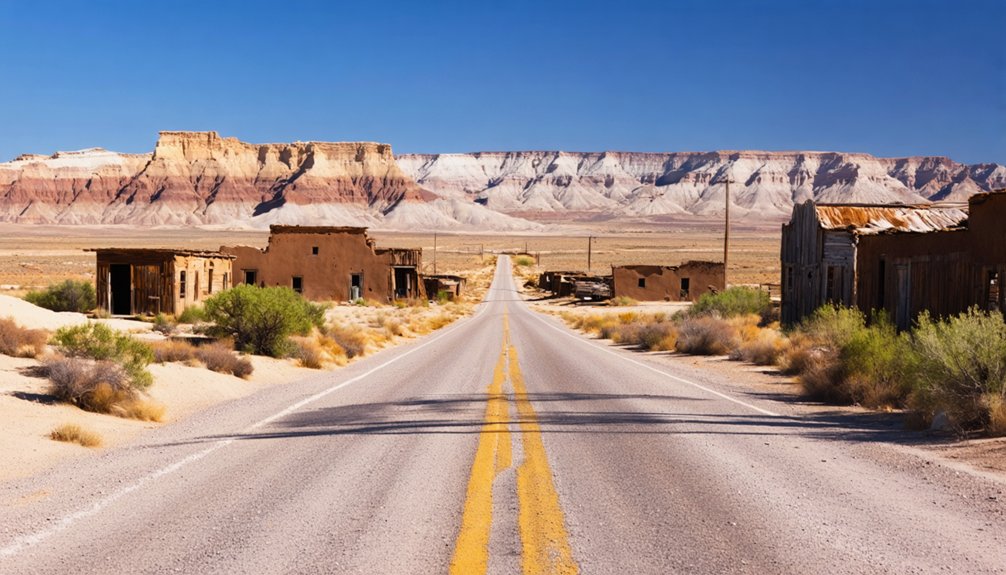
Getting to Caineville from Capitol Reef takes just 20 miles, and the entire drive runs east along Highway 24, following the Fremont River through some of the most surreal desert scenery in Utah.
This road trip corridor rewards you with towering red sandstone cliffs, eroded badlands, and wide-open sky the whole way through.
Utah State Route 24 is one of the most rewarding scenic routes in the Southwest, and it’s completely paved — a legacy of improvements that didn’t arrive until the 1960s.
You’ll feel the remoteness intensify as Capitol Reef fades behind you and Caineville appears ahead.
Keep your eyes open for the Behunin red sandstone cabin just off the highway. It’s a quiet, unassuming landmark that signals you’ve arrived somewhere genuinely forgotten.
Historic Landmarks Still Standing in Caineville
As you explore Caineville’s dusty streets, you’ll find a handful of landmarks that survived the floods and abandonment that drove most residents away.
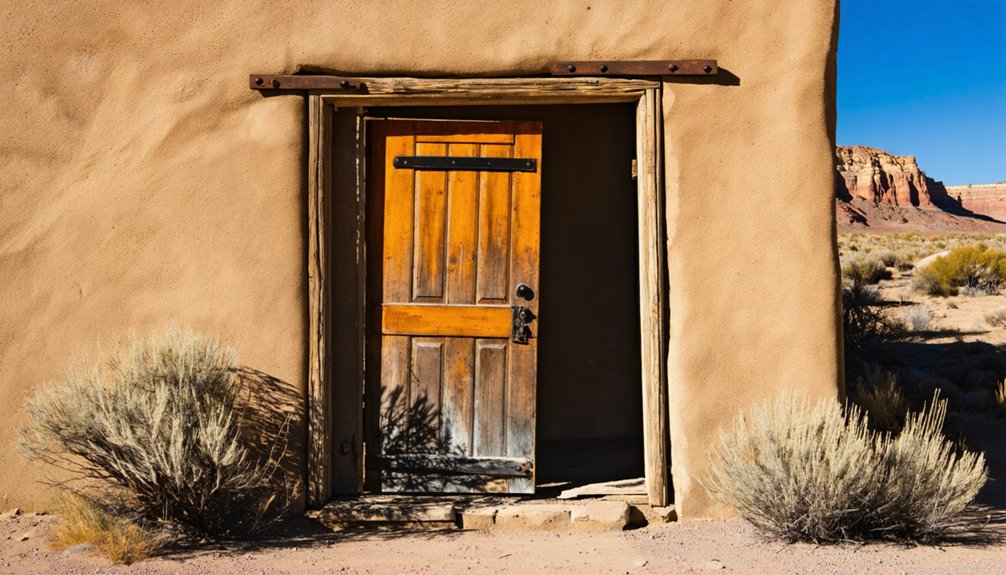
Pull over off Highway 24 to get a closer look at Elijah Cutler Behunin’s striking red sandstone cabin, the enduring handiwork of the town’s founder.
You’ll also want to visit the preserved pioneer cemetery and the Caineville Inn, two landmarks that stand as quiet reminders of the community’s resilient, if brief, history.
Behunin Sandstone Cabin
Standing just off Highway 24, the Behunin sandstone cabin is one of Caineville‘s most tangible connections to its pioneer past. Elijah Cutler Behunin, sent by the Mormon Church, established this settlement in 1882, and his family built this cabin shortly after arriving.
The Behunin history runs deep here — without his vision, Caineville simply wouldn’t exist.
The sandstone significance becomes immediately clear when you see the structure. Behunin didn’t haul lumber across rugged terrain; he used what the land provided. That red sandstone reflects both resourcefulness and the raw beauty of the surrounding landscape.
You can pull over, step outside your vehicle, and stand where Utah’s earliest settlers carved out a life in one of America’s most unforgiving — yet stunning — environments.
Pioneer Cemetery Preserved
The pioneer cemetery in Caineville holds something that few ghost towns manage to preserve — a direct, unfiltered connection to the people who built and lost everything here.
Walk among the graves and you’ll encounter pioneer stories carved into weathered stone — families who fought floods, diphtheria, and brutal isolation just to claim this desert land. The 1892-1893 diphtheria outbreak took many lives, including children, and those losses rest quietly here.
Unlike staged cemetery tours at commercialized historic sites, Caineville’s cemetery delivers raw, unscripted history. You’re standing on ground that absorbed a community’s grief, ambition, and eventual departure.
Bring water, respect the markers, and take time to read the names — each one represents a life that shaped this remote Utah landscape before the floods took nearly everything else.
Caineville Inn Landmark
Few landmarks anchor a ghost town‘s identity quite like Caineville Inn, a surviving structure that cuts through the silence of this near-abandoned Utah community.
Standing prominently amid the sparse desert landscape, it represents one of the most tangible connections to Caineville history you’ll encounter on your visit.
As you explore this remote stretch of Highway 24, the inn offers a grounding reference point for understanding how this once-thriving agricultural settlement evolved into the quiet outpost it’s today.
It’s more than a building — it’s a story you can stand next to.
For those drawn to Caineville tourism, the inn serves as a compelling reason to slow down, step outside your vehicle, and absorb the raw, unfiltered character of Utah’s forgotten frontier communities.
Ghost Towns Within an Hour of Caineville
If you’re hungry for more ghost town history, you won’t have to drive far from Caineville. Head about 4 miles west of Hanksville to uncover Giles and Blue Valley, two forgotten settlements that once thrived along the Fremont River before floods and hardship erased them from the map.
Hanksville itself rewards a stop with its ties to Butch Cassidy’s outlaw hideouts, and if you’re craving off-road adventure, Swing Arm City’s 2,600-acre OHV area lets you explore the rugged desert terrain on your own terms.
Giles And Blue Valley
Nestled about 4 miles west of Hanksville, the ghost towns of Giles and Blue Valley make for a compelling detour on your road trip through Wayne County.
Both communities share a similar fate to Caineville — once-promising agricultural settlements that couldn’t withstand the region’s harsh realities.
Giles history traces back to determined settlers who carved out homesteads along the Fremont River, only to see floods and isolation drive them away.
Blue Valley echoes that same story of resilience and abandonment.
Today, you’ll find scattered remnants of structures against a dramatic backdrop of red rock and open desert.
The remoteness that defeated early settlers is exactly what makes these spots so magnetic — raw, unfiltered history waiting for those willing to seek it out.
Hanksville’s Historic Sites
Just 30 miles east of Caineville, Hanksville punches well above its weight as a historic destination.
Hanksville history runs deep — this remote outpost once served as a hideout for Butch Cassidy and his Wild Bunch gang, who used the surrounding canyon country to evade lawmen. You’ll feel that outlaw energy as you wander through town, where the rugged landscape hasn’t changed much since their era.
Among the standout Hanksville attractions is the Outlaw Trail, connecting you to sites tied directly to frontier lawlessness. Pair your visit with a stop at the Entrada Bluffs overlook for dramatic desert views.
Hanksville rewards curious travelers who crave authenticity over polish — it’s raw, it’s real, and it delivers exactly the kind of freedom that ghost town road-tripping promises.
Nearby OHV Ghost Towns
Hanksville isn’t the only ghost town story worth chasing in this corner of Utah. Just four miles west of Hanksville, you’ll find Giles and Blue Valley, two forgotten settlements swallowed by time and erosion.
These remnants sit quietly off the beaten path, rewarding curious travelers who venture beyond the paved road.
If you crave something more adrenaline-fueled, Swing Arm City delivers. This 2,600-acre OHV area transforms the surrounding desert into a playground where ghost towns and OHV trails intersect in the most unexpected way.
You’re riding through land that pioneers once farmed, ranched, and ultimately abandoned.
This region rewards those who push further.
Combine ghost towns with open terrain, raw history, and real freedom — that’s the true spirit of exploring Caineville’s backyard.
Motels, Campgrounds, and Cafés Near Caineville
Despite its ghost town status, Caineville’s got enough amenities to make it a comfortable base camp for exploring the surrounding desert landscape.
Before hitting the backcountry, check motels reviews to find your best fit:
- Mesa Farm Motel – Rustic rooms with stunning red rock views
- Caineville RV Park – Full campground amenities including hookups and showers
- Rental Teepees – A unique overnight experience under desert skies
- Caineville Café – Fuels your adventures with hearty, no-frills meals
You won’t find luxury chains here, and that’s exactly the point.
This remote stretch of Highway 24 rewards travelers who embrace simplicity.
Pack light, stay curious, and let Caineville’s raw desert energy recharge you between explorations.
Caineville’s Swing Arm City OHV Area for Dirt Bikers
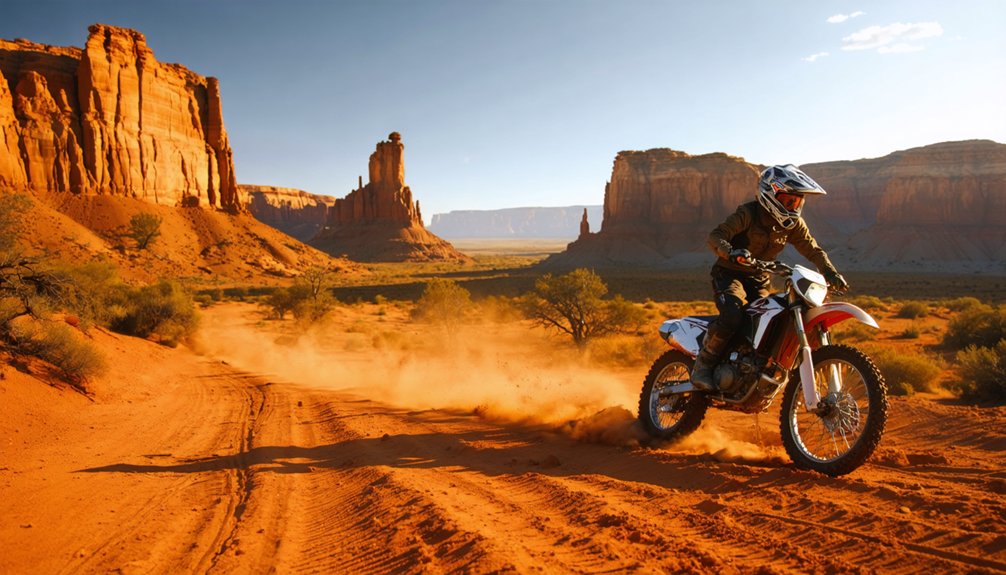
Once you’ve settled in and fueled up at the café, swap your hiking boots for riding gear — Caineville doubles as a premier dirt biking destination.
Swing Arm City gives you 2,600 acres of open OHV terrain where you’ll carve through red desert landscapes on some of Utah’s most thrilling dirt bike trails.
2,600 acres of red desert terrain. Swing Arm City is where Utah’s most thrilling dirt bike trails come alive.
The area’s wide-open expanse suits every skill level, from casual riders exploring canyon edges to aggressive riders pushing technical routes.
Before you throttle up, brush up on OHV safety essentials — wear your helmet, carry water, and ride with a buddy in this remote terrain.
Cell service is limited out here, so download offline maps before you head out.
Freedom tastes best when you’re prepared for it.
Frequently Asked Questions
What Disease Outbreak Devastated Caineville’s Population in the Early 1890S?
A diphtheria outbreak devastated Caineville in 1892-1893, and you’ll discover its disease impact was heartbreaking — it claimed many lives, including children, accelerating population decline in this once-thriving, freedom-seeking pioneer community you’re exploring today.
Who Was John T. Caine, and Why Was Caineville Named After Him?
You’ll love knowing that Caineville History honors John Caine, Utah Territory’s congressional representative. Settlers named the town after him, celebrating his political influence and service as they carved out their bold, independent frontier community in 1882.
How Often Did Floods Destroy Caineville’s Irrigation Dams Before 1900?
Like clockwork gone wrong, you’d watch flood frequency batter Caineville’s dams every two to three years before 1900, making irrigation challenges relentless. These unstoppable waters constantly reclaimed the land, threatening your freedom to farm and settle.
What Year Did Paved Roads Finally Reach the Remote Caineville Area?
You’ll love knowing paved roads didn’t reach Caineville’s remote landscape until the 1960s, a milestone of historical significance that transformed travel accessibility, opening this rugged, freedom-calling desert ghost town to adventurous explorers like you.
How Many People Lived in Caineville at Its Peak Population Around 1900?
“All good things must come to an end!” You’ll find Caineville demographics peaked at 131 residents around 1900, a number carrying historical significance. Sadly, devastating floods soon shattered that thriving community, sending freedom-seeking settlers elsewhere.
References
- https://capitolreefcountry.com/ghost-towns/
- https://travelwitht.wordpress.com/2009/06/16/a-ghost-town/
- https://www.onlineutah.com/cainevillehistory.shtml
- https://www.fremontriverrv.com/small-towns-of-southern-utah
- https://kids.kiddle.co/Caineville
- https://capitolreefcountry.com/caineville/
- https://www.myutahparks.com/basics/history/historic-towns/