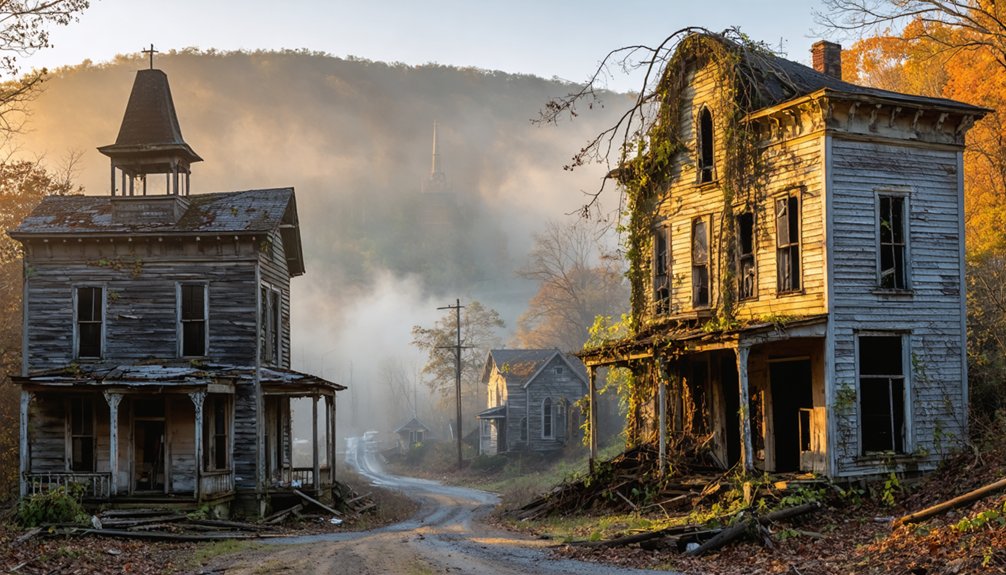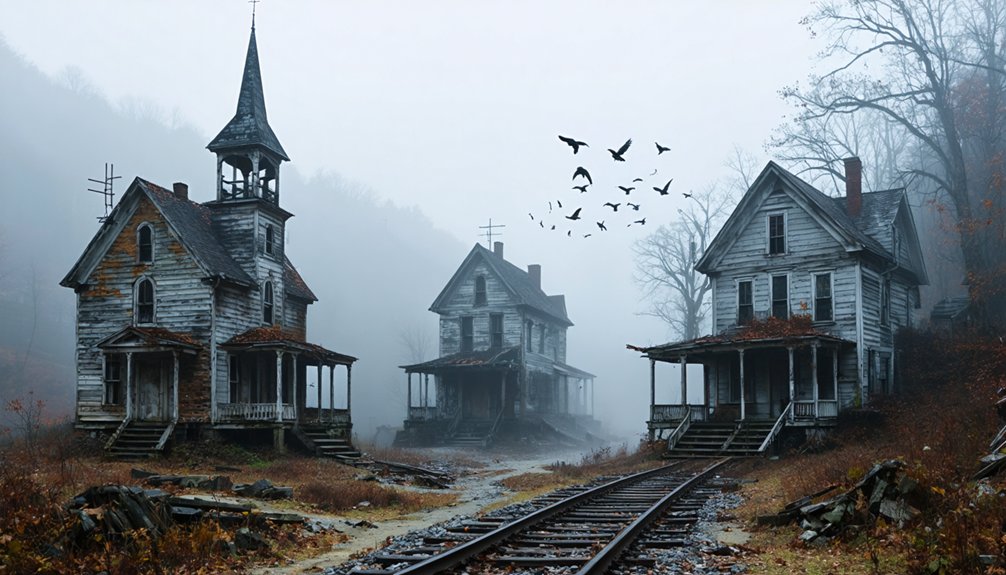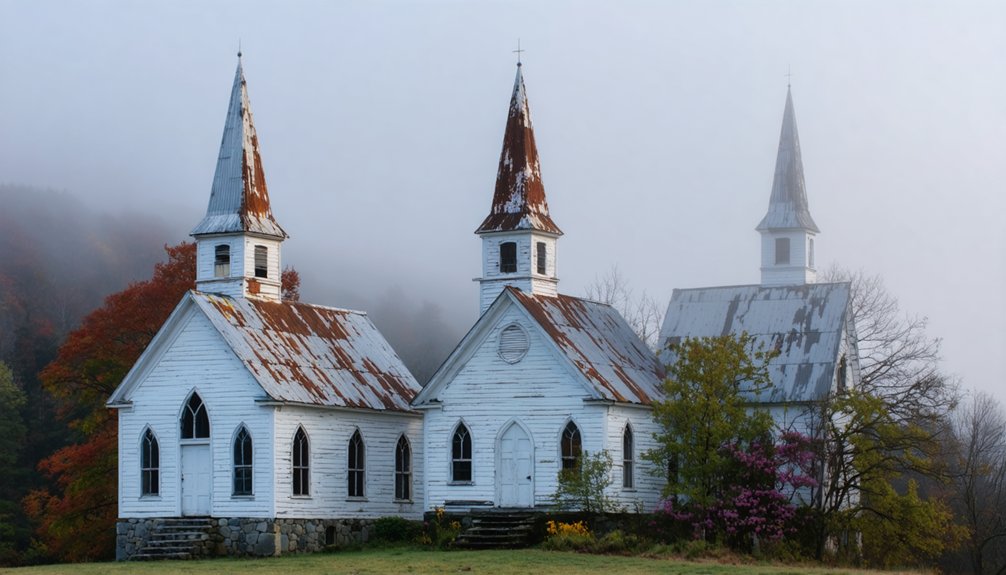
Preserving Appalachian ghost towns requires systematic documentation, legal protection, and community engagement. You’ll need to identify historically significant sites, secure land rights through proper channels, assess structural integrity, and source period-appropriate materials. Develop partnerships with local craftspeople, establish funding models, and create interpretive programs that connect generations. Implement weatherproofing strategies and digital archives to guarantee long-term preservation. The all-encompassing approach outlined below provides your roadmap to successful heritage conservation.
Key Takeaways
- Identify ghost towns with original town plans and salvageable structures before initiating preservation efforts.
- Secure land rights through historic designations, property transfer, or formation of land trusts to protect sites.
- Assess structural integrity by prioritizing buildings based on historical significance and structural stability.
- Source authentic materials through partnerships with local sawmills and artisans skilled in period-specific techniques.
- Build community support through heritage events, oral history collection, and multigenerational knowledge transfer programs.
Identifying Ghost Towns Worth Preserving
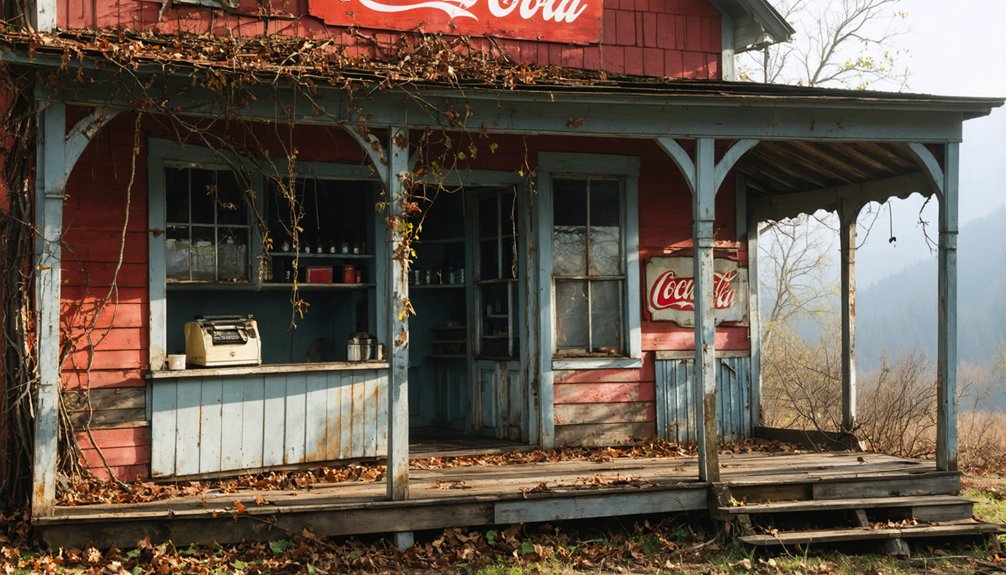
When evaluating Appalachian ghost towns for preservation efforts, you’ll need to contemplate four critical dimensions that determine a site’s overall conservation value.
First, prioritize sites with original 1854 town plans and standing structures like Eckley Miners’ Village, which demonstrate authentic historical fabric.
Authentic historical fabric demands prioritization of sites with original town plans and standing structures from Appalachia’s industrial past.
Second, assess structural preservation potential—favor communities with salvageable buildings rather than those requiring complete reconstruction.
For effective ghost town identification, examine archaeological contexts revealing economic production methods through exposed mining equipment and settlement patterns.
Finally, evaluate community context—former company towns with preserved hierarchical layouts merit interpretation.
Sites functioning within regional heritage tourism networks demonstrate sustainable preservation criteria and long-term viability.
The most compelling candidates combine multiple dimensions, particularly those situated within existing federal preservation frameworks that facilitate resource allocation.
Towns like Thurmond, West Virginia represent excellent preservation candidates as they maintain narrow streets and original architecture that showcase the region’s coal mining heritage.
Engage local stakeholders through community input sessions to ensure preservation efforts align with regional needs while creating a sustainable economic future for historic sites.
Conducting Historical Research and Documentation
Because historical documentation forms the backbone of any ghost town preservation effort, you’ll need to establish a rigorous research methodology that captures both tangible and intangible heritage elements.
Begin by collecting oral histories from descendants and longtime residents, recording and transcribing these narratives for digital preservation.
Complement personal accounts with archival research, examining land deeds, census data, and newspapers at regional libraries or historical societies. Cross-reference these materials against GIS mapping data and archaeological findings to verify accuracy.
For thorough documentation, photograph existing structures with consistent metadata and digitize all materials for public access.
Don’t overlook intangible heritage—document folklore, traditions, and community practices that connect people to place. The TVA conducted extensive sociological surveys of Loyston before flooding it in 1935, providing an excellent model for comprehensive documentation.
When conducting research, always secure proper permissions and respect private property boundaries while avoiding romanticization of historical narratives.
Children’s toys, particularly clay marbles, provide valuable insights into the daily lives of families who once inhabited these now-abandoned towns.
Securing Land Rights and Legal Protection

When preserving Appalachian ghost towns, you’ll need to navigate the complex process of obtaining historic designations through local, state, or national registry applications, which typically requires demonstrating the site’s historical significance and architectural integrity.
You can approach property transfers through various mechanisms, including direct purchase, donation solicitation, or establishing right-of-first-refusal agreements with current owners.
Understanding the legal implications of each transfer method becomes essential for long-term protection, particularly regarding deed restrictions, reversionary clauses, and maintenance obligations that may extend decades beyond the initial acquisition. Always ensure you have proper permission from property owners before entering or beginning preservation work on abandoned sites. Consider utilizing flexible zoning laws that allow these historic properties to adapt to changing community needs while maintaining their authentic character.
Securing legal protection for Appalachian ghost towns requires maneuvering a complex hierarchy of historic designations at federal, state, and local levels.
Begin by consulting your State Historic Preservation Office (SHPO), which serves as the gateway for National Register nominations and coordinates all state-level reviews.
For maximum protection, pursue National Historic Landmark status, requiring properties to demonstrate exceptional historical significance, architectural merit, or archaeological potential.
This designation opens up federal funding, tax incentives, and extensive legal safeguards under the National Historic Preservation Act.
Simultaneously, pursue local ordinances through your preservation commission, which requires proving “special significance” and integrity of design.
You’ll need to document ownership, land boundaries, and architectural elements worth preserving.
Local designations offer site-specific protection that federal designations can’t always provide. Unlike National Register listings, local designation will require owners to seek a certificate of appropriateness for any physical changes to the property.
Remember that National Register properties must typically be over 50 years old to qualify for historical designation, which applies to many abandoned mining towns in Appalachia.
Property Transfer Approaches
Establishing clear ownership through proper documentation forms the cornerstone of any successful ghost town preservation effort in Appalachia.
When acquiring properties with tangled titles or heirs’ property issues, you’ll need to conduct thorough research at county recorder’s offices to trace ownership lineages and establish title clarity. The metes and bounds system prevalent in Appalachian regions often includes references to landmarks that may no longer exist, complicating property deeds interpretation.
To navigate these challenges effectively:
- Engage local legal counsel familiar with Appalachian property law to review deed language and resolve clouded titles before purchase.
- Consider forming a land trust to consolidate fragmented ownership when dealing with multiple heirs.
- Document any existing cultural or historical uses of the land that might support your preservation claims in partition proceedings.
Courts generally uphold conveyances as valid even with some ambiguity, provided the intended property can be reasonably identified through local knowledge and existing documentation.
Federal land patents provide critical evidence of original ownership when researching ghost towns that were established during westward expansion periods.
Assessing Structural Integrity and Preservation Needs
When evaluating Appalachian ghost town structures, you’ll need to establish a systematic prioritization system that ranks buildings based on historical significance, structural stability, and preservation feasibility.
Your evaluation must distinguish between elements that can be salvaged through careful restoration techniques and those requiring complete replacement due to irreparable damage or safety concerns.
Documentation of your evaluation criteria will provide essential evidence for funding requests while ensuring that limited preservation resources target the most vital or representative structures within the settlement.
Building Condition Prioritization
The thorough assessment of building condition forms the cornerstone of any successful ghost town preservation effort in Appalachia.
An exploration of haunting civil war sites in Virginia provides further insight into the historical narratives that shape the region. These locations serve as powerful reminders of the past, allowing visitors to reflect on the sacrifices made during one of America’s most significant conflicts. By engaging with these sites, individuals contribute to the ongoing dialogue about preservation and remembrance, ensuring that history remains relevant for future generations.
You’ll need to develop a systematic risk assessment framework that balances historical significance against structural degradation. Prioritize your limited resources by evaluating buildings through a multi-factor analysis.
- Identify structures with imminent collapse risk first, focusing on compromised foundations, severe roof damage, or walls showing significant bowing or separation.
- Assess unique architectural elements that represent irreplaceable Appalachian craftsmanship, particularly hand-hewn timber frames or regional masonry techniques.
- Consider environmental exposure factors, especially proximity to water sources or landslide-prone areas that accelerate deterioration.
Your funding strategies should align with this prioritization, directing emergency stabilization funds to Category 1 buildings while seeking specialized preservation grants for historically significant structures.
Salvage Versus Replacement
Determining whether to salvage original materials or implement replacements constitutes perhaps the most critical decision you’ll face in Appalachian ghost town preservation. Your assessment must differentiate between natural aging that maintains character versus deterioration threatening structural integrity.
Effective salvage techniques prioritize materials crafted by skilled artisans, including African American builders whose workmanship embodies historical authenticity.
When evaluating logs, foundations, and structural elements, remember that only about one-third of structures typically qualify for full restoration—as evidenced by projects where just 19 of 60 buildings merited complete preservation.
For non-viable structures, replacement strategies include creating metal shell representations that preserve historical memory while acknowledging practical limitations.
Products like Woody Pox offer cost-effective alternatives when tested over extended periods, balancing your freedom to choose preservation approaches against resource constraints.
Sourcing Period-Appropriate Materials and Expertise
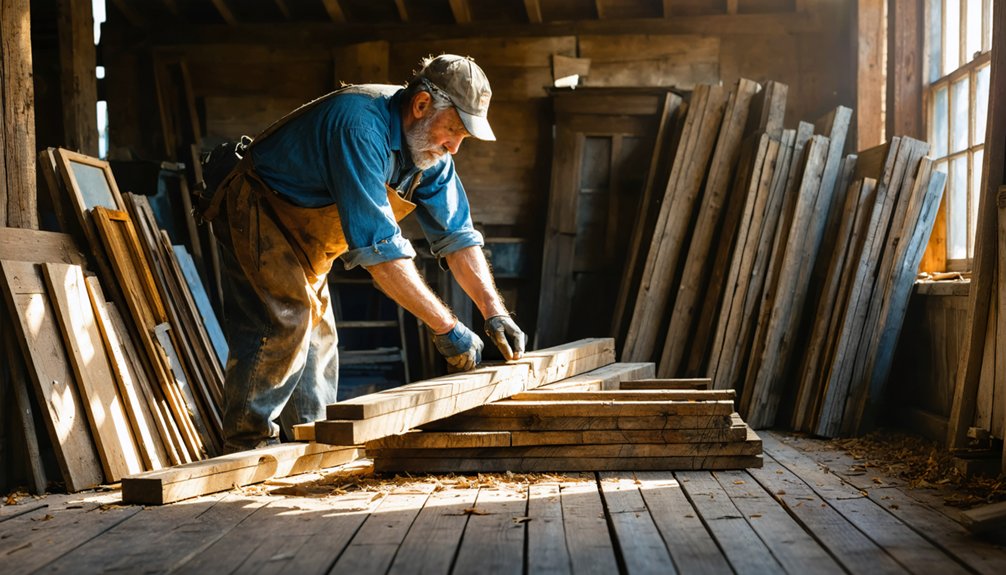
Successful restoration of Appalachian ghost towns requires meticulous attention to material authenticity and specialized expertise.
Reviving forgotten Appalachian communities demands unwavering commitment to historical integrity and craftsmanship excellence.
You’ll need to establish partnerships with local sawmills and artisans who understand traditional restoration techniques. Original materials must be tested for structural integrity before integration into your project.
To guarantee historical accuracy in your restoration:
- Document existing structures through photographs, measurements, and paint analysis before deterioration accelerates.
- Consult oral histories from community elders to verify construction methods and material compositions.
- Train craftspeople in period-specific carpentry and building techniques distinct from modern construction.
When sourcing materials, prioritize regional suppliers to reduce costs and environmental impact.
The investment in authentic materials—though exceeding standard construction expenses—preserves the cultural integrity that makes Appalachian ghost towns worth saving.
Developing Sustainable Funding Models
While preserving Appalachian ghost towns represents a significant cultural investment, establishing sustainable funding mechanisms remains critical for long-term project viability.
You’ll need to pursue a grant diversification strategy by targeting federal programs like AMLER ($122.5 million to Appalachian states in 2022) and POWER grants specifically designed for coal-impacted areas.
Create funding partnerships that leverage multiple streams simultaneously—federal allocations typically require matching funds, with successful AMLER projects generating $0.96 in additional funding for every federal dollar invested.
Tap into state-administered programs through Virginia’s Department of Housing and Community Development or EPA Brownfield Grants for contaminated sites.
Supplement these with private sector support from organizations like The Nature Conservancy, which offers up to $100,000 per project through its Resilient and Connected Appalachians Grant Program.
Building Community Support and Volunteer Networks
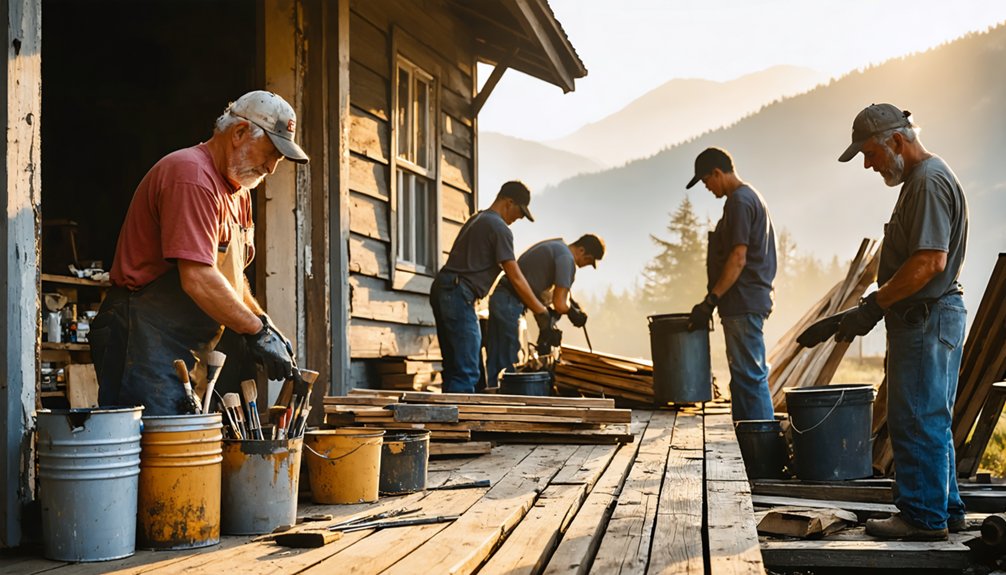
Heritage weekends offer structured opportunities for intergenerational knowledge transfer, where elder residents can demonstrate traditional preservation techniques to younger community members.
You’ll find these cultural gatherings serve dual purposes: documenting oral histories while simultaneously teaching hands-on restoration skills that might otherwise disappear with aging populations.
Through organized skill-sharing workshops, your organization can systematically preserve not only physical structures but also the practical expertise required for authentic ghost town maintenance, from log cabin chinking to slate roof repair.
Organize Heritage Weekends
Organizing heritage weekends serves as a cornerstone strategy for building sustainable community networks around Appalachian ghost towns, particularly when local emotional connections already exist through annual family homestead visits.
These heritage events create structured opportunities for intergenerational knowledge transfer while simultaneously documenting disappearing cultural narratives.
To develop effective heritage weekends, follow these essential components:
- Schedule oral history recording sessions where elders share testimonies about pre-industrial life rhythms, creating permanent digital archives of community storytelling.
- Coordinate guided walking tours through preserved structures with specific interpretation points highlighting regional industrial development.
- Establish hands-on restoration workshops where experienced volunteers can mentor newcomers in period-appropriate techniques while completing necessary maintenance work.
This approach leverages existing emotional connections to sites while creating sustainable documentation networks that preserve both physical structures and cultural memory simultaneously.
Skill-Sharing Among Generations
Intergenerational skill transfer serves as the bedrock of sustainable preservation efforts in Appalachian ghost towns, creating resilient community networks that withstand the passage of time.
You’ll find success by designing volunteer events that intentionally pair elders with youth, implementing mentorship models where experienced craftspeople teach traditional Appalachian techniques alongside ecological stewardship practices.
Incorporate storytelling sessions where older generations share local histories, enriching younger volunteers’ connection to these historic sites. Track transferable skills developed during these exchanges to foster lifelong learning.
Partner with museums and heritage organizations to coordinate multigenerational efforts through platforms like the Appalachian Forest Volunteers program.
Establish regular skill-sharing clinics where participants alternate teaching and learning preservation techniques, ensuring traditional knowledge isn’t lost to time while empowering diverse age representatives in decision-making roles.
Creating Interpretive Programs and Educational Resources
While physical preservation efforts form the foundation of ghost town conservation, effective interpretation transforms these efforts into meaningful educational experiences. Your interpretive strategies should center on connecting visitors with authentic Appalachian heritage through multisensory engagement.
Combine living history presentations with interactive life-ways demonstrations to create immersive learning environments.
For extensive educational outreach:
- Develop multimedia resources – Create digital archives, curriculum materials, and activity books that make ghost town histories accessible to diverse audiences.
- Involve descendant communities – Facilitate annual gatherings and descendant-led tours to incorporate authentic perspectives into your interpretations.
- Leverage technology thoughtfully – Implement mobile apps with AR capabilities, QR-linked content, and virtual reconstructions to overcome physical and temporal limitations.
Implementing Weatherproofing and Maintenance Plans
The preservation of Appalachian ghost towns requires four essential weatherproofing strategies that address the region’s unique climatic challenges and structural vulnerabilities.
First, apply traditional chinking with modern enhancements like Woody Pox to protect log structures while maintaining authenticity.
Second, implement systematic roof maintenance using historically accurate materials to prevent water infiltration.
Your maintenance scheduling should incorporate seasonal inspections to identify rot, insect damage, and moisture intrusion.
Document conditions thoroughly with photographs to track deterioration patterns and establish repair priorities.
When executing structural repairs, prioritize original materials and traditional joinery techniques over modern alternatives.
For remote locations, coordinate volunteer efforts through preservation organizations to overcome terrain challenges and material transportation difficulties.
This balanced approach guarantees these historical treasures remain intact despite harsh Appalachian weather conditions.
Establishing Digital Archives and Virtual Access
Establishing extensive digital archives stands as a cornerstone in preserving Appalachian ghost towns for future generations. Your digital preservation strategy should encompass thorough repositories that house diverse media formats—from fragile manuscripts to oral histories—while implementing standardized metadata for optimized searchability and research access.
To effectively develop your digital archive:
- Create robust digital repositories with redundant storage systems and disaster recovery protocols to safeguard against environmental threats common to Appalachian regions.
- Record and integrate oral histories with geographic mapping tools for immersive digital storytelling experiences that contextualize historical narratives.
- Develop interactive platforms that facilitate community engagement through user contributions, virtual tours, and educational outreach programs partnered with regional institutions like Appalshop.
This infrastructure guarantees these vanishing communities remain accessible despite their physical deterioration.
Frequently Asked Questions
How Do You Handle Human Remains Found During Ghost Town Preservation?
Immediately contact authorities, follow legal protocols for documentation, and suspend work. You’ll need to respect ethical considerations regarding cultural sensitivity while forensic experts properly evaluate and handle the remains.
Can Preserved Ghost Towns Generate Tourism Revenue Without Compromising Authenticity?
Contrary to commercialization fears, you’ll achieve economic sustainability through heritage tourism by implementing minimal-intervention strategies, entrance fees, guided tours, and community partnerships while maintaining structural authenticity and interpretive integrity at your ghost town site.
What Insurance Challenges Exist for Ghost Town Restoration Projects?
You’ll encounter complex TPA processes, AOB disputes, policy exclusions, and ghost insurance risks. You must conduct thorough risk assessment and secure extensive liability coverage that anticipates restoration-specific contingencies and historical property vulnerabilities.
How Are Boundary Disputes With Adjacent Landowners Typically Resolved?
Like untangling a thorny thicket, you’ll resolve boundary disputes through professional surveys, boundary mediation strategies, historical title research, landowner negotiation tactics, legal arbitration, and sometimes court proceedings when amicable solutions fail.
Are There Special Considerations for Preserving Sites With Traumatic Histories?
You must document traumatic histories through community engagement, ensuring multiple perspectives are preserved. Balance narratives by acknowledging systemic injustices while honoring resilience without sanitizing or sensationalizing difficult pasts.
References
- https://hikinginthesmokymountains.com/blog/elkmont-ghost-town-restoration/
- https://thesecretlifeofmarbles.com/ghost-town-marbles/
- https://appalachianmemories.org/2025/10/16/the-lost-towns-of-appalachia-the-forgotten-mountain-communities/
- https://www.blueridgeoutdoors.com/go-outside/southern-ghost-towns/
- http://myappalachianlife.blogspot.com/2018/07/food-preservation-in-appalachia.html
- https://www.youtube.com/watch?v=d9yTEK4w_hQ
- https://www.youtube.com/watch?v=6so920c7RaY
- https://pahistoricpreservation.com/preservationhappenshere-eckley/
- https://www.nrs.fs.usda.gov/pubs/gtr/gtr_ne241/gtr_ne241_171.pdf
- https://www.nps.gov/parkhistory/online_books/sero/appalachian/sec11.htm