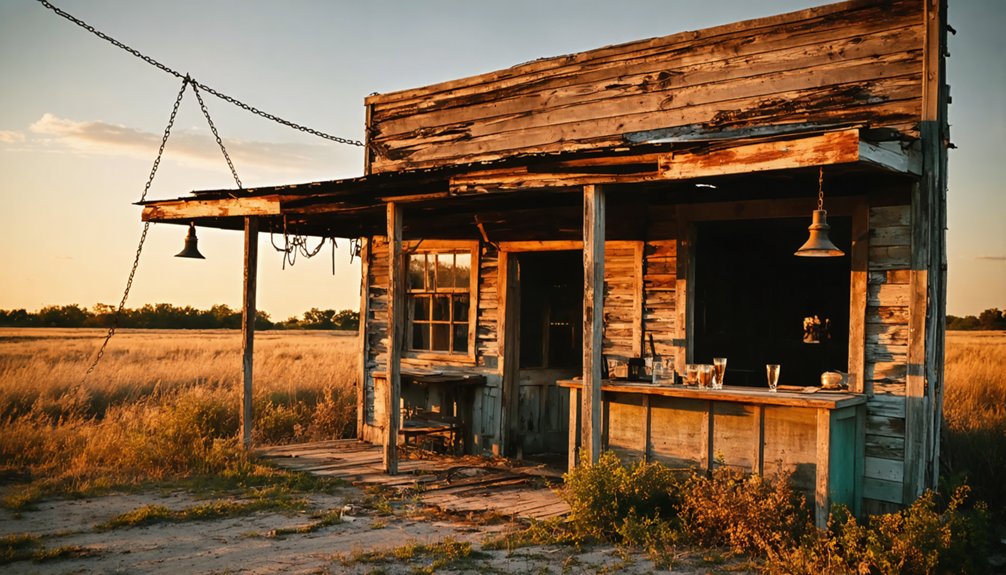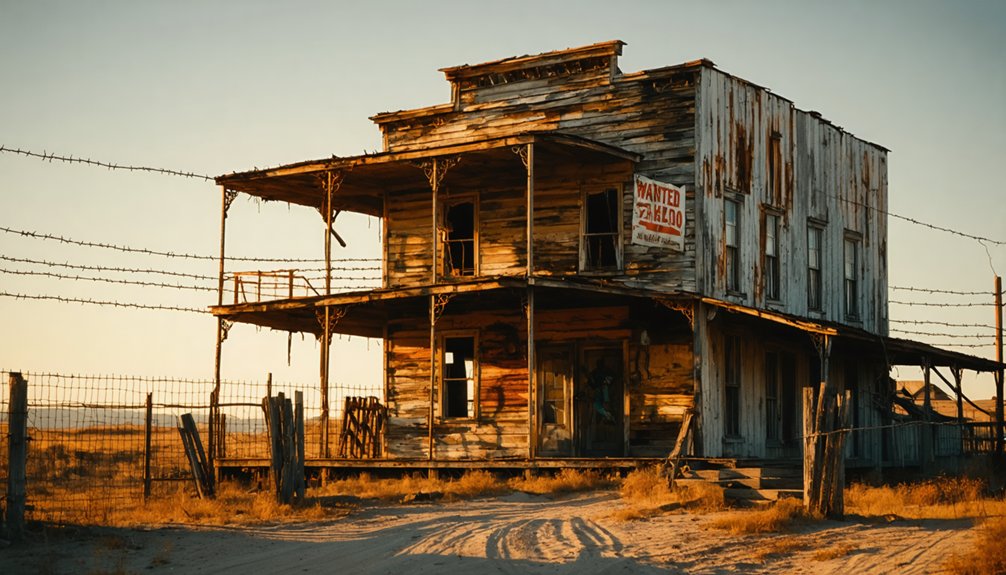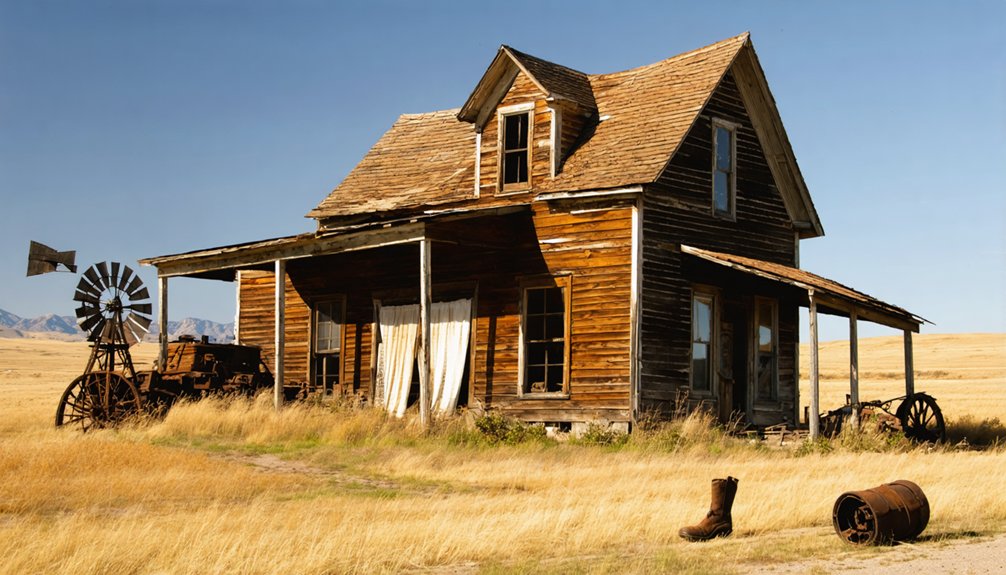
Abandoned homestead cabins across 30 states represent America’s westward expansion, with 280 million acres transferred to pioneering families. You’ll find distinctive regional construction patterns in these structures, from log cabins to sod houses. Conservation easements now protect many sites, while oral histories preserve the often-overlooked contributions of women and minorities who made up a significant portion of homesteaders. These weathered structures stand as silent witnesses to the complex human stories that shaped the American landscape.
Key Takeaways
- Conservation easements provide legal protections for historic homesteads by restricting development to preserve land and cultural landscapes.
- Oral history collection captures essential narratives of homesteaders, requiring proper consent protocols and recording techniques.
- Abandoned cabins across 30 states symbolize America’s westward expansion and represent distinctive regional construction patterns.
- Traditional construction methods like log cabins, sod houses, and adobe structures reflect adaptation to local environments.
- Historic homesteads document contributions of underrepresented groups, including over 100,000 women and approximately 30,000 Black American claimants.
The Fading Remnants: Abandoned Homestead Cabins Across the West
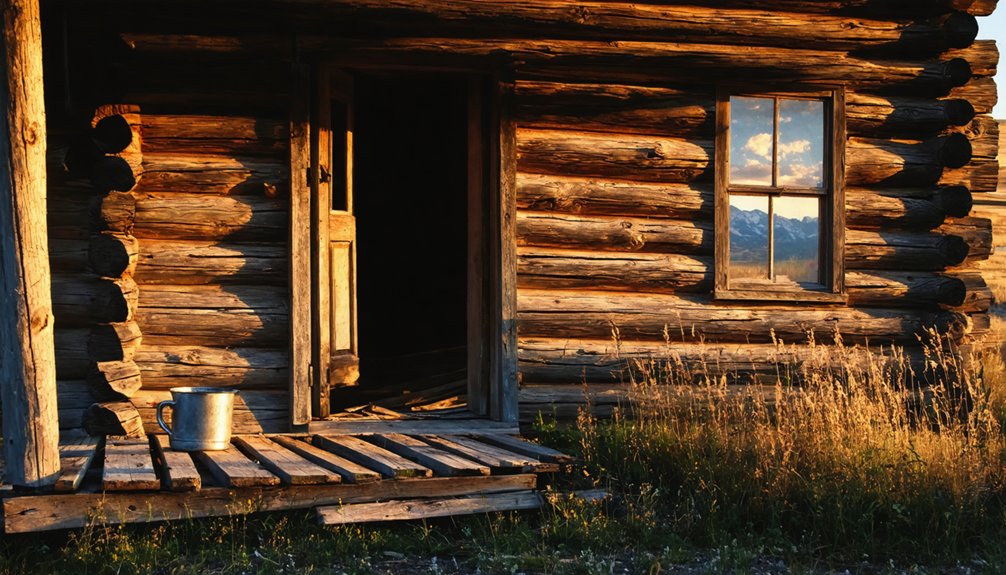
Remnants of America’s westward expansion dot the landscape across thirty states, physical symbols to one of the nation’s most ambitious land distribution programs.
You’ll find these abandoned cabins scattered throughout regions where 280 million acres once transferred to pioneering families. These weathered structures stand as silent witnesses to frontier life, representing distinctive regional construction patterns that varied widely across the American West.
As you explore the backcountry, you’ll discover how these homesteads often followed seasonal occupation patterns—summer in mountains, winter in valleys. Similar to today’s high vacancy rates in places like Manitou Beach and Groveland, these historical properties were frequently unoccupied for portions of the year.
The humble log cabins reflect the ambitions of nearly 4 million homestead claims filed over a century of American expansion.
Today, federal agencies work to document these disappearing relics to freedom-seeking settlers before harsh elements erase our connection to this pivotal chapter in western settlement. Like the crumbling facades of once-bustling mining towns, these homesteads preserve stories of hope and loss across the American frontier.
The causes of disappearing pioneer settlements are often linked to environmental challenges, shifting economic priorities, and the migration of communities towards urban centers. As modern infrastructure reshapes the landscape, these abandoned homes serve as poignant reminders of the resilience and struggles of earlier generations. Understanding their history is crucial to appreciating the diverse tapestry of American heritage.
Documenting Homesteader Stories: Preserving First-Person Accounts
Voices from the frontier represent our most valuable connection to America’s homesteading era, offering insights that physical structures alone can’t provide. When you collect oral histories from descendants of homesteaders, you’re preserving essential historical narratives that might otherwise vanish.
These stories require proper documentation through standardized consent protocols and high-quality recording techniques.
Documenting homesteader narratives demands meticulous consent procedures and professional recording standards to honor these irreplaceable historical accounts.
If you’re undertaking this important preservation work, seek proper training first. Your responsibility extends beyond simply recording—you must approach narrators with respect and systematic interviewing methods. Ensure interviews take place in quiet locations with minimal background noise that could interfere with recording clarity. These recordings capture raw emotions from personal narratives including confusion, sadness, joy, and anger that provide deeper understanding of historical feelings.
After collection, create redundant copies in nonproprietary formats and store them in multiple locations.
For permanent accessibility, partner with appropriate repositories like archives or historical societies that can maintain these oral traditions and uphold the legal agreements you’ve established with narrators.
These institutions guarantee homesteader voices remain accessible for generations.
Conservation Efforts: Protecting Historic Homestead Lands
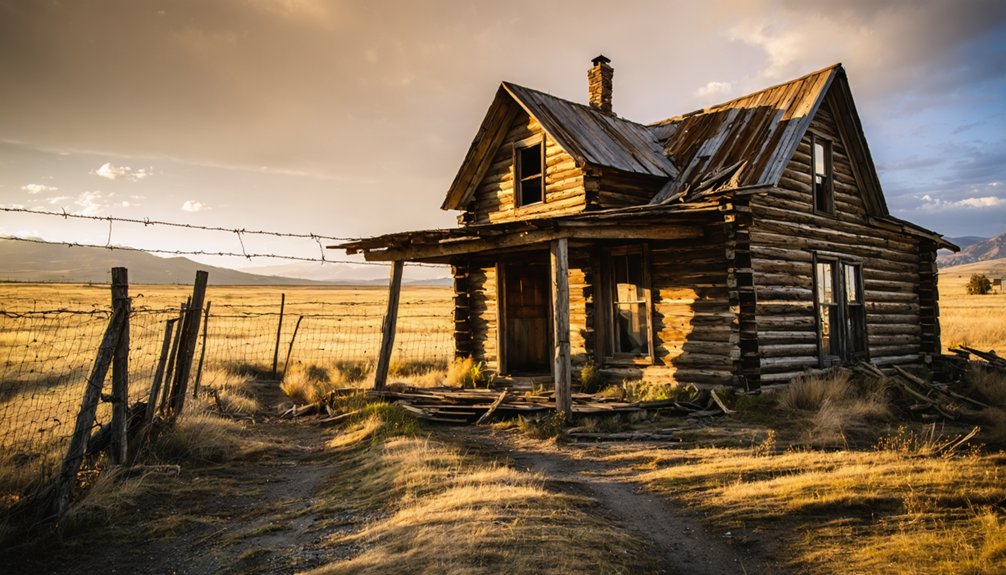
While the stories of homesteaders provide rich historical context, the physical landscapes where these pioneers built their lives face ongoing threats from development and changing land use patterns.
You’ll find that conservation easements offer powerful legal protections, enabling you to preserve your historic property while potentially receiving tax benefits. These agreements restrict development in perpetuity, protecting not just the land but also viewsheds and cultural landscapes. Implementing controlled burns as a land management tool can help maintain the ecological health of historic homestead properties. The Homestead Act of 1862 transformed American land ownership by distributing over 80 million acres to approximately 600,000 farmers by the turn of the century.
Land trusts serve as essential partners in this preservation work, helping private landowners maintain working farms while honoring their historical significance.
Government programs through the USDA provide additional support through voluntary, incentive-based conservation initiatives.
Innovative strategies like Transferable Development Rights allow you to receive economic compensation while protecting your heritage lands—maintaining your freedom while ensuring these treasured landscapes endure for future generations.
The Hidden Demographics: Minorities and Women in Homesteading
You’ll discover that women comprised 10-20% of homesteaders in western states, with over 100,000 receiving land in their own names under the Homestead Act.
African American homesteaders, including notable figures like George Washington Carver and Oscar Micheaux, established thriving communities such as Nicodemus, Kansas and Dearfield, Colorado after the 1866 civil rights act clarified their citizenship status.
These overlooked demographics contributed greatly to western settlement while simultaneously advancing social causes, as homesteading states led the nation in granting women’s suffrage. Single women who claimed land often documented their sense of accomplishment despite facing harsh conditions and significant financial challenges. Recent historical research has uncovered that women homesteaders actually had higher success rates in proving their claims compared to their male counterparts.
African American Homesteaders
Though frequently overlooked in traditional narratives of Western expansion, African American homesteaders played a significant role in settling the American frontier, with approximately 30,000 Black Americans successfully claiming over 650,000 acres of land between 1866 and 1976.
You’ll find evidence of this Black resilience in at least 30 states, particularly in the Great Plains region where communities like Nicodemus, Kansas and Blackdom, New Mexico thrived.
These settlers often fled Southern repression and violence, seeking autonomy through land ownership. After the Civil Rights Act of 1866 clarified that blacks were citizens, African Americans became eligible to participate in homesteading programs. Despite facing persistent racism and limited access to capital, they established churches, schools, and businesses. The Southern Homestead Act of 1866 was specifically designed to provide land opportunities for nearly 4 million former slaves after the Civil War.
This homesteading legacy faced devastating challenges during the 1920s farm crisis and Great Depression, causing many to abandon their claims.
Today, research efforts by organizations like the Center for Great Plains Studies work to preserve these essential stories of freedom and self-determination.
Women Proving Up
Despite their absence from traditional frontier narratives, women homesteaders proved remarkably successful in claiming and developing western lands, with more than 100,000 women receiving property in their own names under the Homestead Act.
You’ll find that these women’s resilience shattered expectations, as research confirms they succeeded at the same rate as men in “proving up” their claims. Single, widowed, and divorced women comprised 10-15% of homesteaders across several western states, with one in six homesteaders in southeastern Oregon being young single women.
Their homesteading journeys varied dramatically—from 47-year-old Geraldine Lucas claiming land at the Grand Teton’s base to Chicago bookkeeper Florence Blake Smith working winters in the city to support her claim.
These landowners’ political impact resonated beyond property lines, as their taxpayer status strengthened the call for suffrage with the powerful argument: “no taxation without representation.”
Architectural Legacy: Construction Methods and Materials of Homestead Structures
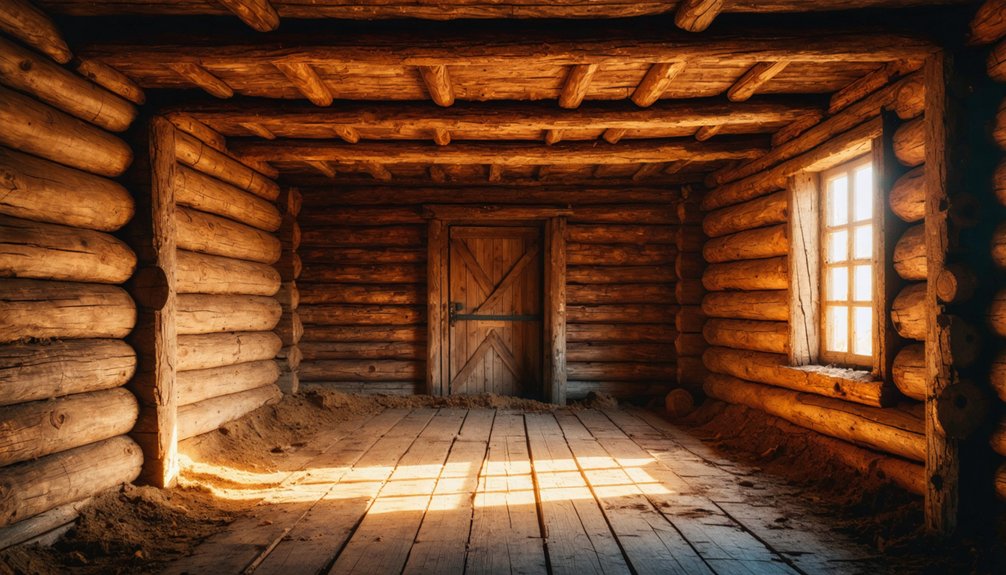
When settlers ventured into the American frontier, they brought with them traditional construction techniques that would define the architectural legacy of Old West homesteads.
You’ll find log construction methods using hand-hewn timbers joined through notching techniques without nails, while timber framing employed mortise and tenon joinery secured with wooden pegs.
Earth infill materials like wattle and daub provided thermal insulation between structural elements.
Pioneer variations reflected available resources: sod construction dominated treeless plains, adobe brick structures emerged in southwestern regions, and fachwerk half-timbering appeared in European-influenced settlements.
Material sourcing depended on immediate surroundings, with structural durability enhanced by old-growth timber’s superior density and tight growth rings—characteristics absent in today’s lumber.
These ingenious adaptations showcase settlers’ resourcefulness in creating lasting structures under challenging frontier conditions.
From Legislation to Landscape: How the Homestead Acts Shaped America
When you examine the legislative progression of the Homestead Act from its contentious beginnings to its 1862 passage, you’ll recognize how political forces directly translated into geographic transformation.
The distribution of 270 million acres through this program created distinctive settlement patterns as homesteaders strategically claimed 160-acre parcels across the western territories.
These mapped patterns remain visible today in property boundaries, rural road networks, and the geometric organization of agricultural landscapes throughout the American West.
Land Policy Evolution
As the nation emerged from its formative years, the Homestead Act of 1862 established a revolutionary framework for American land distribution that would forever alter the country’s physical and social landscape.
This pivotal land policy became possible only after Southern secession removed opposition from slavery-concerned representatives, allowing Lincoln’s Republican Congress to enact their vision.
You can trace a clear evolution in legislative impact through preceding frameworks—from the 1785 Land Ordinance through the 1854 Kansas-Nebraska Act—culminating in the Homestead Act’s unprecedented offer of 160 acres to qualified citizens for minimal fees.
Later amendments, including the 1866 Southern Homestead Act for freedmen and loyal Southerners, and the 1912 reduction of residency requirements from five to three years, demonstrate how America’s land distribution philosophy adapted to changing national priorities.
Mapped Settlement Patterns
The grand experiment of American homesteading left an indelible geometric imprint across the national landscape that remains visible to this day.
When you study American settlement geography, you’ll notice how the rectangular survey system created a distinct checkerboard pattern across 30 states, transforming 270 million acres through methodical land allocation.
This transformation of the continent followed predictable human patterns:
- Family chains and ethnic clusters filed adjacent 160-acre claims, creating cultural neighborhoods
- Religious communities like Mormons established satellite settlements radiating from Salt Lake Valley
- Settlers typically migrated along longitudinal lines, with Iowans moving to Nebraska
- Major land rushes created sudden population explosions, particularly in Oklahoma territories
These systematic settlement patterns permanently altered the continent’s human geography while dispossessing Native Americans of their traditional territories.
Frequently Asked Questions
Why Did Homesteaders Often Build Structures Partially Underground?
Solid as a rock, you’ll find homesteaders built partially underground for thermal insulation advantages. You’d benefit from temperature regulation, resource conservation, enhanced shelter advantages during harsh weather, and improved food preservation capabilities.
How Did Indigenous Communities Respond to Homestead Encroachment?
You’ll find Indigenous peoples fought for their land rights through armed resistance, legal battles, and cultural resilience—maintaining traditions while forming alliances to counter the devastating effects of homestead encroachment on their territories.
What Tools and Equipment Were Essential for Homesteaders?
You’d need axes, saws, hammers, and spades as essential hand tools, while livestock care required specialized equipment like saddles, needles for repairs, and medical instruments for treating animal ailments.
Did Homesteaders Face Legal Challenges From Previous Land Claimants?
You’d face constant land disputes from railroad companies, Native Americans, squatters, and speculators—all claiming superior legal rights. These conflicts threatened your freedom and could take decades to resolve.
How Did Weather Patterns and Natural Disasters Affect Homesteading Success?
You’d find your homestead’s success directly linked to drought impact and flood resilience. Unpredictable weather patterns devastated underprepared settlers, with water scarcity and violent dust storms destroying crops and livelihoods across the plains.
References
- https://www.hcn.org/wotr/how-150-years-ago-the-homestead-act-transformed-the-west/
- https://www.nps.gov/home/learn/historyculture/bynumbers.htm
- https://en.wikipedia.org/wiki/Homestead_Acts
- https://wildhomesteadliving.com/blog/homestead-history
- https://www.archives.gov/milestone-documents/homestead-act
- https://www.nps.gov/home/learn/historyculture/homesteadrecords.htm
- https://onlinelibrary.wiley.com/doi/full/10.1002/aepp.13401
- https://www.huduser.gov/portal/pdredge/pdr-edge-housingat250-article-091125.html
- https://www.blm.gov/about/history/timeline
- https://247wallst.com/special-report/2018/11/02/30-american-ghost-towns-3/