Preserving Native American settlements requires early tribal consultation before any work begins. You’ll need to implement protective site capping with compatible materials, use non-invasive documentation techniques like GPR and 3D modeling, and follow legal frameworks like NAGPRA. Install physical barriers, establish controlled access points, develop community stewardship programs, and employ scientific recording methods that honor cultural protocols. These approaches balance archaeological integrity with respect for irreplaceable cultural heritage that continues to hold deep significance today.
Key Takeaways
- Consult with tribal representatives early to establish respectful relationships and comply with federal regulations like NAGPRA and NHPA.
- Implement physical protection strategies such as site capping, fencing, and controlled access points to prevent damage to settlement areas.
- Document settlements using non-invasive technologies like GPR and 3D modeling to preserve context without disturbing cultural materials.
- Integrate both scientific methods and indigenous knowledge when recording and interpreting settlement remnants.
- Obtain proper permits from land management agencies before any archaeological activity and report unauthorized excavation immediately.
Early Consultation With Tribal Representatives for Site Identification
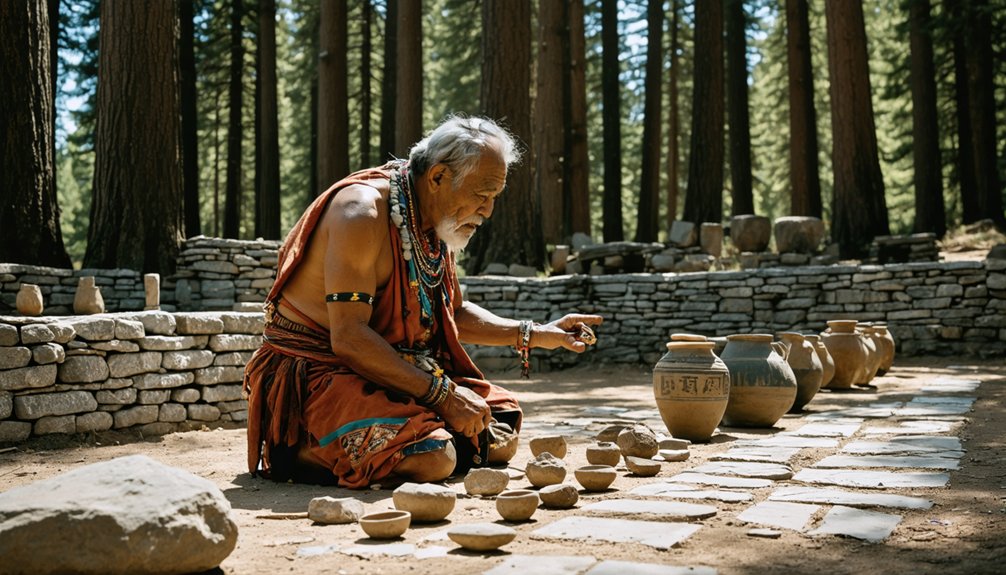
When initiating any project that might impact Native American cultural resources, early consultation with tribal representatives stands as the cornerstone of ethical and legally compliant preservation efforts.
You’ll need to contact SHPOs, THPOs, or the Native American Heritage Commission to identify appropriate tribal representatives for your project area.
Early tribal engagement satisfies federal regulations including Section 106 requirements while revealing culturally significant sites that standard archaeological surveys might miss. This approach demonstrates cultural sensitivity and provides access to traditional knowledge about site boundaries and significance that won’t appear in state inventories.
New technologies like Object-Based Image Analysis are transforming how we identify hidden archaeological features such as mounds that traditional surveys have missed for over 150 years.
Remember to document all consultation efforts thoroughly for regulatory compliance.
Archaeological sensitivity assessments can help identify areas with high potential for containing Native American artifacts dating back over 11,000 years before proceeding with excavation.
Implementing Protective Site Capping and Burial Techniques
After exhaustive archaeological assessment and tribal consultation, site capping emerges as a vital protective measure when complete avoidance of Native American settlement remnants isn’t feasible.
You’ll need to accurately map site boundaries before selecting compatible fill materials that match the original soil matrix.
For effective site capping, choose tightly compacted clays or clay-gravels that control permeability while guaranteeing the cap extends beyond the frost line.
Your engineering plans must address drainage concerns and slope stabilization to maintain long-term integrity. Establishing conservation easements helps to restrict future development on these culturally significant lands.
Proper engineering must incorporate drainage solutions and stabilize slopes to ensure the cap’s protection endures over time.
Remember that burial techniques aren’t permanent solutions—they require deed restrictions and regular monitoring.
You’ll need to document the entire process and register capped sites with heritage authorities.
When implementing these protective measures, always involve tribal representatives to confirm cultural concerns are addressed throughout the capping procedure.
Maintaining Artifact Context Through Non-Invasive Documentation
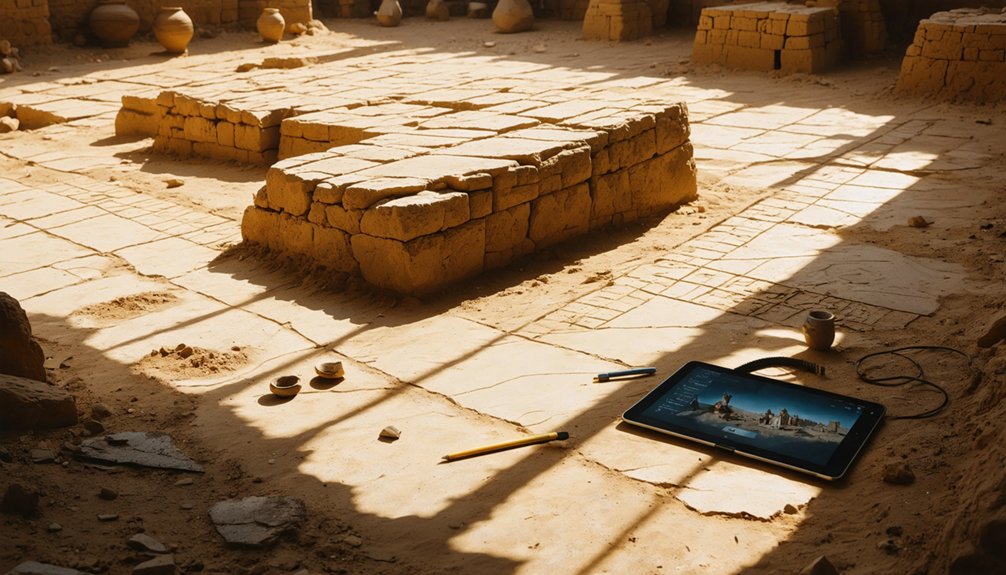
You’ll preserve essential archaeological context by employing advanced imaging technologies like ground-penetrating radar and high-resolution GNSS mapping that document artifacts without disturbing their spatial relationships.
Your field documentation must adhere to standardized protocols, including consistent terminology and measurement units, ensuring records remain interpretable by future researchers.
Specialized recording techniques such as “catch-and-release” surface collection and digital GIS mapping allow you to capture thorough site data while maintaining the integrity of Native American settlement remnants.
Working collaboratively with Indigenous communities ensures proper cultural protocols are followed and traditional knowledge is incorporated when documenting sensitive archaeological materials.
Consulting with DOA/DHP regarding APE boundaries is crucial when defining project areas that may contain Traditional Cultural Properties of significance to Native American groups.
Advanced Imaging Technologies
In recent years, non-invasive documentation methods have revolutionized the preservation of Native American settlement remnants by maintaining artifact context while minimizing physical disturbance.
This approach greatly aids in preserving tribal heritage in ghost towns, allowing for a deeper understanding of the cultural narratives that have shaped these landscapes. By employing advanced mapping technologies and community engagement, researchers can uncover stories that would otherwise be lost to time. Furthermore, this method fosters collaboration between archaeologists and tribal members, ensuring that traditional knowledge is respected and integrated into contemporary practices.
RTI techniques capture surface details with enhanced clarity, while 3D modeling through laser scanning and photogrammetry creates detailed digital replicas of cultural objects.
You’ll find these technologies essential for preserving cultural heritage:
- Reflectance Transformation Imaging reveals previously undetectable design elements on artifacts
- 3D scanning creates permanent digital records of fragile or eroding objects
- Ground Penetrating Radar locates subsurface features within 5cm accuracy
- Portable XRF analysis determines obsidian origins without removing artifacts
- CT scanning and infrared imaging expose internal structures and hidden details
These tools empower you to document, study, and share Native American cultural resources while respecting their physical integrity and original context. Drone-based lidar provides significantly higher resolution imagery than traditional aerial surveys, enabling archaeologists to detect subtle landscape features associated with ancient settlements. Many Indigenous groups maintain digital ownership rights to 3D models created through collaborative digitization projects with museums.
Field Documentation Standards
Field documentation standards represent the cornerstone of effective artifact preservation, ensuring contextual relationships remain intact even during non-invasive research.
You’ll need to establish your research design before beginning fieldwork logistics, determining what specific data requires collection.
Always maintain standardized formatting and consistent detail levels across all documentation. Your records must enable independent interpretation by others through proper maintenance procedures.
Remember that qualified professionals—those with appropriate anthropology degrees—must supervise all activities.
When mapping, label all shovel test locations with field identification numbers and document the site thoroughly with color photographs.
You’ll need to record field observations with sufficient detail to evaluate investigation goals.
Prepare a comprehensive curriculum vitae for all field personnel and supervisors involved in the project.
Documentation consistency isn’t just bureaucratic procedure—it’s essential for preserving the contextual integrity that gives artifacts their true scientific and cultural value.
Specialized Recording Techniques
Non-invasive documentation techniques have revolutionized how we preserve Native American settlement contexts while minimizing physical disturbance.
You’ll find these methods respect both archaeological integrity and Indigenous values while creating thorough records for future generations. Respecting the sovereign status of Native American communities ensures documentation practices align with their cultural protocols and governance structures.
- Integrate photogrammetry with specialized software to create detailed 3D models of artifacts in their original context
- Deploy ground penetrating radar (GPR) to map subsurface features without disturbing sacred ground
- Combine drone imagery with GIS mapping to document spatial relationships across settlement areas
- Record oral histories alongside digital archiving to preserve traditional knowledge about site significance
- Implement “catch-and-release” documentation where artifacts are photographed, measured, and returned to their exact location
These techniques guarantee your documentation maintains cultural sensitivity while creating rich, multidimensional records that honor both scientific and Indigenous knowledge systems.
Applying Legal Frameworks for Cultural Resource Protection
When you discover potential Native American settlement remnants, you’ll need to understand the federal-tribal consultation requirements mandated under NAGPRA and NHPA before proceeding with any investigation.
Obtaining proper permits for archaeological excavation requires applications through the appropriate land management agency, with mandatory tribal consent if the site is located on tribal lands.
You must report suspected cultural theft or unauthorized excavation to federal authorities immediately, as NAGPRA and ARPA provide criminal penalties for illegal trafficking and unauthorized removal of cultural items. Federal law recognizes that sacred objects are vital components of traditional religious practices and deserve special protection.
Federal-Tribal Consultation Requirements
Although often overlooked in development planning, federal-tribal consultation represents a cornerstone of cultural resource protection in the United States.
You’ll need to implement effective consultation strategies early in your project timeline to guarantee proper tribal involvement and compliance with federal mandates like NHPA Section 106 and NAGPRA.
- Make “reasonable and good faith” efforts to identify all tribes with ancestral connections
- Initiate consultation early before project plans become fixed
- Send formal written invitations to tribal governing officials or designated representatives
- Respect government-to-government relationships when engaging with federally recognized tribes
- Remember consultation requirements extend beyond reservation boundaries to ancestral lands
This process isn’t merely procedural—it’s fundamental to preserving cultural heritage while respecting tribal sovereignty.
Permits For Archaeological Excavation
Beyond establishing proper consultation relationships with tribes, you’ll need to navigate a complex permitting system before conducting any archaeological work on Native American settlement sites.
Your permit application must detail the project’s time, scope, location, and purpose when submitted to the relevant federal agency. You’ll need documentation for both ground-disturbing activities (excavation, trenching) and non-invasive methods (remote sensing, photography).
Remember that archaeological guidelines stem from multiple legal frameworks—the 1906 Antiquities Act, Archaeological Resources Protection Act, and National Historic Preservation Act. Only recognized scientific or educational institutions qualify for permits under Interior Department regulations.
Note that tribal lands operate under different jurisdictional rules—Indian tribes are exempt from permit requirements on lands they own or control.
Always include a written plan addressing potential discovery of Native American remains.
Enforcement Against Cultural Theft
Despite significant advancements in cultural resource protection legislation, enforcement against cultural theft remains a critical component in preserving Native American settlement remnants.
You should understand the robust legal frameworks that establish serious consequences for violators.
- ARPA imposes felony penalties up to $250,000 and two years imprisonment for damage exceeding $500
- California state law provides additional protections with misdemeanor charges and fines up to $10,000
- Civil penalties can reach $50,000 per violation under California statutes
- Cultural resource enforcement requires consultation with tribes before project implementation
- Both federal and state frameworks mandate inventory procedures and repatriation protocols
When steering through these protections, you’ll find that legal penalties escalate with severity of the offense.
Understanding these enforcement mechanisms empowers you to properly protect cultural resources while maintaining compliance with applicable laws.
Physical Barriers and Access Management for Settlement Preservation
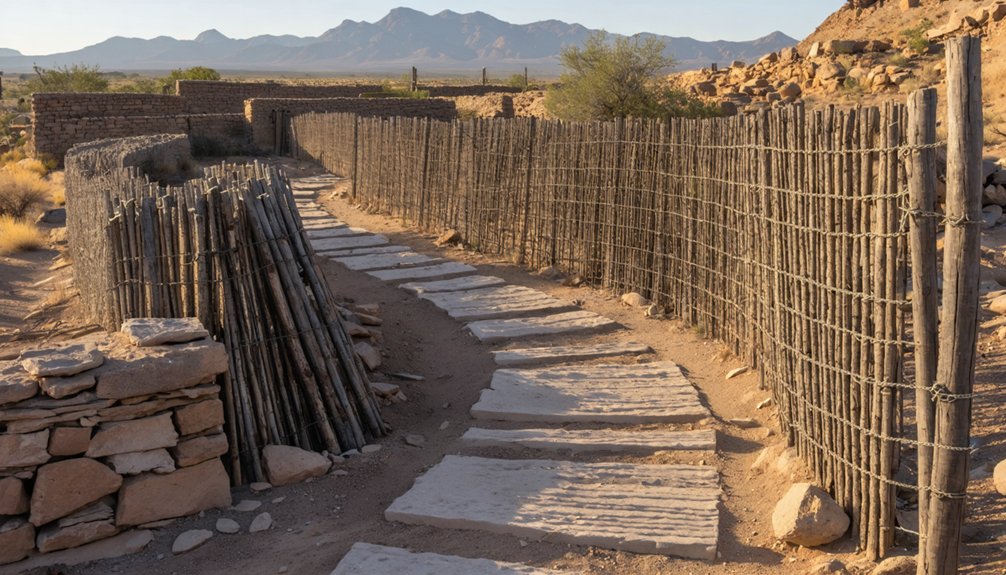
When implementing effective preservation strategies for Native American settlement remnants, physical barriers and access management systems serve as critical frontline defenses against deterioration and desecration.
You’ll need to establish designated access points to prevent uncontrolled visitor traffic through sensitive archaeological areas.
Install fencing and physical barriers to protect sacred sites from accidental disturbance by visitors unaware of their cultural significance.
Implement seasonal restrictions to accommodate tribal ceremonial practices and traditional activities.
Your visitor management approach should include regular patrols and surveillance systems to deter unauthorized excavation and looting of burial sites.
Document visitor patterns to inform adaptive management strategies, especially for high-traffic areas.
Remember that natural landscape features like swamplands can serve as effective environmental barriers, complementing your constructed defenses while preserving ecological conditions necessary for traditional practices.
Community-Based Collaborative Stewardship Programs
Community-based collaborative stewardship programs have emerged as powerful frameworks for preserving Native American settlement remnants through shared responsibility and cultural respect.
You’ll find these collaborative governance models create meaningful partnerships between tribal nations and government agencies while addressing historical imbalances.
When implementing community stewardship initiatives, consider:
- Establishing co-management frameworks similar to the Swinomish-Washington State Parks model where land decisions are made jointly
- Securing dedicated funding through mechanisms like California’s Proposition 68 that allocated $30 million specifically for Native American groups
- Assigning technical specialists to work directly with tribal conservation teams
- Supporting youth engagement programs that reconnect future leaders with ancestral sites
- Creating citizen advisory groups that include both tribal and non-tribal stakeholders
These approaches honor tribal sovereignty while leveraging shared expertise to protect irreplaceable cultural heritage.
Scientific Recording Methods That Respect Cultural Significance
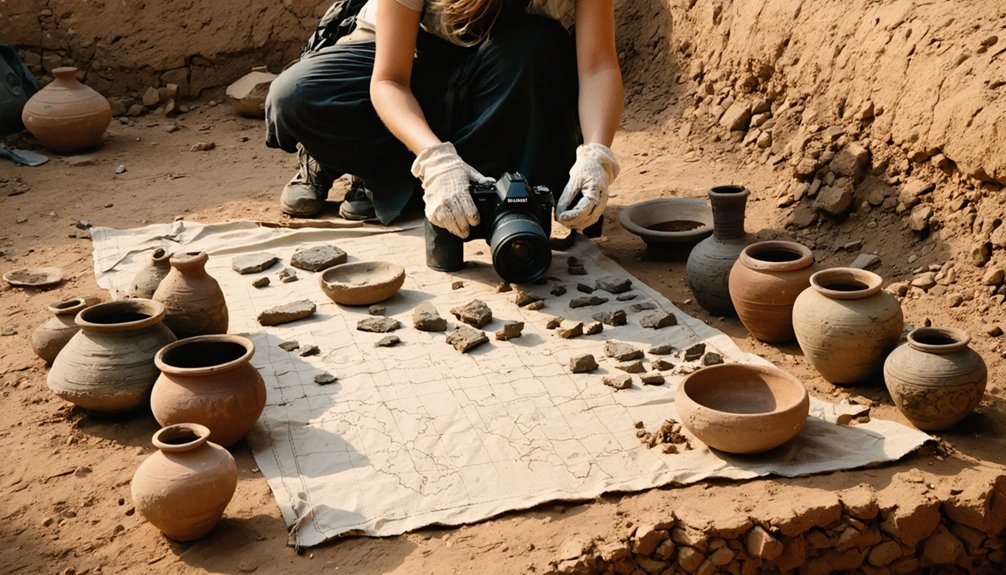
Scientific recording methods form the backbone of cultural preservation efforts, yet they must balance rigorous documentation with deep respect for Native American cultural significance.
When documenting settlement remnants, you’ll need standardized field records that include thorough notes, photographs, and precise GNSS mapping while maintaining archaeological integrity.
Prioritize non-invasive techniques like ground-penetrating radar and surface surveys that minimize disturbance to cultural materials. These approaches preserve site integrity while still gathering critical data.
Always incorporate Indigenous protocols by consulting with tribal representatives before fieldwork begins.
Your documentation must comply with relevant regulations while honoring cultural perspectives.
When preparing reports, include both scientific observations and Indigenous knowledge—creating a more complete understanding that respects the multilayered significance of these irreplaceable heritage sites.
Frequently Asked Questions
How Can We Detect Deeply Buried Native American Sites?
Ever wonder what lies beneath your feet? You’ll need ground penetrating radar, magnetic surveys, geomorphological investigations, and LiDAR in your archaeological surveys to detect deeply buried Native American sites effectively.
What Happens if Artifacts Are Accidentally Disturbed During Construction?
You’ll need to immediately halt work, notify authorities, and protect the site. Your construction protocols must include artifact preservation to avoid legal penalties including fines and potential imprisonment.
Who Funds Long-Term Maintenance of Preserved Native American Sites?
You’d think casinos fund everything, but no—federal funding through NPS and HPF programs, THPOs, state governments, and private donations from organizations like AIA and Mellon Foundation maintain these cultural treasures.
Can Modern Tribes Reclaim Artifacts From Private Landowners?
No, you can’t be legally forced to surrender artifacts found on your private land. Artifact ownership remains with landowners, and tribes face significant legal challenges when attempting reclamation without evidence of illegal excavation.
How Do Climate Change Impacts Affect Preservation Strategies?
As sand slips through time’s fingers, you’ll need climate adaptation strategies incorporating advanced preservation techniques. You must accelerate documentation, prioritize vulnerable sites, integrate Indigenous knowledge, and develop protective infrastructure while respecting tribal sovereignty.
References
- https://nahc.ca.gov/native-americans/understanding-cultural-resources/
- https://www.lancastermoah.org/single-post/how-to-preserve-and-protect-archaeology-within-the-antelope-valley
- https://nahc.ca.gov/wp-content/uploads/2015/10/Protecting-California-Native-American-Sites-During-Drought-and-Wild-Land-Fire-Emergencies-jbl-edits.pdf
- https://www.archaeological.org/heritage-conservation-and-archaeology-an-introduction/
- https://digitalcommons.du.edu/cgi/viewcontent.cgi?article=1571&context=etd
- https://www.army.mil/article/281175/respecting_the_past_the_importance_of_leaving_artifacts_undisturbed
- https://www.nps.gov/subjects/archeology/napgra.htm
- https://savingplaces.org/files/preserving-native-american-places-by-will-cook
- https://www.fs.usda.gov/lei/archeological-resources-protection.php
- https://www.achp.gov/Section_106_Archaeology_Guidance/Questions and Answers/Getting Started in the Section 106 Process