Riverview, a forgotten California ghost town, once thrived around its iron mine in the early 20th century. You’ll find abandoned mining structures like the Monarch Mine and Golden Promise Mine with its intact headframe. The town suffered from severe drought and economic decline when mining operations ceased. Today, weathered buildings, including the restored 1914 schoolhouse, tell stories of California’s mining past. Explore its historic remnants before desert winds erase more of this unique chapter in pioneer history.
Key Takeaways
- Riverview was established as a California mining town in the early 20th century, centered around iron mining operations.
- The town prospered from gold production totaling nearly 109,000 ounces between 1893 and 1959.
- When the mine closed in the late 20th century, Riverview experienced population exodus, transforming it into a ghost town.
- Notable remnants include the Monarch Mine, Golden Promise Mine, a restored 1914 schoolhouse, and an operational post office.
- The abandoned structures face deterioration without formal preservation efforts, while also attracting urban explorers and paranormal enthusiasts.
The Rise and Fall of Riverview
As you travel through the dusty roads of California’s forgotten landscapes, you’ll discover the remnants of Riverview, a town whose existence was inextricably tied to the iron mine that gave it purpose.
Built in the early 20th century, this company town thrived with workers and families who created vibrant lives around the mine’s operations. The area was once productive enough to yield millions of tons of iron ore that was transported to steel manufacturing plants.
The company town pulsed with life, its heartbeat synchronized to the rhythm of the mine’s daily labors.
You’ll sense the ghost of community gatherings that once animated the deteriorating structures—holiday celebrations, sports events, and cultural heritage preserved by diverse immigrants and workers. Similar to Colonel Allensworth, Riverview represents a unique chapter in California’s diverse settlement history.
When the mine declined in the late 20th century, Riverview’s fate was sealed. Families departed, services vanished, and buildings crumbled under neglect.
Mining Operations and Economic Development
The iron mine that sealed Riverview’s destiny wasn’t merely an industrial site—it was the economic engine that powered an entire community’s existence.
When you explore Riverview’s mining history, you’ll find a complex tale of boom-and-bust cycles dating back to 1861’s first gold discovery in the Mule Mountains.
The American Flag Mine and Carnation group became cornerstones of local industry, processing gold found in quartz veins through cyanide plants and flotation facilities. The Stanchfield Gold Mining Company invested over $100,000 to develop the Carnation mines in the early 1900s.
You’d have seen 20-30 workers during operational periods, extracting precious metals worth millions from the desert’s depths.
In 1965, mining operations expanded significantly when a pelletizing plant began processing iron ore, creating more employment opportunities for local residents.
These economic fluctuations defined Riverside County’s development, with gold production reaching nearly 109,000 ounces between 1893-1959.
The infrastructure—specialized roads, processing plants, and transport systems—represented ambitious investments in a dream that ultimately couldn’t sustain itself.
Daily Life in a Forgotten Town
Walking through Riverview during its heyday, you’d have witnessed a vibrant company town where daily life revolved around the rhythms of mining operations. Families structured their daily routines around shift work, with children attending the local schools while parents labored in the mines or managed households.
Your leisure time would’ve been spent at community gatherings, sporting events, or movie nights—simple pleasures that forged powerful community bonds in this isolated settlement. Local legends and mysteries about ghostly disturbances added another layer to the community’s shared experiences. The company provided essential services from healthcare to education, creating a self-contained world where neighbors relied on each other.
After the mine’s closure, these structured patterns collapsed. Residents would gather under the starlit sky to share their supernatural encounters and personal ghost stories. The once-bustling streets emptied as families departed, seeking work elsewhere. Schools closed, medical services vanished, and the social fabric that had defined Riverview unraveled, leaving only memories of a once-thriving community.
Notable Buildings and Landmarks
As you walk through Riverview’s dusty streets, you’ll notice the skeletal remains of once-bustling mining operations standing as silent sentinels to California’s gold rush ambitions.
Pioneer structures, with their weather-beaten wooden facades and crumbling stone foundations, offer glimpses into the architectural ingenuity of early settlers who carved a life from this unforgiving landscape.
The desert’s relentless reclamation has transformed many buildings into haunting sculptures, where nature’s patient fingers pull apart man’s handiwork brick by brick, beam by beam. The area’s reputation for paranormal activity is heightened by reports of green scaly creatures that have terrorized visitors since the infamous 1958 Riverside Bridge incident.
Much like Bodie with its 170 preserved structures, Riverview provides urban explorers an authentic window into California’s boom-and-bust cycle of the 1800s.
Abandoned Mining Operations
Rusting beneath desert skies, five distinct mining operations once formed the industrial backbone of Riverview’s fleeting prosperity.
These sites now stand as weathered monuments to California’s ambitious mining era, where fortune-seekers once toiled.
You’ll find the Monarch Mine’s abandoned machinery silhouetted against the horizon, its ore crushers and steam winches frozen in time.
The Pioneer Shaft reveals earlier mining techniques, showcasing primitive hand-drilling methods alongside later hydraulic innovations.
Further east, Eagle’s Nest Operations left behind impressive tailings and a partially intact stamp mill.
The Sunset Claim features rare examples of sluice boxes still visible among the scrub brush.
Most impressive is the Golden Promise Mine, with its relatively intact headframe standing defiantly against nature’s reclamation efforts.
Each site whispers stories of boom-and-bust cycles that defined Riverview’s brief but vibrant existence.
Unlike modern operations like MP’s Mountain Pass which focuses on rare earth elements, these historical sites primarily extracted gold from the region.
Like many mining operations in Riverside County, these structures primarily extracted gold from quartz veins within the surrounding granitic terrain.
Crumbling Pioneer Structures
Beyond the silent machinery of Riverview’s mines stand the weathered remnants of pioneer architecture that once housed the town’s vibrant community.
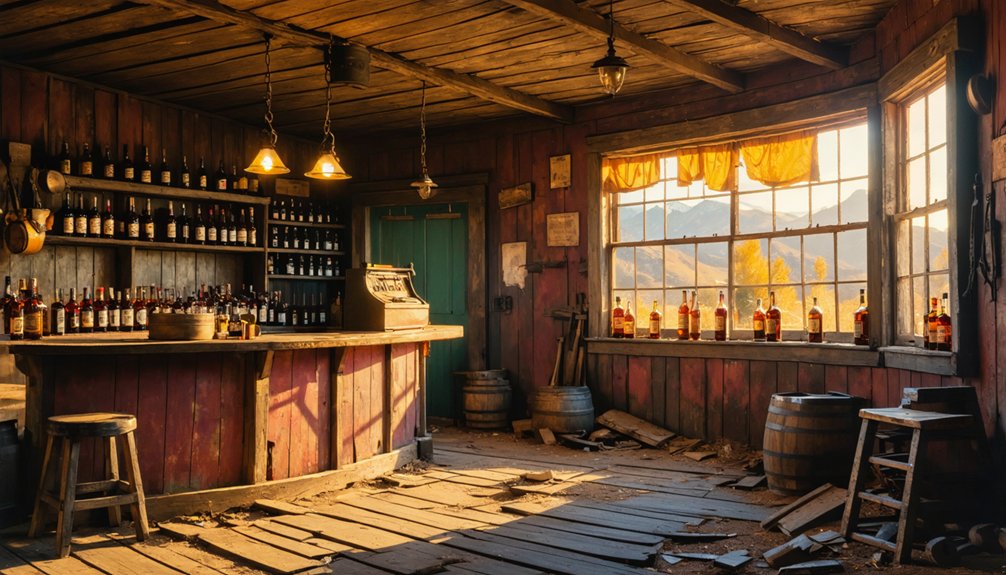
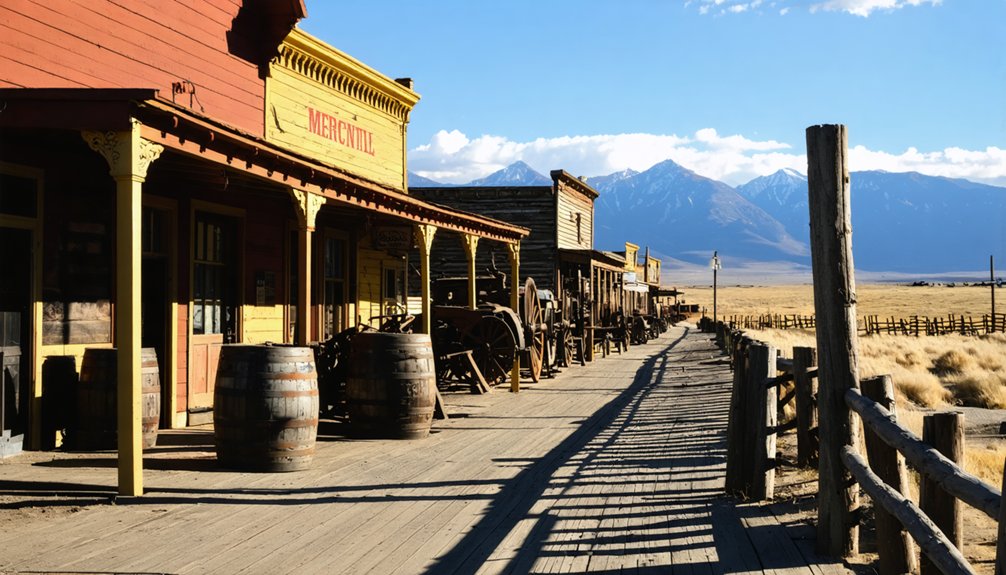
You’ll find ghostly remnants of the 1880s in the false-front facades along main street, where the Golden Stallion restaurant and Red Dog Saloon—with its massive oaken bar—still proudly stand.
The preserved jail building invites your exploration, while the printery and trading post maintain their frontier charm for today’s visitors.
Though the general store was lost to fire in 2021, the 1914 schoolhouse has been meticulously restored to its original state. The operational post office remains an officially recognized establishment.
These crumbling facades, constructed of rustic wood and brick, conceal modern businesses behind their historic exteriors, offering both authentic atmosphere and practical function for those seeking connection to California’s pioneering past.
Desert Reclamation Effects
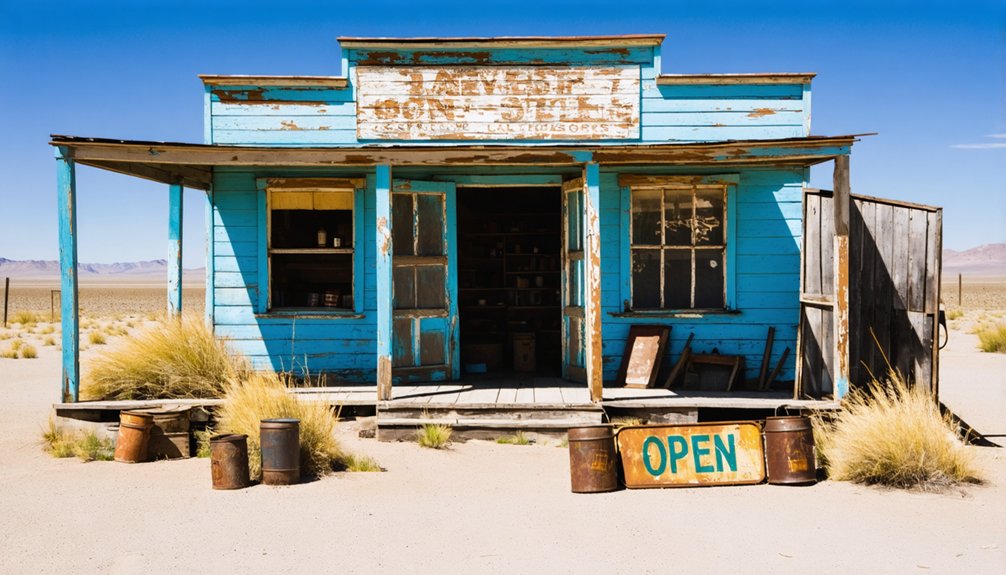
While the desert’s harsh conditions relentlessly reclaim Riverview’s historic structures, you’ll notice the distinctive patterns of decay that tell the story of time’s passage. The arid climate accelerates wood deterioration, while desert winds gradually sandblast exterior surfaces, erasing original architectural details from once-grand buildings.
You’ll find landmark buildings like the 1928 Riverside Municipal Auditorium standing defiant against desert ecology’s persistent assault. Nearby, Calico Ghost Town demonstrates architectural resilience through restoration efforts, showcasing both original structures and reconstructed facades that balance authenticity with preservation.
The desert’s extreme temperature fluctuations create expansion-contraction cycles that stress building materials, yet some structures persist. These landmarks, though weathered by sun and wind, remain testimonies to human ingenuity—symbols of freedom from time’s constraints through careful preservation against nature’s reclaiming forces.
Environmental Factors Contributing to Abandonment
Throughout the early 1900s, a perfect storm of environmental challenges laid siege to Riverview’s fragile existence.
You’d have witnessed the gradual environmental degradation that transformed this once-promising settlement into an uninhabitable stretch of land. The persistent drought that gripped the region led to devastating water scarcity, forcing residents to trek miles for basic necessities.
The parched landscape became increasingly hostile as natural springs dried up and the local river—Riverview’s namesake—dwindled to a trickle.
Wells that once provided ample water for crops and livestock began yielding brackish, undrinkable fluid. Without sustainable water sources, agriculture faltered, livestock perished, and residents faced impossible choices.
Comparing Riverview to Other Riverside County Ghost Towns
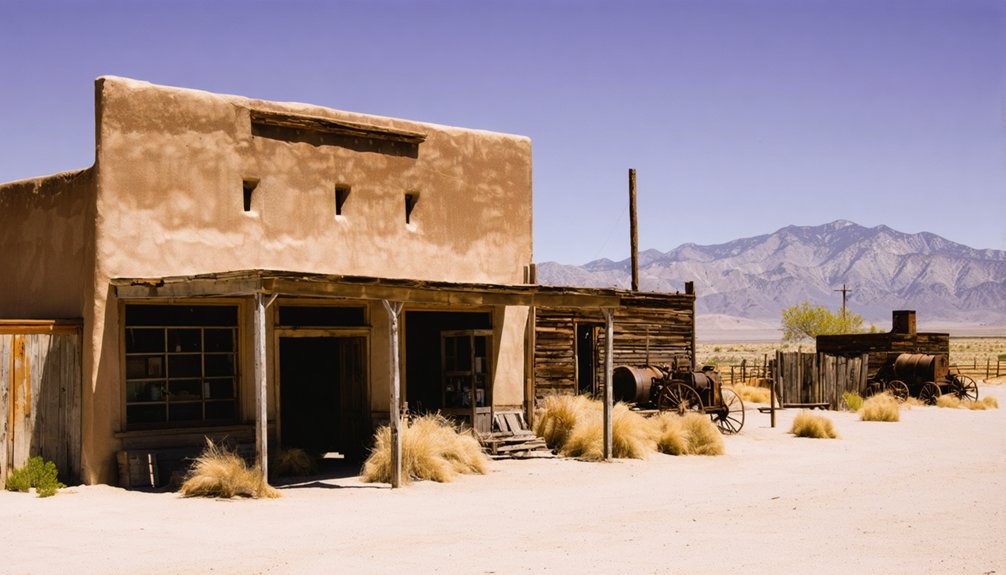
In contrast to its neighboring abandoned settlements, Riverview stands as a distinctive chapter in Riverside County’s forgotten history.
When making Riverview comparisons, you’ll notice its unique path to abandonment differs considerably from other Riverside ghost towns.
Unlike Eagle Mountain’s mining collapse or the flood-ravaged remains of Agua Mansa, Riverview’s isolation became its defining characteristic. The town lacked the gold rush prominence of Allendale or the industrial importance of Temescal.
Riverview stood alone in its quiet abandonment, without the dramatic downfall that defined its neighboring ghost towns.
What makes Riverview particularly intriguing is how it vanished without the dramatic catalysts that typically create ghost towns—no depleted mines, devastating fires, or rerouted railroads sealed its fate.
Instead, its decline represented a quieter surrender to changing economic realities, making it an authentic representation of California’s constantly evolving landscape rather than a victim of sudden catastrophe.
Photographic Journey Through Riverview’s Remains
Wandering through Riverview’s weathered remnants today offers a haunting glimpse into California’s forgotten agricultural past. Your camera will capture stark contrasts between crumbling adobe walls and the surrounding desert scrub.
The best visual storytelling emerges at dawn or dusk, when raking light illuminates textures of weathered wood and rusted metal against the Colorado River backdrop.
Employ varied photographic techniques to document foundations of homes, the skeletal schoolhouse, and faint outlines of streets. You’ll find compelling compositions where nature reclaims human endeavors—desert tortoises resting in the shade of fallen walls, lizards darting between irrigation pipes.
From higher vantage points, you’ll grasp the town’s layout, revealing how this once-thriving community existed in harmony with the harsh landscape.
Preservation Efforts and Future Prospects
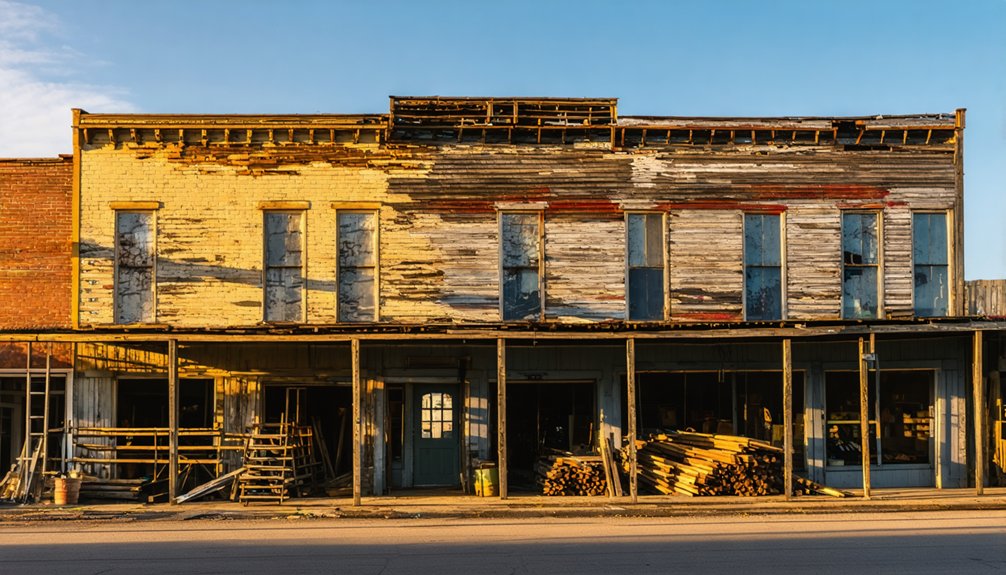
Despite Riverview’s undeniable historical significance, the ghost town currently faces a precarious future with virtually no formal preservation infrastructure in place.
You’ll find no protective legislation, historical landmark designation, or organized volunteer groups safeguarding these weathered remains against time’s relentless advance.
The preservation challenges are substantial – deteriorating structures continue their quiet collapse while nature reclaims what humans abandoned.
Time and wilderness collaborate patiently, dismantling our forgotten heritage piece by weathered piece.
Without fencing, signage, or security measures, the site remains vulnerable to vandalism and unauthorized access.
The absence of community engagement proves particularly troubling, as no local historical societies or foundations have stepped forward to champion Riverview’s cause.
Without intervention, these silent witnesses to California’s past will likely disappear entirely – their stories and secrets returning to the earth from which they rose.
Frequently Asked Questions
Are There Any Paranormal Activities Reported in Riverview?
While local legends swirl through Riverside’s haunted sites like the Mission Inn, you’ll find no verified ghost sightings specifically in Riverview ghost town among the documented paranormal activities in the region.
As you venture further into the Bay Area, ghost town exploration in Mill Valley offers a distinct charm and eerie allure. Here, old remnants of the past whisper stories of miners and settlers, inviting thrill-seekers and history buffs alike to uncover their secrets. The juxtaposition of modern life and these forgotten places creates a hauntingly beautiful atmosphere that captivates all who wander through.
Can Visitors Legally Explore Riverview’s Abandoned Structures Today?
Like forbidden fruit in an abandoned Eden, you can’t legally explore these structures. Riverview’s legal restrictions prohibit access without permission, as trespassing carries hefty penalties. No exploration guidelines exist for visitors.
What Happened to Riverview’s Original Residents After Abandonment?
You’ll find most original residents scattered across Southern California cities seeking jobs after departure. Their community impact lingers in fragmented social networks and lost traditions as families were forced to rebuild elsewhere.
Were Any Notable Films or Television Shows Shot in Riverview?
Like searching for a needle in a haystack, you won’t find Riverview in film locations or television history records. No notable productions were ever shot in this forgotten California ghost town.
The history of Roachville, California, is similarly obscure, with few remnants left to tell its story. Once a bustling community, Roachville faded into obscurity as residents moved away, leaving behind vacant buildings and a sense of lost time. Today, it serves as a reminder of California’s rich but often overlooked past, inviting curious explorers to uncover its hidden tales.
Does Riverview Have Any Surviving Artifacts in Museums?
You won’t find Riverview’s artifacts explicitly mentioned in museum exhibitions. While nearby Silver City and Calico Ghost Towns preserve regional mining relics, Riverview’s specific contributions to artifact preservation remain undocumented in public collections.
References
- https://lizzie-borden.com/ghost-tours/riverside/
- https://www.latimes.com/california/story/2023-05-23/riverside-county-ghost-town-sells-for-22-6-million-to-mysterious-company
- https://www.camp-california.com/california-ghost-towns/
- https://patch.com/california/banning-beaumont/13-ghost-towns-explore-california
- https://www.staxupstorage.com/blogs/exploring-ghost-towns-near-homeland-california/
- https://en.wikipedia.org/wiki/List_of_ghost_towns_in_California
- https://www.youtube.com/watch?v=Q_yjBgICWl8
- https://ohp.parks.ca.gov/?page_id=21452
- https://freepages.rootsweb.com/~gtusa/history/movalhist.htm
- https://www.thetravel.com/forget-bodie-for-californias-largest-ghost-town/