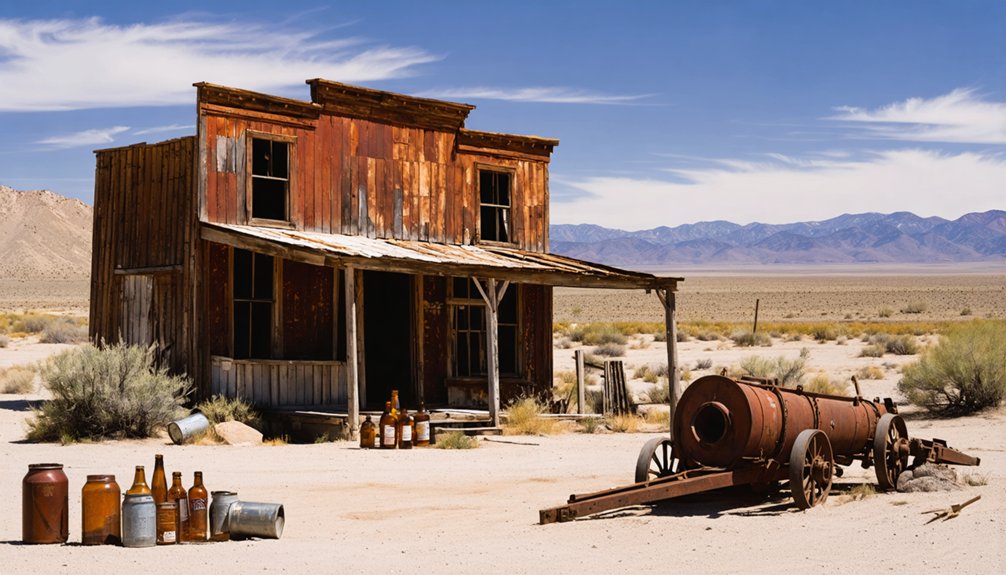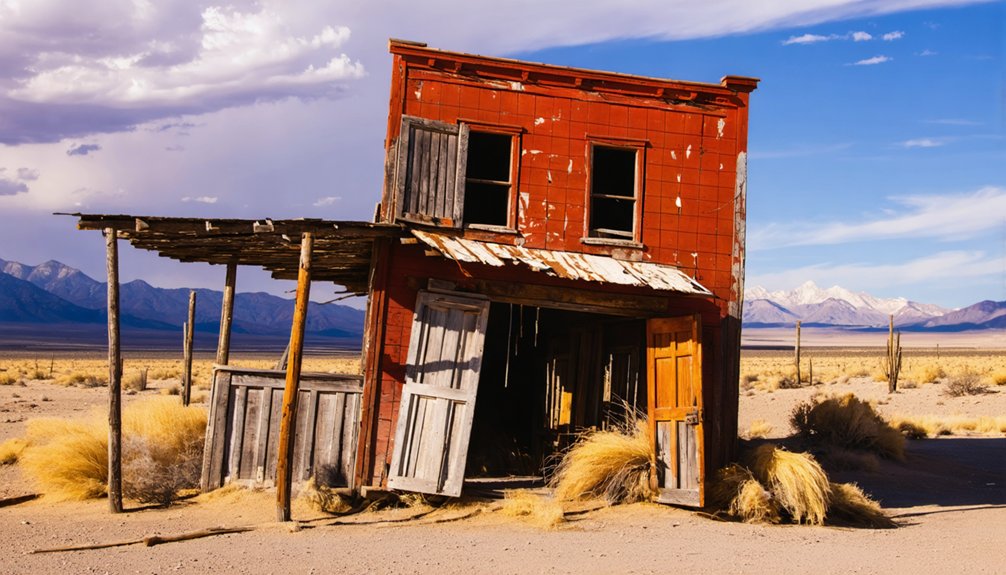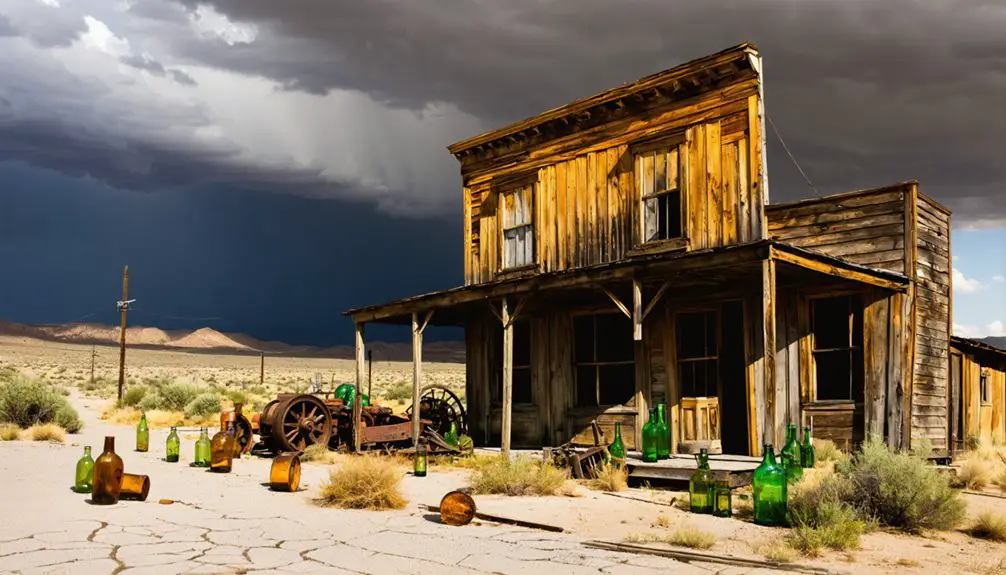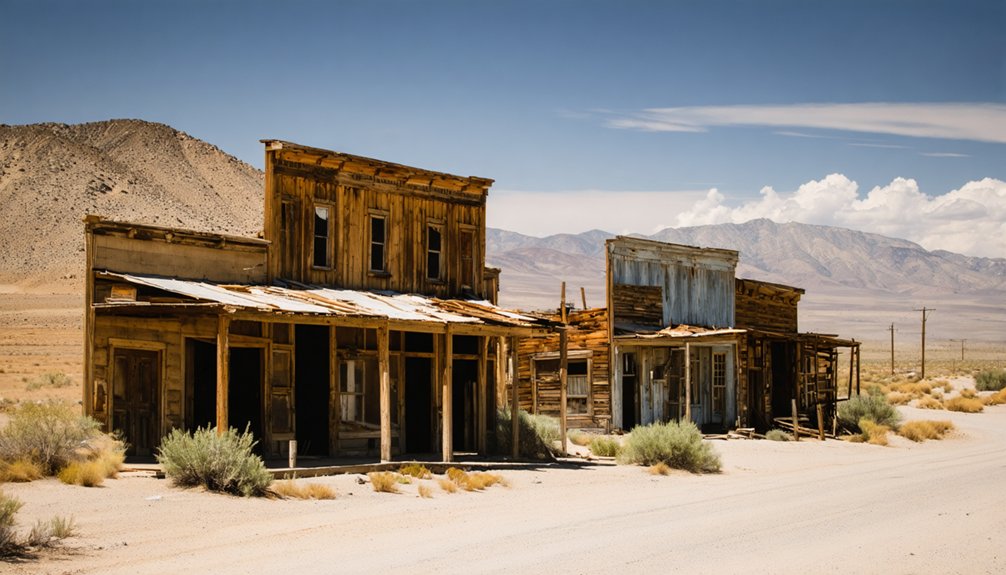
Ruby City, Nevada is a ghost town in Elko County that rose and collapsed within six years. In 1912, Utah land promoters bought 5,000 acres, built homes, a hotel, schools, and an LDS chapel—all before securing settlers. The plan targeted 75 families, but poor soil and scarce water drove them away. By 1918, the town was abandoned. Today, you’ll find stone foundations and open terrain, and there’s more to this story than a simple failure.
Key Takeaways
- Ruby City was founded in 1912 in Elko County, Nevada, when Utah promoters purchased 5,000 acres to establish a Mormon farming community.
- Poor soil quality and water scarcity made agriculture impossible, causing settlers to abandon the town entirely by 1918.
- By 1915, the settlement included a hotel, two schools, a store, a blacksmith shop, and an LDS chapel.
- Today, scattered stone foundations and ruins are all that remain, as nature has largely reclaimed the site.
- Summer and autumn are ideal visit times; standard 2WD vehicles are sufficient, with no four-wheel drive required.
Ruby City, Nevada: A Ghost Town Built for 75 Families That Never Came
In 1912, land promoters from Utah purchased 5,000 acres in Elko County, Nevada, seven miles south of Arthur, with ambitious plans to establish a thriving community of 75 families. They built 75 homes on the land, confident settlers would follow.
They didn’t. Poor soil quality, significant water shortages, and inadequate agricultural conditions made the location nearly unworkable. By 1918, just six years after its founding, residents had abandoned Ruby City entirely, leaving it a ghost town.
Today, the land has largely reclaimed itself, with local flora overtaking former building sites and wildlife habitats reestablishing across the once-settled terrain. You’ll find scattered stone foundations and ruins where families were supposed to build lives — a stark reminder that ambition without viable land means nothing.
The 1912 Land Deal That Launched Ruby City
The year 1912 marked a calculated land acquisition when Utah-based promoters purchased 5,000 acres in Elko County, Nevada, seven miles south of Arthur, betting that a pre-built settlement would attract 75 families. This historical land acquisition reflected deliberate community planning—build first, populate second.
The developers executed three concrete steps:
- Secured 5,000 acres in Elko County at elevation 6,106 feet
- Constructed 75 homes before confirming settler commitments
- Positioned the site seven miles south of Arthur as a regional anchor
You can see the gamble clearly in hindsight. The promoters assumed infrastructure would drive migration. Instead, the strategy exposed a critical flaw—land ownership doesn’t guarantee livability.
Poor soil and water scarcity ultimately undermined every calculation these developers made.
The Hotel, Schools, and Church That Briefly Defined the Town
By 1915, you can see that Ruby City had developed a modest but functional core of community buildings. The town’s founders established a hotel, two schools, a water canal, a blacksmith shop, a store, and an LDS chapel—all designed to support the 75 families they’d anticipated attracting.
These institutions reflect a deliberate effort to build a self-sustaining community, yet they’d serve residents for only a few short years before abandonment in 1918.
Community Buildings and Purpose
Despite its remote location and short lifespan, Ruby City had developed a surprisingly functional civic infrastructure by 1915. You can imagine community celebrations filling the chapel and gathering spaces as settlers tried building something lasting.
Local legends likely emerged around these shared institutions before abandonment silenced everything.
Three core structures defined daily life:
- Hotel – Provided lodging for newcomers and travelers passing through the region
- Two Schools – Educated children of the 75 families the planners originally envisioned settling there
- LDS Chapel – Anchored spiritual and social life for the primarily Mormon settler community
Each building served a deliberate purpose within the planned settlement framework. Yet within three years, water shortages and poor soil rendered these investments meaningless, leaving only foundations behind.
Religious and Educational Institutions
Among the most telling signs of Ruby City’s ambitions were its religious and educational institutions—structures that reveal just how seriously the Utah land promoters took their planned community. They erected two schools, signaling a commitment to educational reforms that would sustain future generations. An LDS chapel provided religious symbolism central to the Mormon settlers’ identity and daily life.
These weren’t afterthoughts—you can see by 1915’s documented record that organizers prioritized spiritual and intellectual infrastructure alongside commerce. Yet no institution survives without people to fill it. When water shortages and poor soil drove families away, these buildings emptied just as quickly as they’d risen.
Why Bad Soil and Scarce Water Doomed Ruby City
Although Ruby City’s founders invested heavily in land and infrastructure, the settlement’s fatal flaws were baked into the land itself. The soil couldn’t support viable crops, and water scarcity made agricultural challenges insurmountable.
You can trace the colony’s collapse directly to these two environmental failures:
- Poor soil quality rendered the 5,000-acre parcel agriculturally useless, despite founders’ promises of productive farmland.
- Water scarcity persisted even after canal construction, leaving settlers without reliable irrigation for crops.
- Combined failures drove residents away rapidly, turning a planned 75-family community into a ghost town by 1918.
Settlers who’d staked their independence on Ruby City’s land found themselves trapped by conditions no amount of planning could overcome. The environment simply wouldn’t cooperate.
How Ruby City Went From New Builds to Ghost Town in Six Years
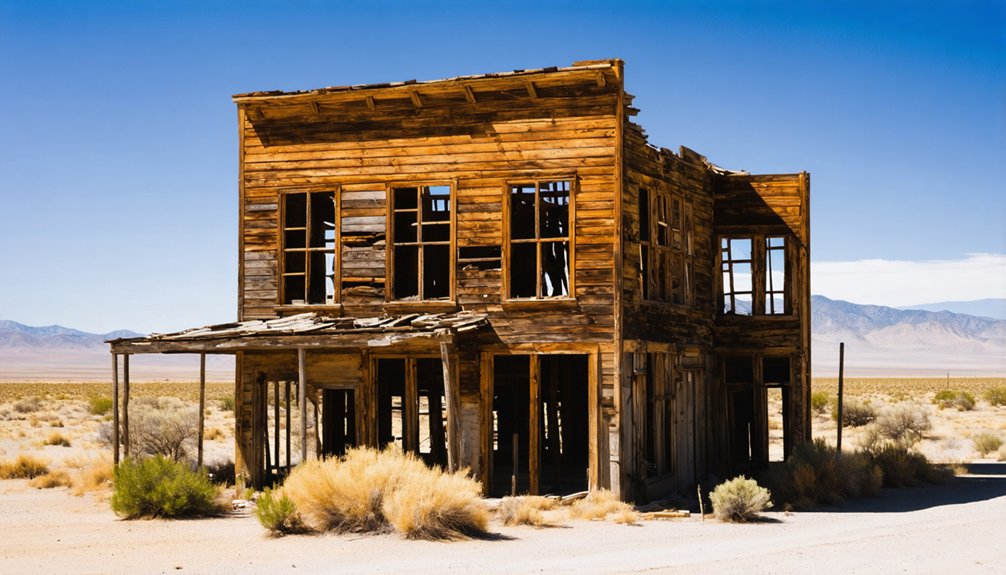
Ruby City’s collapse unfolded with startling speed. In 1912, land promoters built 75 homes on 5,000 acres, expecting families to follow. Few did. The soil couldn’t support crops, and water shortages made farming impossible. Without agriculture, there was no economic foundation to sustain residents.
By 1915, the community had a hotel, two schools, a chapel, and a blacksmith shop. Yet urban decay set in almost immediately as families abandoned their lots rather than struggle against unworkable land.
Within six years of its founding, Ruby City was empty.
Historical preservation efforts never materialized here. By 1918, the structured community had fully transitioned into a ghost town. You can still visit the scattered stone foundations today, standing as silent evidence of a plan that reality quickly dismantled.
What’s Left at Ruby City Today?
If you visit Ruby City today, you’ll find only scattered stone foundations and ruins where 75 planned homes once stood.
The wilderness has largely reclaimed the site, with structures reverting naturally to the surrounding landscape over the past century.
What remains still offers you visible foundations to explore against a backdrop of genuinely pretty scenery.
Ruins and Stone Foundations
What remains of Ruby City today are scattered stone foundations and ruins that have largely reverted to wilderness. You’ll find evidence of historical architecture that once supported a planned community of 75 families, though nature has reclaimed most of it.
Community resilience couldn’t overcome poor soil and water shortages, leaving only structural remnants behind.
When you visit, you’ll encounter:
- Stone foundations marking where homes, a hotel, and a chapel once stood
- Scattered ruins distributed across the site’s expansive terrain
- Open wilderness surrounding the remains, offering undisturbed natural scenery
These foundations document a settlement that lasted just six years before abandonment in 1918. You’re fundamentally walking through a preserved historical record, where each stone tells a story of failed agricultural ambition.
Wilderness Reclaiming the Site
Beyond those stone foundations, nature has steadily moved back in, reshaping Ruby City into something far removed from its 1912 origins. Urban decay here doesn’t look like crumbling concrete or broken glass — it looks like sagebrush pushing through old floor plans and grasses swallowing wall lines entirely.
You’ll notice the wilderness preservation happening in real time. The land has fundamentally reclaimed what settlers briefly interrupted, returning the site to the high desert ecosystem it always was.
At 6,106 feet, harsh winters and dry summers accelerate that process considerably.
What remains is sparse but readable. You can still trace where buildings once stood, but the surrounding landscape dominates. Ruby City doesn’t resist nature’s return — it surrenders to it, offering you a quiet, honest record of human ambition meeting environmental reality.
Ghost Towns Near Ruby City That Reward the Same Drive
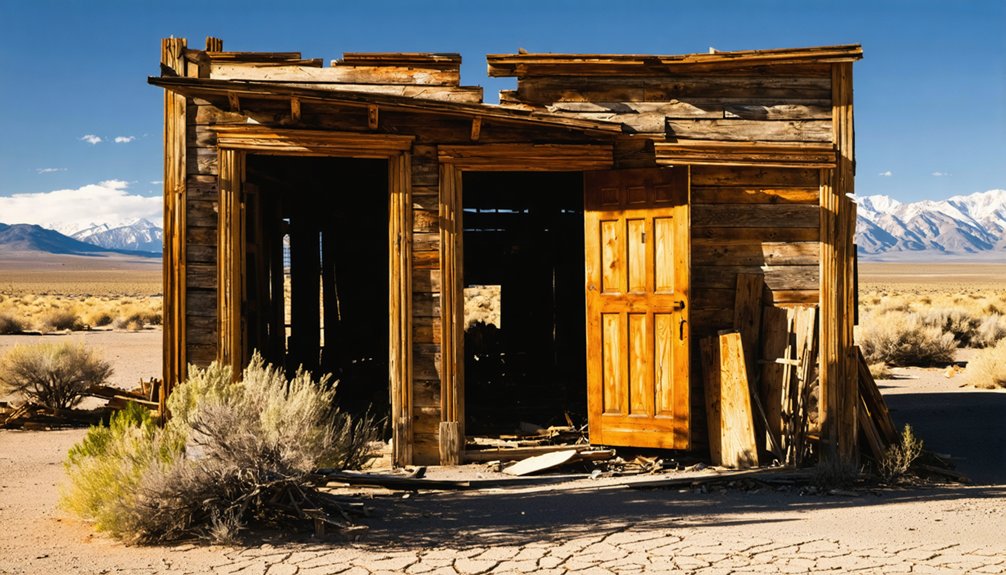
Since Ruby City sits in Elko County‘s remote interior, the drive out rewards more than a single stop. Cultural preservation and economic development shaped—and ultimately failed—several nearby communities worth exploring on the same route.
Three ghost towns near Ruby City justify the detour:
- Cornucopia – A gold and silver mining settlement northeast of Ruby City, now reduced to scattered ruins and tailings.
- Midas – A well-documented mining camp offering standing structures and recorded history tied to Nevada’s silver economy.
- Tuscarora – A former boom town with preserved remnants, active historic documentation, and accessible roads suitable for 2WD vehicles.
You’ll cover remote terrain efficiently by grouping these stops, maximizing your time across Elko County’s historically rich, undervisited landscape.
How to Reach Ruby City Without a 4WD
You don’t need a 4WD to reach Ruby City, as two separate roads provide access to the site for standard 2WD vehicles.
Plan your visit during summer or autumn, when road conditions are most reliable and the scenery is at its best.
The site carries a grid rating of 1, confirming its accessibility for everyday vehicles without specialized equipment.
Two Roads Provide Access
Reaching Ruby City doesn’t require a 4WD vehicle, as two roads provide adequate access to the site for standard 2WD vehicles. The grid rating of 1 confirms straightforward navigation to the ruins, making the ghost town accessible for most travelers seeking historical preservation opportunities.
Plan your visit around these key access considerations:
- Season selection — Summer and autumn offer the best road conditions and visibility of remaining foundations.
- Vehicle preparation — Standard 2WD vehicles handle both access roads adequately under normal conditions.
- Site awareness — Watch for local wildlife while exploring scattered stone foundations and ruins.
You’ll find the remote location rewards independent exploration, delivering genuine frontier solitude alongside tangible remnants of a community that survived only six years before total abandonment.
Best Seasons To Visit
Summer and autumn deliver the most reliable conditions for visiting Ruby City, when snow-free roads allow standard 2WD vehicles to navigate both access routes without complication.
Winter and spring bring heavy snowfall at 6,106 feet, effectively closing access and making the site unreachable without specialized equipment.
Choosing summer gives you extended daylight for examining scattered stone foundations and geological formations across the landscape.
Autumn reduces heat while preserving road stability, letting you move freely through the site without weather-related constraints.
Both seasons also activate surrounding wildlife habitats, giving you a fuller picture of the environment these original settlers confronted.
The same land that defeated 75 planned families now supports natural ecosystems worth observing.
Plan your visit between June and October for the most dependable conditions.
Once you’ve confirmed your visit window, knowing how to reach the site becomes the next practical step. Ruby City carries a grid rating of 1, meaning you don’t need specialized equipment to access it.
Two separate roads lead to the ruins, both navigable by standard 2WD vehicles. This rating matters because it eliminates common navigation challenges and off-road hazards that restrict entry to more remote ghost towns.
Consider these access facts before departure:
- Grid Rating 1 confirms standard vehicle compatibility
- Two roads provide route flexibility if one path is obstructed
- No 4WD requirement reduces logistical barriers for independent travelers
You’re free to reach Ruby City without expensive equipment, making it a straightforward destination for those who value accessible, self-directed exploration.
The Best Seasons to Visit Ruby City
Although Ruby City sits at an elevation of 6,106 feet, you’ll find the site most accessible and rewarding during summer and autumn. Heavy winter snowfall at this elevation makes access difficult and potentially dangerous, so timing your visit strategically matters.
During summer and autumn, both 2WD-accessible roads remain passable, letting you explore the scattered stone foundations and ruins without weather-related complications. You’ll also appreciate the pleasant summer climate the area naturally offers.
From a historical preservation standpoint, visiting during drier seasons reduces your environmental impact on the fragile remaining foundations. Wet or frozen conditions accelerate deterioration of what little survives.
Stone Foundations and Open Land: What You’ll Actually Find There
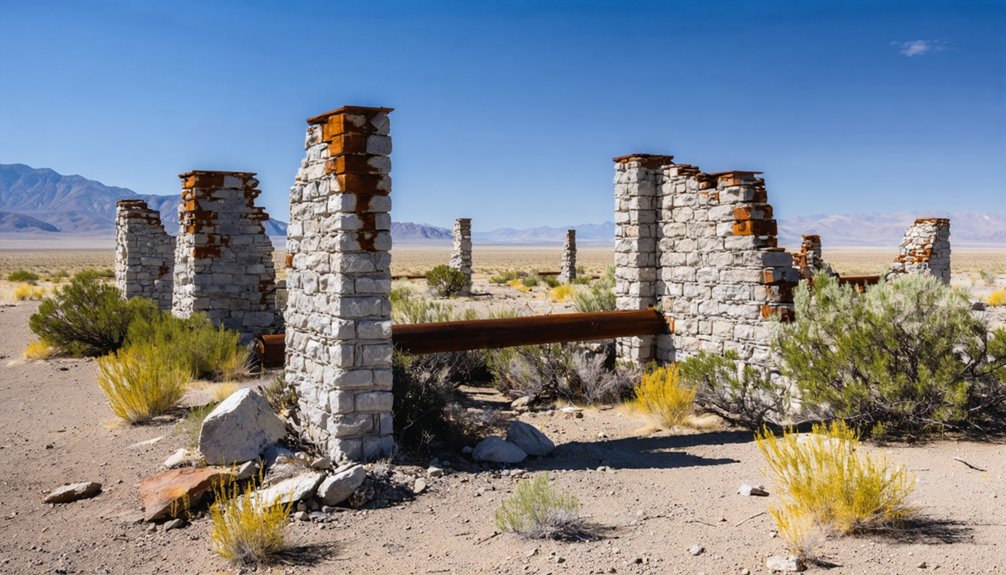
When you arrive at Ruby City, you’ll find a landscape that bears little resemblance to the planned community of 75 homes once envisioned here. Urban decay has surrendered to wilderness, leaving scattered evidence of what once existed. The site carries genuine archaeological significance for those who study failed settlement patterns.
What you’ll actually encounter:
- Stone foundations — scattered across open land, marking where homes, a hotel, and a blacksmith shop once stood
- Open terrain — expansive wilderness that has naturally reclaimed most of the original 5,000-acre parcel
- Visible ruins — structural remnants that document the community’s rapid six-year collapse between 1912 and 1918
You’re free to explore these foundations independently, reading the landscape as a physical record of ambitious plans meeting harsh environmental reality.
Frequently Asked Questions
Were Any Famous or Notable People Ever Associated With Ruby City?
Imagine searching old records and finding nothing. The knowledge base doesn’t document any notable residents or famous events tied there. You’d find only Utah land promoters who planned it — no celebrated figures ever made Ruby City their story.
Are There Any Legal Restrictions or Permits Required to Visit Ruby City?
No documented legal restrictions or permit requirements exist for visiting. You’ll find two accessible roads welcoming 2WD vehicles, making exploration straightforward. Summer and autumn offer the best conditions for your visit to this ghost town.
Has Ruby City Ever Been Considered for Historical Preservation or Restoration?
You won’t find mountains of documented preservation efforts for this ghost town. Its historical significance remains largely unrecognized officially, but you can freely explore its foundations and ruins, as no major restoration initiatives have been recorded.
Were Any Valuable Minerals or Resources Ever Discovered Near Ruby City?
You won’t find documented evidence of mineral deposits or resource extraction near Ruby City. The community’s failure stemmed from poor soil and water shortages, not mining—agricultural promise, not mineral wealth, originally drove its establishment.
Did Any Families Attempt to Revive Ruby City After Its Abandonment in 1918?
No documented revival attempts exist. By 1918, just six years after its founding, you’d find only abandoned structures left behind. Today, ghost town tourism draws you to explore these silent ruins, where freedom and history intersect beautifully.
References
- https://en.wikipedia.org/wiki/Ruby_City
- https://www.ghosttowns.com/states/nv/rubycity.htm
- https://kids.kiddle.co/Ruby_City
- https://en.wikipedia.org/wiki/Ruby_Hill
- https://everafterinthewoods.com/abandoned-places-in-nevada-that-are-as-creepy-as-they-are-beautiful/
- https://www.facebook.com/VisitOkanoganCountry/posts/the-old-ruby-city-known-as-the-babylon-of-the-west-was-once-a-renowned-mining-to/878760144288112/
- https://www.nogalesinternational.com/news/sun-sets-on-ruby-as-owners-shutter-the-ghost-town/article_d3e8b2ca-17ef-11ef-913b-6b292ced17db.html
- https://www.nevadaghosttownsandmininghistory.com/portfolio-2/ruby-valley
- https://npgallery.nps.gov/GetAsset/b8f89a7e-4b6b-45b2-aba0-76c7e0de80a5