Planning a ghost town road trip to Holy Cross City means tackling a rugged 4-mile 4×4 trail above 11,000 feet in Colorado’s White River National Forest. You’ll navigate rocky switchbacks, creek crossings, and unpredictable weather to reach weathered cabins and scattered ruins of an 1880s gold mining camp. Bring recovery gear, layered clothing, and plenty of water for a full-day adventure. There’s far more to this forgotten boomtown’s dramatic story just ahead.
Key Takeaways
- Holy Cross City, a ghost town in Colorado’s White River National Forest, sits at 11,000 feet and dates back to an 1880 gold mining camp.
- Access requires a high-clearance 4×4 vehicle for the rugged 4-mile trail featuring rocky terrain, creek crossings, and steep switchbacks.
- Spring runoff can make French Creek impassable, so plan your visit timing carefully to avoid dangerous crossing conditions.
- Pack recovery gear, layered clothing, food, water, and a first-aid kit, as the challenging terrain warrants a full-day trip.
- Respect the remaining ruins, follow Leave No Trace principles, and stay on designated trails to preserve this historic site.
What Is Holy Cross City and Why Does It Matter?
Tucked into the rugged folds of Colorado’s White River National Forest, Holy Cross City sits at over 11,000 feet on the east slope of French Mountain — a forgotten gold mining camp that briefly roared to life in 1880 before the mountains swallowed it whole.
Within five weeks of its founding, 300 prospectors had carved out a full settlement — saloons, a hotel, boarding houses, and stamp mills.
In just five weeks, 300 prospectors built an entire town from nothing at 11,000 feet.
You’re stepping into historic architecture that survived brutal winters and total abandonment.
Local legends whisper about fortunes promised and never delivered, with the entire district producing only $6,400 in ore before collapse.
By 1884, it was a ghost town.
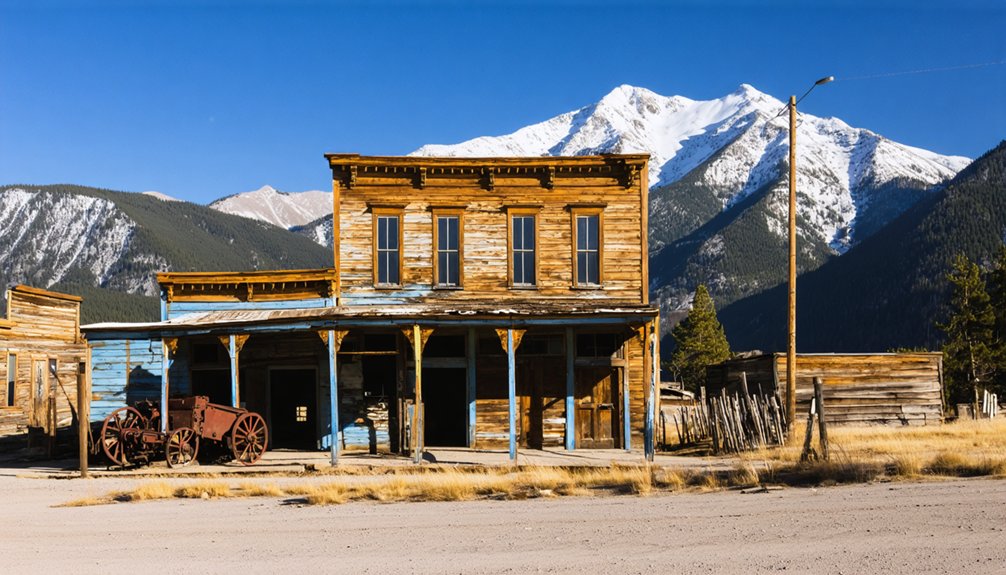
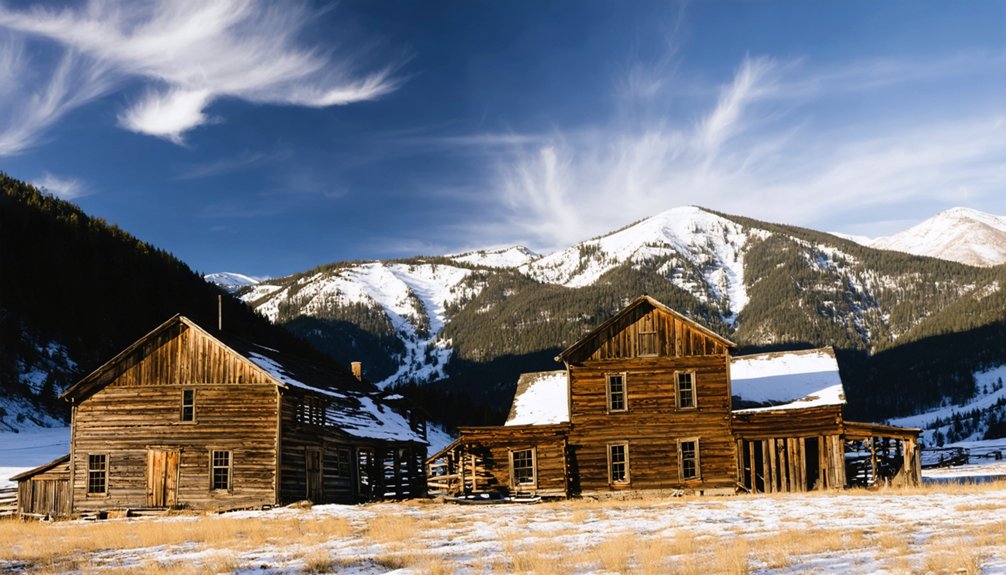
Today, four cabins and scattered ruins remain, frozen in time, waiting for those bold enough to find them.
How to Get to Holy Cross City, Colorado
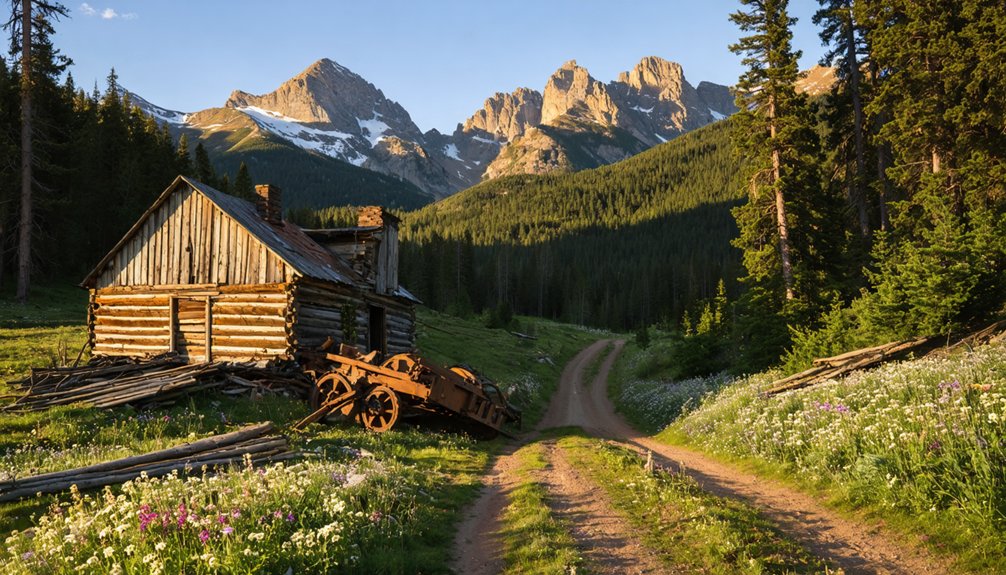
Getting to Holy Cross City isn’t a Sunday drive — it’s a commitment. You’ll follow Holy Cross City Trail, a brutal four-mile 4×4 route that chews through rocky terrain, creek crossings, and switchbacks that’ll test every inch of your rig. A trailhead sign literally warns you about vehicle damage — take it seriously.
Spring runoff can make French Creek impassable, so timing matters for trail safety. Come prepared to winch or reroute. The road demands a full day despite its short distance.
Hikers can tackle the route on foot, moving at their own pace through White River National Forest‘s rugged backcountry. Watch for local wildlife along the trail — elk and mountain critters call this wilderness home. Respect their territory, stay alert, and move deliberately.
How Difficult Is the Holy Cross City Trail?
Holy Cross City Trail earns its reputation the hard way — four miles of relentless rock, creek crossings, and switchbacks that’ll push your rig and your nerves to their limits.
Four miles of brutal rock, creek crossings, and switchbacks — Holy Cross City Trail earns its fearsome reputation every punishing inch.
Trail conditions shift dramatically by season; spring runoff can turn French Creek into an impassable torrent, sometimes demanding winching or improvised trail building just to advance. Don’t underestimate this road because of its short distance — most drivers burn a full day orchestrating it.
Vehicle requirements here aren’t suggestions. You’ll need a capable, high-clearance 4×4 driven by someone with serious off-road experience. The trailhead sign explicitly warns of likely vehicle damage, and it means it.
Hikers can tackle the route too, but either way, Holy Cross City doesn’t welcome the unprepared.
What Should You Bring for the Holy Cross City Road?
Packing smart for Holy Cross City Trail can mean the difference between a triumphant summit and a miserable retreat. Load your rig with recovery gear — tow straps, a hi-lift jack, and a winch — because French Creek doesn’t forgive the unprepared.
Carry extra fuel, since civilization sits far below you. Pack layered clothing; brutal mountain weather shifts without warning at 11,335 feet.
Bring enough food and water for a full day, because this four-mile road swallows time whole. A camera is essential — historical artifacts like collapsed stamp mills and weathered cabins deserve documentation.
Stay alert for local wildlife roaming the Holy Cross Wilderness. A first-aid kit, satellite communicator, and topographic map round out your essentials. Freedom out here demands thorough preparation.
The Rise and Fall of Holy Cross City
When prospectors flooded Eagle County in 1880, Holy Cross City exploded from a simple gold mining camp into a bustling settlement of 300 people within just five weeks, complete with saloons, a hotel, stamp mills, and a school.
You’d never guess that a town so densely packed with infrastructure could collapse so quickly, but low-quality ore, brutal winters, and costly processing gutted the Gold Park Mining Company’s ambitions by 1883.
A Mining Boom Begins
Named after the nearby Mount of the Holy Cross, this remote Colorado mining camp erupted onto the scene in 1880, drawing prospectors by the hundreds within just five weeks of its founding. You can almost feel the raw ambition that fueled those early days — men chasing gold through rugged mountain terrain at over 11,000 feet elevation.
They established the Holy Cross Mining District, spanning more than 100 square miles across the headwaters of Cross Creek and Homestake Creek. Mining techniques targeted lead, manganese, and trace gold deposits buried deep within French Mountain’s slopes.
At its peak, nearly 300 people called this place home.
Today, historical artifacts scattered across the townsite quietly tell that story — abandoned equipment and crumbling cabins whispering of a boom that burned bright but faded fast.
Rapid Decline And Abandonment
Despite its explosive start, Holy Cross City‘s ambitions crumbled almost as quickly as they’d risen. The ore quality proved disappointing, processing costs soared, and brutal winters made survival punishing.
By 1883, the Gold Park Mining Company had pulled out entirely, unwilling to chase diminishing returns.
The numbers tell a brutal story — the entire district yielded only $6,400 in total ore production by 1884. That’s when Holy Cross City earned its ghost town designation, effectively abandoned after fewer than four years of operation.
Today, the environmental impact of that frenzied mining era still marks the landscape, while scattered historical artifacts — collapsed stamp mills, weathered cabins, rusted equipment — silently narrate the town’s short-lived ambitions.
You’re not just visiting ruins; you’re witnessing the raw consequence of chasing fortune in unforgiving terrain.
What’s Left of Holy Cross City Today?
After more than a century of abandonment, Holy Cross City has little left to show for its once-bustling 300-person population. Yet what remains carries a raw, haunting beauty worth every rugged mile.
A century of silence where 300 souls once thrived — Holy Cross City’s haunting beauty rewards the bold.
You’ll find:
- Four scattered cabins — weathered but standing, offering a ghostly window into 1880s mountain life
- Collapsed stamp mills — one at the trail’s foot, another perched higher up the slope
- Scattered mining relics — rusted equipment and hidden structures swallowed by wilderness
As you explore, respect trail safety protocols and stay alert to local wildlife sharing this remote terrain. The silence here speaks volumes — where 25 buildings once hummed with ambition, only wind and memory remain.
Holy Cross City doesn’t beg for your attention; it rewards those bold enough to seek it.
When Is the Best Time to Visit Holy Cross City?
Timing your visit to Holy Cross City can mean the difference between a triumphant adventure and a white-knuckle retreat. Spring runoff transforms French Creek into an impassable torrent, so you’ll want to avoid early-season attempts entirely.
Summer opens the trail from late June through August, rewarding you with wildflower season at its peak — alpine meadows exploding in color against the rugged mountain backdrop at 11,335 feet. July and August offer the most reliable road conditions for your 4×4 push through those brutal four miles.
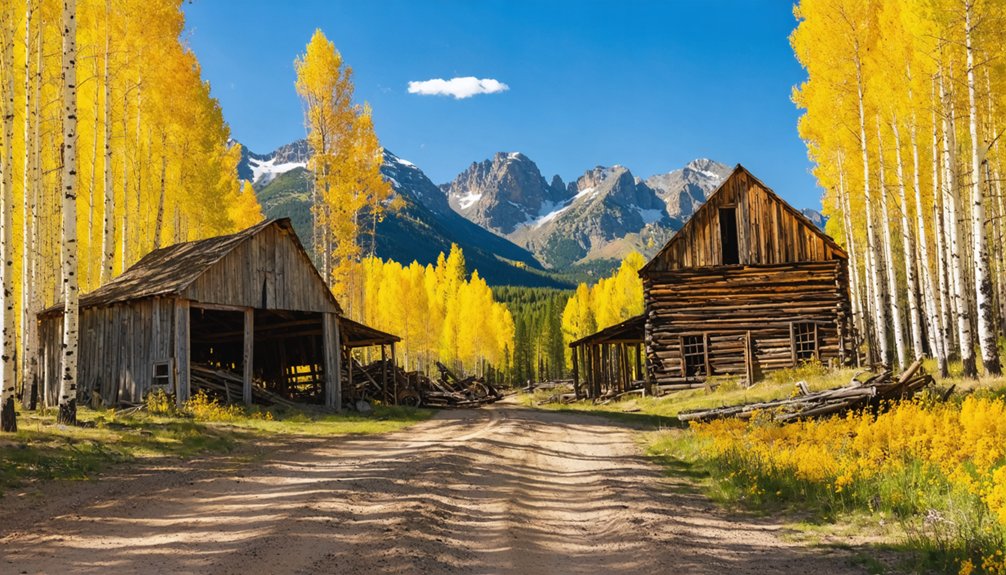
September brings stunning fall foliage, painting the surrounding White River National Forest in amber and gold before early snowfall closes everything down.
Plan for a full-day commitment regardless of season, and always check current road conditions before you commit to the climb.
Frequently Asked Questions
Is Camping Permitted Overnight Near the Holy Cross City Ghost Town?
The knowledge doesn’t specify campground regulations or overnight permits, but you’re within White River National Forest, so you can explore dispersed camping options — just check current overnight permits with the ranger station before you venture out!
Are There Guided Tours Available for Holy Cross City Visits?
You’re on your own here — no guided tours exist for Holy Cross City. Blaze your own trail through haunted legends, capturing stunning Photography tips moments among crumbling cabins, where freedom-seekers truly discover this forgotten ghost town’s raw, untamed spirit.
Can Children Safely Visit Holy Cross City With Their Families?
You can bring children, but prepare carefully! The rugged 4×4 trail demands serious skill. Once there, you’ll discover incredible historical artifacts and photography opportunities that’ll ignite young adventurers’ imaginations amid Holy Cross City’s hauntingly beautiful, forgotten wilderness.
Is Holy Cross City Protected Under Any Historic Preservation Laws?
Nestled within White River National Forest’s Holy Cross Wilderness, you’ll find historic preservation and legal protections naturally shield Holy Cross City. Its wilderness designation actively safeguards those weathered cabins and rusting relics from development, preserving your freedom to explore them.
What Wildlife Might You Encounter While Visiting Holy Cross City?
You’ll encounter rich wildlife habitat teeming with elk, mule deer, and black bears. Animal sightings of mountain goats and eagles await you in Holy Cross Wilderness, where nature roams as freely as your adventurous spirit.
References
- https://en.wikipedia.org/wiki/Holy_Cross_City
- https://www.komoot.com/highlight/5338020
- https://www.youtube.com/watch?v=ATkpSWoDMxw&vl=en
- https://eaglecountyhistoricalsociety.com/holy-cross-city/
- https://en.wikipedia.org/wiki/List_of_ghost_towns_in_Colorado
- https://www.youtube.com/watch?v=QBps7GgDPwY
- https://www.youtube.com/watch?v=5ZzLrCiuAIs
- https://gotaltitudesite.wordpress.com/2017/11/21/colorado-ghost-towns-old-hundred-mine-ironton-and-holy-cross-city/