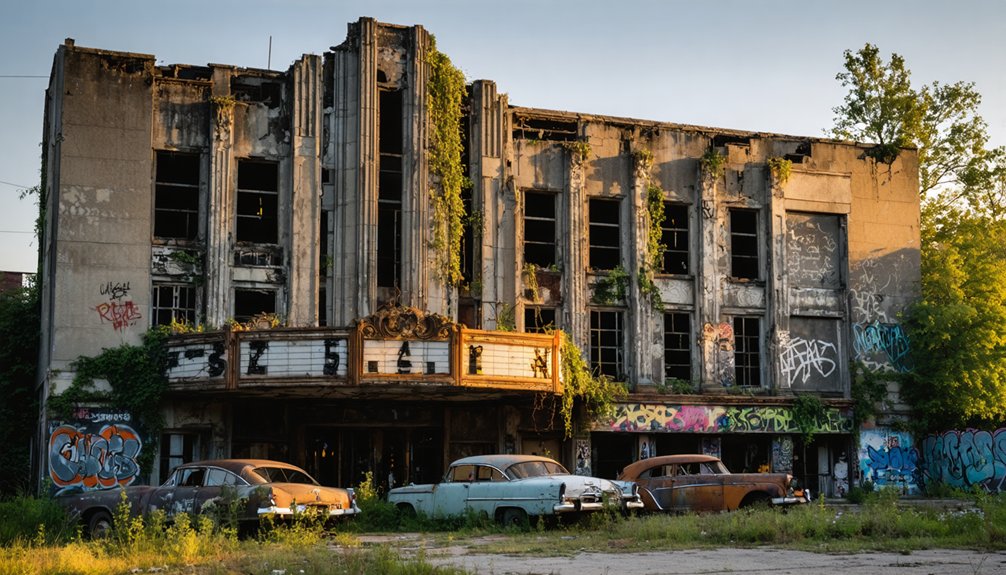
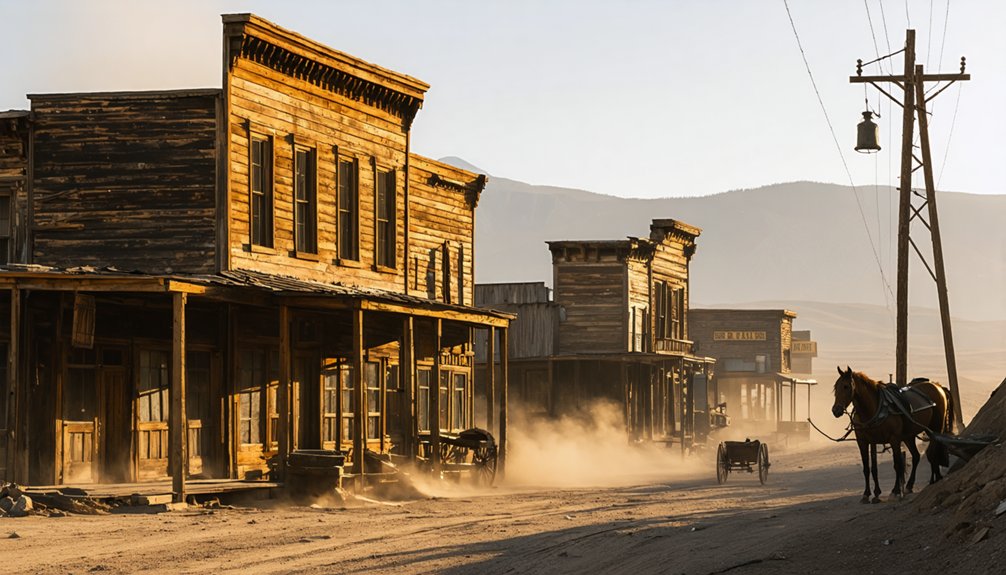
Ghost towns offer strategic survival advantages post-collapse through resource accessibility and defensive positioning. You’ll need to map water sources, establish sustainable foraging practices, and retrofit structures for communal living. Implement decentralized leadership, barter economies, and communication networks to build resilience. Health concerns from deteriorating infrastructure require constant monitoring, especially near industrial sites. Mastering these fundamental skills transforms forgotten spaces into thriving communities where society can emerge anew from the ruins.
Key Takeaways
- Structural assessment and retrofitting of abandoned buildings provides defensive advantages and sustainable shelter options.
- Implement mapping techniques for resource identification, using drones and ground surveys to locate water sources and foraging areas.
- Establish decentralized community governance with resource sharing networks to ensure fair distribution and prevent power consolidation.
- Develop bartering systems based on practical skills and knowledge, which become valuable currency in post-collapse economies.
- Create sustainable food and water security through rainwater collection, contamination testing, and establishing container gardens in viable locations.
Mapping the New Urban Wilderness: Where Ghost Towns Thrive

While humanity retreats from failed urban centers, the documentation of these spaces becomes essential for survival and potential rehabitation.
You’ll need both ground-level mapping and drone reconnaissance to understand the full scope of these new urban wildernesses.
Deploy drones at strategic altitudes to capture detailed imagery of urban wastelands, revealing patterns invisible from ground perspective. This aerial documentation builds temporal bridges between what these spaces were and what they might become.
When the birds fled, our drones inherited the skies—mapping the fractured geometries where tomorrow hides.
Meanwhile, plot bug-out routes on physical maps using colored pencils to maintain integrity during extended use.
Mark intermediary zones where survival gardening can flourish amid urban wildlife. These interstices—abandoned lots, empty buildings—represent your highest-value targets for resource collection and community development. Consider using Camilla Berner’s approach to document the urban interstices and their constantly changing characteristics for optimal resource identification.
The uncanny aesthetics of these ghost towns aren’t just haunting reminders; they’re blueprints for your future adaptation.
Incorporate narrative elements like makeshift bridges and repairs into your maps to highlight areas where survivor activity exists, creating a more accurate representation of the living history within these supposedly abandoned spaces.
Water and Food Security in Abandoned Cityscapes
Securing water and food within abandoned cityscapes forms the backbone of your survival strategy after mapping these ghost towns.
As you navigate through ghost towns submerged in rivers, it’s crucial to identify potential resources that may still be hidden beneath the surface. Engaging with local histories and folklore can lead to discoveries of long-lost treasures, while also shedding light on the reasons these communities vanished. The remnants of civilization offer both a cautionary tale and a treasure map for those willing to delve deeper into the liquid ruins.
You’ll encounter various water sources—from reservoirs that once submerged entire towns to rainwater catchment opportunities in decaying structures. Always test water quality before consumption; industrial contaminants and degraded sewage systems often compromise standing water.
For sustenance, assess local foraging possibilities while remaining vigilant about contamination in areas with industrial pasts like Love Canal.
Root cellars in ruins might yield preserved historical food or viable seeds. Eventually, establish sustainable production through container gardens or hydroponics in stabilized buildings.
Repurpose existing infrastructure wisely—reservoirs, cisterns, and storage pits can serve new functions with proper assessment.
Remember that drought conditions may reveal submerged town remnants, offering unexpected resource opportunities. Examine locations like Elbow Woods where excellent farmland along riversides might still retain fertility despite previous flooding.
During extreme droughts, you may find historic structures partially visible at St. Thomas, Nevada, providing temporary shelter while you gather resources from Lake Mead’s receding shoreline.
Shelter Strategies: Repurposing Vacant Buildings

Once you’ve secured basic water and food supplies, establishing proper shelter becomes your next critical priority in abandoned urban landscapes. Your survival depends on selecting structures with inherent defensive advantages and minimal deterioration.
Focus first on structural assessment of potential hideouts. Military bunkers and Cold War fallout shelters offer superior protection with reinforced concrete walls and sealed environments. High-density urban housing with thick concrete construction provides excellent radiation shielding without extensive modification. The dismantling of institutional care facilities since the 1960s has left numerous abandoned mental hospitals that offer substantial building footprints ideal for community resettlement.
Shelter retrofitting should prioritize systems that extend self-sufficiency: air filtration, greywater recycling, and renewable power integration. Reconfigure interior spaces for communal living while installing security measures like reinforced entry points and surveillance systems. Decommissioned missile silos, like the Survival Condo Project in Kansas, demonstrate how underground structures with thick walls can be converted into luxury living spaces that withstand extreme threats.
Don’t overlook underground industrial spaces—their isolation and existing infrastructure make them ideal for long-term habitation, especially when enhanced with food storage and proper insulation against environmental extremes.
Community Organization in Depopulated Areas
Surviving in ghost towns ultimately depends on establishing functional community structures that can withstand both external threats and internal discord.
You’ll need indirect democracy systems that allow all adults to participate in decision-making processes, creating legitimacy while preventing power consolidation.
Effective community leadership emerges organically through collaborative action rather than charismatic authority.
Implement a three-tier security command structure to distribute power while maintaining necessary hierarchy. Assign specialized conflict resolution roles to diplomatic individuals who can negotiate internal disputes before they threaten group stability. Establish judicial review processes to prevent any president from claiming absolute power.
Cultural programs aren’t luxuries—they’re survival necessities. Regular musical performances and artistic expression strengthen cohesion during high-stress periods. Educational initiatives should include comprehensive plant identification lessons to ensure safe foraging practices and prevent accidental poisonings.
Develop community identity symbols that reinforce belonging and prevent desertion.
Resource management requires categorized warehouse systems and hidden storage facilities, with decentralized distribution networks ensuring equitable access across your settlement’s population.
Health and Safety Concerns in Decaying Infrastructure

Living in abandoned urban environments presents significant health challenges that extend beyond mere survival concerns. Decaying infrastructure compounds existing health hazards, with industrial remnants posing the greatest threat.
You’ll face elevated risks of respiratory diseases, eye disorders, and certain cancers—particularly if you settle near former industrial complexes or landfills.
- Respiratory conditions worsen in areas with hydrogen sulfide exposure from deteriorating waste management.
- Mental health deteriorates due to isolation and the loss of community spaces.
- Chronic disease risk increases from limited physical activity opportunities and restricted access to nutritious food.
- Vector-borne disease threats emerge from standing water in crumbling structures.
- Vulnerable populations (elderly, children, those with pre-existing conditions) face disproportionate health impacts.
Small town residents are often exposed to higher environmental risks than those living in areas with more resources for infrastructure maintenance. Infrastructure resilience becomes critical as water systems fail, waste management collapses, and buildings deteriorate, amplifying disease transmission pathways. These deteriorated environments often create urban heat islands that can lead to temperatures 35°C higher than surrounding rural areas, exacerbating heat-related illnesses.
Economic Alternatives: Bartering and Micro-Economies
In ghost towns with collapsed monetary systems, you’ll need to establish connections within resource trading networks where direct item-for-item exchange becomes the norm.
Your survival skills—such as medical knowledge, mechanical repair, or food preservation—function as currency more valuable than paper money or digital assets in these micro-economies.
Building a reputation for fair trades and specialized expertise will open doors to more favorable bartering arrangements, especially in settlements that serve as regional trading hubs.
Resource Trading Networks
When societies collapse, traditional monetary systems quickly lose meaning, giving rise to resource trading networks that function through direct exchange of goods and services. Understanding barter dynamics becomes essential as you navigate these new economic realities.
Effective traders establish regular trade routes between settlements to capitalize on regional scarcity variations.
- Item-for-item exchanges eliminate middleman inefficiencies in collapsed systems
- Canned food, medical supplies, and practical tools command premium value
- One-time service contracts prevent exploitation while offering non-material trade options
- Professional traders at settlement outposts maintain surplus inventories for regular commerce
- Traveling merchants facilitate inter-community trade by transporting goods between isolated settlements
Reserve renewable commodities for building trade relationships while keeping non-renewable items for personal use.
Your reputation across settlements will determine future negotiation leverage, so honor your agreements consistently.
Skills Over Currency
The collapse of traditional currency systems transforms what society values, elevating practical skills to become the new wealth in post-apocalyptic economies. Your expertise in medicine, metalwork, carpentry, or protection services now functions as direct capital in skills exchange networks emerging between settlements.
Unlike physical goods, your knowledge can’t be stolen or depleted, making it sustainable currency. Establish yourself in barter workshops where communities gather to trade specialized services for essentials. These transactions create mutual dependency without the exploitation risks of long-term labor agreements.
Remember that reputation becomes integral to your economic value. Communities track reliability, and broken promises damage your trading potential.
Focus on developing versatile abilities that remain in constant demand—repair work, medical care, or security expertise—rather than stockpiling obsolete paper money or unstable community tokens.
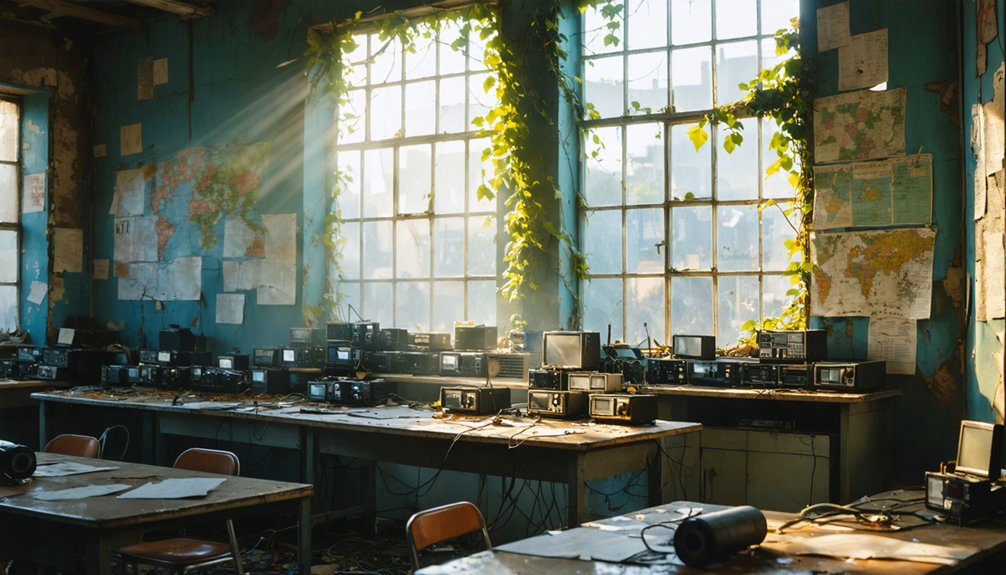
Communication networks represent the central nervous system of modern society, connecting individuals across vast distances and facilitating everything from commerce to governance.
When these systems fail, you’ll need to pivot toward communication resilience through alternative technologies that function without centralized infrastructure.
- Emergency radios provide access to broadcasts using independent power sources
- Ham and CB radios enable peer-to-peer communication across various distances
- Satellite phones maintain functionality if orbital systems remain intact
- Mesh networks like Reticulum offer decentralized digital communication options
- Legacy systems like SLFCS demonstrate how low-frequency transmission can survive catastrophic events
Your communication strategy should incorporate redundant layers—prioritize technologies that operate independently of the internet and power grid, maximizing your ability to gather intelligence and coordinate with others in a fragmented landscape.
Urban Foraging and Resource Reclamation Techniques
Urban foraging requires you to master the triad of strategic dumpster diving, water source identification, and abandoned property navigation to maximize resource yield.
You’ll need to prioritize commercial sites with predictable disposal patterns, while mapping accessible clean water nodes throughout your operational zone.
Evaluating vacant buildings for salvageable materials demands a calculated approach that balances risk exposure with resource acquisition potential.
Strategic Dumpster Diving
While many dismiss it as mere scavenging, strategic dumpster diving represents a sophisticated approach to resource reclamation in abandoned urban environments.
For urban survival success, you’ll need to develop resource mapping skills for ideal timing and location identification. Commercial zones often yield the highest returns with minimal effort.
- Conduct reconnaissance during daylight hours to identify ideal locations
- Prioritize grocery stores, retail outlets, and food establishments for essential supplies
- Rotate between different locations to avoid detection and maximize resource variety
- Use headlamps, gloves, and grabbing tools to improve efficiency and safety
- Network with other foragers to share intelligence about productive sites
When executed properly, this practice becomes a cornerstone of sustainable living in abandoned areas, providing food, clothing, electronics, and building materials without conventional market participation.
Water Source Identification
Finding reliable water sources remains perhaps the most critical skill for long-term survival in abandoned urban environments.
You’ll need to distinguish between safe groundwater and contaminated supplies through basic field techniques adapted from scientific protocols.
Collect water samples from various potential sources—abandoned wells, municipal systems, and natural springs—during both dry and wet seasons to establish baseline quality.
Look for post-1940s infrastructure, as these systems typically contain traceable chemicals that allow for contamination tracing.
Apply simplified isotope analysis by observing how water reacts with common substances; thermogenic contaminants (industrial) behave differently than biogenic (natural decay).
Document flow patterns from higher elevations to identify natural filtration pathways.
Prioritize deep well sources over surface water, as they’re less likely to contain recent contaminants from abandoned infrastructure.
Maneuvering abandoned properties requires methodical assessment and strategic resource identification to maximize survival opportunities while minimizing legal and health risks.
During abandoned property exploration, verify legal status first to avoid trespassing penalties. Conduct visual structural assessments before entry, prioritizing vegetation-rich areas over industrial zones for safer foraging potential.
- Target fruit trees in abandoned lots for immediate sustenance
- Salvage reusable building materials from stable structures
- Identify common edible urban plants like dandelion and lamb’s quarters
- Collect water containers and tools for survival utility
- Avoid areas with visible contamination indicators
For effective legal navigation, consult public records and join community networks to share knowledge about safe sites.
Rotate foraging locations to maintain ecological balance and practice discreet harvesting to preserve resources for future use.
Frequently Asked Questions
How Long Do Batteries and Generators Last Without Maintenance?
You’ll see battery lifespan vary dramatically: 2-10 years depending on type and conditions. Generators without regular maintenance typically fail within 1-2 years as fuel degrades and components seize.
Can You Legally Claim Abandoned Property in Ghost Towns?
Like untangling a briar patch, you can claim ghost towns through adverse possession, but you’ll face serious property rights constraints and legal challenges varying by state’s specific occupation requirements.
What Weapons Are Most Effective for Self-Defense in Collapsed Cities?
Compact melee weapons like knives and clubs offer your best self-defense strategies in collapsed cities. Consider weapon types that balance concealability, durability, and versatility without requiring ammunition or maintenance for ideal survival.
How Do Survivors Handle Mental Health Without Professional Services?
You’ll develop survivor support networks and practice daily routines. Implement breathing exercises, establish goals, and create meaningful projects. Cultivate gratitude, foster community connections, and utilize coping strategies through self-sufficiency activities.
Can Ghost Town Communities Establish Independent Governance Systems?
Yes, you’ll establish independent governance through community decision making systems like councils and consensus voting. You’ll create resource distribution protocols based on need, merit, or contribution to maintain order without external authority.
References
- https://themortgagepoint.com/2024/10/25/americas-new-ghost-towns/
- https://247wallst.com/special-report/2018/11/02/30-american-ghost-towns-3/
- https://www.youtube.com/watch?v=BCEJSNF6nW8
- https://www.youtube.com/watch?v=odbOj8W4V9o
- https://www.youtube.com/watch?v=WJnSGGfPv60
- https://unherd.com/2025/02/americas-post-apocalyptic-cities/
- https://www.yardi.com/blog/news/abandoned-america/38780.html
- https://mrsh.unicaen.fr/hce/index.php_id_1355.html
- https://www.youtube.com/watch?v=LT1GxhbJCKg
- https://masktactical.com/urban-survival-series-part-1/