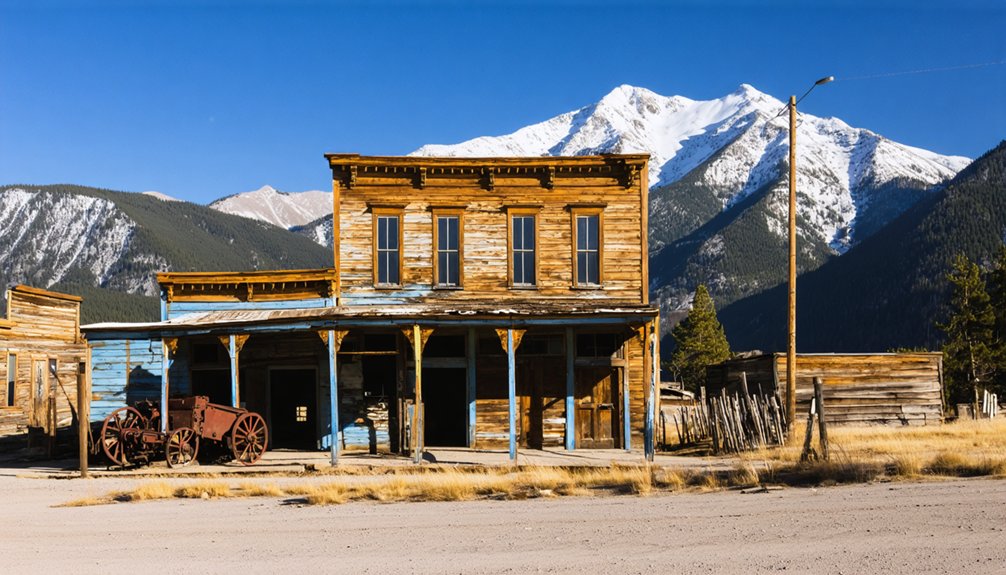
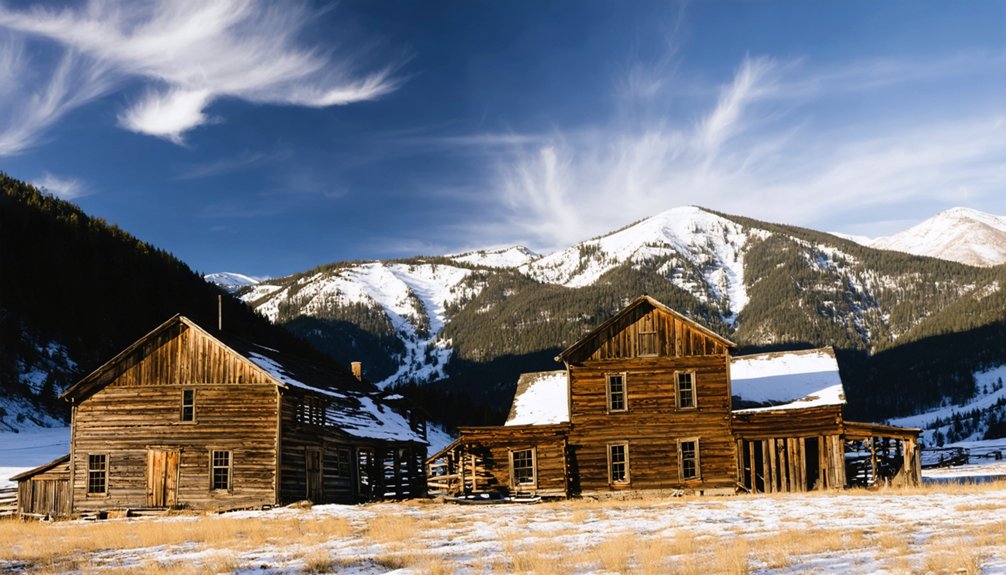
Ula briefly served as Custer County’s first county seat in 1877-1878 before losing status to Rosita. Named after a postal misspelling of Ute Chief Ouray’s name, this high-altitude settlement thrived on silver mining until the crash of 1893. You’ll find remnants of miners’ residences and original equipment at the Ute Ulay Mine and Townsite today, though access requires a high-clearance vehicle. The site’s preservation efforts keep Colorado’s mining heritage alive for curious explorers.
Key Takeaways
- Ula served as Custer County’s first county seat from 1877-1878 before declining after losing this status to Rosita.
- The town’s economy was primarily based on silver mining, with its decline accelerated by the silver crash of 1893.
- Located at over 8,000 feet elevation, Ula residents faced harsh winters and health challenges from altitude and mining.
- The Ute Ulay Mine and Townsite still features original mining equipment, partial buildings, and interpretive signage.
- Preservation efforts aim to maintain Ula’s historical structures and educate visitors about Colorado’s mining heritage.
The Brief Rise to County Seat Status
Though mainly forgotten today, Ula briefly held the distinction of being Custer County’s first county seat from 1877 to 1878.
As the earliest established community in the Wet Mountain Valley, Ula secured this administrative role shortly after Colorado achieved statehood in 1876. The town, whose name derives from a postal misspelling of Ute Chief Ouray’s name, served as the governmental hub for the region’s mainly English settler population. Ula lost its county seat status when Rosita took over in 1878, marking the beginning of political shifts in the area.
Ula’s legacy as county seat was short-lived but significant, marking the beginning of formal governance in this frontier region. The administrative center provided essential services to local ranchers and farmers before economic forces shifted the county’s power dynamics. It’s worth noting that Custer County name appears in multiple locations throughout the United States, making this particular county’s history distinctive.
Though brief in tenure, Ula’s role as county seat established the foundation for governance in this developing frontier community.
This brief period represents an important chapter in understanding Custer County’s developmental trajectory.
Silver Mining: The Foundation of Ula’s Economy
Ula’s political influence as county seat emerged directly from the economic forces that built the town—primarily silver mining. The discovery of valuable “horn silver” in 1878 created rapid growth throughout the region, with Ula benefiting from its proximity to these rich deposits.
Silver extraction in the area was challenging but profitable, focused primarily on:
- Processing high-grade horn silver (approximately 75% pure)
- Adapting mining technology to Colorado’s mountainous terrain
- Leveraging underground mining techniques for maximum yield
- Connecting to railroad networks for ore transportation
- Implementing innovations like roasting and magnetic separation
You’d find the local economy completely dependent on silver prices, which were artificially supported by federal legislation until 1893. Colorado faced economic devastation when the Sherman Silver Purchase Act was repealed, with Ula’s fate sealed as silver prices collapsed, ending the boom that had created this once-promising settlement. Before Silver Cliff emerged as a major settlement, Ula had initially served as the first county seat when Custer County was established in 1877.
Life in a High-Altitude Mining Settlement
If you’d lived in Ula, you’d have faced brutal winters at over 8,000 feet where temperatures plummeted below freezing, cutting off supply routes and occasionally freezing essential water sources like Henson Creek.
Your body would have struggled with the thin mountain air, causing altitude sickness symptoms that hampered physical work and everyday activities.
Despite these challenges, you’d have found community resilience in the town’s saloons and general stores where residents gathered, sharing preserved foods and waiting out storms that regularly isolated the settlement for weeks at a time. Mining operations would have dominated daily life, with many residents working in nearby claims where pay placer gold was discovered, similar to George A. Jackson’s 1859 find that had fueled rushes to other Colorado settlements.
Some miners reported finding significant quantities of turquoise deposits in the area, echoing the ancient mining traditions of the Ancestral Puebloans who had extracted the blue-green gemstone from Colorado’s mountains over a thousand years earlier.
Brutal Winter Survival
As winter descended upon Ula’s high-altitude settlement, survival became the primary focus for every resident.
You’d face brutal winter hardships from October through May, with temperatures plummeting far below freezing at 10,900 feet elevation. The thin air made physical labor more demanding while your poorly insulated cabin required constant feeding of scarce wood or coal to maintain heat.
Survival strategies became essential when:
- Supply routes disappeared under deep snow, isolating you completely for weeks
- Food stockpiles dwindled, sometimes forcing community evacuation
- Building maintenance became critical as snowdrifts damaged structures
- Medical emergencies went untreated with evacuation routes impassable
- Mental health deteriorated during months of isolation and darkness
The infamous 1884 blizzard forced residents to dig tunnels through 25-foot snowdrifts just to move between buildings.
You’d spend every day battling frostbite, respiratory illness, and starvation in this unforgiving mountain environment. Similar to the winter of 1881-1882, mining operations nearly ceased with only a handful of miners continuing to work through the harsh conditions.
Isolated Community Resilience
Living in isolated mining settlements like Ula required extraordinary resilience that you’d develop through necessity and community cooperation.
You’d face steep prices for basic goods, prompting resource sharing and barter systems to stretch limited supplies.
Your community would establish informal governance through miners’ courts and committees, creating structure amid isolation.
You’d participate in dances, church gatherings, and community events to maintain morale in harsh conditions.
When confronting environmental challenges, you’d adapt your building techniques to withstand heavy snow loads and fierce mountain winds.
Water management became critical, as you’d harness mountain streams for both mining operations and daily needs.
You’d likely diversify your skills beyond mining—perhaps taking up ranching, blacksmithing, or trading—as insurance against the boom-bust cycles that threatened your settlement’s economic stability.
The economic disparity was stark as mine owners became wealthy while you earned approximately $3.00 per day for dangerous underground work in 1892.
Altitude Sickness Challenges
When you arrived at Ula’s altitude of nearly 11,000 feet, your body immediately faced a physiological battle with the thin mountain air. The reduced oxygen pressure triggered high altitude physiology responses—headaches, dizziness, and breathlessness that limited your mining capabilities. Similar to the abandoned town of Animas Forks, Ula’s extreme elevation created unique survival challenges for its residents.
Winter’s harsh winds and snowstorms only intensified these effects, restricting access to medical aid.
Mining health risks were particularly severe at Ula because:
- Physical labor increased oxygen demand while supply remained critically low
- Cold temperatures amplified respiratory distress and hypothermia risk
- Rapid settlement patterns prevented proper acclimatization
- Increased blood viscosity from polycythemia strained your cardiovascular system
- Isolation during storms meant no evacuation for serious altitude sickness cases
Your survival depended on gradual adaptation strategies and community resilience against these relentless physiological challenges.
The Transfer of Power to Rosita in 1878
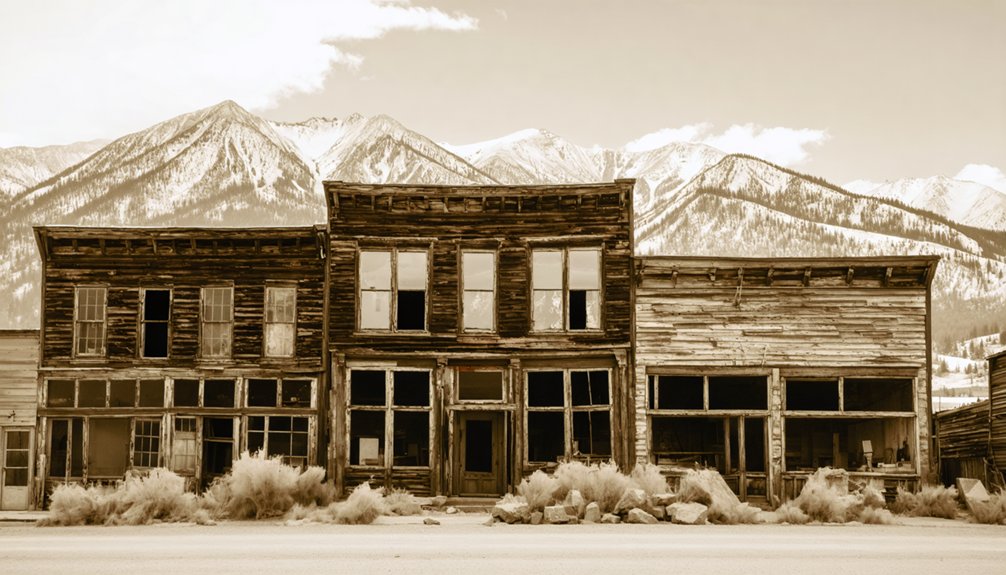
The political landscape of Custer County underwent a dramatic shift in 1878 when Ula relinquished its county seat status to the burgeoning mining town of Rosita.
This transfer of power reflected the changing economic realities of the region, as Rosita’s silver mining operations had generated substantial wealth and population growth.
The historical significance of this change can’t be overstated. After just one year as the temporary county seat (1877-1878), Ula’s ranching-based economy simply couldn’t compete with Rosita’s booming mining industry.
The ephemeral reign of Ula crumbled against the silver-backed might of Rosita’s industrial dominance.
The political dynamics favored the more prosperous town, which boasted nearly 2,000 residents, two newspapers, multiple hotels, and various businesses.
Rosita’s victory proved short-lived, however. By 1886, Silver Cliff would capture the county seat as mining fortunes shifted yet again.
Demographic Shifts During the Boom Years
While Rosita flourished with its newfound political status, Ula’s population underwent significant fluctuations throughout the 1870s and early 1880s.
The demographic trends mirrored the volatile nature of mining towns during Colorado’s Silver Boom, with Ula experiencing the classic boom-and-bust cycle common to frontier settlements.
- Population surged during initial silver discoveries, drawing prospectors from eastern states
- Skilled miners from Cornwall and Ireland formed distinct cultural enclaves
- Chinese laborers arrived to work lower-paying positions, facing discrimination
- Families followed single men as the settlement stabilized, bringing social structure
- Population declined rapidly when richer veins were discovered elsewhere
You’ll find these population fluctuations typical of Colorado’s mining communities, where citizens voted with their feet, following opportunity rather than remaining loyal to any single location.
The Gradual Descent Into Abandonment

You’ll find Ula’s economic collapse followed a predictable pattern, beginning with the silver crash of 1893 that devastated the town’s mining-based economy within eighteen months.
The transfer of the county seat to nearby Westcliffe in 1886 had already stripped Ula of its administrative significance, accelerating population decline as government jobs disappeared.
Economic Collapse Timeline
Boasting a rapid rise in the late 1880s, Ula’s economic collapse followed an equally dramatic but more protracted descent into abandonment over several decades.
You’ll witness a classic case of resource depletion leading to inevitable economic failure, as the once-thriving mining town couldn’t sustain its prosperity once gold and silver reserves diminished.
- Gold Prince Mill’s bankruptcy in 1907 signaled the beginning of the end
- Complete mill closure in 1910 triggered mass exodus of residents
- Failed revival attempts in the 1920s and 1960s couldn’t overcome fundamental resource limitations
- No alternative industries emerged to replace the mining economy
- Infrastructure deteriorated rapidly without ongoing investment
The town’s collapse demonstrates how quickly prosperity can evaporate when built on finite resources without economic diversification—a stark reminder of freedom’s connection to sustainable economic foundations.
County Seat Transfer
Ula’s economic demise began even earlier than the mining collapse, marked by a significant political shift that stripped the settlement of its administrative importance.
After serving merely one year as Custer County’s temporary seat in 1877-1878, voters democratically transferred this status to Rosita, reflecting the shifting political dynamics of the region.
While Rosita flourished for eight years as county seat with diverse businesses including hotels, saloons, and a newspaper—supported by active silver mining—Ula lacked comparable economic drivers.
The transfer removed essential administrative functions and associated jobs from Ula, triggering population decline as residents migrated toward more promising opportunities.
These economic fluctuations mirrored the boom-and-bust cycle common in mining regions, where county seats followed prosperity.
Without sufficient infrastructure or industry to sustain itself, Ula’s abandonment was accelerated, leaving behind only scattered remnants.
What Remains of Ula Today
Despite decades of abandonment, the Ute Ulay Mine and Townsite stands as a tribute to Colorado’s rich mining history. As you explore this National Historic District, you’ll find original cabins, mine entrances, and foundations scattered throughout the alpine landscape.
Historical preservation efforts have stabilized key structures, though many remain in picturesque decay.
When visiting the site, you’ll discover:
- Original mine equipment and ore carts near tunnel entrances
- Partial walls and roofs of former miners’ residences
- Interpretive signage explaining the site’s historical significance
- Protected artifacts offering glimpses into daily frontier life
- Stunning mountain vistas surrounding the weathered structures
Access requires a high-clearance vehicle along the Alpine Loop, and winter snow limits seasonal visitation.
Comparing Ula to Other Colorado Ghost Towns
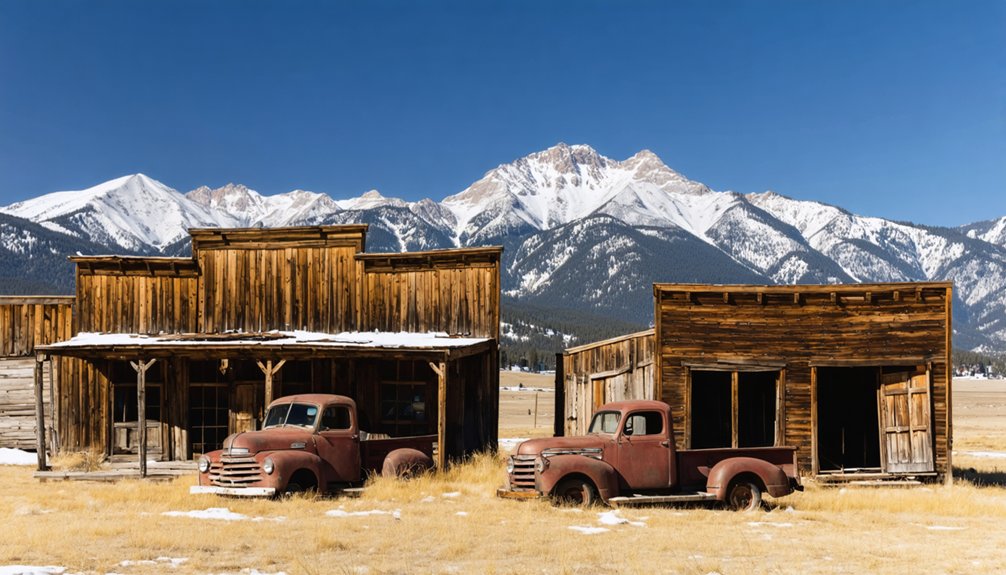
While Ula offers a compelling glimpse into Colorado’s mining past, it represents just one chapter in the state’s rich tapestry of ghost towns. Unlike Rosita, which reached 1,500 residents with profitable silver mines and diverse businesses, Ula’s legacy was cut short when it lost county seat status in 1878.
Compared to Alta and Gilman, which peaked at 1,500 and 2,000 residents respectively, Ula never achieved the same prominence. While Alta earned a spot on the National Register of Historic Places and Gilman became notorious for toxic contamination, Ula faded more quietly.
Unlike St. Elmo with its preserved wooden structures, Ula left fewer physical remnants. This pattern reflects how mining techniques and economic diversity influenced longevity—towns like Rosita with multiple industries outlasted single-purpose settlements like Ula.
Preserving the Memory of Lost Mining Communities
Throughout Colorado’s rugged landscapes, the preservation of ghost towns like Ula depends on a coordinated network of dedicated organizations and funding sources. History Colorado and the State Historical Fund have pioneered preservation strategies that combine financial grants with technical expertise, ensuring these fragile remnants survive for future generations.
In addition to Ula, other ghost towns near Bijou Basin offer a glimpse into Colorado’s past, drawing tourists and historians alike. These sites, once bustling with life, now stand as haunting reminders of the mining boom and the communities that thrived there. Efforts to preserve these areas are vital, not only for education but also for the cultural heritage they represent.
Community engagement remains the cornerstone of successful ghost town preservation efforts:
- Local historical societies raising funds through membership drives and tourism
- Volunteer docents providing on-site education and monitoring
- Emergency stabilization projects receiving up to $330,000 in grant funding
- National Register listings offering legal protection against destruction
- Collaborative efforts between preservation organizations creating living classrooms
You’ll find these preservation initiatives not only protect physical structures but maintain the cultural heritage that defines Colorado’s identity, keeping the spirit of these lost mining communities alive through careful documentation and restoration.
Frequently Asked Questions
Are There Any Accessible Ruins or Structures to Visit Today?
Nearly 90% of Colorado’s ghost towns have disappeared completely. You won’t find accessible landmarks at Ula today, as ghost town exploration there reveals only scattered foundations and minimal remains of this once-thriving mining settlement.
plan your ghost town adventure in Ula by wandering through its remnants and imagining the lives that once flourished in this isolated space. As you stroll along the cracked pathways, the stories of miners and their families linger in the air, inviting you to uncover the history embedded in these silent ruins. Make sure to bring a camera to capture the eerie beauty of what remains, as each photo can tell a tale of the past.
In addition to the echoes of Ula, there are intriguing ghost stories from Animas, Colorado that entice those curious about the supernatural. Local legends speak of spectral miners still searching for gold and mysterious figures wandering the trails at night, adding a chilling charm to the already haunting landscape. Venturing into Animas might just unveil tales that connect the past to the present in eerie and unexpected ways.
Did Any Famous Historical Figures Ever Visit Ula?
No famous historical figures are documented as having visited Ula. The town’s history doesn’t record notable Ula visitors, focusing instead on its brief role as county seat before declining.
What Happened to the Residents After Ula Was Abandoned?
You won’t find records of Ula residents’ ultimate fates after abandonment. Many likely relocated to nearby mining communities or agricultural centers when economic prospects dwindled in the early 1900s.
Were There Any Notable Crimes or Lawlessness in Ula?
Unlike 60% of Colorado’s mining towns, you’ll find no documented evidence of significant crime history in Ula. Historical records show no lawlessness or law enforcement challenges that plagued neighboring settlements.
Did Ula Have Any Unique Cultural or Religious Institutions?
You won’t find unique cultural practices or religious beliefs in Ula’s history. The settlement was too small and short-lived to develop distinctive institutions before declining after losing its county seat status.
References
- https://www.uncovercolorado.com/ghost-towns/rosita/
- https://www.coloradolifemagazine.com/printpage/post/index/id/172
- https://www.uchealth.org/today/ghost-towns-abound-in-colorado/
- https://en.wikipedia.org/wiki/List_of_ghost_towns_in_Colorado
- https://aspenhistory.org/independence-ghost-town/
- https://ghosttownmuseum.com/our-story/
- https://www.colorado.com/articles/colorado-ghost-towns
- https://www.youtube.com/watch?v=CCXuJJiQDfA
- https://en.wikipedia.org/wiki/Custer_County
- https://www.wikiwand.com/en/map/Ula