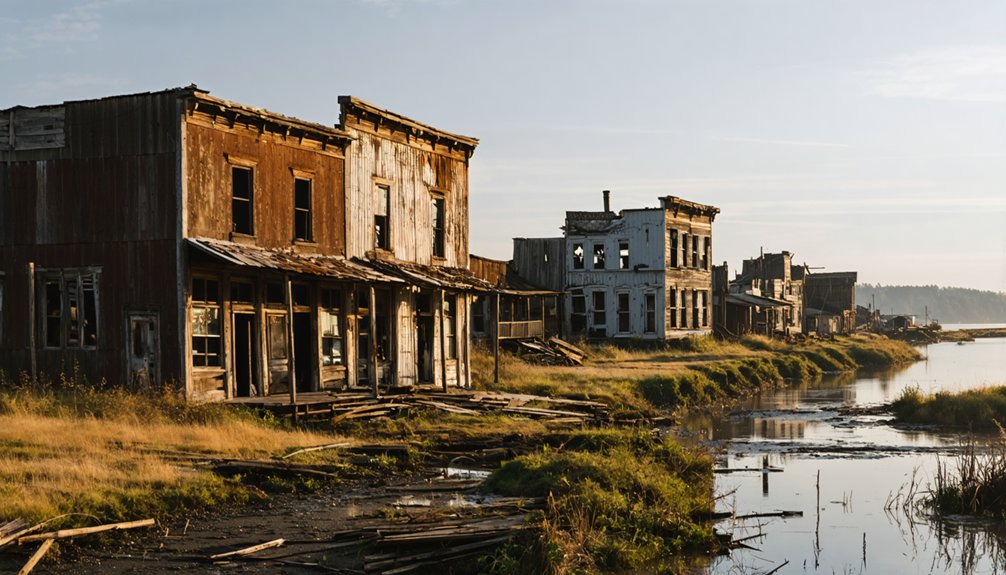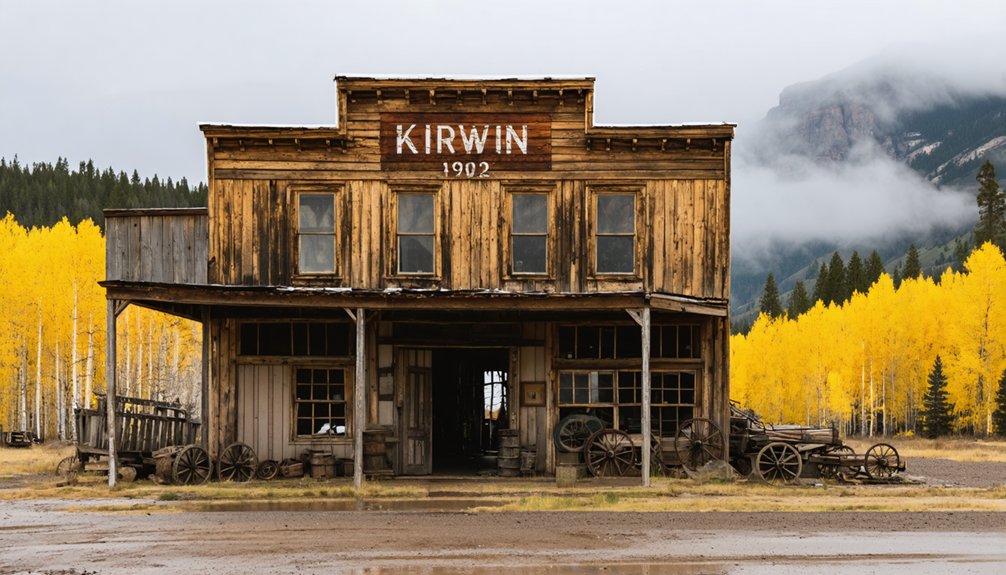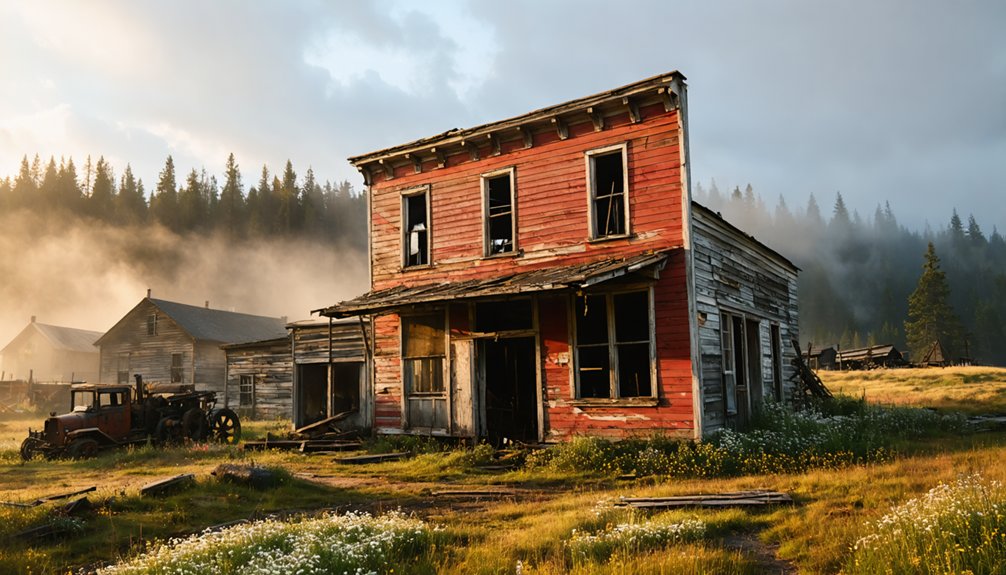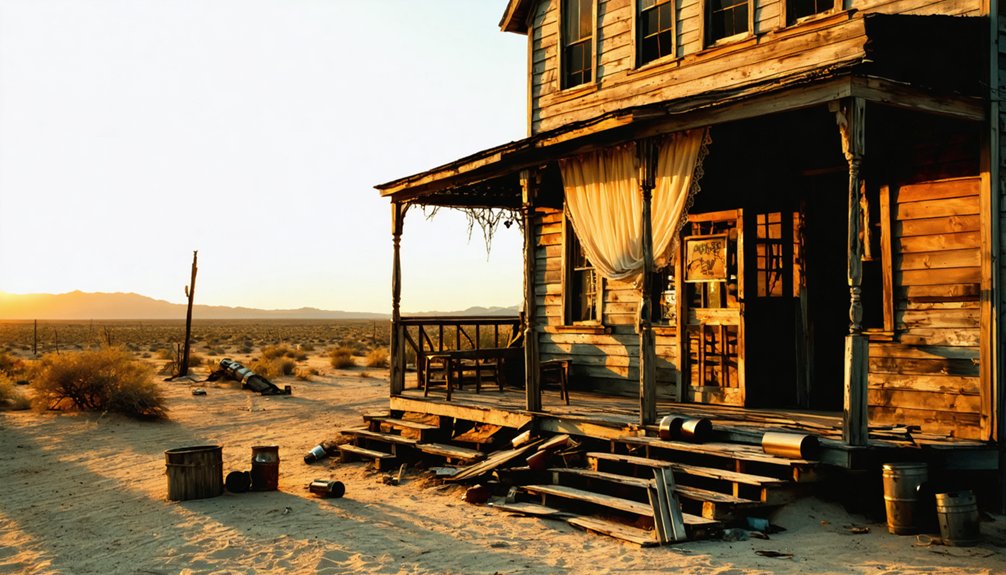
Ghost towns harbor more than abandoned buildings—they contain supernatural imprints from mining tragedies and historic events. You’ll encounter spectral miners in places like Bodie, California, and Virginia City, Nevada, where shadowy figures and unexplained footsteps are commonly reported. These sites, preserved through “arrested decay,” attract paranormal investigators who document electromagnetic fluctuations and temperature anomalies. The $32 billion dark tourism industry guarantees these haunted settlements remain suspended between past and present, waiting to reveal their secrets.
Key Takeaways
- Mining tragedies create enduring supernatural narratives with apparitions of miners and widows reported in abandoned shafts.
- Ghost towns like Bodie, Virginia City, and Jerome feature well-documented spectral encounters in historic buildings frozen in time.
- Environmental disasters transform locations into liminal spaces where natural reclamation intertwines with supernatural manifestations.
- Submerged towns generate unique hauntings, with local legends claiming drowned church bells still chime beneath lakes.
- Documenting paranormal activity requires specialized equipment to capture temperature fluctuations, electromagnetic variations, and infrared anomalies.
The Ghostly Whispers of Abandoned Mining Towns
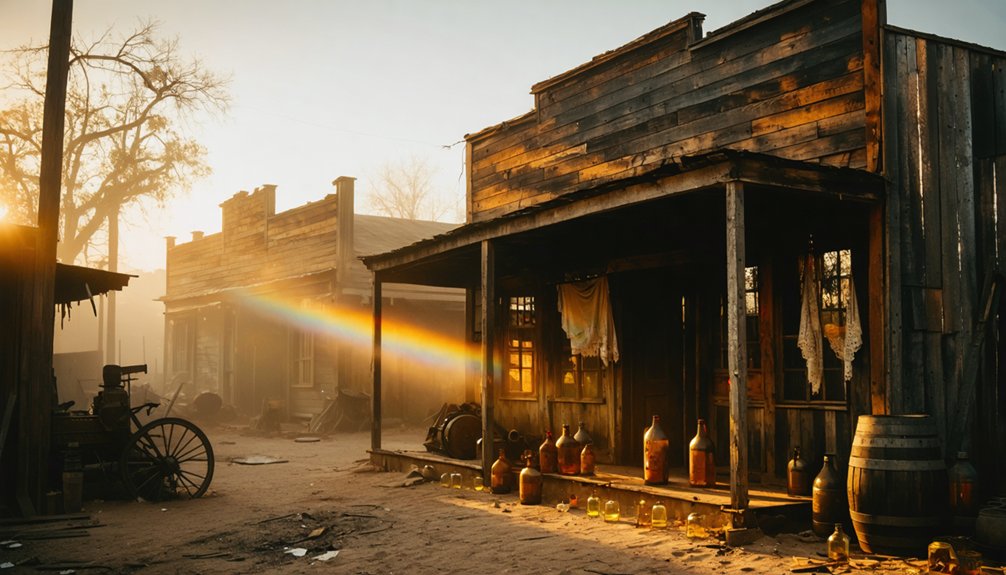
While traversing the rugged landscapes of the American West, you’ll encounter the skeletal remains of once-thriving mining communities, now reduced to weathered foundations and crumbling structures.
These ghost towns, primarily situated in harsh mountainous regions and desert terrains, harbor more than historical remnants.
The desolate shells of frontier ambition conceal spectral memories alongside their weathered artifacts.
You’ll discover that mining tragedies have left supernatural imprints across these abandoned settlements. Former boomtowns that once bustled with thousands now echo with reported ghostly encounters—shadowy figures moving through empty saloons and faint footsteps in deserted mine shafts.
These paranormal narratives often stem from the dangerous working conditions that claimed countless lives. When you explore these sites, listen for whispers near collapsed mine entrances or watch for apparitions of mining widows still waiting for husbands who never returned. Beneath the waters of Lake Pactola, an entire submerged mining town holds its own mysterious underwater legends. The eerie ruins of Bodie, California stand as one of the most authentic ghost towns with well-preserved buildings that appear frozen in time since its abandonment in the 1940s.
When Nature Reclaims: Disaster-Driven Hauntings
You’ll find subsurface fires creating a perpetual apocalyptic landscape in places like Centralia, where toxic fumes rise through cracked earth and abandoned homes stand as monuments to nature’s destructive persistence.
Rising floodwaters in other ghost towns have transformed streets into eerie canals, their submerged ruins becoming sanctuaries for aquatic life while simultaneously harboring tales of spectral inhabitants who refuse to depart.
These disaster zones exist in a haunting liminal state—neither fully reclaimed by nature nor inhabited by the living—where the boundary between natural phenomena and supernatural manifestation blurs into compelling ghost town lore. In Pripyat, the aftermath of the Chernobyl disaster has created a time capsule of Soviet life with schools still containing books and chalkboards frozen in 1986. The wildlife in the area has flourished unexpectedly, with increased animal populations returning to inhabit the abandoned urban environment.
Subsurface Fires Linger
Beneath the abandoned streets of certain ghost towns, an insidious phenomenon continues long after human inhabitants have fled: underground fires that burn relentlessly for decades or even centuries.
You’ll find these subsurface fire hazards primarily in former mining communities where coal seams ignite and create apocalyptic landscapes of toxic underground coal emissions.
- Centralia, Pennsylvania’s fire has burned since 1962 and will continue for another 250 years
- Sinkholes up to 150 feet deep form when supporting coal veins burn away
- Toxic gases and steam emerge from fissures, creating an otherworldly atmosphere
- Infrastructure collapses as thermal damage weakens foundations
These persistent fires transform communities into uninhabitable wastelands where nature’s destructive force manifests through smoke-filled landscapes.
The eerie sight of vapor rising from cracked earth contributes to the ghostly reputation these locations acquire. Toxic fumes continue to pose serious health hazards to the handful of remaining residents who refused to leave Centralia. In 1981, the dangers of Centralia’s underground fire became dramatically evident when a young boy named Todd Domboski nearly fell into a suddenly-formed sinkhole, prompting authorities to accelerate relocation efforts.
Floodwaters Harbor Spirits
As water slowly rises to claim towns destined for submersion beneath man-made reservoirs, a different kind of presence emerges from these intentionally flooded communities across America.
You’ll find these flooded spirits particularly active along the shores of Lake Mead and the Grand Coulee Dam, where eleven towns disappeared underwater.
At Flagstaff, Maine, locals insist the submerged church bell still chimes beneath the surface. The displacement of ancestral graves in Proctor, Tennessee has left spirits wandering, unable to reach their final resting places.
These submerged memories aren’t simply American phenomena. Cross-culturally, flooded towns generate supernatural accounts—whether Italy’s Uria, with its miraculous crucifix narrative, or Native American traditions viewing floods as divine transformation. Like other flood legends throughout history, these stories often frame water as both life-giver and destroyer. Many indigenous flood myths like those of the Hopi and Puebloans describe catastrophic waters reaching nearly to mountain peaks.
Archaeological evidence from Mesopotamia suggests these water-burial stories may contain kernels of historical truth beneath their supernatural veneer.
Spectral Figures of the American Frontier
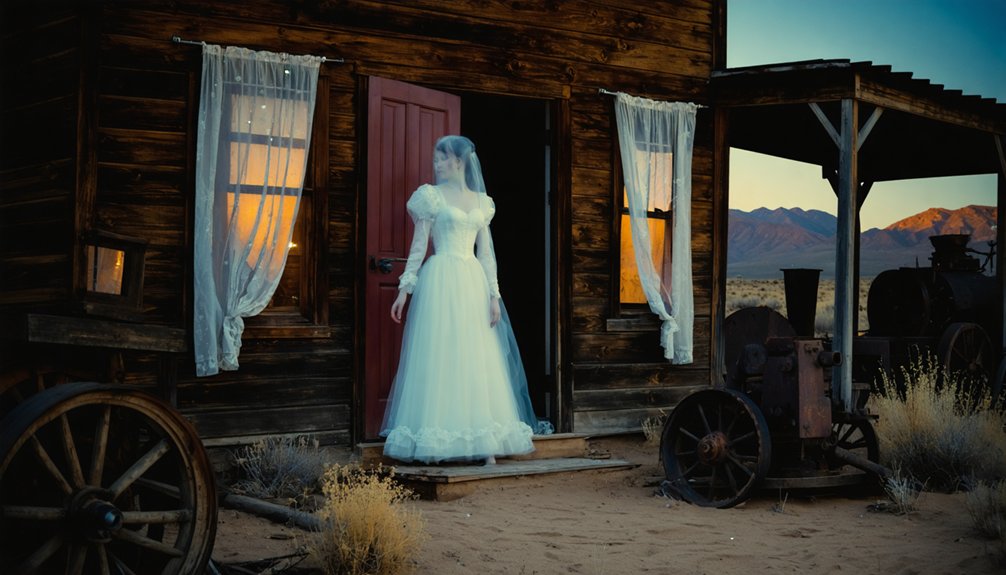
The spectral figures of the American frontier represent a fascinating convergence of cultural beliefs, historical trauma, and supernatural imagination. When you explore these haunting manifestations, you’ll discover a rich spectral symbolism emerging from the cultural fusion of Native American, Mexican, and Euro-American traditions.
These ghostly tales reflect the harsh realities of frontier life—violent deaths, moral ambiguities, and unresolved injustices. American folklore continues to preserve these supernatural narratives as part of its dynamic cultural expression. The eerie stories of places like the Birdcage Theatre in Tombstone remain some of the most compelling examples of Old West hauntings.
- The Mothman with glowing red eyes serves as an ominous harbinger of disaster
- La Llorona’s mournful presence throughout the Southwest embodies tragic loss
- Headless spectral cavalry carries the unresolved tensions of historical conflicts
- Ghost stories functioned as communal coping mechanisms in uncertain frontier environments
As you examine these frontier apparitions, you’re witnessing how communities processed their fears, traumas, and encounters with the unknown—their spirits continuing to haunt the American landscape and consciousness.
Paranormal Hotspots: America’s Most Haunted Ghost Towns
From the ethereal figures that haunted the American frontier, we now turn to their physical dwelling places—the abandoned settlements that continue to resonate with paranormal activity long after their populations have vanished.
You’ll find America’s most haunted ghost towns scattered across the West. Virginia City, Nevada, once home to 25,000 during the Comstock Lode era, now hosts spectral sightings at the Silver Queen Hotel.
Bodie, California stands preserved with reports of miners’ spirits moving objects inexplicably. In St. Elmo, Colorado, shadow figures haunt the historic hotel, while Jerome, Arizona’s steep streets lead to the Grand Hotel’s ghostly encounters.
Calico, California rounds out these paranormal hotspots, where disembodied voices echo through the schoolhouse and general store. Each location offers a glimpse into a violent past where mining disasters, fires, and lawlessness created the perfect conditions for supernatural phenomena.
The Living Dead: How Tourism Keeps Ghost Towns Alive

Ghost towns, once abandoned relics of the past, now survive primarily through tourism economies that generate billions in revenue while preserving historical structures.
You’ll find that visitor spending supports local small businesses, with tourism accounting for over 50% of income in many revitalized locations.
Your interest in these destinations directly contributes to preservation efforts, as communities adapt by developing heritage attractions and repurposing historic buildings for sustainable cultural engagement.
Tourism’s Economic Impact
While many abandoned settlements lie dormant across the American landscape, their economic potential has been revitalized through the phenomenon of ghost town tourism, generating substantial revenue streams for surrounding communities.
When you visit these historic sites, you’re contributing to economic sustainability through a global dark tourism market valued at nearly $32 billion in 2023, with projected growth to $38.64 billion by 2030.
- Ghost town trails attract tens of thousands of visitors annually, with documented spending of $1.7 million on soft goods and accommodations.
- Couples represent 41.8% of dark tourism revenue, seeking unique historical experiences.
- Tourism creates employment in hospitality, retail, and service sectors in often rural areas.
- Community engagement increases as tourism stimulates investment in infrastructure and diversifies local economies.
Preservation Through Visitation
The paradox of preservation through visitation represents a fundamental conservation principle within ghost town management—these abandoned places require human presence to remain intact.
Through responsible engagement, you’re not merely observing history but actively participating in its continuation. When you follow “Leave No Trace” principles and respect site-specific regulations, you contribute to the “arrested decay” aesthetic that defines these haunting landscapes.
Community stewardship thrives when you support local guides and artisans, allowing tourism revenue to flow directly into conservation projects.
By engaging with community-led educational programs, you help transmit traditional knowledge while strengthening cultural identity.
The regenerative tourism model invites you to leave these destinations better than you found them—participating in restoration initiatives and spreading visits throughout the year minimizes environmental impact while maximizing preservation benefits.
Beyond the Visible: Documenting Supernatural Encounters
Capturing evidence of paranormal phenomena requires both methodical approach and specialized equipment, especially when investigating abandoned settlements with reported ghostly activity.
Your evidence collection should incorporate multiple tools to strengthen credibility. Temperature fluctuations, particularly cold spots, often indicate potential entity engagement, though you’ll need to rule out natural drafts first.
- EMF detectors capture electromagnetic variations associated with spiritual presences
- Infrared cameras document temperature anomalies invisible to the naked eye
- Audio recorders may capture EVPs (electronic voice phenomena) missed during live investigations
- Multiple evidence types strengthen your documentation over single-method reliance
Always secure permission before investigating properties, as trespassing undermines credibility.
When reviewing your collected data, remain critical—distinguishing between genuine paranormal activity and environmental anomalies requires objective analysis of all gathered evidence.
Preserving Haunted History: Conservation Efforts and Challenges
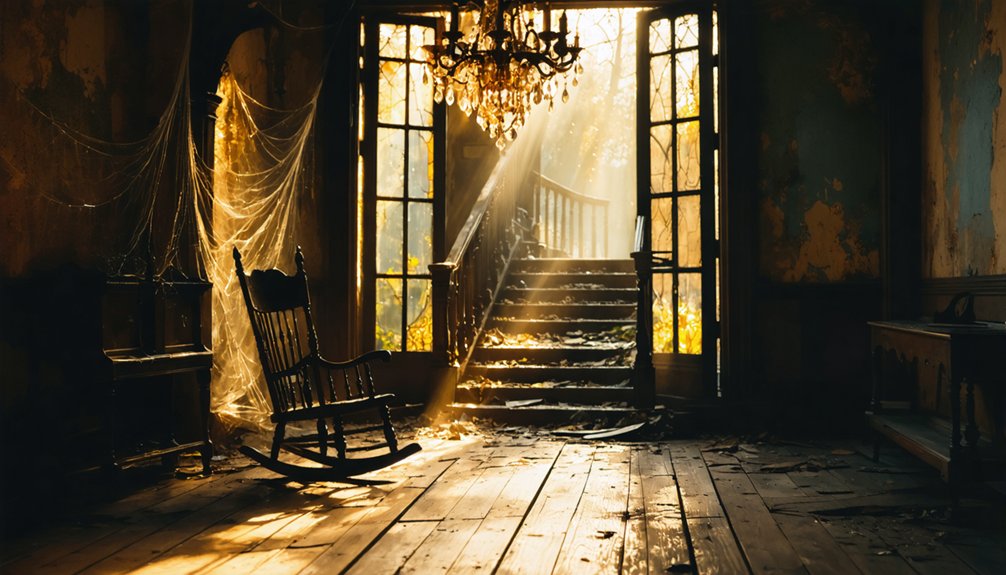
Preserving ghost towns with paranormal histories presents unique conservation challenges beyond those encountered during evidence collection.
Exploring abandoned places in the western states can reveal fascinating stories of human endeavor and resilience. These sites often serve as haunting reminders of the past, attracting both adventurers and history enthusiasts. Documenting their decay and cultural significance is crucial for understanding the broader impacts of time and neglect on our environment.
The “arrested decay” approach, as exemplified in Bodie, California, maintains authenticity while stabilizing structures that may house spiritual energy.
Funding challenges plague most preservation efforts, with projects often requiring millions in combined grants and donations.
The $570,000 raised for a Colorado project illustrates the substantial investment needed for haunted historical sites. Limited federal resources necessitate creative financing through community engagement and volunteer initiatives.
Organizations like the Ghost Town Club of Colorado coordinate preservation work while respecting both historical significance and reported supernatural activity.
Their partnerships with local stewardship groups establish sustainable maintenance strategies that honor both tangible and intangible heritage.
Digital documentation methods now capture architectural details while potentially recording paranormal phenomena, creating thorough archives of these mysterious locations.
Frequently Asked Questions
Can Modern Construction in Ghost Towns Disturb or Increase Paranormal Activity?
While urban disturbances lack scientific validation, you’ll find construction impact frequently correlates with increased paranormal reports, primarily due to psychological suggestion, environmental changes, and heightened cultural sensitivity to historical disturbances.
What Scientific Equipment Do Paranormal Investigators Use in Ghost Towns?
You’ll employ EMF meters to detect electromagnetic fluctuations, EVP recorders to capture voices, thermal cameras for temperature anomalies, SLS cameras for mapping entities, and environmental monitors to document atmospheric changes during investigations.
Are There Seasonal Patterns to Reported Ghost Sightings?
Yes, you’ll find seasonal fluctuations in ghostly apparitions, with peaks during autumn and spring changeover periods. Warm, humid conditions and thunderstorms also correlate with increased paranormal activity according to investigative data.
How Do Indigenous Spiritual Beliefs Interpret Ghost Town Hauntings?
Indigenous spiritual beliefs view ghost town hauntings as manifestations of unsettled souls with cultural perspectives emphasizing spiritual connections to land. You’ll find these interpretations rooted in traditions where abandoned places harbor lingering spirits.
Can Visitors Take Artifacts From Ghost Towns Without Consequences?
Absolutely not. You’ll face severe legal implications including hefty fines, imprisonment, and equipment confiscation if caught removing artifacts. Artifact preservation laws strictly prohibit unauthorized collection from both public and private ghost towns.
References
- https://www.christywanders.com/2024/08/top-ghost-towns-for-history-buffs.html
- https://www.visittheusa.com/experience/5-us-ghost-towns-you-must-see
- https://www.geotab.com/ghost-towns/
- https://www.youtube.com/watch?v=yeTVfoQxqJc
- https://www.atlasobscura.com/lists/americas-best-preserved-ghost-towns
- https://en.wikipedia.org/wiki/Lists_of_ghost_towns_in_the_United_States
- https://www.blackhillsbadlands.com/blog/post/old-west-legends-mines-ghost-towns-route-reimagined/
- https://www.newmexico.org/places-to-visit/ghost-towns/
- https://www.visitutah.com/things-to-do/history-culture/ghost-towns
- https://www.youtube.com/watch?v=Bp2IcEQsWEM