When you visit Virginia City and Nevada City in Montana’s Madison Valley, you’re stepping into two of the American West’s most intact gold rush settlements. Bill Fairweather’s 1863 Alder Gulch strike drew 10,000 people almost overnight, producing an estimated $30 million in gold within three seasons. Economic stagnation, rather than active planning, preserved the original 1860s streetscapes you’ll find today. The full story of how these towns survived—and what you’ll actually encounter there—runs deeper than it first appears.
Key Takeaways
- Virginia City and nearby Nevada City are historic ghost towns preserved from the 1863 Alder Gulch gold rush in Montana.
- Bill Fairweather’s gold strike in 1863 brought roughly 10,000 people, extracting an estimated $30 million in early mining seasons.
- Original 1860s buildings, boardwalks, and storefronts remain largely intact, offering a documented record of frontier commercial life.
- Both towns are managed collectively by the Montana Heritage Commission, preserving 248 buildings across a one-mile corridor.
- Visitors can explore the sites through self-guided tours running from late May to mid-September each year.
The 1863 Gold Rush That Built Virginia City
On May 26, 1863, a prospecting party led by Bill Fairweather struck gold in Alder Gulch, triggering one of the most consequential mineral rushes in the American West. You’re looking at what historians recognize as the richest placer gold strike in the Rocky Mountains.
Within a year, roughly 10,000 people flooded settlements along the gulch, transforming wilderness into a functioning mining economy almost overnight. Early gold extraction relied on placer mining technology — sluice boxes, rockers, and hand tools — methods that let individual prospectors operate independently without corporate backing.
During the first three seasons alone, miners pulled an estimated $30 million in gold from Alder Gulch. That scale of production built Virginia City rapidly, establishing it as the dominant commercial and political center of Montana’s territorial frontier.
How Virginia City Went From Boomtown to Ghost Town
As gold extraction intensified through the late 1860s, the most accessible placer deposits in Alder Gulch were exhausted, and the independent prospectors who’d built Virginia City began leaving for newer strikes elsewhere.
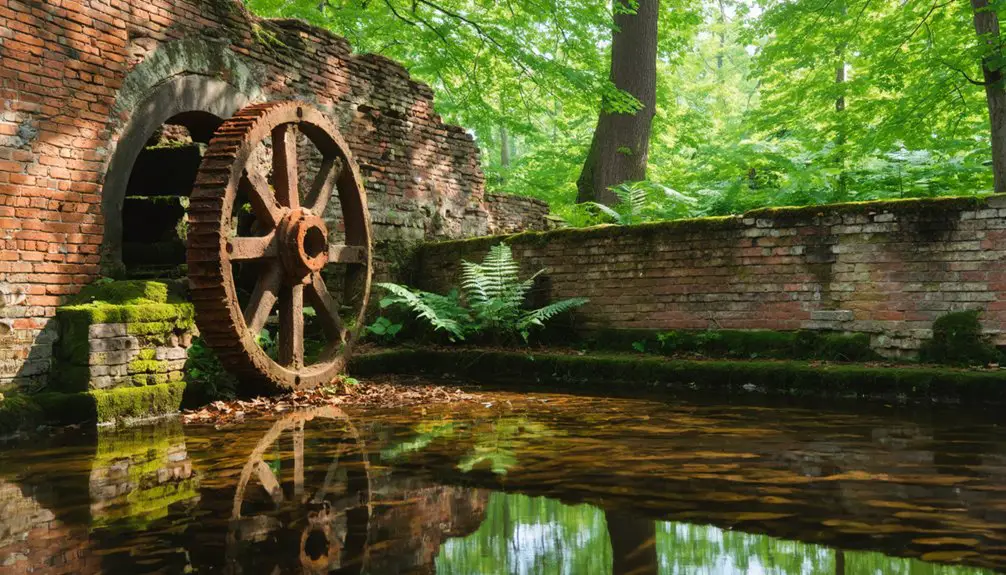
Advances in mining technology shifted control from individual miners to industrial dredging operations, which ran from 1898 to 1922 and systematically dismantled surrounding communities. You can still see evidence of this transformation in the scarred landscape of tailings and dredge ponds left behind.
Virginia City’s town architecture survived largely because the population decline was gradual rather than sudden. By the 1940s, only about 100 residents remained.
The town didn’t vanish entirely, but it shed its boomtown identity and drifted toward preservation—a trajectory that ultimately saved its historic built environment from demolition or redevelopment.
Preserved Buildings, Boardwalks, and What Survives From the 1860S
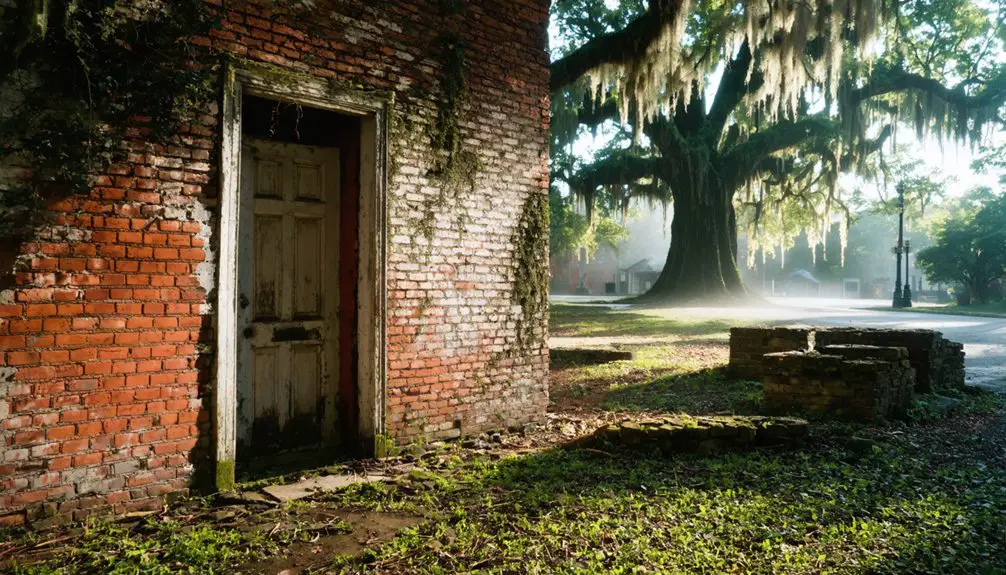
What the population decline ultimately preserved is now visible in Virginia City’s streetscape, where original 1860s-era buildings, boardwalks, and storefronts remain largely intact. Historic architecture that might’ve been demolished or redeveloped elsewhere survived precisely because economic stagnation reduced the pressure to modernize.
When you walk Virginia City’s main corridor, you’re moving through a documented record of frontier commercial life.
Preservation efforts intensified through Charlie and Sue Bovey’s acquisition of historic properties, which the state of Montana eventually assumed. The Montana Heritage Commission now manages 248 buildings across Virginia City and Nevada City.
National Park Service grants have funded structural stabilization and curatorial infrastructure. What remains isn’t reconstructed nostalgia — it’s a largely unaltered built environment that reflects the original 1863 boomtown layout with documented historical integrity.
Nevada City and Virginia City: Two Ghost Towns, One Trip
Nevada City sits roughly one mile west of Virginia City along Highway 287, making both towns a practical pairing for a single visit.
Together, they preserve a corridor of Wild West history rooted in the 1863 Alder Gulch gold rush. The Montana Heritage Commission manages 248 buildings across both sites, giving you access to one of the region’s most concentrated examples of Historic architecture from the 1860s.
248 buildings. One gold rush. A corridor of Wild West history the 1860s never quite let go.
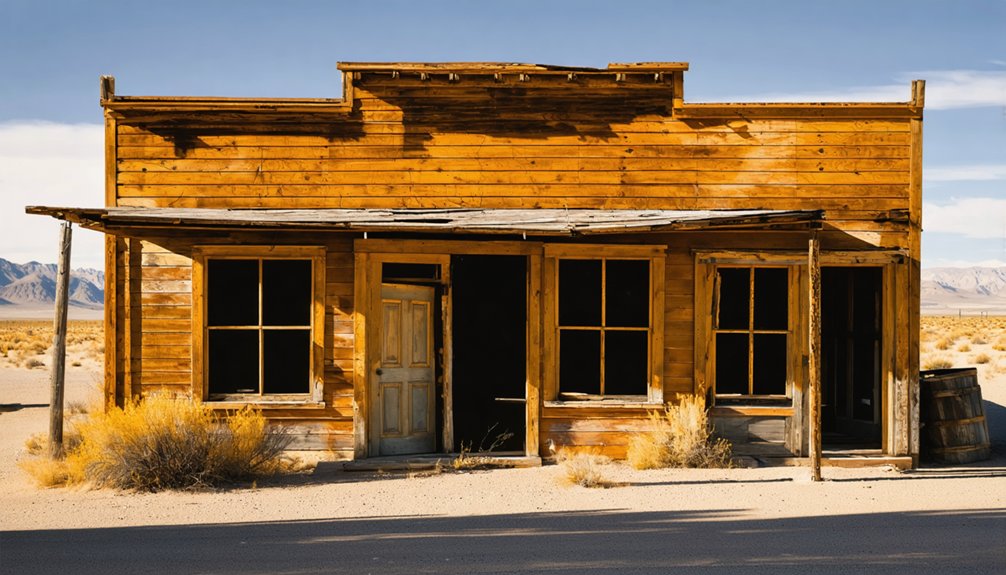
- Weathered storefronts lining unpaved Nevada City streets, frozen mid-century in timber and brick
- Virginia City’s boardwalks stretching past saloons, assay offices, and mercantile facades still standing from the boom years
- Open mining landscapes between both towns, scarred by dredge ponds and tailings left from operations ending in 1922
You’re not choosing between two destinations—you’re walking through one continuous historical record.
When to Visit Virginia City and What the Experience Is Actually Like
Tours at Virginia City and Nevada City run from late May to mid-September, so your visit window is narrower than you might expect. Plan accordingly, because arriving outside that range limits your access to guided interpretation and many restored buildings.
Within the season, you’ll find seasonal events that reflect the town’s mining-era heritage, giving you context beyond simple sightseeing.
Local dining options remain modest, consistent with a small historic community rather than a tourist-engineered resort. That restraint actually serves the experience—Virginia City doesn’t perform its history artificially.
You move through original streetscapes, preserved storefronts, and documented landscapes on your own terms.
The town rewards curiosity over passive observation, making it well-suited for visitors who prefer self-directed exploration grounded in documented historical reality.
Frequently Asked Questions
Who Were the Boveys and Why Do They Matter to Virginia City?
You’ll find Charlie and Sue Bovey’s historical significance undeniable—they personally refurbished and preserved Virginia City’s 1860s structures. Their Bovey family legacy saved 248 buildings, which Montana’s state government now owns and actively protects for future generations.
How Many Buildings Does the State of Montana Currently Own There?
You’ll find that Montana owns 248 buildings encompassing historic architecture across Virginia City and all of Nevada City — a documented preservation triumph that’s fueled tourism development and protected your freedom to explore this extraordinary, independently managed heritage landscape.
What Grants Has Virginia City Received for Preservation Funding?
Virginia City’s secured two million-dollar National Park Service grants—one funding historical architecture stabilization, another supporting the McFarland Curatorial Center—investments that’ve actively driven tourism development and guaranteed your freedom to explore its documented heritage.
Which Organization Currently Manages Preservation Work in Virginia City?
You’ll find that the Montana Heritage Commission, through the Montana Historical Society, actively manages preservation work, safeguarding Virginia City’s historic architecture while supporting tourism development that empowers communities to freely explore and connect with authentic frontier heritage.
What Damage Did Dredging Operations Cause to Nearby Virginia City Communities?
Biting the dust hard, nearby communities faced severe environmental impact and community displacement as dredging operations from 1898–1922 destroyed several settlements, leaving you with nothing but tailings and dredge ponds scarring the once-thriving Alder Gulch landscape.
References
- https://coloradosghosttowns.com/virginia city montana.html
- https://destinationyellowstone.com/day-trip-ghost-towns-virginia-nevada-city-montana/
- https://www.worldatlas.com/articles/ghostowns-of-america-virginia-city.html
- https://nvtami.com/2025/01/22/virginia-citys-forgotten-ghost-towns/
- https://discoveringmontana.com/ghost-town/virginia-city/
- https://montanakids.com/cool_stories/ghost_towns/intro.htm
- https://destinationmontana.com/virginia-city-mt/
- https://www.smithsonianmag.com/sponsored/nevadas-living-and-abandoned-ghost-towns-180983342/
- https://www.rv.com/archive/virginia-city-and-nevada-city-living-ghost-towns/
- https://travelnevada.com/cities/virginia-city/