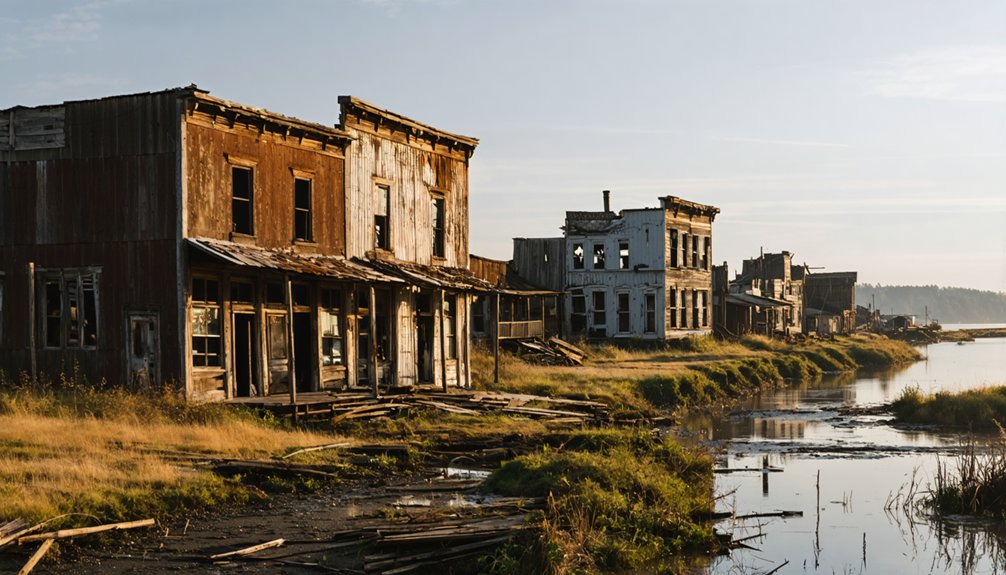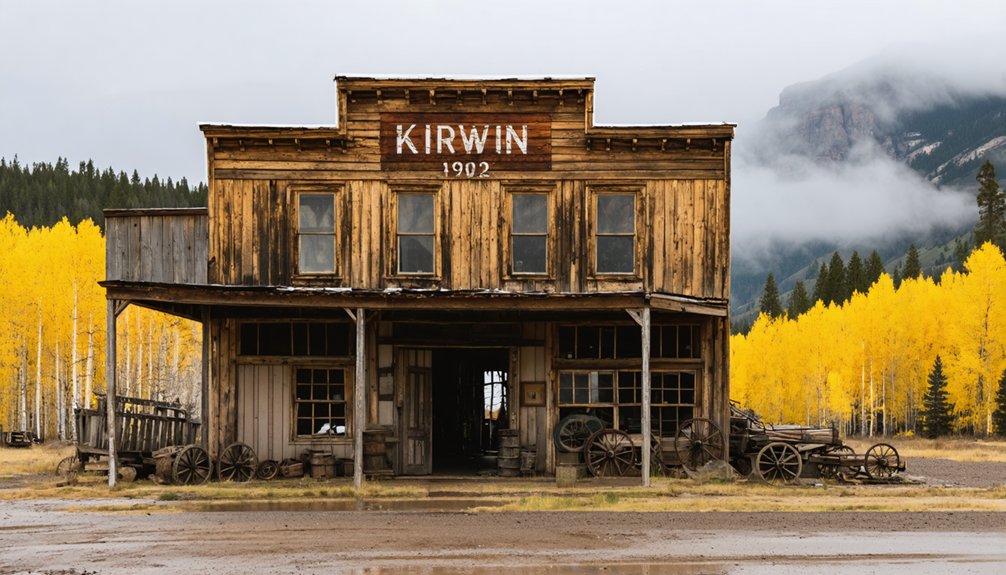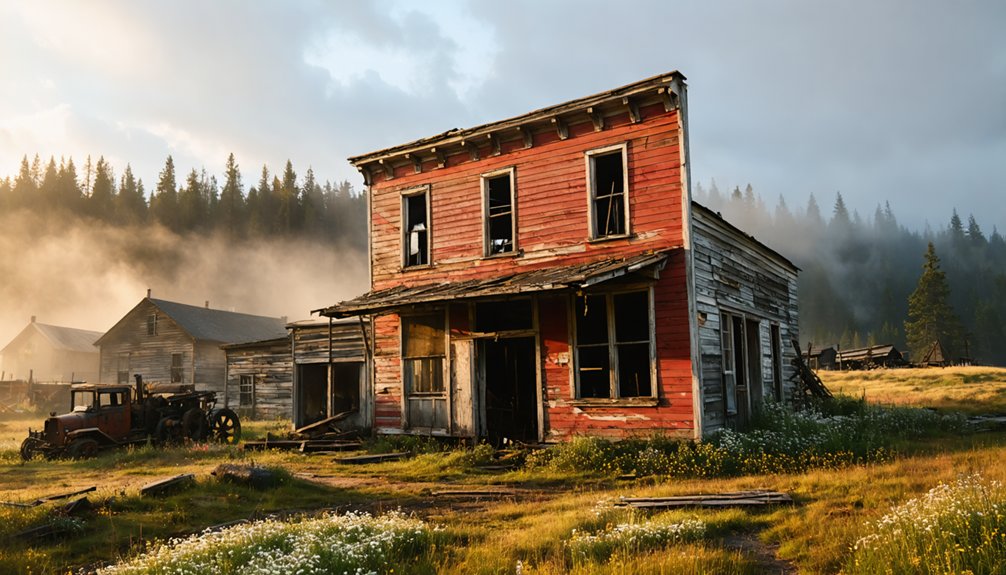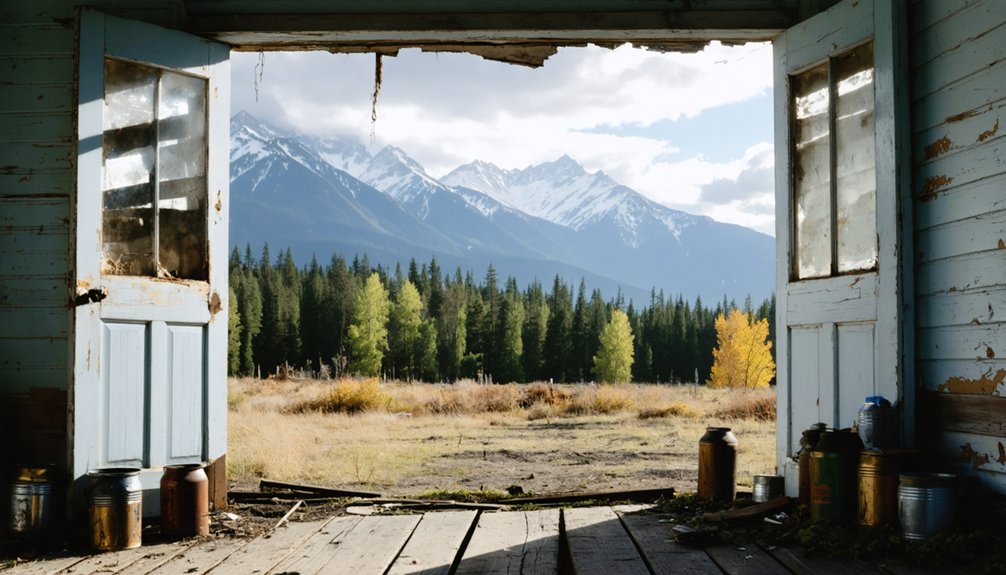
Washington’s wilderness conceals fascinating ghost towns awaiting your discovery. You’ll find Monte Cristo and Copper City with their mining heritage, Franklin’s coal-powered past, and the abandoned Northern State Hospital complex. The Okanogan region holds remnants of gold rush settlements like Ruby and Nighthawk, while Sherman Ghost Town preserves frontier architecture. These forgotten communities offer windows into the state’s boom-and-bust cycles and pioneer determination that shaped its development.
Key Takeaways
- Monte Cristo thrived after an 1889 silver discovery but declined following devastating floods and financial challenges.
- Franklin, once a coal mining boomtown, was abandoned after a tragic 1894 disaster killed 37 miners.
- Northern State Hospital operated as a self-sufficient mental health facility from 1909-1973 before being largely abandoned.
- Okanogan County’s gold rush towns like Ruby, Loomis, and Nighthawk collapsed following the 1893 silver market crash.
- Sherman Ghost Town features an intact 1888 church and cemetery with a Civil War veteran’s grave.
Lost Mining Riches: Exploring Monte Cristo and Copper City
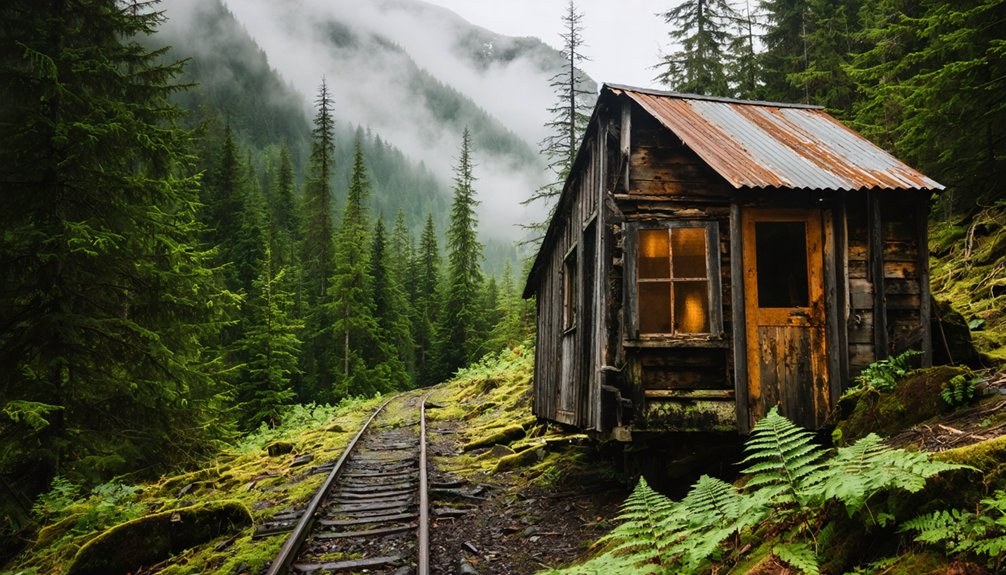
The rugged peaks of Washington’s Northern Cascade Mountains conceal a fascinating chapter of the state’s mining history at Monte Cristo, where silver’s discovery in 1889 triggered a classic boom-and-bust cycle.
You’ll find a settlement that quickly grew from wilderness to 2,000 residents as Rockefeller’s syndicate poured $470,000 into what seemed like promising polymetallic deposits. The mining district was once described as the unrivaled district of Washington, with ore yields estimated between $300-$350 per ton.
Despite building an ore processing plant handling 300 tons daily and completing the Everett and Monte Cristo Railroad by 1893, nature ultimately defeated human ambition.
Avalanches and floods repeatedly destroyed infrastructure, with a devastating 1897 flood precipitating the town’s decline.
Today, visitors can hike the 5-mile trail along the old railroad grade to access this remarkable historical site.
While less documented, nearby Copper City shared a similar fate.
Both ghost towns now rest within Mt. Baker-Snoqualmie National Forest, their abandoned structures evidence of frontier dreams crushed by harsh mountain realities.
Exploring the area reveals many abandoned towns in the cascades, scattered remnants of lives once vibrant. These sites lure adventurers and historians alike, eager to uncover the stories left behind. The haunting beauty of nature reclaiming these forgotten places adds to their mysterious allure.
Coal-Powered Memories at Franklin Ghost Town
Within the emerald folds of Washington’s Green River Gorge lies Franklin, a coal town whose history mirrors America’s industrial transformation during the late 19th century.
You’ll discover a settlement born in 1884 when the Oregon Improvement Company began coal mining operations before Washington achieved statehood.
The town’s prosperity was haunted by tragedy—the 1894 disaster claimed 37 miners in what’s now considered Washington’s second-worst underground coal mining accident, an act of deliberate arson.
Ghost stories persist among the sealed mine shafts where men once worked 1,300 feet below ground.
During its heyday, Franklin was often called the Pennsylvania of the West due to its extensive coal reserves that fueled the region’s growth.
Today, visitors can follow an old railroad grade that leads directly to the remnants of this once-bustling coal-mining community.
The Forgotten Healthcare Complex of Northern State
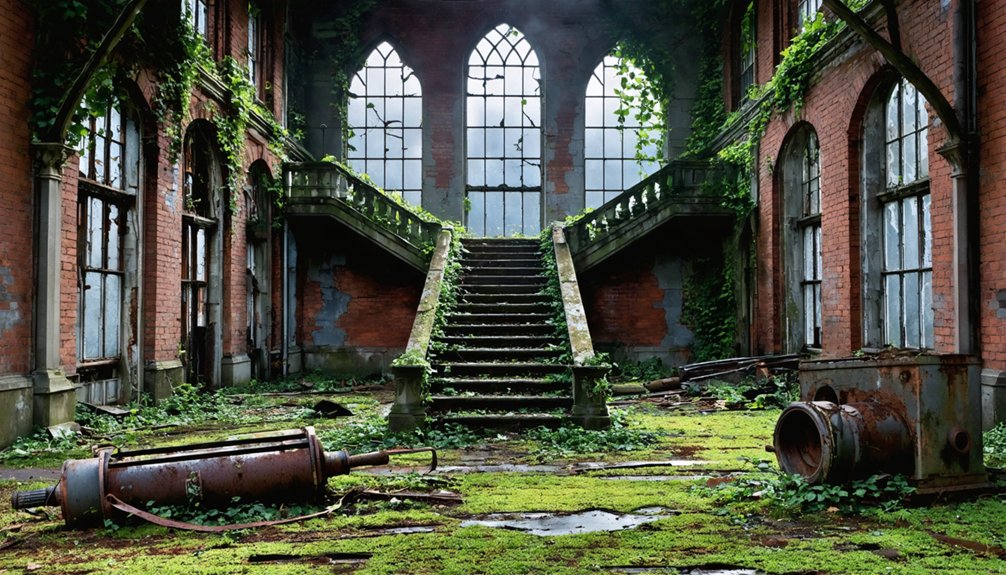
While coal towns like Franklin represent Washington’s industrial past, another forgotten landscape tells the story of the state’s approach to mental healthcare.
Just 4 miles from Sedro-Woolley stands Northern State Hospital, established in 1909 and operational until 1973. This once-thriving complex housed up to 2,700 patients during its 1950s peak, functioning as a self-contained community with its own 700-acre farm, water systems, and extensive facilities. The first patients were actually sent by train to clear the land and help construct the buildings that would become their home.
Northern State Hospital operated as a world unto itself—a sprawling medical metropolis where thousands lived, worked and healed in isolation.
The forgotten architecture remains largely abandoned today, though some buildings have been repurposed. Originally designed by Tacoma architects Heath and Grove, the campus reflects early 20th century mental health treatment philosophies. Many patients were subjected to controversial treatments including electroshock therapy and lobotomies, which often resulted in severe aftereffects.
Despite its historical significance and National Register listing, Northern State’s empty corridors stand as silent witnesses to shifting healthcare policies and the thousands of lives that passed through its doors.
Okanogan’s Gold Rush Legacy: Ruby, Loomis, Nighthawk, and Old Molson
Unlike many Western gold rush settlements that boomed in California and Colorado, Washington’s Okanogan region harbored a collection of lesser-known mining communities that flourished briefly before fading into obscurity.
Ruby’s resurgence exemplifies this pattern—founded in 1886 following silver discoveries, it rapidly grew to 700 residents with a notorious reputation as the “Babylon of the West.” Ruby was briefly declared the county seat for 11 months in 1888. The town’s meteoric rise ended with the 1893 silver crash, leaving only foundations and excavation traces visible today.
The Arlington Mine alone produced nearly three million dollars before economic collapse rendered these operations unsustainable.
You’ll find Loomis’ legacy intertwined with Ruby’s story, as both communities exemplify the region’s boom-bust cycle. The area features the mysterious China Wall, a 27-foot tall granite structure built for a stamp mill in 1888.
Today, minimal physical evidence remains of these once-thriving settlements beyond scattered rock foundations and informational markers—silent reminders to an era when thousands sought fortune in Washington’s mineral-rich mountains.
Sherman Ghost Town: Remnants of Washington’s Homesteading Era
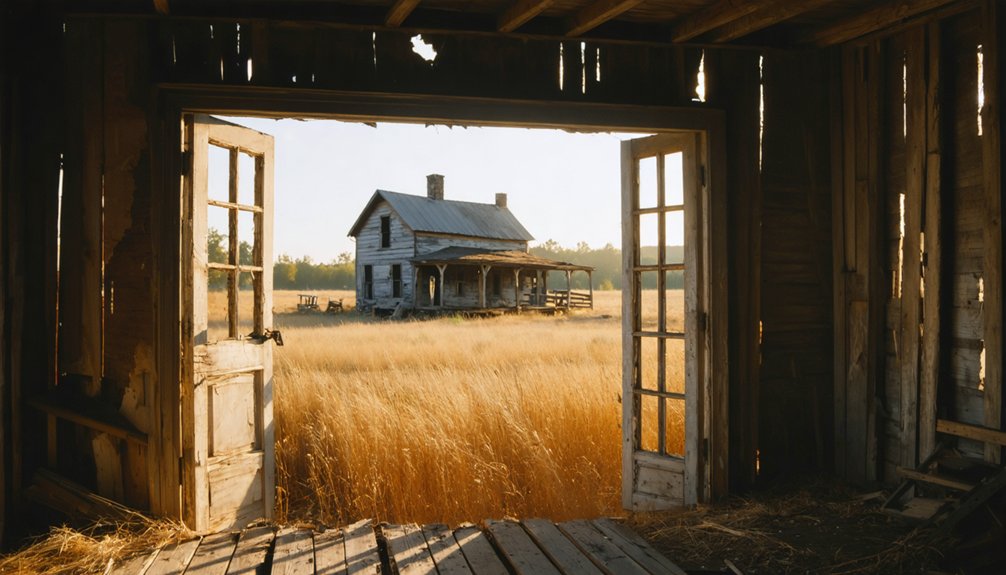
Moving east from Okanogan’s mining settlements to Washington’s agricultural heartland, you’ll find Sherman Ghost Town standing as a monument to America’s homesteading era.
Located just 15 minutes northeast of Govan, this remnant of 1880s pioneer resilience captures the stark reality of homesteading challenges faced by early settlers.
Four compelling reasons to explore Sherman:
- The 1888 church remains intact, showcasing simple frontier architecture.
- A historic cemetery containing a Civil War veteran who succumbed to pneumonia in 1890.
- The weathered schoolhouse that educated generations of farming families.
- The sobering aftermath of the devastating 1889 blizzard that buried the region under six feet of snow.
The picturesque cemetery behind the church offers a poignant glimpse into the lives of simple people who worked this challenging land for generations.
Sherman’s decline accelerated as Highway 2 redirected traffic, but its unpretentious structures continue telling the story of determined Americans who staked their futures on wheat and perseverance.
The town’s population gradually decreased as better roads allowed residents to travel to larger towns like Spokane for goods and services.
Frequently Asked Questions
Are Washington’s Ghost Towns Legally Accessible to the Public?
Most ghost towns aren’t publicly accessible as they’re on private property. You’ll need landowner permission, though some locations like Northern State Recreation Area offer legal access with public restrictions.
What Safety Precautions Should Visitors Take When Exploring Ghost Towns?
Bring proper safety gear including sturdy boots and flashlights. Maintain wildlife awareness, watching for snakes and bears. Stay on established paths, respect structural instability, and always inform others of your exploration plans.
When Is the Best Season to Visit Washington’s Abandoned Towns?
Summer (June-August) is your best time to explore Washington’s abandoned towns, offering ideal hiking conditions, extended daylight, and predictable seasonal weather patterns while minimizing safety hazards and structural deterioration concerns.
Can Metal Detecting or Artifact Collection Be Done at Ghost Towns?
You generally cannot legally metal detect at Washington’s ghost towns. Artifact preservation ethics and metal detecting regulations strictly prohibit unauthorized collection on public lands, historic sites, and private property without permission.
Are Any Washington Ghost Towns Rumored to Be Haunted?
With 73% of paranormal enthusiasts reporting unexplained phenomena, you’ll find haunted legends at Oxford Saloon, where ghostly sightings of a murdered bouncer persist in Snohomish’s historic district. Northern State also harbors patient spirits.
References
- https://stateofwatourism.com/ghost-towns-of-washington-state/
- https://www.emeraldpalate.com/abandoned-places-in-washington/
- https://okanogancountry.com/ghost-towns
- https://www.youtube.com/watch?v=PJfKMi771YE
- https://www.wta.org/go-outside/seasonal-hikes/fall-destinations/hidden-history-ghost-town-hikes
- https://www.ghosttownsofwashington.com
- https://westernmininghistory.com/towns/washington/monte-cristo/
- https://www.youtube.com/watch?v=FVveO9uJBvc
- https://apps.ecology.wa.gov/gsp/sitepage.aspx?csid=4550
- https://www.historylink.org/file/8404