Abandoned army settlements tell haunting stories of military ambition and sudden desertion. You’ll find Fort Jefferson’s 16 million bricks crumbling into the ocean, Fort Pike ravaged by hurricanes, and Soviet-era Wünsdorf frozen in time since 1994. These sites often house personal belongings left behind, graffiti-covered fortifications, and nature steadily reclaiming concrete structures. The eerie silence of these military ghosts reveals chapters of history where strategic priorities changed faster than walls could stand.
Key Takeaways
- Fort Jefferson, built with 16 million bricks on unstable coral, was abandoned in 1874 due to cracking walls and deteriorating conditions.
- Fort Pike, once housing Seminole prisoners and enslaved individuals, has been abandoned since 2015 after devastating hurricane damage.
- Freedmen’s camps established for formerly enslaved people faced disease outbreaks, with hundreds dying from malnutrition at settlements like Springdale.
- Soviet headquarters at Wünsdorf remains frozen in time since 1994, with personal belongings of 75,000 former residents left behind.
- Concrete military structures at Fort Tilden have been reclaimed by invasive vegetation and transformed into wildlife habitats and graffiti galleries.
The Dark History of Fort Jefferson’s Unfinished Fortress
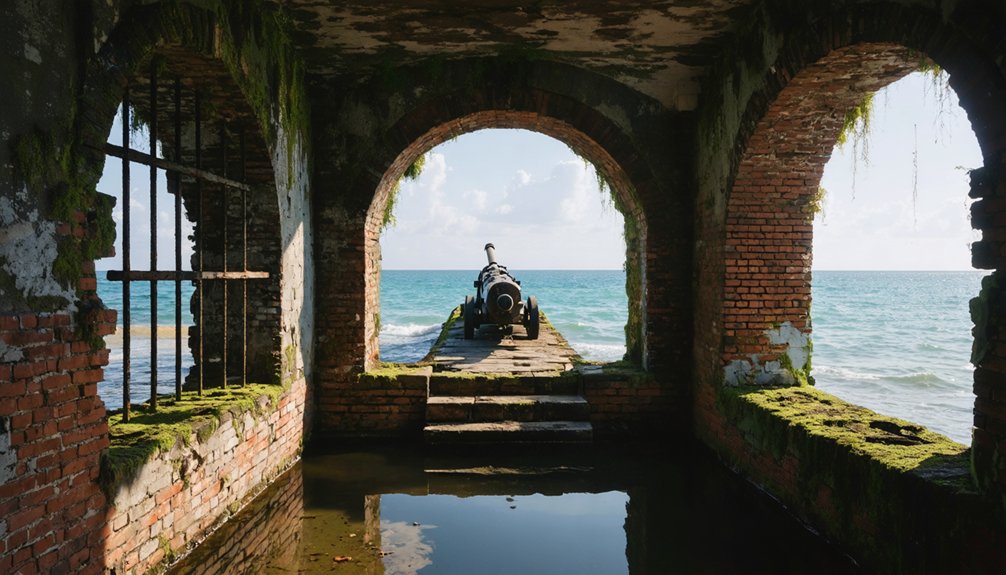
Though construction of Fort Jefferson began in 1846 with ambitious plans to create an impenetrable coastal defense, the massive fortress would remain unfinished despite thirty years of labor and over 16 million bricks.
You’ll find one of the greatest fortress failures in American military history standing in the Dry Tortugas. Engineers built on what they thought was solid coral, but foundations settled on shifting sands instead, causing massive brick walls to crack. Located 70 miles west of Key West, Florida, this isolated outpost posed significant logistical challenges throughout its construction and operation.
The fort’s haunted history includes service as a Civil War prison housing Lincoln assassination conspirators, including Dr. Samuel Mudd. Yellow fever epidemics, hurricanes, and deteriorating conditions plagued the garrison. The workforce endured brutal conditions with many Irish immigrants falling victim to disease and malnutrition.
The structure literally crumbled under its own weight, contaminating drinking water with salt. By 1874, nature had accomplished what no enemy ever could—forcing the military to abandon this doomed outpost.
Fort Pike: Hurricane-Ravaged Haunt on the Louisiana Coast
Standing sentinel at the eastern edge of Orleans Parish, Fort Pike represents one of America’s first Third System fortifications constructed after the War of 1812. Named for explorer Zebulon Montgomery Pike, this coastal stronghold guarded the Rigolets pass connecting Lake Pontchartrain to the Gulf of Mexico.
The fort’s haunted history includes housing Seminole prisoners and enslaved Black individuals during forced relocations, with casemates converted to makeshift cells. Later, it became a training ground for United States Colored Troops. Construction of this impressive fortification began in 1819 and was completed seven years later.
Despite never firing a hostile shot, coastal echoes of its military significance remain. Hurricane Katrina (2005) and Isaac (2012) left devastating marks, forcing repeated closures. The site was completely submerged underwater when Katrina struck the Louisiana coast.
Now abandoned since 2015 due to budget cuts, Fort Pike stands overgrown yet defiant—a shuttered witness to America’s complex past.
Urban Decay at Fort Tilden: From Military Stronghold to Forgotten Ruin
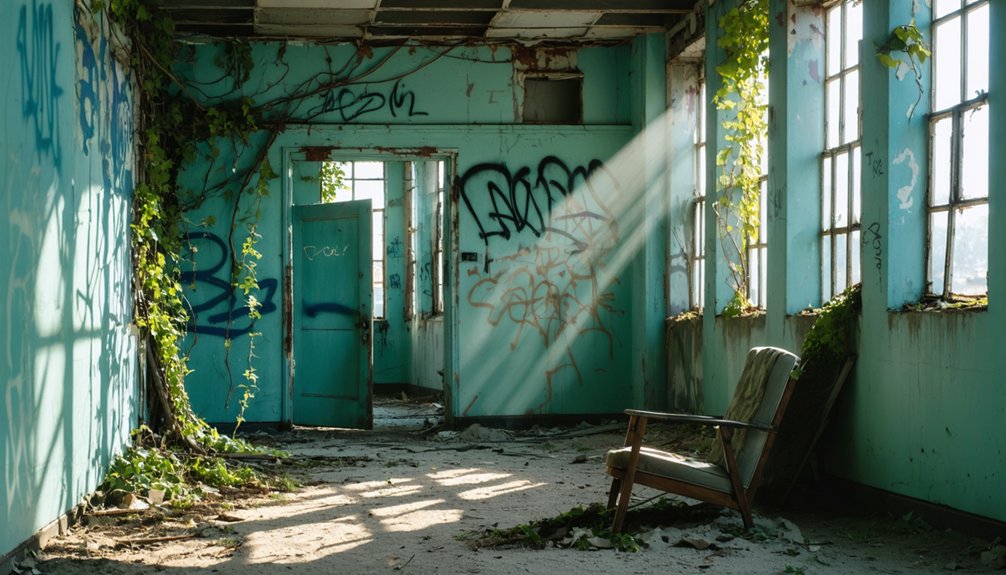
You’ll find the mighty concrete batteries of Fort Tilden now smothered by invasive vegetation, with sand dunes gradually burying what was once America’s Atlantic sea wall defense.
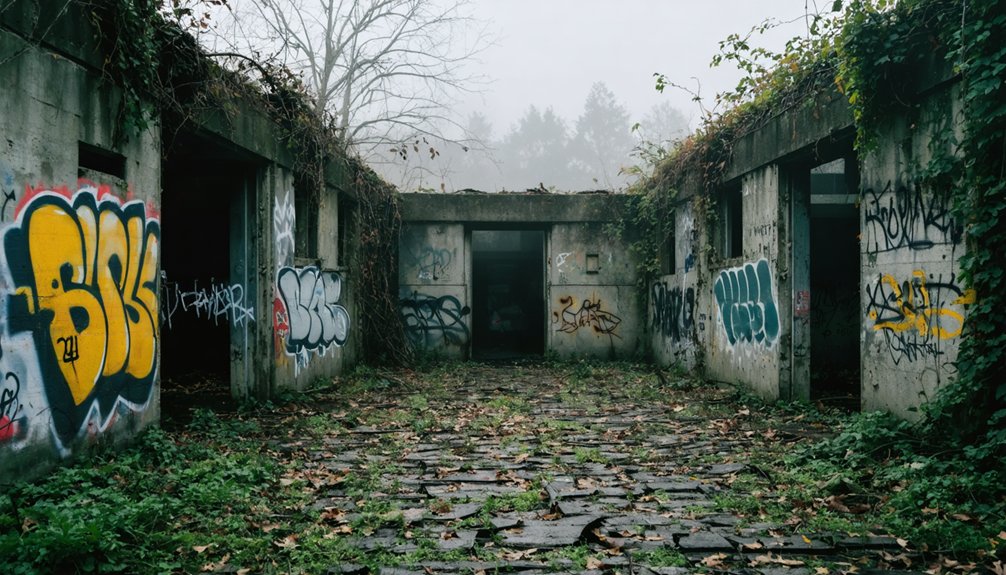
Colorful graffiti covers the interior walls of Battery Harris, transforming Cold War military architecture into an unauthorized open-air gallery since its 1974 deactivation.
The rusted remains of railway tracks, crumbling missile launch pads, and abandoned ammunition bunkers offer silent testimony to the fort’s evolution from World War I coastal defense to nuclear-capable Cold War outpost.
Visitors exploring the site may stumble upon remnants of the Nike missile system that once housed Ajax and Hercules weapons with destructive capabilities comparable to the bomb dropped on Hiroshima.
Park rangers now patrol the area to ensure visitors’ activities don’t disturb the fragile dune ecosystem that has reclaimed much of the military installation.
Nature Reclaims Concrete
Since Fort Tilden’s decommissioning in 1974, nature has steadily reclaimed the military installation’s concrete structures and infrastructure.
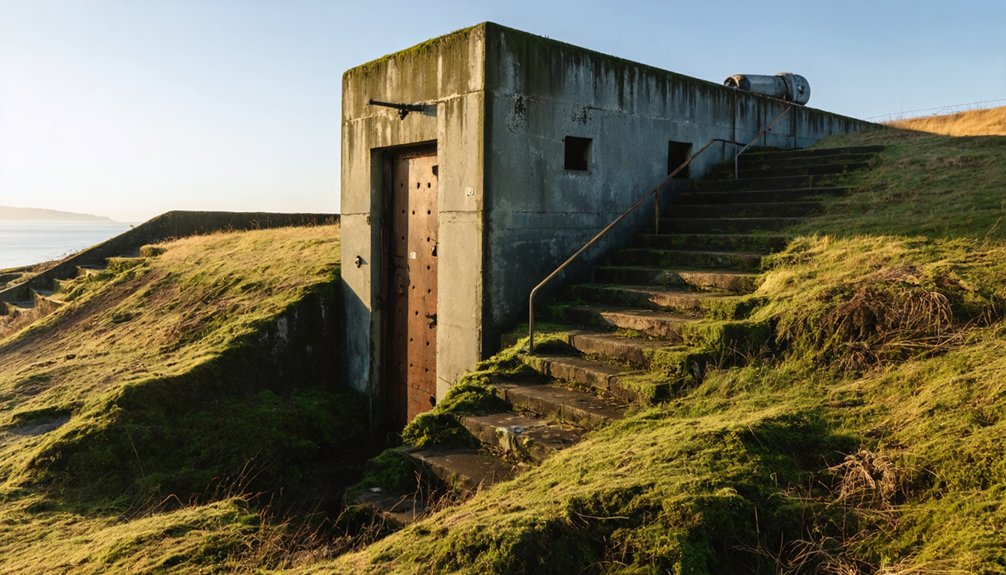
You’ll find thick coastal vegetation bursting through cracks in casemates, while sand dunes gradually bury the remnants of America’s coastal defenses. Railway tracks that once transported ammunition now rust beneath layers of native grasses, demonstrating nature’s resilience against human intervention. The once formidable Battery Harris East remains partially accessible to visitors via a staircase installed by the National Park Service. The impressive 16-inch guns that were installed in 1917 to protect New York harbor are now completely absent from view.
The concrete batteries where soldiers once stood guard now serve as habitats for local wildlife. Birds nest in abandoned buildings, small mammals occupy former munitions dumps, and reptiles bask on sun-warmed concrete pads.
This urban regeneration has transformed a military complex into an ecological buffer zone between the city and Atlantic coast—a stark reminder that when humans retreat, nature advances, converting our most enduring structures into wild landscapes.
Graffiti Artists’ Canvas
The vast concrete fortifications of Fort Tilden have evolved into an unauthorized open-air gallery, where decades of graffiti artists have left their marks on the abandoned military structures.
Each concrete casemate serves as a primary canvas for urban exploration enthusiasts who’ve documented the site’s deterioration through layered artwork.
If you visit today, you’ll encounter:
- UFO-like concrete slabs covering former cannons, now adorned with graffiti layers dating back to the 1970s
- Underground corridors and control rooms featuring chronological tags spanning multiple decades
- Rusty steel bars at entrances showing evidence of artists squeezing through despite padlocked gates
- Former powder rooms transformed into impromptu galleries within the fortifications
These concrete monoliths, half-buried in sand, continue attracting artists despite the National Park Service’s management challenges since 1974.
War Remnants Decay
As visitors traverse the wind-swept dunes of what was once America’s premier coastal defense system, Fort Tilden’s deteriorating military structures reveal a hauntingly beautiful narrative of abandonment.
You’ll find haunting landscapes of concrete batteries now half-buried in sand, their massive gun emplacements silent since 1974 when the fort was deactivated. The military nostalgia is palpable as you explore rusted railway tracks that once transported massive artillery shells, now overtaken by persistent vegetation.
What once defended against German U-boats and later housed nuclear-capable Nike missiles now surrenders to nature’s reclamation. The WPA-constructed buildings, Harris Batteries, and missile launch pads slowly crumble under coastal elements.
Despite this decay, Fort Tilden’s structures remain accessible within Gateway National Park, standing as concrete witnesses to America’s defensive past, preserved as a historic district since 1984.
Freedmen’s Camps: The Uncertain Fate of Post-Civil War Settlements
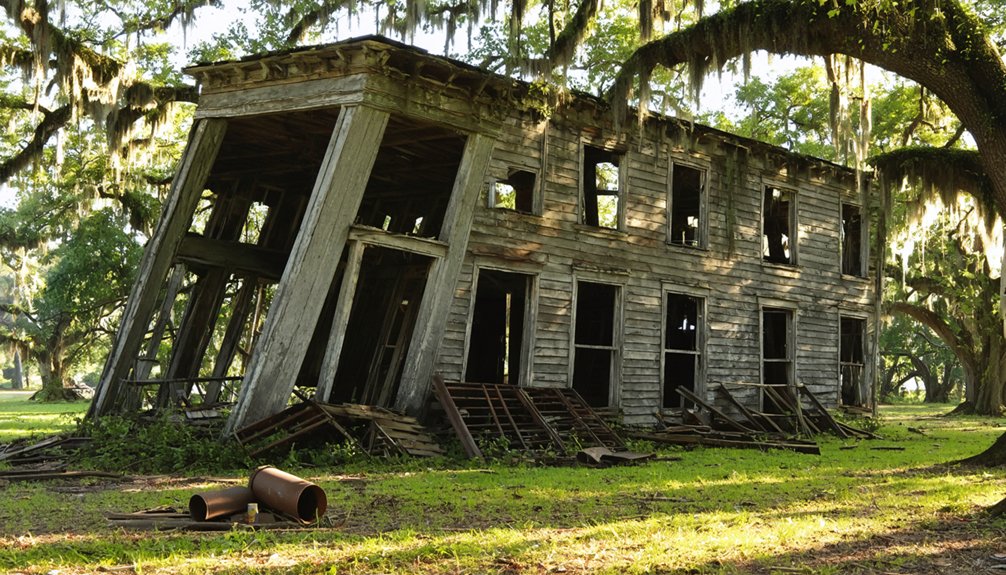
During and after the American Civil War, thousands of formerly enslaved individuals found themselves in a precarious state of newfound freedom, prompting the establishment of Freedmen’s camps across the United States.
These settlements, emblematic of historical resilience, emerged from necessity as refugees fled Confederate territories. Many of these refugees were considered contraband of war, a legal designation that placed them in an ambiguous status between slavery and freedom.
Four critical aspects of the freedmen’s legacy include:
- Camps like Springdale and Greene suffered devastating health crises with hundreds dying from malnutrition and disease.
- The government designed Freedmen’s Village on Lee’s confiscated estate as a “stepping stone to self-sufficiency.”
- Schools emerged within camps, with Mary Peake teaching beneath an oak tree at what became Hampton University.
- The Freedmen’s Bureau, established in 1865, aimed to protect African-American liberties while camps served as recruitment centers for Black troops.
These camps served as political and social hubs where newfound freedom could be experienced by those who had escaped enslavement.
From Barracks to Neighborhoods: Military Bases Transformed
While Freedmen’s settlements ultimately faded into history, another transformation of military spaces continues to reshape American communities today. Through community engagement, local leaders actively plan redevelopment before base closures are confirmed, focusing on long-term benefits.
These transformations embrace adaptive reuse—old barracks become apartments, firehouses turn into restaurants, and theaters transform into museums. At Fort Monmouth, historical buildings maintain the site’s heritage while meeting modern needs.
Economically, these projects create jobs and revitalize regions. March Air Force Base now hosts 90 businesses employing 12,000 people across various sectors.
Despite challenges like environmental cleanup and infrastructure upgrades, successful redevelopments balance remediation with development goals.
These transformed bases preserve military history through heritage markers and restored structures while creating sustainable, mixed-use communities that honor the past.
Ghostly Relics: Abandoned Army Settlements Around the World
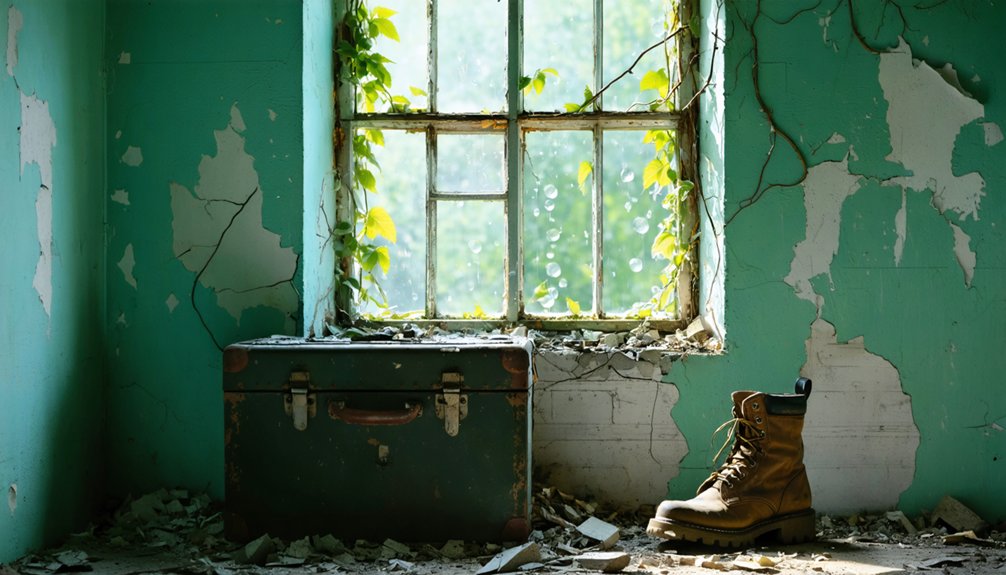
You’ll encounter chilling remnants of military history at the Maunsell Forts, where sea-battered platforms stand as silent witnesses to wartime defense strategies.
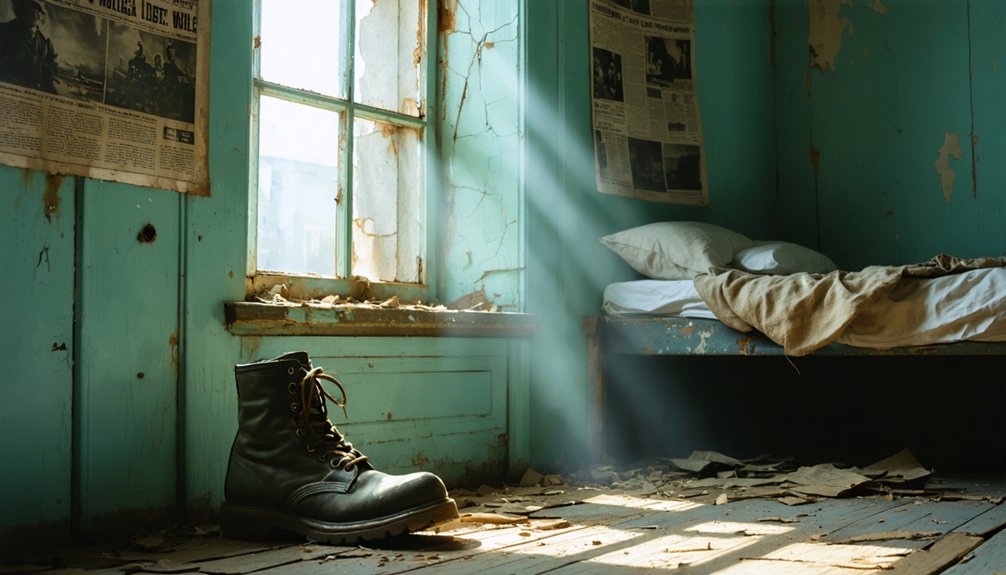
The abandoned Soviet camp at Wünsdorf reveals a hastily evacuated past, with personal belongings frozen in time since 1994.
These forsaken installations, from Hitler’s Wolf’s Lair to Albania’s secretive Sazan Island bunkers, offer glimpses into the strategic minds that once directed global conflicts.
Whispers From Crumbling Walls
Across the continents, abandoned military settlements stand frozen in time, their crumbling infrastructure bearing silent witness to geopolitical shifts that rendered them obsolete.
In these haunted echoes of Cold War tension, forgotten heroes once lived, trained, and prepared for conflicts that never materialized.
- At Wünsdorf, Soviet families left 100,000 rounds of ammunition and personal belongings behind, creating an eerie time capsule of military life.
- Switzerland’s Alpine bunkers, concealed in innocent-looking barns and rocks, now sit empty and sealed—perfect monuments to paranoid preparation.
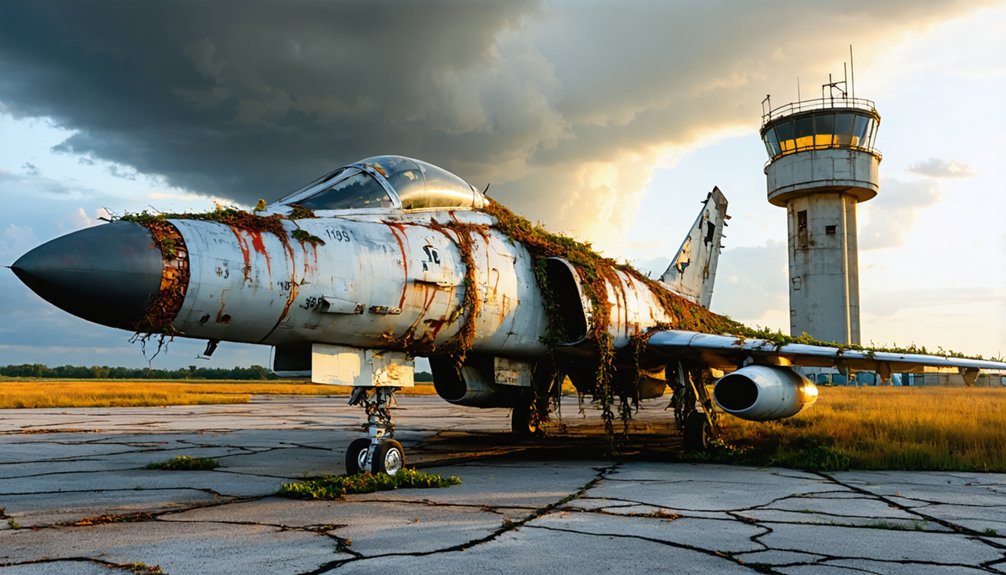
- Hungary’s deserted airbases showcase overgrown runways where strategic bombers once stood ready.
- America’s abandoned forts like Fort Jefferson remain isolated, their disease research facilities and military isolation chambers slowly reclaimed by nature.
Sea-Worn Coastal Fortresses
Standing sentinel against the relentless tides, America’s forgotten coastal fortifications now crumble into the very waters they once defended.
You’ll find Fort Preble’s eroded remains barely visible off Maine’s coast, while Fort Tyler on Gardiner’s Island never even received its guns before storms washed away its foundation.
These forgotten fortifications tell stories of strategic failures and nature’s dominance.
Fort Mansfield was abandoned in 1909 after engineers discovered a critical blind spot, rendering it militarily useless.
Fort Pike, once holding both Confederate and Union troops, now sits neglected after hurricane damage.
Coastal erosion claims more history each year, with Revolutionary-era structures like Forts Allen and Sumner completely vanished.
In the midst of these losses, some areas remain untouched, revealing stories of resilience and the past. Among these, the best preserved native american ghost towns offer a glimpse into the lives of those who once called these lands home. Exploring these historic sites can provide invaluable insights into Native American culture and history, before the passage of time erases them completely.
The obsolescence came quickly for many—Fort Popham was outdated by advancing artillery technology before builders even completed its walls.
Reclaiming Military Pasts
While America’s coastal fortresses surrender to the sea, military abandonment extends far beyond our shorelines to create a global landscape of ghostly military settlements.
Each abandoned base tells a distinct story of military nostalgia and forgotten legacies:
- Wünsdorf’s sprawling Soviet headquarters near Berlin stands frozen in time, with 75,000 former residents’ belongings still scattered throughout its complex.
- Switzerland’s camouflaged Alpine bunkers represent a neutral nation’s paradoxical Cold War preparedness.
- Balaklava’s hidden submarine tunnels, once erased from maps, now invite you to explore Stalin’s nuclear-proof engineering marvel.
- Latvia’s decaying Karosta Naval Base partially sinks into the Baltic, its buildings slowly surrendering to nature.
These military ghosts offer rare glimpses into secretive Cold War operations while nature steadily reclaims what nations once fortified against each other.
Frequently Asked Questions
What Happens to Military Records When Bases Are Abandoned?
While you’re free to explore elsewhere, military records from abandoned bases aren’t lost—they’re transferred to National Archives facilities for archival preservation, distributed across locations in Washington, DC and College Park, Maryland.
Do Abandoned Settlements Still Maintain Any Security or Surveillance Systems?
You’ll find most abandoned settlements retain basic security measures like fences and signs, but their surveillance technology is typically decommissioned, removed, or non-functional unless the site has been repurposed for civilian use.
What Strange Occurrences Have Civilians Reported Near Fort Jefferson?
You’ll encounter ghost sightings of Civil War soldiers, unexplained noises like phantom gunfire, mysterious fog, and electronic disturbances near Fort Jefferson. Many visitors report cold spots and disorienting experiences after dark.
How Do Local Communities Typically Respond to Nearby Abandoned Army Sites?
You’ll typically see communities balance economic concerns about job losses with local engagement in redevelopment planning, often creating new spaces for businesses, housing, and social services from abandoned military infrastructure.
What Artifacts Are Most Commonly Looted From Abandoned Military Settlements?
Like silent sentinels of forgotten battles, you’ll find weapons, coins, metal objects, military memorabilia, and decorative items frequently looted from abandoned bases—each piece representing a stolen chapter in our historical preservation narrative.
References
- https://www.operationmilitarykids.org/abandoned-military-bases/
- https://www.archives.gov/publications/prologue/1997/summer/freedmens-bureau-records.html
- https://www.loveexploring.com/gallerylist/233478/americas-eeriest-abandoned-military-sites
- https://en.wikipedia.org/wiki/List_of_former_United_States_Army_installations
- https://www.thescroller.net/31819/echoes-of-the-battlefield-20-forgotten-military-bases/
- https://forward.com/opinion/13796/the-value-of-settlement-is-obsolete-02204/
- https://www.youtube.com/watch?v=MYe6MXx_3rE
- https://www.drytortugas.com/fort-jefferson-facts/
- https://www.drytortugas.com/forgotten-fort/
- https://keywestseaplanecharters.com/amazing-history/