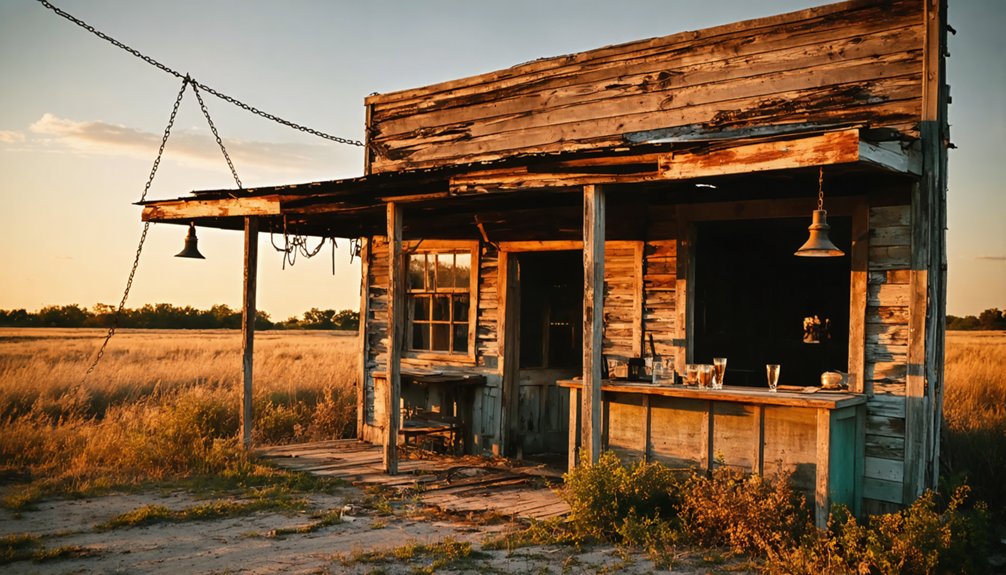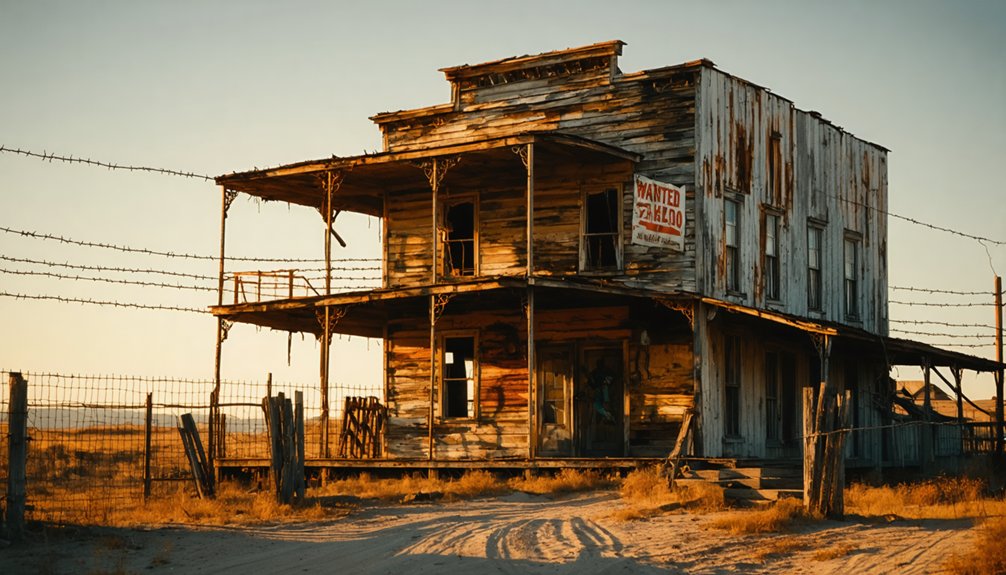
You’ll find Montana’s mining towns filled with eerie remnants of the past: skeletal headframes, toxic pits glowing with unnatural colors, and crumbling Victorian mansions. In Garnet, hastily-built cabins with asymmetrical windows stand frozen in time. Beneath Butte, 10,000 miles of tunnels form a dangerous labyrinth where miners once toiled. These silent witnesses to sudden prosperity and collapse hold stories that intensify as twilight falls over the forgotten frontier.
Key Takeaways
- Abandoned mine shafts and tunnels create a labyrinthine network beneath towns, with over 10,000 miles under Butte alone.
- Ghost towns like Bannack and Garnet preserve eerie architectural remnants where paranormal activity is frequently reported.
- The toxic Berkeley Pit contains 40 billion gallons of acidic water and is associated with wildlife deaths and supernatural sightings.
- Blackened timbers and abandoned shafts stand as haunting reminders of the 1917 Granite Mountain mine fire that claimed 168 lives.
- Hotel Meade in Bannack features cold spots and apparitions, including Sheriff Henry Plummer’s vengeful spirit patrolling after sunset.
The Phantom Structures of Garnet: Montana’s Best-Preserved Ghost Town
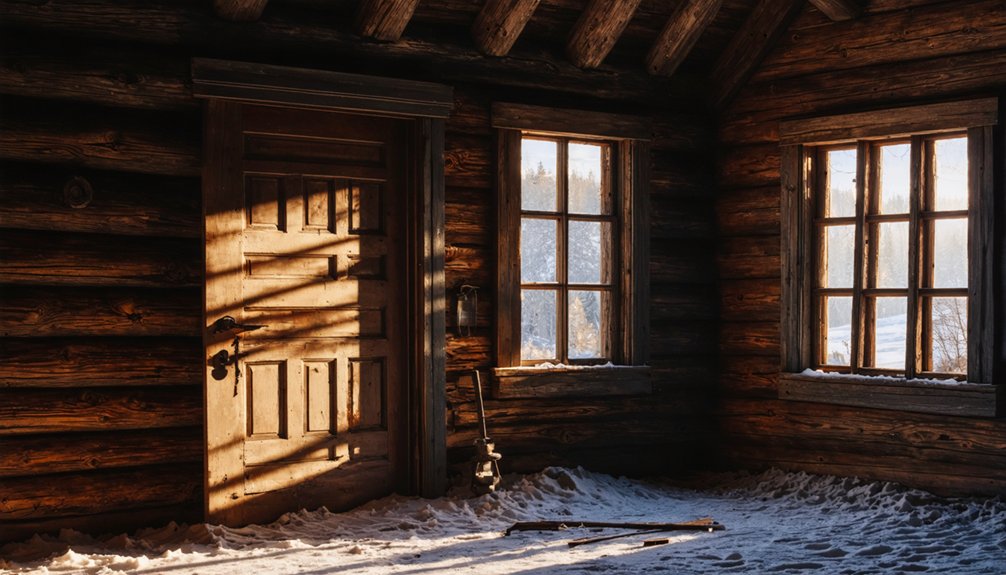
Nestled in the rugged Montana wilderness, Garnet stands as the state’s most meticulously preserved ghost town, offering visitors an unparalleled glimpse into the architectural remnants of late 19th-century mining life.
As you wander among the 30 remaining structures, you’ll encounter log cabins, the J.K. Wells Hotel, and commercial buildings seemingly frozen in time since their hasty abandonment in the 1940s.
The town exhibits fascinating architectural oddities reflecting miners’ priorities—homes built with minimal foundations for quick heating rather than durability, and some properties featuring mine shafts in residential yards.
When practicality trumped permanence, miners built for immediate comfort, leaving curious architectural choices that tell their pragmatic story.
This rare preservation began in the 1970s under Bureau of Land Management stewardship, safeguarding Garnet’s unique character.
Unlike many mining settlements lost to history, these phantom structures reveal authentic traces of frontier life, complete with original furnishings left behind during residents’ abrupt departures. At its height, the thriving community supported thirteen different saloons where miners could find entertainment after long days of labor.
Following a devastating fire in 1912, half of the town was destroyed, marking the beginning of Garnet’s gradual decline into the ghost town we see today.
Whispers From the Berkeley Pit: Environmental Scars and Supernatural Tales
While Garnet preserves the physical structures of Montana’s mining history, the Berkeley Pit in Butte represents its darker environmental legacy—a colossal open-pit copper mine transformed into a toxic lake of extraordinary proportions.
You’ll find this 40-billion-gallon acidic cauldron harbors water with pH levels between 2.8-3.0, saturated with deadly metals including arsenic, copper, and cadmium. The pit forms America’s largest Superfund site, requiring perpetual treatment of approximately 7 million gallons daily to prevent contamination spread.
These environmental hauntings manifest physically—342 snow geese perished here in 1995 after landing on what appeared to be sanctuary. The mining operations, which included over 49 miles of vertical shafts, created an intricate underground network that now channels contaminated water throughout the region. A tragic repeat occurred in 2016 when thousands of migratory birds died from heavy metal poisoning after landing in the toxic waters.
Locals whisper of supernatural sightings near the pit’s edge, where contaminated groundwater flows through abandoned mine shafts. These stories reflect both ecological devastation and cultural trauma, as this terminal sink of toxicity continually threatens surrounding aquifers.
The Millionaire’s Row: Helena’s Haunted Victorian Mansions
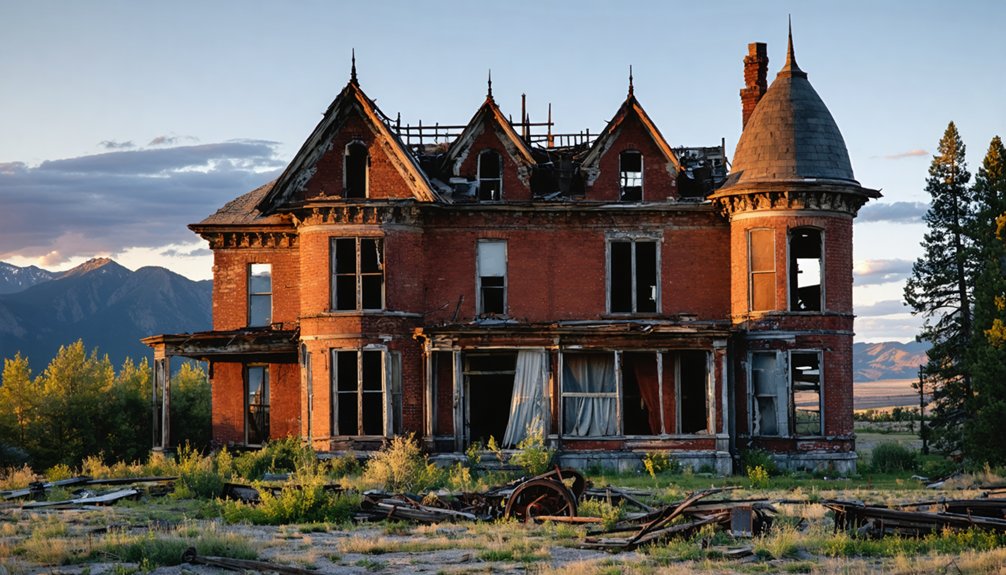
Nearly fifty millionaires per capita populated Helena by 1888, generating vast fortunes from Montana’s gold-rich earth and transforming this frontier settlement into America’s wealthiest city for its size.
These mining barons erected elaborate Victorian mansions along what became known as Millionaire’s Row, architectural monuments to their newfound wealth. The city’s history is preserved today as a disambiguation page that helps visitors navigate to specific historical sites of interest.
- Queen Anne Victorian architecture dominates these historic homes, with their spindled porches, gingerbread trim, and asymmetrical facades.
- The Original Governor’s Mansion exemplifies Victorian excess with twenty ornate rooms across three lavish floors.
- Haunted histories permeate these grand structures, with reports of apparitions, mysterious footsteps, and disembodied voices.
- Mining wealth’s darker counterparts—red-light districts and social inequality—contribute to the eerie legends that now define these opulent residences.
The area’s transformation began with the Four Georgians who discovered gold in Last Chance Gulch, triggering the influx of fortune seekers that would establish Helena’s prominence.
Abandoned Mining Equipment: Silent Sentinels of a Bygone Era
Beyond the opulent Victorian mansions of Helena’s Millionaire’s Row stand the weathered reminders to Montana’s mineral wealth: the abandoned mining equipment that punctuates the landscape of former boomtowns.
You’ll find these rusting relics concentrated in southwest Montana’s ghost towns like Bannack and Garnet, where ore mills and mining carts remain frozen in time since their rapid abandonment.
Just a short drive away, you can explore eerie silver mining towns in Idaho that tell their own stories of boom and bust. These once-thriving communities, now shrouded in mystery, offer a glimpse into the lives of those who sought fortune in the rugged wilderness. With crumbling facades and overgrown trails, they beckon adventurous souls to uncover their hidden pasts.
Each piece of ghostly machinery tells a story of boom-and-bust cycles that shaped Montana’s development.
While these artifacts provide tangible connections to frontier industrialism, they present environmental challenges.
A systematic program led by multiple agencies has identified over 8,000 mine sites across Montana for health and environmental risk assessment.
In Central Montana’s Judith Mountains, visitors can explore similar historical remnants including the visible foundations and drilling contest boulder at Kendall ghost town.
Contaminated soils and dangerous open shafts surround many sites, creating tension between preservation and remediation.
The Montana Department of Environmental Quality monitors these silent sentinels, balancing their historical significance against safety concerns—a physical representation to the state’s complex relationship with its extractive past.
The Lost Communities: Cultural Diversity in Montana’s Mining Boom
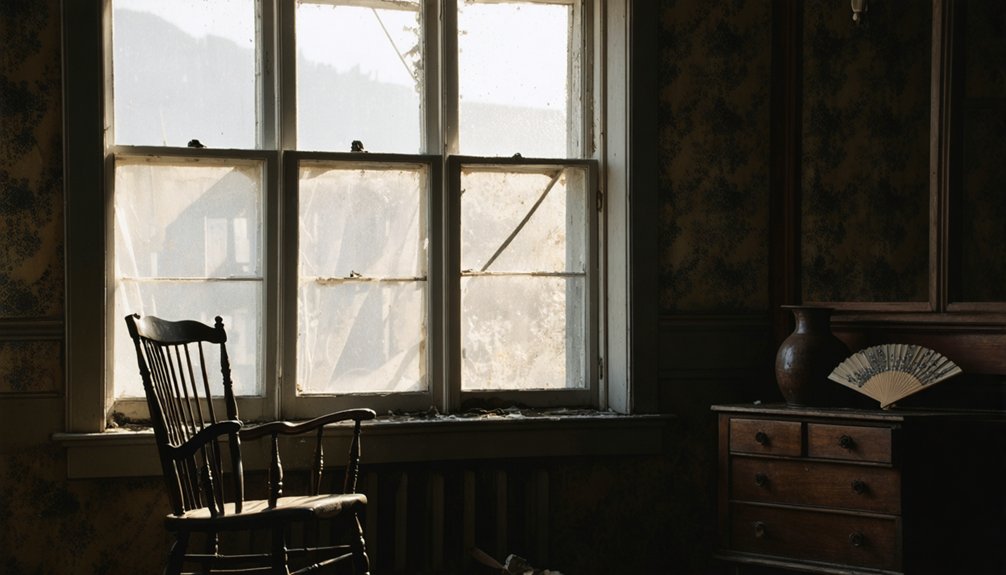
As Montana’s mining operations expanded in the late 19th century, the state’s frontier towns transformed into vibrant multicultural centers that defied the homogeneous portrayal of Western settlement.
Nowhere was this more evident than in Butte, where you’d find a remarkable tapestry of immigrant traditions forming distinct neighborhoods like Finn Town and Chinatown.
The cultural heritage of these mining communities persists through:
- Enduring culinary traditions like Cornish pasties and Slavic povitica
- Labor solidarity that transcended ethnic divisions “below ground”
- Social clubs that preserved native languages and customs
- Architectural remnants now preserved in Historic Landmark Districts
Despite facing discrimination, particularly Chinese and African American residents contributed considerably to these communities’ fabric. The infamous Granite Mountain Mine fire of 1917 claimed 168 miners from 25 different countries, tragically illustrating the town’s diversity. The shared dreams and hardwork of these diverse ethnic groups created Butte’s unique cultural identity amid the boom-and-bust cycles of copper mining.
Their legacy remains in museums, celebrations, and the multicultural identity that distinguishes Montana’s mining towns from other Western settlements.
Bannack After Dark: Paranormal Activity in the First Territorial Capital
While cultural diversity shaped Montana’s mining communities during daylight hours, the ghost town of Bannack reveals another dimension of frontier life after sunset.
You’ll encounter spectral history at Hotel Meade, where cold spots and apparitions watch from windows. The vengeful spirit of Sheriff Henry Plummer, hanged by vigilantes in 1863, patrols between the Skinner Saloon and gallows post—a tragic reminder of frontier justice gone awry.
Ghostly encounters aren’t limited to Plummer’s restless soul. Disembodied voices echo near the general store, phantom doors slam without explanation, and the cries of a baby persist around one particular home.
These paranormal manifestations connect you directly to Bannack’s violent past, where gold fever attracted 5,000 residents before abandonment claimed Montana’s first territorial capital by the 1940s.
Decaying Glory: The Architectural Remains of Butte’s Copper Kingdom

Towering against Montana’s big sky, Butte’s seventeen original headframes stand as silent sentinels of a once-thriving copper empire that dominated America’s industrial landscape.
You’ll witness the architectural heritage of the “Richest Hill on Earth” through decaying structures that tell stories of wealth, labor, and environmental consequence.
- The Copper King Mansion’s Victorian opulence contrasts sharply with the toxic Berkeley Pit’s stark industrial void.
- Ethnic enclaves reveal distinct architectural styles—Irish, Italian, Finnish, and Welsh—reflecting the diverse mining workforce.
- Uptown’s commercial buildings preserve turn-of-the-century craftsmanship despite decades of economic decline.
- Abandoned smelters and hoist houses create a haunting industrial landscape, deteriorating under Montana’s harsh elements.
These architectural remnants embody both the glory and devastation of Butte’s copper kingdom, where freedom’s promise attracted thousands seeking fortune in Montana’s depths.
When Fire and Fortune Collide: The Tragic Ends of Mining Settlements
You’ll find Montana’s mining towns indelibly scarred by the convergence of fire and fortune, as exemplified by the 1917 Granite Mountain/Speculator Mine Fire that claimed 168 lives and stands as America’s deadliest hard-rock mining disaster.
Beneath Butte’s historic buildings lie the blackened timbers and abandoned shafts where flames once consumed oxygen, created deadly chimney effects, and left miners to write final notes in their last hours.
These tragedies, occurring amid wartime production demands and labor unrest, fundamentally altered mining communities’ trajectories, accelerating their eventual transformation from bustling industrial centers to the haunted memorials and ghost towns that dot Montana’s landscape today.
Among the remnants of these once-thriving settlements, tales of eerie echoes and shadowy figures tell the stories of the past. Today, the haunted mining camps in Montana attract thrill-seekers and history enthusiasts alike, eager to uncover the mysteries that linger in the air. Each site serves as a stark reminder of the lives intertwined with the land, forever marked by the weight of their histories.
The eerie history of Colorado’s ghost towns similarly captures the imaginations of those drawn to the remnants of a bygone era. As visitors walk through the crumbling structures and abandoned streets, whispers of lost dreams and untold stories echo along the windswept hills. Each ghost town stands as a testament to a rich yet haunting past, inviting exploration and reflection on what once was.
Blazing Gold Dust
Flames devoured Montana’s mining settlements with devastating regularity, transforming bustling centers of commerce and industry into smoldering ruins within hours.
As you explore these ghost towns today, you’ll find remnants of blazing trails once filled with golden dreams—all decimated by the volatile combination of wooden structures, open flames, and frontier carelessness.
- Virginia City lost millions in gold production potential during conflagrations that accelerated its decline
- Archaeologists now study carbonized remains to reconstruct daily life in these vanished communities
- Fire-damaged ruins still visible today reveal the precarious nature of boomtown existence
- Each charred timber represents both tremendous wealth and catastrophic vulnerability
These fire incidents didn’t merely destroy property—they reshaped Montana’s mining frontier, sending populations fleeing to newer strikes and leaving behind the eerie, fire-scarred landscapes you witness today.
Ruins From Flames
While the history of Montana’s mining settlements tells a story of ambition and prosperity, it also reveals how catastrophic fires transformed these once-thriving communities into haunting ruins.
You’ll find no more sobering example than the 1917 Granite Mountain-Speculator Mine Disaster in Butte. As you explore the flame remnants of this catastrophe, consider that 168 men perished when an electric cable ignited 2,500 feet below ground.
The shaft became a deadly chimney, with miners leaving desperate notes as oxygen disappeared. This disaster—America’s deadliest hard-rock mining tragedy—exemplifies how quickly fortune could turn to devastation.
Though memorialized only decades later, these mining tragedies shaped Montana’s cultural identity. When you visit these sites today, you’re walking among the physical reminders of both tremendous industrial ambition and its devastating human cost.
Underground Tunnels and Their Secrets: What Lies Beneath Mining Towns
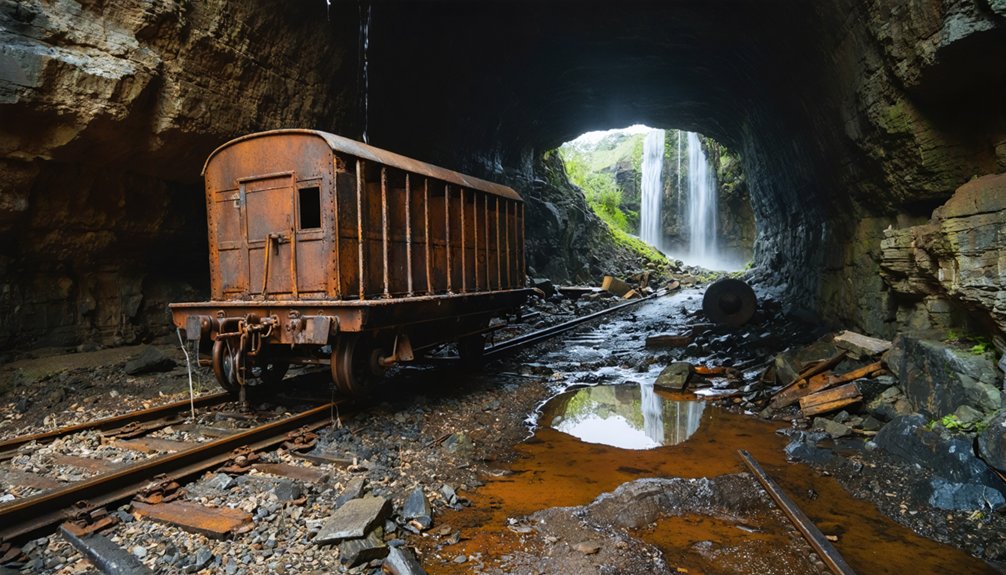
Beneath the surface of Montana’s mining towns lies an intricate labyrinth of tunnels, shafts, and drifts that tell the hidden story of the state’s industrial past.
Beneath Montana’s industrial towns, forgotten tunnels whisper secrets of a bygone era.
In Butte alone, you’ll find over 10,000 miles of subterranean passages—one of the world’s most extensive networks. These underground workings, now largely abandoned, harbor both profound historical significance and hidden dangers.
- The Berkeley Pit now captures acid drainage from the vast network of tunnels that miners once pumped dry continuously for a century.
- Undocumented shafts pose structural hazards, occasionally creating sinkholes in urban areas.
- Labor unions found their power in these dark corridors where over 2,300 miners lost their lives.
- The 1917 Granite Mountain disaster claimed 168 lives—America’s worst hard rock mining catastrophe.
From Boom to Bust: The Ghostly Remnants of Sudden Desertion
When you visit Montana’s ghost towns today, you’ll find abandoned saloons with dusty bars and collapsing structures that silently narrate the abrupt exodus following price crashes and depleted ore.
The architectural remnants—hastily constructed during boom times with minimal foundations—continue to deteriorate as nature reclaims these once-vibrant communities.
Ghostly echoes of vigilante justice and miners’ hardships persist in these deserted streets where the contrast between past prosperity and current desolation creates an especially haunting atmosphere.
Abandoned Saloons Stand Empty
The abandoned saloons of Montana’s mining towns stand as poignant monuments to their communities’ precipitous decline.
Once vibrant centers of social life, these establishments now echo with saloon stories of revelry and ghostly gatherings. You’ll find Kelley’s two-story establishment in Garnet particularly evocative—men downstairs gambling, women entertaining upstairs—a reflection of frontier social dynamics.
- Teller City’s 27 saloons dwindled to empty shells as mining operations ceased
- The 1912 Garnet fire accelerated abandonment, with half the town’s drinking establishments never rebuilt
- Mrs. Kelley’s management represents the often-overlooked female influence in frontier commerce
- By the 1940s, these once-bustling community hubs stood silent, marking the dissolution of mining communities
These architectural vestiges remain powerful symbols of freedom’s fleeting nature in boom-and-bust economies.
Collapsing Structures Tell Stories
Hastily constructed with minimal foundations and subsequently abandoned to Montana’s unforgiving elements, the collapsing structures of mining ghost towns serve as eloquent narrators of boom-and-bust economics.
You’ll find buildings frozen in time—some with inventory still inside, doors locked as owners fled financial collapse. These collapsing facades reveal forgotten stories of communities that vanished virtually overnight following market crashes or resource depletion.
The skeletal remains of headframes stand like gallows against Montana’s sky, while sinkholes created by underground mining operations have literally swallowed portions of towns.
Harsh weather accelerates decay, transforming once-bustling commercial districts into haunting tableaux of broken windows and peeling paint.
These architectural remnants aren’t merely decaying structures—they’re physical embodiments of ambition, hardship, and the ephemeral nature of prosperity tied to extractive industries.
Ghostly Echoes Remain
Montana’s abandoned mining settlements offer more than physical remnants—they preserve the echoes of sudden exodus that occurred with each economic collapse.
In these ghost towns, you’ll witness the economic volatility that repeatedly transformed thriving communities into skeletal remains virtually overnight.
- Silver mines closed within weeks after the 1893 Sherman Act repeal, triggering immediate population flights
- Roosevelt’s 1934 gold price doubling briefly revived abandoned operations, drawing miners back to rework claims
- World War II restrictions on dynamite made mining unsustainable, causing another mass departure
- Structures deteriorate “board by board and brick by brick,” erasing physical evidence of Montana’s mining heritage
When you explore these sites, you’re witnessing the aftermath of economic forces that repeatedly emptied once-vibrant commercial districts, leaving behind hotels, saloons and infrastructure abandoned mid-stride.
Frequently Asked Questions
Did Montana Mining Towns Experience Significant Paranormal Activity Before Becoming Abandoned?
Yes, you’ll find historical accounts of paranormal activity dating to the late 1800s, with contemporary paranormal investigations confirming these haunted locations through documented EVPs, temperature anomalies, and apparition sightings.
How Did Winter Weather Affect Ghost Town Preservation and Decay?
Like winter wolves devouring abandoned prey, severe snow accumulations directly assault ghost town structures. You’ll observe how Montana’s seasonal decay accelerates deterioration through freeze-thaw cycles, while limiting winter preservation efforts to snowmobile-accessible interventions.
What Indigenous Perspectives Exist on Montana’s Mining Town Legacy?
You’ll find Indigenous heritage deeply wounded by mining towns that represent dispossession and environmental devastation, while modern Cultural preservation efforts seek to reclaim narratives about traditional lands and spiritual connections.
Do Any Mining Town Descendants Still Live Nearby Today?
Yes, you’ll find thriving descendant communities surrounding Montana’s former mining towns. Many residents actively trace their lineage through modern genealogy, maintaining deep connections to their copper, gold, and silver mining heritage.
Were There Successful Attempts to Revive Any Abandoned Montana Mining Towns?
You’ll find Butte demonstrates the most successful revival efforts, shifting from mining decline through extensive economic reinvention, while places like Garnet remain preserved primarily as ghost town tourism destinations rather than functional communities.
References
- https://westernmininghistory.com/state/montana/
- https://www.islands.com/1911056/montana-garnet-day-mining-town-best-preserved-abandoned-mountains/
- https://co.silverbow.mt.us/481/History-Culture
- https://mtbeyond.com/history/montana-mining/
- https://roadtrippers.com/magazine/digging-into-montana-mining-history-in-big-sky-country/
- https://glaciermt.com/ghost-towns
- https://www.arcgis.com/home/item.html?id=38e9b6bdc3484eae8a1acec01cbe717e
- https://www.distinctlymontana.com/modern-mining-montana
- https://www.mbmg.mtech.edu/MontanaGeology/DataPreservation/main.asp
- https://www.legendsofamerica.com/mt-garnet/