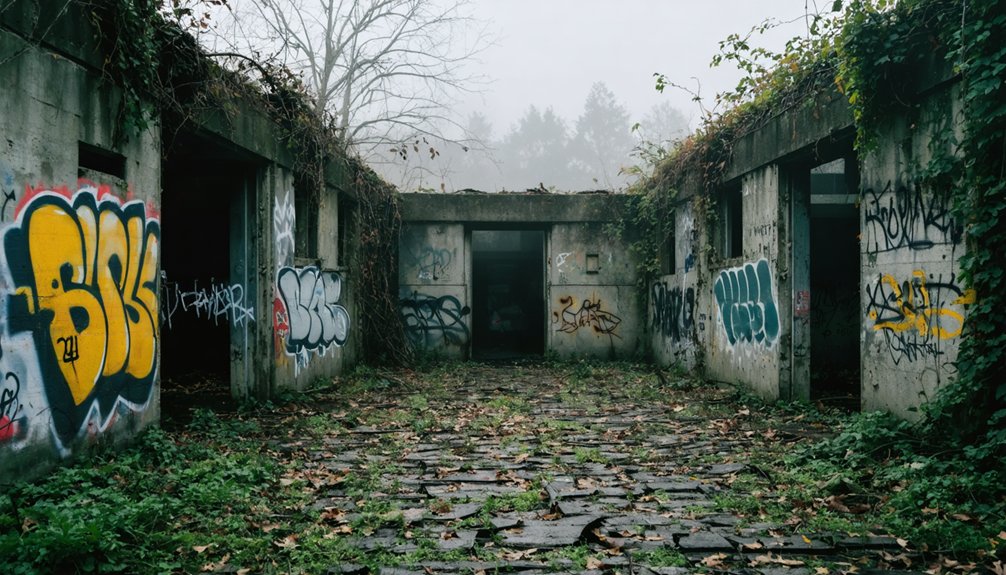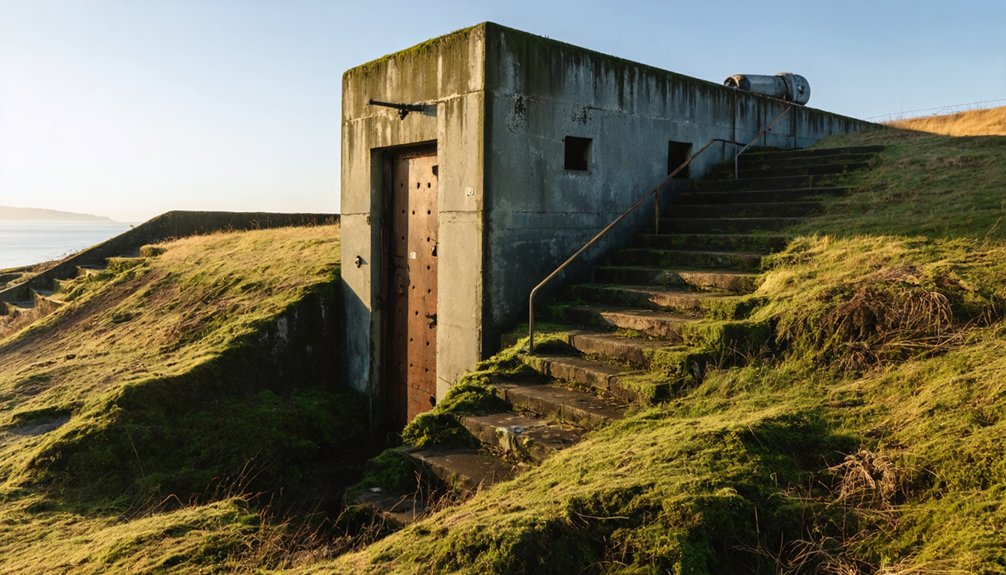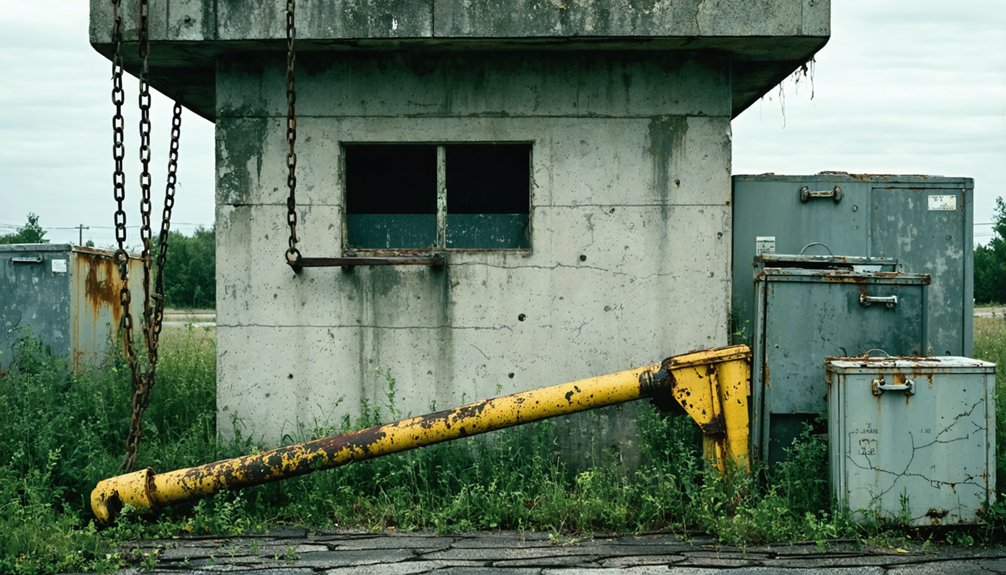
You’ll find extensive infrastructure networks at decommissioned military bases, including underground bunkers, reinforced chambers, and specialized facilities. These sites often contain hidden tunnel systems, contaminated zones from chemical residues, and historical structures preserved from World War II and Cold War eras. While many bases transform into civilian developments, others remain partially sealed due to safety hazards, unexploded ordnance, or structural decay. The complex legacy of these installations reveals deeper layers of America’s military heritage.
Key Takeaways
- Extensive infrastructure including runways, utilities, buildings, and facilities that can be converted for civilian development projects.
- Underground tunnel networks and reinforced bunkers, many sealed due to safety concerns or structural instability.
- Chemical contamination zones requiring cleanup, including areas affected by PFAS, jet fuel, and other hazardous materials.
- Historical structures and monuments preserved as military heritage, including World War II-era buildings and Cold War installations.
- Mixed-use development opportunities combining residential, commercial, and industrial zones within existing military infrastructure.
The Legacy of Military Infrastructure
When examining decommissioned military bases, you’ll find extensive infrastructure networks that have left a significant imprint on America’s landscape through the Base Realignment and Closure process.
Your infrastructure assessment will reveal that the Department of Defense maintains 22-33% excess capacity across its facilities, with the Army showing up to 33% surplus infrastructure that requires ongoing maintenance. The DOD estimated net total savings of approximately $14 billion through fiscal year 2001 from these closures. The successful conversion of these sites into mixed-use developments has proven vital for local economic recovery.
DoD facilities contain up to one-third excess capacity, creating an ongoing maintenance burden across military installations nationwide.
The legacy preservation challenge becomes evident as you explore these sites. You’ll encounter underutilized facilities ranging from reserve component training areas with 50% excess capacity to administrative spaces with 29% surplus.
The Pentagon’s BRAC initiative has closed over 450 installations, achieving a 21% reduction in base structure, yet disposal of closed military property often extends years beyond official closure dates, with 42 bases still pending land disposal as of 2023.
Hidden Underground Remnants
While many decommissioned military bases have visible surface structures, their most intriguing remnants lie deep underground in elaborate tunnel networks and reinforced bunker systems.
You’ll find hidden facilities like Cheyenne Mountain Complex, carved from 700,000 tons of granite, and Raven Rock’s nuclear bunker serving as Pentagon alternates. These military secrets include reinforced chambers with 14-foot thick walls, integrated power systems, and specialized areas for missile storage and command operations. Space Force crews maintain constant vigil at missile silos across the northern states. The Titan I Missile Complex showcases this engineering with its 155-foot deep underground facilities.
Today, these underground remnants serve various purposes. Some, like Balaklava’s submarine base, have become museums.
Others maintain caretaker status or function as military training grounds. Many remain sealed due to flooding, unexploded ordnance, or structural decay, their massive concrete and steel infrastructure slowly deteriorating beneath the earth’s surface.
Environmental Challenges and Toxic Heritage
When you examine decommissioned army bases, you’ll find persistent chemical contamination zones that require extensive remediation efforts, particularly from PFAS, TCE, and heavy metals that have penetrated deep into soil layers.
Your greatest concern should be the widespread groundwater contamination, as hazardous substances from military operations have infiltrated aquifers and threaten drinking water supplies for surrounding communities. The Department of Defense has already invested 11.5 billion dollars in evaluations and cleanup operations nationwide. Notably, firefighting foams at 245 military installations have left a legacy of PFAS contamination in groundwater across the United States.
These contaminated sites often necessitate multi-million dollar cleanup operations and can take decades to remediate, with many former bases now designated as Superfund sites requiring urgent environmental intervention.
Chemical Contamination Zones Persist
Despite decades of military base closures, persistent chemical contamination zones remain a critical environmental challenge at over 700 decommissioned U.S. military installations.
You’ll find extensive toxic legacies from historical use of PFAS-containing firefighting foams, with some sites showing groundwater contamination at 20.7 million parts per trillion – far above EPA safety limits. The Department of Defense has identified 401 military sites with suspected PFAS discharge. Recent investigations revealed that 581 installations are now suspected of PFAS contamination following extensive preliminary assessments.
- Chemical exposure risks stem primarily from PFAS compounds like PFOS, PFOA, and PFHxS, which resist degradation in soil and groundwater.
- Contamination zones typically include jet fuel residues, benzene, TCE, lead, and radioactive waste that threaten drinking water supplies.
- Migration of these “forever chemicals” into surrounding watersheds creates long-term impacts on civilian communities and ecosystems, forcing dramatic measures like livestock euthanization in affected areas.
Groundwater Protection Needs Urgent
The staggering timeline for groundwater remediation at decommissioned military bases presents an immediate environmental crisis.
You’ll find that some contaminants require up to 500 years to reach safe levels, while complete fuel contamination cleanup could take up to 40,000 years.
PFAS, the “forever chemicals” from firefighting foams, now plague over 700 military sites, exceeding safety thresholds by 100 times in many locations.
Recent data shows that Aqueous Film Forming Foam continues to be a primary source of water contamination at military installations.
Your groundwater monitoring concerns are justified, as these toxic cocktails include jet fuel, TCE, pesticides, and radioactive waste.
The ATSDR assessment reveals that safe PFAS exposure levels are significantly lower than previously thought, making contamination even more concerning.
The contamination remediation challenge is particularly complex when PFAS combines with legacy pollutants.
You’re facing a multi-generational threat, as contaminated plumes extend beyond base boundaries, directly impacting civilian water supplies and raising serious health risks including leukemia and blood disorders.
From Defense to Development: Land Transformation
You’ll find that decommissioned army bases present unique opportunities for adaptive reuse through their existing infrastructure and large-scale development potential.
The transformation from military to civilian use typically follows mixed-use development models that incorporate housing, commercial spaces, and public amenities within the established framework of roads, utilities, and buildings.
These conversion projects often leverage specialized military infrastructure like hangars, warehouses, and administrative facilities to create economic hubs while maintaining the site’s historical context.
Adaptive Reuse Strategies
Military installations undergoing decommissioning present unique opportunities for adaptive reuse, transforming defense assets into civilian development projects through strategic land repurposing.
You’ll find extensive infrastructure and facilities ready for conversion into vibrant community spaces through careful assessment and modernization.
- Structural evaluations determine which buildings can be preserved, focusing on HVAC viability, security requirements, and regulatory compliance.
- Infrastructure assets like runways, roads, and utilities offer immediate development potential when retrofitted with modern systems.
- Community engagement drives successful transformations into research parks, educational facilities, or cultural venues while preserving historical significance.
You’re able to leverage existing resources while implementing sustainable practices, reducing environmental impact through preservation of embodied energy and limited new construction materials.
This approach optimizes both timeline and cost efficiency in redevelopment efforts.
Mixed-Use Development Models
When transforming decommissioned bases into civilian spaces, mixed-use development models offer a thorough framework for maximizing economic potential through integrated residential, commercial, and industrial zones.
You’ll find these developments prioritize sustainable design by concentrating growth within existing urban footprints rather than consuming undeveloped land. Through community engagement, village-style neighborhoods emerge with walkable streets and diverse housing options.
These principles also extend to recognizing forgotten native american history exploration, ensuring that indigenous heritage is respected and incorporated into modern urban development. By weaving these historical narratives into the urban fabric, communities foster a sense of identity and belonging. This approach not only honors the past but also enriches the experiences of all residents.
The integration of specialized zones, like technology parks and business incubators, stimulates innovation while preserving military heritage through thoughtful incorporation of historical elements.
These projects attract varied industries including technology, aerospace, healthcare, and light manufacturing, strengthening regional economic resilience.
With proper planning and significant investment, you’re looking at developments that can generate millions in revenue while creating sustainable, livable communities that honor their military legacy.
Preserved Historical Structures and Artifacts
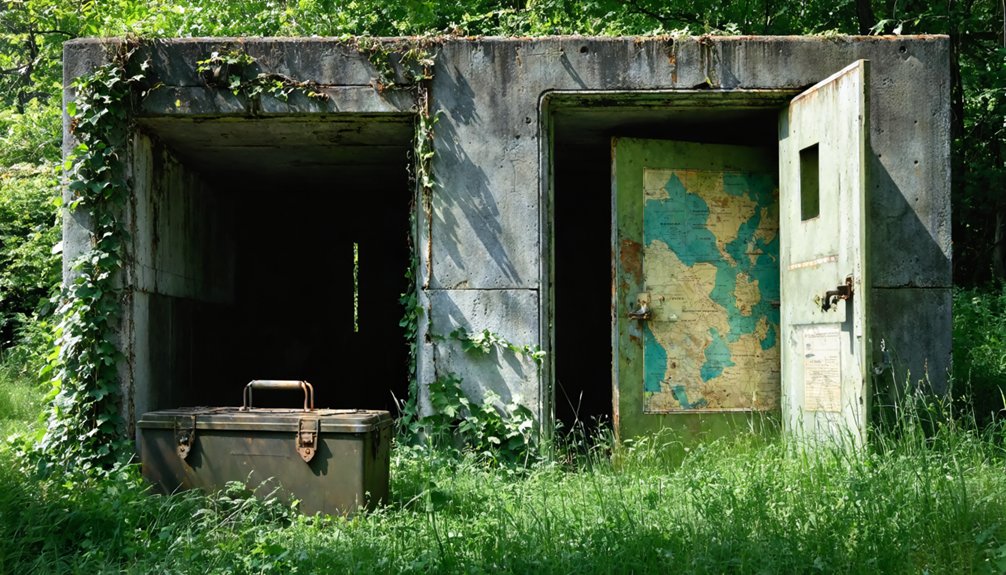
Throughout America’s decommissioned army bases, numerous historical structures and artifacts remain preserved as enduring monuments to U.S. military heritage. You’ll find extensive military artifacts spanning multiple eras, from early 19th-century arsenals to Cold War missile complexes, each telling a unique story of American defense evolution.
- Historical preservation efforts have maintained iconic features like stone magazines, defensive earthworks, and durable bunkers that showcase original military engineering and architecture.
- Many bases retain World War II-era structures, including distinctive 700 and 800 series wooden buildings that have been adapted for civilian use while maintaining their historical integrity.
- Cold War installations feature preserved missile silos, underground control rooms, and strategic defense facilities that document a critical period in military technological advancement.
These sites continue serving as essential references for understanding America’s military past while adapting to modern purposes.
Safety Concerns at Abandoned Sites
While preserved historical structures offer educational value, abandoned military installations harbor serious safety hazards that demand careful attention.
You’ll encounter unstable buildings with weakened foundations, collapsed roofs, and deteriorating infrastructure that pose immediate physical dangers.
Critical hazard awareness includes recognizing areas potentially contaminated with unexploded ordnance, which can remain volatile for decades.
You must understand that former maintenance zones and training areas may contain toxic chemical residues, including PFAS and TCE, that can affect your health through various exposure routes.
Essential safety measures involve avoiding underground tunnels and bunkers due to entrapment risks, staying clear of former artillery zones, and recognizing that contaminated groundwater can spread well beyond base boundaries, impacting surrounding communities.
Managing Waste and Contamination
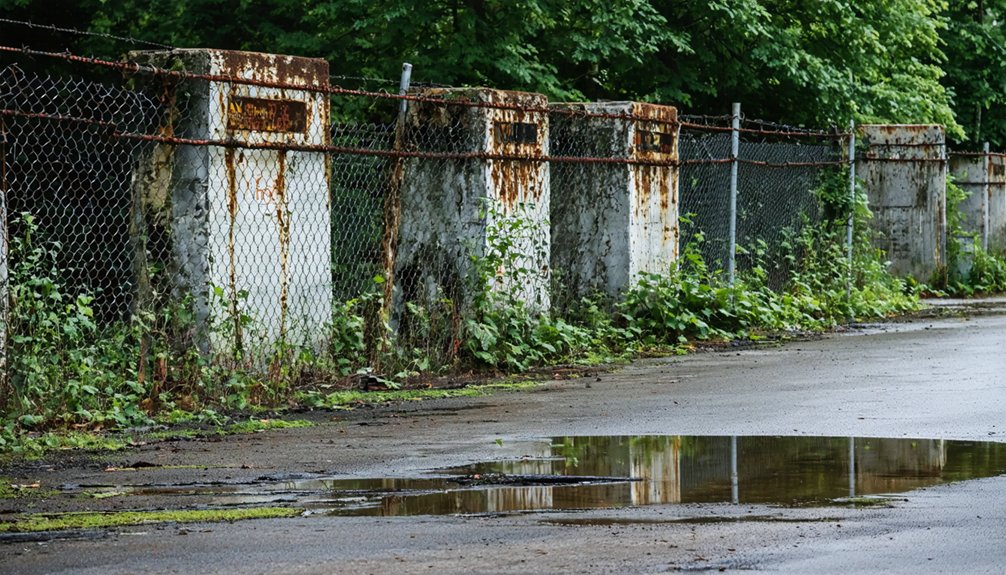
Due to the massive volume of waste generated at military installations, managing contamination and disposal presents a complex technical challenge. Military personnel generate up to 20 pounds of waste daily – double the civilian rate – creating intensive demands for waste management systems and contamination prevention protocols.
- Integrated waste management frameworks prioritize the 4Rs (reduction, reuse, recycling, energy recovery) through universal waste centers and contractor facilities that have achieved significant diversion rates.
- Specialized treatment methods like composting, anaerobic digestion, and waste-to-energy technologies help process organic materials and recover resources.
- Heavy metal contamination from ammunition residues, chemical agents, and explosives requires targeted remediation strategies, though security priorities often complicate implementation of sustainable disposal practices.
You’ll find investment in proper infrastructure remains critical, as demonstrated by the $81 million spent on 23 incinerators in Afghanistan.
Architectural Remnants of Military Past
Following the decommissioning of military bases, significant architectural features remain as tangible reminders of their operational history.
You’ll find distinctive architectural styles throughout these sites, from Art Deco administration buildings to mid-century control towers. Historical significance is preserved in officers’ clubs, chapels, and barracks that now serve new purposes.
Large-scale aviation structures dominate many former bases, with hangars and maintenance facilities adapted for civilian use. The original street layouts and infrastructure often integrate seamlessly into new developments.
At coastal installations, you’ll encounter massive dry docks, piers with industrial cranes, and harbor defenses. Cold War remnants are particularly striking, featuring radar towers, radomes, and bunker complexes.
These architectural elements provide a direct connection to America’s military heritage while offering potential for innovative repurposing.
Legal Framework for Base Transitions

The Defense Base Realignment and Closure Act of 1990 sets the foundational legal structure for converting military installations to civilian use.
You’ll find strict legal obligations governing the transfer process, managed by a nine-member commission that minimizes political interference. The Department of Defense must comply with state and federal environmental regulations while meeting specific implementation deadlines.
- Environmental assessments require detailed documentation of contamination and cleanup efforts through Environmental Condition of Property reports.
- Nuclear decommissioning falls under Atomic Energy Act provisions, requiring NRC-approved Decommissioning Plans and Final Site Surveys.
- State and federal coordination demands interagency compliance requirements, including Department of Defense and State Memoranda of Agreement for property transfers.
The shift process integrates multiple regulatory frameworks to guarantee environmental safety and proper oversight during the conversion from military to civilian use.
Frequently Asked Questions
Can Civilians Purchase Individual Buildings or Structures on Decommissioned Military Bases?
You can’t directly purchase individual buildings from the military. Civilian ownership comes only after federal property regulations transfer entire base parcels to local authorities or developers for redistribution.
What Happens to Military Equipment Too Large or Costly to Remove?
You’ll find large military equipment on decommissioned bases is either dismantled on-site, sold as scrap, recycled for materials, or demilitarized in place through DLA Disposition Services’ contracted demolition teams.
Are There Any Restrictions on Photographing or Documenting Abandoned Military Facilities?
You’ll face strict photography regulations and legal implications when documenting abandoned bases. You must obtain permission from military authorities, as these sites remain restricted even after decommissioning under 18 USC §795.
Do Former Military Bases Still Maintain Their Original Security Systems?
You won’t find active security systems at decommissioned bases – they’re typically dismantled during closure. Security upgrades vanish as preservation challenges mount, leaving only empty shells of former military installations.
How Long Does It Typically Take for Nature to Reclaim Abandoned Bases?
You’ll see initial nature recovery within months, but complete ecological succession typically takes 30-50 years as vegetation gradually overtakes structures and wildlife reestablishes diverse habitats in abandoned bases.
References
- https://oldcc.gov/news/march-air-force-bases-downsizing-created-ghost-town-heres-whats-there-now
- https://www.businessinsider.com/camp-century-photos-secret-underground-us-military-base-greenland-2025-2
- https://www.everycrsreport.com/reports/R48547.html
- https://www.youtube.com/watch?v=UU2_LFVVpsM
- https://www.popularmechanics.com/technology/design/g1507/creepy-abandoned-military-sites-from-around-the-world/
- https://www.loveexploring.com/gallerylist/233478/americas-eeriest-abandoned-military-sites
- https://thecounty.me/2025/12/03/presque-isle/maine-man-makes-case-for-preserving-historic-states-military-sites-in-new-book/
- https://www.everycrsreport.com/reports/RL30440.html
- https://icic.org/blog/smart-redevelopment/
- https://www.dmi-ida.org/knowledge-base-detail/Excess-Military-Infrastructure-and-the-Base-Realignment