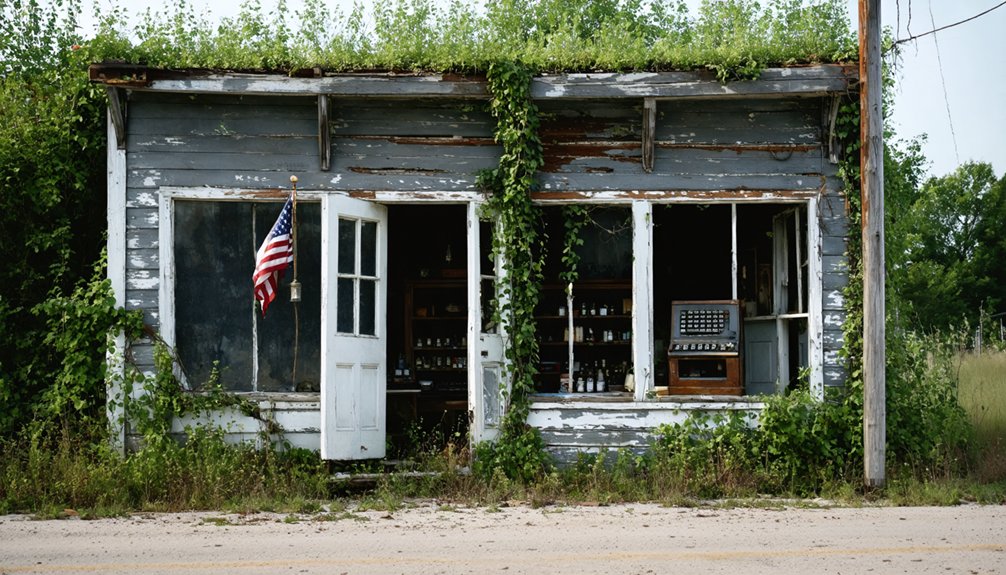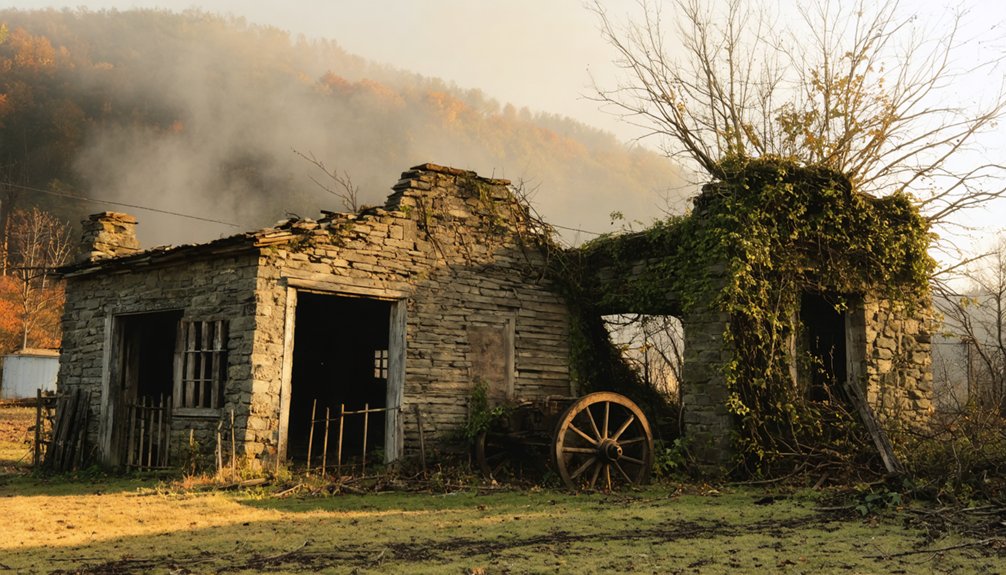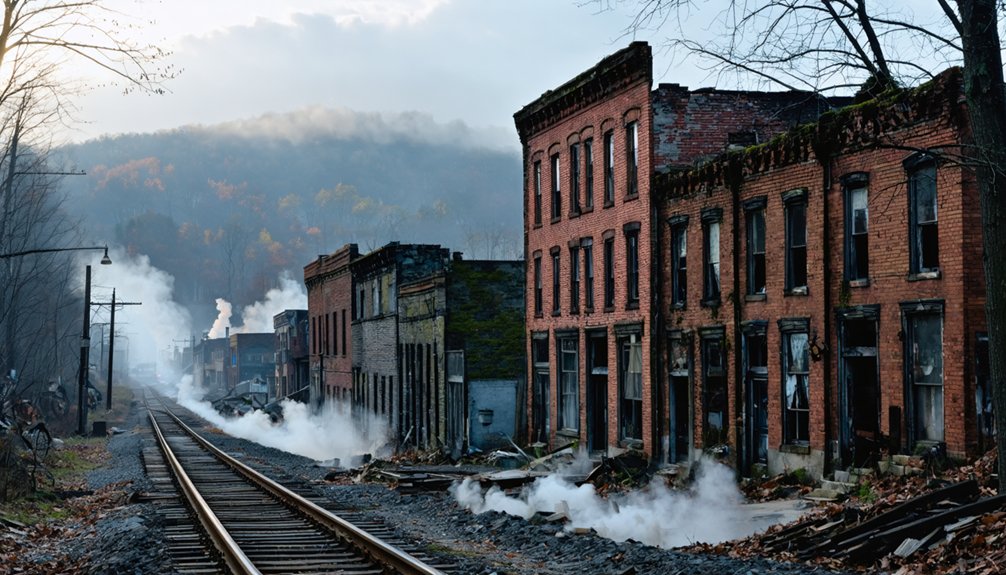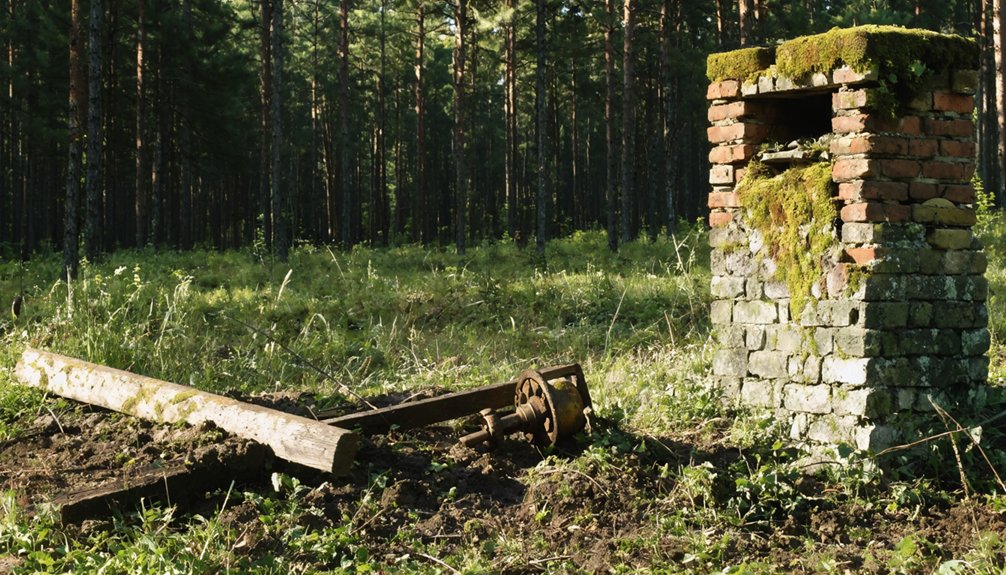
You’ll find compelling Civil War ghost town relics scattered across the American South, from Windsor Ruins’ 23 majestic columns in Mississippi to Fort Sumter’s battle-scarred walls in South Carolina. These architectural survivors include Federal-style churches, antebellum mansions, and military fortifications that withstood Union bombardments. While some structures like Fort Ward undergo restoration, others remain untouched, silently preserving their wartime stories for those willing to explore these haunting historical treasures.
Key Takeaways
- Windsor Ruins in Mississippi preserves 28 towering columns from an antebellum mansion, standing as silent witnesses to Civil War history.
- The Federal-style Presbyterian Church in Rodney, Mississippi maintains its structural integrity despite the town’s abandonment.
- Seminary walls in Wasioja, Minnesota and architectural remnants in Cahawba, Alabama showcase preserved community structures from wartime.
- Military installations like Fort Sumter and Fort Pulaski display battle damage and structural remains from Civil War conflicts.
- Archaeological excavations continue to uncover weapons, artifacts, and evidence of displaced communities throughout former Civil War settlements.
The Silent Stones: Architectural Remnants of the South
Throughout the American South, architectural ruins from the Civil War era stand as silent witnesses to the region’s turbulent past, with plantation houses bearing some of the most dramatic remnants.
You’ll find Windsor Ruins in Mississippi, where 23 full columns and 5 partial columns survive from what was once the state’s largest antebellum mansion. These 16-inch brick structures, crafted by enslaved artisans, tell a story of architectural significance that transcends their original purpose.
The ruin restoration challenges are evident at sites like Millwood Plantation in South Carolina, where five moss-draped columns endure, and Sheldon Ruins, where stone walls have withstood multiple burnings. During the Civil War, the Confederate textile mill at Saluda River Factory produced uniforms for Southern troops before its destruction. Today, visitors can explore the star-shaped masonry of Fort Pulaski in Georgia, where Union bombardment left permanent scars in the fortress walls.
These architectural fragments reveal the engineering prowess of their builders while documenting the destructive impact of warfare on the Southern landscape.
Military Installations: From Active Duty to Abandonment
When the Civil War ended, hundreds of military installations across America faced a stark shift from active combat centers to abandoned relics.
You’ll find their stories etched in places like Fort Moultrie, where Federal troops withdrew as South Carolina seceded, and Fort Barrancas, which changed hands multiple times before its abandonment in 1862.
These sites tell a complex tale of military history through their deteriorating walls and overgrown grounds. Fort Sumter saw some of the most significant damage during the Siege of Charleston Harbor. Fort Jefferson became a prison for deserters during this tumultuous period.
Time and nature slowly reclaim these silent fortifications, their crumbling structures whispering stories of battles long past.
Today, you can explore diverse outcomes in site preservation.
Fort Ward’s archaeological restoration rebuilt strategic sections for educational purposes, while Fort Jefferson stands largely untouched, a massive isolated fortification in the Keys.
Fort Negley’s excavations revealed unmarked graves of enslaved laborers, demonstrating how these abandoned installations continue to uncover vital historical insights decades after their military service ended.
The secrets of abandoned farming hamlets shed light on the everyday lives and struggles of those who once inhabited these now-desolate landscapes. As researchers delve into these forgotten areas, they uncover artifacts and remnants that paint a vivid picture of resilience in the face of adversity. Each discovery offers a unique glimpse into the past, enriching our understanding of rural history and the elements that shaped these communities.
Preserving History: Standing Structures and Their Stories
Among the most compelling Civil War ghost town remnants you’ll find today are the well-preserved Federal-style Presbyterian Church in Rodney, Mississippi and the ruined but still-standing seminary walls in Wasioja, Minnesota.
These architectural survivors offer tangible connections to the era’s building techniques and community life, with features like the symbolic cannonball display above Rodney’s church doors telling dramatic wartime stories.
Similar to Cahawba, Alabama, which served as a state capital before the Civil War led to its downfall, these structures stand as stark reminders of once-thriving communities.
Through careful preservation efforts, these structures continue to serve as physical touchstones to both antebellum prosperity and Civil War devastation.
The Rodney History and Preservation Society actively works to repair and preserve these historical structures, ensuring they remain standing for future generations to explore.
Restored Antebellum Architecture Lives
Standing as majestic monuments to America’s complex past, antebellum mansions serve dual roles as architectural treasures and historical repositories. You’ll find their antebellum significance reflected in the grand Greek Revival designs, featuring towering Corinthian columns and sprawling porticos that once welcomed Southern society’s elite.
The architectural symbolism extends beyond mere aesthetics – these homes embody both the refined craftsmanship of the era and its darker underpinnings. Enslaved artisans contributed substantially to creating these architectural masterpieces. Located primarily in states like Louisiana and Mississippi, these homes showcased the immense wealth generated from tobacco, sugar, and cotton plantations.
Today, preservation efforts have transformed many of these structures into museums and educational centers where you can explore their multifaceted history. From the intricate plasterwork to the cast-iron balconies, each restored detail tells a story of wealth, power, and conflict.
These living time capsules now serve as platforms for understanding the contradictions of the pre-Civil War South, inviting you to confront both beauty and burden.
Last Buildings Standing Today
From the coastal fortifications of Florida to the windswept ruins of Western mining towns, America’s Civil War-era ghost towns present a remarkable array of preserved structures that tell complex stories of boom, bust, and survival.
You’ll find last structures and preservation efforts across the nation that showcase our resilient past:
- Fort Jefferson stands as America’s largest brick structure, defying hurricanes since 1846.
- Bodie’s 110 buildings remain frozen in time, complete with original furnishings.
- Virginia City maintains its wooden saloons and mines as living history.
- Harrisburg’s solitary Orson B. Adams Home endures as a memorial to Western settlement.
- Cahawba’s brick streets and statehouse ruins reveal antebellum urban planning.
The California Parks Service maintains these historic buildings in a state of arrested decay, ensuring they remain authentic while preventing complete deterioration.
These surviving structures serve as tangible links to our past, offering direct connections to Civil War-era life and the challenges faced by early American communities. Today, many of these historic sites attract visitors through heritage tourism programs that help fund their preservation.
Economic Forces Behind Southern Town Collapses
The collapse of Southern towns during and after the Civil War era stemmed from multiple interconnected economic forces that created devastating ripple effects throughout the region.
Economic turmoil rippled through Southern communities as interlinked market forces triggered widespread collapse in the Civil War’s devastating wake.
You’ll find that economic dependency on single industries, particularly mining and agriculture, left these communities vulnerable to rapid decline when resources were depleted or market conditions shifted.
Population flight accelerated as transportation routes changed, bypassing once-thriving towns and redirecting commerce elsewhere.
When railroads chose alternative paths or highways were rerouted, businesses shuttered and residents departed.
The emergence of larger regional hubs drew away crucial economic activity, while demographic shifts and rising costs weakened local infrastructure.
These towns couldn’t compete with cities offering diverse job opportunities, leading to a declining tax base and deteriorating public services that further fueled their abandonment.
Archaeological Discoveries in Forgotten Communities
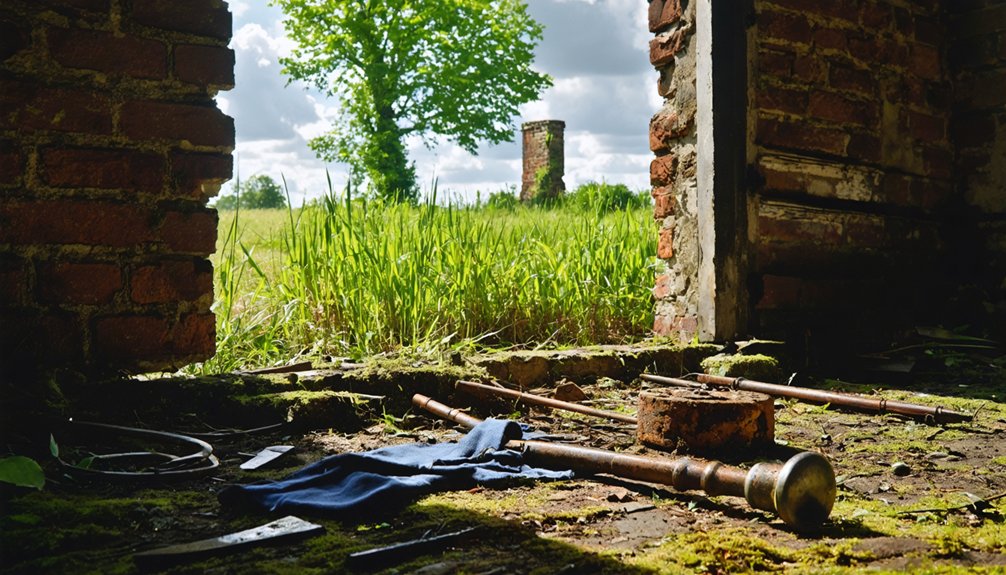
While exploring abandoned Southern communities, archaeologists have uncovered multilayered evidence of human settlement spanning centuries before and during the Civil War era.
The archaeological impact of these discoveries reveals forgotten narratives that reshape our understanding of life before, during, and after the conflict.
- Cahawba’s excavations expose Native American settlements dating back to 100 CE, including Mississippian earthworks beneath Civil War-era structures.
- Hidden weapons caches along the Congaree River provide insights into Confederate supply chain collapse.
- Relocated cemetery studies document displaced communities and lost burial grounds.
- River dredging projects continually uncover military artifacts with traceable manufacturing marks.
- Structural ruins like the Crocheron Mansion serve as preservation focal points for understanding daily life.
These findings continue to illuminate the complex layers of Southern history through tangible remains.
Tourism’s Role in Ghost Town Conservation
Modern ghost towns serve as living museums where tourism and preservation intersect in complex ways. You’ll find that tourism impact has transformed these historical sites into economic engines, generating billions in revenue while funding essential conservation efforts.
Through entrance fees, guided tours, and merchandise sales, these destinations now sustain their own preservation.
Conservation strategies have evolved to balance access with protection. You can experience these sites through digital guides and augmented reality apps that minimize physical impact while maximizing educational value.
When you visit, you’re supporting local jobs and infrastructure maintenance, though this brings challenges. Site managers must carefully control visitor flow, implement protective measures, and manage seasonal fluctuations to prevent deterioration.
Your tourist dollars directly contribute to preserving these irreplaceable windows into Civil War history.
Modern Development vs. Historical Sites: The Ongoing Battle
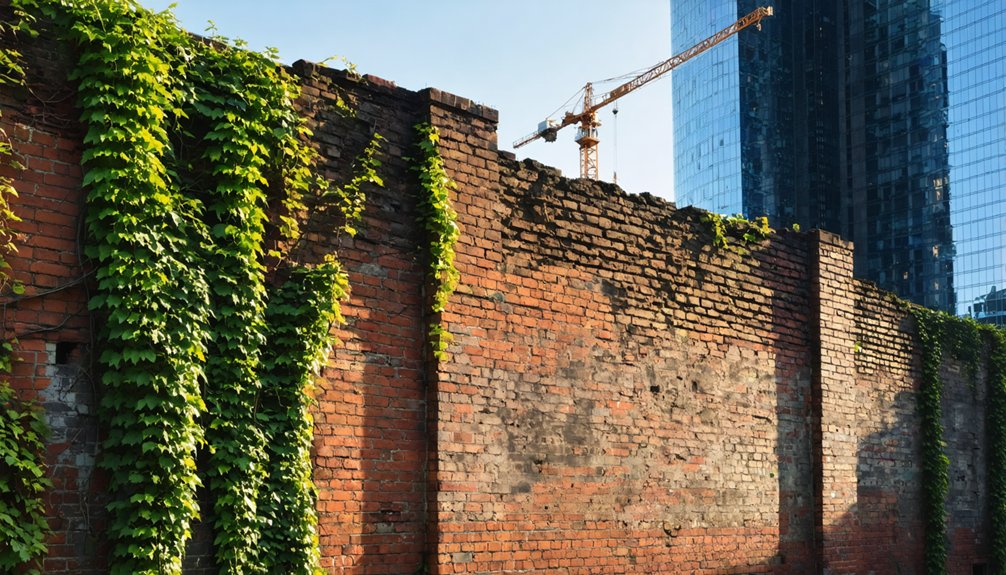
As cities expand and property values fluctuate, Civil War ghost towns face unprecedented pressure from developers seeking to transform historical sites into modern commercial and residential spaces.
The battle between development pressures and preservation challenges reveals complex economic and cultural tensions that you’ll find in communities nationwide.
Key factors driving this conflict include:
- Declining property values reducing financial incentives for preservation
- Rising infrastructure costs favoring new construction over restoration
- Urban expansion threatening historical sites’ contextual significance
- Environmental hazards complicating preservation efforts
- Community divisions between growth advocates and preservationists
You’re witnessing a transformation where development often wins over historical preservation, driven by economic demands and modern housing needs.
Legacy structures require costly maintenance, while developers eye prime locations for profitable conversions, forcing communities to make difficult choices about their historical heritage.
Frequently Asked Questions
How Did Former Residents Document Their Daily Lives in Abandoned Towns?
You’ll find their experiences captured through personal diary entries describing daily routines, photo archives showing community life, ledger books tracking purchases, and letters detailing living conditions and social activities.
What Happened to the Cemetery Records From These Ghost Towns?
You’ll find many cemetery records were lost to fires, neglect, and town abandonment, though modern cemetery preservation efforts aim to document these historically significant sites through volunteer surveys and official registries.
Did Any Confederate Gold Remain Hidden in These Abandoned Settlements?
You’ll never find definitive proof of Confederate treasure in ghost towns, though metal detectors occasionally ping lost artifacts. The $250,000 stolen near Chennault remains history’s biggest verified gold disappearance.
Were There Successful Attempts to Rebuild or Resettle These Towns?
You’ll find mixed results in rebuilding efforts, with some towns establishing new settlements nearby while others faced resettlement challenges. Places like Agdam show recent success, while Belchite intentionally preserves its ruins.
How Did Weather Patterns Influence Which Structures Survived Over Time?
You’ll find that weather resilience determined survival – brick and stone structures withstood storms and flooding, while wooden buildings succumbed to rot, wind damage, and structural materials deteriorated in harsh conditions.
References
- https://en.wikipedia.org/wiki/Ghost_town
- https://www.geotab.com/ghost-towns/
- https://www.mentalfloss.com/geography/american-ghost-towns-can-still-walk-through
- https://www.loveexploring.com/gallerylist/131658/abandoned-in-the-usa-92-places-left-to-rot
- https://www.christywanders.com/2024/08/top-ghost-towns-for-history-buffs.html
- https://www.losethemap.com/scariest-ghost-towns-in-the-world/
- https://tompoland.net/ruins-of-the-south-2/
- http://www.mdah.ms.gov/explore-mississippi/windsor-ruins
- https://www.southernpartisan.com/33-civil-war-forts-you-can-still-visit/
- https://theforgottensouth.com/mississippi-windsor-ruins/