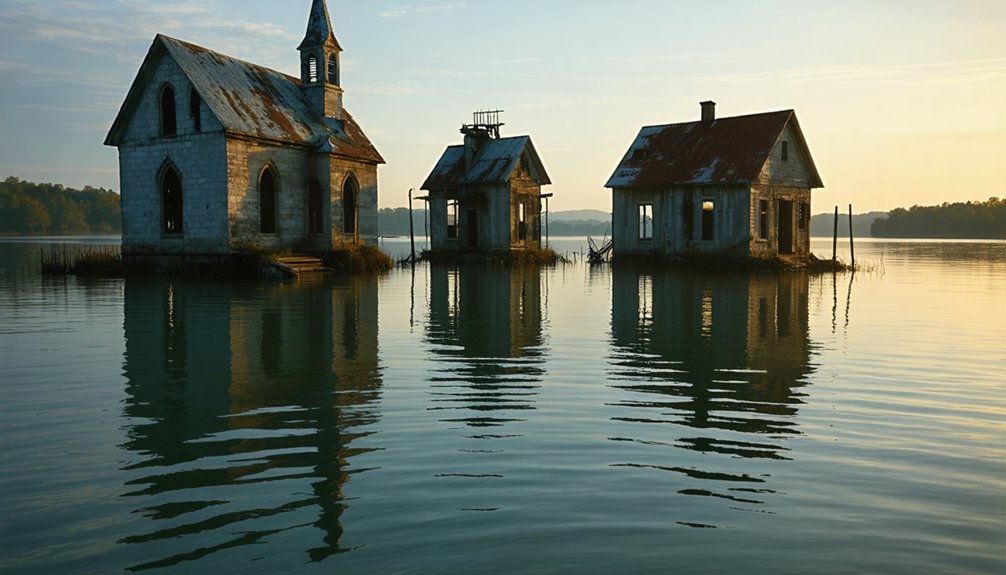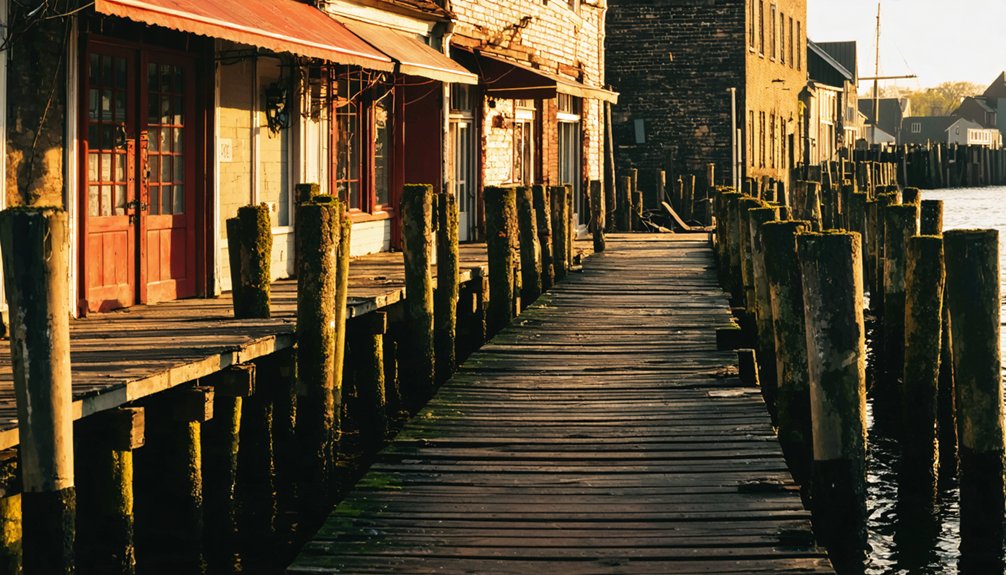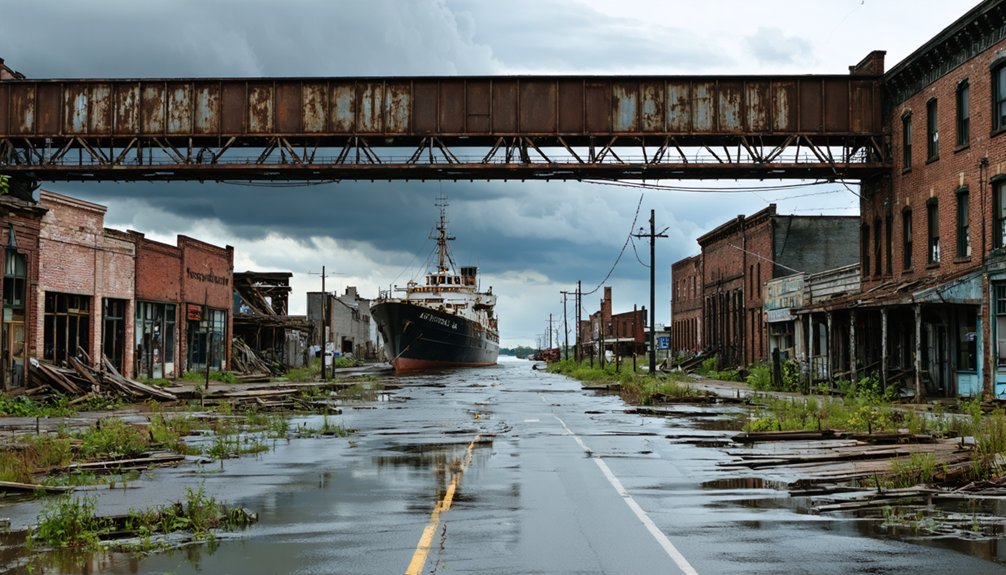
American riverside towns face widespread desolation due to a perfect storm of challenges. You’ll find crumbling infrastructure, where aging water systems leak trillions of gallons annually, alongside abandoned industrial buildings that once drove local economies. Young residents have fled to urban areas, leaving behind aging populations and shuttered businesses. Climate change and corporate water demands have intensified these towns’ struggles, while historical water rights decisions continue to favor larger cities. The full story of these communities reveals an even more complex web of environmental, economic, and cultural factors.
Key Takeaways
- Economic decline drives young residents to urban areas, causing rural riverside towns to lose 10-20% of their population each decade.
- Aging water infrastructure and inequitable water rights favor large cities, leaving small river towns struggling with basic utilities.
- Healthcare deserts emerge as medical facilities close and physicians become scarce, pushing families to relocate from riverside communities.
- Historical dependence on single industries makes river towns vulnerable when those sectors decline, leading to business closures and tax revenue losses.
- Climate change and environmental degradation damage river ecosystems, threatening town infrastructure and traditional ways of life.
The Slow Death of River-Dependent Agriculture
While America’s river-dependent agricultural infrastructure once flourished across vast irrigated landscapes, today’s data reveals a stark transformation of these water-dependent regions.
You’ll find fewer farms drawing from once-mighty rivers, with an 8% drop in irrigated operations and 5% fewer acres under cultivation. The infrastructure that supported these agricultural communities is slowly crumbling.
This decline is particularly evident in groundwater dependency, as farmers increasingly turn to aquifers due to diminishing surface water availability.
You can see this decline most dramatically in places like California’s Central Valley, where drought has stripped away 10% of irrigated cropland. Recent data shows that southbound grain traffic has plummeted by a staggering 79% due to low water conditions.
The ripple effects are reshaping entire communities – when irrigation declines, crop reduction follows, and towns that once thrived on agricultural commerce begin to hollow out.
As irrigation systems falter and farmland shrinks, agricultural towns face a domino effect of economic decline and community dispersal.
Even the Mississippi River’s reduced water levels have crippled the crucial barge network that farming communities depend on, leading to billions in lost trade opportunities.
Corporate Water Giants Vs Small-Town Survival
As small-town water systems crumble under mounting financial pressure, corporate giants have begun reshaping America’s water landscape through preferential access and pricing deals.
You’ll find data centers consuming up to 5 million gallons daily while nearby residents struggle to pay their basic water bills. In places like Mesa, Arizona, corporate consumption has created stark water inequities, with tech companies paying less per gallon than local households. The treated cooling water from these facilities becomes permanently chemically contaminated and unusable for drinking.
The impact ripples through small-town infrastructure, where aging systems leak trillions of gallons annually. With delinquency rates reaching 30-50% due to unpaid bills, many rural utilities teeter on the edge of collapse.
You’re watching a dramatic reshaping of rural America, as corporate priorities overshadow community needs. When small utilities can’t access capital for repairs, they’re forced to raise rates or risk bankruptcy.
This corporate-favored framework isn’t just changing water access – it’s determining which towns survive and which fade away.
When Young People Leave: Population Exodus
You’ll find abandoned high schools and shuttered medical clinics dotting America’s river towns, where young people have steadily migrated toward urban centers offering better career prospects and modern amenities.
These architectural casualties reflect a broader pattern of population loss, with more than 77% of rural counties now housing fewer working-age residents than they did two decades ago.
However, recent data shows that rural population growth has persisted for four consecutive years, offering a glimmer of hope for these communities.
Your glimpse into these communities reveals how each closed school and reduced medical service creates a domino effect, pushing more families to relocate and leaving behind aging populations in increasingly isolated towns.
The stark reality of this demographic shift becomes clear as the ratio of seniors to working-age residents has surged from 26 to 40 per 100 people over two decades.
Job Opportunities Drive Migration
Since the turn of the millennium, America’s rural landscapes have witnessed a dramatic exodus of young adults seeking better employment prospects in metropolitan areas.
You’ll find migration trends that reveal a stark reality: rural communities have lost 10-20% of their young residents each decade as traditional industries automate or decline.
When you explore these towns along America’s rivers, you’ll notice how diminishing job opportunities create a cycle of decline.
As businesses shutter and tax revenues fall, infrastructure crumbles and services disappear. This deterioration makes it even harder for rural employment to bounce back.
The pattern is clear – where labor demand shrinks, young workers leave, and communities age.
While some areas see partial rebounds through international migration, they’re not enough to restore the economic significance that once defined these riverside communities.
Healthcare Access Worsens Decline
While young residents migrate away from riverside communities, the healthcare infrastructure deteriorates at an alarming rate. You’ll find once-bustling medical centers now sitting empty, their corridors echoing the footsteps of the few remaining staff. Studies show poverty rates in these areas contribute significantly to worsening health outcomes.
Rural health disparities have created a devastating cycle: as doctors leave, you’re forced to drive hours for basic care, making these towns even less attractive to young families and new healthcare providers. In states like North Dakota, rural areas face a staggering 352% higher burden of patients per physician compared to urban areas.
The architecture of healthcare inequities becomes visible in shuttered clinics and vacant medical offices. Only 10% of physicians now serve the 20% of Americans living in rural areas, leaving you with limited options for care.
Without local pharmacies or reliable internet for telehealth, you’re watching these riverside communities become healthcare deserts, accelerating their decline as residents seek towns with better medical access.
Empty Schools Close Communities
Rural schoolhouses stand as silent monuments to vanishing communities, their empty hallways and shuttered classrooms marking the exodus of young families from America’s riverside towns.
You’ll find these abandoned buildings at the heart of a vicious cycle: school closures trigger community decline, which leads to more closures. Since 1998, over 6,000 rural schools have shut their doors, each closure severing essential community ties. These closures have hit minority communities particularly hard.
When your local school closes, you’re watching the demolition of more than brick and mortar. Teachers leave, property values plummet, and young families seek opportunities elsewhere. Research shows that counties with low closure propensity suffer the most severe population losses.
The ripple effect touches everything – from declining farm communities to vanishing local businesses. Without schools anchoring these riverside settlements, you’re witnessing the unraveling of America’s rural fabric, one classroom at a time.
Historical Water Rights Gone Wrong
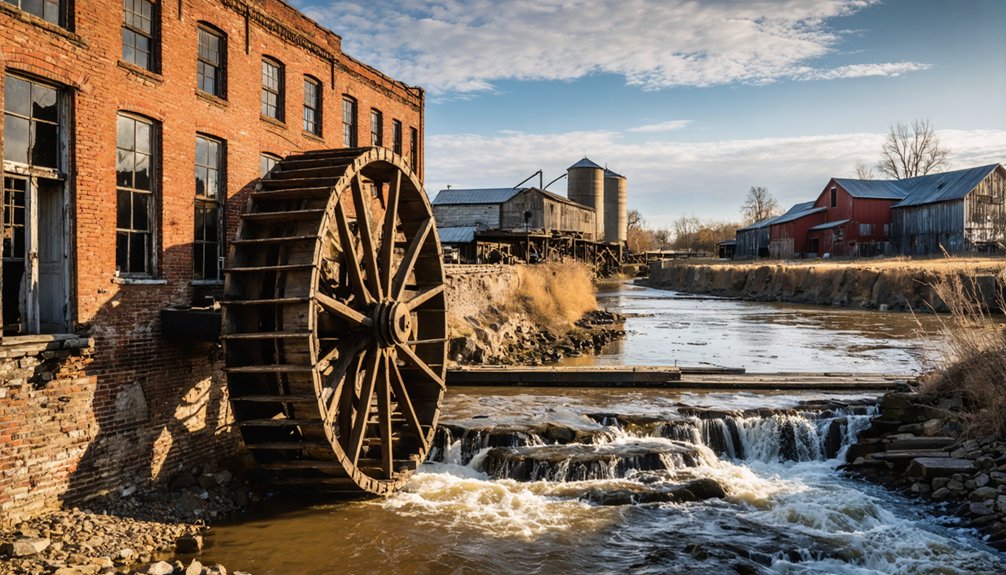
Throughout the American West, the complex legal framework of water rights evolved into a system that would dramatically reshape settlement patterns and urban development for generations to come.
You’ll find that early water allocation decisions, based on “first in time, first in right,” created lasting inequalities between communities and profoundly impacted where people could sustainably live.
Cities like San Diego secured dominant water rights through pueblo doctrine, while massive agricultural districts claimed enormous shares of river water.
These legal disputes left smaller river towns struggling to survive. The system favored early settlers and large municipal centers, forcing migration away from water-scarce areas.
When you examine the architectural remains of once-thriving riverside communities, you’ll see how these historical water rights decisions emptied entire towns, leaving behind abandoned buildings and declining infrastructure that still dot the Western landscape today.
Climate Change’s Deadly Grip on River Communities
As climate change tightens its grip on America’s river communities, you’ll witness a cascade of infrastructure failures and population shifts reshaping the built environment.
Your once-reliable levees and flood walls now strain against unprecedented water levels, while aging dams crumble under intensifying pressure.
You’re watching towns transform their architectural landscape through climate adaptation strategies, but many can’t keep pace with the mounting threats.
Record-breaking floods alternate with devastating droughts, forcing communities to completely rethink their infrastructure development.
Community resilience initiatives struggle against limited federal funding, while toxic contamination from warming-induced changes compounds the challenge.
Your river towns face stark choices: invest heavily in modernizing water systems and flood protection, or risk becoming another desolate reminder of climate change’s relentless impact.
The Economic Ripple Effect of Water Scarcity
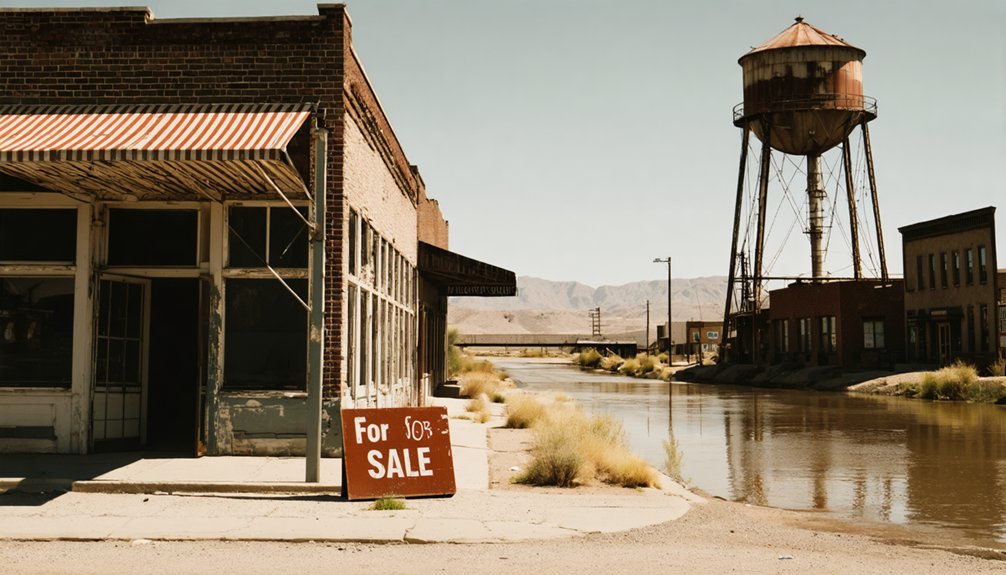
When you look at once-bustling river towns today, you’ll see shuttered storefronts and abandoned farms where water scarcity has devastated local economies.
The exodus of agricultural workers and business owners has left behind crumbling infrastructure and vacant main streets that once teemed with commerce.
You’re witnessing a chain reaction where failing farms trigger mass unemployment, causing populations to scatter and leaving these water-starved communities as mere shells of their former selves.
Farm Income Plummets Fast
While river communities across America once thrived on agricultural prosperity, today’s water scarcity has triggered a devastating economic cascade that’s reshaping rural landscapes.
You’ll find once-bustling farming towns now struggling as crop revenue plunges by $6.1 billion, forcing many families to abandon their generational homesteads. The financial stress has transformed vibrant main streets into rows of empty storefronts, as mounting production costs and declining farm income ripple through local economies.
- Farm bankruptcies are leaving historic grain silos and processing facilities abandoned
- Rural infrastructure deteriorates as tax revenues shrink from departing residents
- Former farmhouses stand empty along riverbanks where irrigation once supported thriving operations
- Once-crowded agricultural supply stores now sit vacant, symbols of community decline
Job Markets Dry Up
The severe water scarcity gripping America’s river towns has triggered a devastating employment crisis that extends far beyond agricultural job losses.
You’ll find once-thriving communities now struggling as water-dependent industries shut down, forcing workers to seek opportunities elsewhere. Without job training programs or economic diversification initiatives, these towns can’t adapt fast enough to retain their workforce.
The ripple effects are devastating your community’s foundation. Every shuttered farm or processing plant leads to fewer service jobs, weaker tax revenues, and crumbling infrastructure.
When water levels drop, so do property values and business investments. Young workers are fleeing to urban areas, leaving behind aging populations and deteriorating public services.
The very architecture of these riverside economies is collapsing as the water crisis deepens, transforming vibrant towns into shells of their former selves.
Businesses Close Their Doors
Three devastating waves of business closures have reshaped riverside towns across America as water scarcity tightens its grip.
You’ll find empty storefronts where thriving businesses once stood, their fates sealed by unreliable water supplies and rising operational costs. The impact on business sustainability has created a domino effect, transforming once-bustling commercial districts into silent monuments of economic decline.
- Local shops and restaurants shut down as water restrictions force reduced operations
- Tourism-dependent businesses collapse as river attractions deteriorate
- Manufacturing facilities relocate, leaving behind empty industrial complexes
- Supply chain disruptions push remaining businesses to breaking point
These closures strike at the heart of community resilience, draining towns of their economic importance.
With each shuttered business, you’re witnessing the erosion of local tax bases and the unraveling of social fabric that once defined these riverside communities.
As you explore the hidden treasures of Oregon’s ghost towns, the remnants of a bygone era come alive, telling stories of resilience and hope. These abandoned places serve as poignant reminders of the vibrant lives once lived, inviting curious adventurers to uncover their secrets. Each crumbling structure and fading sign holds the promise of history waiting to be rediscovered, adding depth to the state’s rich narrative.
Cultural Heritage Washing Away
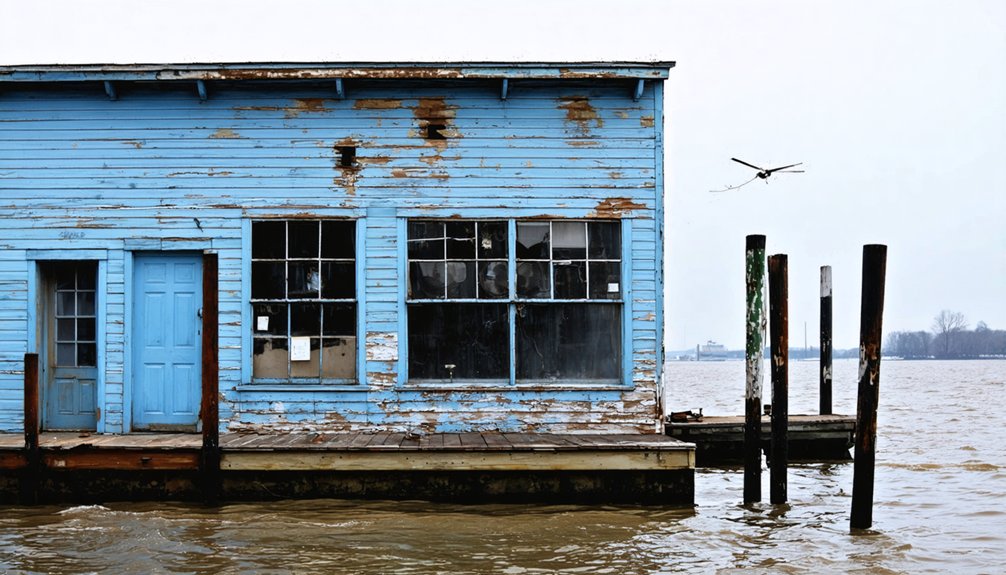
Massive infrastructure projects and rising sea levels have triggered an unprecedented erasure of cultural heritage along America’s waterways.
You’ll find over 1.13 million acres of indigenous land submerged beneath dam waters – that’s larger than Rhode Island. This cultural erosion has wiped out 424 sacred sites, destroying ecosystems and severing Native Americans from their ancestral grounds.
The heritage displacement doesn’t stop there.
You’re witnessing coastal cultural sites crumbling under rising waters, while looters ransack what remains of Native American settlements. Over 90% of known archaeological sites have been plundered, with artifacts sold internationally.
The infrastructure that promised progress has instead become a stark monument to loss, and you’re watching centuries of cultural identity dissolve with each passing flood, each act of vandalism, each new dam project.
Beyond Recovery: The Breaking Point for River Towns
When declining water resources collide with aging infrastructure, you’ll find America’s river towns reaching a vital breaking point.
You’re witnessing communities struggling to maintain basic services as their economic foundations crumble. Without sustainable solutions, these towns face a stark reality: their community resilience is failing as younger residents flee, leaving behind crumbling infrastructure and an aging population.
- Water systems can’t keep up with environmental stress, forcing towns to choose between costly repairs or service cuts.
- Empty storefronts and abandoned homes create a domino effect of declining property values.
- Diminishing tax bases make it impossible to fund essential infrastructure updates.
- Population loss creates a death spiral: fewer residents mean higher per-capita costs for remaining services.
These breaking points aren’t just about water – they’re reshaping the entire architectural and demographic landscape of America’s riverside communities.
Frequently Asked Questions
How Do River Towns Maintain Essential Services With Shrinking Tax Revenues?
You’ll see struggling river towns pool resources through service innovation, sharing police and fire departments while seeking federal grants. Community collaboration drives regional partnerships to maintain infrastructure despite dwindling local tax bases.
What Alternatives Exist for River Communities to Diversify Beyond Agriculture?
You’ll boost economic diversity through eco tourism initiatives, developing riverfront trails, launching artisanal markets, restoring historic buildings, creating cultural festivals, and establishing recreational hubs that attract visitors year-round.
Can River Towns Legally Challenge Corporate Water Rights?
Like a dam breaking through barriers, you can mount legal challenges against corporate water rights through senior rights claims, environmental lawsuits, and tribal partnerships, though you’ll face resource constraints.
How Do Abandoned River Towns Impact Neighboring Communities’ Property Values?
You’ll see your property values plummet when abandoned properties appear nearby, typically dropping 9-13% within 500 feet. This triggers reduced community investment and creates a downward spiral affecting entire neighborhoods.
What Role Do State Governments Play in River Town Revitalization Efforts?
Like architects of rebirth, your state governments release essential funding and craft revitalization strategies, directing resources to transform aging riverfronts through infrastructure grants, technical assistance, and extensive waterfront development programs.
References
- https://steadystate.org/colorado-river-lifeline-of-the-southwest-suffering-effects-of-economic-growth-and-climate-change/
- https://www.coopercenter.org/research/young-adults-fuel-revival-small-towns-rural-areas
- https://calmatters.org/commentary/2024/11/sacramento-region-missed-opportunities/
- https://www.foodandwaterwatch.org/2023/02/28/colorado-river/
- https://iee.psu.edu/news/blog/colorado-river-crisis-water-shortages-climate-change-and-sustainable-management
- https://www.fb.org/market-intel/low-mississippi-river-levels-again-jeopardize-farm-income
- https://investigatemidwest.org/2024/12/04/graphic-irrigation-water-use-on-us-farms-are-in-decline/
- https://farmdoc.illinois.edu/publications/economic-impact-of-mississippi-river-drought-on-u-s-agriculture-insights-from-the-gravity-model
- https://www.foodandwaterwatch.org/2023/08/08/big-ag-is-draining-the-colorado-river-dry/
- https://wsm.ucmerced.edu/wp-content/uploads/2023/01/Economic_Impact_CA_Drought_V02-1.pdf