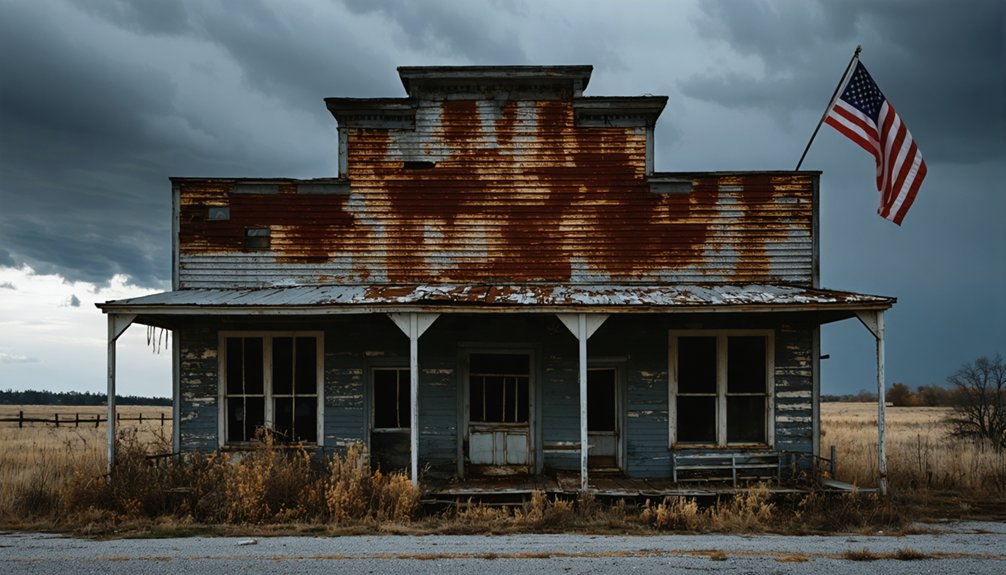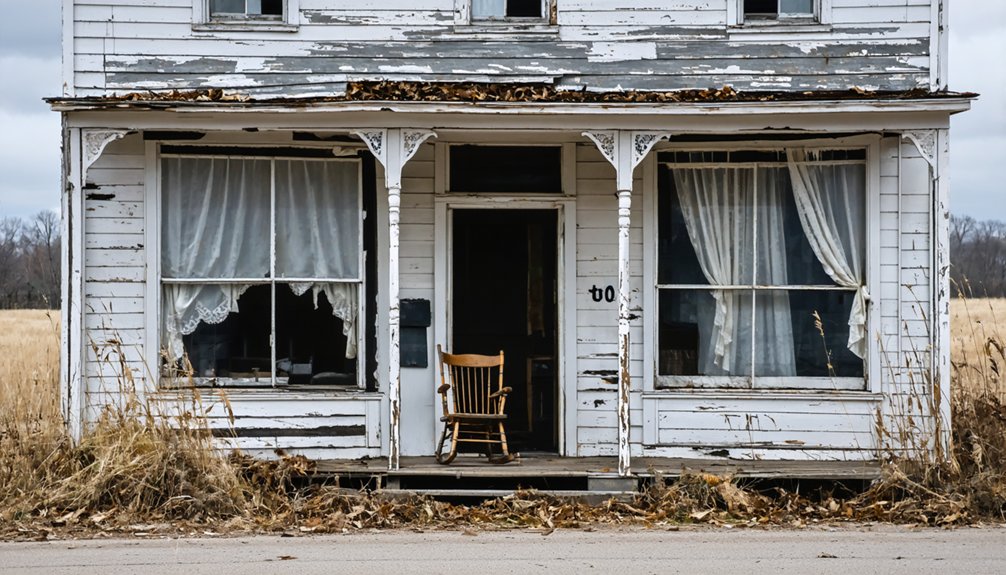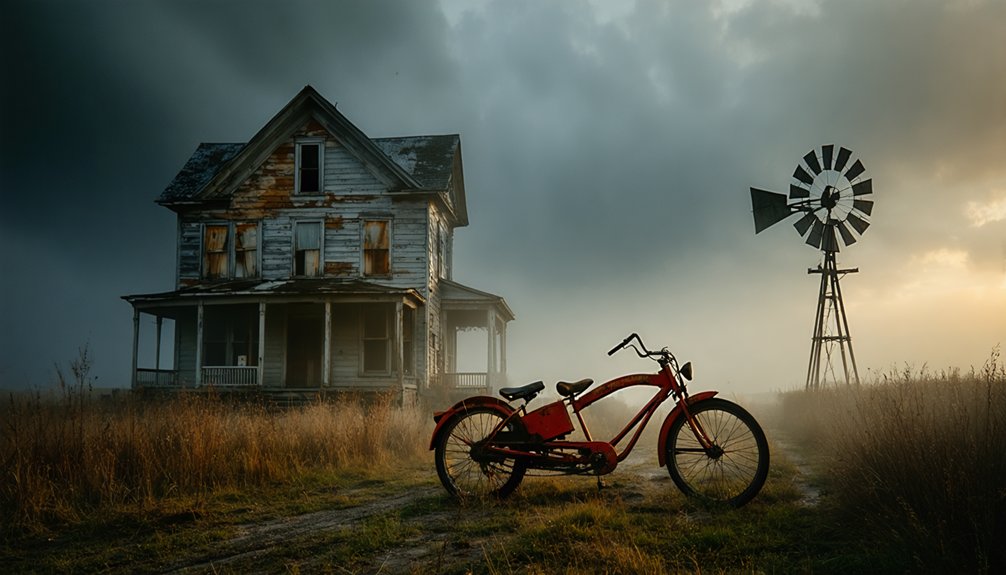
You’ll find paranormal activity concentrated in Midwest ghost towns due to the convergence of violent historical events, economic decline, and structural decay. These abandoned places often harbor dark histories like murders and disasters, while deteriorating buildings create unexplained phenomena through natural causes. Local folklore and cultural myths transform these tragedies into supernatural narratives, which are further amplified by tourism. Understanding the complex interplay of these factors reveals why these locations remain focal points for unexplained occurrences.
Key Takeaways
- Historical tragedies like murders, accidents, and environmental disasters leave lasting spiritual imprints that contribute to reported paranormal activity.
- Deteriorating structures create unexplained sounds and visual phenomena that people often interpret as supernatural occurrences.
- Cultural myths and local folklore transform tragic events into supernatural stories, reinforcing beliefs in paranormal presence.
- Economic decline leads to abandoned buildings and empty communities, creating ideal environments for perceived ghostly encounters.
- Unresolved community trauma from events like Civil War casualties manifests through reported supernatural experiences and ghost sightings.
Tragic Historical Events and Their Lasting Impact
While many ghost towns across America’s Midwest stand as remnants of bygone eras, their alleged paranormal activity often stems from tragic historical events that have left an indelible mark on these abandoned communities.
You’ll find that horrific incidents, like the unsolved 1912 Villisca axe murders, have transformed ordinary places into focal points of reported supernatural phenomena. The violent death of Marshal Bush in Beer City, Oklahoma, and the loss of 198 children at West Hills orphanage demonstrate how tragic events become woven into local folklore. The lawless frontier town attracted those seeking refuge from legal constraints, creating an atmosphere ripe for violence and tragedy. Visitors who dare to explore the Moore family home must now sign up for overnight guided tours to experience its haunting atmosphere.
These historical legacies persist through generations, amplified by the physical ruins left behind. When you examine cases like Times Beach, Missouri, where dioxin contamination forced an entire community to evacuate, you’ll understand how environmental disasters and mass casualties have created enduring narratives of spiritual unrest.
The Role of Abandoned Buildings and Decay
These historic tragedies gain amplification through the physical deterioration of abandoned buildings across Midwest ghost towns.
You’ll find that structural decay creates ideal conditions for acoustic phenomena that your brain often interprets as paranormal activity. Wind whistles through broken windows, floors creak from settling foundations, and empty rooms produce unpredictable echoes that mimic human movements.
The buildings’ deteriorating state affects your sensory experiences in profound ways. Places like the Missouri State Penitentiary, with its “bloodiest 47 acres” history, exemplify how violent pasts seem to linger in decaying structures.
At the Historic Wolf Hotel, visitors frequently report ghostly apparitions in the underground tunnels, where darkness and isolation intensify the experience.
You’re likely to encounter sudden temperature changes from drafts, witness strange shadows from failed lighting, and feel heightened awareness in these sensory-deprived spaces.
Natural reclamation adds another layer, as vegetation overtakes structures and wildlife creates unexplained sounds.
Your mind, primed by the eerie atmosphere of decay, naturally seeks patterns in these random stimuli, reinforcing beliefs in supernatural presence.
Cultural Myths and Local Legends
Local myths and legends emerge from a complex interplay of historical trauma, cultural memory, and psychological response to unexplained phenomena in Midwest ghost towns.
You’ll find cultural narratives shaped by tragic events like the Villisca axe murders and Cape Girardeau’s steamboat disasters, which transform into supernatural tales through generations of storytelling.
The folklore evolution in these communities often connects to deeper historical wounds – from Civil War casualties to Underground Railroad secrets.
You’ll notice how stories of phantom figures and mysterious lights blend with documented tragedies, creating layered meanings that reflect collective anxieties.
Urban legends about hidden tunnels, occult gatherings at places like Stull Cemetery, and spectral appearances serve as vehicles for processing unresolved community trauma while reinforcing local identity through shared supernatural beliefs.
At the Sherwood-Minton House, visitors report encounters with translucent doctors and echoing sounds of soldiers’ footsteps, adding to the rich tapestry of local paranormal lore.
At the Morton House Museum in Southwest Michigan, eyewitnesses have reported seeing ghostly orbs and hearing unexplained voices that contribute to the region’s supernatural heritage.
Economic Decline and Population Exodus
As industrial decline swept through the Midwest since the late 2000s recession, you’ll find widespread economic deterioration driving the transformation of once-vibrant communities into ghost towns.
Manufacturing plant closures, like Ford’s Minnesota facility in 2011, eliminated hundreds of jobs, while boom-bust cycles in mining regions accelerated population exodus. The shift from small family farms to industrial agriculture operations has further destabilized local economies.
The shuttering of key factories across America’s heartland created devastating ripple effects, displacing workers and destabilizing entire communities.
You’ll notice up to 7% population losses in major cities between 2020-2023, primarily among younger workers seeking economic opportunities elsewhere.
This exodus creates a devastating cycle: as residents leave, tax bases shrink, infrastructure crumbles, and services vanish.
Empty storefronts, abandoned homes, and deteriorating public facilities deter new investment and community renewal initiatives.
Without intervention, these towns face continuing decline, marked by aging populations, retail vacancies 35% above average, and diminishing prospects for economic recovery. Cities like St. Louis exemplify this pattern with building permits down 22% year over year.
Documented Paranormal Reports and Investigations
Documented paranormal activity across Midwest ghost towns presents a complex intersection of eyewitness accounts, official records, and unexplained phenomena that warrant rigorous investigation.
You’ll find the most compelling evidence in locations like the Gary, Indiana Demon House, where law enforcement and child services officials provided sworn affidavits describing inexplicable events, including levitation and retrograde walking.
Notable investigation sites encompass historical properties like the Villisca Axe Murder House, where EMF readings and surveillance footage capture unexplained disturbances. The Pope Leo XIII Institute trains dedicated priests to investigate such phenomena through specialized courses in demonology and spiritual warfare.
The region’s paranormal phenomena extend beyond residential hauntings to include institutional sites, such as Milwaukee’s Convent Hill, where early documented cases of demonic activity emerged.
These accounts, supported by multiple eyewitness accounts from clergy, medical personnel, and law enforcement, suggest patterns of spiritual disturbance deeply embedded in Midwest history.
Tourism’s Influence on Ghost Stories
Tourism’s economic allure has fundamentally reshaped how ghost stories emerge and evolve across Midwest ghost towns, transforming abandoned settlements into profitable dark tourism destinations.
As visitors seek unique experiences, ghost towns in Colorado have become increasingly popular for those intrigued by the supernatural. Many of these locations not only showcase their haunted histories but also offer guided tours and events that draw in thrill-seekers from all over. The blend of history and mystery in these desolate places provides a captivating glimpse into the past while boosting local economies.
Ghost towns across America’s heartland have become haunted havens, where tourism dollars breathe new life into old spirits.
You’ll find that site administrators actively craft and refine ghost storytelling experiences to meet visitor expectations while carefully avoiding definitive paranormal claims. This marketing approach maintains mystique while protecting authenticity.
The demand for supernatural experiences has created a self-sustaining cycle: increased tourism revenue funds preservation efforts, which in turn enables more elaborate ghost tours and events.
You’re witnessing how tourism marketing shapes local folklore, as communities adapt their historical narratives to emphasize spooky elements that draw visitors. Towns like Clifton, which hit peak population of 700 in 1877 before becoming abandoned, now serve as magnets for paranormal enthusiasts.
This commercial influence hasn’t just preserved these sites – it’s revolutionized how ghost stories are told and remembered in America’s heartland.
Frequently Asked Questions
How Do Electromagnetic Fields Affect Paranormal Activity in Ghost Towns?
Like invisible threads in a cosmic web, electromagnetic fields can amplify your electromagnetic sensitivity to ghostly energy, potentially triggering temporal lobe activity that creates perceived paranormal experiences in abandoned towns.
Can Weather Patterns Influence the Frequency of Ghostly Encounters?
You’ll notice more reported ghostly encounters during seasonal changes and drops in atmospheric pressure, though these patterns likely reflect heightened human sensitivity rather than actual supernatural activity.
Why Do Some People Experience Paranormal Activity While Others Don’t?
Your psychic sensitivity and exposure to environmental factors determine if you’ll notice paranormal activity. You’re more likely to experience phenomena if you’re naturally perceptive and in triggering locations.
Do Renovations of Haunted Buildings Increase or Decrease Paranormal Activity?
You’ll find renovation effects dramatically increase paranormal activity as you disturb a building’s history, disrupt energy flows, and agitate spirits who feel threatened by changes to their familiar environment.
What Role Do Native American Burial Grounds Play in Ghost Town Hauntings?
You’ll find Native American burial grounds contribute to hauntings through their deep spiritual significance and disrupted cultural heritage, often amplified when towns were built atop these sacred spaces without proper respect.
References
- https://www.cbsnews.com/chicago/news/five-creepy-historical-sites-in-the-midwest/
- https://us1049quadcities.com/iowa-illinois-haunted-state/
- https://www.travelawaits.com/2702819/most-haunted-places-midwest/
- https://www.nextavenue.org/discovering-the-paranormal-in-the-rural-midwest/
- https://www.splashtravels.com/destinations/ranking-most-haunted-cities-americaaccording-paranormal-experts
- https://thetravelingwildflower.com/hauntedplacestovisit/
- https://matadornetwork.com/read/mysterious-places-in-the-midwest/
- https://www.youtube.com/watch?v=bieNPpjRIh0
- https://yesterdaysamerica.com/one-of-the-most-haunted-states-in-america-do-you-live-there/
- https://www.clickondetroit.com/news/michigan/2024/10/16/these-10-michigan-towns-have-most-ghost-sightings-in-the-state/