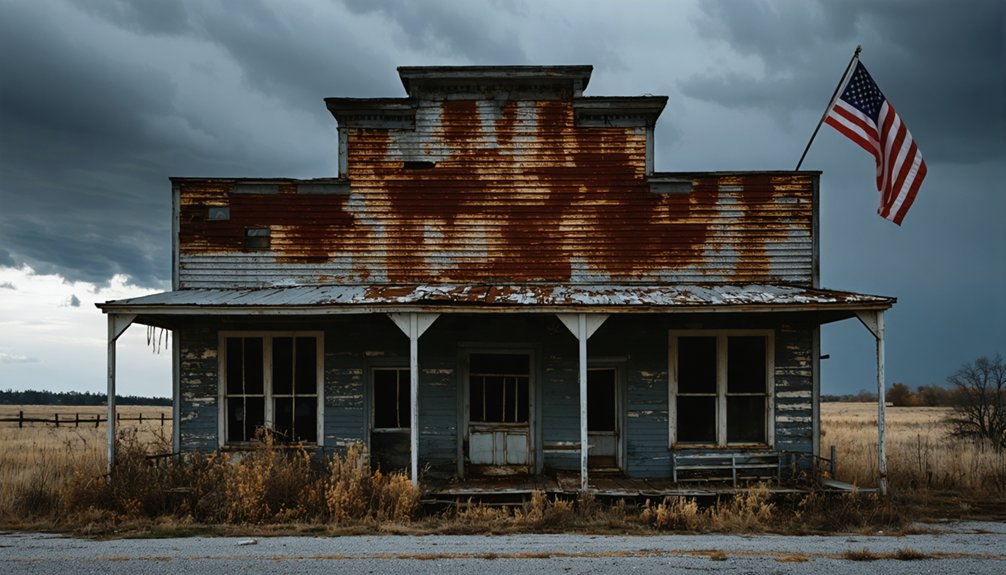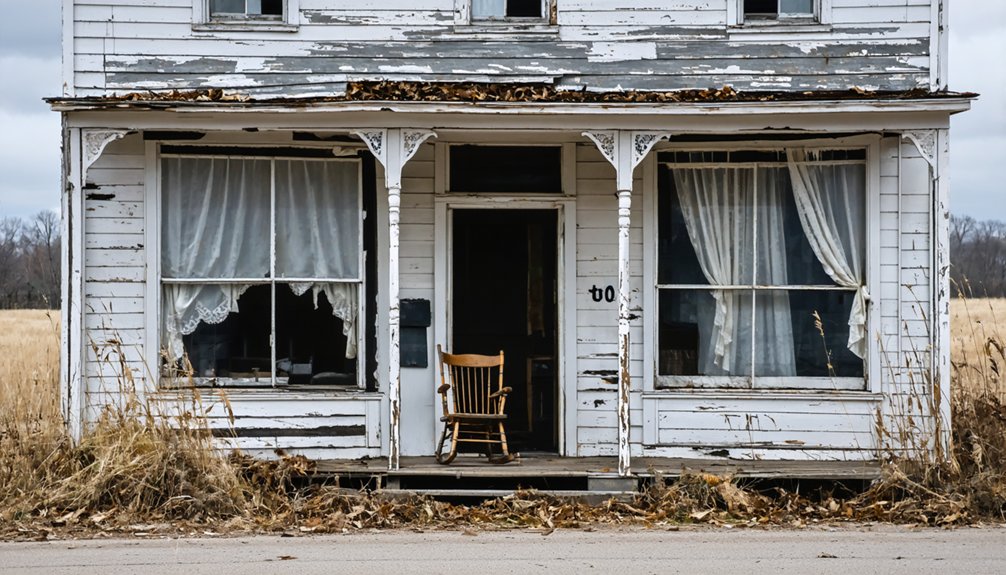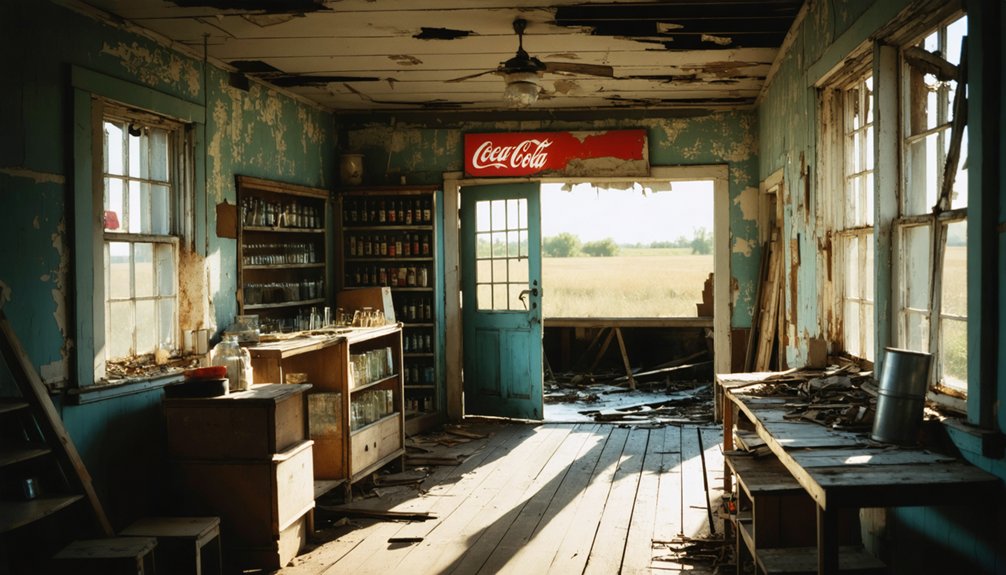
Midwest ghost towns offer you a unique blend of haunting history and architectural preservation you won’t find elsewhere. You’ll discover remarkably intact Victorian homes, Craftsman buildings, and industrial structures that tell stories of economic booms and devastating busts from the 1800s through the Dust Bowl era. From the infamous Villisca Axe Murder House to the eerie Franklin Castle, these abandoned settlements showcase authentic period details, paranormal activity, and stunning natural reclamation. The deeper you explore these hidden treasures, the more secrets they reveal.
Key Takeaways
- Preserved Victorian architecture and authentic period details provide rare glimpses into America’s pioneering past through untouched historical structures.
- Rich paranormal history, including famous sites like the Villisca Axe Murder House, attracts ghost hunters and history enthusiasts.
- Natural reclamation creates stunning visual contrasts where abandoned structures blend with prairie landscapes and lakeside settings.
- Indigenous heritage and economic cycles tell complex stories of boom-and-bust development unique to Midwestern settlement patterns.
- Remote locations and limited tourist infrastructure keep these sites relatively undiscovered, preserving their authentic historical character.
The Rich Historical Legacy of Midwest Ghost Towns
While the American West’s ghost towns often capture popular imagination, the Midwest’s abandoned settlements tell an equally compelling story of cultural transformation and economic evolution.
You’ll find deep Indigenous heritage woven into these forgotten places, where Sisseton and Wahpeton Dakota communities originally thrived along essential waterways before the 1851 treaties changed everything.
The region’s economic resilience emerged through waves of development, as settlers established important community infrastructure – from sawmills to churches. Many towns ultimately declined when local forests depleted, forcing logging operations to close permanently.
As pioneers laid foundations brick by brick, each new sawmill and steeple marked another step in the Midwest’s economic transformation.
The Dust Bowl era devastated many Great Plains towns, leading to mass abandonments across farming communities.
You can trace agricultural evolution through abandoned farmsteads and trading posts that once sustained immigrant families. These towns weren’t just places to work; they were vibrant communities where people gathered in multipurpose spaces, like dance halls above general stores.
Today, these hidden settlements preserve significant chapters of Midwestern history, from Indigenous pathways to pioneer ambitions.
Exploring the Eerie Tales and Haunted Past
Beyond their historical foundations, these abandoned Midwest settlements harbor dark and mysterious tales that continue to captivate visitors and paranormal investigators.
You’ll discover haunted legends at sites like Iowa’s Villisca Axe Murder House, where unsolved 1912 killings spark reports of children’s voices and moving objects.
Franklin Castle’s legacy of family deaths and bootlegging operations has created layers of spectral activity, while Missouri State Penitentiary‘s violent past fuels ghostly encounters within its infamous walls.
Tourists flock to experience the “bloodiest 47 acres” during ghost tours and paranormal investigations at the Missouri State Penitentiary.
The Historic Wolf Hotel in Ellinwood enchants guests with its vintage rooms and underground tunnels where apparitions frequently appear.
In Alton, Illinois, you’ll find multiple haunted locations tied to tragic fires and murders, including the twice-rebuilt First Unitarian Church.
Even underwater ghost towns like Camp Crook, South Dakota add to the region’s eerie mystique, with their submerged remnants telling silent stories of abandonment and loss.
Architectural Treasures Frozen in Time
As you explore these silent Midwestern ghost towns, you’ll encounter remarkably intact Victorian homes, Craftsman buildings, and early industrial structures that stand as architectural time capsules from their peak settlement periods.
The original construction details, from hand-hewn logs to ornate woodwork and iron fencing, reveal both the settlers’ resourcefulness and their aesthetic aspirations. Stone foundations and scattered building materials tell the stories of past construction methods throughout these abandoned settlements.
Nature now intertwines with these preserved period-specific elements, where rough-cut timber meets wild vines and locally quarried limestone weathers beneath decades of seasonal change. The historic Glancy Motel in Clinton, Oklahoma stands as a prime example of deteriorating mid-century architecture awaiting its fate.
Original Construction Still Stands
The architectural legacy of Midwest ghost towns stands frozen in time through remarkably preserved 19th- and early 20th-century structures.
You’ll find authentic buildings like Forestville’s Meighen General Store stocked exactly as it was in the 1890s, showcasing remarkable historical significance.
Original construction methods reveal the region’s architectural integrity through diverse materials.
You’ll discover timber-rich environments reflected in wooden cabins and log buildings throughout protected areas like Glen Haven, while the 160-year-old Matz Farmstead’s stone ruins demonstrate lasting masonry traditions.
The Orson B. Adams Home stands as proof of pioneer craftsmanship.
From Victorian storefronts to rustic log cabins, these structures tell stories of frontier life.
You’ll explore multi-use buildings like Shalda Corner store with its upstairs dance hall, and community fixtures like Amik’s 1911 Firehall.
The Cliff Mine remains stand as America’s first successful copper operation, producing 38 million pounds of the metal between 1845-1878.
The historic Grey Cloud Island kiln, built around 1846, represents one of the rarest preserved limestone processing structures in the Upper Mississippi region.
Rustic Design Meets Nature
Natural harmony defines the architectural legacy of Midwest ghost towns, where rustic design seamlessly merges with surrounding landscapes.
You’ll find structures built from hand-hewn logs, rough-cut timber, and local stone that blend perfectly with their forest, river valley, and plains settings. The settlers’ resourceful use of rustic materials like hemlock, pine, and oak created buildings that work with, rather than against, the natural topography.
These architectural remnants tell a story of practical adaptation, where buildings were positioned to maximize sunlight and protection from harsh elements.
Today, nature’s slow reclamation of these abandoned structures creates a haunting fusion of human craftsmanship and wild growth. Original features like wooden barracks, ice houses, and blacksmith shops stand as evidence to the pragmatic yet enduring construction methods of frontier life.
Preserved Period-Specific Details
Stepping into Midwestern ghost towns reveals a remarkable collection of preserved architectural treasures from the late 1800s to early 1900s.
You’ll discover period-specific architecture in original log cabins, general stores, and mining facilities that showcase the region’s frontier spirit. The settler’s stone ruins at the Matz Farmstead stand as enduring examples of early Midwestern construction methods. These structures tell stories through their historical craftsmanship, from hand-hewn timber joints to locally sourced stone foundations.
You can explore authentic features like multi-purpose dance halls above general stores, community icehouses, and wooden barracks that once housed immigrant families.
Each building serves as a time capsule, preserving construction techniques and design elements unique to their era. In mining towns like Calumet and Central Mine, you’ll find intact churches, homes, and industrial buildings that remain untouched since their communities’ sudden decline, offering genuine glimpses into America’s pioneering past.
Natural Beauty Meets Abandoned Splendor

When you explore the Midwest’s ghost towns, you’ll discover a striking interplay between untamed nature and architectural ruins, where dense forests and dramatic shorelines embrace crumbling structures.
You’ll find abandoned mining towns nestled in forested hills, their weathered foundations now draped in moss and local flora, while coastal ghost towns along Lakes Michigan and Superior offer breathtaking views from sea caves and cliffsides. Visitors to Freda can marvel at the massive concrete foundations that remain as testament to the once-bustling Champion Mill.
Throughout the seasons, these forgotten places transform dramatically, as fall paints the canopies in vibrant colors and winter’s snow creates ethereal landscapes where wildlife now freely roams the empty streets.
Scenic Mountain Town Decay
Throughout the late 19th century, mountain ghost towns emerged as bustling settlements amid breathtaking alpine vistas, only to face inevitable decline as their resource-driven economies collapsed.
You’ll find scenic decay everywhere – from St. Elmo’s abandoned mines to Bodie’s weather-worn wooden structures, each telling a story of boom-to-bust transformation.
Natural disasters and depleting resources dealt these towns devastating blows. When mines closed and railroads disappeared, thousands fled, leaving ghostly remnants of once-thriving communities.
Places like Centralia showcase nature’s reclamation, where an underground fire has burned since 1962. Yet these ruins hold immense historical value, with over 100 original structures in some locations still standing as evidence to frontier life.
Their striking contrast against rugged mountain backdrops creates an eerily beautiful portrait of American resourcefulness and resilience.
Wild Prairie Meets Ruins
Unlike their mountain counterparts, Midwestern ghost towns emerge from vast prairies where abandoned structures stand in stark relief against endless horizons.
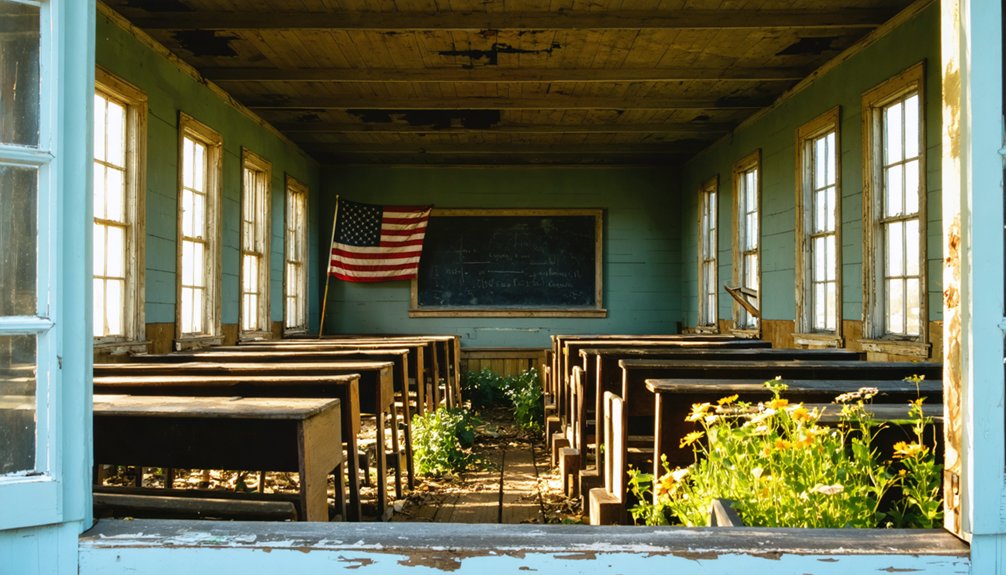
You’ll find these haunting remnants scattered across Minnesota, Iowa, and other heartland states, where wild grasses and flowers reclaim weathered wooden buildings.
The prairie ecosystems create stunning natural backdrops year-round, from snow-draped ruins in winter to vibrant wildflower displays in summer.
As you explore these forgotten places, you’ll witness wildlife interactions unfold among the deteriorating structures, where nature and history converge.
These settings offer unique photography opportunities, especially in states like Minnesota, where over 50 ghost towns dot the landscape near natural landmarks like Lake Superior.
The contrast between decaying human settlements and thriving prairie life creates a compelling narrative of time’s passage.
Lakeside Ghost Town Vistas
Along the Great Lakes’ shores, abandoned settlements stand as evidence to the region’s past animation.
You’ll discover these ghost towns nestled within protected natural areas like Sleeping Bear Dunes National Lakeshore, where sites like Glen Haven merge lakeside serenity with historical remnants.
As you explore the Keweenaw Peninsula‘s forgotten communities, you’ll encounter abandoned tranquility where rugged Lake Superior vistas frame weathered foundations and aging lighthouses.
Nature enhances these sites’ allure through seasonal displays – autumn leaves reflecting on water surfaces and winter snow highlighting stark ruins against frozen lakes.
You can trace the past through remnant docks, mill foundations, and waterfront cemeteries while enjoying modern recreational pursuits like hiking and kayaking.
These locations offer both natural splendor and cultural heritage, preserved within the embrace of Great Lakes wilderness.
Economic Cycles: From Boom to Tourism Revival
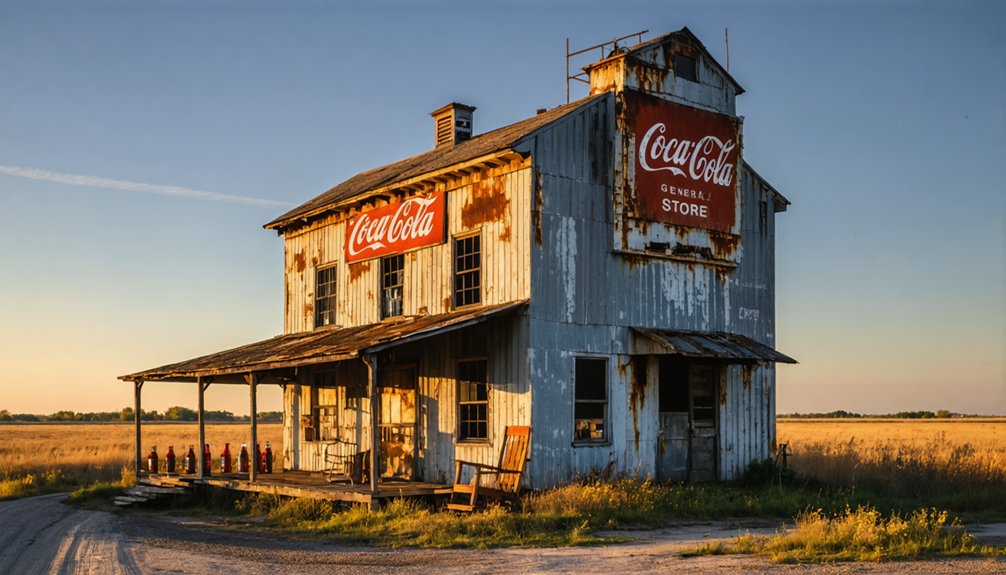
When mineral deposits were discovered across the Midwest in the late 1800s, they triggered rapid economic transformations that would define the region’s development for generations.
You’ll find that these towns demonstrated unique economic resilience compared to their Western counterparts, investing heavily in permanent infrastructure and durable buildings that attracted long-term settlers.
The cyclical patterns of boom and bust shaped these communities distinctively. While many towns initially depended on mining, they developed diverse economic bases through railroads, telegraph systems, and robust service sectors.
Even as resources eventually depleted, the substantial infrastructure investments didn’t go to waste – they became the foundation for modern tourism.
Today, you can explore these preserved structures and experience the rich heritage of Midwestern ghost towns, where mining’s legacy has transformed into a thriving tourism industry.
Photography Paradise: Capturing Decay and Beauty
Through the lens of a camera, Midwestern ghost towns transform into a photographer’s paradise of haunting beauty and historical decay.
These ghost towns of the Midwest tell stories of lives once lived and dreams long forgotten. Abandoned buildings stand as silent witnesses to an era of prosperity, now overtaken by nature’s relentless embrace. Each corner reveals remnants of the past, inviting explorers to uncover the rich tapestry of history woven into the fabric of these desolate landscapes.
You’ll discover dilapidated structures offering rich compositions where nature reclaims human spaces, creating striking contrasts between wild growth and architectural remnants.
These accessible locations let you explore creative techniques like light painting and long exposures, revealing otherworldly scenes in abandoned buildings.
Light painting and long exposures transform derelict spaces into ethereal galleries, where time stands still and shadows dance untethered.
From remote wilderness sites to urban edges, you can capture diverse subjects – lighthouses, cemeteries, and industrial ruins – while developing emotional storytelling through your images.
The region’s ghost towns provide more than just striking visuals; they’re time capsules frozen in moments of abandonment.
Whether you’re shooting at dawn or experimenting with night photography, each site offers dynamic lighting conditions that breathe life into stories of America’s past.
Cultural Impact on Local Communities
The cultural fabric of Midwestern ghost towns continues to influence surrounding communities long after their abandonment.
You’ll find these settlements once fostered vibrant community bonds amongayan batalhai financing expansonteČuna patriots.
Preservation Efforts and Future Prospects
Preserving Midwestern ghost towns requires substantial coordination between historical societies, government agencies, and dedicated volunteers who work tirelessly to protect these abandoned settlements.
You’ll find that sustainable funding through grants and community fundraising plays an essential role, with costs ranging from thousands to tens of thousands depending on the site’s size.
Community collaboration is crucial, as local preservation commissions work alongside state agencies to implement protection measures.
Strong partnerships between preservation groups and government bodies form the backbone of effective ghost town protection efforts.
You can see their efforts in stabilizing structures, documenting artifacts, and managing environmental threats.
While challenges like weathering and vandalism persist, the growing recognition of ghost towns as cultural assets offers hope.
Through responsible tourism management and integrated conservation approaches, these historic sites continue to contribute to local economies while maintaining their authentic character for future generations to explore.
Frequently Asked Questions
What Safety Precautions Should Visitors Take When Exploring Abandoned Ghost Towns?
You’ll need proper safety gear including sturdy boots, gloves, and flashlights. Stay alert for wildlife, bring a companion, and inform others of your plans before exploring abandoned structures.
Are Permits Required to Visit and Photograph Midwest Ghost Towns?
As you gaze through your camera lens, you’ll need permits for most Midwest ghost towns. Check permit requirements since they vary – private lands demand owner permission, while public sites have specific photography guidelines.
Which Ghost Towns Are Accessible During Winter Months?
You’ll find winter exploration possible at Central, Delaware, and Freda in Michigan’s Keweenaw Peninsula, where maintained roads guarantee ghost town accessibility despite heavy snowfall. Sleeping Bear Dunes settlements also welcome winter visitors.
Do Any Ghost Towns Offer Overnight Accommodation Options?
You’ll find overnight stays at Michigan’s Miners House #8, Laurium Manor Inn, and Kansas’s Wolf Hotel, offering unique experiences to immerse yourself in authentic ghost town atmospheres.
What Are the Best Times to Capture Paranormal Activity?
You’ll find ideal paranormal activity during nighttime explorations between 10 PM and 3 AM, especially during a full moon. Cold, quiet winter nights and stormy weather can enhance your chances of supernatural encounters.
References
- https://www.geotab.com/ghost-towns/
- https://247wallst.com/special-report/2018/11/02/30-american-ghost-towns-3/
- https://www.loveexploring.com/gallerylist/188219/the-us-state-with-the-most-ghost-towns-revealed
- https://thetravelingwildflower.com/hauntedplacestovisit/
- https://www.youtube.com/watch?v=lfj6aeZEVJY
- https://battlegroundhistory.com/american-midwest/
- https://en.wikipedia.org/wiki/List_of_ghost_towns_in_North_Dakota
- https://www.atlasobscura.com/lists/abandoned-places-midwest
- https://www.fws.gov/story/ghost-town-carver-rapids
- https://www.youtube.com/watch?v=YeBOGdi1LH0