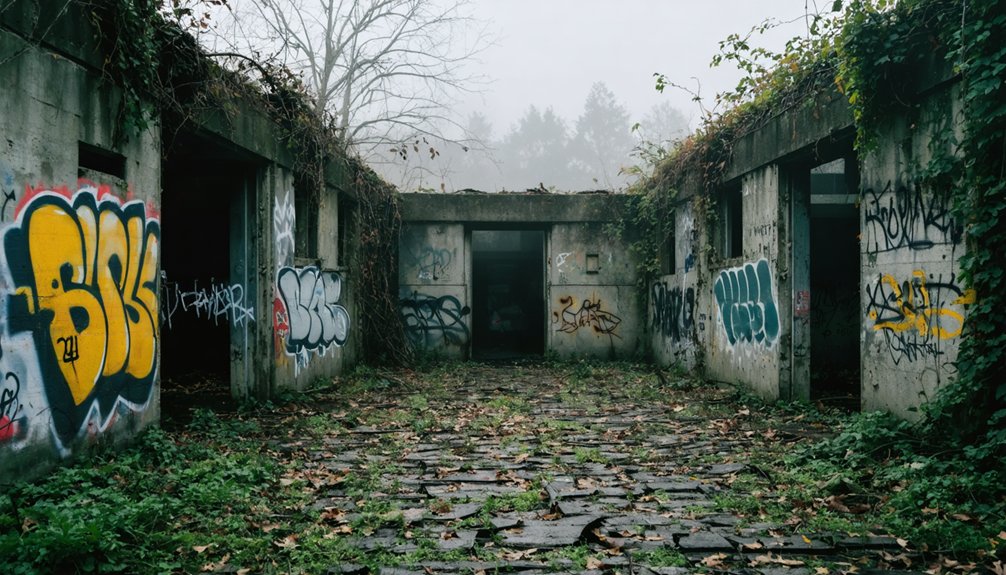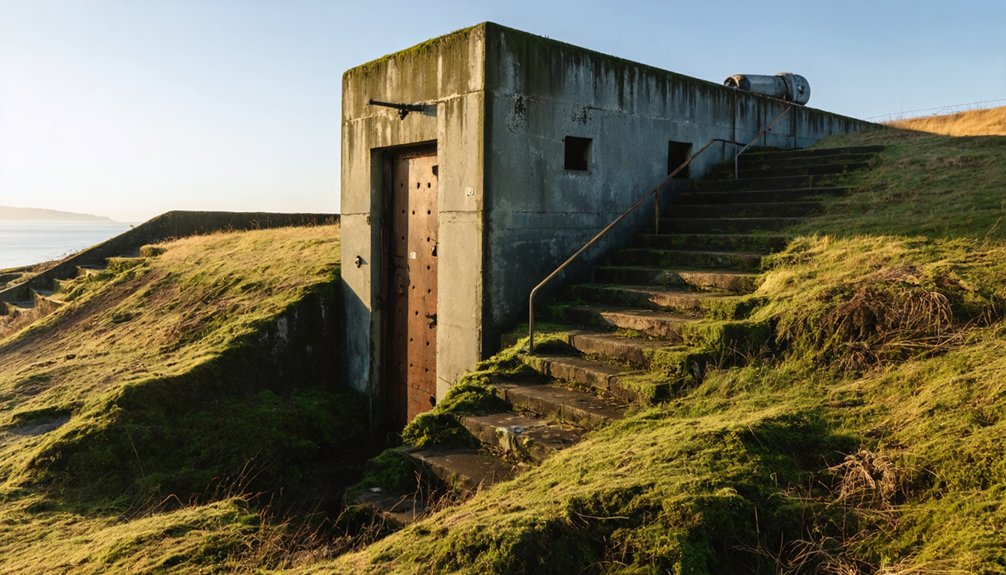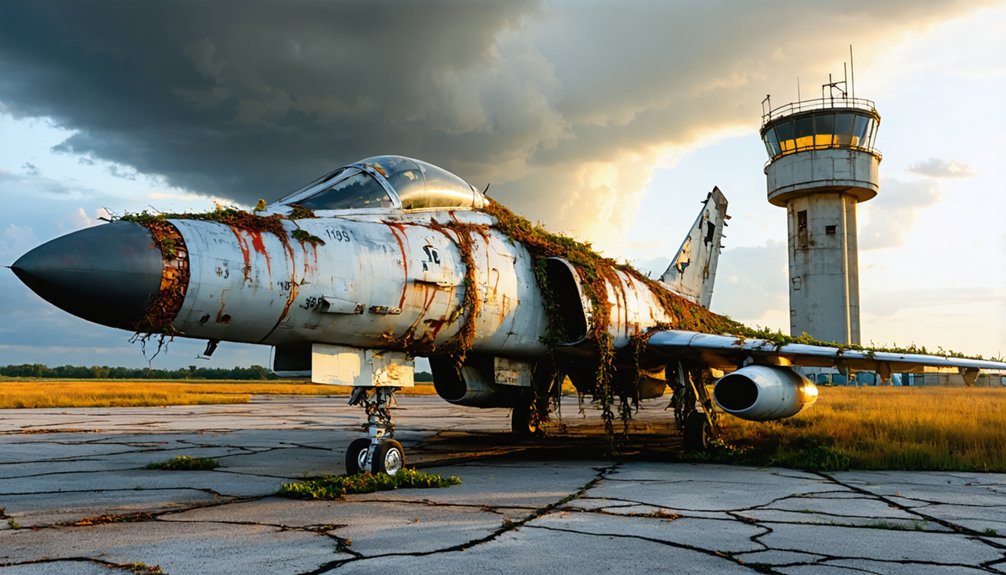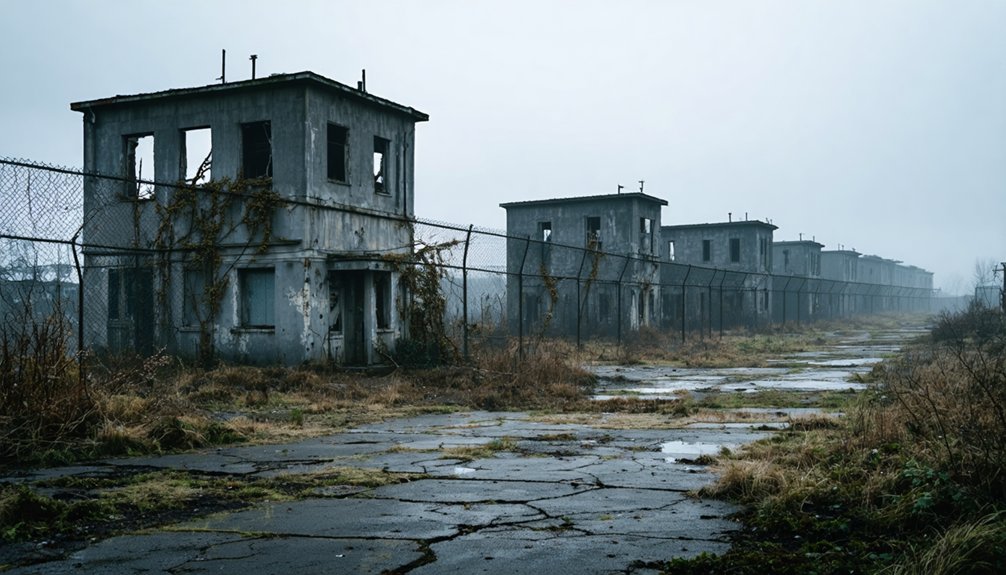
You’ll find US military sites haunting because they’re steeped in centuries of wartime history, tragedy, and cultural significance. These installations occupy strategic locations marked by military cemeteries, mass graves, and memorials that commemorate battles and sacrifices. Their shadowy corridors, Greek Revival architecture, and somber atmosphere reflect both physical and psychological scars. From ghostly sentinels at the Alamo to unexplained phenomena at modern bases, America’s military grounds hold countless untold stories of warfare, loss, and supernatural encounters.
Key Takeaways
- Military sites hold centuries of wartime trauma, tragic deaths, and mass burials, creating an atmosphere heavy with historical suffering.
- High-stress environments and intense military training heighten personnel’s sensitivity to unexplained phenomena and perceived supernatural occurrences.
- Gothic and Revival architectural styles, shadowy corridors, and dark arches in military buildings contribute to their inherently eerie atmosphere.
- Rich cultural histories, including Native American grounds and plantation sites with spiritual traditions, add layers of supernatural significance.
- Collective memory of accidents, battles, and sacrifices creates enduring ghost stories that become part of military base culture and folklore.
The Weight of Wartime History
As you walk through America’s military sites today, you’ll find the deep imprints of wartime history etched into their grounds and structures.
From Fort Leavenworth’s Civil War battles to Fort Monroe’s dual role as both Confederate prison and freedom sanctuary, these locations carry the weight of military trauma in every corner.
Historic military sites like Fort Leavenworth and Fort Monroe echo with both the darkness of imprisonment and the light of liberation.
You’ll encounter military cemeteries, mass graves, and aging infrastructure that stand as silent witnesses to past conflicts.
Former barracks and hospital buildings remain as physical representations to historical hauntings, while memorials mark sites of significant wartime events.
At bases like Clark Air Base, natural disasters during wartime service have added additional layers of ghostly significance.
These grounds don’t just preserve history – they embody the complex narratives of suffering, hope, and sacrifice that have shaped America’s military legacy.
Places like Fort Jefferson stand as haunting reminders with their 16 acres of massive masonry walls that once imprisoned Civil War deserters.
The abandoned Port of Whittier in Alaska stands as a testament to military operations that once thrived in the harsh northern environment.
Tales From Underground Tunnels and Bunkers
Below the haunted grounds of these military sites lies an even more mysterious world – the vast networks of underground tunnels and bunkers built during the Cold War.
You’ll find these underground mysteries carefully hidden beneath resorts, cities, and mountains, designed to house over 1,000 people for up to six months. These self-sufficient fortresses contained power plants, massive water tanks, and secure communication lines to the Pentagon.
These facilities were often equipped with advanced medical centers that could provide critical care during emergencies while staying protected from external threats.
The tactical haunting continues in the complex tunnel networks, where reinforced concrete walls and blast doors protected against nuclear strikes. The Greenbrier Bunker operated as a hidden Congress shelter for over three decades before being exposed.
From the Viet Cong’s multi-level hideouts to America’s secret Continuity of Government facilities like Raven Rock, these subterranean labyrinths served as command centers, weapon caches, and evacuation routes.
Even today, many remain classified, their secrets locked behind heavily guarded doors.
Tragic Deaths That Echo Through Time
Throughout America’s military history, tragic accidents have left indelible marks on bases and facilities across the nation.
You’ll find tragic legacies spanning from 19th-century naval mishaps to modern-day aviation disasters. The 1994 Fairchild AFB B-52 crash and Green Ramp disaster stand as stark reminders of peacetime risks, while the 1968 C-130B Hercules downing remains the deadliest U.S. military aviation accident, claiming 189 lives.
These emotional echoes continue with recent incidents, like training collisions and helicopter crashes, each adding to the somber atmosphere that pervades military grounds. The flaming wreckage of Czar 52 burned for nearly three hours as emergency crews worked tirelessly to extinguish it. At Pope Air Force Base, twenty-four paratroopers lost their lives when aircraft debris ignited a devastating fire.
Communities preserve these memories through memorials and ceremonies, while many bases report unexplained phenomena near accident sites.
From underground bunkers to airfields, these tragic events have transformed ordinary military spaces into places where history’s weight feels palpably present.
Cultural Crossroads and Supernatural Beliefs
Military installations across America sit at unique cultural crossroads where diverse spiritual traditions converge and intertwine.
You’ll find these sites often occupy former plantation grounds where enslaved African Americans practiced Hoodoo, performing crossroads rituals that merged African spirituality with Christianity and Indigenous beliefs.
The Kongo cosmogram‘s influence remains particularly strong, as practitioners used these sacred diagrams at intersections to commune with ancestors and seek protection.
Through spiritual syncretism, “The Man at the Crossroads” emerged as a powerful entity embodying both African and Native American traditions.
These practices often took place in hush harbors and secluded wooded areas to avoid detection under strict slave codes.
You’ll notice how these layered beliefs still shape supernatural encounters reported on bases today, especially where military grounds overlap with historically significant African American and Indigenous lands.
Personnel continue sharing tales of ghostly phenomena that reflect these deep cultural connections.
The mystique deepens with bases like Fort Mifflin offering candlelight ghost tours that let visitors explore these spiritual intersections firsthand.
The Psychology of Military Base Hauntings
While spiritual traditions shape beliefs about hauntings on military bases, psychological factors play an equally powerful role in how personnel experience and interpret unexplained phenomena.
You’ll find that intense military environments create powerful psychological triggers – from high-stress combat training to sleep deprivation and isolation. These conditions heighten your sensitivity to unusual sights and sounds, making supernatural interpretations more likely. Military personnel who experienced strange dream encounters during night patrols often share remarkably similar details about shadowy figures and distorted faces.
The collective memory of trauma, deaths, and battles on base locations primes you to connect unexplained events with ghostly activity. The Cold War paranoia between the U.S. and Soviet Union further intensified beliefs in supernatural phenomena on military installations.
Shared histories of war and loss create a backdrop where soldiers instinctively link mysterious occurrences to spiritual manifestations.
When you’re working night shifts or experiencing combat-related PTSD, your mind becomes more susceptible to sensory distortions. Base folklore reinforces these experiences through shared storytelling, creating a self-perpetuating cycle where troops validate each other’s paranormal encounters and embed supernatural beliefs into military culture.
Ancient Architecture and Eerie Environments
You’ll find that America’s military installations carry the weight of centuries in their stone walls and geometric layouts, from star-shaped forts to classical revival buildings that blend defensive innovation with imposing architectural statements.
As you walk through these sites, you’re surrounded by deliberate design choices – the bastions positioned for overlapping fields of fire, the symmetrical layouts with their temple-front porticos, and the dark corridors that seem to absorb sound.
The marriage of ancient architectural principles with practical military necessities has created spaces that feel frozen in time, where every archway and enclosed courtyard hints at untold stories from the past.
Old Stones Tell Stories
Through centuries of American military construction, diverse architectural styles have left behind haunting remnants of the nation’s defensive past.
You’ll find ancient echoes in the Greek Revival buildings, where stone whispers through symmetrical façades and temple-front columned porticos. From the 1820s to 1875, these imposing structures defined America’s military presence.
- Classical Revival sites like Portsmouth’s Naval Medical Clinic showcase refined window patterns and Ionic columns that stand as silent sentinels.
- Fort Screven’s seven coastal artillery batteries loom with their imposing cannon placements, telling tales of strategic defense.
- The Golden Gate area’s 1860s military buildings reveal early architectural trends, where durable materials like stone and brick replaced primitive adobe structures.
Dark Corridors Echo Past
As you navigate the shadowy corridors of America’s historic military structures, ancient architectural elements create an unmistakably eerie atmosphere. Your echoing footsteps resound through dark corridors lined with masculine stone arches and rectangular windows, hallmarks of Classical Revival design that dominate these imposing spaces.
You’ll find these historic buildings showcase an impressive blend of Greek Revival, Romanesque Revival, and Spanish Colonial styles. Temple-front columned porticos and Corinthian columns stand as evidence of institutional power, while Moorish details in military chapels add mysterious character.
The stark utilitarian design of cavalry barracks and administrative buildings, constructed from enduring brick and stone masonry, transport you back to early 20th-century military life. Each architectural feature serves both form and function, creating an environment where past and present seem to merge in the shadows.
Legends That Live On in Military Culture
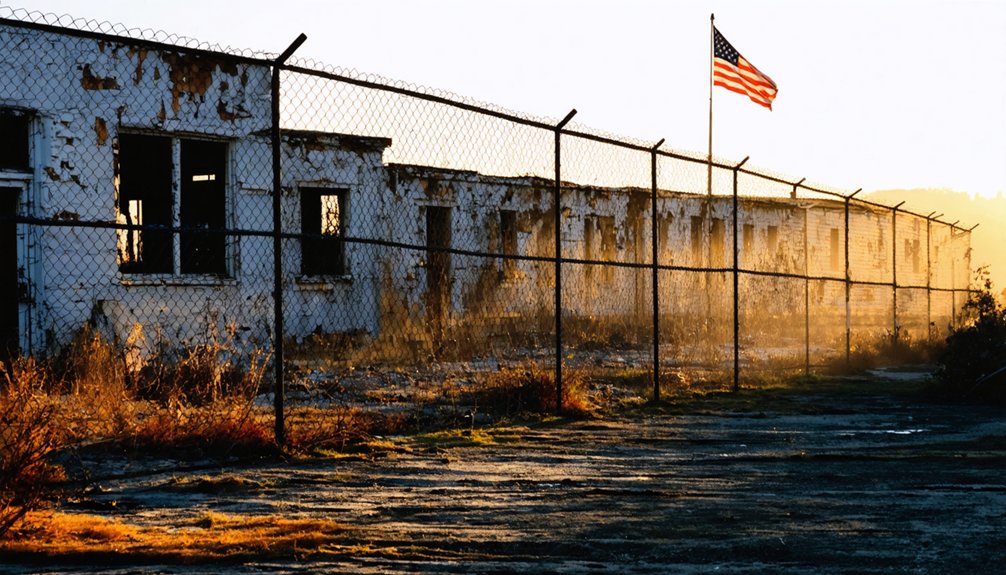
Military culture thrives on legends that shape its identity and inspire service members across generations.
You’ll find these legendary warriors celebrated through heroic folklore that weaves together fact and myth, creating powerful narratives that strengthen military identity. From Sergeant Alvin York’s extraordinary feats to ghostly narratives at historic bases, these stories form the backbone of military tradition.
- Tales of exceptional bravery serve as benchmarks for courage, pushing you to exceed ordinary expectations in your service.
- Base folklore, including haunted corridors and phantom footsteps, connects you to the sacrifices of past warriors.
- Military myths, whether based on historic battles or urban legends, build camaraderie and preserve cultural heritage.
These enduring stories continue to influence modern service members, fostering a sense of belonging and purpose within military communities.
Unexplained Phenomena Behind Base Walls
While unexplained phenomena have long haunted military bases, recent years have revealed a surge in mysterious aerial incursions that defy conventional explanation.
Since 2022, you’ll find over 600 unauthorized drone sightings at installations like Naval Weapons Station Earle and Langley Air Force Base. These aren’t your typical commercial drones – they’re operating at altitudes between 24,000 and 28,000 feet, suggesting advanced technology that remains unidentified.
The All-domain Anomaly Resolution Office analyzes these aerial anomalies through military sensors, but many cases remain unsolved.
While some sightings are eventually explained as natural phenomena or perceptual illusions like autokinesis, others continue to challenge military protocols.
You’re looking at a complex security puzzle that spans multiple agencies, with no clear answers about who’s behind these unexplained intrusions.
Strategic Locations and Their Dark Past
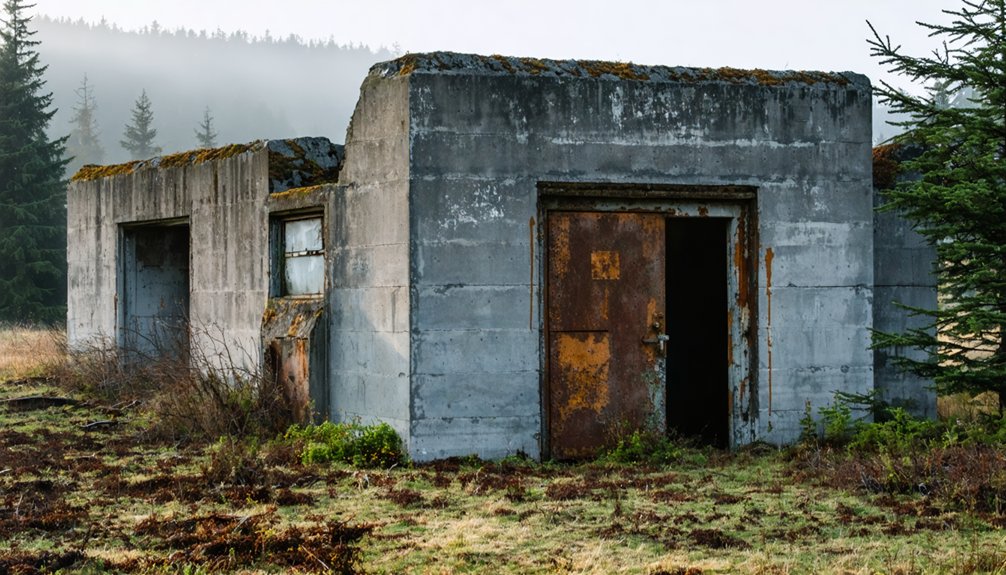
You’ll find America’s most strategic military sites often overlap with its bloodiest battlefields, from West Point’s Revolutionary War fortifications to Fort Sumter’s opening salvos of the Civil War.
These locations weren’t chosen at random – they command essential waterways, protect significant chokepoints, and guard underground facilities that house military secrets dating back generations.
Many of these bases occupy isolated positions specifically selected for defense, contributing to their reputation for unexplained occurrences and dark histories that stem from centuries of conflict.
Historic Battle Grounds
Throughout America’s military history, strategic battle locations have played pivotal roles in shaping the nation’s destiny, from George Washington’s fortification of West Point during the Revolutionary War to the blood-soaked fields of Gettysburg.
These historic grounds tell stories of sacrifice, betrayal, and the fight for freedom across generations.
- Battlefield preservation efforts now protect over 40 Civil War sites, ensuring Americans can experience these hallowed grounds firsthand.
- Many locations occupy commanding geographical features like plateaus and rivers, demonstrating our ancestors’ tactical understanding.
- West Point stands as America’s oldest continuously occupied military post, bridging the Revolutionary era to modern times.
These strategic sites, though marked by dark histories of bloodshed and displacement, remain vital reflections of our nation’s enduring struggle for liberty and self-determination.
Underground Military Secrets
Deep beneath America’s landscape lies a network of classified military installations that serve as the backbone of national security operations.
You’ll find massive underground facilities like Raven Rock Mountain Complex and Cheyenne Mountain, designed to guarantee government survival during catastrophic events. These bunkers can withstand nuclear attacks while maintaining essential command functions.
The nation’s most sensitive data is stored in fortified underground vaults like the Utah Data Center, where intelligence agencies manage global surveillance operations.
Meanwhile, secret weapons development continues at places like China Lake and White Sands, where underground testing ranges shield classified operations from prying eyes.
These hidden complexes, along with covert training sites, form an intricate web of facilities that protect America’s most closely guarded military and intelligence capabilities.
Isolated Defense Positions
Beyond the underground facilities that safeguard America’s secrets, strategic isolation plays a defining role in military defense. You’ll find these isolated fortifications in some of Earth’s most forbidding places, from Alaska’s harsh terrain to Australia’s remote deserts, where natural barriers create strategic advantages against potential threats.
- Remote locations shield sensitive intelligence operations while enabling continuous surveillance of vast areas.
- Harsh climates and limited access routes reduce the risk of sabotage and unauthorized entry.
- Strategic terrain features like mountains and ridges allow fewer defenders to control critical sectors effectively.
You’re looking at a system where geographic isolation isn’t just about distance – it’s about creating multiple layers of natural defense that work alongside modern technology, ensuring these sites remain secure while maintaining operational readiness for rapid response when needed.
The Legacy of Military Base Ghost Stories
Military bases across America harbor ghostly tales that stem from centuries of warfare, tragedy, and loss.
As history unfolded, many regions in the nation transformed into ghost towns of the American west, reflecting the dreams and despair of those who sought fortune. These abandoned places, now relics of a bygone era, tell stories of migration, economic booms, and ultimate decline. Exploring their remnants allows us to glimpse the complex narratives woven into America’s past.
You’ll find ghostly sentinels patrolling the walls of the Alamo, while spectral soldiers on horseback gallop across F.E. Warren AFB’s grounds.
At Fort Leavenworth, the Rookery stands as one of the most haunted locations, where decades of military executions and Civil War violence have left their mark.
These stories aren’t just entertainment – they reflect the psychological impact of war and trauma on military communities.
From the Lady in White at the Presidio to Charlotte’s spirit at Fort Huachuca’s hospital, each tale preserves a piece of military history.
Whether in abandoned barracks, old morgues, or former POW camps, these haunting legends continue to shape the cultural identity of America’s military installations.
Frequently Asked Questions
Do Military Ghosts Follow a Chain of Command in the Afterlife?
You’ll find military ghosts often maintain their earthly hierarchy and afterlife protocol, following rank structures, performing duties, and respecting chain of command just as they did in life.
Can Civilians Report Ghost Sightings on Military Bases to Official Channels?
No, you can’t directly report ghost sightings through official military channels as a civilian. There aren’t any formal ghost protocols, and civilian reports typically get redirected to tour guides or museum staff.
Are Haunted Military Sites More Active During Times of War?
You’ll find war time hauntings intensify at military sites during conflicts, with soldier spirits appearing more frequently. Combat stress, heightened emotions, and fresh casualties seem to amplify paranormal activity in these locations.
Do Military Ghost Hunters Need Special Clearance to Investigate Base Hauntings?
You’ll need proper military permissions and active security clearance for ghost hunting on bases. TS/SCI clearance is typically required, along with official command sponsorship or appointment to investigate.
How Do Modern Military Technologies Interact With Reported Paranormal Phenomena?
Like a radar picking up phantom signals, you’ll find military technology’s electromagnetic fields can amplify paranormal activity, while modern surveillance equipment captures unexplained phenomena that fuel military folklore about hauntings.
References
- https://daggerdefense.com/blogs/news/unveiling-the-mysteries-the-most-haunted-us-military-bases
- https://www.military.com/undertheradar/2018/10/31/11-scary-ghost-stories-legends-and-haunted-military-bases.html
- https://soldiersangels.org/haunted-military-bases/
- https://www.militaryghosts.com/exploring-famous-haunted-us-military-sites/
- https://www.militaryspouse.com/military-life/most-haunted-military-bases/
- https://www.military.com/feature/2025/10/25/haunted-military-sites-skeptics-guide-most-allegedly-haunted-military-sites.html
- https://www.coffeeordie.com/article/haunted-guide-us-military
- https://foreverserve.com/blogs/news/the-most-haunted-u-s-military-bases-in-the-world
- https://www.wearethemighty.com/articles/haunted-sites-near-military-bases/
- https://www.loveexploring.com/gallerylist/233478/americas-eeriest-abandoned-military-sites