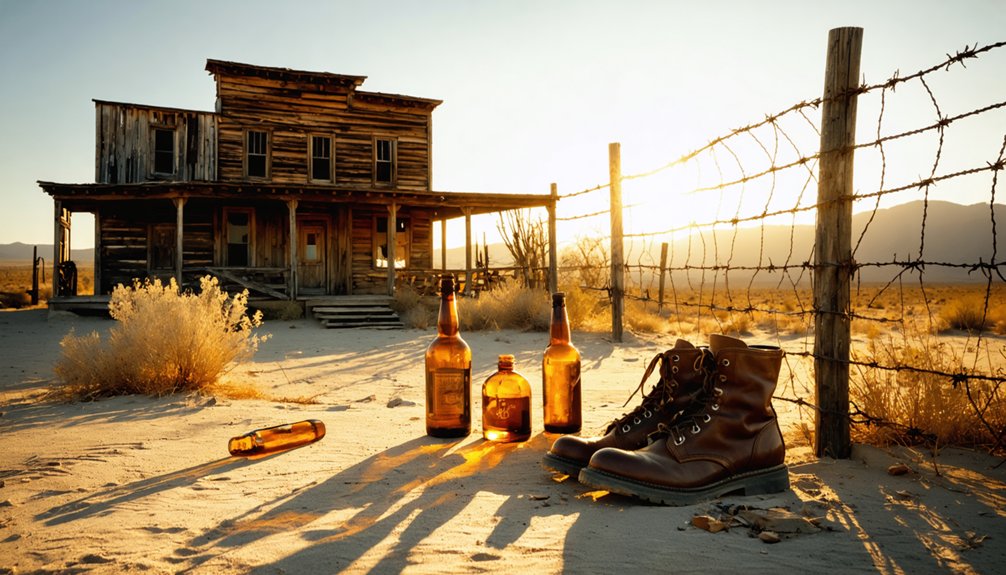
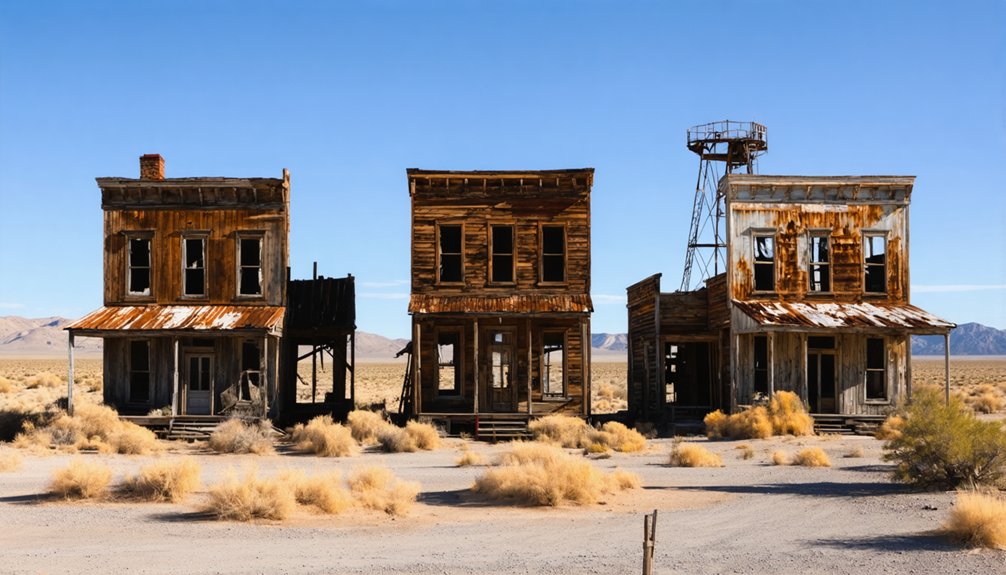
You’ll discover authentic remnants of America’s mineral rush era while camping in Nevada’s ghost towns, where preserved buildings and artifacts tell stories of frontier life. These remote desert sites offer unique opportunities for stargazing, photography, and wilderness exploration among historic mine shafts and weathered structures. From Berlin-Ichthyosaur State Park to the “Queen of the Mining Camps” at Goldfield, each destination combines rugged adventure with cultural heritage. The ghost towns’ secrets await those ready to venture into the high desert.
Key Takeaways
- Experience authentic remnants of America’s mineral rush era through preserved historic buildings, courthouses, and mining structures.
- Enjoy exceptional stargazing and night photography opportunities due to minimal light pollution in remote desert locations.
- Access unique camping experiences at established sites like Berlin-Ichthyosaur State Park or rugged spots near preserved miners’ huts.
- Explore rich cultural heritage through artifacts, cemeteries, and architectural remains that tell stories of frontier life.
- Discover adventure in navigating remote desert terrain while experiencing dramatic landscapes and geological formations.
A Journey Through Time: Historical Mining Heritage
When you venture into Nevada’s abandoned mining towns today, you’re walking through the remnants of America’s dramatic mineral rush era.
These sites tell stories of remarkable transformation, where two-tent camps exploded into bustling cities of 10,000 people virtually overnight. You’ll find evidence of diverse mining techniques in the old stamp mills, smelters, and mine shafts that dot the landscape. Virginia City stands as a prime example, with its numerous historic buildings still intact.
The cultural significance of these ghost towns runs deep, preserved in courthouse ruins, brick chimneys, and centuries-old cemeteries. The Montgomery Shoshone mine once processed 300 tons of ore daily during Rhyolite’s peak years.
From crumbling courthouses to weathered gravestones, Nevada’s ghost towns hold the enduring cultural legacy of America’s mineral rush pioneers.
Places like Rhyolite and Belmont showcase the incredible ambition of frontier settlers, who built elaborate concrete buildings, banks, and even electric plants in their pursuit of mineral wealth.
What remains today serves as an open-air museum, offering you direct connection to the untamed spirit of the American West.
Essential Gear and Safety Preparations
Before setting up camp in Nevada’s abandoned mining towns, you’ll need specialized gear and safety preparations that go beyond standard outdoor equipment. The remote desert locations and historic structures demand careful planning to guarantee your adventure remains thrilling rather than dangerous.
- Your camping essentials must include all-terrain vehicles with repair kits – these ghost towns often hide behind treacherous dirt roads where help won’t reach you easily.
- Pack structural assessment tools and bright flashlights to evaluate old buildings before approaching – one wrong step could trigger a collapse.
- Bring safety equipment for both winter and summer conditions, as desert temperatures swing dramatically between scorching days and freezing nights. Winters can drop to the low 20s, making proper insulation and negative-degree sleeping bags essential.
- Stock satellite communication devices and thorough first-aid kits – you’re venturing into areas where cell service doesn’t exist and medical help is hours away.
The remnants of cyanide mills and ore hoppers scattered throughout Tunnel Camp require visitors to maintain a safe distance and avoid disturbing these potentially hazardous historical structures.
Top Ghost Town Camping Destinations
Although Nevada’s landscape is dotted with countless abandoned settlements, five remarkable ghost towns stand out as premier camping destinations for adventure seekers. These locations offer glimpses into the mining boom cycles that shaped the region’s history.
At Berlin-Ichthyosaur State Park, you’ll find the most developed ghost town accommodations, with 14 designated campsites equipped with fire rings and restrooms.
Tunnel Camp offers a more rugged experience, where you can pitch your tent among mine tailings and witness spectacular desert sunrises. The well-preserved brick office remains provide a glimpse into the site’s mining operations.
In Goldfield, you’ll explore the “Queen of the Mining Camps” while adhering to local camping regulations.
The remote wilderness of Jarbidge provides an authentic Gold Rush atmosphere with preserved miners’ huts, while Rhyolite and Gold Point beckon with their extensive ruins and nearby camping opportunities, perfect for history enthusiasts seeking solitude among the remnants of Nevada’s mining heritage.
Successfully reaching Nevada’s abandoned mining towns demands mastery of desert terrain navigation.
You’ll encounter a challenging mix of sand-swept basins, towering mountain ranges, and deceptive terrain features that can disorient even experienced explorers. Your survival depends on mastering both traditional and modern navigation techniques while adapting to the desert’s harsh reality.
- You’re free to explore vast stretches of open desert, but subtle elevation changes can mask your true position.
- Your paper maps and compass become lifelines when electronics fail in extreme temperatures.
- You’ll need to identify essential landmarks like mine shafts and tailings piles to confirm your location.
- Your ability to read the landscape and anticipate flash flood zones could save your life.
Near Berlin-Ichthyosaur State Park, you’ll discover 14 remote campsites perfect for establishing a base while exploring ghost towns.
Always set waypoints for emergency exits and water sources before venturing into these remote territories. Remember to pack hydration packs for sustained exploration in these arid environments.
Best Seasons and Weather Considerations
Since weather patterns in Nevada’s ghost towns can be unforgiving, choosing the right season for your camping adventure is essential. Fall offers the most seasonal advantages, with moderate temperatures and accessible roads that make exploring these historic sites easier.
Fall camping in Nevada’s ghost towns provides ideal conditions, with mild weather and better road access for exploring abandoned settlements.
Winter reduces encounters with wildlife, though snow might block your access to remote locations. You’ll want to avoid summer’s extreme desert heat unless you’re well-prepared for dehydration risks. Many campers enjoy setting up near BLM land for stunning nighttime views of stars and surrounding landscapes. During monsoon season, be prepared for sudden thunderstorms that can sweep across the desert without warning.
Weather precautions are vital year-round. Pack for dramatic temperature swings between day and night, and always bring extra water since ghost towns lack reliable sources.
Watch for sudden dust storms and flash floods, particularly near canyons. Remember that facilities are minimal – most sites offer primitive camping only, and seasonal closures can affect amenities like dump stations and water availability.
Wildlife Encounters and Natural Wonders
metadata
Photography and Stargazing Opportunities
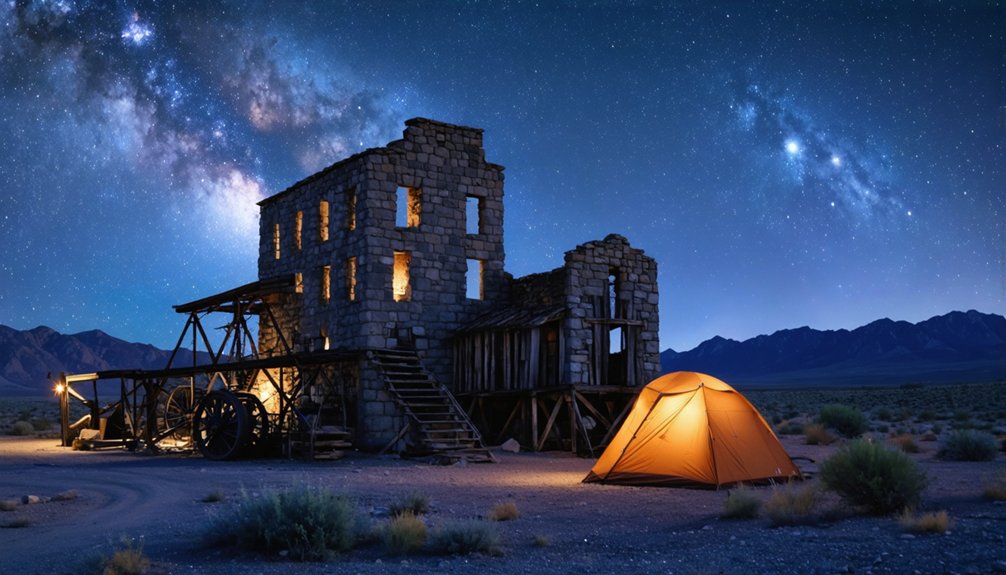
The desolate mining towns of Nevada offer photographers and stargazers an unparalleled canvas for capturing the beauty of both historic ruins and celestial wonders.
You’ll find places like Tunnel Camp, where crumbling red brick buildings and vintage mining equipment create dramatic compositions against the desert landscape.
As night falls, you’re treated to some of the clearest stargazing conditions imaginable. The high desert’s low humidity and absence of light pollution make these ghost towns perfect for night photography and observing celestial events.
The dark desert skies of Nevada’s ghost towns reveal nature’s celestial theater, untouched by city lights and coastal haze.
Set up your tripod on stable mine tailings, and you can capture everything from star trails to the Milky Way arching over historic structures.
With easy shifts between daytime exploration and nighttime shooting, you’ll have endless opportunities to document these haunting remnants of Nevada’s mining era.
Preserving and Respecting Historical Sites
While Nevada’s ghost towns offer fascinating glimpses into America’s mining past, preserving these historical treasures requires careful stewardship from every visitor.
The archaeological significance of native american sites cannot be overlooked, as they provide invaluable insights into the cultures that thrived long before European settlers arrived. By understanding the history and traditions preserved at these locations, visitors can gain a deeper appreciation for the land and its original inhabitants. It is essential to honor and protect these sites, ensuring that future generations can also experience their rich heritage.
Your commitment to historical preservation guarantees these remnants of the Old West survive for future generations. When exploring these historic sites, remember that every artifact tells a story of the brave pioneers who shaped the American frontier.
- Always stay on marked trails and respect “no trespassing” signs – many structures remain privately owned.
- Never remove artifacts or building materials, as they’re protected by state preservation laws.
- Keep your distance from unstable structures and abandoned mine shafts for your safety.
- Practice ethical visitation by camping only in designated areas away from historic buildings and ruins.
These simple actions help maintain the authentic character of Nevada’s mining heritage while guaranteeing safe exploration for everyone.
Frequently Asked Questions
Are There Any Active Paranormal Investigations Allowed in These Ghost Towns?
In Nevada’s million haunted corners, you’ll find authorized paranormal tours and ghost hunting opportunities at places like Nevada State Prison, Pioneer Saloon, and Washoe Club, where you’re free to investigate with proper permits.
Can Metal Detecting Equipment Be Used to Search for Artifacts?
You’ll need permits for metal detecting in Nevada’s ghost towns since they’re usually on public lands. For artifact preservation, you can’t remove items over 100 years old without proper authorization.
Which Ghost Towns Have Cell Phone Service for Emergency Communications?
You’ll find reliable cell service in Gold Point and Virginia City, with spotty coverage in Belmont, Pioche, and Jarbidge. Always pack offline maps and satellite devices for emergency communications.
Do Any Abandoned Mining Towns Offer Guided Overnight Camping Experiences?
You won’t find official guided tours with camping amenities in Nevada’s abandoned mining towns. While day tours exist and independent camping is possible, no companies currently offer supervised overnight experiences.
Are There Restrictions on Collecting Small Rocks or Mineral Samples?
With 90% of Nevada’s ghost towns protected by law, you can’t legally collect rocks or minerals without permits. All sampling is prohibited to preserve these historic sites’ archaeological integrity and natural features.
References
- https://www.legendsofamerica.com/nv-ghosttowns/
- https://nvtami.com/top-10-ghost-towns-nevada-northwest/
- https://www.youtube.com/watch?v=pMRDgac4OCU
- https://www.silverstaterv.com/nevada-ghost-towns-and-camps/
- https://findingnevadawild.com/goldfield-the-old-west-lives-in-nevadas-best-ghost-town/
- https://www.visittheusa.com/experience/6-nevada-ghost-towns-explore-if-you-dare
- https://travelnevada.com/ghost-town/
- https://www.overlandexpo.com/compass/trips-and-trails-delamar-ghost-town/
- https://lasvegasareatrails.com/rhyolite-ghost-town-death-valley-nevada/
- https://en.wikipedia.org/wiki/List_of_ghost_towns_in_Nevada