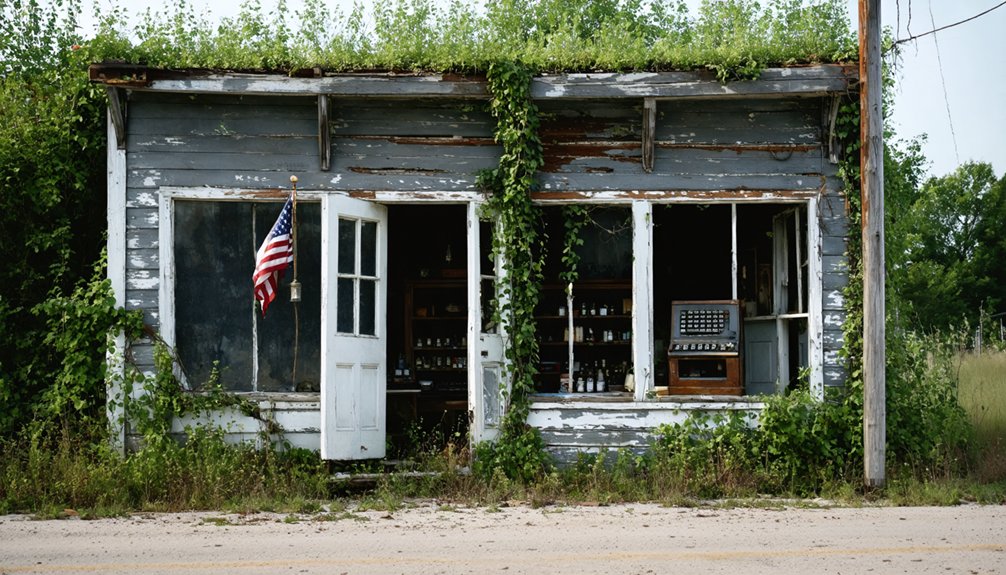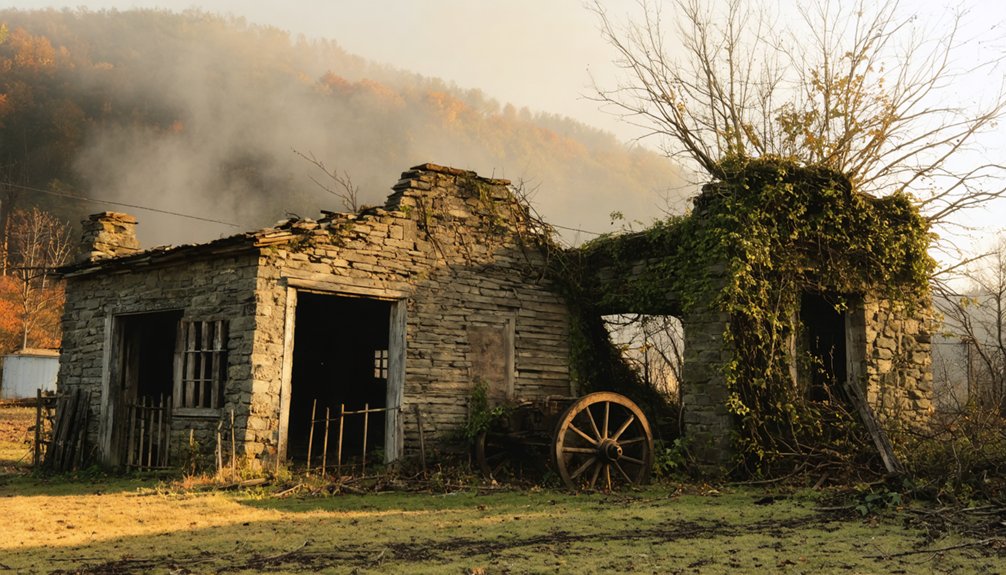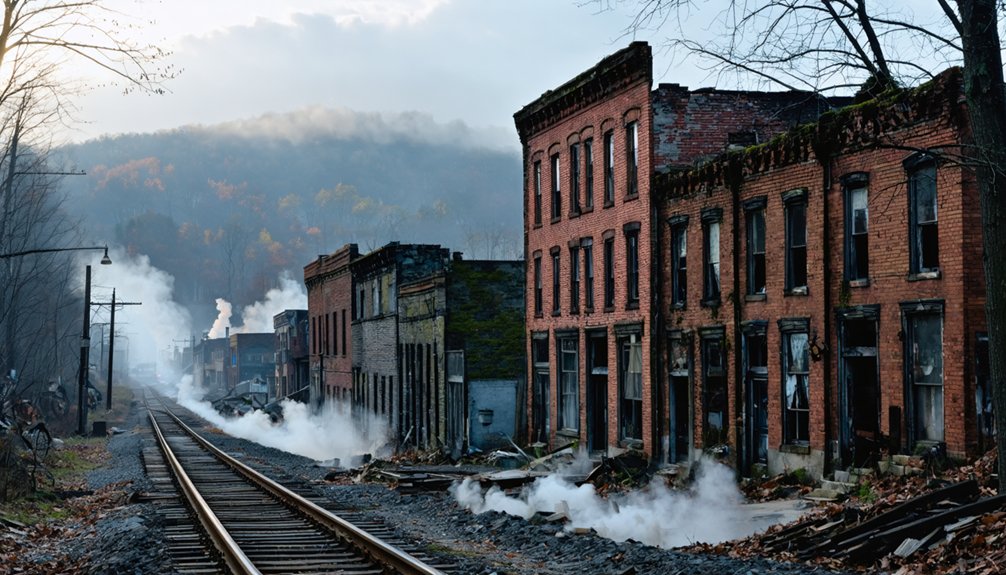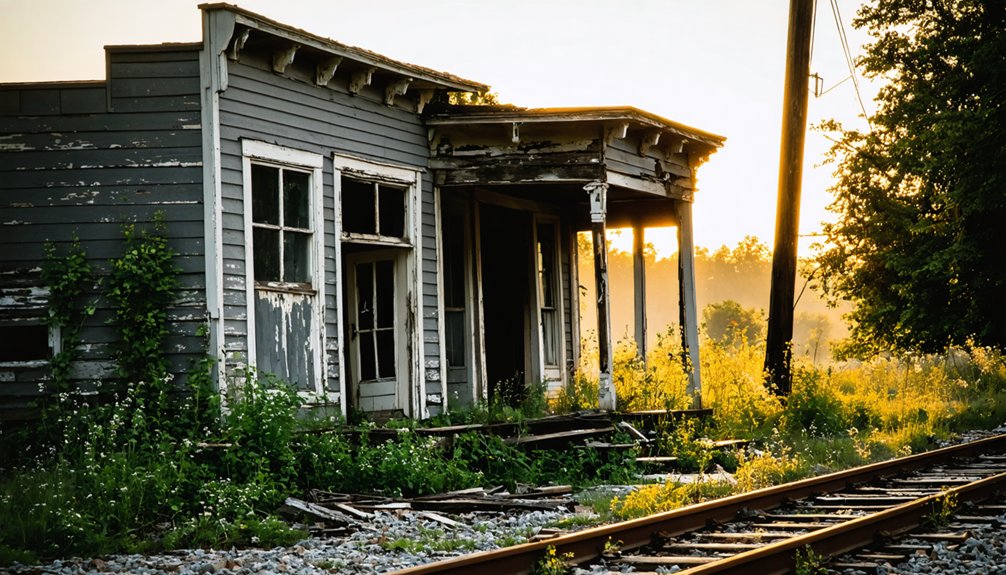
Civil War-era towns became abandoned due to multiple devastating factors that hit communities simultaneously. You’ll find resource depletion stripped towns of essential materials, while military destruction demolished infrastructure and buildings. Population shifts saw 200,000+ Southerners flee their homes, leaving communities unable to sustain themselves. Transportation changes, particularly railroad access, determined which towns survived, and natural disasters dealt final blows to struggling settlements. These interconnected challenges created America’s landscape of over 3,000 ghost towns.
Key Takeaways
- Resource depletion, particularly in mining and farming communities, left towns economically unsustainable when natural resources were exhausted.
- Military battles and occupations caused devastating physical destruction to buildings, infrastructure, and economic resources.
- Mass population movements of around 200,000 Southerners created demographic instability and overwhelmed some communities’ ability to support refugees.
- Changes in transportation networks, especially railroad access, isolated communities and rendered previously vital trade routes obsolete.
- Natural disasters like floods and hurricanes destroyed towns beyond their capacity to rebuild, creating thousands of ghost towns.
The Impact of Resource Depletion on Town Survival
While many factors contributed to the abandonment of Civil War-era towns, resource depletion emerged as a primary catalyst for their economic collapse and eventual desertion.
You’ll find that towns’ economic sustainability directly correlated with their resource management practices, as seen in mining communities like Bodie and Calico that flourished only until mineral deposits ran dry.
The pattern repeated across different resource-dependent settlements. When soil fertility declined, agricultural towns couldn’t sustain farming operations. Transportation changes often accelerated decline as bypassed rail routes left communities isolated.
Southern towns experienced severe decline as soil exhaustion forced farmers to abandon their lands and seek opportunities further west.
As timber supplies dwindled, communities lost essential building materials and trade commodities. These resource failures triggered chain reactions – businesses closed, infrastructure crumbled, and supply chains shifted away from struggling towns.
Without their economic foundations, these communities couldn’t attract new residents or investment, leading to their inevitable abandonment.
War-Time Destruction and Military Occupation
Physical devastation from direct combat and military occupation emerged as a primary force behind Civil War town abandonment.
Military battles and occupations wreaked havoc on towns during the Civil War, forcing many communities to dissolve completely.
You’ll find that artillery bombardments and skirmishes destroyed homes, businesses, and public buildings, while property requisition by armies transformed civilian structures into makeshift hospitals and barracks. The constant presence of troops led to systematic dismantling of infrastructure, as soldiers stripped buildings for materials and fuel.
Civilian casualties mounted as battles raged near population centers, forcing residents to flee. A Confederate time bomb explosion at City Point in 1864 exemplified the devastating attacks that could render towns uninhabitable, causing 58 deaths and massive property damage. The total direct costs of the war reached 1.5 times the nation’s gross national product of 1860.
Sherman’s campaign alone inflicted $100 million in damage, destroying crucial economic infrastructure and agricultural resources. Towns changed hands repeatedly, destabilizing communities and disrupting commerce.
The combination of combat damage, military occupation, and resource depletion created conditions that made many towns unsustainable, leading to their eventual abandonment.
Migration Patterns and Population Shifts
The widespread destruction of towns and infrastructure sparked unprecedented population movements during the Civil War era.
You’ll find that refugee demographics shifted dramatically, with an estimated 200,000 Southerners fleeing their homes. Cities like Richmond doubled in population within the first year of war, while Memphis saw its Black population surge from 3,000 to 22,000 by 1865.
Urban migration created severe strain on resources, leading to overcrowding and food shortages in refugee centers. Different groups faced varying challenges: Confederate civilians escaped advancing Union armies, Unionists sought refuge in mountainous regions, and newly freed Black refugees struggled with segregation and limited access to resources in contraband camps. These refugees often found work as carpenters and teamsters in Union army camps. Nearly one million enslaved people self-emancipated between 1861 and 1865, contributing to the mass migration patterns.
Many towns that couldn’t sustain these sudden population shifts eventually became abandoned.
Transportation Evolution and Infrastructure Changes
During the Civil War era, railroad infrastructure emerged as the decisive factor in determining which towns would thrive and which would face abandonment.
You’ll find that communities not connected to rail networks often declined as transportation trends shifted away from canals and turnpikes. The Union’s deliberate destruction of Southern railways further isolated many Confederate towns, permanently disrupting their economic foundations. By the Civil War, within 5 miles of a railway was where over 80% of Midwestern farms were located, showing the critical importance of rail access. The American System promoted extensive internal improvements that reshaped transportation networks nationwide.
As transportation evolved beyond the rail age, you’d see even more dramatic changes. The rise of highways, automobiles, and air travel dealt additional blows to rail-dependent communities.
Infrastructure investments increasingly favored new transportation modes, leaving many historic rail towns without their traditional economic purpose. The shift from steam to diesel locomotives reduced railroad workforce requirements, while changing freight patterns rendered once-vital rail hubs obsolete.
Natural Disasters and Environmental Challenges
Beyond human-driven changes in transportation networks, nature itself played a powerful role in reshaping Civil War-era settlements.
You’ll find that flooding effects devastated riverside communities like Rodney, Mississippi, where the Mississippi River’s course changes repeatedly inundated the town and severed crucial trade routes.
Hurricane devastation proved particularly catastrophic for coastal settlements, as demonstrated by Indianola, Texas, which succumbed to two massive storms in 1875 and 1886. Union forces had previously weakened towns like St. Mary’s of Aransas when they burned the wharves during wartime raids.
Earthquake damage, such as the 1886 tremor that struck Port Royal, South Carolina, often combined with other natural forces to render towns uninhabitable.
Erosion challenges steadily consumed communities like Burrwood, Louisiana, where land subsidence and wetland destruction gradually erased the settlement from existence.
These environmental forces frequently overwhelmed towns’ limited resources for recovery and preservation, with over 3,000 ghost towns scattered across America serving as testament to nature’s destructive power.
Many of these forgotten places in Appalachia tell stories of resilience and hardship, echoing the lives once lived within their walls. As nature reclaims these spaces, the remnants of history serve as a poignant reminder of the cultural legacy and struggles faced by their communities. Exploring these sites can evoke a deep connection to the past and highlight the ongoing battle between humanity and the forces of nature.
Frequently Asked Questions
How Long Did It Typically Take for a Civil War Town to Become Abandoned?
Like falling dominoes, you’d find Civil War towns’ abandonment timeline varied drastically – from immediate evacuation after military attacks to gradual decline over months or years, depending on wartime impact severity.
Did Any Abandoned Civil War Towns Successfully Rebuild and Survive Later?
Yes, you’ll find several towns revived through rebuilding efforts and historical preservation. Places like Walhalla, Victoria and Calico, California transformed into tourist destinations that sustain thriving communities today.
What Happened to the Buildings and Structures in Abandoned Towns?
Ever wonder about those silent ruins? You’ll find most structures succumbed to building decay through weather damage, vandalism, and neglect, though some remain as historical preservation sites with visible foundations and walls.
Were There Efforts by Governments to Prevent Towns From Becoming Abandoned?
You’ll find that government interventions did occur, including tax incentives, land grants, and infrastructure support, but these economic incentives often proved inadequate to prevent widespread town abandonment after the Civil War.
How Did Property Ownership Work in Abandoned Civil War-Era Towns?
Over 80% of abandoned properties faced land disputes. You’d find property rights were often unclear, with multiple claimants fighting for ownership through both legal channels and squatter’s rights.
References
- https://en.wikipedia.org/wiki/Ghost_town
- https://devblog.batchgeo.com/ghost-towns/
- https://www.geotab.com/ghost-towns/
- https://www.britannica.com/topic/ghost-town
- https://blogs.loc.gov/maps/2023/09/more-places-in-civil-war-history/
- https://www.lovemoney.com/gallerylist/86648/americas-empty-ghost-towns-and-why-theyre-abandoned-today
- https://worldpopulationreview.com/world-city-rankings/abandoned-cities
- https://www.loveexploring.com/gallerylist/188219/the-us-state-with-the-most-ghost-towns-revealed
- https://janetakesonhistory.org/2021/10/21/was-southern-soil-exhaustion-a-cause-of-the-civil-war/
- https://digitalcommons.georgiasouthern.edu/cgi/viewcontent.cgi?article=1120&context=aujh