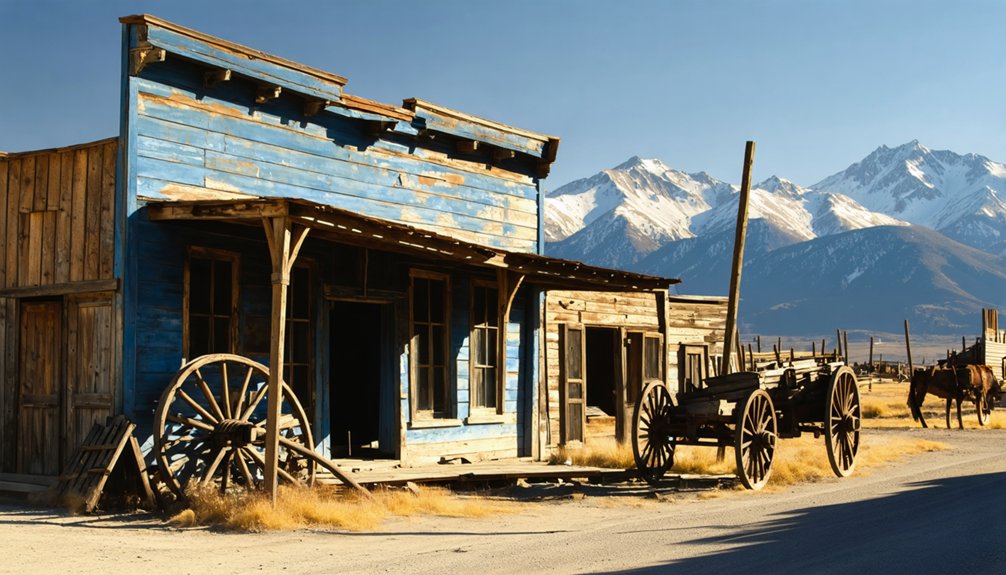
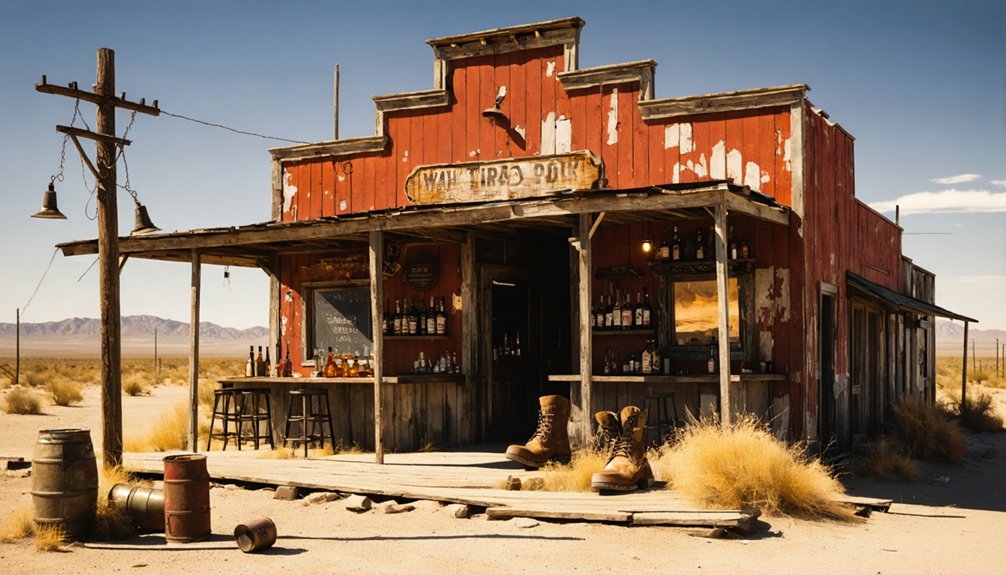
You’ll find that ghost towns across the American West trace back to the pioneer dream of the mid-1800s, when settlers sought new opportunities through mining, farming, and railroad development. While some towns flourished initially, their fates hinged on factors like mineral depletion, changing transportation routes, and environmental disasters. Over 400 ghost towns in New Mexico alone stand as remnants of this era, each telling a unique story of boom, bust, and abandonment.
Key Takeaways
- Pioneer settlements in the West were often founded on temporary economic booms like mining, leading to abandonment when resources depleted.
- The Homestead Act of 1862 encouraged rapid Western settlement, but many communities failed due to harsh environmental conditions.
- Transportation networks, especially railroads, determined town survival, with bypassed settlements often becoming ghost towns.
- Natural disasters, particularly floods and droughts, forced pioneers to abandon their established communities permanently.
- Single-industry towns, dependent on mining or agriculture, were vulnerable to economic collapse when their primary resource failed.
The Pioneer Dream of Western Settlement
As America expanded westward in the mid-1800s, the pioneer dream captured the imagination of diverse groups seeking new opportunities and fresh starts.
You’ll find that pioneer motivations ranged from the practical desire for farmland to the spiritual quest for religious freedom. The Homestead Act of 1862 fueled these settlement aspirations by offering 160 acres of free land to those willing to cultivate it.
Whether you were an African American escaping Southern racism, a Mormon seeking religious sanctuary, or a European immigrant drawn by tales of prosperity, the West represented possibility. The treacherous six-month journey across nearly 2,000 miles tested the resolve of these determined settlers.
Federal policies and railroad expansion made these dreams increasingly attainable, though often at the expense of Native American communities. The ideology of manifest destiny drove Americans to believe it was their right and duty to expand across the continent.
Settlers formed tight-knit groups, sharing resources and labor while adapting to harsh environmental challenges through innovation and determination.
From Mining Camps to Deserted Towns
When precious metals were discovered across the American West, mining camps erupted virtually overnight into bustling boomtowns filled with prospectors, merchants, and frontier opportunists.
You’d find a complex mix of people establishing communities complete with stores, saloons, and essential mining infrastructure like stamp mills and smelters.
But these towns lived and died by the mines. Once ore deposits became depleted or unprofitable, the economic foundations crumbled quickly.
Workers left in droves, leaving behind empty buildings and dormant mining techniques that had once extracted wealth from the earth.
New Mexico alone contains over 400 ghost towns that stand as silent witnesses to this cycle of boom and bust.
Today, you’ll discover these abandoned settlements scattered across the Western landscape, with ghost town preservation efforts helping to protect their historical significance.
As you explore these remnants of the past, you’ll find photographers dedicated to capturing western ghost towns in photos, showcasing their eerie beauty and the stories they hold. Each image not only reflects the architecture and spirit of these sites but also serves to raise awareness about their preservation. By sharing these captivating visuals, they invite a new generation to appreciate and enjoy the rich history embedded in these quiet landscapes.
Places like Goldfield, Nevada exemplify this pattern, transforming from a tent city to metropolis in just a few short years.
The remnants – from weathered headframes to crumbling hotels – tell powerful stories of ambition, struggle, and the impermanence of frontier dreams.
The Role of Transportation Networks
Transportation networks served as both creators and destroyers of frontier settlements across the American West.
You’ll find that railroads initially sparked town formation by providing essential access points for settlers and supplies in remote areas, with communities sprouting up around depots and stops. This transportation evolution proved decisive in determining which settlements thrived and which vanished. Many communities that were established in the 1800s experienced rapid decline due to economic busts following resource depletion. The Wabash Trace Nature Trail itself showcases several ghost towns that emerged along its original railway route.
The infrastructure impact became even more pronounced as newer transportation modes emerged.
When highways replaced railroads as primary transport arteries, towns bypassed by these new routes often withered. You can trace this pattern clearly in places like Route 66, where communities that once thrived on rail and early automobile traffic disappeared after interstate highways diverted commerce elsewhere.
Towns that developed multiple transportation connections typically survived, while single-mode dependent settlements often became ghost towns.
Environmental Hardships and Natural Disasters
You’ll find that floods were a major force in reshaping pioneer settlements, as many Western towns were built in vulnerable floodplains near essential water sources.
The harsh climate of the American West, characterized by extreme temperatures and prolonged droughts, proved particularly devastating to farming communities that lacked irrigation infrastructure.
When natural disasters struck these isolated settlements, their limited resources and absence of nearby support systems often meant recovery wasn’t possible, leading to permanent abandonment.
The Times Beach disaster of 1982 showed how devastating floods could disperse environmental contamination and force entire communities to permanently evacuate their homes.
Some settlements, like those near mining operations, faced catastrophic environmental conditions – as seen in Picher, Oklahoma, where toxic chat piles forced entire communities to relocate.
Floods Reshape Pioneer Towns
Throughout the American West, devastating floods reshaped the destiny of numerous pioneer settlements, forcing entire communities to abandon their homes and livelihoods.
You’ll find evidence of this destructive pattern in towns like Grafton, where flood resilience strategies proved futile against nature’s recurring fury. Despite attempts to relocate communities upriver or to seemingly safer ground, many settlements couldn’t survive the relentless water damage to their crops, homes, and infrastructure. After facing constant flooding, the original settlement of Wheeler’s Mormon pioneers moved their entire town one mile upriver and renamed it Grafton. Today, Butch Cassidy scenes were filmed among Grafton’s well-preserved buildings, showcasing its historical significance.
The Great Flood of 1862 exemplifies these community relocation challenges, completely destroying towns like Colorado City and Harrisburg.
In more recent history, the 1983 flood transformed Thistle, Utah, into a ghost town overnight. When combined with other hardships like drought or conflict, flooding often delivered the final blow that turned thriving pioneer communities into abandoned remnants of the past.
Harsh Climate Forces Exodus
While mining operations initially drew settlers to the American West, severe environmental challenges often forced their exodus, transforming bustling communities into ghost towns.
You’ll find that climate challenges played a decisive role in these abandonments, as pioneers faced brutal temperature extremes and persistent water shortages.
In desert regions, you’d encounter scorching summers and harsh winters that devastated crops and strained limited resources.
Resource scarcity became particularly acute when dust storms damaged farmland and buildings, while droughts depleted critical water supplies needed for both agriculture and daily life.
These environmental pressures, combined with the region’s isolation and lack of economic diversity, made it impossible for many communities to sustain themselves once mining operations ceased to be profitable.
Cultural Legacy of Frontier Communities
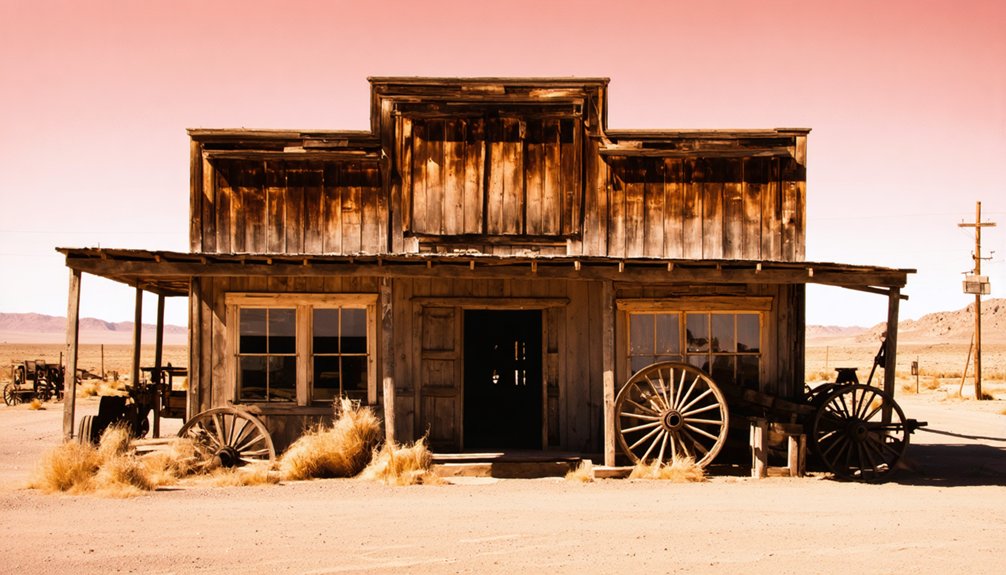
As settlers pushed westward across the American frontier, they forged a distinctive cultural legacy that transformed isolated outposts into vibrant communities with lasting national impact.
You’ll find their influence in the cultural fusion that created a uniquely American identity, blending Anglo-American traditions with European immigrant customs. These settlements birthed democratic governance from necessity, as pioneers established their own systems of self-rule and community cooperation.
You can trace many American values directly to these frontier roots. The emphasis on rugged individualism and self-reliance emerged from survival demands, while communal activities like literary societies and religious gatherings built social bonds.
Frontier life birthed core American ideals – balancing fierce independence with the vital ties of community that enabled survival and growth.
Even as these communities later became ghost towns, they’d already shaped enduring national characteristics that defined American civic life and cultural identity.
The Economic Rise and Fall of Pioneer Towns
When precious minerals were discovered in the American West, entire towns materialized virtually overnight, driven by the promise of untold riches beneath the earth.
You’ll find that pioneer hardships shaped these communities, as they adapted to harsh economic realities. Despite community resilience, many towns couldn’t survive when their primary economic drivers disappeared.
- Mining operations shifted from individual prospectors to large corporations, forcing smaller operators out.
- Railroad routes determined whether towns would thrive or fade into obscurity.
- Agricultural communities rose and fell with crop prices and weather patterns.
- Cattle towns flourished during the open range era but declined when fencing changed ranching practices.
These boom-and-bust cycles transformed vibrant frontier settlements into ghost towns, leaving behind empty buildings as evidence of the West’s dynamic economic history.
Frequently Asked Questions
What Daily Entertainment Activities Did Pioneer Families Enjoy in Western Ghost Towns?
Like moths to a flame, you’d find yourself drawn to community gatherings, storytelling nights, saloon music, horseback riding, dance halls, gold panning, and carriage rides through rugged terrain.
How Did Pioneer Children Receive Medical Care in Remote Western Settlements?
You’d rely on your mother’s pioneer medicine skills, using home remedies and herbal treatments. In remote healthcare situations, local midwives, traveling doctors, and military fort hospitals provided additional medical support.
What Happened to the Pets and Livestock When Towns Were Abandoned?
You’d be heartbroken seeing countless abandoned animals left to fend for themselves. Pets often turned feral or starved, while livestock either roamed free, died from harsh conditions, or were claimed by new settlers.
How Did Pioneer Women Maintain Fashion and Beauty Standards in Frontier Towns?
You’d maintain pioneer attire through communal sewing, home-crafted fabrics, and adapting eastern trends. Beauty rituals involved natural ingredients, shared beauty tips, and creative fabric embellishments despite frontier limitations.
What Burial Customs and Grave Markers Were Common in Ghost Town Cemeteries?
You’ll find east-facing burial traditions reflecting Christian beliefs, with homemade markers of wood or stone. Grave symbolism included protective rock piles, while Boot Hill graves marked those who died violently.
References
- https://zionriversedgeadventures.com/article/the-history-behind-graftons-ghost-town
- https://www.geotab.com/ghost-towns/
- https://www.youtube.com/watch?v=Bp2IcEQsWEM
- https://travelwyoming.com/blog/stories/post/wy-hidden-histories-pioneers-ghost-towns/
- https://www.authentikusa.com/us-en/blog/english-top-5-villes-fantomes-aux-usa-maj
- https://www.legendsofamerica.com/gt-hiddentales/
- https://backroadplanet.com/9-ghost-towns-still-standing-in-the-west/
- https://explorethearchive.com/western-ghost-towns
- https://wildwestcity.com/old-west-ghost-towns/
- https://www.notesfromthefrontier.com/post/untitled