Texas’s ghostly figures emerge from the state’s violent frontier past, where bitter feuds, cattle drive tragedies, and cultural clashes created perfect conditions for restless spirits. You’ll find these haunts concentrated along historic cattle trails, in over 500 ghost towns, and at sites of Native American conflict. From the notorious Sutton-Taylor feud to the legendary Ghost Riders of Stampede Mesa, each supernatural tale connects to real historical trauma that shaped Texas’s untamed wilderness. The deeper you explore, the more these spirits reveal about the Wild West’s true nature.
Key Takeaways
I
The Legacy of Violence and Tragedy in Texas
While Texas’s modern ghost stories often stem from its turbulent past, the state’s history of violence runs particularly deep through the Reconstruction era and frontier period.
You’ll find the ghostly legacies of bitter feuds like the Sutton-Taylor conflict, which claimed over 35 lives and tore communities apart. These feud dynamics went beyond simple disputes, intertwining with racial tensions, political power struggles, and economic rivalries over cattle and land.
Notorious figures like John Wesley Hardin carved paths of destruction across Texas, while bloody confrontations between settlers and Native American tribes left lasting trauma. The post-Civil War period saw thousands of Texans return to unclear property rights, leading to widespread disputes and violence.
From San Antonio’s deadly shootouts to the guerrilla warfare of family vendettas, violence shaped the Texas frontier. The city earned its reputation as one of the deadliest places in the Wild West. The Texas Rangers struggled to maintain order as informal justice and vigilante actions blurred the lines between lawmen and outlaws.
Spirits of the Cattle Trails
Beyond the violent clashes that shaped Texas history, the state’s most haunting legends emerge from its iconic cattle trails.
You’ll find tales of cattle drive ghosts stretching from Texas to Montana, with the Western Trail (1874-1886) hosting more supernatural activity than any other route. These cowboy spirits, many buried in unmarked graves, remain dedicated to completing their final drives even after death.
At Stampede Mesa in Crosby County, you can still hear phantom hoofbeats where 700 steer and their handlers plunged to their deaths in 1889. Trail boss Sawyer’s lack of remorse forever stained the tragic event.
The tragedy spawned the “Ghost Riders in the Sky” legend, with witnesses reporting spectral cattle and riders appearing against the night sky. According to historian Michael Grauer, numerous eyewitness accounts of these ghostly apparitions have been documented over the decades.
These haunted trails tell a deeper story of the grueling conditions, deadly accidents, and fierce dedication that defined America’s cattle drive era.
Native American Haunts and Historical Wounds
You’ll find Texas’s most haunted Native American sites concentrated along ancient territorial boundaries where historical trauma still echoes through the land.
At places like Enchanted Rock and Old Town Spring, the spirits of displaced tribes and fallen warriors manifest in recurring supernatural phenomena, from phantom figures to cursed grounds. The eerie creaking noises at night from Enchanted Rock have long fueled beliefs in supernatural activity.
The violent clashes between Native Americans and settlers have left an indelible spiritual imprint, where ancient burial grounds and massacre sites continue to generate reports of restless spirits and unexplained activities. The 1842 Comanche attack at Shoal Creek stands as one of the most notorious examples of this haunted legacy.
Phantom Horse Herds Return
As moonlight bathes the rugged Texas plains, phantom horse herds continue to make their presence known, particularly in places marked by Native American tragedy.
You’ll hear them most distinctly in Palo Duro Canyon, where spectral stampedes echo through the night, carrying the weight of historical massacres and cultural displacement.
These phantom horses aren’t just ghostly apparitions – they’re powerful symbols of unresolved grief and ancestral wounds.
When you witness these ethereal manifestations, you’re experiencing more than just folklore; you’re connecting with the land’s living memory.
The hoofbeats you hear represent the spiritual unrest of displaced tribes and the violence that shaped Texas’s frontier.
Each sighting reminds us that the landscape holds onto its stories, especially those of loss and injustice, through these haunting equine apparitions.
The tales often intertwine with stories of Bigfoot Wallace’s revenge, where horse thieves met brutal fates on the lawless frontier.
The Texas Rangers’ brutal justice against outlaws and Native Americans in the 1800s has left an indelible mark on these haunted territories.
Sacred Land Still Echoes
Through centuries of spiritual connection and tragedy, Texas’s sacred lands continue to resonate with Native American presence, particularly in places like Shoal Creek and Enchanted Rock.
You’ll find evidence of ancient settlements dating back to 9000 BC, where burial grounds and sacred echoes still whisper their stories.
These spiritual landscapes hold layers of unresolved trauma – from the Shoal Creek Massacre of 1842 to countless conflicts between settlers and indigenous tribes.
As development encroached on hallowed grounds, sacred sites faced desecration. The Devil’s Backbone Tavern stands where tribal ceremonies once took place, while mining operations scarred the spirit-filled Chisos Mountains.
Today, witnesses report mysterious phenomena across these locations – from warrior spirits at Enchanted Rock to unexplained voices along Shoal Creek, suggesting the land remembers what many have forgotten. In San Antonio, the Alamo mission started as a peaceful sanctuary in 1724 before becoming a fortress of violent death. The Akokisa curse in Old Town Spring still causes fires when shop owners cut down trees.
Ghost Towns and Historic Buildings: Echoes of the Past
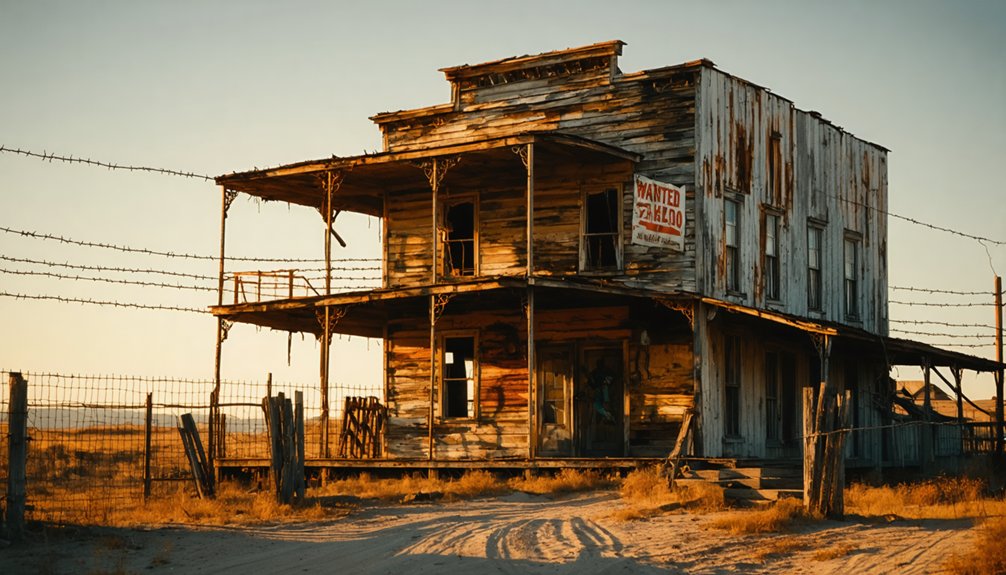
You’ll find more than five hundred ghost towns scattered across Texas, where abandoned buildings and weathered ruins tell stories of economic booms, devastating natural disasters, and shifting transportation routes that spelled doom for once-thriving communities.
When you walk through these forsaken places, like Belle Plain with its crumbling college ruins or Fort Griffin’s old military structures, you’re stepping into spaces where saloon brawls, frontier justice, and daily life played out in the Old West.
Each cemetery marker and decaying storefront bears witness to dreams that flourished briefly before succumbing to harsh realities, from the hurricanes that leveled Indianola to the railroad decisions that left towns like Toyah to fade into memory.
Abandoned Dreams Still Whisper
When dreams of prosperity faded across Texas in the late 1800s and early 1900s, they left behind haunting reminders of once-thriving communities.
You’ll find abandoned hopes scattered across the landscape, where nature slowly reclaims what humanity built during brief moments of economic fortune.
These lingering memories tell stories of boom-and-bust cycles through:
- Weathered ruins of immigrant-built structures, from German settlements to Polish communities
- Industrial relics like mine shafts and sawmill remains at Aldridge and Hagerman
- Empty churches and schools that once echoed with life in places like Belle Plain
- Cemeteries that preserve the names of those who dared to dream big
Today, you can walk among these silent witnesses to ambitious ventures, where vines embrace old foundations and desert winds whisper tales of what might’ve been.
Saloon Spirits Never Left
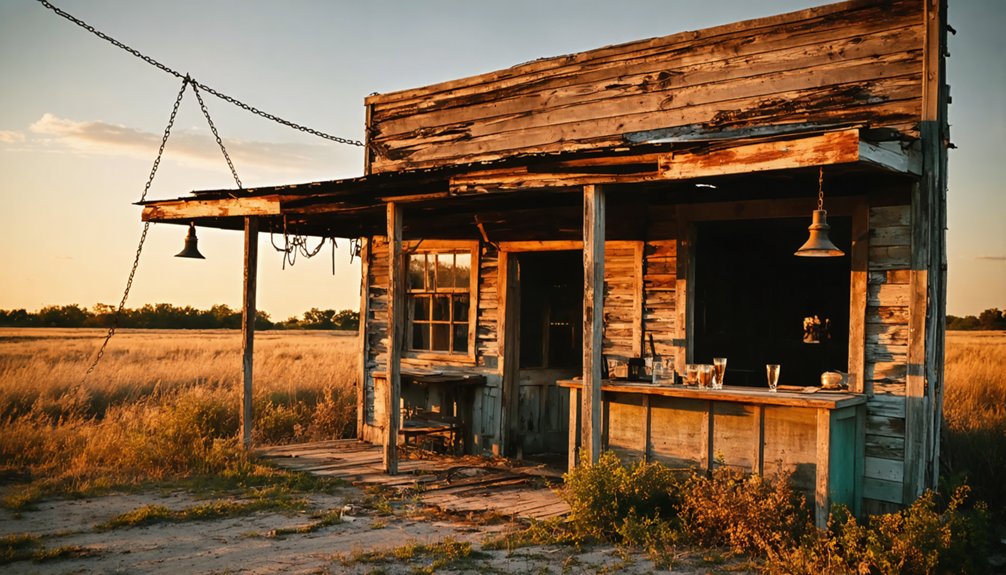
In the shadowy corners of Texas ghost towns, abandoned saloons still harbor whispers of frontier revelry and commerce. You’ll find these ghostly establishments scattered across places like Kimball, Belle Plain, and Shafter, where spectral patrons once sealed deals and shared tales over whiskey shots.
These saloons weren’t just drinking spots – they were the heartbeat of frontier commerce, where cattle drives ended and fortunes changed hands.
When you walk through these empty doorways today, you’re stepping into spaces that once buzzed with multiple saloon gatherings alongside churches and schools.
Even as mining booms faded and railways bypassed these towns, the saloons held on until the very end. Now they stand as silent sentinels, reminding you of an era when freedom meant opportunity on Texas’s wild frontier.
Deadly Tales Live On
Dark chapters of Texas history still haunt the state’s ghost towns and historic buildings, particularly in eastern regions like Jefferson.
You’ll find haunted memories woven into these abandoned places, where ghostly legends arose from devastating events and social upheaval that tore communities apart.
- The Grove stands as Jefferson’s most haunted site, where shadow figures and unexplained footsteps echo the town’s violent past during the Civil War era.
- Former port town Indianola vanished after two devastating hurricanes, leaving only ruins and tales of restless spirits.
- Abandoned homes in Belle Plain hold stories of bitter rivalries and violent disputes over county seats.
- Places like The Littlefield Home preserve eerie histories through piano music played by unseen hands and objects that move on their own.
Preserving History Through Supernatural Stories
Throughout Texas, supernatural stories have become powerful tools for preserving historical landmarks and cultural heritage sites. You’ll find this supernatural integration in places like Fort Ringgold, where UTRGV’s CHAPS program involves students and locals in uncovering ghostly history while creating engaging K-12 curricula.
Museums, including San Antonio’s Institute of Texan Cultures, expertly weave haunted narratives with historical facts, deepening your connection to the past.
Cultural preservation thrives at sites like Villa Finale, where ghost stories bridge the gap between past inhabitants and modern visitors. These tales aren’t just for entertainment – they’re protecting endangered local histories from urban development while generating essential tourism revenue.
Through haunted tourism, you’re helping fund the preservation of historic buildings and keeping difficult histories alive through compelling supernatural narratives.
The Wild West Environment and Human Psychology
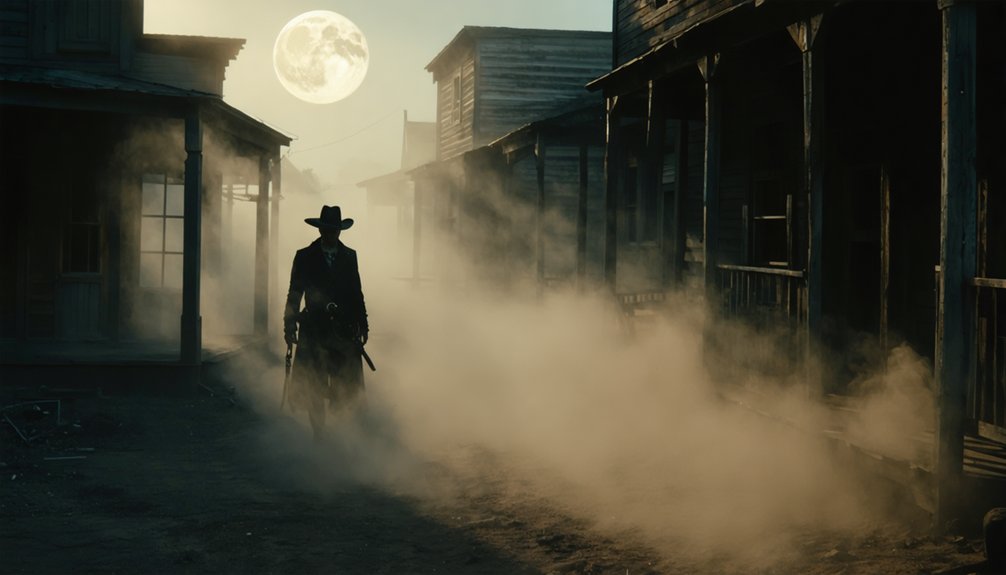
Texas’s Wild West history shapes more than just preserved buildings and artifacts – it profoundly influences the ghostly tales you’ll encounter across the state.
The harsh frontier environment created deep psychological trauma that still echoes through collective memory, manifesting as supernatural stories tied to specific locations.
When you explore these haunted sites, you’ll understand how the Wild West’s volatile nature bred ghost stories through:
- Isolated settlements where violence and danger were constant companions
- Brutal acts of frontier justice that left emotional scars on communities
- Lawlessness that forced people to cope with unexplained phenomena
- Environmental hazards that amplified fears and supernatural beliefs
The untamed landscape’s impact on human psychology created lasting imprints, turning tragic events into enduring spectral legends that continue to captivate visitors today.
Frequently Asked Questions
Can Ghost Hunting Equipment Detect Old West Spirits in Texas Locations?
You’ll find that modern ghost detection equipment can effectively identify potential Old West spirits through EMF readings, thermal imaging, and spirit communication devices, though results aren’t always guaranteed at Texas locations.
Do Modern Ranchers Report Ghostly Encounters Similar to Historical Cowboy Experiences?
You’ll find modern ranchers still report ghostly encounters much like old cowboy legends – seeing spectral figures on horseback, hearing phantom cattle drives, and experiencing unexplained phenomena during isolated ranch life.
What Ritual Practices Were Used to Ward off Spirits in 1800S Texas?
Over 70% of households used spiritual cleansings in 1800s Texas. You’d find protective charms from multiple traditions: Hoodoo bundles near chimneys, Native American mitote ceremonies, and Catholic prayers against evil spirits.
How Do Seasonal Changes Affect the Frequency of Old West Ghost Sightings?
You’ll notice seasonal patterns intensify haunting frequency during fall and winter, when cooler temps, foggy conditions, and longer nights create ideal conditions for ghostly encounters in Texas’ Old West locations.
One popular attraction features ghost stories from Texas ruins, where visitors can hear chilling tales of spirits that wander the remnants of abandoned buildings. As the sun sets, the eerie atmosphere draws ghost hunters and curious thrill-seekers alike, eager to uncover the mysteries hidden within these historical sites. Each story offers a glimpse into the past, revealing the lives and fates of those who once called these places home.
Are Certain Types of Buildings More Likely to Harbor Old West Spirits?
You’ll find Old West spirits most often in haunted hotels and abandoned saloons – like the Driskill Hotel in Austin where cowboys still roam the halls and ghostly poker games echo through the night.
References
- https://www.themoonlitroad.com/mcdow-hole-texas-ghost-story-haunted/
- https://texashighways.com/travel/the-most-haunted-roads-in-texas/
- https://www.wideopencountry.com/old-west-ghost-stories/
- https://authentictexas.com/haunted-sites-across-texas/
- https://www.youtube.com/watch?v=6u47HvHWZXM
- https://tourismo.com/fort-worth/cow-town-ghosts-hauntings-of-the-wild-west-tour/
- https://www.legendsofamerica.com/we-ghoststories/
- https://texapedia.info/wild-west-history/
- https://www.tpr.org/podcast/the-source/2025-06-04/how-san-antonio-went-wild-during-the-wild-west
- https://history.howstuffworks.com/american-history/ridiculous-history-the-wild-wild-west-was-really-the-mild-mild-west.htm