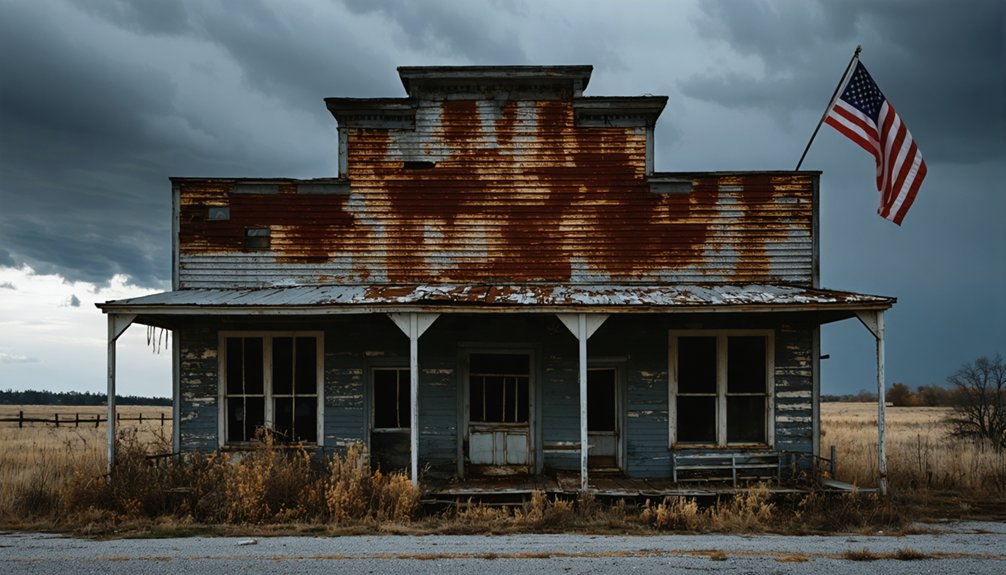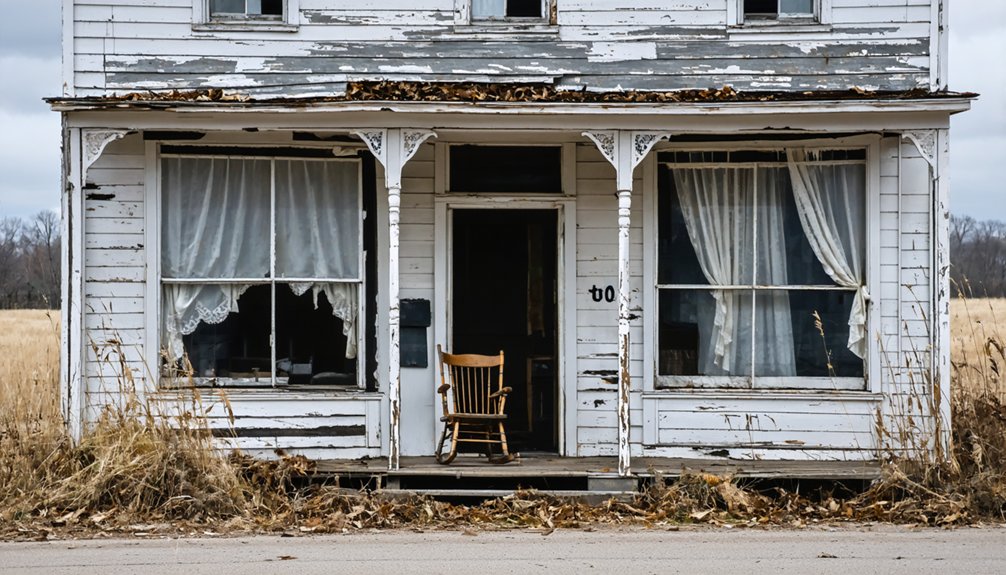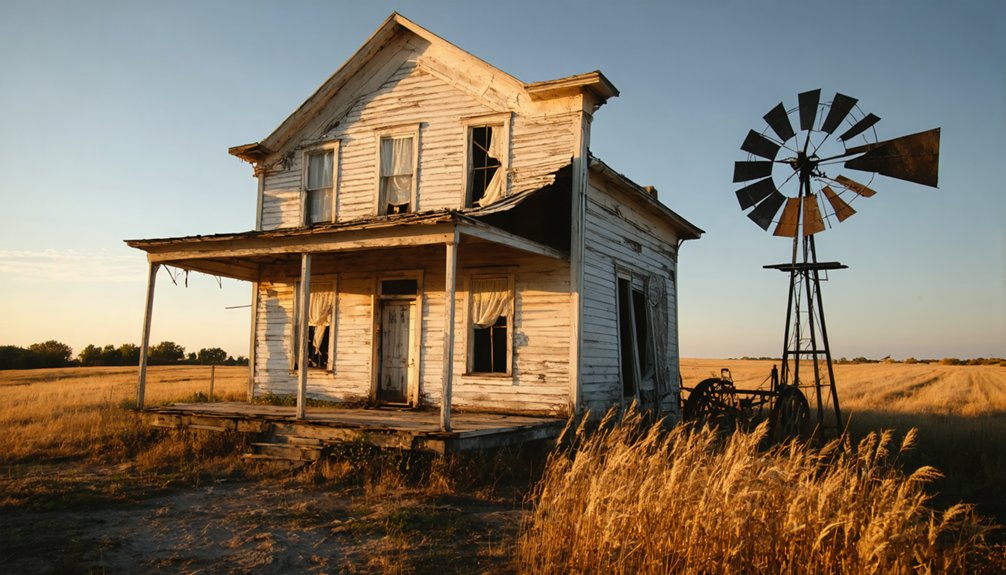
When you visit a Midwest ghost town, you’ll encounter haunting whispers created by a perfect storm of natural and historical elements. Wind passing through abandoned buildings creates eerie acoustics, while temperature inversions and curved architecture amplify these sounds to match human speech frequencies. These unsettling effects are intensified by the towns’ tragic histories of resource depletion, economic collapse, and traumatic events. The deeper you explore these silent streets, the more their ghostly secrets reveal themselves.
Key Takeaways
- Wind passing through deteriorating buildings creates natural whisper-like sounds, amplified by unique architectural features and materials.
- Temperature inversions and strong prairie winds transform abandoned structures into acoustic amplifiers across open Midwest landscapes.
- Historical traumas and violent events embedded in local folklore contribute to perceived ghostly whispers and supernatural phenomena.
- Building materials like stone and mortar create perfect conditions for long-lasting echoes and standing waves that mimic human voices.
- Curved walls and high ceilings in abandoned structures enhance frequency resonance, particularly matching human speech patterns.
The Origins of Abandoned Midwest Settlements
While many Midwest ghost towns share similar fates today, their origins reveal diverse stories of ambition and opportunity in America’s heartland.
You’ll find settlement patterns driven by the rush to exploit natural resources – from copper mines in Michigan to vast timber forests in Wisconsin. During the late 1800s, you’d see towns spring up overnight around salt deposits in Illinois or at strategic railroad junctions.
Some settlements emerged as frontier havens in unorganized territories, like Beer City in Oklahoma’s “No Man’s Land,” where outlaws and bootleggers thrived beyond state jurisdiction. The lawless town attracted countless visitors with its saloons and brothels, catering to cowboys waiting for cattle transport.
Beyond law’s reach, frontier towns like Beer City became sanctuaries for outlaws in the untamed territories of early America.
Others grew around mining camps or health resorts, catering to specific populations. Resource exploitation shaped these towns’ destinies – whether through the boom of timber harvesting, the promise of mineral wealth, or the strategic positioning along crucial transportation routes. When the salt deposits were exhausted, many Illinois towns faced inevitable decline and abandonment.
Natural Forces Behind Ghost Town Whispers
You’ll find that wind passing through abandoned Midwest buildings generates haunting whisper-like sounds through vortex shedding and turbulence around deteriorating structures.
The unique shapes and materials of these dilapidated buildings act as natural amplifiers, while temperature inversions common to the region can bend sound waves in unexpected ways. These ghost towns emerged when families were forced to abandon their homes as black blizzards ravaged the agricultural plains in the 1930s.
As temperatures fluctuate, the expansion and contraction of old wooden beams and metal fixtures create additional creaks and groans that blend with the wind-generated acoustics. Many of these eerie sounds echo through towns that vanished after lead mines depleted, leaving behind only scattered remnants of once-thriving communities.
Wind Through Empty Buildings
As fierce winds sweep across the Midwest’s expansive flatlands, they transform abandoned ghost towns into natural amphitheaters of mysterious sounds.
You’ll find whispering winds creating acoustic mysteries as they pass through deteriorating structures, where loose windowpanes, damaged siding, and exposed corridors become instruments of nature.
The region’s unique wind patterns, enhanced by vast open croplands and lack of hills, generate powerful air currents that find their way into every crack and crevice.
When these winds encounter narrow passages, broken windows, and weathered roofs, they create haunting whispers through pressure changes and turbulent airflow. Modern wind engineers study these erratic wind patterns in urban environments to better understand how buildings respond to such forces.
Derechos, occurring every couple of years, further damage these buildings, leaving behind more gaps and loose materials that amplify these ethereal sounds. During the devastating 2020 derecho, winds reaching 140 mph peak gusts tore through buildings, creating new pathways for ghostly acoustics.
Temperature Affects Old Structures
Beyond the whistling winds, temperature fluctuations create their own ghostly symphony in abandoned Midwest structures.
Similar to how vacant lots raise temperatures by up to 20 degrees in Houston’s neighborhoods, these abandoned buildings contribute to local heat variations.
You’ll notice these sounds intensify as thermal changes affect both above-ground materials and underground foundations. Temperature variations of up to 25°C warmer than natural ground temperatures near basements create subtle yet persistent deformation in these aging buildings.
- Heat retention from nearby urban infrastructure stresses fine-grained soils, causing foundations to settle and shift.
- Daily temperature swings force building materials to expand and contract, creating whisper-like sounds.
- Concrete structures store thermal energy longer, while wooden buildings respond quickly to temperature changes.
Without modern HVAC systems, these abandoned structures are particularly vulnerable to temperature’s effects on structural integrity, especially during the Midwest’s increasingly extreme weather patterns. With predictions showing an extreme heat belt emerging in the Midwest within 30 years, these structural vulnerabilities will only worsen.
Historical Events That Shaped the Haunting Sounds
While many ghost towns emerged naturally through economic decline, specific historical events dramatically accelerated their abandonment and shaped the haunting phenomena reported today.
You’ll find that violent conflicts, like Marshal Bush’s murder in Beer City, left lasting ghostly echoes throughout frontier settlements.
In riverside towns, you’ll discover how steamboat struggles at treacherous rapids created economic hubs that later succumbed to devastating floods. Similarly, towns like Bodie thrived with seventy bustling saloons before falling silent to abandonment.
The historical hauntings in mining communities like Pactola emerged from sudden economic collapse when mineral resources ran dry. Many report hearing echoes similar to those at Missouri State Penitentiary, where paranormal activity includes mysterious voices and footsteps.
Natural disasters dealt the final blow to many settlements – from the 1862 flood that forced Harrisville’s relocation to the Dust Bowl that decimated farming towns like Ardmore.
These traumatic events created the perfect conditions for the mysterious sounds that still echo through these abandoned places.
Cultural Folklore and Supernatural Beliefs
Through generations of settlement and conflict, the Midwest’s ghost towns have accumulated rich layers of supernatural folklore shaped by Native American spirituality, colonial beliefs, and tragic historical events.
The haunted history of midwest ghost towns serves as a testament to the past, drawing curious visitors eager to uncover the secrets these abandoned places hold. Each dilapidated structure whispers stories of those who once thrived there, intertwining the lives that are long gone with the legends that persist today. Exploring these ghost towns reveals not only the challenges of survival in a bygone era but also the enduring allure of the mysteries that linger in their shadows.
These cultural narratives blend indigenous traditions with European influences, creating uniquely American supernatural stories of profound cultural significance.
- Native American spiritual beliefs established certain locations as supernaturally charged before European arrival, particularly along waterways where unexplained lights and voices persist.
- Colonial-era Latin inscriptions and esoteric practices merged with indigenous folklore, creating hybrid supernatural narratives that survive in places like Almont’s Demon Tree cemetery.
- Violent historical events, from frontier conflicts to unsolved murders, have embedded themselves into local folklore, with specific types of deaths correlating to distinct paranormal manifestations.
Economic Factors Leading to Silent Streets
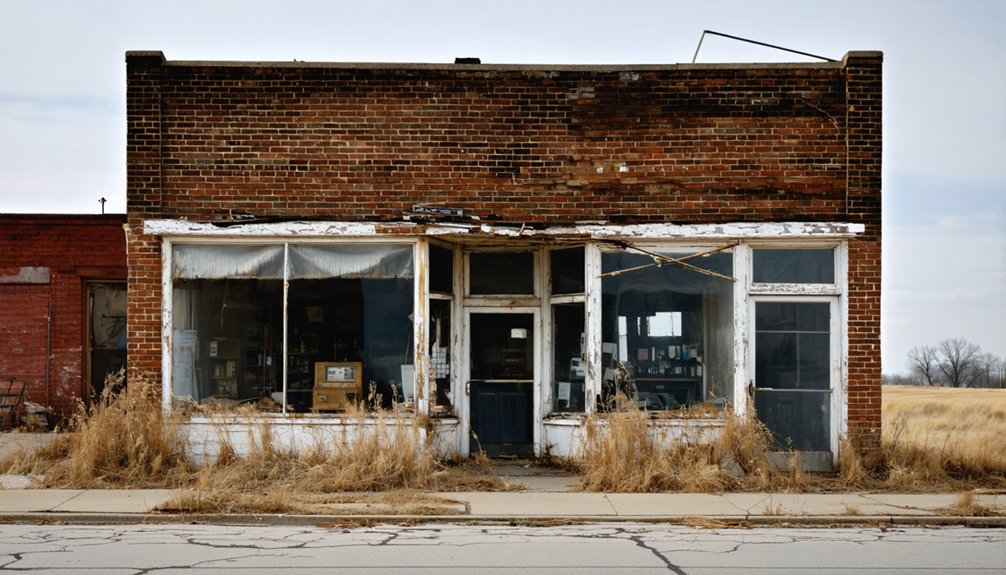
Inside countless Midwest towns, the slow march of economic forces transformed once-bustling communities into silent streets and vacant buildings.
You’ll find their stories rooted in depleted natural resources – exhausted copper mines, cleared forests, and dried-up salt deposits that once fueled local economies. When these industries collapsed, towns couldn’t recover.
The death knell often came from multiple directions. New highways and rerouted railroads bypassed once-essential trading posts. Farm mechanization eliminated jobs, while agricultural consolidation emptied rural communities. Global competition crushed local manufacturers, sending steel mills and factories into permanent closure.
Each economic collapse triggered a devastating cycle – businesses shuttered, workers left, and housing values plummeted. Without economic diversification, these towns faced unstoppable population decline, leaving behind only echoes of their former significance.
The Science of Sound in Deserted Buildings
As you step into abandoned Midwest buildings, their haunting acoustics reveal fascinating scientific phenomena.
Sound reflections bounce endlessly off weathered stone walls and empty corridors, creating standing waves that amplify whispers in unexpected ways. The acoustic geometry of these spaces transforms ordinary sounds into auditory illusions, making voices seem to come from everywhere at once.
Here’s what’s creating these ghostly effects:
- Hard surfaces like stone and mortar reflect sound waves multiple times, producing long-lasting echoes.
- Curved walls and high ceilings focus frequency resonance, creating “sweet spots” where whispers dramatically amplify.
- The building’s natural spectral acoustics match human speech frequencies, carrying voices unusually far.
These psychoacoustic effects can alter your perception, making it difficult to judge sound direction and distance – a demonstration of the complex physics at work in these silent structures.
Local Legends and Oral Traditions

While Native American tribes first shared supernatural tales across the Midwest, European settlers later contributed their own haunting stories, creating a rich tapestry of regional folklore that persists today.
You’ll find these ghost narratives deeply rooted in tragic events, like the 1912 Villisca axe murders or the Legend of Black Annie in Boonville. Each tale carries specific rituals – from calling Lucinda’s name three times at Stony Hollow Cliff to exploring Nebraska’s infamous Hatchet House.
Local folklore often centers on landmarks where communities gather to share and preserve these stories through annual events and ghost tours. The tales evolve as each generation adds its own interpretations, yet they maintain core elements that reflect historical traumas, societal fears, and cultural shifts that have shaped the Midwest’s supernatural identity.
Psychological Impact of Empty Towns
Beyond the supernatural tales that haunt these forgotten places, the psychological toll of ghost towns leaves deep scars on those who remain.
You’ll witness psychological decay unfold as vacant buildings and crumbling infrastructure trigger depression, anxiety, and chronic stress in residents. The pervasive sense of social isolation intensifies as community bonds dissolve and fear keeps people indoors.
- Your mental health risks increase by 41.5% when surrounded by abandonment, though greening initiatives can reverse these effects.
- You’ll face heightened vigilance and safety concerns, as vacant properties often attract criminal activity.
- Your children become especially vulnerable, as exposure to these disordered environments can impact their neurological development.
The emptiness breeds a cycle of withdrawal, where remaining residents struggle with diminished pride and connection to their once-vibrant community.
Tourism and Modern-Day Ghost Stories
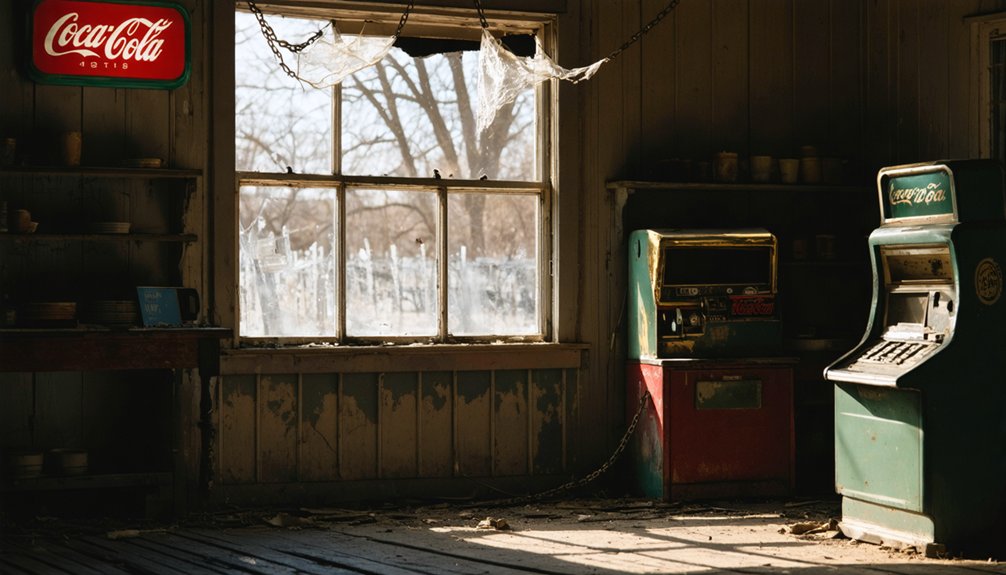
Despite their haunting emptiness, Midwest ghost towns have transformed into thriving tourism destinations that capitalize on both historical significance and paranormal intrigue.
You’ll find ghost tours and paranormal investigations at locations like the Villisca Axe Murder House in Iowa and Anoka State Hospital in Minnesota, where visitors report encounters with apparitions and unexplained voices.
These haunted destinations peak during Halloween season, drawing tourists who seek both historical knowledge and supernatural experiences.
Halloween transforms historic haunts into paranormal hotspots, where visitors chase both echoes of the past and whispers from beyond.
You can explore preserved buildings, join guided investigations, or even spend the night in haunted hotels.
Social media and YouTube channels have amplified interest in these locations, while tourism websites help you plan self-guided adventures.
Local economies now benefit from this blend of heritage tourism and paranormal curiosity, though they must carefully balance preservation with accessibility.
Preservation Efforts and Acoustic Environments
The preservation of Midwest ghost towns demands a complex interplay of structural stabilization and sound conservation. Through modern preservation techniques and acoustic analysis, you’ll discover how these sites maintain their haunting whispers while protecting their historical integrity.
Local communities, government agencies, and volunteers work together to safeguard these atmospheric ruins.
Here’s what makes these ghost towns acoustically unique:
- Wind-generated whispers flow through broken windows and empty streets, creating natural sound chambers.
- Sparse vegetation and minimal urban noise allow sounds to travel unusually far.
- Geological features like valleys and riverbeds amplify and channel these ethereal sounds.
You’ll find that preservation efforts actually enhance these acoustic properties while protecting the structures. As teams stabilize walls and manage vegetation, they’re inadvertently preserving the ghost towns’ signature soundscapes that draw visitors from across the country.
Frequently Asked Questions
Can Ghost Town Whispers Be Recorded on Modern Audio Equipment?
You can capture ghost town whispers using modern audio technology, which detects subtle sound frequencies. Digital recorders, while controversial, pick up EVPs that weren’t audible during recording sessions.
Do Whispers Occur More Frequently During Specific Weather Conditions or Seasons?
You’ll notice whispers peak during winter’s cold snaps and spring’s damp conditions. Weather influences like temperature drops, high humidity, and storm fronts create distinct seasonal patterns of increased paranormal activity.
Have Any Scientific Studies Measured the Frequency of Whispers in Abandoned Towns?
You won’t find any scientific studies with reliable acoustic analysis measuring ghost town whispers. Historical documentation exists only through anecdotal reports, without controlled measurements or peer-reviewed research validating their frequency.
What Percentage of Reported Whispers Correlate With Documented Historical Deaths?
You won’t find an exact percentage since whisper documentation remains inconsistent, but research suggests a notable historical connection between reported whispers and death records, particularly in areas that experienced tragic events.
Do Restored Ghost Towns Experience Fewer Whisper Phenomena Than Unrestored Ones?
You’ll find considerably fewer whisper reports in restored ghost towns due to their regular maintenance and structural repairs. Ghost town restoration impact directly reduces environmental factors that people often misinterpret as paranormal phenomena.
References
- https://pbswisconsin.org/news-item/southern-wisconsins-ghost-towns-leave-behind-vital-stories/
- https://www.geotab.com/ghost-towns/
- https://247wallst.com/special-report/2023/07/11/americas-modern-ghost-towns/
- https://www.loveexploring.com/gallerylist/188219/the-us-state-with-the-most-ghost-towns-revealed
- https://www.youtube.com/watch?v=lfj6aeZEVJY
- https://www.lovemoney.com/gallerylist/86648/americas-empty-ghost-towns-and-why-theyre-abandoned-today
- https://en.wikipedia.org/wiki/Lists_of_ghost_towns_in_the_United_States
- https://www.atlasobscura.com/lists/abandoned-places-midwest
- https://battlegroundhistory.com/american-midwest/
- https://www.youtube.com/watch?v=YeBOGdi1LH0