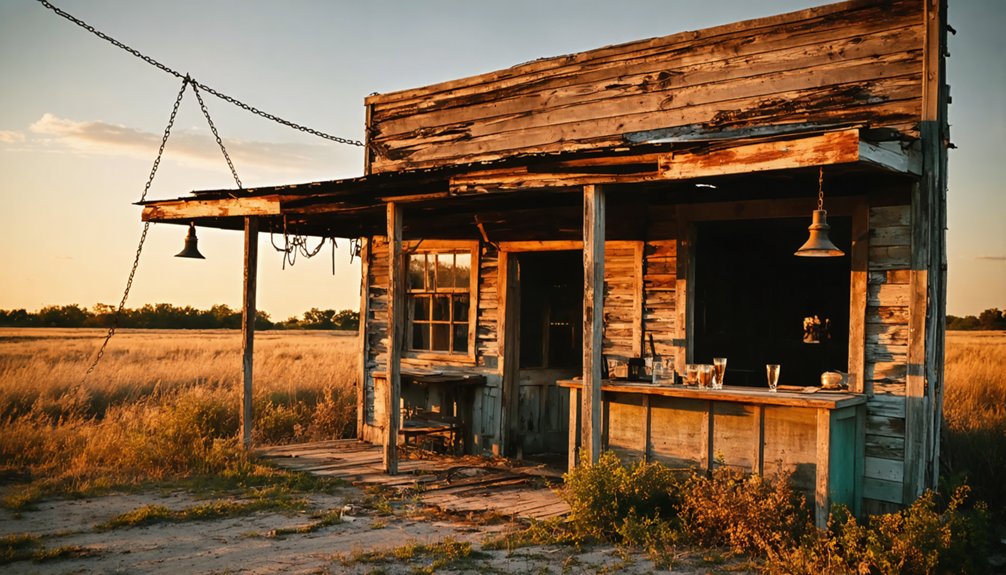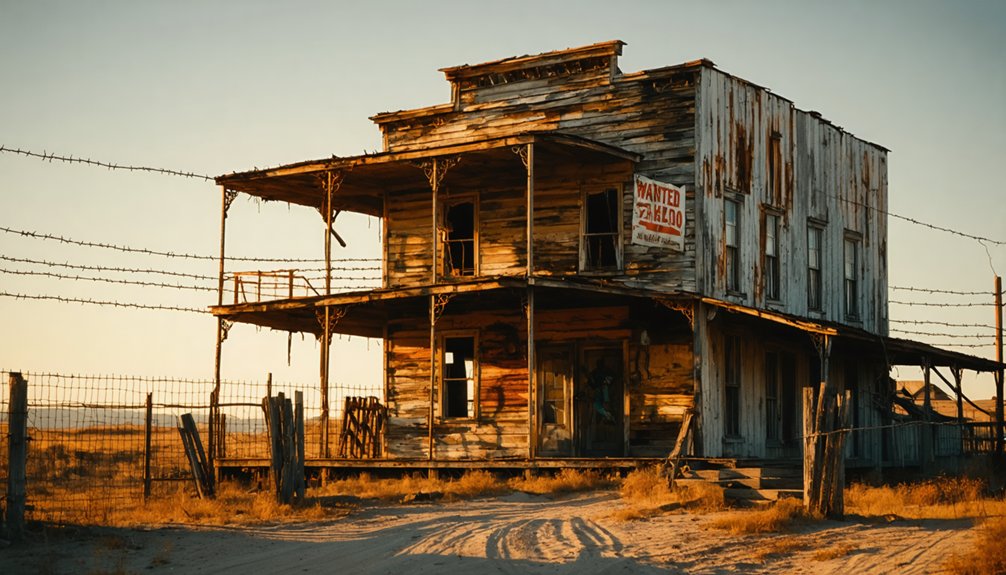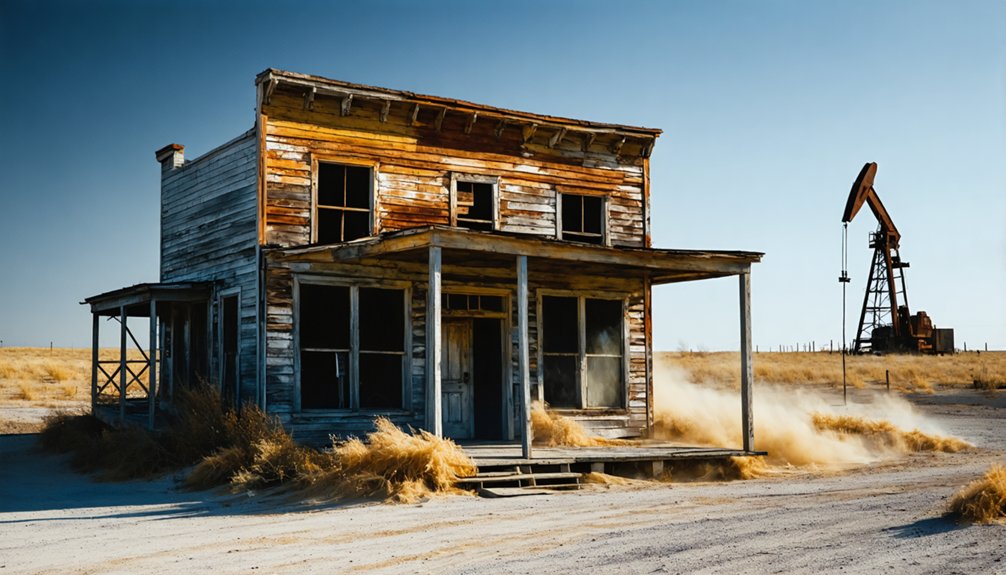
Texas ghost towns became deserted due to several interconnected factors you’d recognize from boom-and-bust cycles. Many communities relied heavily on single industries like mining or agriculture, making them vulnerable when those sectors declined. Natural disasters, particularly hurricanes along the coast and severe droughts inland, forced mass evacuations. Towns also died when bypassed by railroads and highways, while others disappeared under reservoir waters. The stories behind these abandoned places reveal fascinating patterns of rise and fall.
Key Takeaways
- Natural disasters, particularly hurricanes and severe droughts, forced communities to abandon their homes and businesses permanently.
- Economic dependence on single industries like mining or agriculture left towns vulnerable when resources depleted or markets changed.
- Towns bypassed by evolving transportation networks, including railroads and highways, lost vital economic connections and declined.
- Dam construction and lake creation submerged entire communities, forcing relocation through eminent domain acquisitions.
- Loss of essential services like schools, medical facilities, and post offices triggered population exodus, especially among younger residents.
The Rise and Fall of Single-Industry Towns
As the American frontier expanded westward in the late 1800s, Texas saw the rapid emergence of towns built entirely around single industries like mining, agriculture, and railroads.
You’d find places like Thurber, where coal mining operations attracted diverse workers seeking economic opportunities. These company towns quickly developed essential infrastructure – post offices, schools, churches, and businesses to support their growing populations.
Company towns like Thurber sprang up across Texas, building vital community services to support waves of workers drawn to mining opportunities.
But these towns’ fortunes were tied directly to their primary industry. When coal mines depleted, crops failed, or railroads changed routes, communities crumbled. Texas now has 511 ghost towns, more than any other state in America.
Labor relations often deteriorated as industries declined, leading to strikes and wage cuts. Towns like Shafter and Helena discovered their vulnerability when their economic foundations collapsed.
One by one, services disappeared, businesses closed, and residents moved away, leaving behind empty buildings as evidence of their brief but vibrant existence. Today, many communities in the High Plains region continue to lose residents as agricultural challenges and infrastructure losses push people toward urban areas.
Natural Disasters and Environmental Impact
You’ll find that Texas ghost towns often met their fate through nature’s devastating forces, from the hurricanes that destroyed prosperous Indianola in the 1870s and 1880s to the severe droughts that emptied places like Lobo and Barstow when their water sources failed.
The construction of Lake Texoma in 1944 submerged entire communities, including Preston and Hagerman, transforming populated areas into underwater ruins that occasionally resurface during dry spells.
Many communities were established during resource booms and quickly collapsed when natural conditions changed.
The mining town of Terlingua saw its population plummet from 2,000 peak residents to around 50 today, showcasing how environmental pressures can decimate local communities.
These environmental challenges, whether natural or human-engineered, permanently altered Texas’s landscape and forced the abandonment of once-thriving settlements, leaving only memories and scattered remnants behind.
Devastating Gulf Coast Hurricanes
Since the mid-1800s, the Texas Gulf Coast has endured relentless battering from devastating hurricanes, with over 60 making landfall and more than 25 qualifying as major storms of Category 3 or higher.
You’ll find evidence of hurricane devastation in the numerous towns that couldn’t survive nature’s fury, from the catastrophic 1900 Galveston hurricane that killed 8,000 people to Hurricane Harvey’s $125 billion destruction in 2017.
The impact of these storms has transformed thriving coastal communities into ghost towns through repeated flooding, coastal erosion, and infrastructure collapse.
When you consider that a major hurricane strikes the Texas coast every six years on average, you’ll understand why many towns couldn’t sustain themselves. Notable examples include the town of Indianola, where three-fourths of buildings were destroyed in the devastating hurricane of 1875.
Storm surges up to 15 feet, 175 mph winds, and widespread tornado outbreaks have forced countless residents to abandon their coastal homes permanently. Climate experts predict above-average activity for the 2025 Atlantic hurricane season, with up to 19 named storms expected.
Persistent Drought Effects
While hurricanes ravaged Texas’s coastal regions, persistent drought has transformed its inland communities into ghost towns through decades of water scarcity.
You’ll find the starkest evidence in Central Texas, where the 2010-2014 drought surpassed even the notorious 1950s drought in severity. Lakes like Belton and Buchanan dropped to record lows, revealing the ghostly remains of towns that were deliberately flooded to create reservoirs. In fact, when Belton Lake was constructed in the 1950s, several farming communities were submerged.
Despite water conservation initiatives, many ranchers couldn’t maintain their herds as wells dried up and forage became scarce. Texas has experienced a dramatic transformation with 511 ghost towns now completely abandoned across the state. The Edwards Plateau suffered particularly harsh impacts, where drought resilience strategies proved insufficient against multi-year water shortages.
You can now witness the foundations, roadways, and graveyards of these abandoned communities whenever reservoir levels fall, proof of nature’s power to reshape human settlements.
Flooding From Dam Construction
More than 200 human-made lakes across Texas permanently transformed the state’s landscape during the mid-20th century, submerging entire communities beneath their waters.
As dam construction projects like Toledo Bend and Lake Buchanan expanded, you’d find towns like Fairdale and Bluffton forced to relocate through eminent domain acquisitions.
The dam impacts reached far beyond physical displacement – they erased generations of community identity, submerging family cemeteries, historical landmarks, and archaeological sites.
While residents received compensation for their land, they lost irreplaceable cultural connections and traditions. Former residents like A.A. McGraw received 125 dollars per acre for their properties. Construction of the 145.5-foot-tall Buchanan Dam permanently altered the landscape and community between 1931 and 1937.
During severe droughts, you can occasionally glimpse these underwater ghost towns when lake levels drop, revealing old roads, building foundations, and gravesites.
These remnants stand as stark reminders of the sacrifices made for flood control and hydroelectric power.
Shifting Transportation Routes and Economic Isolation
As transportation networks evolved across Texas in the mid-1800s, the survival of towns often hinged on their ability to maintain essential trade routes and connections.
The rise or fall of Texas frontier settlements depended heavily on securing vital trade routes during the state’s early transportation era.
You’ll find that stage lines initially connected remote settlements to ports and cities, creating crucial economic lifelines for small communities.
When railroads emerged, they dramatically altered this transportation evolution, forcing towns to compete for railway access or face isolation.
Towns that couldn’t secure railroad connections often withered, while others later suffered when highways became the dominant transport mode.
You can see this pattern in places like Sherwood, which lost its population after being bypassed by the railroad in 1911, and Indianola, which declined after Highway 36’s rerouting.
This economic dependency on transportation routes proved detrimental for communities that couldn’t adapt to changing networks.
Population Exodus and Demographic Changes
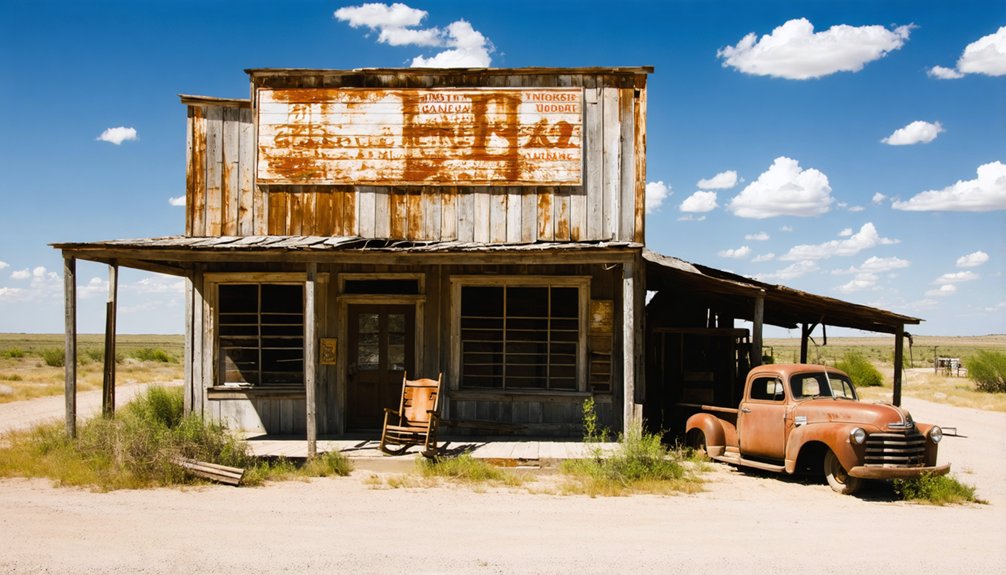
Since the mid-20th century, Texas ghost towns have faced a persistent demographic crisis marked by declining birth rates and widespread out-migration.
You’ll find rural counties experiencing more deaths than births, while younger residents steadily relocate to urban centers along Interstate 35, drawn by opportunities in Dallas, Houston, Austin, and San Antonio.
Population migration has reshaped these communities dramatically, as aging demographics take their toll.
You’re seeing ranching families’ heirs selling ancestral lands and moving east, while small towns struggle with dwindling school enrollments and reduced services.
The economic vulnerability of oil, gas, and agricultural industries has accelerated this exodus.
When essential community members depart, they leave behind weakened tax bases and isolated elderly populations, creating a cycle that’s difficult to reverse in these once-thriving rural areas.
Loss of Essential Community Services
You’ll find that as essential services vanished from Texas ghost towns, the closure of schools left families with no choice but to relocate for their children’s education.
The loss of medical facilities and doctors meant residents had to travel long distances for basic healthcare, making it especially difficult for elderly community members to remain.
When post offices shut down, towns lost not only their mail service but also their central gathering places where citizens had traditionally exchanged news and maintained social connections.
School Closures Impact Communities
When schools close their doors in rural Texas communities, they take with them far more than just classrooms and textbooks.
You’ll witness the rapid unraveling of your town’s economic and social fabric as these essential institutions shut down. Without adequate school funding, local jobs vanish, forcing families to relocate in search of better education quality for their children.
The impact ripples through your community like a shockwave. Local businesses that once thrived on school traffic begin to fail.
You’ll see your neighbors’ children enduring lengthy commutes to distant schools, missing out on sports and after-school activities. The changes hit minority and low-income families particularly hard, as they often lack resources to relocate.
Your community gathering spaces disappear, social bonds weaken, and the heart of your town slowly fades away.
Healthcare Access Disappears
As rural healthcare facilities vanish across Texas, residents face increasingly dire challenges accessing medical care.
You’ll find over 60 counties without hospitals and 25 lacking primary care physicians, creating severe healthcare shortages throughout ghost towns and rural communities.
When you need emergency care, you might face drives up to 90 minutes, while specialty treatment could require even longer journeys.
These access barriers hit hardest if you’re elderly, uninsured, or can’t afford transportation.
When local hospitals close or cut services like labor and delivery units, you’re forced to travel farther for basic care.
The closures create a domino effect – without adequate healthcare facilities, communities struggle to retain doctors and medical staff, leading to inconsistent care and further facility shutdowns.
Post Offices Shut Down
The closure of local post offices dealt another significant blow to Texas ghost towns, following the pattern of vanishing healthcare facilities. Throughout the late 1800s and early 1900s, post offices served as crucial community hubs, symbolizing a town’s viability and connection to the outside world.
When these essential institutions began shutting down, you’d witness the beginning of community decline as both residents and businesses struggled to maintain their operations without reliable communication services.
- Post offices acted as more than mail centers – they were meeting places and commerce hubs
- Closures typically followed economic downturns and population loss
- Without postal services, businesses couldn’t operate effectively and new settlers avoided these areas
- The Great Depression accelerated post office shutdowns, hastening the transformation of vibrant communities into ghost towns
Geographic Factors in Town Abandonment
Throughout Texas history, geographic factors played a decisive role in determining which towns would thrive and which would fade into obscurity.
You’ll find that when key transportation infrastructure bypassed towns like Gomez, they quickly lost crucial economic connections. Communities reliant on single transportation hubs became especially vulnerable when routes shifted elsewhere.
Natural resource management proved equally critical to survival. When oil wells dried up or mines depleted, boom towns went bust.
You’ll see this pattern repeated across Texas, where agricultural communities struggled against water scarcity and devastating droughts. The Dust Bowl of the 1930s forced many farming towns into abandonment, while coastal settlements like Indianola succumbed to hurricanes.
Geographic isolation also meant limited access to essential services, compelling residents to relocate to better-connected areas near urban hubs.
Frequently Asked Questions
Can Ghost Towns in Texas Be Legally Purchased and Revitalized?
You can legally purchase and revitalize Texas ghost towns through tax foreclosures, adverse possession, or direct purchase. Start ghost town investments by securing clear titles, then launch revitalization projects following municipal regulations.
How Many People Typically Remain in Texas Ghost Towns Today?
Like fading footprints in time’s sands, you’ll find Texas ghost towns today typically house between 12-200 residents, with some maintaining historical significance despite dramatic population decline over decades.
these remnants of the past often serve as vital links to understanding local history and community evolution. the significance of preserved ghost towns lies in their ability to showcase architectural styles, cultural traditions, and the stories of those who once called them home. as these towns endure, they become museums of human experience, inviting exploration and reflection.
Do Any Texas Ghost Towns Host Seasonal Festivals or Tourist Events?
You’ll find vibrant seasonal celebrations in Texas ghost towns like Terlingua’s November mining event, Jefferson’s May battle reenactments, Helena’s Victorian tea parties, and Marfa’s fall lights festival, maximizing tourism potential.
What Happens to Property Titles and Ownership in Abandoned Texas Towns?
Like sleeping giants, property titles remain with original owners unless challenged. You’ll face property disputes through adverse possession claims or title transfers if you occupy abandoned land for 10+ years.
Are There Any Successful Examples of Texas Ghost Towns Becoming Inhabited Again?
You’ll find Terlingua’s the strongest success story, transforming from abandonment to 267 residents through community involvement and tourism, despite revitalization challenges. Lobo and Indian Gap show smaller-scale comebacks through cultural preservation.
References
- https://www.amysatticss.com/ghost-towns/
- https://www.texastribune.org/2024/11/14/texas-population-changes-rural-urban/
- https://texashighways.com/travel-news/four-texas-ghost-towns/
- https://www.youtube.com/watch?v=xFKjMfg_jTo
- https://www.chron.com/life/travel/article/ghost-towns-texas-21221278.php
- https://www.county.org/county-magazine-articles/summer-2025/ghost-towns
- https://en.wikipedia.org/wiki/List_of_ghost_towns_in_Texas
- https://mix931fm.com/texas-ghost-towns-history/
- https://www.texasstandard.org/stories/texas-population-boom-ghost-towns-rural-urban-suburban-shift/
- https://www.youtube.com/watch?v=phjUE19A8HM