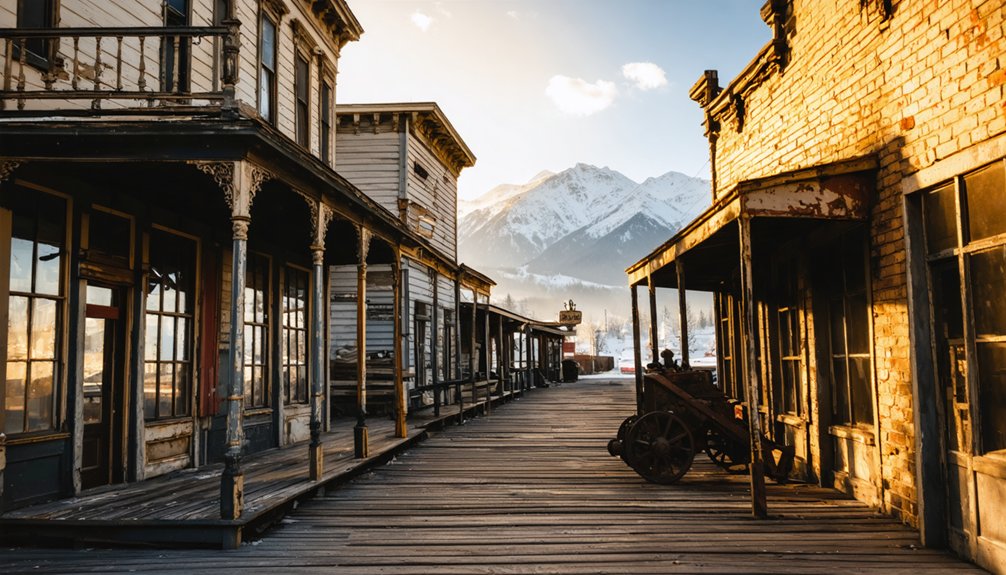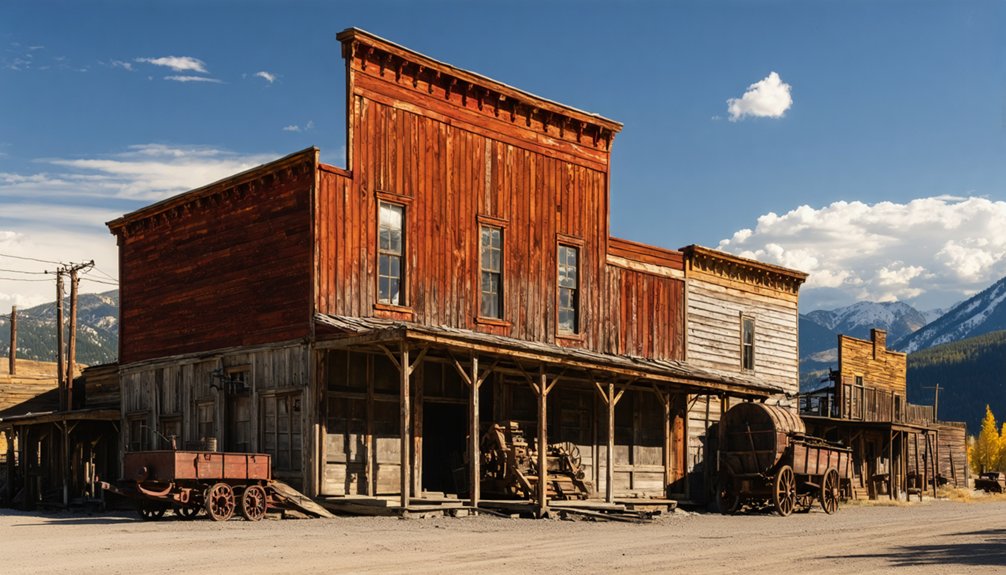
You’ll step into Australia’s transformative gold rush era through Victoria’s remarkably preserved 19th-century mining towns. These authentic sites showcase innovative technologies, from steam-powered machinery to intricate ore processing equipment, while offering hands-on experiences like gold panning demonstrations. The fusion of Victorian architecture, dramatic industrial landscapes, and compelling cultural stories reveals how the 1851 discovery of gold shaped modern Australia’s multicultural identity. These heritage treasures hold even more fascinating details beneath the surface.
Key Takeaways
- Experience firsthand the remarkably preserved 19th-century architecture and industrial heritage that shaped Australia’s development through gold mining.
- Explore interactive exhibits with hands-on gold panning demonstrations and underground mine tours showcasing original mining conditions.
- Discover the technological evolution from simple hand tools to sophisticated steam-powered machinery through well-preserved authentic equipment.
- Photograph dramatic industrial landscapes featuring historic machinery, ruins, and natural formations created by mining activities.
- Learn about diverse cultural heritage through Indigenous sites, European influences, and stories of multicultural communities during the gold rush.
Step Back in Time: Living Heritage of the Gold Rush Era
When you explore the Victorian Goldfields of Australia, you’ll discover a remarkably preserved network of 19th-century mining towns that stand as living monuments to the gold rush era.
In historic precincts like Ballarat and Bendigo, you’ll walk along grand boulevards lined with Victorian-era architecture, from miners’ cottages to opulent public buildings. These living history sites offer immersive experiences that connect you directly to the region’s rich past.
You can trace the footsteps of diverse communities who shaped these settlements, from First Peoples to European migrants like German entrepreneur Joseph Reid. The area attracted 8,000 early prospectors within just eleven months of the initial gold discovery.
Through preserved streetscapes, historic hotels, and civic institutions, you’ll witness how mining camps transformed into thriving townships. Each architectural landmark and cultural site tells authentic stories of democratic values, social dynamics, and the spirit of the gold rush society.
With an astounding 1,900,000 kg of gold extracted from the region since 1851, the Victorian Goldfields created immense wealth that shaped Australia’s development.
Exploring Ancient Mining Technologies and Innovation
The remarkable transformation of Victorian mining towns parallels the evolution of their groundbreaking technologies.
As these towns adapted to the changing landscape, they became known as the mysterious mining towns of Victoria, each with its own unique story. The legacies of miners and townsfolk intertwine with the remnants of once-thriving industries, adding to the enigmatic charm of the region. Visitors are often captivated by the ghost towns and striking landscapes that whisper tales of prosperity and hardship.
Victorian mining towns evolved in lockstep with revolutionary technologies, marking an era of unprecedented industrial progress.
You’ll witness the fascinating progression from ancient techniques like hand-digging and panning to sophisticated mechanization evolution that revolutionized the mining industry.
As you explore these historic sites, you’ll discover how steam power, innovative ore processing, and communication advances shaped the Victorian mining landscape.
Visitors can observe the ring-shaped depressions that mark the locations of historic puddling machines throughout Victoria’s goldfields.
The introduction of rock drills in the 1880s enabled miners to cut horizontal blast holes in just one hour instead of ten.
- Experience authentic gold puddling machines that replaced manual clay separation
- Marvel at preserved steam-powered equipment that transformed underground operations
- Examine early stone-breaking machinery and black powder blasting techniques
- View remnants of telegraph systems that connected remote mining communities
- Study the pioneering railway networks that transported ore and supplies
These technological innovations weren’t just about efficiency – they represented the bold spirit of Victorian ingenuity that you can still feel today in these remarkable historic sites.
A Photographer’s Paradise: Capturing Historic Ruins
You’ll find rich photographic opportunities in the interplay of light and shadow as sunbeams pierce through broken walls and weathered mining structures.
Historic machinery, from rusted stamp batteries to towering poppet heads, creates compelling focal points that draw viewers into the frame while telling the story of Victoria’s industrial heritage. The reserve’s staggering yield of 22,000,000 ounces of gold provides a powerful historical backdrop for photographers seeking to capture the scale of industrial ambition.
The contrast between aged metal, splintered timber, and natural elements offers endless compositional possibilities, especially during golden hour when warm light emphasizes surface textures and architectural details. At sites like the Herons Reef Gold Diggings, the remarkably preserved Cornish miners hut offers authentic period architecture for compelling historical photographs.
Dramatic Light Through Ruins
Photographers seeking to capture Victorian mining ruins will discover nature’s most dramatic lighting conditions during late afternoon, when slanting sunbeams pierce through weathered windows and doorways.
These golden rays reveal atmospheric decay while creating ethereal light interplay between shadows and illuminated particles dancing in the air. You’ll find the most compelling shots during the “golden hour” before sunset, when warm light bathes crumbling walls and rusted machinery in rich, dimensional tones. Rule of thirds alignment helps compose these shots effectively against historic structures. Just as in ghost town Kolmanskop, desert sands sweep through abandoned corridors, adding mysterious layers to each composition.
- Use a tripod to steady your camera in low-light conditions
- Frame wide shots first to establish the scene’s mood
- Capture close-up details of textures enhanced by angled light
- Consider black and white conversion to emphasize dramatic contrasts
- Bracket your exposures to preserve both highlight and shadow detail
Composition With Mining Machinery
Beyond the interplay of light and shadow lies a rich tapestry of mechanical forms waiting to be captured through your lens. When composing your shots of Victorian mining machinery, you’ll discover that upright, compact forms create naturally striking vertical compositions.
O’Sullivan’s pioneering work with stereo cameras helped establish effective techniques for capturing mining equipment. Use headstocks and timber framing as structural anchors to guide viewers’ eyes through your frame. To maximize compositional techniques, position yourself to capture the iconic square-set timbering that defines these historic sites.
You’ll find that low-angle perspectives with reflective foreground elements add compelling depth, while tight cropping eliminates distractions and emphasizes machinery aesthetics. Consider incorporating panoramic views to showcase the machinery’s relationship with surrounding landscapes. The Canon G1X Mk3 proves especially useful for capturing detailed in-camera panoramas of mining sites.
For underground shots, you can recreate the dramatic effects Victorian photographers achieved with magnesium flashes, transforming ordinary mechanical components into glistening industrial sculptures.
Educational Trails and Interactive Learning Experiences
When exploring Victorian mining towns, you’ll discover an extensive network of educational trails that bring the region’s rich industrial heritage to life.
Through interpretive signage and guided excursions, you can traverse historical pathways while learning about mining operations, pioneer life, and indigenous cultural connections.
These trails integrate natural conservation with industrial archaeology, offering you authentic insights into the Victorian gold rush era.
- Experience underground mine tours that showcase original mining conditions and technology
- Try hands-on gold panning demonstrations to understand historical extraction methods
- Follow self-guided walks featuring illustrated information boards detailing mining techniques
- Engage with volunteer guides who share compelling stories about mining town life
- Explore Aboriginal cultural sites that reveal pre-mining land use and subsequent impacts
Natural Beauty Meets Industrial History
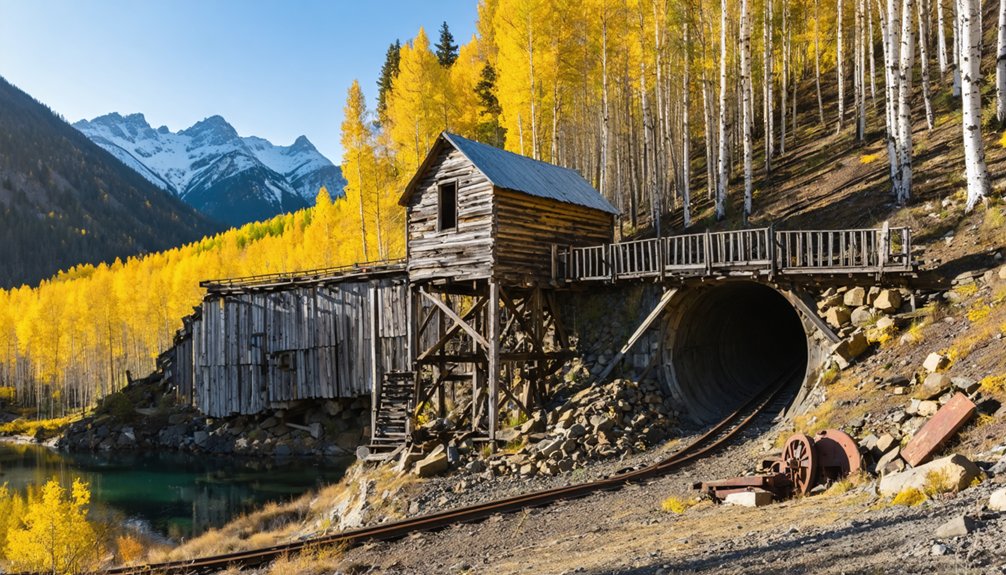
The dramatic fusion of natural landscapes and industrial remnants creates a compelling backdrop across Victoria’s historic mining regions.
You’ll discover vibrant Pink Cliffs and Red Knob, where hydraulic mining has sculpted bold, colorful formations that now serve as natural amphitheaters.
Explore the interplay between rugged volcanic plains and weathered mullock heaps as you traverse walking tracks through Grant Historic Area.
Winding footpaths reveal nature’s reclamation, where ancient volcanic plains meet the remnants of mining’s past at Grant Historic Area.
You can wander through dry forests harboring over 100 native plant species that have reclaimed former mining sites, or pause at scenic lookouts where Mount Tarrengower offers sweeping views of forested hills dotted with mining relics.
The region’s seasonal wetlands and lava caves add natural wonder to these industrial heritage sites, while spring wildflower displays transform abandoned mining areas into vibrant botanical showcases.
Preservation Efforts and Cultural Significance
As generations of Australians recognize the irreplaceable value of their mining heritage, preservation efforts have gained momentum through strategic partnerships between government agencies, Indigenous groups, and local communities.
You’ll discover how cultural preservation initiatives combine community engagement with environmental stewardship, ensuring these historic sites remain authentic while adapting to modern sustainability standards.
Heritage listing provides essential legal protection while enabling access to preservation funding and resources.
- Experience living history through preserved architectural features and mining structures
- Learn from Indigenous perspectives integrated into site interpretation
- Witness active restoration projects that blend cultural heritage with environmental conservation
- Explore documented mining techniques and technological innovations of the Victorian era
- Support local communities actively involved in heritage tourism and preservation projects
Hidden Treasures: Off-the-Beaten-Path Mining Sites
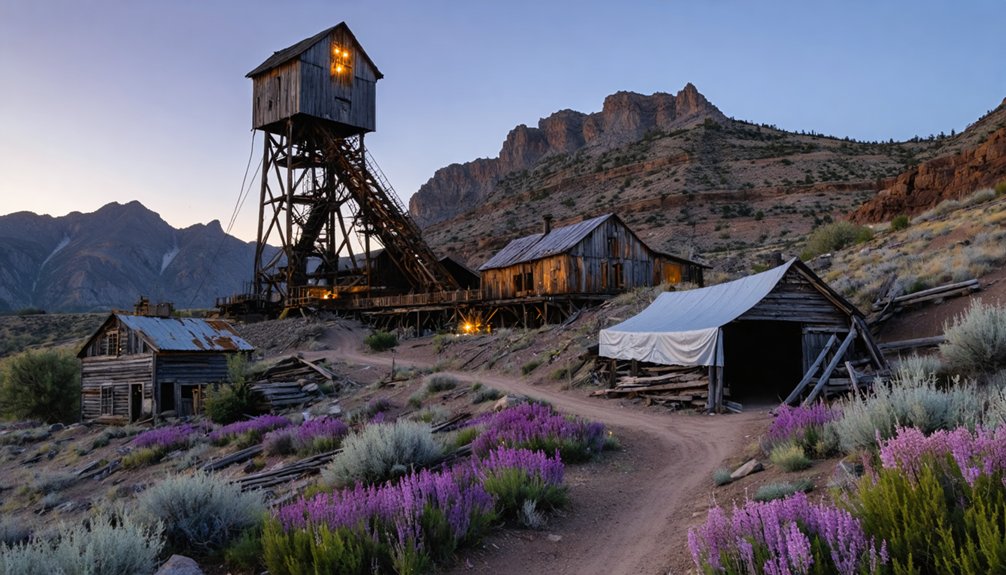
While popular gold rush sites draw crowds, you’ll find remarkable untouched mining heritage at places like Jubilee Mine and Forest Creek Historic Gold Diggings.
These lesser-known locations preserve authentic remnants of Victoria’s mining history, from century-old quartz kilns to extensive networks of water races and sluice channels.
You’re likely to encounter well-preserved battery foundations, cyanide treatment plants, and original mine shafts that offer intimate glimpses into nineteenth-century mining technology and settlement patterns.
Remote Historical Mining Gems
Deep within Victoria’s rugged terrain, remote mining towns and relics offer extraordinary glimpses into Australia’s gold rush heritage.
You’ll discover over 2,400 miles of historic tracks that once connected these isolated communities, leading to remarkably preserved sites of historical significance.
These remote relics include everything from intact quartz mines to original settlement structures, documenting the evolution from simple gold panning to sophisticated deep reef mining operations.
- Explore preserved mining infrastructure like stamp mills and underground shafts
- Examine authentic 19th-century buildings and mining equipment in their original locations
- Investigate archaeological sites yielding artifacts from miners’ daily lives
- Trek along historic prospecting routes mapped in the 1890s
- Visit protected heritage sites containing rare examples of early mining technology
Untouched Goldfields Heritage Spots
Beyond the well-trodden tourist paths, Victoria’s untouched goldfields heritage sites provide rare glimpses into authentic 19th-century mining life.
You’ll discover remarkably preserved ruins like the 1867 Cornish miner’s hut at Herons Reef and the historic Specimen Gully cottage, where Victoria’s first gold discovery sparked a rush in 1851.
During your goldfields exploration, you can venture to the North British Mine’s decaying cyanide tanks and Victoria’s largest surviving quartz kilns near Maldon.
The region’s historical significance is evident in hidden gems like the Garfield Water Wheel’s massive stone supports and the Victorian Ladies Sericultural Company’s stone ruins.
These untouched sites, now part of Australia’s UNESCO World Heritage Tentative List, offer you genuine encounters with mining heritage largely untainted by modern reconstruction.
Impact on Modern Australian Identity and Heritage
Although the Victorian gold rush occurred over 150 years ago, its profound influence continues to shape Australia’s modern identity and cultural heritage.
The legacy of Victoria’s golden age lives on, weaving threads of prosperity and cultural diversity into Australia’s national fabric.
When you explore these historic mining towns, you’ll discover how the integration of over 350,000 immigrants established Australia’s multicultural foundations. You’ll witness firsthand how the democratic values born from events like the Eureka Rebellion still resonate in modern Australian cultural identity.
- Preserved heritage buildings in Ballarat and Bendigo showcase the era’s architectural grandeur
- Former mining sites offer insights into 19th-century technological innovation
- Box-Ironbark forests reveal the interplay between natural regeneration and mining history
- Chinese cultural influences reflect early multicultural dynamics
- Historic town centers demonstrate the evolution from gold wealth to sustainable regional economies
Frequently Asked Questions
Are There Any Dangerous Animals or Snakes Around the Mining Sites?
Like hidden guardians, venomous snakes (especially tigers and browns) lurk around mining sites. You’ll need proper safety precautions during wildlife encounters, but attacks are rare if you’re alert and careful.
Can Visitors Take Small Artifacts or Rocks as Souvenirs?
You can’t remove artifacts due to souvenir regulations and historical preservation laws. You’ll need Heritage Victoria’s consent and proper permits before collecting anything from protected mining sites.
What Is the Best Season to Visit Victorian Mining Sites?
Like setting your GPS for success, you’ll find the best weather during April to September’s cooler months. These times offer ideal seasonal events, comfortable temperatures, and safer conditions for exploring Victorian mining heritage.
Are Ghost Tours Available at Any of These Historic Sites?
You’ll find ghost tours available at Ballarat, Walhalla, and King William’s Town, where expert guides blend ghostly encounters with historical significance through night walks exploring mines, asylums, and cemeteries.
How Accessible Are These Sites for People With Mobility Limitations?
Where there’s a will, there’s a way – you’ll find wheelchair accessibility throughout key areas, with guided tours designed for mobility needs. Paved pathways, seating areas, and adaptive facilities welcome all visitors.
References
- https://www.goldfieldsguide.com.au/blog/138/remarkable-places-in-the-victorian-goldfields
- https://www.australiangeographic.com.au/news/2022/07/a-10-site-tour-of-victorias-goldfields/
- https://www.youtube.com/watch?v=1S6UO0GLZ8w
- https://www.heritage.vic.gov.au/__data/assets/pdf_file/0023/512258/Historic-gold-mining-sites-in-the-St-Andrews-mining-division-Bannear-1999.pdf
- https://www.australiantraveller.com/vic/ghost-towns-in-victoria/
- https://www.parks.vic.gov.au/places-to-see/parks/steiglitz-historic-park
- https://whc.unesco.org/en/tentativelists/6794/
- http://melbourneblogger.blogspot.com/2020/10/unescos-world-heritage-sites-central.html
- https://www.youtube.com/watch?v=1hYE9URsIzs
- https://goldfieldsworldheritage.com.au/the-goldfields/heritage-experiences/