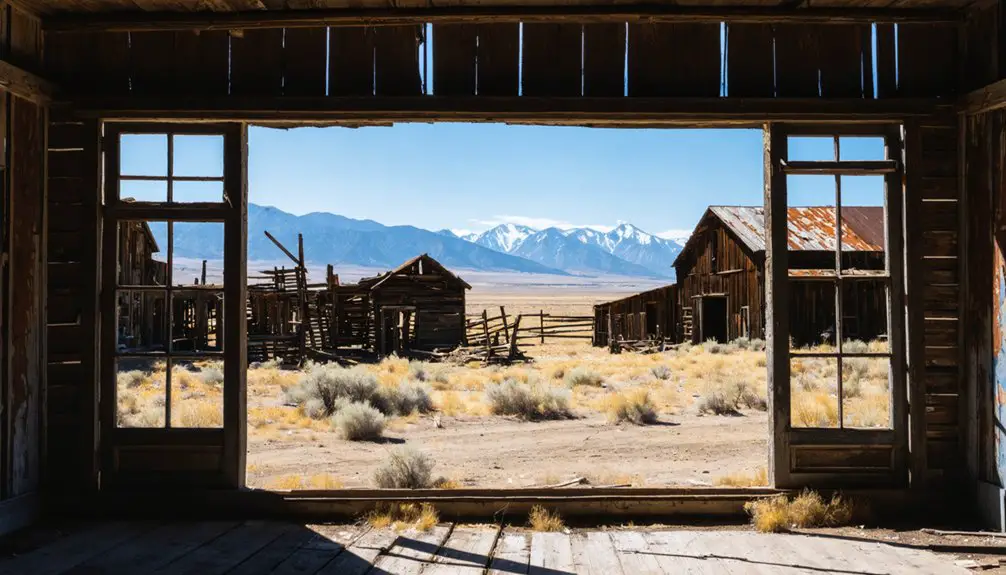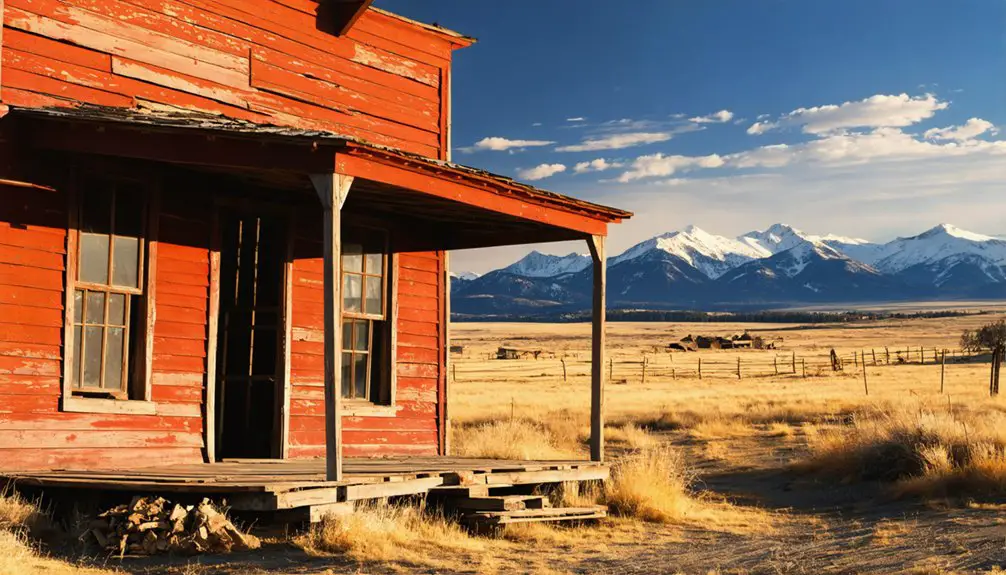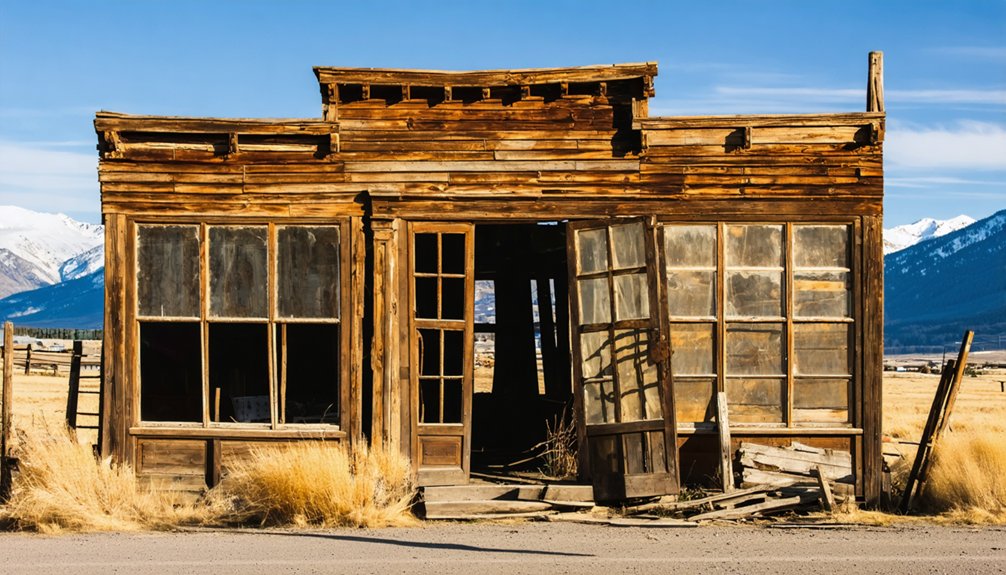
You’ll discover over 130 well-preserved ghost towns across Montana’s diverse landscape, with many dating back to the 1860s gold rush era. Notable sites include Bannack State Park, featuring 60+ original buildings from Montana’s first territorial capital, and Virginia City, which maintains authentic 19th-century storefronts and furnishings. Garnet Ghost Town offers 30 intact structures in a remote mountain setting, while abandoned railroad settlements like Lombard showcase the state’s pioneering transportation heritage. Montana’s ghost towns hold countless untold stories within their weathered walls.
Key Takeaways
- Montana has numerous ghost towns, with Bannack, Virginia City, and Garnet being the most well-preserved 19th-century mining settlements.
- Elkhorn State Park, 45 miles from Helena, features remarkably preserved buildings from Montana’s mining era.
- Eastern Montana contains abandoned railroad towns like Vananda and Moccasin, with preserved storefronts and historic structures.
- Garnet Ghost Town showcases over 20 intact buildings from the 1890s gold rush, including a hotel with original furnishings.
- Bannack State Park preserves over 60 buildings from Montana’s first territorial capital, maintained in a state of “preserved dilapidation.”
Historic Mining Towns Near Helena
While Montana’s capital city of Helena prospered during the late 19th century, several mining towns emerged in its vicinity as prospectors sought their fortunes in the mineral-rich mountains. The city’s wealth was built on Last Chance Gulch, where the original gold discovery sparked Helena’s founding in 1864. This prosperity helped Helena become one of the wealthiest cities per capita in America.
The Unionville history reveals a thriving camp that supported the Whitlatch-Union Mine from 1864 to 1942, with notable placer mining operations in Nelson Gulch.
You’ll discover Marysville just a short drive from Helena, where thousands once lived during its gold rush heyday.
For Elkhorn exploration, venture 45 miles from Helena to find remarkably preserved buildings in what’s now Elkhorn State Park.
Rimini flourished along the Montana Central Railroad until rerouting led to its decline, while Comet, though on private property, stands as a testament to the High Ore Mining District’s legacy from 1869.
Bannack and Virginia City: Preserved Heritage Sites
After gold’s discovery along Grasshopper Creek in 1862, Bannack emerged as Montana Territory’s first capital and set the stage for an era of remarkable preservation.
Today, you’ll find over 50 original buildings carefully maintained in a state of “preserved dilapidation,” making Bannack preservation efforts among the most successful in the American West.
Bannack’s remarkable preservation captures the authentic spirit of the American frontier through its carefully maintained historic structures.
The historic Hendricks/Apex Mill, built in 1918, stands as one of only two intact mills open to the public in Montana.
Population grew from just 400 people to over 3,000 residents in less than a year during the gold rush peak.
Just 45 miles north, Virginia City history parallels Bannack’s gold rush legacy.
When miners discovered richer deposits in Alder Gulch, they sparked Virginia City’s rise and Bannack’s decline.
Both towns tell compelling stories of frontier justice, with Henry Plummer’s outlaw gang terrorizing the region until vigilantes took action.
While Virginia City maintains a blend of past and present, Bannack stands frozen in time, offering you an authentic glimpse into Montana’s mining heritage.
Exploring Eastern Montana’s Abandoned Settlements
As you travel eastern Montana’s remote backroads, you’ll encounter abandoned railroad towns like Vananda and Moccasin, where preserved storefronts and schoolhouses stand as silent witnesses to the region’s railroad heritage. The historic town of Virgelle, established in 1912, offers visitors a chance to experience homesteader cabin lodging.
Many of these sites, including former farming communities like Square Butte and Hammond, feature accessible ruins that showcase early 20th-century architectural elements through their remaining foundations and weathered structures.
When visiting these historical locations, you’ll need to respect private property boundaries and obtain necessary permissions, as several sites like Castle Town and Comet maintain restricted access despite their visible roadside remnants. You can also explore Diamond City’s remains, which include several satellite communities like El Dorado, Boulder, Jim Town, and Cement Gulch City.
Remote Railroad Town Ruins
Throughout eastern Montana’s vast landscape, abandoned railroad settlements stand as silent monuments to the region’s pioneering spirit and subsequent decline.
You’ll find remnants of this railroad history in places like Lombard and Thurlo, where Milwaukee Road’s 1980 abandonment left 669 miles of empty tracks from Terry to the Idaho border.
The once-bustling Ingamar, established in 1908, grew to 46 businesses before a devastating 1921 fire, while Silver City’s ruins trace back to 1864 along the defunct Helena-Great Falls line.
The Montana Central Railway consolidated these routes into the Great Northern Railway network in 1889, forever changing the region’s transportation landscape.
Town restoration efforts have preserved some structures, like Ingamar’s schoolhouse on the National Register of Historic Places.
Virginia City also thrived during this era as it became the territorial capital from 1865 to 1875.
At Coolidge, you can still explore the mill foundations and mine entrance that once supported 350 residents before its postal service ended in 1932.
Preserved Stores and Schools
Montana’s best-preserved ghost towns showcase remarkably intact commercial districts and educational facilities from the territorial period through the early 20th century.
At Bannack, you’ll find over 60 preserved structures, including a main street with original storefronts and a historic schoolhouse, all protected within the state park system since 1961.
Garnet’s National Register Historic District protects up to 80 buildings, featuring saloons, general stores, and educational artifacts from its one-room schoolhouse. The town’s famous Kelleys Saloon once served countless miners during the peak gold rush years.
Virginia City and Nevada City maintain extensive commercial corridors with period-authentic interiors, while their preserved schoolhouses offer glimpses into frontier education.
Through careful preservation efforts, these sites let you explore merchant life and 19th-century learning through stabilized buildings, interpretive displays, and authentic period furnishings. These towns stand as testament to the era when millions in precious metals were extracted from Montana’s mountains.
Historic Site Access Tips
When exploring eastern Montana’s abandoned settlements, you’ll find several well-maintained access routes leading to these historic treasures.
For ideal historic site accessibility, plan your visits during summer months when roads are clear and visitor centers are operational.
Key ghost town preservation sites offer varying levels of access:
- Interstate 15’s Lincoln Road exit provides dirt road access to Marysville via Silver City.
- Montana Highway 294 connects to Castle Town through NF-581 in the Castle Mountains.
- North Kendall Road leads to well-preserved ruins at Kendall, accessed from Hilger.
Remember that some locations like Comet remain on private property and are off-limits.
For the best experience, stick to public sites like Elkhorn State Park, which offers year-round access to preserved 19th-century buildings, or Garnet Ghost Town, where you’ll find intact structures and summer interpretive services.
Notable Ghost Towns of Southwest Montana
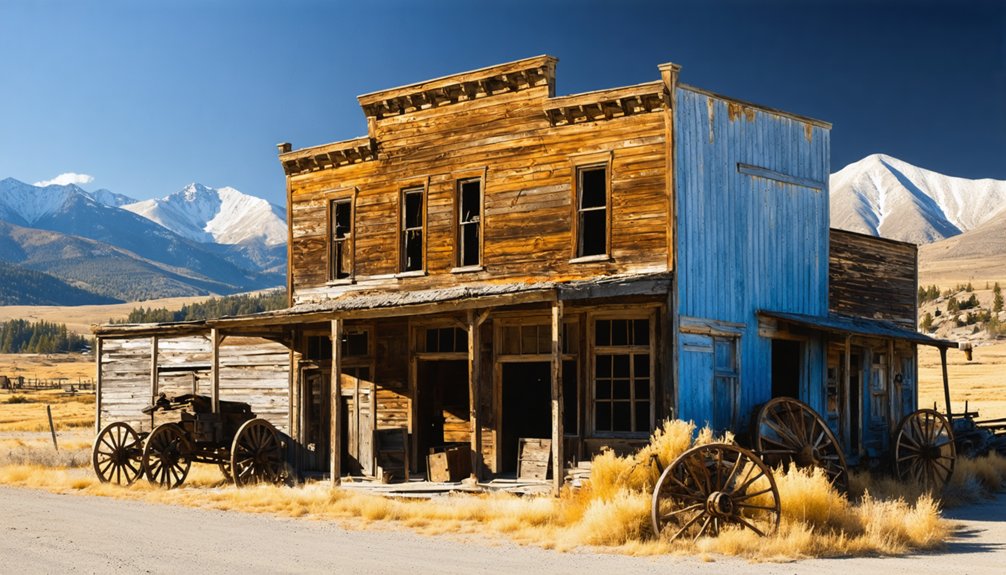
Southwest Montana harbors some of the state’s most compelling ghost towns, with Virginia City, Bannack, and Garnet standing as premier examples of preserved 19th-century mining settlements.
At Garnet Ghosttown, you’ll find over 20 historic structures amid the remote mountain setting, while Bannack State Park preserves more than 60 buildings from Montana’s first territorial capital.
Virginia City and nearby Nevada City offer the most extensive preserved streetscapes, where you can experience living history through stagecoach rides and period performances.
You’ll discover original wooden storefronts, saloons, and a restored courthouse in Virginia City, while Nevada City houses significant mining-era artifacts.
These sites remain accessible via well-maintained roads, though Garnet’s remote location requires travel on gravel paths and limits visits to summer months.
Must-Visit Historic Buildings and Structures
Among Montana’s best-preserved ghost towns, visitors will discover an impressive collection of historic buildings that offer authentic glimpses into 19th-century frontier life.
The mining architecture reveals remarkable details about how these communities thrived, from the imposing masonry of Elkhorn’s Fraternity Hall to Bannack’s rustic log structures.
For the most compelling examples of ghost town preservation, you’ll want to explore:
- Bannack’s Main Street, featuring over 50 original buildings including the jail, schoolhouse, and historic Masonic Lodge
- Virginia City’s restored commercial district, complete with period-accurate shops and museums
- Garnet’s collection of 30 intact structures, including a hotel and saloon with original furnishings
These sites showcase essential frontier institutions – from courthouses and jails to saloons and blacksmith shops – that once served Montana’s bustling mining communities.
Transportation Routes and Railroad Ghost Towns
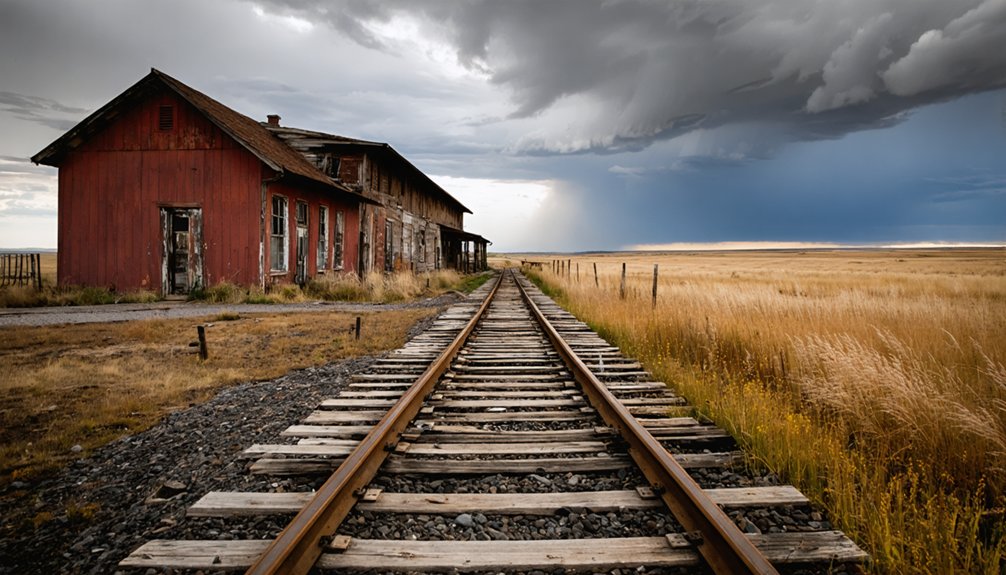
You’ll discover Montana’s most fascinating ghost towns along the historic Milwaukee Road rail line, where once-thriving settlements like Ingamar and Alberton flourished before the railroad’s 1980 abandonment.
The state’s rail history shaped communities from Miles City to Bannack, where the 1880s railroad bypass led to that gold rush town’s eventual demise.
Through mountain passes and along crucial transportation corridors, these railroad ghost towns tell the story of Montana’s boom-and-bust cycle, from the Northern Pacific’s influence in eastern Montana to the Boston and Montana Company’s ambitious but ill-fated railway development at Coolidge.
Historic Rail Line Locations
Montana’s railroad ghost towns stand as compelling remnants of the state’s mining boom era, when rail lines served as crucial lifelines for transporting precious metals and supplies.
The pattern of railroad expansion directly shaped these settlements’ fates – towns bypassed by new rail routes often faced rapid decline, while those along main corridors flourished temporarily.
You’ll find three distinct types of rail-related ghost towns across Montana:
- Bypass victims like Bannack, which withered after rail routes chose alternate paths
- Disaster-struck settlements like Coolidge, where floods destroyed crucial rail infrastructure
- Milwaukee Road casualties from the 1980s, when major line abandonment left towns stranded
Today, these sites preserve fascinating glimpses of Montana’s transportation heritage through their remaining depots, roundhouses, and commercial districts.
Milwaukee Road Ghost Settlements
When the Milwaukee Road railroad system collapsed in 1980, it left behind a string of fascinating ghost settlements across Montana’s eastern and central regions.
You’ll find these abandoned outposts scattered along the former rail line, from Anata’s no-trespassing schoolhouse to Ingamar’s once-famous bar along one of the route’s loneliest stretches.
Each Milwaukee Road ghost settlement tells a unique story.
Mudo’s grain elevators and converted church stand as silent sentinels, while Lombard, immortalized in the 1934 film “Danger Lights,” features its historic hotel ruins and abandoned rail bridge.
In Lennep, you can explore remnants of an 1877 Norwegian settlement, including Montana’s oldest Lutheran church from 1914, a general store, and a schoolhouse that serve as monuments to the region’s railroad heritage.
Mountain Pass Railway Towns
As railroads carved their way through Montana’s challenging mountain passes, they established a network of strategically placed towns that served as essential hubs for construction, maintenance, and locomotive operations.
Along these railway corridors, settlements emerged to support vital railroad functions at strategic mountain crossings like Monida Pass, Marias Pass, and Homestake Pass.
You’ll find three distinct patterns that led to these towns’ eventual decline:
- Dieselization eliminated the need for water and coal stops
- Route realignments left abandoned depots and facilities
- Mining and timber operations ceased, removing the economic backbone
Many of these mountain pass communities, once bustling with railroad workers and support services, couldn’t survive when technological advances and changing transportation needs made them obsolete.
Their remaining structures stand as proof of Montana’s pioneering rail heritage.
Montana’s Most Accessible Ghost Town Destinations

Within driving distance of Helena and Missoula, several ghost towns offer easily accessible windows into Montana’s mining heritage.
You’ll find Elkhorn State Park‘s well-preserved 1880s structures just 40 minutes from Helena, while Garnet Ghost Town showcases over 20 intact buildings from the 1890s gold rush era, perfect for ghost town photography.
Both sites feature interpretive signs and allow self-guided exploration of accessible ruins.
For quick day trips, consider Marysville’s historic cabins and mining structures via paved roads, or venture to Rimini, 16.8 miles from Helena.
While Comet Ghost Town requires viewing from the road, its scattered remnants still tell compelling stories of Montana’s mining past.
Most sites are best visited during summer months, when road conditions are ideal for standard vehicles.
Hidden Gems in Remote Mountain Locations
Deep in Montana’s rugged mountain ranges lie some of the state’s most enchanting ghost towns, preserved by their remote locations and challenging access.
Among these hidden treasures, you’ll discover Garnet perched at 6,000 feet, featuring the intact Kelly saloon and J.K. Wells Hotel, accessible only by snowmobile in winter.
These secluded escapes offer remarkable glimpses into Montana’s mining heritage:
- Neihart’s charming 1880s main street and vintage miners’ cottages remain frozen in time, with roughly 80 current residents.
- Zortman’s remnants nestle in the Little Rockies’ rugged terrain.
- Castle Town, once home to Calamity Jane, beckons through picturesque gulches via remote forest roads.
In Elkhorn, well-preserved structures still stand, complete with bowling lanes and local ghost stories that capture the authentic spirit of Montana’s mining era.
Frequently Asked Questions
Are Ghost Towns in Montana Safe to Visit During Winter Months?
Montana’s ghost towns transform into bone-chilling winter wonderlands that you’ll want to approach cautiously. Winter safety demands snowmobiles or snowshoes, with limited ghost town accessibility due to deep snow and hazardous conditions.
Exploring ghost towns in Montana history can reveal fascinating stories of the past, each with its own unique charm and eerie atmosphere. As you wander through the remnants of these once-bustling communities, you may uncover artifacts and structures that tell the tale of resilience and abandonment. The haunting silence of these locations invites reflection on the lives that once filled these now desolate streets.
In addition to Montana’s ghost towns, annual events in Virginia City showcase the vibrant history and culture of this unique region. Visitors can experience lively reenactments, local artisans, and seasonal festivities that breathe life into the historic streets. These gatherings offer a stark contrast to the haunting stillness of abandoned towns, inviting exploration and celebration of the area’s rich heritage.
Can You Legally Collect Artifacts or Relics From Montana Ghost Towns?
You can’t legally collect artifacts from Montana ghost towns without permits. Strict legal regulations protect historic sites on federal, state, and private lands to guarantee proper artifact preservation.
Are There Guided Night Tours Available at Any Montana Ghost Towns?
Darkness-draped destinations await you! You’ll find guided night tour options at Bannack’s popular Ghost Walks, Garnet’s seasonal events, and Helena’s haunted history tours. Virginia City offers evening experiences during peak months.
Which Montana Ghost Towns Have Reported Paranormal Activity or Hauntings?
You’ll find documented haunted locations at Garnet Ghost Town with its phantom piano music, Bannack State Park where Dorothy Dunn’s spirit lingers, and Gunslinger Gulch where ghostly legends include footsteps and apparitions.
Do Any Montana Ghost Towns Still Have Year-Round Permanent Residents?
You’ll find countless tales of hardy souls who’ve made historic Montana ghost towns their year-round homes. Places like Rimini maintain modern preservation while hosting permanent residents, though most abandoned mining settlements remain uninhabited.
References
- https://en.wikipedia.org/wiki/List_of_ghost_towns_in_Montana
- https://www.roamingnearandfar.com/montana-ghost-towns-near-helena/
- https://www.greatfallstribune.com/story/life/my-montana/2018/06/28/these-12-best-ghost-towns-see-montana/736153002/
- https://www.mountain-home.com/blog/vacation-planning/guide-montana’s-ghost-towns
- https://www.youtube.com/watch?v=BQH5LghhkVs
- https://glaciermt.com/ghost-towns
- https://visitmt.com/things-to-do/ghost-towns
- https://southwestmt.com/ghosts/ghost-towns/
- https://xlcountry.com/montana-ghosts-towns/
- https://westernmininghistory.com/towns/montana/helena/