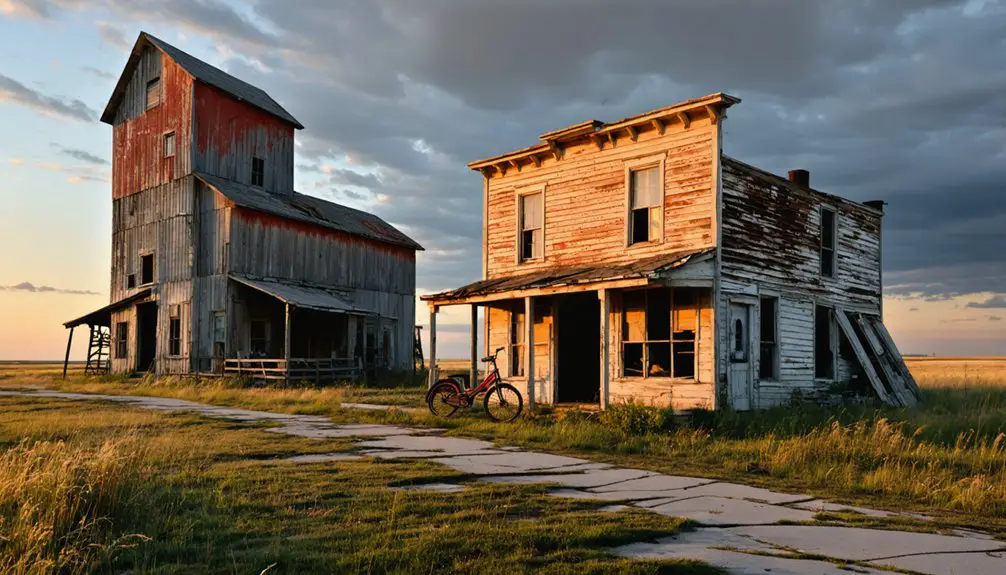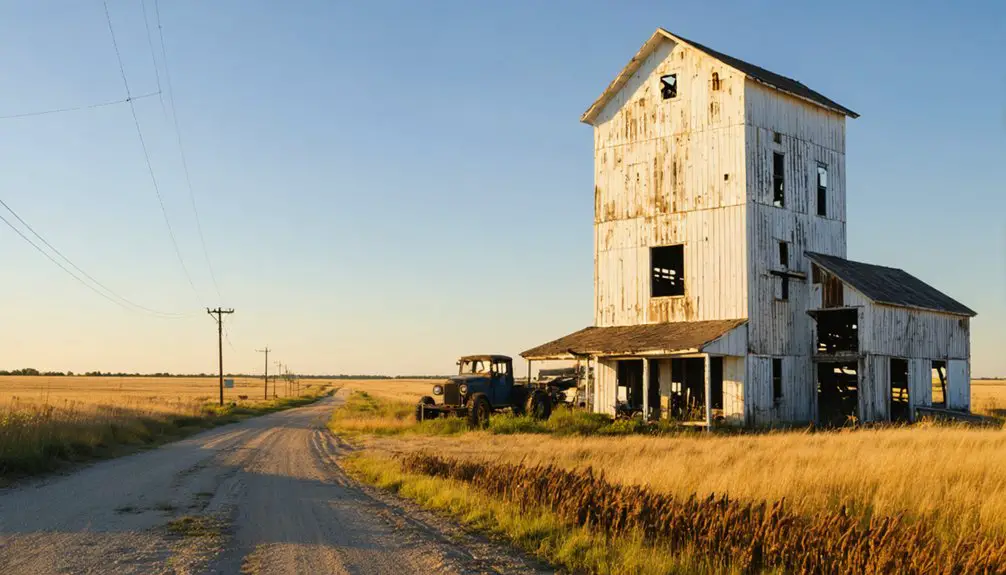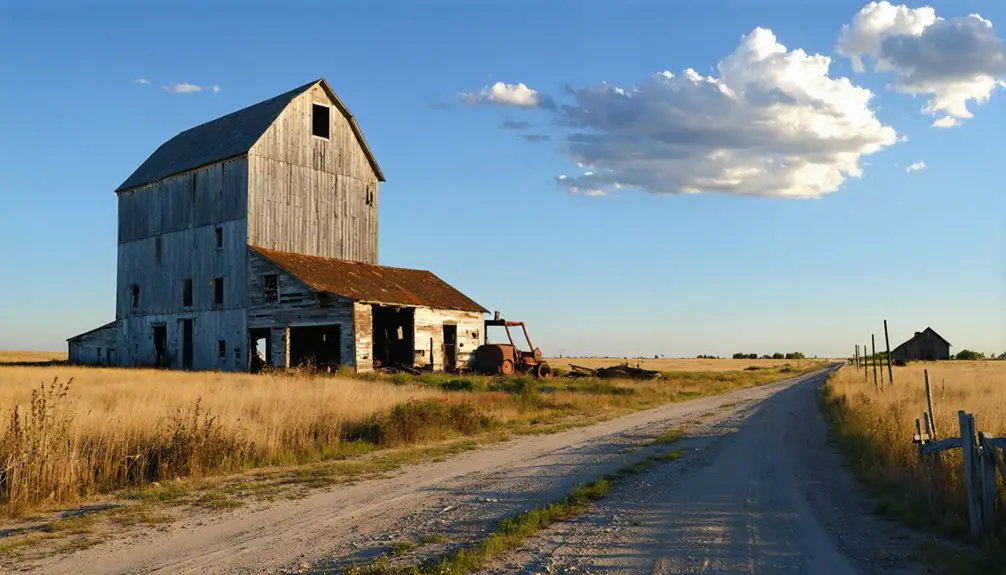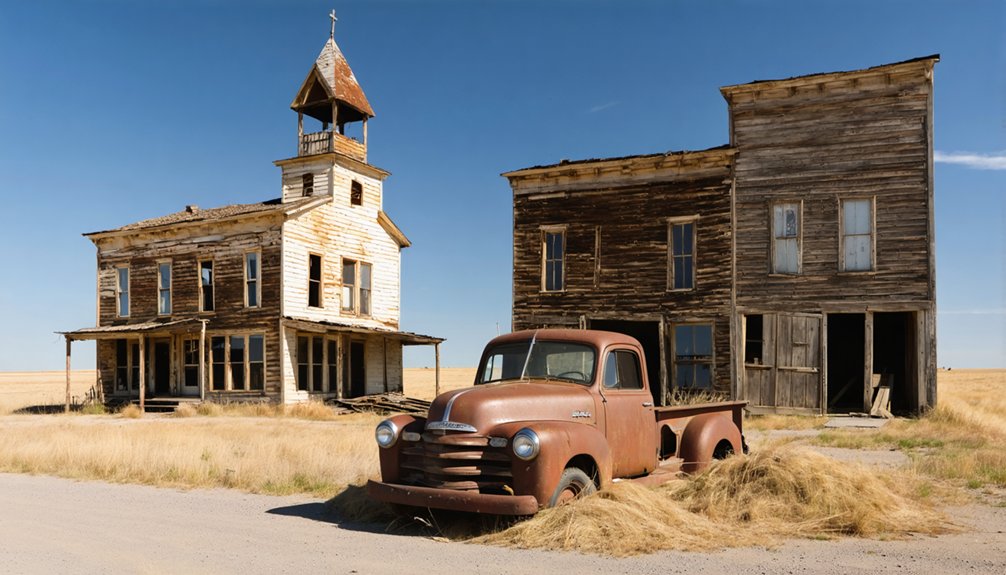
You’ll find hundreds of ghost towns scattered across North Dakota, many emerging during the railroad expansion of the late 1800s. These abandoned settlements include submerged towns beneath Lake Sakakawea, former railroad stops, and communities affected by agricultural decline. Notable sites like Sims Ghost Town and San Haven Sanatorium feature preserved structures and alleged paranormal activity. From historic churches to abandoned mines, North Dakota’s ghost towns offer fascinating windows into the state’s dynamic past.
Key Takeaways
- North Dakota has numerous ghost towns, particularly those created by railroad expansion and later abandoned due to economic decline.
- Underwater ghost towns like Elbowoods, Sanish, and Van Hook were submerged during the creation of Lake Sakakawea in 1953.
- Historic ghost towns include Sims, featuring the Scandinavian Lutheran Church, and Sherbrooke, which once hosted President McKinley.
- Railroad ghost towns were typically built every seven miles along rail lines for grain transport before declining in the 1920s.
- Many ghost towns still maintain preserved structures, including Crystal Springs’ brick schoolhouse and various historic churches.
The Rise and Fall of North Dakota’s Most Notable Abandoned Towns
While the late 19th and early 20th centuries saw North Dakota’s landscape dotted with promising new settlements, many of these towns would eventually fade into obscurity. The town development was largely driven by railroad expansion, with companies like Northern Pacific and Great Northern establishing crucial stops for grain shipping and passenger service. Griffin is one example, where the Milwaukee Road railroad significantly shaped its development and eventual decline.
Communities like Omemee flourished briefly, reaching populations of 600 and boasting amenities like opera houses. The town was marked by distinctive three-foot stone markers painted yellow. However, economic decline struck as railroad lines were abandoned or rerouted, and agricultural changes reduced rural populations.
Towns like Crystal Springs, Temple, and Griffin couldn’t survive when railways diminished, highways bypassed them, and severe droughts struck. By the mid-20th century, many once-thriving communities had lost their post offices, schools, and residents, leaving only scattered buildings or foundations as evidence of their existence.
Military Sites and Underwater Ghost Towns
The construction of North Dakota’s Garrison Dam in 1953 forever changed the Missouri River Valley, creating Lake Sakakawea and submerging eight thriving communities beneath its waters.
You’ll find these submerged towns, including Elbowoods, Sanish, and Van Hook, now rest at the bottom of America’s second-largest man-made lake by area.
While no military installations were lost, the flooding displaced hundreds of Native American families from the Fort Berthold Reservation, with most relocating to New Town.
The waters claimed schools, hospitals, and stores, though some buildings were salvaged and moved to higher ground.
Today, the lake has become a popular recreational destination for fishing, boating, and swimming activities.
Devils Lake’s rising waters have also claimed portions of Minnewaukan and surrounding communities, forcing residents to abandon centuries-old settlements.
Since 1964, the lake’s surface area has expanded dramatically from 80 square kilometers to approximately 815 square kilometers, submerging countless structures.
Today, these underwater ghost towns serve as silent testimonies to the sacrifices made for hydroelectric power and flood control.
Haunted Places and Historic Landmarks
Beyond the submerged settlements beneath North Dakota’s waters lie numerous ghost towns with rich historical significance and alleged paranormal activity.
Among the state’s most notable haunted locations, you’ll find tales of supernatural occurrences and remarkable historical landmarks that have withstood time’s passage. Old Sanish and Elbowoods are beneath Lake Sakakawea today.
- The Sims Ghost Town features the active Scandinavian Lutheran Church, where the “Gray Lady Ghost” reportedly plays the organ, drawing even former First Lady Laura Bush to visit.
- San Haven Sanatorium’s abandoned medical facilities near the Canadian border carry the weight of its tuberculosis treatment history.
- Sherbrooke’s historic hotel once housed President McKinley before the town lost its county seat status.
- Omemee’s opera house and railroad junction stand as silent reminders of a once-thriving community of 600 residents, now reduced to empty, haunting structures.
About 35 miles northeast of Bismarck, Arena stands as a testament to early settlement, though little remains of its original infrastructure.
Railroad Ghost Towns: A Legacy of Forgotten Communities
Railroads carved an indelible mark across North Dakota’s landscape during the territorial days and early statehood, giving birth to numerous communities that would later become ghost towns.
You’ll find these lost settlements spaced like beads along the Milwaukee Road, Northern Pacific, and Great Northern rail lines – towns like Griffin, Gascoyne, and Wheelock.
The railroad history reveals a calculated pattern: communities were platted every seven miles to facilitate grain transport, with some reaching populations of 400 residents during their peak years.
But you can trace their community decline to multiple factors: the 1920s farm crisis, the Great Depression, severe droughts of the 1930s, and the evolution of transportation efficiency.
The rise of automobiles in the 1920s significantly accelerated the decline of these small railroad communities.
Today, these abandoned depots and shuttered grain elevators stand as silent monuments to North Dakota’s railroad era.
The story of Gascoyne exemplifies this pattern, as its once-thriving lignite coal mine that produced millions of tons annually closed in 1997, leaving the town with just 16 residents.
Preserved Structures and Remaining Buildings in Ghost Towns
While many ghost towns have vanished entirely from North Dakota’s prairie landscape, several communities preserve notable architectural remnants that offer glimpses into their past significance. The fascinating remnants of two submerged towns beneath Lake Sakakawea represent a unique piece of the state’s ghost town history.
These preserved architecture sites showcase rural relics that tell stories of pioneer life and community development across the state. The town of Crystal Springs has maintained its historic brick schoolhouse since 1916, serving as a prominent landmark along Interstate 94.
When exploring these abandoned settlements, you’ll discover:
- Religious structures standing sentinel, from St. John’s Lutheran Church in Arena to the former Seventh Day Adventist Church in Deisem
- Educational landmarks like Crystal Springs school and Atkinson Schoolhouse in Griffin, complete with original wooden shingles
- Transportation artifacts, including a preserved Milwaukee Road boxcar in Griffin
- Historic infrastructure ranging from fieldstone fountains to old general stores and post offices, particularly visible in towns like Crystal Springs and Deisem
Frequently Asked Questions
Can Tourists Legally Explore North Dakota Ghost Towns Without Special Permits?
You’ll need landowner permission for private ghost towns, but can explore public sites freely while following basic ghost town regulations and tourist safety guidelines about building entry and artifacts.
What Survival Supplies Should Explorers Bring When Visiting Remote Ghost Towns?
Pack survival kits with water, first-aid supplies, flashlights, and snacks. You’ll need essential gear like GPS devices, charged phones, and protective clothing when exploring remote locations far from assistance.
Are There Guided Tours Available to North Dakota’s Ghost Towns?
Like wind-swept echoes of the past, you’ll need to explore North Dakota’s ghost towns independently, as there aren’t organized guided tours available. You can rely on self-guided resources and maps instead.
After a day of exploration, you might want to stay overnight in North Dakota to fully absorb the haunting beauty of the landscape. Many visitors find the serenity of the open skies and quiet towns offers a peaceful retreat. Consider booking a local bed and breakfast for a unique experience that showcases the charm of the area.
As you venture deeper into the historic ghost towns in North Dakota, you’ll uncover fascinating stories of the pioneers who once called these places home. Each town, with its dilapidated structures and remnants of a bygone era, offers a unique glimpse into the challenges faced by early settlers. Embrace the sense of history as you wander through the streets, imagining the lives that unfolded in these now-silent spaces.
Which Ghost Towns Are Accessible During Winter Months in North Dakota?
You’ll find best winter accessibility at Tagus, Wheelock, Arena, Sims, and Lark. These ghost towns remain reachable via maintained roads, though ghost town conditions depend heavily on snowfall and plowing schedules.
How Can Photographers Get Permission to Shoot Inside Abandoned Buildings?
Contact county assessors to identify property owners, send written permission requests, provide liability insurance, and respect photography etiquette. Always prioritize building safety when exploring and document all granted permissions.
References
- https://northernsentry.com/2025/06/26/north-dakota-ghost-towns/
- https://us1033.com/a-look-at-some-real-life-north-dakota-ghost-towns/
- https://ghostsofnorthdakota892857007.wordpress.com/2015/10/30/true-ghost-towns-population-zero/
- https://www.onlyinyourstate.com/experiences/north-dakota/ghost-towns-nd
- https://www.youtube.com/watch?v=8GO57Im_dss
- https://kids.kiddle.co/List_of_ghost_towns_in_North_Dakota
- https://www.ghosttowns.com/states/nd/nd.html
- https://cdn.saffire.com/files.ashx?t=fg&rid=DickinsonCVB&f=DixCVB_Cemetery_Map.pdf
- https://www.youtube.com/watch?v=-E2DA6Ryd1g
- https://www.legendsofamerica.com/crystal-city-north-dakota/