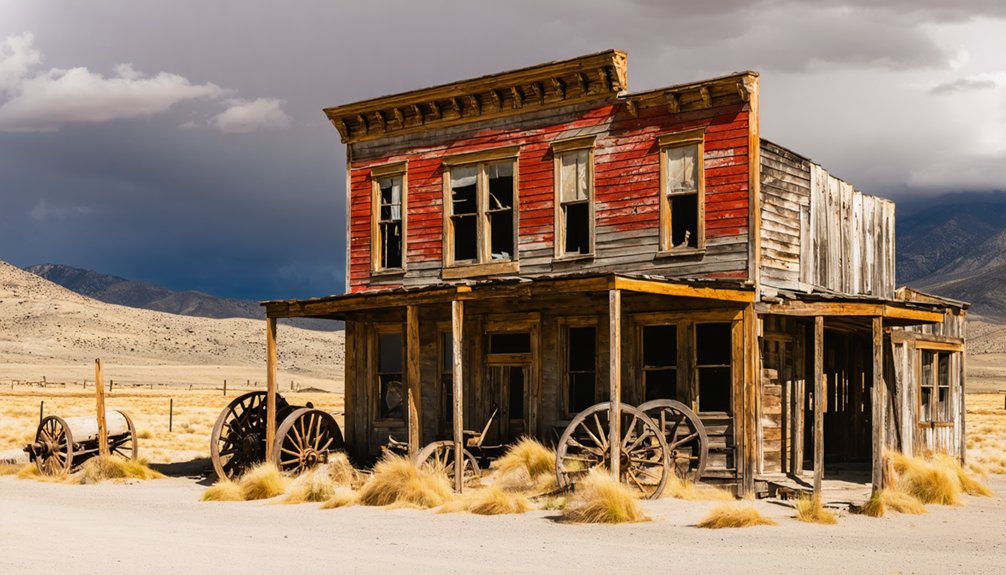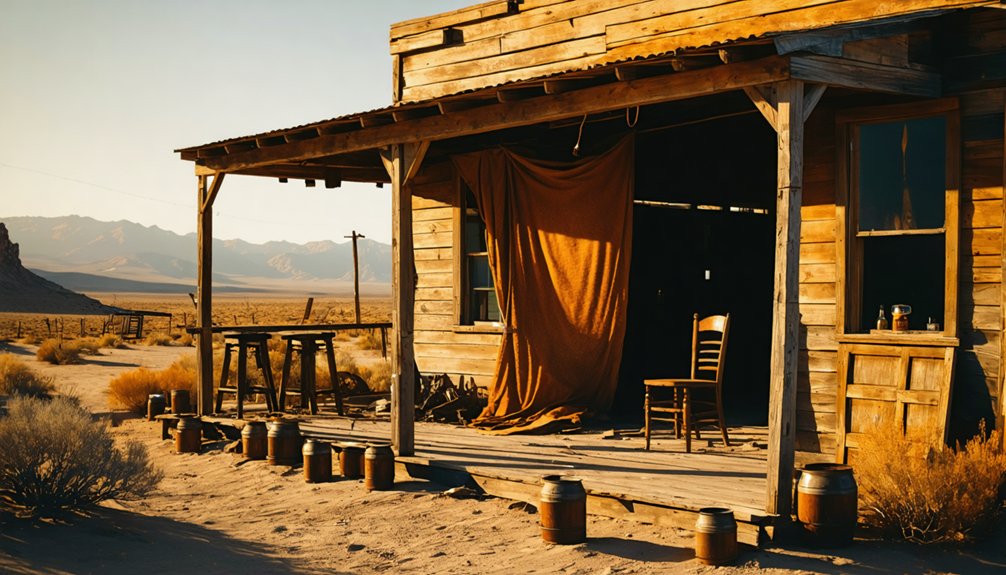
The Western United States offers remarkable ghost towns that capture America’s frontier spirit. Bodie, California stands preserved in “arrested decay” with over 100 original structures. Montana’s Bannack features 60 historic buildings where vigilante justice once ruled. Colorado’s St. Elmo and Wyoming’s South Pass City showcase authentic mining-era architecture, while Virginia City dazzles with Victorian elegance from Comstock Lode riches. These time capsules tell stories of boom-and-bust cycles that shaped the American West’s character and destiny.
Key Takeaways
- Bodie, California offers over 100 buildings preserved in “arrested decay,” showcasing authentic frontier life from the gold rush era.
- Bannack, Montana features 60+ original structures and hosts annual historical reenactments as both a State Park and National Historic Landmark.
- Virginia City, Nevada preserves over 600 historic Victorian buildings from the famous Comstock Lode silver strike.
- South Pass City, Wyoming maintains 23 original structures and holds significance as the birthplace of women’s suffrage legislation.
- St. Elmo, Colorado contains 43 surviving structures from its mining heyday and offers surrounding backcountry exploration opportunities.
The Haunting Beauty of Bodie, California’s Gold Rush Legacy
Nestled in the eastern Sierra foothills, Bodie stands as a haunting reminder of America’s gold rush era, its weathered structures silently narrating tales of fortune and folly.
Your Bodie exploration reveals a town born from W.S. Bodey’s 1859 discovery, though he never witnessed the settlement that would misspell his name.
The Gold Rush impact reached its zenith after an 1876 mine cave-in exposed rich veins, transforming this minor camp into a boomtown of 10,000 souls.
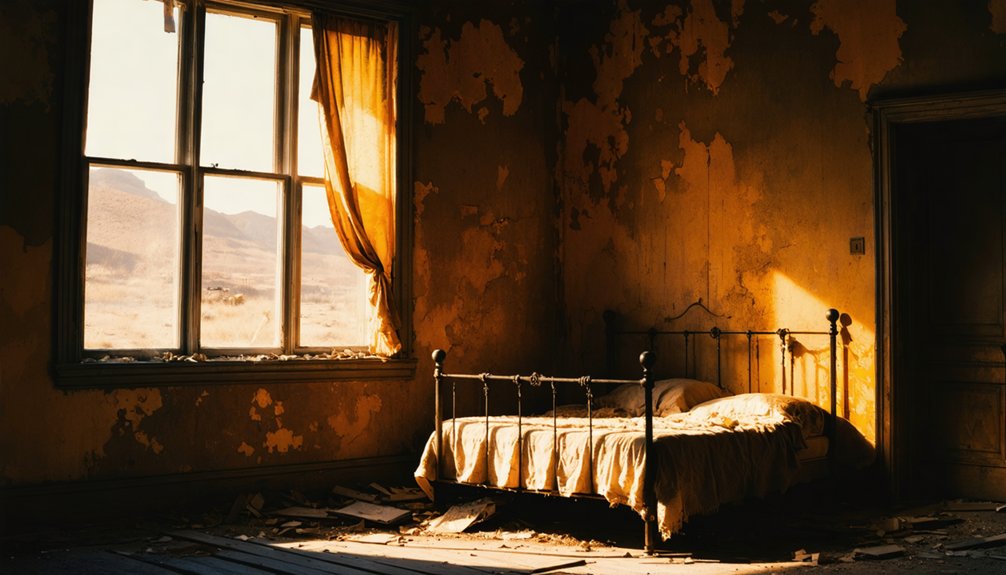
You’ll find over 100 buildings preserved in “arrested decay,” exactly as residents left them when the gold played out.
Once notorious for its lawlessness—inspiring a child’s prayer, “Goodbye God, we’re going to Bodie”—this official state ghost town now offers you an authentic glimpse into frontier life frozen in time.
A vibrant China Town once flourished here, with hundreds of Chinese residents contributing to the economy through various trades including laundry services and logging.
The town’s wild character was reflected in its approximately 2,000 buildings at peak population, including numerous saloons where miners sought relief from their difficult work.
St. Elmo: Colorado’s Time Capsule in the Rockies
While Bodie captures California’s gold rush spirit, the alpine heights of Colorado harbor their own perfectly preserved relic of America’s mining past.
St. Elmo, established in 1880, stands frozen in time with 43 surviving structures showcasing the architectural styles of Western boomtowns. You’ll discover a town that once bustled with 2,000 residents and more than 150 mining claims before railroad service ended in 1922.
Established in 1880, St. Elmo preserves 43 structures from a once-thriving mining community of 2,000 souls and 150 claims.
St. Elmo’s architecture reveals its rapid growth—with buildings erected amid six feet of snow—and subsequent preservation by the dedicated Stark family. The town became a National Historic District in 1979, recognizing its significance in Colorado’s mining heritage.
Today, you can explore this National Historic District while surrounded by the ghosts of frontier ambition. St. Elmo‘s legends, particularly tales of lingering Stark family spirits, add a paranormal dimension to your visit, making this ghost town a genuine gateway to Colorado’s mining heritage. Visitors can enhance their experience by taking horse and ATV excursions through the beautiful backcountry surrounding the town.
Bannack: Where Montana’s Wild West History Stands Frozen in Time
Founded in 1862 after a momentous gold discovery along Grasshopper Creek, Bannack embodies the quintessential American frontier experience with its dramatic arc from boomtown prosperity to ghostly abandonment.
As Montana’s first territorial capital, you’ll walk the same streets where vigilante justice dramatically unfolded in 1864, when Sheriff Henry Plummer and his deputies were hanged for their alleged criminal activities.
Bannack’s architecture remains remarkably preserved, with over 60 original structures including the imposing Hotel Meade and the schoolhouse where frontier children learned their lessons.
Now protected as a State Park and National Historic Landmark, this authentic slice of Western heritage offers you unparalleled access to America’s raw past.
Wandering through these weathered buildings, you’ll feel the echoes of gold fever, lawlessness, and pioneer dreams. The historic Hotel Meade is particularly fascinating, with reports of Dorothy Dunn’s ghost appearing to visitors in her signature blue dress. Visitors can immerse themselves in frontier life during the annual Bannack Days celebration, featuring historical reenactments that bring the 1860s vividly to life.
South Pass City: Wyoming’s Hidden Mining Heritage
Just a stone’s throw from the historic Oregon Trail, South Pass City offers you an unparalleled window into Wyoming’s gold rush era with over twenty meticulously preserved 19th-century structures.
You’ll walk the same half-mile main street once bustling with miners, merchants, and dreamers during the town’s 1868-1870 heyday when over 1,000 residents called this place home.
Your visit uncovers the authentic rhythms of frontier mining life through thousands of artifacts housed in original buildings, from the imposing Carissa Mine complex to humble saloons where fortunes were won and lost. All structures are completely original to the site and have not been relocated from elsewhere, maintaining the town’s historical integrity. This remarkable site proudly stands as the birthplace of women’s suffrage legislation in Wyoming, where the first women’s suffrage bill was passed in December 1869.
Oregon Trail Proximity
Nestled within a small valley along Willow Creek at the southeastern edge of the Wind River Mountains, South Pass City occupies a historically strategic position approximately 10 miles north of the Oregon Trail.
This proximity wasn’t coincidental but transformative—the town leveraged the established migration route to flourish as a mining hub serving travelers, settlers, and soldiers traversing the American frontier.
The historical significance of this location becomes evident when you consider how Fort Stambaugh was established nearby in 1870, specifically to protect the mining community from threats. The area was once home to Native American tribes who faced displacement as settlers and gold seekers arrived in increasing numbers.
As you explore South Pass City today, you’re walking through a landscape that once buzzed with the energy of western expansion, where miners and travelers converged at this critical juncture of America’s transportation and resource development corridors. The town quickly grew after gold was discovered in 1867, transforming the original stage stop into Wyoming’s second incorporated city.
Preserved Nineteenth Century Buildings
A tribute to meticulous preservation efforts, South Pass City stands as Wyoming’s crown jewel of nineteenth-century architectural integrity with its remarkable collection of 23 original structures.
Walking the half-mile main street, you’ll discover buildings of profound architectural significance—from the E.A. Slack Cabin to the three-room Grecian Bend Saloon operated by Janet Sherlock in 1889.
The Carissa Saloon and Exchange Bank provide perfect historical context for understanding the fluid nature of commerce in mining boomtowns.
Don’t miss the Houghton-Colter General Store, which adapted through decades of economic shifts until 1948.
These buildings aren’t mere replicas; they’re authentic vessels housing 30,000 original artifacts that tell the unvarnished story of western expansion, making this ghost town an unparalleled window into America’s pioneering spirit.
Mining Life Uncovered
While these architectural treasures frame the external narrative of South Pass City, the true heartbeat of this ghost town lies beneath its weathered facades in the gold-laden veins that sparked its existence.
At the Carissa Mine, you’ll witness the evolution of mining techniques from primitive hand processing to sophisticated stamp mills that crushed quartz and extracted precious metals.
The mine’s tumultuous history—producing $7 million in gold despite ownership disputes and financial troubles—captures the boom-and-bust cycle that defines Western ghost town legends.
As you explore, imagine the once-bustling half-mile main street where miners exchanged stories in saloons after grueling shifts.
The preserved equipment from the 1929 modernization offers a tangible connection to those who gambled everything on golden dreams—some finding fortune, others only dust.
Virginia City: Silver Fortunes and Victorian Splendor
When you walk the wooden sidewalks of Virginia City, you’re treading upon the legacy of America’s first major silver discovery, the Comstock Lode, which transformed this mountainside settlement into one of the wealthiest towns in the West during the 1860s and 1870s.
The town’s preserved Victorian architecture—from elaborate mansions to the iconic Silver Queen Hotel—stands as a testament to the extraordinary wealth that flowed from the mines below Mount Davidson.
Unlike many abandoned mining camps, Virginia City maintains its original character through meticulously preserved buildings and mining infrastructure, offering visitors an authentic glimpse into the opulence that silver fortunes once built on this windswept Nevada hillside.
Comstock Lode Legacy
Rising from the rugged terrain of Nevada’s Virginia Range, the Comstock Lode represents one of America’s most transformative mineral discoveries.
When you explore Virginia City today, you’re walking atop what was once the nation’s first major silver boom—a phenomenon that literally built Nevada into statehood in 1864.
The Comstock history reverberates through the 600+ Victorian buildings still standing, remnants of a town that once boasted 25,000 residents, an elevator unprecedented west of Chicago, and wealth that helped finance San Francisco’s development.
As you wander streets where Mark Twain once reported and miners once celebrated their fortunes, you’ll encounter a rare preserved slice of authentic Western heritage—a place where $230 million in precious metals transformed a barren hillside into a national treasure.
Preserved Victorian Architecture
Virginia City’s three hundred preserved Victorian buildings stand as America’s finest tribute to silver boom opulence, their elaborate facades and ornate details frozen in architectural amber since the devastating 1875 fire prompted a massive rebuilding effort.
As you stroll C Street’s wooden-planked sidewalks, you’ll witness the remarkable architectural preservation that earned the town its designation as the nation’s largest historic landmark in 1961.
The Victorian influences are unmistakable in the false-fronted buildings and brick blocks that line the main thoroughfare, offering sweeping views across the Great Basin.
From the stately Cobb Mansion to the imposing Fourth Ward School with its Second Empire styling, these structures remain fundamentally unchanged from their original states—testament to the extraordinary wealth of the Comstock Lode and the freedom it afforded its most successful residents.
Terlingua: Texas’s Mercury Mining Ruins and Desert Revival
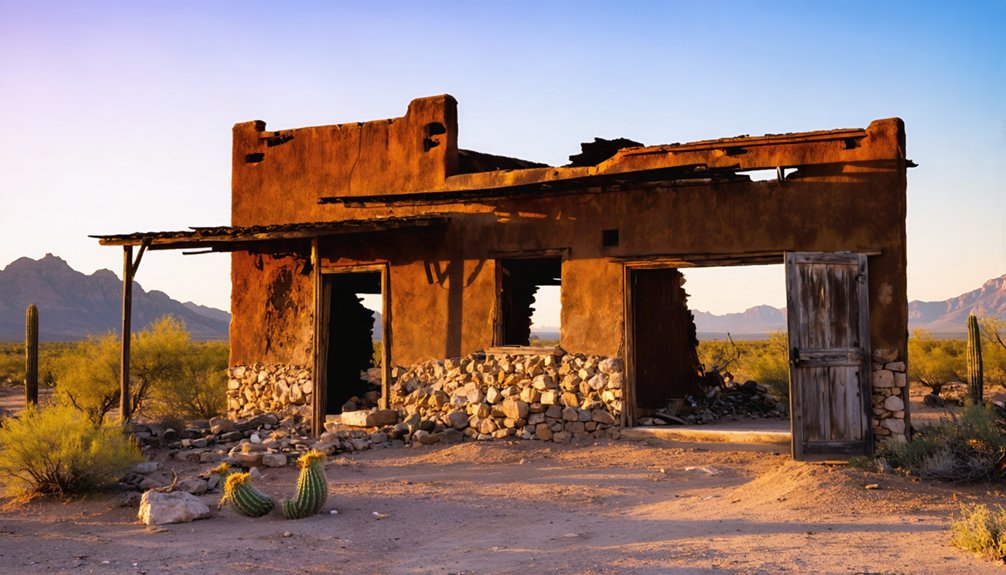
Nestled in the rugged Chihuahuan Desert of southwestern Texas, Terlingua stands as a haunting memorial to America’s boom-and-bust mining legacy.
The discovery of cinnabar history began in the mid-1880s when deposits transformed a sleepy village into a thriving district, though Apache tribes had long valued the brilliant red mineral for body pigment.
By the early 1900s, the population swelled to nearly 2,000 as mining culture flourished around mercury extraction. The town divided into segregated sections for Mexican laborers and Anglo miners, yet created a unique border culture despite harsh conditions.
When mercury prices plummeted in the late 1930s, Terlingua emptied.
Today, you’ll find the 1913 St. Agnes Church ruins and a historic cemetery alongside modern revival establishments like the Starlight Theatre.
What Makes a Great Ghost Town: Preservation vs. Authenticity
When wandering through America’s abandoned mining camps and forgotten frontier settlements, you’ll invariably confront the central tension that defines every notable ghost town: the delicate balance between preservation and authenticity.
The most compelling sites employ distinct preservation techniques—from South Pass City’s thorough restoration of 23 original structures housing 30,000 artifacts to Bodie’s “arrested decay” approach that freezes buildings in their weathered state.
You’ll find the raw experience of Garnet, Montana with its untouched log cabins more immersive than commercialized destinations like Tombstone.
Authenticity challenges emerge when tourism demands collide with historical integrity. The best sites maintain visible artifacts—dishes on tables, books on shelves—while adhering to ethical standards that protect these fragile windows into America’s past from both commercial exploitation and natural deterioration.
Planning Your Western Ghost Town Road Trip
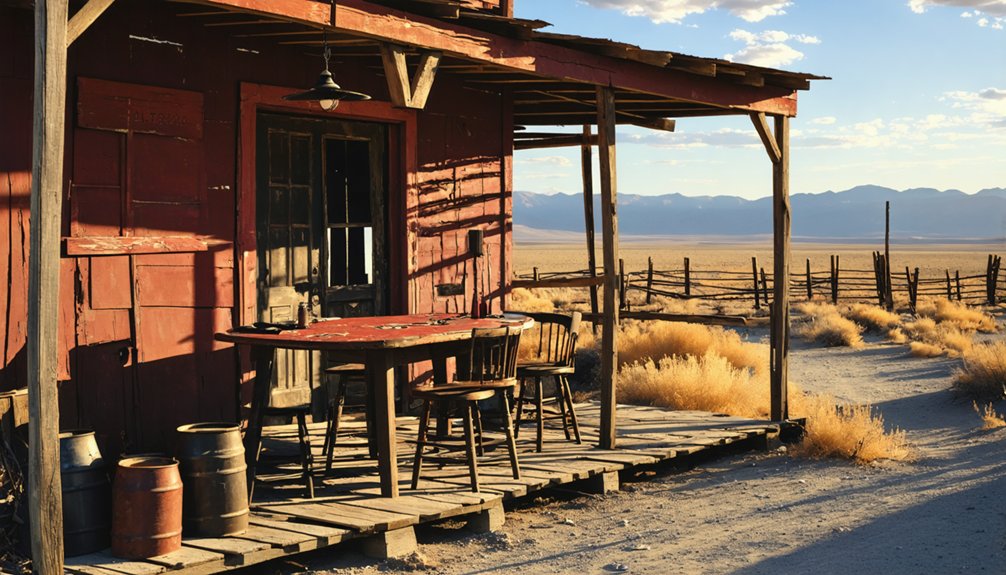
When planning your ghost town expedition, consider that summer offers extended daylight but spring and fall provide milder temperatures and fewer tourists to enhance your photographic endeavors.
You’ll need to assess vehicle requirements carefully, as popular sites like Bodie and Calico feature paved access roads, while remote locations might demand high-clearance vehicles to navigate unpaved terrain.
Proper preparation with essentials such as comfortable footwear, adequate hydration, sun protection, and navigation tools will greatly improve your exploration experience across these weathered monuments to frontier ambition.
Seasonal Considerations
Although ghost towns of the American West hold their haunting allure year-round, timing your visit can dramatically transform your experience from comfortable exploration to challenging adventure.
Spring and fall offer ideal conditions with mild temperatures and fewer crowds, while summer provides reliable access but brings intense heat and tourist congestion.
Winter turns these abandoned settlements into snow-draped time capsules, often requiring specialized transportation and heightened preparation for seasonal hazards.
- The spring thaw reveals increased wildlife activity, with bird migrations and emerging fauna enhancing your connection to these forgotten landscapes.
- Unpaved access roads deteriorate considerably during wet seasons, making 4WD vehicles essential for off-peak exploration.
- Summer months feature extended daylight hours and special events like Bannack Days in Montana.
- Shoulder seasons deliver the perfect balance of accessibility, comfort, and solitude.
Accessibility and Gear
Preparing for ghost town exploration requires thoughtful planning beyond simply choosing the right season. Many of these historical treasures hide along rough mountain roads and unmaintained pathways, demanding vehicle requirements that exceed standard sedans. Equip yourself with a high-clearance or four-wheel drive vehicle to navigate gravel roads, steep inclines, and occasional stream crossings that guard these forgotten places.
Your essential gear should include detailed topographical maps—digital navigation often fails where cell service disappears. Pack generously: water, emergency supplies, first aid kits, and communication devices like satellite phones become lifelines in these remote locations.
Remember protective clothing for temperature swings common at higher elevations. As you venture where few travelers go, preparation becomes your greatest ally, transforming potentially dangerous situations into memorable adventures across the weathered landscapes of America’s abandoned West.
Photography Tips for Capturing Abandoned Mining Towns
Ghostly remnants of America’s mining history demand a photographer’s careful attention to both technical skill and artistic vision.
Master composition techniques by combining wide establishing shots with intimate detail work, ensuring level horizons while creating depth through layered elements.
Navigate lighting challenges by shooting during golden hours and employing tripods for longer exposures in shadowy interiors—bracketing exposures helps capture both highlights and shadow detail.
- Focus on storytelling details like rusted bed frames, table settings, and abandoned personal effects
- Experiment with light painting techniques after dark to illuminate structures against star-filled skies
- Balance your collection with both wide environmental shots and textural close-ups
- Incorporate reflections, natural framing elements, and cemetery imagery for atmospheric depth
Respecting History: Ethical Tourism at Historic Ghost Towns
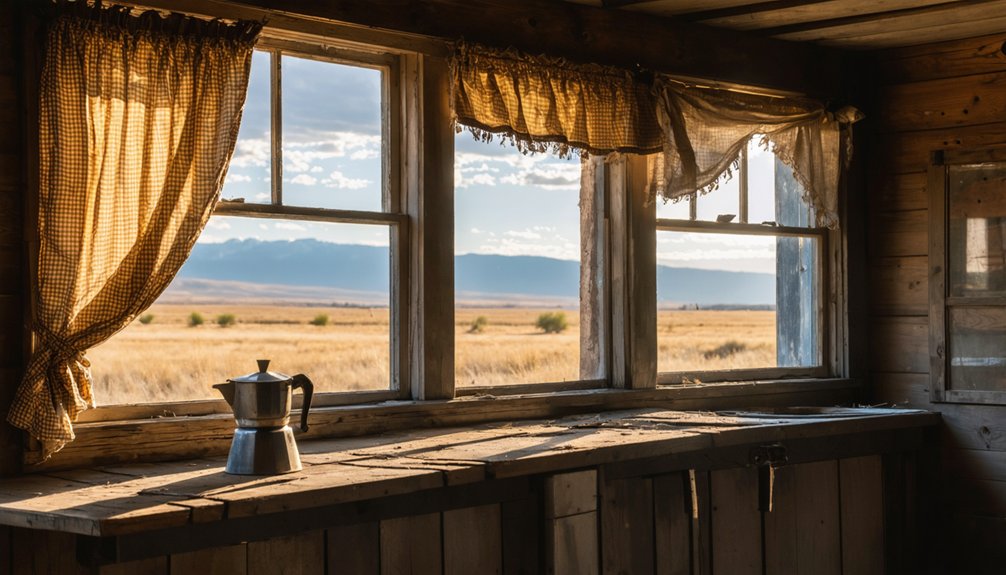
When visiting the weathered remains of once-thriving settlements, you’re not merely exploring abandoned buildings but engaging with living history that demands respect and ethical stewardship.
The cultural significance of these sites extends beyond their physical structures to the stories they hold about America’s frontier past.
Your visitor responsibilities include following Tread Lightly® principles and adhering to legal protections that prohibit removing even seemingly insignificant artifacts like rusty nails or bottle fragments.
Remember that these sites aren’t theme parks but protected heritage locations. Always obtain necessary permissions, stay on designated paths, and practice “take only photographs, leave only footprints.”
Frequently Asked Questions
Are Ghost Towns Legally Accessible Year-Round?
Ghost town accessibility varies dramatically. Public historic sites offer year-round access with seasonal restrictions, while privately owned locations require explicit permission, potentially limiting when you’ll explore these haunting fragments of history.
Can Visitors Take Home Artifacts Found at Ghost Towns?
Picture those dusty relics nestled in weathered earth. No, you can’t take artifacts home. Artifact preservation is protected by law, and you’ll face serious legal ramifications including hefty fines and possible imprisonment.
Do Any Ghost Towns Offer Overnight Accommodation Options?
Yes, you’ll find compelling ghost town accommodations at Gold Point (Nevada), Calico (California), and Jerome Grand Hotel (Arizona), each offering unique lodging experiences from restored miners’ cabins to reportedly haunted hotel rooms.
Are These Ghost Towns Actually Haunted?
You’ll have to take haunted legends with a grain of salt. While paranormal activity is widely reported in these towns, scientific evidence remains elusive—leaving you free to form your own conclusions.
What Wildlife Dangers Should Visitors Be Aware Of?
You’ll encounter predatory wolves, pack-hunting coyotes, javelina, and grave-disturbing scavengers. Take safety precautions against wildlife encounters by carrying deterrents and remaining vigilant, especially in isolated desert environments.
References
- https://www.tripadvisor.com/Articles-loOISRppph64-American_ghost_towns.html
- https://en.wikipedia.org/wiki/Wikipedia:WikiProject_Ghost_towns
- https://explorethearchive.com/western-ghost-towns
- https://m.dresshead.com/files/scholarship/Documents/Ghost_Towns_Lost_Cities_Of_The_Old_West_Shire_Usa.pdf
- https://whakestudios.com/us-ghost-towns/
- https://www.youtube.com/watch?v=2sIM72082jc
- https://www.christywanders.com/2024/08/top-ghost-towns-for-history-buffs.html
- https://dot.ca.gov/-/media/dot-media/programs/environmental-analysis/documents/ser/townsites-a11y.pdf
- https://en.wikipedia.org/wiki/Lists_of_ghost_towns_in_the_United_States
- https://en.wikipedia.org/wiki/Ghost_town