You’ll find spring (March to May) offers ideal conditions for exploring Indiana’s network of over 100 ghost towns, with temperatures ranging from 50-70°F and minimal precipitation. The moderate climate enhances trail accessibility, while early wildflowers mark forgotten cemeteries and historical structures. Spring’s gentle winds and low humidity provide clear visibility of ruins, particularly at sites like Spring Mill Village and Marengo. Seasonal considerations reveal additional factors that can greatly impact your ghost town expedition.
Key Takeaways
- Spring (March to May) offers optimal exploration conditions with moderate temperatures around 50-70°F and minimal rainfall for better site access.
- Fall provides spectacular scenic views with autumn colors, making ghost towns visually striking, especially in the Wabash Valley region.
- Winter visits reveal unique snow-covered landscapes but pose risks with temperatures below 20°F and potential access limitations.
- Spring wildflowers mark forgotten cemetery locations and enhance visibility of pioneer structures at sites like Spring Mill Village.
- March is particularly favorable with lowest precipitation (3 inches), humidity below 60%, and gentle winds for clear ruins visibility.
Seasonal Weather Patterns Affecting Ghost Town Exploration
While Indiana’s ghost towns beckon curious explorers year-round, the state’s distinct seasonal weather patterns greatly impact both accessibility and safety during visits.
With over 100 documented locations scattered across Indiana, careful planning around weather conditions is essential for visiting these historic sites.
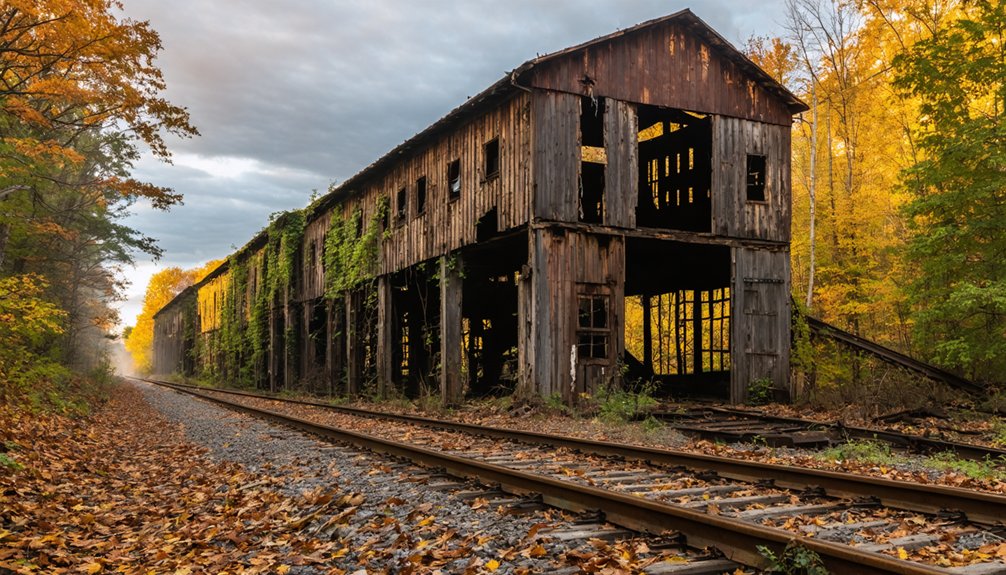
Fall offers visitors peak fall colors and spectacular scenery in places like Taylorville and surrounding ghost towns in the Wabash Valley.
Given the limited available data on seasonal conditions affecting these historic sites, you’ll need to research current weather forecasts and local climate patterns before planning your expedition.
The search for detailed information about seasonal temperatures and precipitation patterns at Indiana’s ghost town locations remains an important prerequisite for any exploration attempt.
Understanding regional climate data is essential for safely exploring Indiana’s ghost towns and planning optimal visit timing.
Without specific meteorological data to guide timing decisions, it’s advisable to contact local historical societies and weather services to gather accurate seasonal information for your intended ghost town destinations.
This knowledge gap underscores the necessity of thorough preparation and flexibility in scheduling your visits to these abandoned settlements.
Spring’s Hidden Treasures: March to May
You’ll find Indiana’s ghost towns most accessible during the spring months of March through May, when moderate temperatures and drier conditions create ideal exploration environments for sites like the Rose Island ruins and Spring Mill Village.
The seasonal timing aligns perfectly with the reopening of regional attractions such as Bluespring Caverns, where you can investigate underground passages connected to several abandoned settlements. Visitors interested in haunted history can explore Stranger Things of SoIN digital passport locations year-round to discover local oddities and abandoned sites. If you’re also interested in unique historic sites, make sure to visit the Rotary Jail Museum, the world’s only operational rotating jail.
Spring’s natural awakening brings wildflowers along the Ghost Town Trail and reveals previously obscured structural remains throughout southern Indiana’s 41 documented ghost town locations.
Perfect Weather Conditions
Spring emerges as the premier season for ghost town exploration in Indiana, with March through May offering exceptional conditions for both preservation and visitor comfort. Taking advantage of spring’s mild conditions lets you explore remnants of abandoned historical structures near Indiana Dunes State Park. Ghost hunters investigating sites like Story Inn report clearer supernatural activity during spring months.
The ideal visitation window capitalizes on the weather impact that creates perfect exploration conditions:
- Temperatures progress ideally from March’s 50-55°F highs to May’s comfortable 70°F peaks, with moderate overnight lows that won’t impede your adventures.
- Precipitation holds steady at 3-4 inches monthly, with March being the driest at 2.5-3 inches.
- Humidity stays below 60%, ensuring clear visibility of historic ruins and structures.
- Gentle winds averaging 5-10 mph minimize dust interference at exposed sites like City West.
These conditions combine with extended daylight hours – reaching 14.5 by May – giving you ample time to explore these fascinating historical sites.
Trail Access Opens
As winter’s grip loosens across Indiana, an extensive network of ghost town trails reveals its hidden treasures between March and May, with eight strategically placed access points now welcoming visitors along the 46-mile route.
You’ll find well-equipped visitor facilities at key entry points, with Dilltown offering the most thorough amenities including restrooms, water, and picnic areas.
The trail’s westernmost access at Saylor Park connects you to the Hoodlebug Trail, while Heshbon provides seasonal facilities.
The recently completed Cambria County extension adds three miles east of Nanty Glo, expanding your exploration options.
The National Recreation Trail designation by the Department of the Interior ensures maintained standards throughout the system.
The hard-packed limestone surface, maintaining a gentle 3% grade, makes spring navigation accessible from sunrise to sunset.
From Wehrum’s industrial remnants to the historic Eliza Furnace, each access point serves as a gateway to Indiana’s rich mining heritage. A visit to the Buena Vista Furnace offers insights into 19th-century iron production, where workers once produced 400 tons of pig iron yearly.
Historical Sites Bloom
The historical tapestry of Indiana’s ghost towns unfolds most vividly during the March-to-May window, when nature’s awakening enhances access to preserved structures and forgotten settlements.
Historical preservation efforts shine through as spring’s mild temperatures reveal previously hidden architectural details across 41 documented ghost town sites.
You’ll discover these ghost town legends at their most accessible when you explore during spring:
- Pioneer structures at Spring Mill Village emerge amid blooming trillium and mountain laurel
- Marengo’s cave-adjacent ruins stand clear before summer foliage obscures them
- Angel Mounds’ earthen architecture gains definition in spring lighting
- Rose Island’s remaining foundations at Charlestown peek through budding greenery
Early wildflowers frame forgotten cemeteries while providing natural markers to remote speakeasy locations and abandoned town squares throughout southern Indiana.
These abandoned communities serve as time capsules of past settlements, preserving the stories and memories of their former inhabitants.
Local residents often report seeing icy cold spots near these historical ruins, similar to the paranormal activity documented at Fort Wayne’s Embassy Theater.
Summer Ghost Town Photography Tips
While summer heat challenges photographers in Indiana’s ghost towns, this season offers exceptional opportunities for capturing haunting images of abandoned structures.
Despite harsh summer conditions, Indiana’s ghost towns reveal their most captivating secrets to patient photographers seeking abandoned beauty.
You’ll find that golden hour provides dramatic shadows across weathered buildings, while midday light helps illuminate dark tunnels and passageways during urban exploration sessions. To maximize your shots, equip yourself with a sturdy tripod, wide-angle lens, and proper cleaning kit to combat dusty conditions.
For night photography, utilize long exposures to capture star trails above silent streets. Focus on key structures like jails and saloons, incorporating unique details such as rust patterns, peeling paint, and historic artifacts.
Remember to research locations beforehand, secure necessary permits, and follow safety protocols when traversing unstable terrain. Black and white processing can enhance the textural qualities of your captured ruins.
Autumn Colors at Abandoned Sites
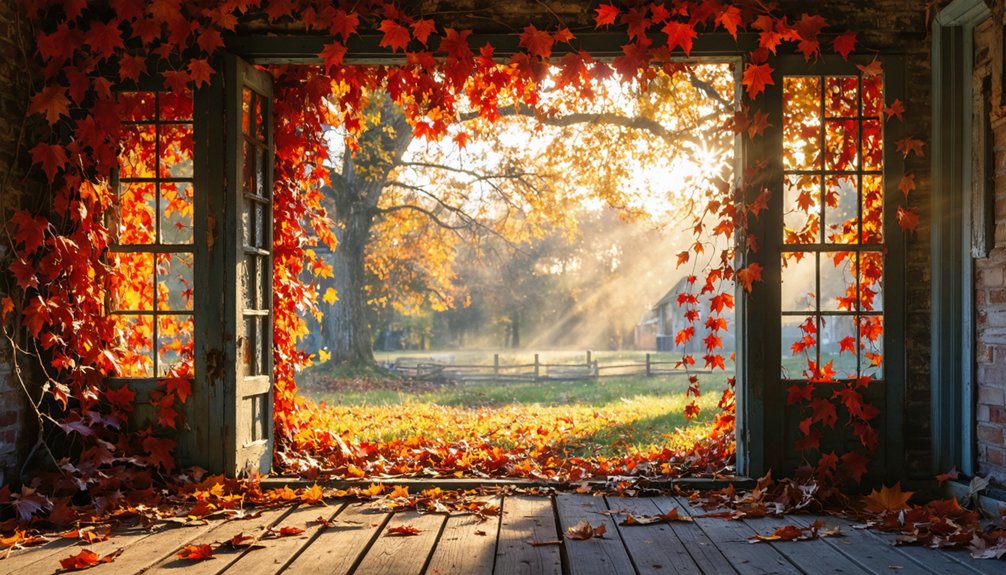
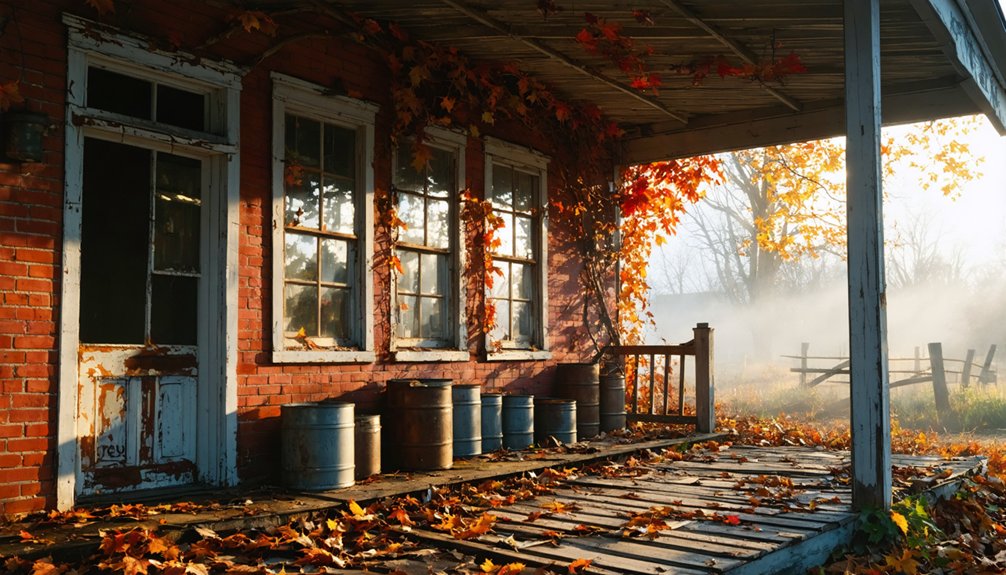
Indiana’s ghost towns transform into visual masterpieces during autumn months, particularly across Brown County’s rolling hills where abandoned structures stand against a backdrop of fiery reds and golden hues.
The fall season offers unparalleled ghost town aesthetics for both explorers and photographers.
- Brown County’s historic sites, including Elkinsville, showcase peak autumn photography conditions during October.
- The Parke County Covered Bridge Festival coincides with maximum fall foliage, creating ideal exploration opportunities.
- Natural lighting conditions enhance documentation of architectural details and structural remains.
- Late September through October provides perfect temperatures for outdoor site visits.
You’ll find these abandoned locations most enchanting during autumn’s peak, when surrounding foliage creates dramatic contrasts against weathered structures.
The season’s transformation adds depth to historical documentation while offering comfortable exploration conditions.
Winter Adventures in Historical Ruins
Exploring ghost towns during winter months reveals a dramatically different experience, as snow-dusted ruins and frozen landscapes transform historical sites into ethereal scenes worthy of documentation.
You’ll find ideal winter photography conditions at sites like Rose Island in Charlestown State Park, where interpretive signs guide you through the abandoned amusement park’s remains.
At Indiana Dunes State Park, trek 1.5 miles across three mountains to discover City West ghost town, with Chicago’s skyline visible from the beach pavilion rooftop.
Trek across the snow-covered dunes to City West’s remains, where winter reveals stunning Chicago views from the abandoned pavilion.
Local ghost town legends intensify during these darker months, particularly at Devil’s Hollow north of Fort Wayne, where full moon nights attract paranormal enthusiasts.
For the best experience, explore multiple Southern Indiana state parks, where maintained trails provide year-round access to frozen waterfalls, historical ruins, and never-freezing springs at locations like Spring Mill State Park.
Planning Your Ghost Town Road Trip
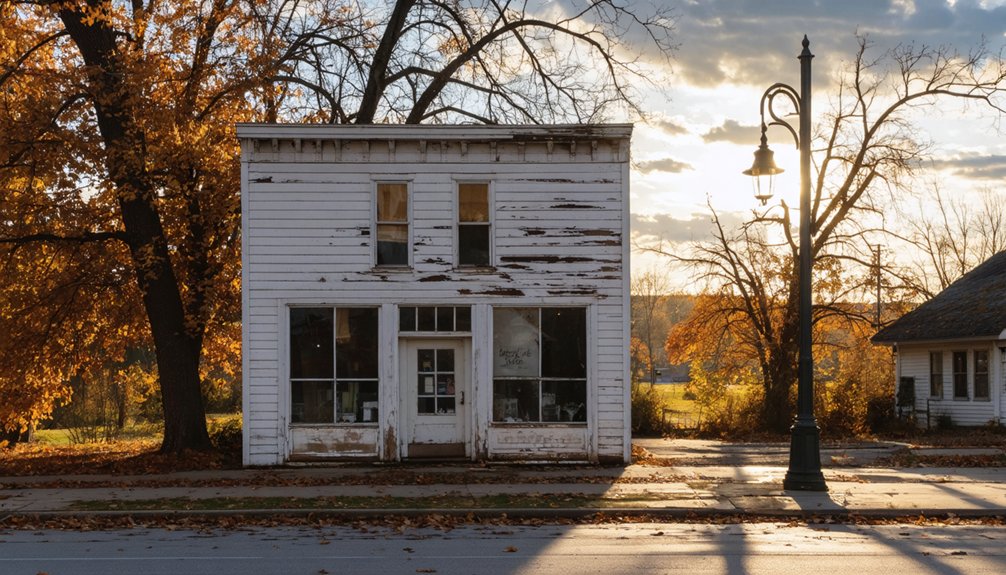
Your ghost town expedition through southern Indiana requires careful route mapping between accessible locations like Marengo, Greenville, and Tunnelton, which are best visited during spring and fall months when weather conditions are mild and daylight hours are ample.
You’ll need to account for varying road conditions, as some locations require travel on unpaved paths that can become hazardous during winter frost or spring thaws.
Consider clustering your visits geographically, starting with the well-preserved Masonic lodge at Greenville before heading southeast to explore Tunnelton’s historic railway tunnel, maximizing your time at each location while maintaining efficient travel between sites.
Essential Route Planning Tips
When planning an extensive ghost town excursion across Indiana’s historic sites, careful route mapping becomes essential for maximizing exploration of the 552-mile network of abandoned settlements and paranormal destinations.
The route highlights encompass diverse visitor experiences, from historical landmarks to reportedly haunted locations.
- Utilize the combined trail maps and Google Maps integration to navigate the three connected trail sections, ensuring thorough coverage of key destinations like the Randolph County Infirmary and Crown Hill Cemetery.
- Consider breaking the journey into manageable segments using the available PDF maps for specific trail portions.
- Include stops at significant historical sites like Underground Railroad hubs and pioneer settlements.
- Plan accommodations strategically, with options like The Story Inn providing convenient access to multiple ghost town clusters.
Seasonal Location Accessibility
The seasonal patterns across Indiana’s ghost towns greatly shape accessibility throughout the year, with distinct variations between the state’s northern, southern, eastern, and western regions.
You’ll find Fort Wayne’s historical significance preserved through year-round ghost tours, while Metamora’s urban legends come alive during specialized Halloween events.
Southern locations like English and Youngs Creek remain accessible except during construction periods, with gravel roads passable outside heavy rains.
The eastern region offers consistent access via Laurel’s secluded crossroads and Bath’s scenic drives, while western sites near Saline City maintain year-round availability.
For best exploration, target dry seasons when traversing railroad-adjacent paths and flood-prone areas, particularly around relocated historical sites like Worthington and the Ohio River valley settlements.
Safety Considerations by Season
Each season brings distinct safety challenges when exploring Indiana’s ghost towns, requiring careful preparation and awareness of environmental conditions. As you venture through these historic sites, you’ll need to adapt your approach based on seasonal hazards and changing terrain.
- Spring’s slippery trails and flooding risks near reservoirs demand waterproof footwear and careful path selection.
- Summer introduces risks of heat exhaustion above 90°F, while dense vegetation harbors ticks and limits visibility.
- Fall’s leaf litter conceals terrain hazards, and early darkness shortens safe exploration time.
- Winter temperatures below 20°F create hypothermia risks, while snow and ice make remote locations inaccessible.
Wildlife encounters vary by season, from snakes in warmer months to year-round rodent activity.
You’ll need to maintain vigilance for structural instability and respect private property boundaries regardless of season.
Frequently Asked Questions
Are Any Indiana Ghost Towns Legally Restricted From Public Access?
You’ll find Monument City’s ghost town history highlights public access restrictions – while most Indiana ghost towns are accessible, specific locations may be off-limits due to private property ownership or safety concerns.
Which Ghost Towns Have the Most Intact Original Buildings Still Standing?
You’ll find New Harmony has the most intact structures, with numerous preserved 1820s buildings protected as a National Historic Landmark. Millville follows, featuring restored canal-era buildings under state preservation efforts.
Do Any Ghost Towns Offer Guided Historical Tours?
You’ll find guided tours with historical insights in New Harmony’s ghost town district, where knowledgeable guides lead 90-minute walks through moonlit streets and preserved buildings from Indiana’s utopian community past.
Where Can I Find Detailed Maps of Underground Tunnels in Ghost Towns?
You’ll find limited public access to tunnel exploration maps, though historical societies maintain some records. For safety and preservation, most detailed underground layouts aren’t publicly shared due to their historical significance.
Are Metal Detectors Allowed When Exploring Indiana Ghost Town Sites?
You’ll need written permission from the property owner before metal detecting in Indiana ghost towns. Follow metal detecting regulations and ghost town etiquette by avoiding historical structures and filling any holes you dig.
References
- https://wkdq.com/southern-indiana-ghost-towns/
- http://freepages.rootsweb.com/~gtusa/history/usa/in.htm
- https://www.onlyinyourstate.com/experiences/indiana/ghost-towns-in
- https://www.noblegenealogy.org/ghosts.html
- https://www.geotab.com/ghost-towns/
- https://www.youtube.com/watch?v=45D4dbASJyE
- https://storymaps.arcgis.com/stories/9a3b3f4a63ba4031a46cb53907a0515c
- https://kids.kiddle.co/List_of_ghost_towns_in_Indiana
- https://www.youtube.com/watch?v=U2wchT3Yz_Y
- https://en.wikipedia.org/wiki/List_of_ghost_towns_in_Indiana