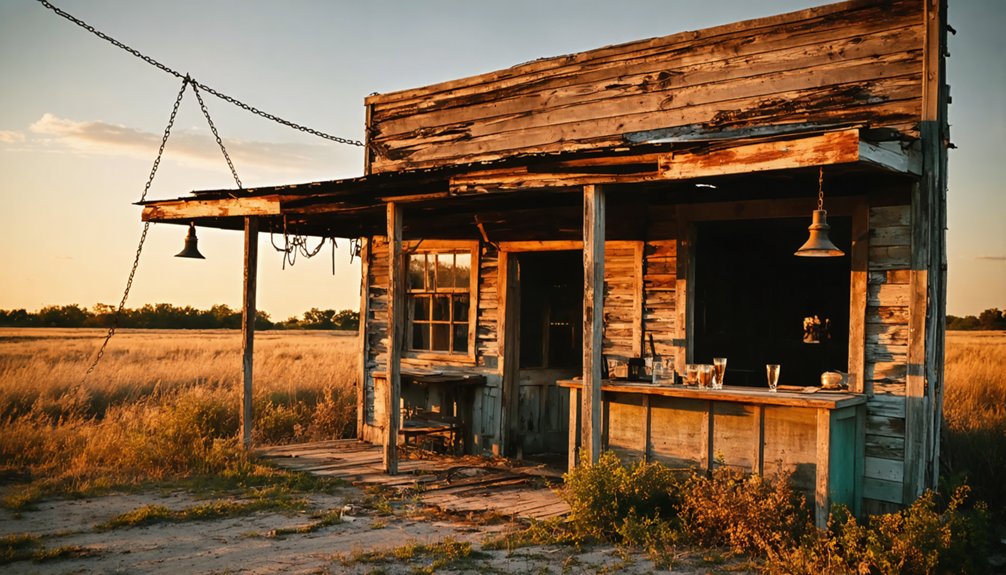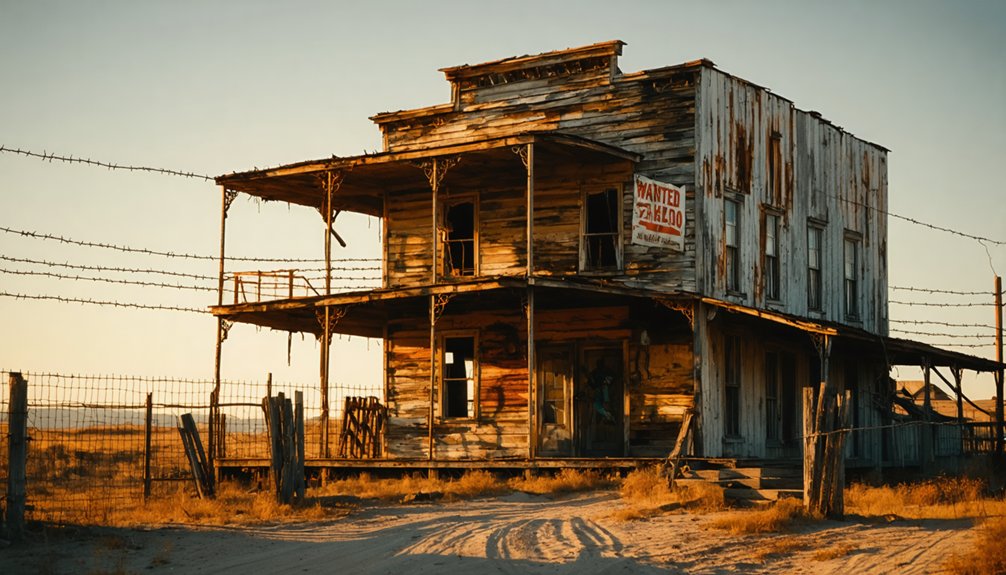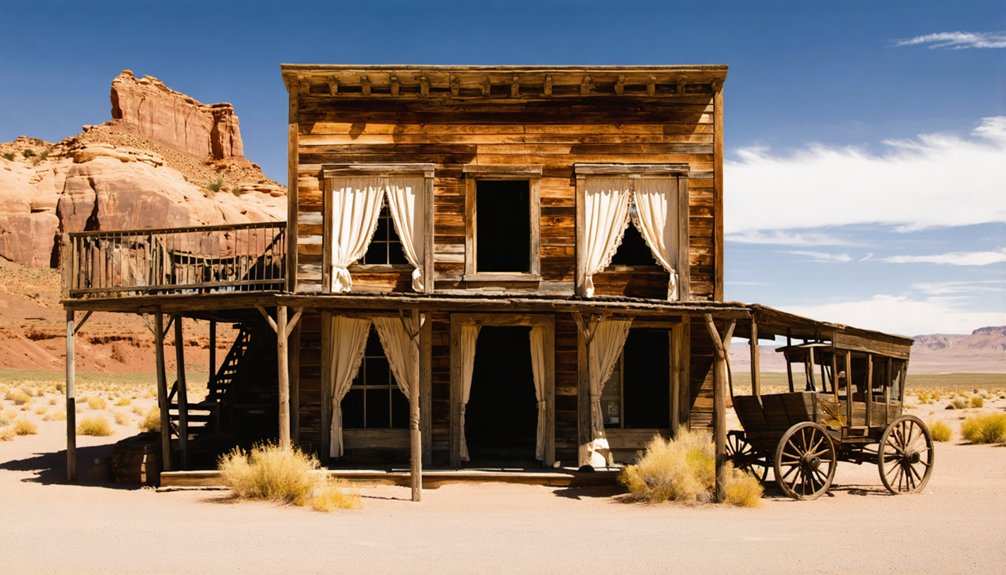
Utah’s forgotten ghost towns reflect the state’s boom-and-bust past. You’ll find Silver Reef, where improbable sandstone silver deposits created wealth before floods ended mining by 1891. Visit Grafton, established in 1859 by Mormon pioneers seeking self-sufficiency, or Frisco, once so lawless it averaged a murder daily. Old Irontown showcases industrial ambitions with its abandoned foundry. These silent settlements reveal stories of resilience against harsh conditions and economic volatility.
Key Takeaways
- Silver Reef boomed with nearly 2,000 residents and extracted $25 million in silver before becoming a ghost town by the 1890s.
- Frisco gained notoriety for its lawlessness, averaging one murder daily with 23 saloons until the Horn Silver Mine collapsed in 1885.
- Grafton, established in 1859 during the Mormon Cotton Mission, grew to 168 residents before environmental challenges forced abandonment.
- Old Irontown produced up to seven tons of pig iron daily until economic difficulties forced its closure in 1876.
- Iosepa, founded in 1889 for Hawaiian LDS converts, maintained cultural heritage until disbanding in 1917, leaving only a cemetery.
The Mormon Cotton Mission: Grafton’s Rise and Fall

When Brigham Young initiated the Mormon Cotton Mission in the 1850s, he envisioned a network of self-sufficient settlements that would free Utah from dependence on outside cotton imports.
Brigham Young’s Cotton Mission sought to create independent communities, liberating Utah from external textile markets.
Grafton, established in 1859 by five determined families, became a symbol of community resilience amid harsh conditions.
You’ll find that cotton cultivation thrived briefly, especially during the Civil War when demand spiked.
The settlers faced numerous challenges including constant irrigation maintenance as sand regularly filled their ditches, requiring community-wide efforts to keep their farms viable.
Despite persistent flooding, disease outbreaks, and Native American conflicts, Grafton grew to 168 residents by the late 1860s, making it the second largest settlement in the Virgin Valley.
The adobe schoolhouse, built in 1886, still stands as evidence of their determination.
Silver in Sandstone: The Unlikely Boom of Silver Reef
You’ll find that Silver Reef defied geological expectations with its unprecedented silver deposits in sandstone formations, an anomaly that attracted thousands of miners and investors during the late 1870s.
The town’s rapid rise to a population of nearly 2,000 residents included a thriving business district, social amenities, and over 450 mine openings before economic challenges, labor disputes, and declining silver prices triggered its downfall. Originally named Bonanza City in 1875, the settlement was renamed Silver Reef by February 1877 as its popularity grew.
Silver Reef’s remnants, preserved as a historic district today, offer evidence to the $25 million in silver extracted from its unusual geological setting before it became a ghost town by the 1890s. Among the most notable structures still visible are the ruins of the Wells Fargo Express office, which was partially restored in 1949 and documented in historical photographs.
Unusual Geological Discovery
Among the most extraordinary geological anomalies in America’s mining history, the discovery of silver in sandstone at what would become Silver Reef stands as a scientific curiosity that defied conventional geological understanding.
When John Kemple found silver-streaked white sandstone in 1866 near Harrisburg, Utah, experts initially dismissed him. Silver mining in sandstone was considered geologically impossible. The deposit’s uniqueness became apparent when assays confirmed high-grade horn silver (silver chloride) within the Springdale Sandstone formation.
The mineralization resulted from a complex process: metals from Triassic volcanic tuffs dissolved, transported, and precipitated within sandstone folds. This rare combination of silver chloride without significant base-metal sulfides created a virtually unprecedented deposit. The bonanza-grade ores discovered in the area eventually led to the establishment of Silver Reef mining camp around 1880.
The unusual ore body contained trace uranium, vanadium, and selenium—elements that further distinguished Silver Reef’s geological anomalies from traditional silver mining districts worldwide. Despite finding this remarkable deposit, Kemple faced persistent disbelief from locals and assayers who accused him of salting his samples to falsify results.
Boom and Bust Cycle
Silver Reef’s meteoric rise and dramatic fall epitomizes the classic boom-and-bust pattern of Western mining towns.
You’ll find that after the 1871 discovery, the area exploded with activity, reaching peak production between 1878-1882 when miners extracted 70% of silver from the Buckeye Reef.
This prosperity was short-lived, as economic instability set in by 1881 when mining operations slashed wages, triggering a worker exodus. Main Street, once lined with numerous businesses creating a bustling community, declined rapidly as miners and merchants abandoned the area. The town once reached a peak population of approximately 2,500 during its heyday.
- Over 7 million ounces of silver extracted before 1910
- Three major companies abandoned operations between 1883-1889
- Water infiltration overwhelmed pumping capabilities, increasing costs
- Silver market collapse devastated the town’s economic foundation
- By 1909, all significant mining had ceased, leaving Silver Reef virtually abandoned
The town’s buildings were dismantled and relocated, erasing much physical evidence of the once-thriving community.
Remains and Preservation
Though Silver Reef’s rapid decline left a ghost town in its wake, remarkable physical remnants have survived to tell the story of this unique mining community. The 1877 Wells Fargo Express office stands as a centerpiece of ghost town architecture alongside remnants of a horse race track and two cemeteries.
The Silver Reef Foundation operates the Wells Fargo Silver Reef Museum, preserving artifacts and stories from this rare geological wonder where silver emerged from sandstone. At its peak, the town boasted a population of approximately 2,000 by 1879, with numerous businesses establishing themselves during the height of the silver boom.
During the 1990s-2000s, Utah’s Abandoned Mines Reclamation Program secured over 450 mine openings for public safety.
Community engagement through tours and educational programs maintains Silver Reef’s legacy despite challenges from looting.
Preservation efforts highlight the town’s multicultural past, including Chinatown districts, creating a thorough historical narrative of this anomalous mining settlement.
Forging History: Old Irontown’s Industrial Legacy
The ambitious iron-making settlement of Old Irontown emerged in 1868 near Iron Mountain as Mormon pioneers‘ second attempt to establish a viable iron industry after disappointing yields in Cedar City.
Mormon pioneers’ determination to build a self-sufficient iron industry led to Old Irontown’s founding in 1868 near Iron Mountain.
You’ll find this industrial heritage site represents Mormon self-sufficiency ideals, producing essential iron goods for a growing frontier society. At its peak, the operation produced five to seven tons of pig iron daily using sophisticated smelting techniques. The town survived until 1876 when economic challenges forced its closure.
- Iron ore was extracted from nearby mountains and processed in a 2,500-pound capacity furnace
- Distinctive beehive-shaped kilns converted local timber into charcoal fuel
- Products included wagon wheels, dutch ovens, and materials for the St. George LDS temple
- The operation employed specialized facilities including pattern shops, molding areas, and an Arastra grinding device
Frisco: From Wild West Boomtown to Desolate Desert

When you visit the desolate ruins of Frisco today, it’s hard to imagine that this remote desert site once hosted one of Utah’s most notorious boomtowns. Founded in 1875 after rich silver deposits were discovered, Frisco quickly gained infamy for its exceptional lawlessness—averaging one murder per day during peak years across its 23 saloons and numerous brothels.
The town’s fate was sealed by reckless mining practices. On February 12, 1885, insufficient tunnel timbering caused the Horn Silver Mine to collapse dramatically—an event felt miles away in Milford.
Though no lives were lost, production never recovered.
Thistle: A Modern Ghost Town Created by Natural Disaster
Unlike most abandoned settlements in Utah’s ghost town inventory, Thistle stands as a haunting reminder that not all ghost towns belong to the distant past.
In April 1983, this once-thriving railroad community met its fate when unprecedented precipitation triggered a devastating landslide that dammed the Spanish Fork River. The resulting Thistle disaster became the costliest landslide in U.S. history, submerging the town and forcing residents to evacuate with merely hours’ notice.
- Founded in 1883 with 417 residents at its peak in 1920
- Landslide created a 220-foot high natural dam and artificial lake
- Damages exceeded $200 million, marking Utah’s first presidential disaster declaration
- Severed essential transportation routes including two major highways and railroad connections
- Community legacy lives on through photographs and stories of multi-generational families who lost their homes
Iosepa: The Hawaiian Outpost in Utah’s Desert
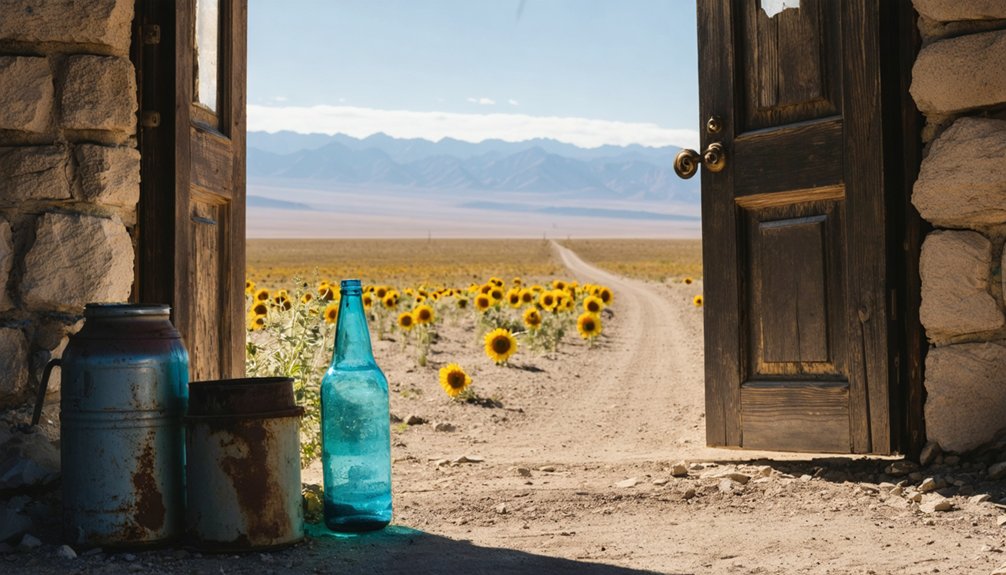
Nestled within Utah’s arid Skull Valley lies Iosepa, perhaps the most culturally unique ghost town in the American West. Founded in 1889, this settlement housed Hawaiian converts to The Church of Jesus Christ of Latter-day Saints who sought proximity to Salt Lake City’s temples.
Despite harsh desert conditions, residents maintained their Hawaiian heritage through traditional street names, cultural practices, and community values. This cultural resilience flourished even as they faced discrimination, economic hardship, and health challenges, including leprosy cases in 1896.
The colony disbanded by 1917 when Hawaii received its first LDS temple, prompting residents to return home.
Today, only the cemetery and scattered foundations remain, but descendants honor their ancestors with annual Memorial Day gatherings featuring traditional foods, dancing, and grave decorations.
Visiting Utah’s Ghost Towns: What to Expect Today
While Iosepa’s poignant story captures the cultural richness of Utah’s ghost towns, modern visitors face practical considerations when exploring these abandoned settlements.
In addition to Utah’s rich history, the ghost towns of California history offer a fascinating glimpse into the Gold Rush era, attracting adventurers and history buffs alike. Each abandoned site tells a unique story of optimism and decline, inviting visitors to imagine the lives once lived in these now-silent streets. Exploring these remnants of the past can be both eerie and enlightening, revealing the transformative impacts of time and change on communities.
In addition to the ghost towns in Washington state, which hold their own tales of abandonment, visitors can uncover the stories behind the relics of past settlements strewn across the landscape. Each location reveals how the pursuit of opportunity often led to disappointment, leaving behind haunting reminders of what once was. As travelers venture through these ghost towns, they can gain a deeper understanding of the economic shifts and societal changes that shaped them.
Ghost town accessibility often requires traversing remote dirt roads with limited signage and amenities. You’ll find most sites offer minimal facilities—no restrooms or water sources—so come prepared. When exploring, respect both historical structures and potential property boundaries.
- Bring detailed coordinates and maps, as cell service is unreliable (AT&T generally offers best coverage)
- Wear sturdy, closed-toe footwear for uneven terrain and unstable structures
- Visit preserved towns like Grafton or Silver Reef for interpretive signs and maintained trails
- Research seasonal conditions; many sites become inaccessible during winter months
- Prioritize visitor safety by avoiding unstable buildings and respecting off-limits areas
The Mining Legacies That Built and Broke Communities

Beneath Utah’s rugged landscape lies a rich mining heritage that both created and destroyed entire communities in the late 19th and early 20th centuries. Towns like Silver Reef, Frisco, and Eureka transformed overnight from barren terrain into bustling hubs with populations reaching thousands.
These community transformations hinged entirely on mineral wealth—silver, gold, copper, and iron.
The mining impacts were equally dramatic in their decline. When Silver Reef’s mines flooded in 1891, the town rapidly emptied. Frisco’s population vanished after a devastating mine collapse in 1885.
The boom of mining towns was matched only by their spectacular downfall—entire communities erased by a single flooded shaft or collapsed tunnel.
Despite revival attempts—including Silver Reef’s uranium mining phase from 1951 to the 1980s—most towns couldn’t overcome resource depletion, fires, and flooding.
Today, remnants like Old Iron Town’s beehive kilns and Eureka’s preserved structures stand as silent indicators to boom-and-bust cycles that defined Utah’s mining frontier.
Preserving the Past: Conservation Efforts for Utah’s Abandoned Towns
While abandoned towns like Grafton receive thorough restoration through dedicated nonprofit efforts, others remain in a state of natural decay, presenting contrasting approaches to historical preservation.
The Grafton Heritage Partnership Project exemplifies successful conservation through its meticulous restoration of adobe structures and acquisition of surrounding lands that maintain the town’s historical context.
Protection of historical artifacts faces ongoing challenges from vandalism and environmental threats, requiring communities to establish clear priorities for preserving these tangible connections to Utah’s pioneering past.
Restoration vs. Abandonment
As Utah’s ghost towns face the inevitable pressure of time and elements, restoration efforts have emerged as a critical counterbalance to abandonment and decay.
You’ll find stark contrasts between preserved sites like Grafton, where restoration benefits include functioning as outdoor museums of pioneer life, and forgotten towns that succumb to nature’s reclamation.
The consequences of abandonment are evident in crumbling structures, vandalism, and the permanent loss of historical narratives.
- Nonprofits like the Grafton Heritage Partnership actively rebuild schoolhouses and churches
- Restored sites generate tourism revenue supporting local economies
- Abandoned structures face accelerated deterioration from weather and souvenir hunters
- Regular maintenance schedules prevent the complete disappearance of historical buildings
- Self-guided tours in preserved towns offer educational experiences unavailable at neglected sites
Historical Artifacts Protection
The preservation of historical artifacts in Utah’s ghost towns represents a delicate balance between access and protection. When you visit these sites, you’re witnessing the ongoing struggle between artifact preservation and natural deterioration.
Federal laws prohibit removing items, but enforcement remains challenging due to remote locations and limited site monitoring resources.
Organizations like the Grafton Heritage Partnership Project have implemented strategic conservation methods, including structural restoration and interpretive signage that educates without endangering artifacts.
Archaeological teams employ sophisticated documentation techniques such as 3D modeling to catalog discoveries before they’re lost to the elements or vandalism.
You’ll notice that the most successful preservation efforts combine controlled access through mapped trails and guided tours with educational initiatives that discourage destructive behaviors while still allowing you to experience these historical treasures authentically.
Hidden Histories: The Untold Stories of Utah’s Ghost Town Residents

Hidden beneath the weathered ruins and abandoned structures of Utah’s forgotten settlements lie personal stories that rarely make it into conventional history books. These narratives reveal the cultural heritage and community resilience of ordinary people who faced extraordinary challenges.
Forgotten Utah settlements conceal untold stories of resilience, cultural heritage, and the extraordinary struggles of ordinary people.
You’ll find evidence of lives marked by perseverance amid hardships—Mormon pioneers who repeatedly rebuilt after devastating floods, families who endured dangerous tensions during the Black Hawk War, and communities that adapted to harsh environmental conditions.
- Hawaiian Mormon converts establishing cultural outposts like Iosepa
- Families reuniting annually to honor their ancestral connections to places like Grafton
- Mining town residents creating vibrant social lives despite isolation
- Agricultural settlers relocating multiple times due to environmental challenges
- Diverse populations including Chinese railroad workers challenging the frontier myth
Frequently Asked Questions
Were Any Ghost Towns Successfully Revitalized in Modern Times?
Yes, Grafton and Silver Reef exemplify successful revitalization efforts through modern preservation techniques, restoring buildings and establishing educational exhibits while maintaining their historical significance through nonprofit partnerships.
What Paranormal Activities Have Been Reported in These Abandoned Towns?
Over 60% of Utah’s ghost towns report paranormal activity. You’ll encounter ghost sightings like the “White Lady” in Spring Canyon, haunted locations with disembodied whispers, and unexplained lights at historically violent mining settlements.
In addition to Utah, haunted ghost towns in Oklahoma also draw those intrigued by the supernatural. These locations, rich with history, tell stories of once-thriving communities that now sit in eerie silence, often enveloped in tales of wandering spirits. Visitors may find themselves captivated by the remnants of the past while hoping to catch a glimpse of the paranormal.
Among the ghost towns to explore in Utah, each has its own unique narrative that adds depth to the experience. The intriguing blend of history and mystery encourages visitors to delve into the tales of the past while navigating through remnants of forgotten lives. As adventurers wander these desolate places, they may encounter echoes of history and the spectral whispers of those who once called these towns home.
How Did Native Americans Interact With These Settler Communities?
You’ll find Native Americans had complex interactions with settlers—initially engaging in trade relationships and cultural exchanges before tensions escalated into violent conflicts over land rights and resources that ultimately displaced indigenous communities.
Which Ghost Town Is Most Accessible for Visitors With Mobility Limitations?
Park City offers you the most accessibility with wheelchair-friendly visitor facilities, accessible routes through downtown, and ADA-compliant museum exhibits showcasing Utah’s mining history without compromising your independence.
What Items Can Legally Be Collected From These Historic Sites?
You can’t legally collect any artifacts from ghost towns. These sites have strict legal limitations prohibiting removal of collectible artifacts as they’re typically on private property or protected historic sites.
References
- https://www.valleyjournals.com/2024/10/02/507818/exploring-utah-s-ghost-towns-seven-abandoned-settlements-with-fascinating-histories
- https://kasbyrealestate.com/2022/11/22/7-utah-county-ghost-towns-and-the-fascinating-stories-behind-them/
- https://www.visitutah.com/things-to-do/history-culture/ghost-towns
- https://www.utahlifemag.com/blog/post/4-ghost-towns
- https://www.deseret.com/utah/2024/06/03/how-to-visit-utah-ghost-towns/
- https://www.grandcountyutah.net/388/Ghost-Towns-Communities
- https://en.wikipedia.org/wiki/List_of_ghost_towns_in_Utah
- https://history.utah.gov/wp-content/uploads/2018/08/Maps-GhostTowns.pdf
- https://www.canyoneeringusa.com/zion/hikes/grafton
- https://graftonheritage.org/history-settlement/