Planning a ghost town road trip to Albert, Texas is easier than you’d think. Tucked in the Texas Hill Country, it sits halfway between Fredericksburg and Johnson City along US Highway 290, making it a natural stopping point. You’ll find a restored dance hall, a historic icehouse, and a legendary oak tree that’s stood for generations. It’s open daily, so there’s no complicated itinerary required — and there’s far more to this quiet little town’s story than you’d expect.
Key Takeaways
- Albert, Texas, sits halfway between Fredericksburg and Johnson City along US Highway 290, making it an ideal ghost town day-trip destination.
- Access Albert via Lower Albert Road from US 290, then follow Ranch Road 1623 into this quiet, scenic Hill Country community.
- Key historic sites include a restored dance hall, an icehouse, and a landmark oak tree, all maintained and open daily.
- Lyndon B. Johnson attended Williams Creek School in Albert, adding significant historical depth to your visit.
- Plan a leisurely afternoon visit, bring cash, and pair Albert with stops in Fredericksburg and Johnson City for a full day trip.
Is Albert, Texas Actually a Ghost Town?
Although Albert, Texas carries the ghost town label, it’s not exactly a hollow shell of a forgotten past. By 2007, the town was nearly abandoned, but historical preservation efforts brought it back to life.
Insurance broker Bobby Cave purchased the property in 2004 for $216,000, restored the structures, and reopened the site as a functioning destination.
Current owners Chris Horne and John Hay continue welcoming visitors today.
Where Albert, Texas Is and How to Get There
You’ll find Albert tucked into the Texas Hill Country in Gillespie County, roughly 16 miles southeast of Fredericksburg and about halfway between Fredericksburg and Johnson City.
To get there, head south off US Highway 290 onto Lower Albert Road, or follow FM 1623 through the rolling ranchland until the old structures come into view.
The drive itself sets the tone, putting you on quiet Hill Country backroads with Blanco County just a mile to the east.
Albert’s Hill Country Location
Tucked into the Texas Hill Country, Albert sits in Gillespie County about 16 miles southeast of Fredericksburg, roughly halfway between Fredericksburg and Johnson City. It’s a quiet stretch of open road where historical architecture and local legends meet the freedom of the Hill Country landscape.
To reach Albert, keep these landmarks in mind:
- FM 1623 runs directly through town — your main navigational anchor.
- US Highway 290 connects you south via Lower Albert Road toward the community.
- The Blanco County line sits just one mile east, marking Albert’s edge of Gillespie County.
You’re fundamentally threading between two iconic Texas towns, making Albert a natural midpoint stop that rewards curiosity without demanding much of your time or your route.
Roads Leading To Albert
Getting to Albert is straightforward once you know which roads to trust. From US Highway 290, head south on Lower Albert Road, and you’ll find yourself rolling through open Hill Country terrain toward FM 1623, also called Ranch Road 1623.
That road carries you directly into what remains of this quiet, storied community.
Albert sits roughly halfway between Fredericksburg and Johnson City, making it a natural midpoint stop on any westward or eastward drive.
You won’t need a detailed map — just open road instincts and a willingness to slow down.
Once you arrive, the historical architecture and local legends do the talking.
The dance hall, the icehouse, and the grand oak anchor the site, pulling you into a place where Texas history still breathes.
Nearby Towns And Landmarks
Albert sits close enough to both Fredericksburg and Johnson City that either town makes a natural base for your visit. You’re roughly halfway between two of the Texas Hill Country’s most storied stops, which means you can pack your day with history without backtracking.
Three landmarks worth anchoring your route around:
- Fredericksburg – German historical architecture lines Main Street, and local legends of pioneer settlement run deep here.
- Johnson City – Lyndon B. Johnson’s boyhood home connects directly to Albert’s own school history.
- Luckenbach, Texas – Just a short drive away, it shares a direct family tie to Albert’s founding story through the Luckenbach name itself.
Each stop adds another layer to what makes this stretch of Highway 290 worth exploring slowly.
How Albert, Texas Got Its Name
Before Albert earned its name, you’d have known this little Hill Country stop as Martinsburg, a postal community serving the Blanco-Fredericksburg stage route until 1886.
Everything changed in 1892, when Albert and Minnie Luckenbach left the nearby town of Luckenbach and established a new post office here.
The town took the name of Albert Luckenbach himself, and that identity has stuck ever since.
Martinsburg’s Original Identity
What’s now known as Albert, Texas started life under a different name entirely — Martinsburg. Settlers pushed southeast from Fredericksburg in 1877, chasing better grazing land and building something lasting. The town served a practical purpose: a stop on the Blanco-Fredericksburg stage route, connecting communities across open Hill Country terrain.
Three facts worth knowing before you visit this historical preservation gem:
- Martinsburg operated a post office until 1886, when mail rerouted through Hye.
- The stage route made it one of the area’s earliest tourist attractions for travelers moving between towns.
- The Martinsburg name disappeared completely in 1892, replaced when Albert Luckenbach established a new post office.
You’re fundamentally walking through layers of identity every time you set foot here.
The Luckenbach Family Arrives
In 1892, Albert and Minnie Luckenbach packed up their lives in Luckenbach and moved to Martinsburg, bringing something the town had lost six years earlier — a post office. When Albert Luckenbach established that post office, the town took his name, shedding Martinsburg’s identity for good.
It’s a fitting origin story for a place now woven into local legends across the Texas Hill Country. You’re not just visiting a dot on a map — you’re standing where one family’s decision reshaped an entire community’s identity.
The historic architecture around you, from the restored dance hall to the old store site, carries that legacy forward. Albert Luckenbach didn’t build an empire, but he gave this quiet stretch of road a name worth remembering.
Albert Luckenbach’s Lasting Legacy
Few towns carry their origin story in their name quite like Albert, Texas does. When Albert Luckenbach established the post office in 1892, he didn’t just deliver mail — he reshaped the community’s identity forever, turning Martinsburg into something entirely new.
His legacy touches everything you’ll see during your visit:
- The name itself — Albert Luckenbach’s first name became the town’s permanent identity.
- Historic preservation — the restored dance hall and icehouse honor the era he helped build.
- Community transformation — what started as a stage stop evolved into a genuine Hill Country gathering place.
You’re not just passing through a dot on the map. You’re standing inside a living story that began the moment one family unpacked and stayed.
Albert’s Dance Halls, Schools, and Community Life
Albert’s community life took shape around three anchors: the dance hall, the school, and the general store. Built in the 1920s, the dance hall became the heartbeat of local legends and community traditions, hosting German brass bands, the Albert Echo Singing Society, and the Gillespie County Singing Festival. You can almost hear the music echoing through the Hill Country air when you visit today.
The Albert School, also called the Williams Creek School, carries its own historic weight — Lyndon Baines Johnson once walked its halls.
A new building replaced the original in 1900, reflecting a growing community.
The first general store opened in 1897, completing Albert’s core.
These three structures defined daily life here for generations, and their stories still shape what you’ll experience on your visit.
How Albert Went From 50 Residents to Nearly Nobody
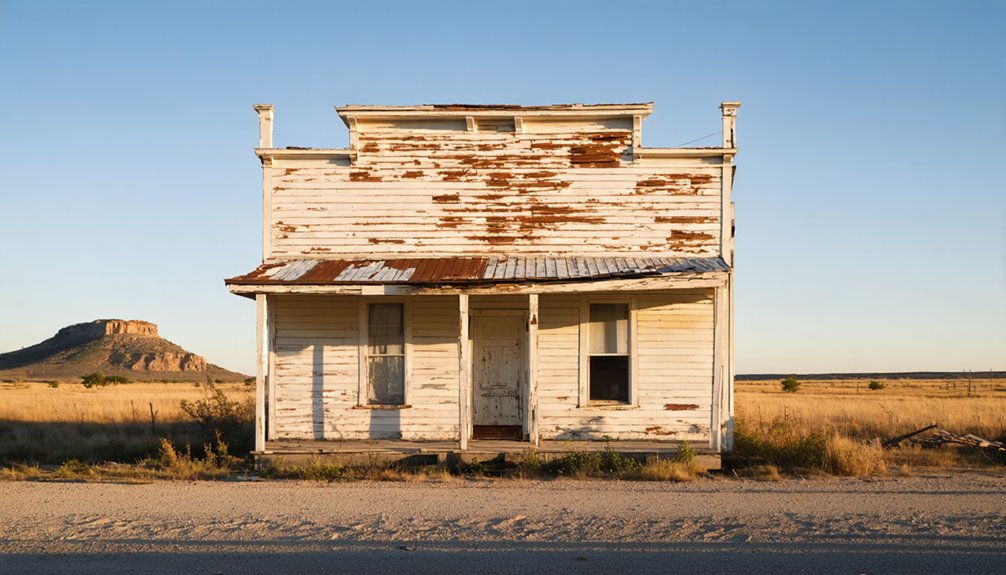
At its peak in 1925, Albert counted 50 residents — a modest but living community built around its store, school, and dance hall.
At its peak, Albert was a living community of 50 — anchored by a store, school, and dance hall.
By the mid-1960s, only four people remained. Here’s what the decline looked like:
- The store was torn down by 1985, erasing a commercial anchor that had stood since 1897.
- The school became a community club, stripped of its original purpose but preserved through historical preservation efforts.
- The dance hall turned into a storage locker, silencing decades of German brass bands and community singing.
What to Do in Albert, Texas Today
Despite its ghost town status, Albert’s got more life in it than you’d expect. Pull up a seat at the icehouse, order a cold drink, and soak in the Hill Country air under a grand old oak tree.
The restored dance hall still hosts gatherings, keeping a tradition alive since 1892. You’re stepping into historic architecture that actually breathes — not a museum replica, but a working community space.
Sample local cuisine from nearby vendors when events draw crowds to the grounds. The layout is compact, so you won’t need more than an afternoon to take it all in.
Owned by Chris Horne and John Hay, Albert welcomes visitors daily, making it a natural stop between Fredericksburg and Johnson City on your road trip route.
How Albert Fits a Fredericksburg–Johnson City Day Trip
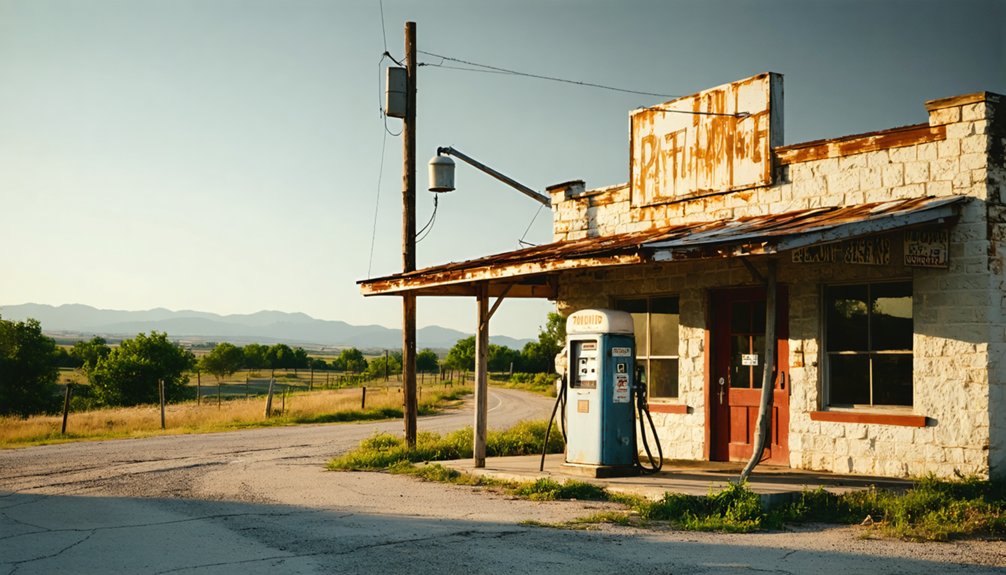
Tucking Albert into a Fredericksburg–Johnson City day trip takes almost no effort, since it sits almost exactly halfway between the two towns along a route you’d already be driving. You’re not going out of your way — you’re simply stopping where the road naturally wants you to pause.
Here’s how to make it work:
- Start in Fredericksburg — explore the main street, then head southeast on US 290 toward Albert.
- Stop in Albert — soak in the historical architecture, grab a drink at the icehouse, and absorb the local legends tied to Lyndon Johnson’s childhood school nearby.
- Finish in Johnson City — cap the day with LBJ’s boyhood home just minutes away.
Simple, direct, and completely on your own terms.
What to Know Before You Visit Albert, Texas
Before you load up the car and head out on FM 1623, there are a few practical things worth knowing about Albert. The town is open daily, but it’s still a part-time kind of place, so don’t expect a bustling main street.
Albert is open daily, but don’t expect a bustling main street — it’s still a part-time kind of place.
Current owners Chris Horne and John Hay keep the icehouse and bar running, making it a genuine stop rather than just a drive-by curiosity.
You’ll find historical architecture worth slowing down for, including the restored dance hall and the oak tree that’s anchored the property for generations.
Local legends connect the site to Lyndon B. Johnson’s school days nearby.
Come with a relaxed mindset, bring cash, and plan to spend an unhurried afternoon soaking in what remains of this quietly remarkable Hill Country community.
Frequently Asked Questions
Did Lyndon B. Johnson Actually Attend School in Albert, Texas?
Like a thread woven into Texas history, yes, LBJ actually attended the Williams Creek School, also known as the Albert School — one of Albert’s most cherished historical landmarks and local legends you’ll want to explore.
Who Are the Current Owners of Albert, Texas Today?
Chris Horne and John Hay own Albert’s abandoned landmarks today. They’ve breathed life into the town’s haunted legends, welcoming you to explore its restored icehouse, bar, and dance hall, keeping this ghostly Hill Country gem alive.
Was Albert, Texas Really Sold on eBay?
Yes, it’s true! In 2007, you could’ve bid on one of America’s most unique roadside attractions — Albert, Texas, one of history’s most fascinating historic ghost towns, hit eBay with a reported $2.5 million reserve price.
What Was Albert, Texas Originally Called Before It Was Renamed?
You’ll find Albert’s ghost town history rooted in its original name, Martinsburg. It served as a stop along the Blanco-Fredericksburg stage line, making it one of the region’s earliest historic landmarks before its 1892 renaming.
How Much Did Bobby Cave Pay to Purchase Albert in 2004?
Imagine dusty roads, forgotten echoes… Bobby Cave paid $216,000 in 2004 to resurrect Albert’s spirit. For ghost town tourism and road trip planning, you’ll find his revival transformed this Texas relic into your next unforgettable Hill Country adventure.
References
- https://en.wikipedia.org/wiki/Albert
- https://www.reddit.com/r/todayilearned/comments/5w4x2a/til_that_the_ghost_town_of_albert_tx_with_a/
- https://www.texasescapes.com/TexasHillCountryTowns/Albert-Texas.htm
- https://alberttexas.com/
- https://alberttexas.com/pages/history
- https://www.ghostsandgetaways.com/blog-1/27-fascinating-ghost-towns-in-texas
- http://www.texasescapes.com/TexasHillCountryTowns/Albert-Texas.htm
- https://texashillcountry.com/hill-country-ghost-town-road-trip/
- https://kids.kiddle.co/List_of_ghost_towns_in_Texas