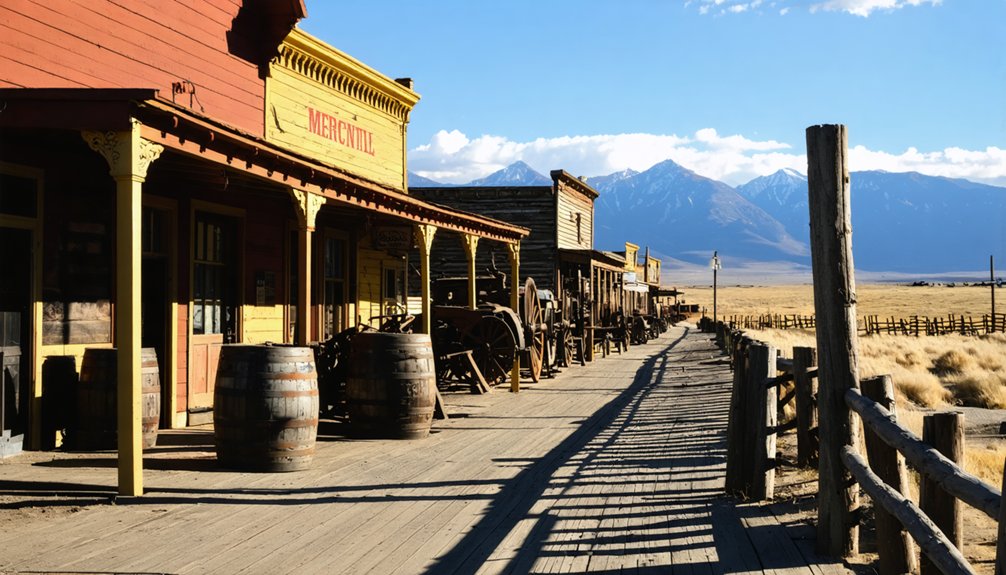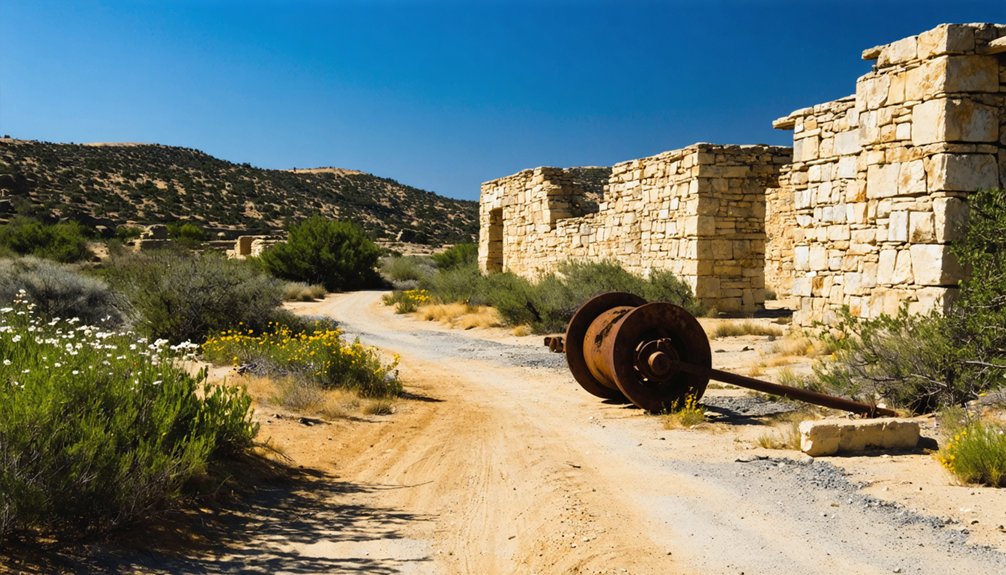
Pull off U.S. Highway 395 in Mono County and step into California’s forgotten past at Dogtown, the site of the eastern Sierra’s first gold rush in 1857. You’ll find crumbling stone walls, collapsed timbers, and a lone gravesite scattered across a landscape that once drove prospectors wild with promise. There’s no signage, no crowds — just raw history beneath your boots. Stick around, and the full story of this remarkable place gets even better.
Key Takeaways
- Dogtown sits off U.S. Highway 395 in Mono County, near Virginia and Dog Creeks, making it an easy road trip stop.
- Use California Historical Landmark No. 792 as your reference point to locate the site without a guided tour or reservation.
- Explore stone walls, collapsed roof timbers, shallow dugout depressions, and a single gravesite as remnants of the 1857 gold rush.
- No reconstructive buildings or interpretive signage exist, so come prepared for self-guided exploration through natural, overgrown terrain.
- Visit early morning between Bridgeport and Lee Vining for optimal lighting and a more atmospheric ghost town experience.
Where Dogtown Sits and How to Get There
Tucked into the rugged eastern flank of the Sierra Nevada, Dogtown sits in Mono County, California, where Virginia and Dog Creeks once drew desperate prospectors chasing gold-rush rumors.
You’ll find this ghost town’s remnants near U.S. Highway 395, one of the West’s most liberating access routes for road-trippers craving open skies and forgotten history.
California Historical Landmark No. 792 marks the spot, giving you a concrete anchor point when the landscape feels vast and unmarked.
Pull off the highway, breathe the high-desert air, and let the silence sink in.
Historic landmarks like this one don’t announce themselves loudly — you’ve got to seek them out.
Dogtown rewards the curious traveler willing to slow down and look beyond the guardrail.
What Makes Dogtown California Worth the Detour
Dogtown doesn’t hand you its story — you have to earn it. Stone walls, collapsed timbers, and a lone gravesite reward those who wander off Highway 395 into the eastern Sierra quiet. Local folklore whispers of gold nuggets, dog traders, and Mormon prospectors chasing rumors toward Mono Lake. Historic artifacts embedded in the landscape tell the rest.
Three reasons this detour hits different:
- First blood — Dogtown sparked California’s first major eastern Sierra gold rush in 1857, igniting everything from Bodie to Aurora.
- Raw ruins — No reconstruction, no gift shop, just honest decay pressed against creek-carved cliffs.
- Human scale — A hundred miners once lived here. That intimacy makes history feel touchable, not textbook.
The Gold Rush Story That Put Dogtown on the Map
Before Bodie became a legend and Aurora drew its crowds, one rumor changed everything: gold near Mono Lake. That whisper sent prospectors scrambling to Dog Creek in 1857, launching the first major gold rush on California’s eastern Sierra slope.
One rumor changed everything: gold near Mono Lake — and the eastern Sierra was never the same.
Miners carved out dugouts and huts, working the creek beds with placer mining techniques before graduating to hydraulic mining operations that reportedly ranked among California’s largest.
Historical artifacts — stone walls, roof timbers, scattered depressions — still anchor you to that restless era when fortune-seekers chased every glittering promise.
Dogtown even yielded the largest gold nugget ever found on this side of the Sierra.
Within a few years, richer strikes pulled everyone away, but this scrappy little camp is what started it all.
What You’ll Actually See at the Dogtown Ruins
What’s left of Dogtown won’t greet you with reconstructed storefronts or interpretive signage — you’ll find stone walls rising from the earth, roof timbers half-swallowed by time, and shallow depressions where miners once burrowed into the hillside to sleep.
Local flora creeps over the ruins, softening edges that history left jagged. Weather conditions shift fast in the eastern Sierra, so arrive prepared.
Three details ground the experience:
- A single gravesite marks human loss amid the diggings — pause there.
- Stone walls near Dog Town Creek reveal how tightly miners hugged the cliff face.
- The landscape itself tells the story — eroded channels expose hydraulic mining’s raw ambition.
You’re not touring a museum. You’re reading the earth directly.
How to Plan a Dogtown Stop on Highway 395
Once you’ve read the earth at Dogtown, the practical question becomes: how do you actually get there? The site sits off U.S. Highway 395 in Mono County, tucked near the confluence of Virginia and Dog Creeks. Watch for California Historical Landmark No. 792 — that roadside marker is your anchor point.
Dogtown sits off Highway 395 in Mono County — find it by California Historical Landmark No. 792.
You don’t need a guided tour or a reservation. Just pull over, follow the terrain toward the creek, and let the local legends lead you deeper into the landscape.
Historical artifacts — stone walls, roof timbers, a solitary grave — reward the curious traveler who wanders beyond the marker.
Plan your stop between Bridgeport and Lee Vining for the smoothest routing. Morning light hits the ruins beautifully, and the open eastern Sierra air feels like pure freedom.
Frequently Asked Questions
Why Was the Dogtown Mining Camp Given Such an Unusual Name?
Like a whispered secret carried on desert winds, Dogtown’s name reflects miserable living conditions—it’s historical preservation of raw frontier hardship. Local legends also claim a woman traded puppies for gold dust, sparking the camp’s unforgettable, freedom-chasing identity.
Who Is Credited With Being Dogtown’s Very First Gold Prospector?
You’ll find gold rush legends split between two names: Cord Norst and Leroy Vining are both credited as Dogtown’s first prospector, their pioneering prospecting techniques sparking an eastern Sierra adventure you can still feel today.
Did Chinese Miners Ever Work at the Dogtown Site After It Declined?
Generations of history unfolded beneath your feet — Chinese miners breathed new life into Dogtown’s post-decline tailings during the 1860s, with roughly 20 resilient souls reworking the earth for nearly a decade, chasing gold’s eternal promise.
What Type of Gold Nugget Discovery Made Dogtown Historically Significant?
You’ll find that Dogtown’s discovery significance lies in its legendary gold nugget — the largest ever unearthed on the eastern Sierra slope. That single, glittering find beckons you to wander these wild, forgotten hills freely.
Did Mining Activity Ever Return to Dogtown After Its Initial Abandonment?
Yes, mining did return! In the late 1870s, you’d find restless souls chasing local legends back to Dogtown’s historic preservation site, where Chinese miners had already reworked tailings for a decade, though no significant new gold followed.
References
- https://en.wikipedia.org/wiki/Dog_Town
- https://nvtami.com/2023/09/28/dog-town-california/
- https://www.ghosttowns.com/states/ca/dogtown.html
- https://www.highdesertdrifter.com/dogtown.shtml
- https://it.wikipedia.org/wiki/Dog_Town
- https://www.latimes.com/archives/la-xpm-1989-03-15-mn-526-story.html
- https://discovergloucester.com/2022/09/29/step-into-the-past-in-dogtown/
- https://www.nevadaappeal.com/news/2018/oct/16/californias-dog-of-a-mining-camp/
- https://www.pbs.org/video/windows-wild-hiking-dogtown/
- https://ericbrightwell.com/2013/03/06/california-fools-gold-exploring-dogtown/