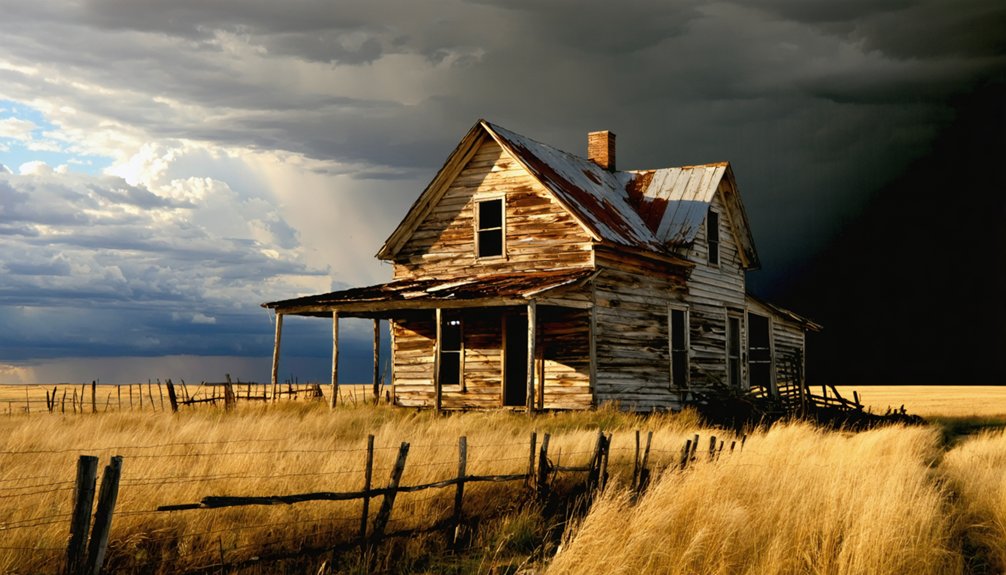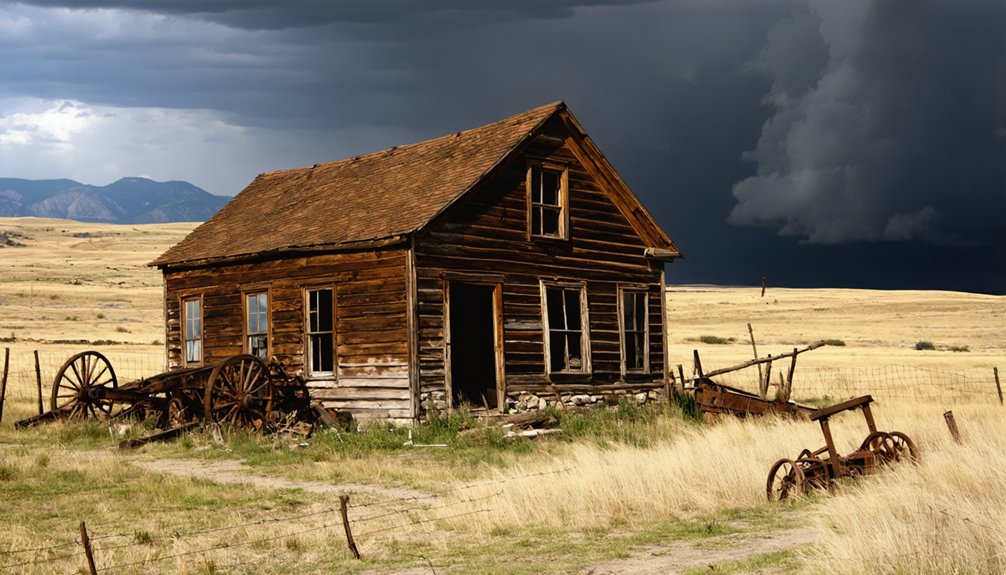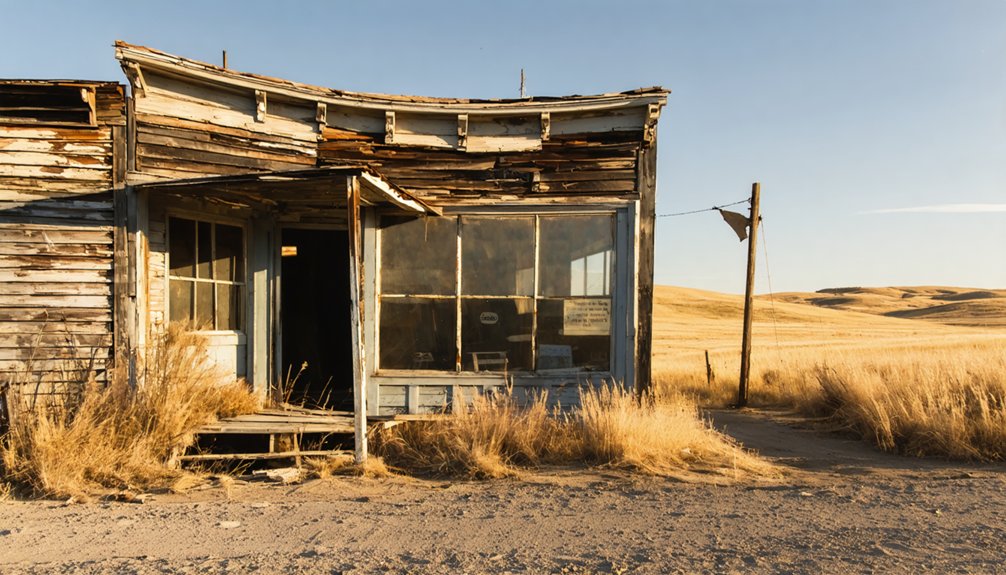
Planning a ghost town road trip to Allens Camp, South Dakota, means heading into Pennington County’s Black Hills with a sense of adventure and solid preparation. Founded around 1875–1876 along Spring Creek, this overlooked frontier mining settlement rewards curious explorers willing to do their homework. Visit late spring through early fall for the best access, confirm land ownership beforehand, and pair it with nearby ghost towns like Rockerville and Galena. There’s far more to this forgotten camp than you’d expect.
Key Takeaways
- Allen’s Camp, founded around 1875–1876 in Pennington County, sits along Spring Creek in the Black Hills of South Dakota.
- Visit between late spring and early fall, as winter snow typically makes the site inaccessible.
- Confirm land ownership before visiting—contact the Black Hills National Forest office for current rules and boundary information.
- Bring sturdy boots, water, offline maps, and a first-aid kit, as physical remains are minimal or absent.
- Pair the visit with nearby ghost towns Rockerville, Mystic, and Galena for a fuller Black Hills mining history experience.
What Was Allens Camp, South Dakota?
Tucked into the rugged landscape of Pennington County, South Dakota, Allen’s Camp was a small mining settlement that sprang up around 1875 or 1876 when a man known simply as Mr. Allen began mining along Spring Creek.
Like many Black Hills camps of that era, it emerged fast, drew hopeful prospectors, and eventually faded into obscurity. Today, it’s classified as a ghost town, meaning you won’t find a bustling community waiting for you.
What you’ll find is raw history embedded in the land itself. Historical artifacts and preservation efforts tied to South Dakota’s broader mining heritage help piece together stories of places like this one.
Allen’s Camp represents the kind of short-lived frontier settlement that defines the Black Hills’ restless, freedom-chasing past.
How Mr. Allen’s Mining on Spring Creek Started It All
When you trace Allen’s Camp back to its roots, you’ll find a single prospector — known only as Mr. Allen — who arrived on Spring Creek around 1875 or 1876 and began working the ground for ore.
His mining activity drew enough attention to pull others in, and just like that, a camp took shape around the work.
You’re looking at a classic Black Hills story: one man’s pick swings, and a settlement rises almost overnight.
Mr. Allen Arrives
Around 1875 or 1876, a man known simply as Mr. Allen rode into the Black Hills and staked his claim along Spring Creek. He didn’t arrive with fanfare — just ambition and a pickaxe. His mining history began quietly, yet it sparked enough activity to plant a settlement on the map.
You’re now tracing his footsteps through Pennington County, following a story that most travelers never bother to seek out. That’s exactly what makes this journey worth taking.
Preservation challenges mean little physical evidence survives today, so you’ll need to let the landscape speak. Spring Creek still runs through the hills, carrying the same water that once drew Allen here. That connection is yours to feel firsthand.
Mining Spring Creek
Spring Creek did what most creeks do best — it kept its secrets until someone willing to work hard enough came along to pull them out. Mr. Allen was that person, arriving around 1875 or 1876 with a pickaxe, ambition, and enough determination to break ground in Pennington County’s rugged Black Hills terrain.
His mining operation on Spring Creek sparked a small but significant chapter in the region’s mining history, drawing others who hoped the ground held enough promise to build a life around. It didn’t last, but that’s the story ghost town preservation tries to honor — the brief, burning moments when a creek bank became a community.
You’re now chasing that same story across roads that still cut through this quietly dramatic landscape.
A Camp Emerges
Mining a creek is one thing — building a life around it’s another. When Mr. Allen began working Spring Creek around 1875 or 1876, he didn’t just stake a claim — he planted the seed of a community. Word spread, others followed, and Allen’s Camp took shape in Pennington County’s rugged Black Hills terrain.
That’s how mining history worked on the frontier. One determined prospector broke ground, and a settlement grew around the momentum. Land ownership, however informal at first, defined who stayed and who moved on.
You’re tracing that same energy when you visit today. The camp emerged fast, driven by opportunity and raw ambition. Understanding that origin makes the landscape mean something — even if nothing physical remains where Allen once worked.
When to Visit Allens Camp and What Season Makes Sense
Because Allen’s Camp sits in the Black Hills of Pennington County, timing your visit around the region’s weather patterns makes a real difference. Late spring through early fall gives you the best window — roads are more accessible, and you can actually read the landscape that shaped this mining settlement’s cultural significance.
Summer draws crowds to the Black Hills, so arriving on a weekday keeps your experience quieter and more focused. Early autumn is perhaps the sharpest choice: temperatures cool, foliage shifts, and the terrain feels raw and honest.
Winter buries the area under heavy snow, limiting access entirely.
Whatever season you choose, treat your stop as part of broader preservation efforts — tread carefully, stay on public land, and let the place speak without disturbing what little remains.
Can You Actually Access Allens Camp Today?
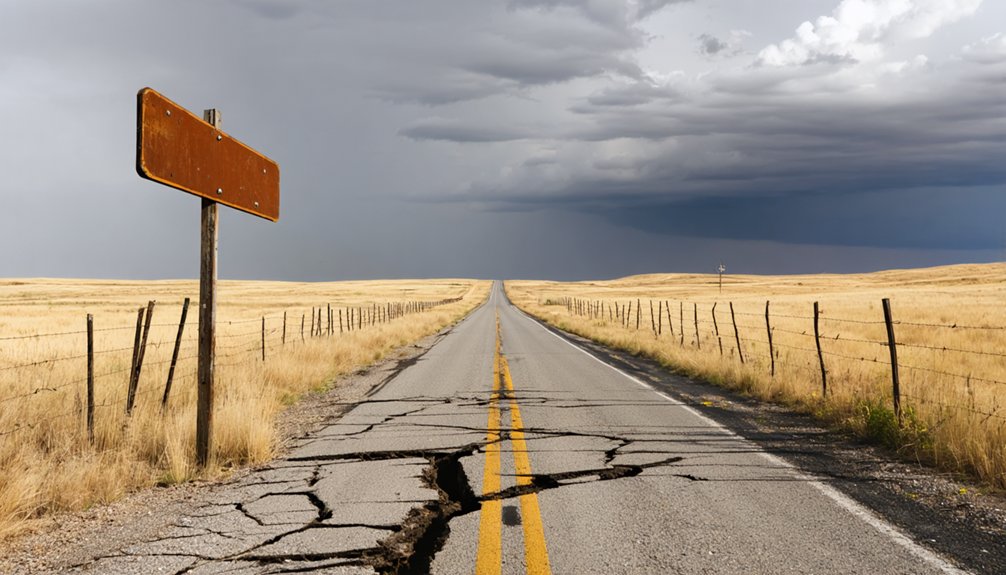
Before you load up the car and head out to Pennington County, you’ll need to check whether the land surrounding Allen’s Camp is privately owned or falls under Forest Service jurisdiction, since both scenarios carry access restrictions that could stop your visit cold.
Don’t expect standing structures or dramatic ruins waiting at the site — many Black Hills ghost towns leave behind little more than a name on a historical record.
Plan your route around these realities, treating Allen’s Camp as a research stop where the landscape itself tells the story.
Check Land Access First
One reality check every Black Hills explorer needs to make before loading up the car: Allen’s Camp sits in Pennington County terrain where land access isn’t guaranteed. Freedom-seekers, that means doing your homework before you roll out.
- Confirm ownership — land could be private, Forest Service, or state-managed, each carrying different rules.
- Contact the Black Hills National Forest office — they’ll clarify permitted access and protect the site’s historical significance for future visitors.
- Research local legends — county historical societies often hold access contacts alongside stories that make the site worth finding.
Don’t assume open land means open access. Trespassing ruins the adventure for everyone and risks closing off sites permanently. A quick call saves your trip and keeps these forgotten corners of history accessible.
No Guaranteed Visible Remains
Even if you clear every access hurdle, arriving at Allen’s Camp might mean staring at an open hillside with nothing but wind and Spring Creek to confirm you’re standing on history. Ghost-town directories consistently warn that some sites leave zero visible evidence behind, and Allen’s Camp fits that profile.
Since 1875 or 1876, land ownership has shifted, weather has worked, and time has erased what Mr. Allen’s mining operation once built here. Don’t let that discourage you. The historical context itself becomes the experience — you’re reading a landscape, not touring a museum.
Bring research notes, a topographic map, and realistic expectations. Treat the stop as a moment of frontier connection rather than a photo opportunity, and you’ll leave satisfied rather than disappointed.
Plan Around Access Restrictions
Access questions should sit near the top of your planning checklist, because ghost-town land in the Black Hills can fall under private ownership, Forest Service jurisdiction, or some complicated overlap of both.
Before you chase Allen’s Camp’s mining history down Spring Creek, confirm your land access situation.
- Check Forest Service maps to identify whether your target coordinates fall within managed public land or private property boundaries.
- Contact the Pennington County Assessor’s office to verify current land ownership before stepping off any road.
- Carry printed permits or documentation if Forest Service rules require them for your specific entry point.
Skipping these steps risks trespassing charges that’ll cut your adventure short fast.
Freedom on the road means respecting boundaries so you can keep exploring.
What’s Left to See at Allens Camp in Pennington County?
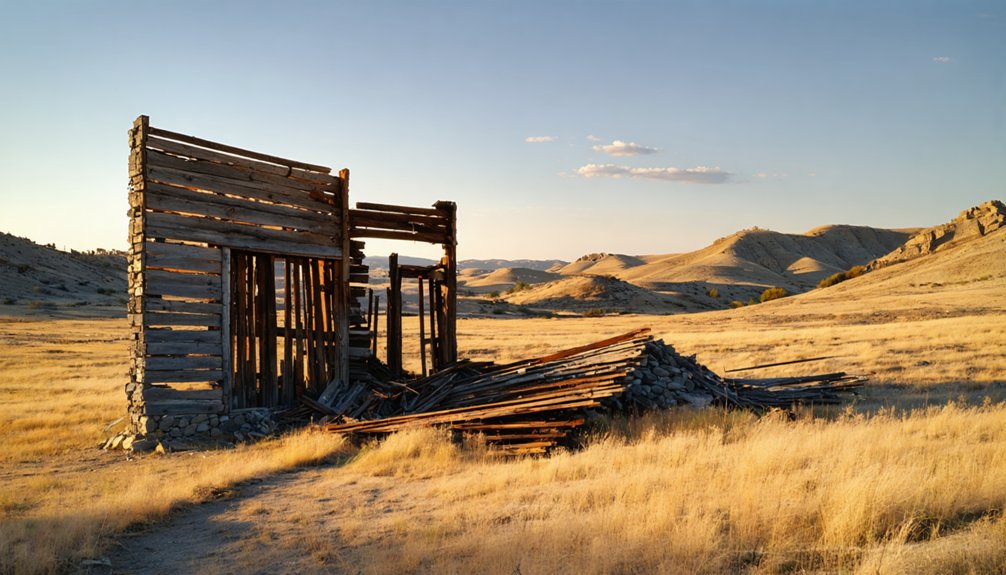
Because Allen’s Camp left behind more history than hardware, you won’t find a main street of weathered storefronts or a collapsed mine shaft posing for photos. What you’ll find is a landscape shaped by ambition, where Mr. Allen staked his claim along Spring Creek sometime around 1875 or 1876 and sparked a brief mining settlement in Pennington County.
Historical artifacts tied to this era are scattered across the broader Black Hills region, and local legends about boom-and-bust camps like this one add texture to the terrain.
Treat the visit as an act of interpretation rather than sightseeing. Read the creek, scan the hillsides, and let the documented record fill the gaps. The story is real, even when the structures aren’t.
How to Find Allens Camp Without Getting Turned Around
Finding Allen’s Camp means doing your homework before you leave the pavement, because Spring Creek’s surrounding terrain in Pennington County doesn’t come with roadside signage pointing toward a forgotten mining claim. Cross-reference historical maps with current USGS topographic layers before heading out.
- Download offline maps—cell service disappears fast in the Black Hills, leaving you genuinely on your own.
- Check trail conditions and seasonal road closures through the Forest Service before committing to a route.
- Note wildlife sightings reported in the area, since active animal zones sometimes intersect with access restrictions.
Treat every unmarked junction as a decision point requiring your map, not your instincts. Access may cross private land, so confirm boundaries ahead of time and respect every posted boundary you encounter.
What to Bring When Visiting Remote Pennington County Ghost Towns
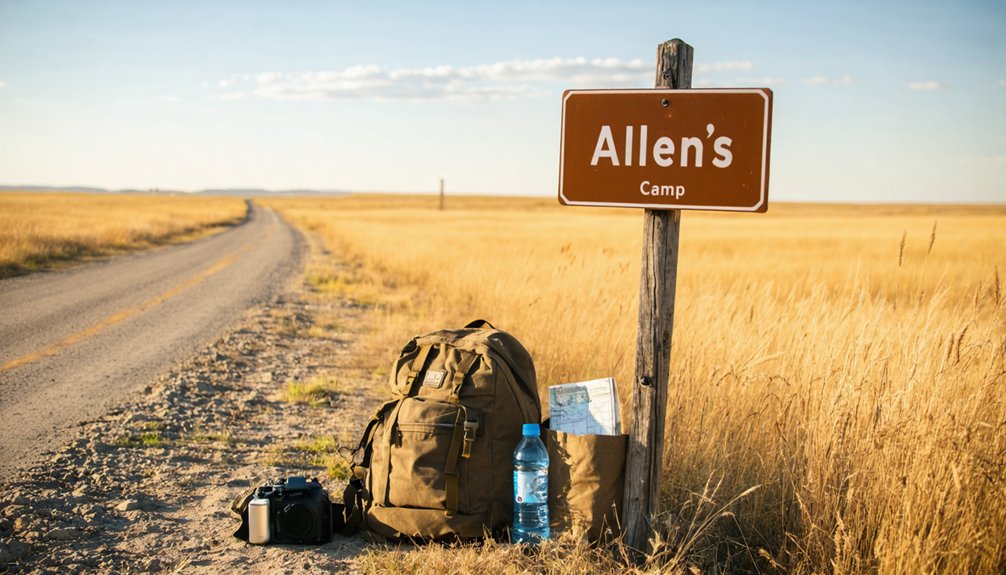
Packing for a remote Pennington County ghost town means treating the trip like a backcountry excursion, not a roadside stop. Toss in sturdy boots, water, snacks, and a paper map because cell service disappears fast in the Black Hills. Bring a fully charged phone anyway for photos — mining history rarely offers second chances to document what little remains.
A printed land access summary helps you stay legal when trails cross between Forest Service land and private property. Pack a first-aid kit, sun protection, and layers since weather shifts quickly at elevation. A notebook lets you record observations that photos miss.
You’re chasing fragments of a vanished world, so carry enough gear to stay comfortable, move freely, and respect every boundary you encounter along the way.
Black Hills Ghost Towns Worth Pairing With Allens Camp
Allen’s Camp hits hardest when it’s one stop on a longer Black Hills ghost-town loop rather than a solo destination. Pair it with these sites to build a route that captures the region’s full cultural significance:
Allen’s Camp rewards those who treat it as one chapter in a longer Black Hills ghost-town story.
- Rockerville – One of the Black Hills’ earliest gold camps, it offers more visible remnants and strong interpretive context.
- Mystic – A former mining and logging town facing real preservation challenges, with scattered structural traces still readable in the landscape.
- Galena – A silver-era camp that illustrates how quickly boom cycles collapsed across Pennington County.
Linking these stops creates a driving narrative that’s bigger than any single site. You’ll move through layers of frontier history, reading the land where communities rose fast and vanished faster.
How to Turn Allens Camp Into a Full Black Hills Ghost Town Day
Once you’ve mapped out those companion stops, it’s time to think about how you’ll string them into a single, purposeful day. Start early, heading toward Spring Creek country where Allen’s Camp took shape around 1875 or 1876 under a Mr. Allen’s mining ambitions.
Let historical anecdotes guide your stops — each site carries its own story of boom, bust, and disappearance. As you move between locations, discuss how early mining techniques like placer and hydraulic methods shaped these creek-side camps and then rendered them obsolete.
Keep your route loose enough to allow spontaneous pulls off the road. Carry a detailed map, respect posted land boundaries, and treat each stop as a research moment. Freedom here means exploring deliberately, not recklessly.
Frequently Asked Questions
Was Allen’s Camp Ever Given an Official Post Office Designation?
Like scrolling through ghost town history with no results, you won’t find an official post office designation for Allen’s Camp — the mining industry moved too fast, and this fleeting Pennington County settlement vanished before bureaucracy caught up.
What Specific Mineral Did Mr. Allen Mine at Spring Creek?
The sources don’t reveal the specific mineral’s significance in Mr. Allen’s mining history at Spring Creek. You’ll want to dig deeper into Black Hills records to uncover exactly what drew him there in 1875.
Did Allen’s Camp Appear on Any Historical Maps of Pennington County?
Over 90% of Black Hills mining camps never made historical maps! You can’t confirm Allen’s Camp appeared in historical cartography, as map accuracy for short-lived 1875–1876 settlements was notoriously poor — making your discovery even more thrilling.
How Many People Lived at Allen’s Camp During Its Peak Population?
You won’t find reliable historical population figures for Allen’s Camp — the records simply don’t exist. Its community development history was brief and untracked, leaving this frontier mystery wide open for your adventurous exploration!
Are There Any Descendants of Mr. Allen Still Connected to the Area?
No records confirm descendants, but you’ll uncover local legends through genealogical research that’ll ignite your adventurous spirit! Dig into Pennington County archives, chase stories along Spring Creek, and you might just connect living history to Mr. Allen’s pioneering legacy.
References
- https://en.wikipedia.org/wiki/List_of_ghost_towns_in_South_Dakota
- https://www.sdpb.org/rural-life-and-history/2023-08-21/some-black-hills-ghost-towns-and-their-origins
- https://blackhillsatvdestinations.com/ghost-towns/
- https://www.sdpb.org/arts-life/vanished-south-dakota-in-the-moment
- https://en.wikipedia.org/wiki/Category:Ghost_towns_in_South_Dakota
- https://www.ghosttowns.com/states/sd/sd.html
- https://www.sdhspress.com/journal/south-dakota-history-2-2/some-black-hills-ghost-towns-and-their-origins/vol-02-no-2-some-black-hills-ghost-towns-and-their-origins.pdf
- https://kids.kiddle.co/List_of_ghost_towns_in_South_Dakota