Planning a ghost town road trip to Jermyn, Texas means stepping into a place where the railroad once built a thriving community of over 200 residents — and then slowly abandoned it. You’ll find the town along State Highway 114, about 10 miles northwest of Jacksboro. There’s no gas, no restaurants, and no modern conveniences waiting for you, so prepare everything before you leave. Keep going, and you’ll uncover everything you need to make this trip unforgettable.
Key Takeaways
- Jermyn sits 10 miles NW of Jacksboro and 20 miles NE of Graham, accessible via State Highway 114 near the Young County line.
- No gas, food, or conveniences exist in town; fuel up and pack supplies in Jacksboro or Graham before arriving.
- Bring a camera to photograph surviving structures along Highway 114, including two churches, a post office, and a civic center.
- Download offline maps before departing, as cell service is unreliable in far west Jack County.
- Research Jermyn’s railroad and ranching history beforehand to enrich your exploration of this once-thriving 200-resident community.
Is Jermyn, Texas Actually a Ghost Town?
What you’re really encountering here is historical preservation in its most authentic form. There’s no town revitalization campaign dressing things up for tourists.
Instead, you get the honest remnants of a once-thriving railroad stop, stripped down to its essentials and still standing. That’s worth the drive on its own.
How the Railroad Built Jermyn: and Its Decline Ended It
When the Gulf, Texas and Western Railroad arrived in Jermyn on October 21, 1909, it didn’t just pass through — it built the town from the ground up. The railroad planted its roundhouse, depot, and offices here, instantly transforming raw land into a legitimate shipping hub for local cattlemen.
Within two decades, Jermyn had banks, hotels, a cotton gin, and over 200 residents thriving on rail-driven commerce.
At its peak, Jermyn bustled with banks, hotels, and over 200 residents fueled entirely by railroad commerce.
Then the Frisco system absorbed the railroad in 1930, and the unraveling began. Passenger service vanished, highways redirected traffic, and residents followed opportunity elsewhere.
Yet Jermyn’s story isn’t purely one of loss. Historical preservation efforts and community resilience kept a post office, churches, and a general store alive — proof that some towns refuse to disappear quietly.
What Jermyn Looked Like at Its Peak in the 1920s
By the 1920s, Jermyn had grown into a surprisingly complete small town, packing a remarkable range of businesses into a community of roughly 213 residents. You’d have found a bank, hotel, drugstore, restaurant, cotton gin, lumber yard, icehouse, blacksmith shop, land office, garage, warehouse, and confectionary all operating within the same small stretch.
The town had its own post office and published two newspapers, *The Enterprise* and later *The News*. A church and school anchored community events, giving residents a full civic life.
The historical architecture that once lined these blocks reflected genuine ambition. Jermyn wasn’t scraping by — it was thriving. Rail access made it a legitimate shipping hub, and for two decades, it functioned as a real, self-sufficient town worth stopping to understand.
What’s Still Standing in Jermyn Today
When you pull into Jermyn today, you’ll find a small but stubborn collection of structures still holding their ground. The post office continues to operate, giving the community an official, living pulse that most ghost towns never keep.
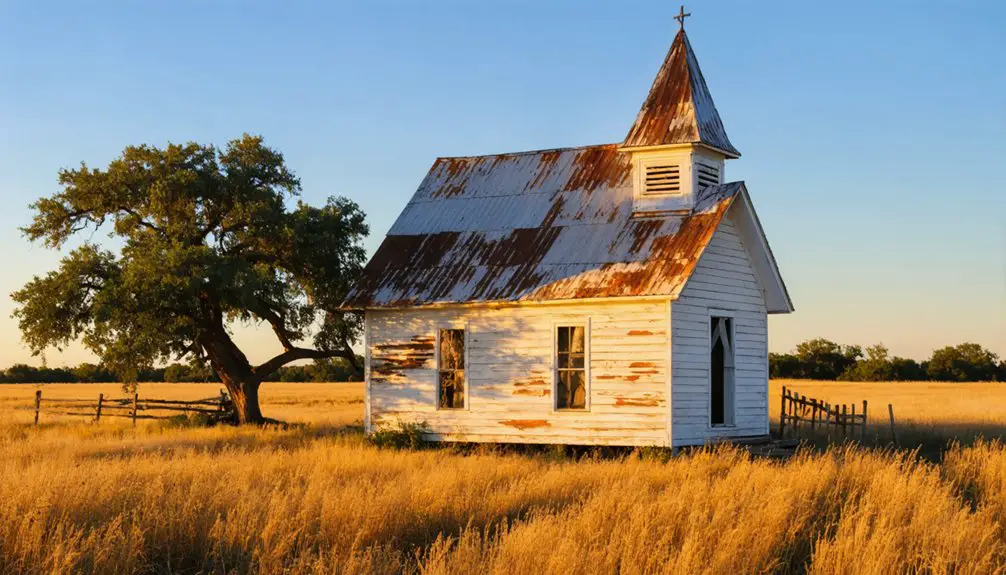
You can also visit two active churches and a former school building now serving as a civic center, each one a quiet reminder that Jermyn hasn’t entirely let go of its past.
Standing Structures Today
Though much of Jermyn’s commercial backbone has long since disappeared, a handful of structures still stand as quiet proof that this community hasn’t fully surrendered to time.
When you pull off State Highway 114, you’ll find two churches, a post office, a general store, and a former school building now serving as a civic center.
Each piece of historical architecture carries its own quiet story, shaped by decades of ranching culture and railroad memory.
Local legends tied to the town’s boom years still echo through these walls if you take time to look closely.
You’re not walking through a museum — you’re standing inside a living remnant of a community that refused to disappear completely, and that distinction makes the stop genuinely worth your time.
Post Office Still Operates
Among the quiet details that make Jermyn more than a ghost town footnote, its still-operating post office stands out most sharply. While most rural Texas communities this size have lost basic services entirely, Jermyn’s post office keeps a thread of civic life intact. It’s a small but meaningful act of community preservation in a place that easily could’ve faded completely.
You’ll notice how the building itself reflects the town’s character — understated, functional, and linked to an earlier era of historical architecture that once supported a full commercial district. For road trippers chasing genuine living history rather than staged nostalgia, this detail matters.
The post office isn’t a relic. It’s proof that Jermyn hasn’t fully let go, and that gives your visit a different, more grounded kind of meaning.
Churches And Civic Center
The post office isn’t the only sign of life you’ll find in Jermyn. Two churches still stand in this small community, their historical architecture serving as quiet reminders that people once built something meaningful here.
Whether you’re religious or not, these structures are worth a slow walk around — they tell the story of a town that refused to disappear overnight.
You’ll also want to check out the old school building, now repurposed as a civic center. It’s where community events still bring locals together, proving that Jermyn hasn’t completely surrendered to time.
For a road tripper chasing authentic, off-the-beaten-path Texas, these landmarks deliver exactly that — real history you can stand next to, photograph, and carry home with you.
Nearby Towns Worth Stopping on Your Way to Jermyn
Since Jermyn sits about 10 miles northwest of Jacksboro and 20 miles northeast of Graham, you’ve already got two solid stops built into your route. Both towns reward curious travelers with historical architecture, local legends, and enough character to make the drive worthwhile.
Here’s what you can explore along the way:
- Jacksboro – Visit Fort Richardson, Texas’s northernmost frontier fort, packed with preserved Civil War-era buildings.
- Graham – Walk around the massive town square, one of the largest in Texas, lined with historic storefronts.
- Lost Valley area – Scout the 20-square-mile basin surrounding Jermyn for stunning ranch country views.
- State Highway 114 – The route itself tells a story, cutting through raw West Texas landscape that feels genuinely off the beaten path.
How to Get to Jermyn, Texas
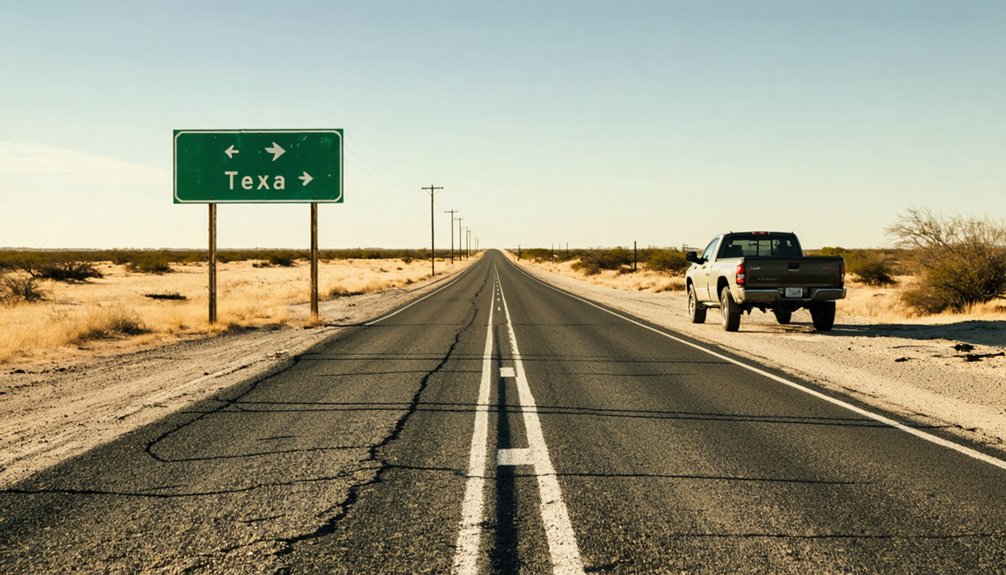
Once you’ve mapped out your stops in Jacksboro and Graham, getting to Jermyn itself is straightforward. Head northwest from Jacksboro about 10 miles along State Highway 114, or drive northeast roughly 20 miles from Graham.
Either route drops you directly into Jack County’s far western edge, where Jermyn sits near the Young County line.
Watch for the historical marker on SH 114, about a mile east of the community. It’s your first real encounter with Jermyn’s story before you even arrive.
From there, you’ll roll into a quiet stretch where the town architecture — churches, a general store, and a former school — still stands.
You’re not chasing ruins here; you’re reading history that remained standing long after the railroad left.
No Gas, No Restaurants: What to Know Before You Go
Before you head out, know that Jermyn offers no gas stations, no restaurants, and no modern conveniences to bail you out if you arrive unprepared.
Fill your tank and pack your own food and water in Jacksboro, about 10 miles southeast, or in Graham, roughly 20 miles southwest, since those are your closest options for real amenities.
Treat this stop as a self-sufficient day trip, and you’ll enjoy the experience far more than if you show up expecting anything beyond a historic marker, a post office, and a general store.
Fuel Up Before Arriving
Jermyn offers no gas stations, restaurants, or roadside conveniences, so you’ll want to fill your tank and pack snacks before leaving Jacksboro or Graham. Both towns sit within 20 miles and give you everything you need before heading into this quiet slice of historical preservation and local legends.
Pack smart so you can explore freely:
- Fill up completely in Jacksboro (10 miles southeast) or Graham (20 miles southwest)
- Bring water and snacks — there’s no place to grab either once you arrive
- Pack a camera for the historic marker and remaining structures
- Download offline maps since cell service can be unreliable in far west Jack County
A little preparation means nothing interrupts your time wandering Jermyn’s roads on your own terms.
Pack Your Own Food
Arriving in Jermyn means stepping into a place where the nearest meal, gas pump, or convenience store is at least 10 miles away. Once a railroad history hub with a hotel, restaurant, drugstore, and confectionary serving over 200 residents in the 1920s, town decline stripped away every dining option decades ago.
When the Frisco system absorbed the old Gulf, Texas and Western line in 1930 and passenger service ended by 1936, businesses followed the people out.
Today, you’ll find a general store, two churches, and a post office — nothing more. Pack a cooler with food, water, and snacks before leaving Jacksboro or Graham.
You’re visiting a place that traded convenience for history, so come fully prepared and enjoy the freedom of exploring on your own terms.
Nearest Town Amenities
Since Jermyn offers no gas stations or restaurants, you’ll need to stock up before making the drive out on State Highway 114. Your two best options are Jacksboro, about 10 miles southeast, and Graham, roughly 20 miles southwest.
Before leaving either town, handle these essentials:
- Fill your tank completely — there’s no fuel between these towns and Jermyn
- Grab extra water and snacks — you’ll want energy while exploring historical artifacts and roadside markers
- Download offline maps — cell coverage gets unreliable in far west Jack County
- Research local legends beforehand — knowing Jermyn’s railroad history makes the drive far more meaningful
Think of the supply run as part of the adventure. The freedom of exploring remote Texas comes with the responsibility of arriving fully prepared.
Frequently Asked Questions
Who Was J. J. Jermyn, and Why Was the Town Named After Him?
Like a name etched in stone, J.J. Jermyn’s legacy lives on — he’s the son of coal magnate Joe Jermyn. You’ll discover his historic landmarks and local legends shaped this town’s identity forever.
Who Donated the Land That Jermyn, Texas Was Originally Built On?
You’ll find that Oliver Loving and W. P. Stewart donated the land where Jermyn stands today. Their generous contribution created the foundation for the historic landmarks and local legends that still draw curious, freedom-seeking explorers.
What Newspapers Were Once Published in Jermyn, Texas?
You’ll love knowing that Jermyn’s historic ghost town roots included two old fashioned newspapers — *The Enterprise* and later *The News* — keeping early residents informed during the town’s thriving, freedom-filled frontier days.
What Railroad Eventually Took Over the Gulf, Texas and Western Railroad?
“All good things must end” — the Frisco system took over the Gulf, Texas and Western Railroad in 1930, reshaping historic railway development and sealing the fate of towns named after individuals, like Jermyn, Texas.
What Is the Current Population of Jermyn, Texas Today?
You’ll find Jermyn’s population hovering around 75 residents, a tiny community where historic landmarks whisper local ghost stories. It’s a hauntingly small settlement, but its living spirit keeps this unique Texas treasure alive.
References
- https://www.texasescapes.com/CentralTexasTownsNorth/Jermyn-Texas.htm
- https://en.wikipedia.org/wiki/Jermyn
- https://en.wikipedia.org/wiki/List_of_ghost_towns_in_Texas
- https://www.tshaonline.org/handbook/entries/jermyn-tx
- https://kids.kiddle.co/List_of_ghost_towns_in_Texas
- https://www.texasescapes.com/TOWNS/Texas_ghost_towns.htm
- https://atlas.thc.texas.gov/Details/5237001010/print
- https://authentictexas.com/texas-ghost-towns/
- https://austinghosts.com/jefferson-the-most-haunted-town-in-texas/
- https://www.texasescapes.com/TexasGhostTowns/Eighteen-Ghost-Towns-of-Runnels-County.htm