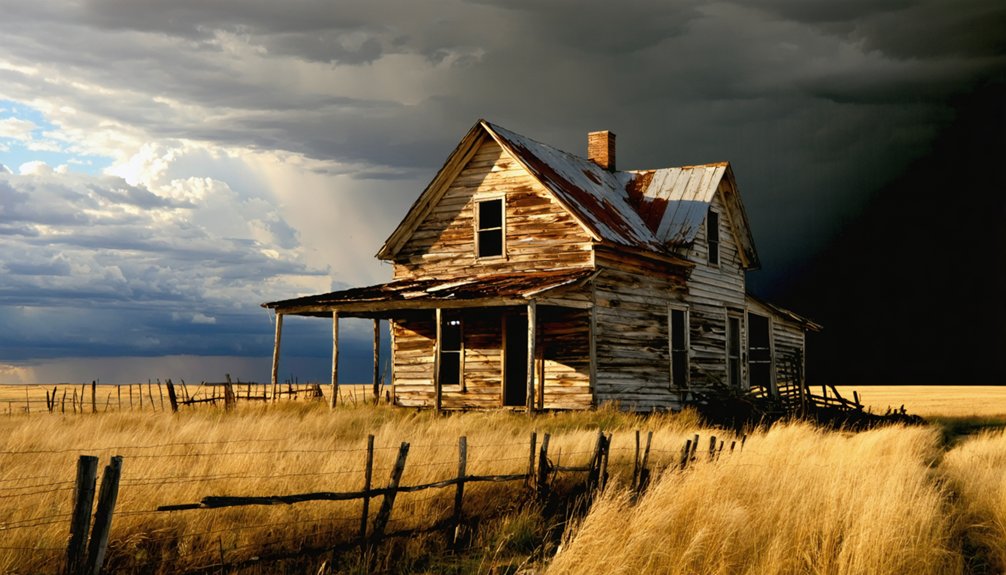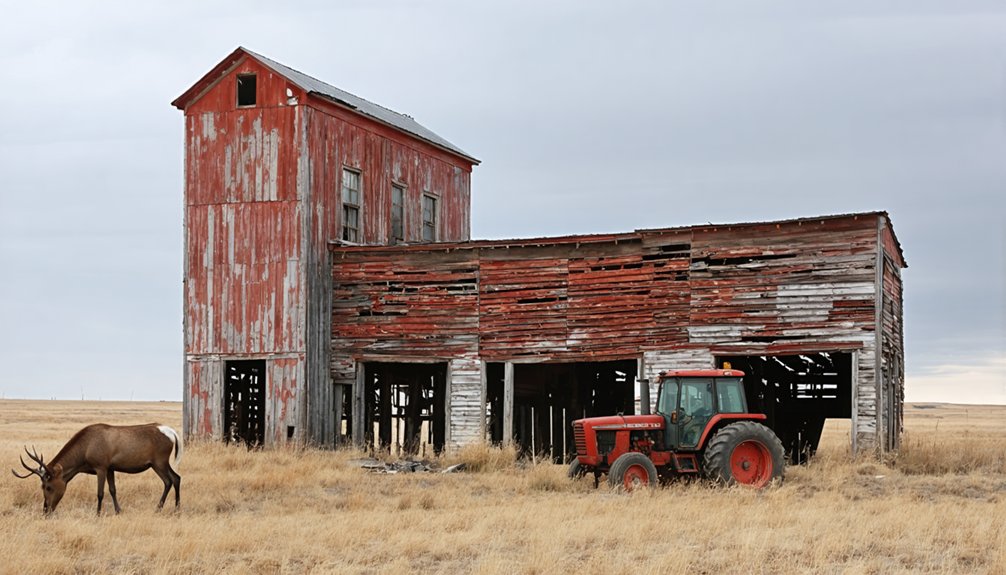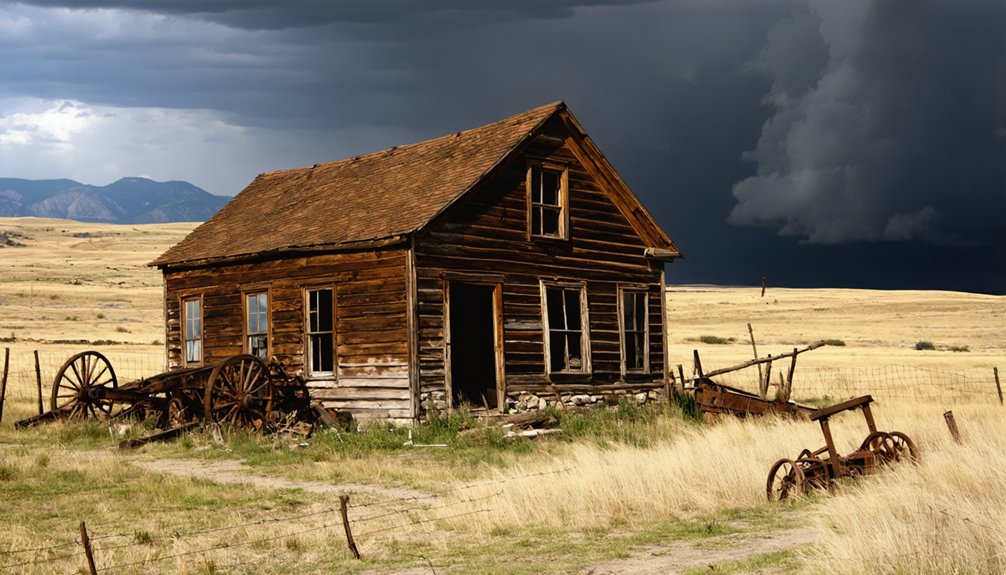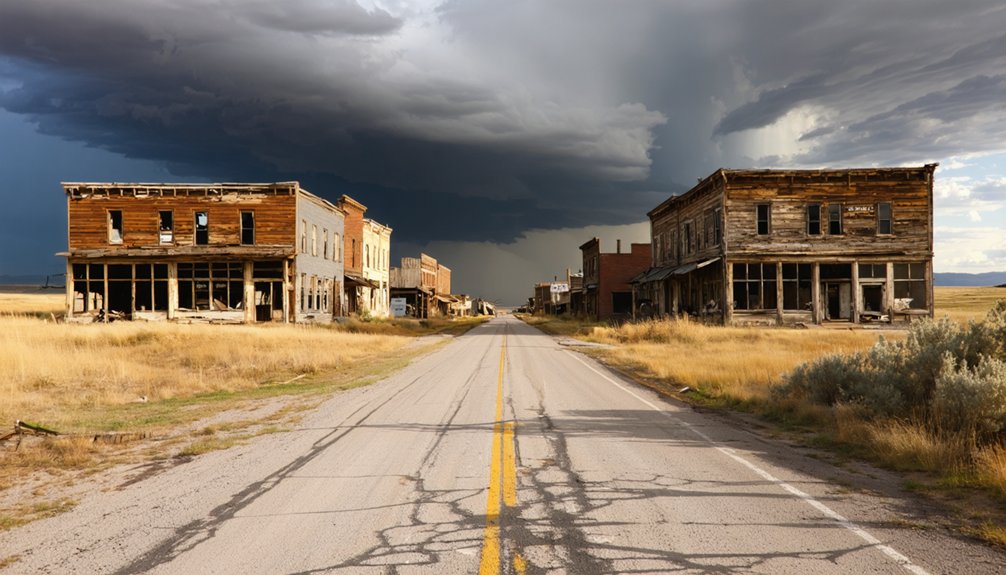
Ardmore, South Dakota is a ghost town frozen in time, sitting just one mile north of the Nebraska border in Fall River County. Founded in 1889 as a railroad hub, it declined due to drought, acidic water, and the end of steam travel. You’ll find weathered wooden homes, crumbling brick buildings, and an old water tower still standing. Whether you’re a history buff or photography enthusiast, this haunting landscape has a story worth uncovering.
Key Takeaways
- Ardmore is located near the SD-Nebraska border, accessible via South Dakota Highway 71, approximately one mile north of the state border.
- Visit late spring through early fall for clear skies, accessible roads, and optimal lighting for photographing decaying structures.
- Pack sturdy boots, gloves, water, snacks, a camera, and a fully charged phone before exploring fragile, hazardous structures.
- Stop at J.H. Keith Memorial Cascade Falls for parking, restrooms, and picnic facilities before exploring Ardmore’s ruins.
- Extend your trip by visiting nearby ghost towns Oelrichs and Oral, which feature weathered structures and layered frontier history.
What Is Ardmore, South Dakota?
Once a thriving railroad hub, Ardmore, South Dakota, is now a ghost town sitting just one mile north of the South Dakota-Nebraska border in Fall River County. Founded in 1889 by European-American settlers, it served as a key stopping point along the New Burlington Railroad.
Before drought, acidic water, and the decline of steam travel drove residents away, the town was bustling. Today, you’ll find decaying wooden homes, sturdy brick buildings, and an old water tower scattered across a hauntingly beautiful landscape.
It’s a place rich in historical preservation, where remnants of a forgotten era still stand. Local legends paint a picture of a resilient community that survived the Great Depression without a single family on welfare — a remarkable demonstration of the independent spirit that once defined this remote frontier town.
How Ardmore Went From Railroad Hub to Ghost Town?
Ardmore’s rise and fall is a story driven by forces both natural and technological. Once a thriving stop along the New Burlington Railroad, the town couldn’t survive compounding blows that stripped away its lifeline.
Here’s what ultimately unraveled Ardmore:
- Severe droughts destroyed local resources and farming potential
- The creek water turned too acidic for human consumption
- Steam trains stopped halting in town after switching fuel sources
- Dry farming experiments failed, leaving settlers with nothing to harvest
- Population collapsed once the external water supply disappeared
Today, historical preservation efforts remain minimal, leaving structures exposed to nature’s reclamation. Wildlife observation has become an unexpected reward for visiting explorers.
You’re fundamentally walking through a raw, unfiltered snapshot of frontier collapse — no museum required.
How to Get to Ardmore, South Dakota
To reach Ardmore, you’ll take South Dakota Highway 71, driving through barren stretches of open land before the ghost town quietly appears on the horizon.
Along the way, watch for J.H. Keith Memorial Cascade Falls, a worthwhile landmark that offers parking, restrooms, and even a picnic area with swimming.
Once you arrive in Ardmore, park carefully and stay alert — the crumbling structures demand your full attention the moment you step out of the car.
Finding Highway 71
Getting to Ardmore, South Dakota is straightforward once you’ve locked onto Highway 71. This rural corridor cuts through open, untamed land, delivering you directly into a slice of local history frozen in time. Preservation efforts here are minimal, so you’re experiencing the frontier raw and unfiltered.
- Highway 71 runs north-south, connecting Nebraska’s border to Fall River County.
- Ardmore sits approximately one mile north of the South Dakota-Nebraska state line.
- Expect long, barren stretches of prairie before the town appears.
- No major highway interchanges complicate your route — it’s a clean, direct drive.
- GPS may show limited detail, so download offline maps beforehand.
Trust the road, trust your instincts, and let Highway 71 guide you toward one of South Dakota’s most hauntingly preserved ghost towns.
Nearby Landmarks En Route
Before you reach Ardmore’s quiet ruins, one landmark breaks up the drive in the best possible way — J.H. Keith Memorial Cascade Falls. Pull off, stretch your legs, and take in the cascading water that feels worlds away from the barren stretches you’ve been driving through.
A picnic area and restrooms make it a practical stop, and swimming is allowed if you’re feeling bold. Just watch the stream banks carefully — poison ivy thrives there.
Beyond its beauty, the falls carry historical significance as a preserved natural landmark along a route that time has largely forgotten. These preservation efforts remind you that not everything in this corner of South Dakota has faded.
Refreshed and ready, you can push on toward Ardmore’s ghostly silence waiting just ahead.
Road Trip Parking Tips
Reaching Ardmore is straightforward — take South Dakota Highway 71 south toward the Nebraska border, and you’ll find the town sitting roughly a mile north of the state line.
Once you arrive, parking is informal since no designated lots exist. Pull off responsibly to support historical preservation and wildlife observation opportunities throughout the area.
- Park along the roadside without blocking any remaining structures.
- Visit J.H. Keith Memorial Cascade Falls nearby for official parking and restrooms.
- Avoid driving onto unstable ground near deteriorating buildings.
- Keep vehicles visible from the road for safety purposes.
- Use the falls’ picnic area as a staging point before exploring.
Respecting the land keeps Ardmore accessible for future visitors who crave the same raw, unfiltered freedom you’re chasing today.
The Abandoned Buildings Still Standing in Ardmore
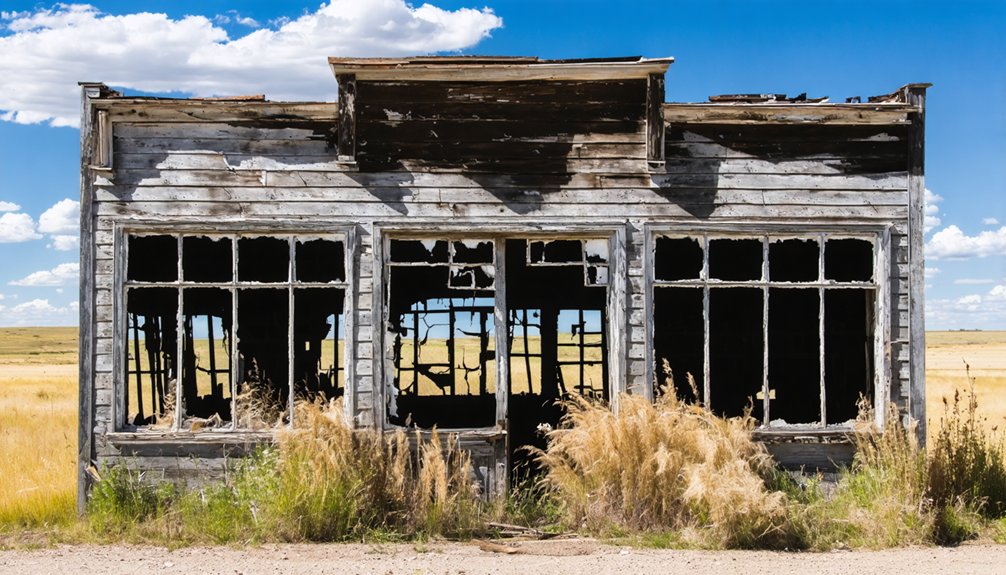
Although time has taken its toll on Ardmore, a surprising number of buildings still stand amid the silence. You’ll find a mix of decaying wooden homes alongside solid brick structures that speak to the town’s resilient abandoned architecture.
Historical preservation wasn’t a priority here, yet some buildings remain structurally sound, their exteriors intact despite ransacked interiors.
A weathered general store and post office still hold their shape, quietly frozen in another era. An old water tower looms above the landscape, commanding attention against the open sky.
You’re free to explore, but exercise serious caution — these century-old structures can shift or collapse without warning. Bring your camera, respect the space, and let Ardmore’s haunting stillness tell its own story on your terms.
Is It Safe to Explore Ardmore’s Abandoned Buildings?
Exploring Ardmore’s abandoned buildings carries real risk, so you’ll want to approach every structure with sharp awareness and deliberate caution. These century-old structures hide urban legends within their crumbling walls, yet they also shelter genuine historical artifacts worth discovering responsibly.
- Watch for unstable flooring, deteriorating ceilings, and compromised structural supports
- Avoid touching ransacked interiors where debris creates hidden hazards
- Stay alert for poison ivy spreading from nearby stream banks into building perimeters
- Photograph historical artifacts without disturbing or removing them from their resting places
- Visit during daylight hours when visibility maximizes your personal safety
Freedom means exploring boldly but smartly. Ardmore rewards curious travelers who respect its fragile landscape while keeping personal safety non-negotiable throughout every step of their ghost town adventure.
Can You Still Photograph Ardmore Today?
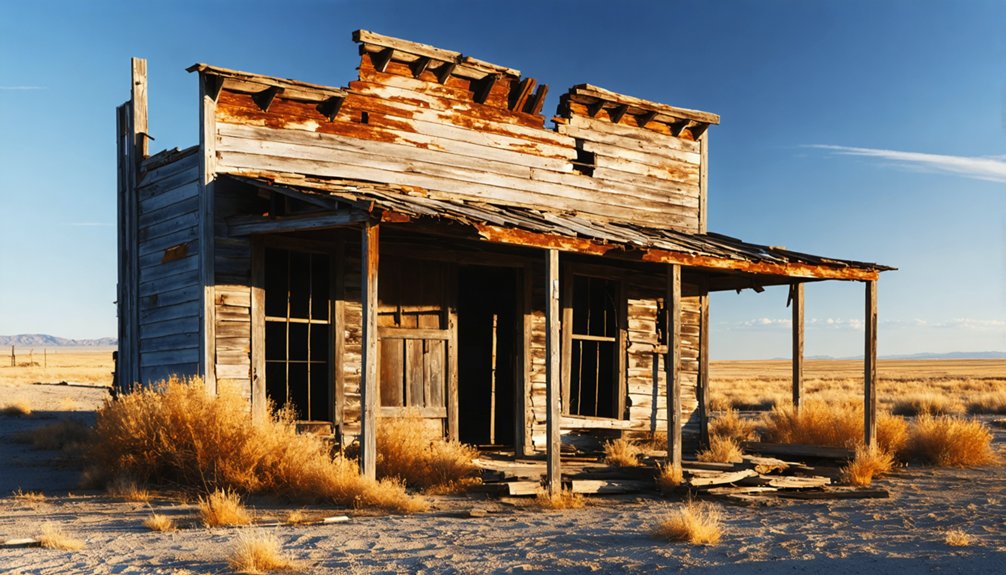
Ardmore stands as a photographer’s paradise, offering raw, authentic imagery that modern ghost towns rarely deliver. You’ll find weathered wooden homes, stubborn brick structures, and a lone water tower that beg to be captured through your lens.
Natural light plays beautifully against deteriorating facades, rewarding those who experiment with photographic techniques like shadow contrast and wide-angle framing.
Historical preservation remains minimal here, which paradoxically works in your favor. Nothing’s staged or sanitized — you’re shooting genuine abandonment.
Early morning visits deliver moody, atmospheric shots before harsh midday light flattens the textures.
Bring telephoto lenses if you’d prefer photographing structurally questionable buildings from a safe distance.
Ardmore’s landscape stretches endlessly, so don’t overlook sweeping environmental shots that capture the town’s profound isolation against South Dakota’s expansive horizon.
The Best Time of Year to Visit Ardmore
Timing your visit to Ardmore can dramatically shape your experience of this weathered ghost town. Late spring through early fall offers the clearest skies and most accessible roads via Highway 71, letting you soak in the historical artifacts and chase local legends at your own pace.
The right season transforms Ardmore from a mere stop into an unforgettable journey through living history.
- Spring: Mild temperatures, blooming landscapes, fewer visitors
- Early Summer: Longest daylight hours for extended exploration and photography
- Late Summer: Warm evenings perfect for discovering hidden corners of decaying structures
- Fall: Dramatic lighting conditions highlight weathered wood and brick textures beautifully
- Winter: Harsh, isolating conditions make roads unpredictable and access difficult
Avoid peak summer heat when temperatures can become brutal.
Whatever season you choose, you’ll find Ardmore’s haunting silence and crumbling architecture reward those willing to venture off the beaten path.
What to Bring to Ardmore

Since Ardmore’s remote location and crumbling structures demand careful preparation, you’ll want to pack smart before hitting Highway 71. Sturdy boots protect your feet while orienteering unstable floors inside century-old buildings, and gloves keep your hands safe from jagged debris. Bring water, since there’s nothing available in town, and pack snacks for the long stretches of empty road leading there.
A camera is essential — Ardmore rewards photographers generously. Notebook in hand, you can document local legends tied to the town’s railroad past, contributing personally to historical preservation efforts.
Watch for poison ivy along stream banks near J.H. Keith Memorial Cascade Falls if you’re stopping there first. Finally, bring a fully charged phone — cell service is sparse, and self-reliance out here isn’t optional, it’s freedom.
Cascade Falls and Other Stops Near Ardmore
As you make your way to Ardmore via South Dakota Highway 71, you’ll want to stop at J.H. Keith Memorial Cascade Falls, a scenic break from the barren stretches of road.
The falls offer a parking area, restrooms, and a picnic spot where you can swim and recharge before exploring the ghost town.
Just watch out for poison ivy along the stream banks before you get too comfortable.
Cascade Falls Visitor Amenities
Before you reach the ghost town of Ardmore, the J.H.. Keith Memorial Cascade Falls offers a perfect pit stop where you can stretch your legs and soak in nature’s beauty. Local legends surrounding the area add a rich layer of history, while historical artifacts nearby hint at the region’s frontier past.
Here’s what you’ll find at Cascade Falls:
- Designated parking area for easy access
- Restroom facilities for traveler convenience
- Scenic picnic area perfect for a relaxing break
- Swimming allowed in the invigorating falls
- Trailside warnings about poison ivy along stream banks
Take your time exploring before pushing onward. The falls recharge you for the barren stretches ahead, where Ardmore’s haunting landscape eventually emerges from South Dakota’s vast, open terrain.
Swimming And Picnic Areas
Cascade Falls gives you three good reasons to linger: a scenic picnic area, an invigorating swimming spot, and a designated parking area with restroom facilities. Spread out a blanket, unpack your cooler, and let the natural surroundings reset your pace before pushing on toward Ardmore.
The swimming area invites you to cool off beneath the falls, where the rushing water feels earned after miles of open road. While you’re there, keep your ears open — locals carry local legends about the region’s frontier past that no historical marker captures.
Watch the stream banks carefully, though, since poison ivy grows along the edges. Consider the falls your last comfortable pit stop before stepping into a landscape where historical artifacts and ghostly silence replace modern conveniences entirely.
Highway 71 Access Points
Highway 71 is your main artery into Ardmore, cutting through Fall River County with minimal fanfare but reliable access. You’ll pass barren stretches before the town emerges, rewarding your patience with genuine historical preservation and whispers of local legends still tied to this forgotten railroad stop.
Key stops along your Highway 71 approach:
- J.H. Keith Memorial Cascade Falls – parking and restrooms available
- Picnic area – ideal for a quick break before exploring
- Swimming hole – permitted at the falls for a revitalizing stop
- Stream banks – watch carefully for poison ivy
- Ardmore townsite – approximately one mile north of the Nebraska border
Each stop layers your experience, transforming a simple drive into something genuinely worth remembering.
Ghost Towns Within an Hour of Ardmore
While Ardmore itself tells a compelling story of abandonment, the surrounding region of southwestern South Dakota and northwestern Nebraska holds even more forgotten towns within an hour’s drive. You’ll find that this stretch of open country rewards curious travelers willing to chase history down dusty back roads.
Nearby ghost towns like Oelrichs and Oral offer their own layers of local legends, where old-timers once swore fortunes could be made on the frontier. Historical preservation efforts remain scattered and informal, leaving many structures to nature’s slow reclamation.
You’re fundamentally your own curator here, piecing together stories from crumbling foundations and weathered signage.
Pack a map, fuel up before leaving Highway 71, and give yourself a full day — these forgotten communities deserve more than a passing glance.
Frequently Asked Questions
Did Ardmore Ever Have a School or Church During Its Peak Years?
The knowledge doesn’t confirm historical school sites or church ruins in Ardmore, but you’d likely have found both during its thriving 1880s railroad peak, when frontier communities always built these essential gathering places.
Are There Any Legal Restrictions on Entering Ardmore’s Abandoned Buildings?
The knowledge doesn’t specify trespassing regulations for Ardmore’s buildings, but you’ll want to exercise serious safety precautions around these century-old structures. They’re dangerously deteriorated, so explore freely but wisely—your adventure shouldn’t end in a collapse!
Was Ardmore Ever Considered for Revival or Repopulation Efforts?
There’s no recorded revival effort for Ardmore, but ghost town tourism and historical preservation have kept its spirit alive. You’ll find its weathered structures standing as proud reminders of resilience, inviting free-spirited explorers like you to uncover its untamed history.
Who Owns the Land and Buildings in Ardmore Today?
Like a puzzle missing its final piece, ownership details aren’t clearly documented. You’ll find urban decay tells its own story here, but historical preservation efforts remain murky as Ardmore’s land ownership isn’t publicly confirmed in available records.
Has Ardmore Ever Appeared in Films, Documentaries, or Television Shows?
The available knowledge doesn’t confirm Ardmore’s appearances in films or shows, but its abandoned structures and ghost town tourism appeal make it a cinematic landscape you’d swear you’ve seen on screen before.
References
- https://www.atlasobscura.com/places/ardmore-ghost-town
- https://takemytrip.com/2016/08/ardmore-south-dakota-ghost-town-and-route-71/
- https://en.wikipedia.org/wiki/Ardmore
- https://www.onlyinyourstate.com/experiences/south-dakota/ardmore-ghost-town-sd
- https://www.thetravel.com/south-dakota-ghost-town-ardmore/
- https://www.youtube.com/watch?v=C95x3aqWN0g
- https://www.islands.com/2004885/abandoned-ghost-village-border-south-dakota-nebraska-ardmore/
- https://www.southdakotamagazine.com/ardmore