You’ll find Beersheba near the junction of Kansas Highway 23 and Highway 156, close to the Finney-Hodgeman county line northeast of Kalvesta. Founded in 1882 as Kansas’s first Jewish agricultural colony, it failed within years due to drought and broken promises. Today, only a historical marker and an 1884 Jewish cemetery remain on open prairie. Fill your tank in Cimarron before heading out, and there’s much more to this forgotten colony’s story worth uncovering.
Key Takeaways
- Beersheba sits near the junction of Kansas Highways 23 and 156, close to the Finney-Hodgeman county line northeast of Kalvesta.
- The site has no standing structures, but a historical marker and an 1884 Jewish cemetery with weathered gravestones remain.
- Established in 1882, Beersheba was Kansas’s first Jewish agricultural colony, ultimately failing due to poor rainfall and exploitation.
- No gas stations, restrooms, or dining exist at the site; fill up in Cimarron and bring adequate water supplies.
- Combine Beersheba with nearby Garden City or Cimarron to round out your road trip with lodging and dining options.
How to Find the Beersheba Colony Site in Finney County
Though little remains of Beersheba today, you can still find the colony’s site near the junction of Kansas Highway 23 and Kansas Highway 156, close to the Finney-Hodgeman county line northeast of Kalvesta. A rest stop near that intersection gives you a place to pull over, stretch your legs, and take in the wide-open scenic views that once drew hopeful settlers westward.
The historical marker there tells the colony’s story, grounding you in what this stretch of Kansas prairie once meant to dozens of Russian-Jewish families. You’ll likely spot local wildlife moving through the surrounding grasslands, a reminder that nature reclaimed what the settlers left behind.
Plan Beersheba as a deliberate stop rather than a drive-by glance — it rewards the curious traveler who takes time to reflect.
What Was the Beersheba Jewish Colony: and Why Did It Fail?
Once you’ve found the marker and taken in that quiet stretch of Kansas prairie, it helps to understand exactly what unfolded here. In 1882, the Hebrew Union Agricultural Society planted its hopes in this arid ground, bringing Russian-Jewish immigrant families west to homestead and farm.
Their historical significance runs deep — this was Kansas’s first Jewish agricultural colony, tied directly to Rabbi Isaac Mayer Wise’s Reform movement.
The cultural legacy they left behind tells a hard story:
- Settlers built dugouts and sod houses with no available lumber
- Unreliable rainfall and poor irrigation doomed their harvests
- The organization leased land to a cattle syndicate, then stripped settlers of their livestock and equipment
What You’ll Actually See at the Beersheba Site Today
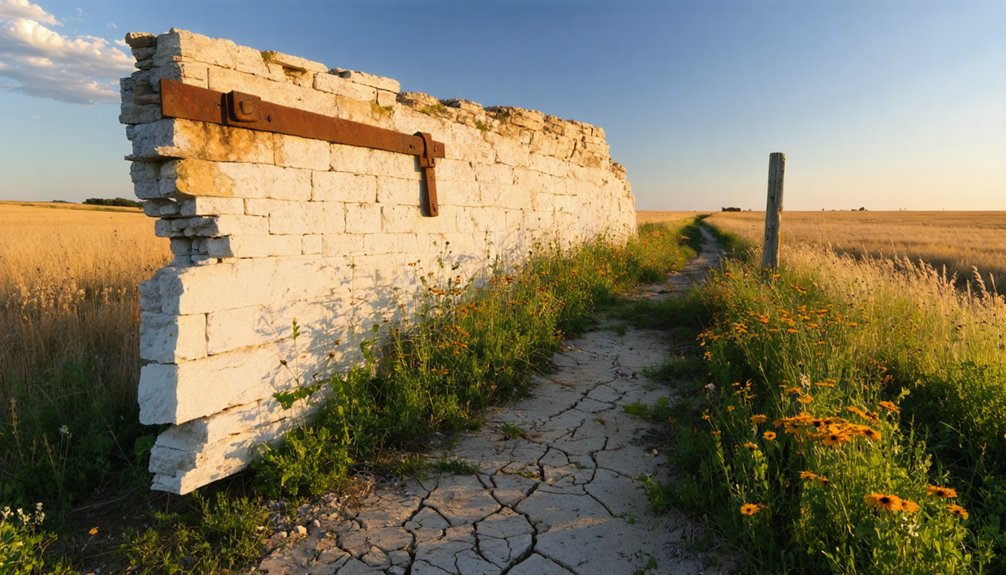
After the colony’s collapse, nature and time reclaimed nearly everything — so you won’t find standing structures, original homesteads, or a preserved town grid when you pull off here. What greets you instead is open Kansas prairie, local wildlife moving through the tall grass, and the quiet weight of a place that once held real human ambition.
The main draw is the historical marker at the junction of K-23 and K-156, where vintage signage commemorates the colony’s founding and brief life. A small rest stop sits nearby, giving you a moment to stretch and absorb the landscape.
The Jewish cemetery, opened in 1884, holds the only physical remnants — weathered gravestones that connect you directly to the families who tried to build something lasting here.
Is the Beersheba Colony Worth the Drive? Nearby Stops That Make It So
Standing at that quiet junction with only gravestones and a marker to show for an entire community’s dreams, you might wonder if the detour justifies itself. It does, especially when you build the surrounding drive intentionally.
The detour justifies itself — but only when you arrive with intention and leave with something earned.
- Cimarron sits about 22 miles southwest, offering local dining and a genuine small-town stop worth stretching your legs.
- Garden City, roughly 8 miles away, provides scenic viewpoints along the Arkansas River plus stronger restaurant and lodging options.
- Kalvesta and the surrounding Finney County backroads reward slow drivers with open prairie landscapes unchanged since the 1880s.
Beersheba alone is a quiet, reflective stop. Paired with these nearby anchors, it becomes the emotional centerpiece of a road trip that actually earns its miles.
No Facilities, No Town: What the Drive to Beersheba Actually Involves
Before you leave the pavement behind, know what you’re actually driving into: no gas stations, no restrooms, no roadside diner, and no preserved town waiting at the end. The junction of K-23 and K-156 offers a marker and a rest stop, but beyond that, you’re facing open Kansas prairie.
Local flora — native grasses and scrubby drought-tolerant growth — stretches in every direction, largely unchanged from what those 1882 settlers first broke with their plows.
Weather conditions out here shift fast, so check forecasts before heading out. Wind, heat, and sudden storms are real considerations on exposed flatland.
Fill your tank in Cimarron, pack water, and bring what you need. The freedom of the open road here is genuine, but so is its indifference.
Frequently Asked Questions
Can Visitors Access the Beersheba Jewish Cemetery on Private Land?
You’ll need permission for private land access before visiting. The cemetery preservation effort keeps these historic gravestones protected, so respect the land, contact local authorities, and honor the freedom-seeking settlers who once called Beersheba home.
Were Any Beersheba Colonists’ Descendants Still Living in Kansas Today?
Yes, descendants likely still live in Kansas! Through genealogical research, you can trace family lines to cities like Wichita or Dodge City. Cultural heritage preservation efforts help you honor these resilient pioneers who shaped Kansas’s forgotten frontier spirit.
Did Beersheba Ever Receive an Official Kansas Historical Landmark Designation?
Like a faded photograph tucked in a drawer, Beersheba’s story isn’t lost. You’ll find a state marker at K-23 and K-156 honoring its historical preservation, though a formal landmark designation remains unconfirmed in available records.
Are There Any Museums in the Region With Beersheba Colony Artifacts?
No confirmed museums with Beersheba artifacts are documented, but you’ll find local history and cultural preservation efforts in nearby Dodge City and Garden City museums, where you can uncover nostalgic glimpses of Kansas’s forgotten pioneering spirit.
What Other Jewish Agricultural Colonies Were Founded in Kansas After Beersheba?
Several colonies followed Beersheba’s 1882 lead, yet most failed too. You’ll find Jewish farming history echoes through Kansas pioneer settlements, as harsh weather and poor locations doomed these freedom-seeking communities before they could truly take root.
References
- https://www.hppr.org/2026-03-24/high-plains-history-hodgeman-county-ghost-towns
- https://www.tabletmag.com/sections/community/articles/jews-on-the-prairie
- https://www.visitgck.com/things-to-do/driving-tours/
- https://theclio.com/entry/156769
- https://fhsuguides.fhsu.edu/kansasheritage/hodgemancounty
- https://cdp.jewishgen.org/usa/kansas-ks/beersheba-finney-county
- http://www.kancoll.org/books/harris/sod_chap06.htm
- https://terpconnect.umd.edu/~calmon/HistoryBook.doc
- https://en.wikipedia.org/wiki/List_of_ghost_towns_in_Kansas
- https://www.kgou.org/oklahoma-news/2018-10-01/how-curious-an-all-female-ghost-town