Planning a ghost town road trip to Eagle City, Utah means committing to remote backcountry travel on Mount Ellen’s southeast slopes in Garfield County. You’ll need a capable vehicle, dry weather, plenty of water, and recovery gear before heading toward Bromide Basin. Eagle City boomed in 1890 around gold extraction and collapsed after the Bromide Mill burned in 1911. Visit between June and September for the safest conditions. Everything you need to know before you go is ahead.
Key Takeaways
- Eagle City sits on Mount Ellen’s southeast slopes in Utah’s Henry Mountains, accessible via 2WD roads through remote Garfield County terrain.
- Visit between June and September, with September offering ideal temperatures, fewer crowds, and active wildlife including Henry Mountains bison.
- Pack water, fuel, recovery gear, a first aid kit, and paper maps, as no services exist in this remote area.
- Dry weather is critical; mud, snow, and wet conditions can make roads impassable and trap vehicles without nearby rescue options.
- Extend your trip by exploring nearby ghost towns Notom and Starr Springs, plus scenic Waterpocket Fold corridor viewpoints.
Where Eagle City Sits in the Henry Mountains
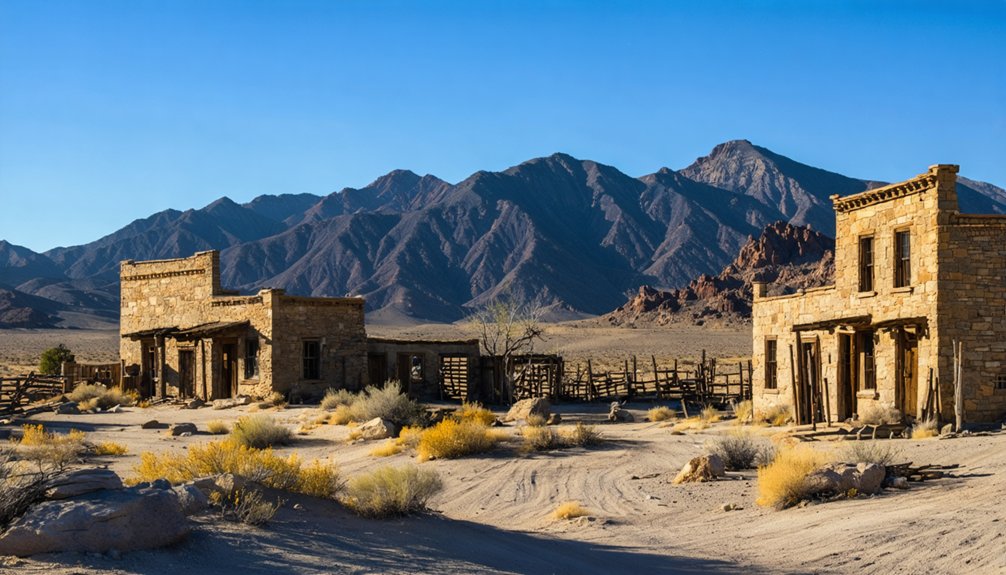
Eagle City occupies a striking perch on the southeast slopes of Mount Ellen, deep within Utah’s Henry Mountains in Garfield County. You’ll find it near Bromide Basin, close to the head of Crescent Creek, at an elevation that rewards the determined traveler with sweeping, untamed scenery.
Perched high on Mount Ellen’s southeast slopes, Eagle City rewards the determined traveler with raw, untamed Henry Mountains scenery.
The terrain is high, remote, and unforgiving — exactly the kind of place that shaped hard-edged mining culture. Today, the site sits on BLM-managed public land, meaning you can explore its surface freely.
Its cultural significance lies in what it reveals about boom-and-bust frontier life. Preservation efforts here remain minimal, leaving the landscape raw and honest.
That remoteness is part of the appeal — you’re stepping into history without guardrails, gift shops, or crowds softening the experience.
Why Eagle City’s Mining History Earns the Remote Drive
When you make the drive out to Eagle City, you’re retracing a gold rush that sparked in 1889 and built a full camp—store, hotel, saloon, doctor’s office—within a year.
The boom ran hard until water intrusion stalled deep mining, the Bromide Mill burned in 1911, and World War I pulled the last workers away, leaving the town to collapse under its own silence.
That compressed arc of ambition and failure is exactly what makes the remote haul worth it.
Gold Rush Origins
How does a remote mountain basin in southern Utah spark a gold rush? In 1889, prospectors pushed into Bromide Basin near the head of Crescent Creek and found gold. That discovery pulled fortune-seekers onto the southeast slopes of Mount Ellen, and by 1890, Eagle City had taken shape around the Bromide and Oro mines.
You can still picture what that momentum built — a store, hotel, saloon, and doctor’s office serving roughly 100 residents. Mill operators hauled mining equipment to Crescent Creek, establishing processing facilities that turned raw ore into revenue. Those mills became historic landmarks defining the camp’s identity.
The rush was real, the output genuine, and the infrastructure surprisingly complete for such an isolated elevation. Eagle City didn’t grow by accident — it grew because the ground demanded it.
Boom-And-Bust Mining
Boom-and-bust isn’t just a label for Eagle City — it’s the full arc of its existence, compressed into a few hard decades. Miners pulled gold from the Bromide and Oro mines using the best mining techniques available in the 1890s, yet deeper shafts kept flooding. A planned 3,000-foot drain tunnel never got funded, and without it, extraction stalled.
The Bromide Mill burned in 1911, stripping away the town’s processing backbone. World War I took the remaining workers. What had briefly supported 100 residents, a hotel, a saloon, and a doctor’s office collapsed into silence.
Today, ghost town preservation efforts remain minimal — the site holds sparse ruins, stone houses, and raw mountain scenery. That honesty is exactly what makes the drive worth taking.
Worth The Remote Drive
Few ghost towns justify their remoteness the way Eagle City does. You’re not just chasing ruins — you’re tracing a complete story of ambition, extraction, and collapse set against the dramatic backdrop of Mount Ellen.
Local legends tie this camp to Butch Cassidy’s Wild Bunch, adding an outlaw thread to the gold-rush narrative. Stone houses still stand on the southeast slopes, quiet evidence that preservation efforts — even informal ones — have kept the site legible to curious visitors.
The Bromide Mill burned, the miners left, and Frank Lawler stayed alone for decades. That layered history rewards the drive.
Load up, plan for dry conditions, and treat Eagle City as the rare backcountry destination that genuinely earns its isolation.
The Gold Rush That Built Eagle City in 1890
When you trace Eagle City’s origins, you’ll find everything started with a single gold discovery in 1889 in Bromide Basin, tucked into the remote Henry Mountains of Garfield County, Utah.
That strike triggered a small but intense mining rush that drew prospectors into some of the most isolated terrain in the American West.
Gold Discovery In 1889
The gold discovery that set Eagle City in motion came in 1889, when prospectors working the remote folds of the Henry Mountains struck promising ore in Bromide Basin. Gold prospecting in this high, isolated country wasn’t easy — you’re talking rugged terrain, scarce water, and no infrastructure for miles.
But the find was real enough to spark a rush, and mining legends grew fast around the strikes near Crescent Creek. Word spread, men arrived, and within a year a functioning camp began taking shape.
That single discovery rewrote the purpose of this corner of Garfield County, pulling people into one of Utah’s most remote mountain ranges with nothing but ambition and the promise of ore worth chasing.
Bromide Basin Mining Rush
Once gold turned up in Bromide Basin in 1889, the rush that followed built Eagle City almost overnight. By 1890, prospectors and settlers had carved a functioning camp into the remote southeast slopes of Mount Ellen, drawn by the Bromide and Oro mines pulling ore from the high country.
Owners quickly constructed mills along Crescent Creek, and the town filled with a store, hotel, saloon, and doctor’s office to support roughly 100 residents. The mountain scenery surrounding the basin was striking, but nobody came for the views — they came for the gold.
Eagle City even attracted mining legends from the outlaw world, with members of Butch Cassidy’s Wild Bunch reportedly passing through. For a brief window, this isolated camp pulsed with real economic momentum.
Boom, Bust, and the Bromide Mill Fire of 1911
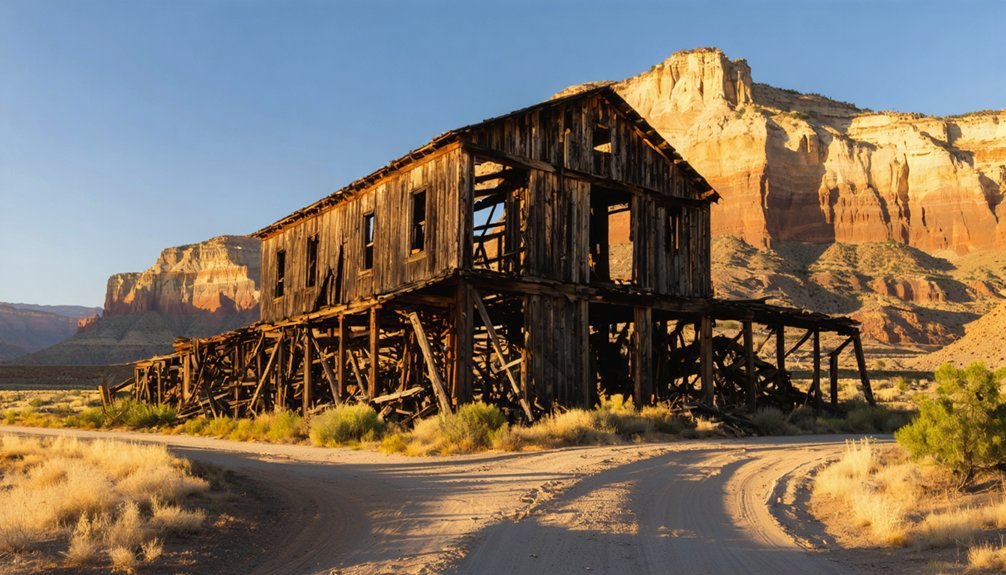
Eagle City’s boom years carried the breathless energy of a genuine gold rush—prospectors flooded Bromide Basin after the 1889 discovery, and by 1890 the camp had taken shape around the Bromide and Oro mines, complete with a store, hotel, saloon, and doctor’s office serving roughly 100 residents.
Mining legends even place members of Butch Cassidy’s Wild Bunch among its visitors. But the bust came hard. Deeper shafts hit water, and a proposed 3,000-foot drain tunnel died for lack of capital.
The Wild Bunch passed through. Then the water rose, the capital dried up, and Eagle City followed.
Then, in 1911, the Bromide Mill burned—and with it went the town’s processing heart. World War I pulled away whoever remained.
Today, historical preservation efforts keep Eagle City’s story alive, though what you’ll find on-site is spare: stone houses, scattered ruins, and silence where a hundred lives once played out.
The Last Man Standing: Frank Lawler’s 60-Year Vigil
After the mill burned and the war swallowed the last of Eagle City‘s young men, nearly everyone left—but Frank Lawler didn’t. He stayed for roughly 60 years, becoming the town’s sole guardian and its most compelling symbol of cultural significance. No institution kept Eagle City alive during those decades—just one man’s stubborn presence in the remote Henry Mountains.
When you visit today, you’re walking ground he once walked alone. Preservation challenges have taken their toll; sparse ruins and a few standing structures are all that remain. Lawler’s long vigil couldn’t stop time, but it did extend the town’s story well into the 1970s.
That’s worth remembering as you explore the site—freedom sometimes looks like simply refusing to leave.
What You’ll Actually Find at the Eagle City Site Today
When you arrive at Eagle City today, sparse ruins and a handful of standing structures greet you—stone houses among them, weathered but still recognizable as the bones of a once-active camp. A documented cabin stands as a tangible marker of the site’s cultural significance, connecting you directly to the boom-and-bust era that shaped this remote corner of the Henry Mountains.
Don’t expect interpretive signs or maintained trails; this is raw, unmediated history on public BLM land. Preservation challenges are real here—isolation that once defined the camp now leaves remaining structures vulnerable to time and weather.
Bring your camera, stay on the surface, and treat what’s left with respect. What you see today may not survive another generation.
How to Reach Eagle City Without Getting Stranded
Reaching Eagle City means committing to remote mountain travel, so plan accordingly before you leave pavement behind. The route follows 2WD grid roads into the Henry Mountains, climbing the southeast slopes of Mount Ellen toward Bromide Basin.
Reaching Eagle City means committing to remote mountain travel — grid roads climbing deep into the Henry Mountains toward Bromide Basin.
Dry weather is non-negotiable — snow closes access in winter, and wet conditions turn mountain roads treacherous fast.
Pack water, extra fuel, and basic recovery gear before you head out. Services don’t exist up here. That isolation is exactly what makes this adventure safety consideration critical: tell someone your route and expected return time.
Your reward for the effort is genuine. The scenic viewpoints across Garfield County alone justify the drive, and arriving at a ghost town this remote feels like discovering something the modern world forgot to reclaim.
When to Go: Avoiding Snow, Mud, and Summer Heat
You’ll want to plan your visit between late spring and early fall, when the mountain roads into the Henry Mountains are clear of snow and dry enough for safe travel.
Winter closes off access with heavy snowfall, and spring snowmelt can turn remote routes into muddy traps that strand even prepared travelers.
Midsummer works well for the roads, though the high elevation of Mount Ellen’s southeast slopes keeps temperatures cooler than Utah’s desert lowlands, making July and August more manageable than you might expect.
Best Months To Visit
Because Eagle City sits high on the southeast slopes of Mount Ellen in Utah’s remote Henry Mountains, the window for a comfortable visit is narrower than you might expect. Snow closes mountain roads well into spring, and winter access is practically impossible without specialized equipment.
Late June through early October offers your best conditions, with July and August delivering warm, dry days ideal for exploring remnant stone houses and ruins. September is arguably the ideal period — crowds thin, temperatures moderate, and wildlife encounters become more frequent as animals move through Bromide Basin.
Cultural preservation efforts at remote BLM sites like Eagle City depend partly on respectful off-season avoidance, so resist pushing the shoulder months. Plan for dry weather, pack your own water, and build in flexibility for mountain afternoon storms.
Weather Hazards To Avoid
Three distinct hazards shape the travel calendar for Eagle City: late-season snow, post-melt mud, and the midday heat that settles over the Henry Mountains each July and August.
Snow closes mountain roads well into spring, sometimes through May, cutting off access entirely.
Once snowmelt begins, saturated ground turns dirt tracks impassable, threatening both your vehicle and the site’s fragile cultural preservation. Wait until the soil firms before heading up.
Summer heat peaks midday in July and August, straining both you and your engine on exposed mountain grades.
Wildlife encounters increase at dawn and dusk during warmer months, so plan accordingly.
The practical sweet spot remains June and September, when roads are dry, temperatures are manageable, and Eagle City rewards the independent traveler who prepares honestly.
What to Pack for Eagle City’s Remote Mountain Terrain
Reaching Eagle City means trading pavement and cell service for rugged mountain roads on the southeast slopes of Mount Ellen, so what you pack can make or break the trip. Packing essentials include plenty of water, high-calorie food, and layered clothing for shifting mountain temperatures. Don’t underestimate the elevation or the isolation.
Your safety gear should cover a basic first aid kit, a paper map, a spare tire, and a recovery strap since no tow truck is coming up Crescent Creek. Bring a camera for the stone house ruins and sweeping Henry Mountains scenery.
Dry-weather visits reduce risk, but afternoon storms roll in fast. Pack light, pack smart, and respect the same remote terrain that once tested prospectors a century ago.
Other Utah Ghost Towns to Add to Your Henry Mountains Route
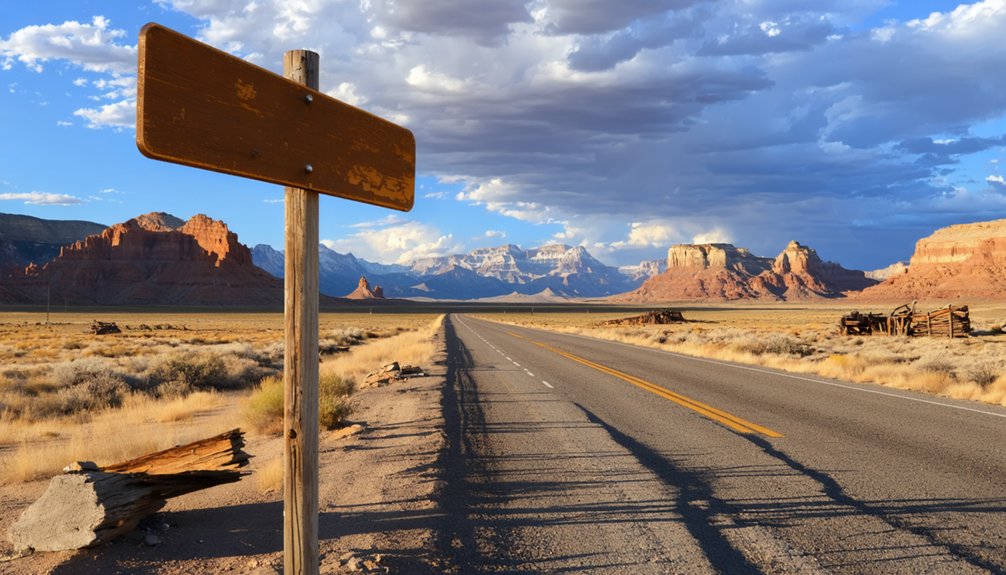
While Eagle City rewards the effort it takes to find it, the Henry Mountains region sits close enough to other forgotten Utah mining settlements that a single road trip can layer ghost town upon ghost town across a long weekend.
Notom and Starr Springs offer nearby starting points, both carrying their own boom-and-bust histories.
As you move between sites, stop at scenic viewpoints along the Waterpocket Fold corridor, where canyon walls hold the silence of vanished communities especially well.
Capitol Reef country pushes that feeling further.
Wildlife encounters with bison, the free-roaming Henry Mountains herd, add something no museum exhibit can replicate.
Map your stops loosely, keep your schedule flexible, and let the landscape itself decide the pace of your exploration.
Frequently Asked Questions
Is a Permit Required to Visit Eagle City on BLM Land?
Ironically, you don’t need a permit — freedom’s alive where the town died. BLM’s visitor regulations allow open access, so you can explore Eagle City’s historical preservation without bureaucratic barriers holding you back.
Are Campgrounds Available Near Eagle City in the Henry Mountains?
You’ll find dispersed BLM camping near Eagle City’s remote Henry Mountains terrain. Embrace freedom under open skies, supporting historical preservation while enjoying exceptional wildlife viewing amid the same rugged landscape that once sheltered gold rush pioneers.
Can You Metal Detect or Collect Artifacts at Eagle City Legally?
You can’t legally metal detect or collect artifacts at Eagle City—it’s BLM land, so artifact regulations and metal detecting laws strictly prohibit removal. Respect the site; you’ll preserve its evocative history for fellow freedom-seeking explorers.
Is Eagle City Accessible to Visitors With Physical Mobility Limitations?
Eagle City’s remote mountain terrain limits accessibility options considerably. You’ll find rough, unpaved roads and uneven ground that challenge mobility assistance devices. If freedom calls you here, plan carefully — the rugged Henry Mountains terrain doesn’t accommodate limited mobility easily.
Are There Any Guided Tours Available for Eagle City Ghost Town?
No guided tours exist for Eagle City, but you’ll find that’s part of its freedom. You can explore independently, honoring historical preservation while seizing raw photography opportunities among the stone ruins and mountain silence.
References
- https://exhibits.lib.utah.edu/s/ghost-towns/item/140116
- https://kids.kiddle.co/Eagle_City
- https://www.ghosttowns.com/states/ut/eaglecity.html
- https://www.reddit.com/r/todayilearned/comments/al4ddl/til_eagle_mountain_ca_is_one_of_americas_newest/
- https://en.wikipedia.org/wiki/Eagle_City
- https://onlineutah.us/eaglecityhistory.shtml
- https://nevadahiking.org/loc/eagle-city/
- https://es.abcdef.wiki/wiki/Eagle_City
- https://en.wikipedia.org/wiki/List_of_ghost_towns_in_Utah