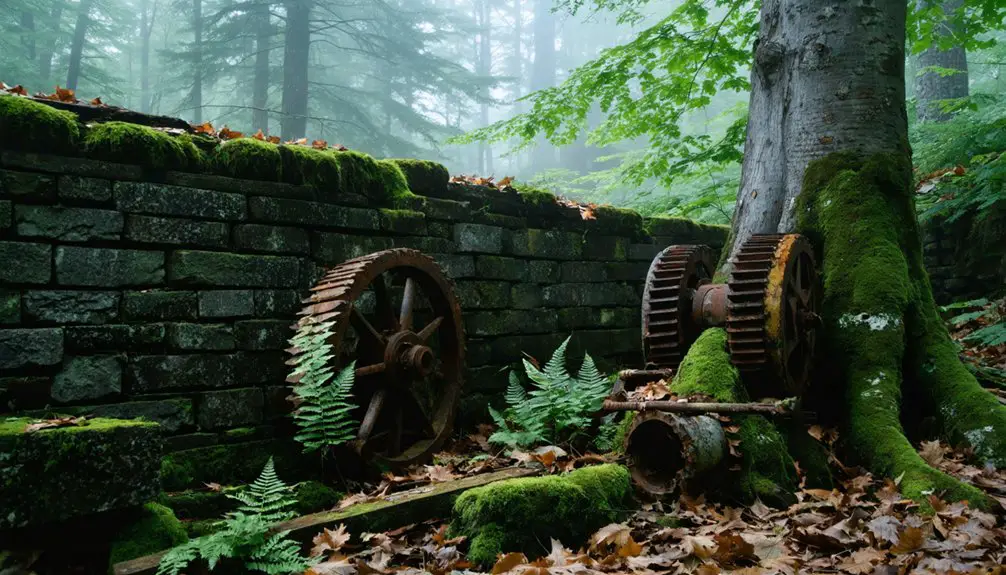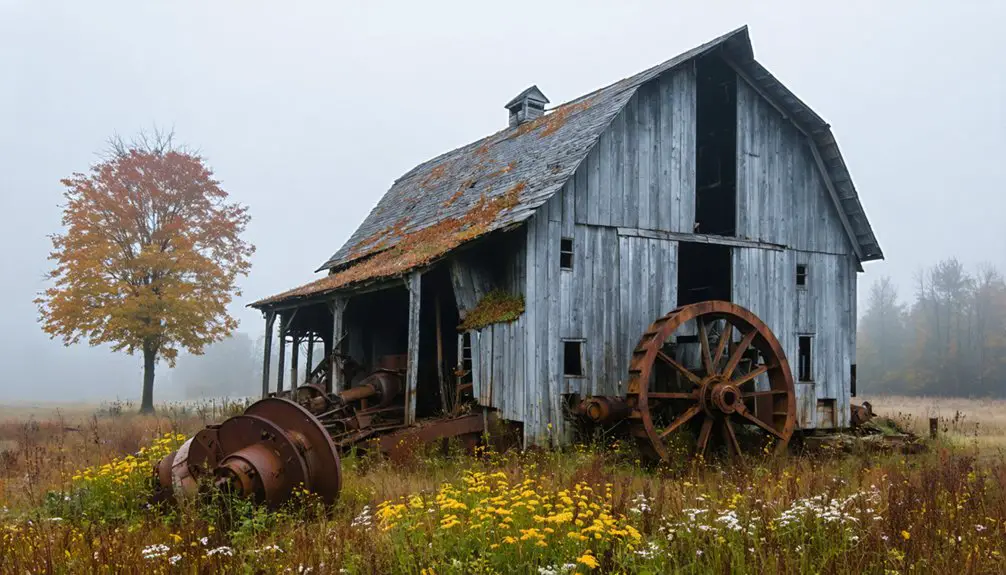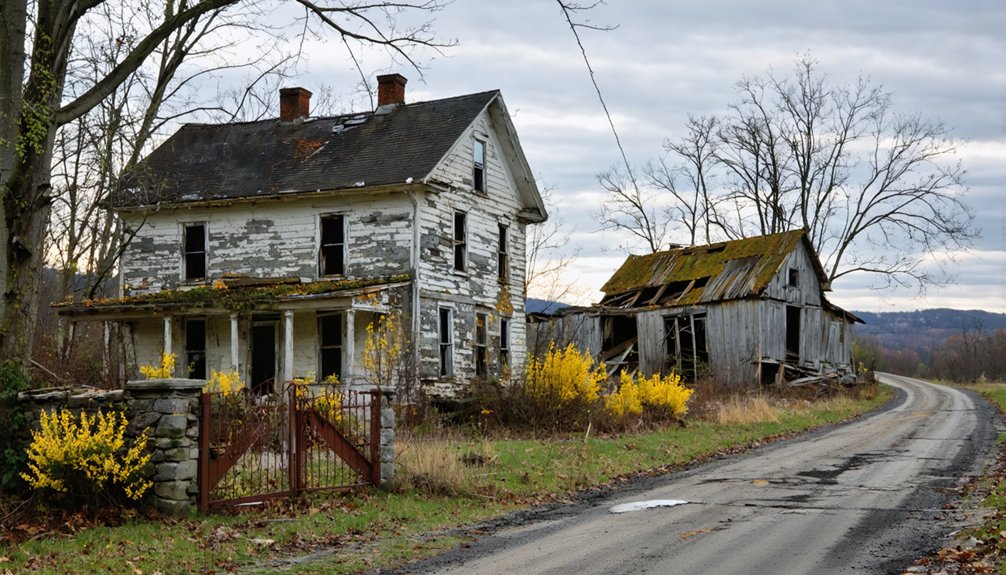
Your Vermont ghost town road trip begins at Glastenbury, a remote mountain settlement swallowed by the Green Mountains after its timber economy collapsed. Start from Route 9, drive through Woodford, and hit the Long Trail trailhead for a 22.3-mile overnight hike through century-old ruins. From there, you’ll connect to marble quarries, granite pits, and forgotten villages scattered across the state. There’s far more waiting for you ahead on this route than you’d expect.
Key Takeaways
- Glastenbury, located in southern Vermont’s Bennington Triangle, is a prime ghost town destination featuring ruins reclaimed by nature after a 19th-century logging collapse.
- Start your road trip from Route 9 east, turning onto Harbour Road for 5 miles to reach the Long Trail trailhead parking area.
- The hike covers 22.3 miles over two days, requiring overnight gear, topographic maps, GPS, food, water, and layered clothing.
- Expand your road trip by visiting Dorset Marble Quarry and Barre Town Forest, which feature striking abandoned quarries throughout Vermont.
- The Urbex Vermont Atlas documents 35+ abandoned sites, including mill ruins and CCC camps, perfect for planning a comprehensive ghost town itinerary.
Vermont’s Ghost Town Road Trip: Why Glastenbury Comes First
When planning a Vermont ghost town road trip, Glastenbury belongs at the top of your list. Unlike destinations shaped by urban development and modern attractions, this southern Vermont relic offers something rawer — a collapsed timber economy, mountain wilderness, and a string of unsolved disappearances between 1945 and 1950 that still haunt the region.
Folklorist Joseph Citro coined the term “Bennington Triangle” to describe the area, and Glastenbury sits at its center. The Green Mountains swallowed this town after its 19th-century logging boom collapsed, leaving behind legend more than structure.
You won’t find roadside ruins here. You’ll find a remote, trail-accessed destination that demands real backcountry planning. That combination of history, mystery, and wilderness is exactly what makes Glastenbury the right place to start your journey.
Glastenbury: Bennington Triangle Disappearances and Timber Boom Ruins
Glastenbury’s story starts with timber and ends with silence. The timber industry built this mountain town, then abandoned it when the profits dried up. Add haunted legends tied to five disappearances between 1945 and 1950, and you’ve got one of Vermont’s most compelling destinations.
Timber built Glastenbury. Silence buried it. Five disappearances made sure no one forgot.
Here’s what shaped Glastenbury into what you’ll find today:
- A 19th-century logging boom created the town almost overnight
- Economic collapse followed when timber demand fell
- Five people vanished in the Bennington Triangle between 1945–1950
- Folklorist Joseph Citro popularized the haunted legends surrounding the area
- Nature has reclaimed most structures, leaving ruins deep in the Green Mountains
You’re not visiting a preserved museum. You’re stepping into a place history forgot and wilderness swallowed whole.
How to Reach Glastenbury’s Trailhead From Route 9
To reach Glastenbury’s trailhead, you’ll start on Route 9 east and drive about four miles to Woodford.
From there, turn onto Harbour Road and follow it for roughly five miles until you reach the parking lot entrance.
That parking area puts you at the crossing of the Long Trail and Appalachian Trail, where your backcountry journey into the ghost town truly begins.
Starting On Route 9
Route 9 is where your Glastenbury adventure begins. Head east toward Woodford, roughly 4 miles out, and you’re already stepping into territory tied to urban legends and historical preservation efforts that keep this forgotten mountain town alive in collective memory.
Here’s what to lock in before you leave Route 9:
- Turn onto Harbour Road after passing through Woodford
- Drive approximately 5 miles to reach the trailhead parking lot
- Confirm you’re at the Long Trail and Appalachian Trail crossing
- Pack overnight gear — this is a 22.3-mile, two-day commitment
- Carry navigation tools since road access ends well before the site
You’re not driving to a roadside attraction. You’re launching into Vermont’s Green Mountains with purpose, history, and genuine wilderness ahead.
Turning Onto Harbour Road
Once you’ve left Route 9 behind, Harbour Road is your next move. Turn onto it and drive roughly five miles until you reach the parking lot entrance.
From there, you’ll hit the junction of the Long Trail and Appalachian Trail — your gateway into serious backcountry.
This isn’t a casual detour. The hike to Glastenbury runs 22.3 miles across two days, cutting through Green Mountain wilderness where wildlife conservation shapes how the land’s managed.
You’re entering terrain that demands navigation skills, overnight gear, food, and water.
What pulls people out here isn’t just adventure — it’s historical preservation. Glastenbury’s timber-boom ruins and Bennington Triangle legends make the effort worthwhile.
Pack smart, plan your route carefully, and respect the remote environment you’re stepping into.
Reaching The Trailhead Parking
Head east on Route 9 from Bennington for about four miles until you reach Woodford, then turn onto Harbour Road and drive five miles to the parking lot entrance. This parking area marks where road access ends and true wilderness navigation begins.
From here, you’ll connect with both the Long Trail and the Appalachian Trail, launching a 22.3-mile, two-day backcountry experience. Pack accordingly:
- Topographic maps for reliable wilderness navigation
- Overnight shelter, sleeping gear, and layers
- Sufficient food and filtered water
- A first aid kit suited for remote terrain
- Historical preservation resources to understand Glastenbury’s logging-era past
You’re not just visiting ruins — you’re stepping into a landscape shaped by industrial collapse and enduring legend. Plan carefully, and the reward is real freedom.
What to Pack for an Overnight Ghost Town Hike

Since reaching Glastenbury demands a 22.3-mile, two-day commitment through remote Green Mountain terrain, you’ll need to pack smart before you hit the trailhead.
Your camping gear should include a lightweight tent, a sleeping bag rated for mountain temperatures, and a compact stove for hot meals. Don’t underestimate how fast conditions shift at elevation.
Your navigation tools are non-negotiable out here. Carry a detailed topo map and a compass since cell service disappears fast in the backcountry. A GPS device adds an extra layer of confidence on long trail sections.
Beyond gear, bring enough water and food for two full days.
The Long Trail and Appalachian Trail crossing gives you a clear entry point, but the wilderness between there and Glastenbury is entirely yours to manage.
Other Abandoned Vermont Sites to Add to Your Route
Glastenbury doesn’t have to be your only stop. Vermont’s abandoned landscape runs deep, and you’ll find urban legends, crumbling quarries, and preservation efforts scattered across the state. Build a fuller route by adding these sites:
- Dorset Marble Quarry – the oldest commercial marble quarry in the U.S., still visually striking
- Barre Town Forest – over 25 abandoned granite quarries hidden among the trees
- Woodford and Shaftsbury – natural extensions of any Bennington Triangle itinerary
- Urbex Maps Vermont Atlas – documents 35+ locations including mill ruins, CCC camps, and shuttered ski areas
- Bennington Triangle zone – layers folklore and documented disappearances into a single explorable region
Each site adds texture to your trip without stretching the route beyond reach.
Marble Quarries, Granite Pits, and the Ghost Towns Between
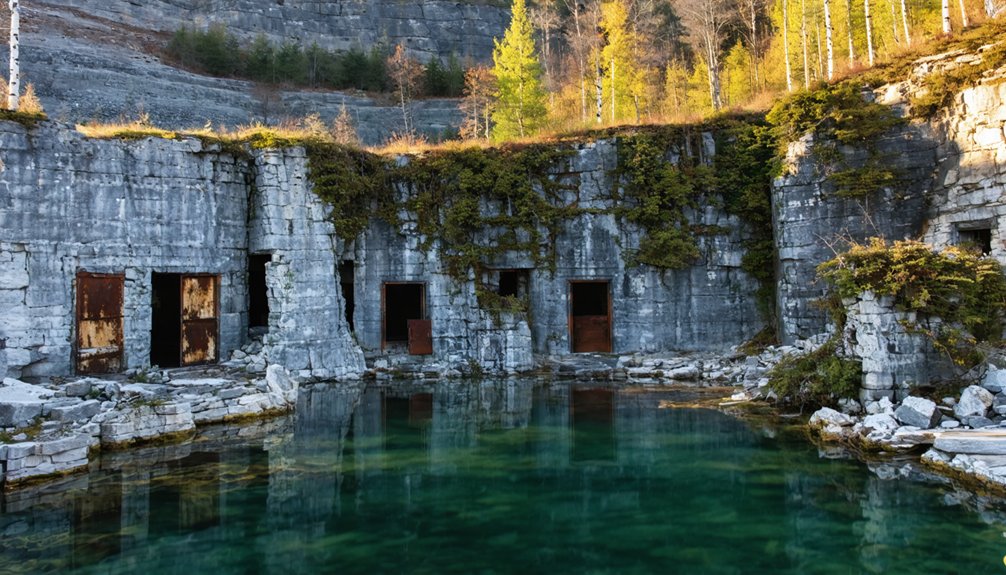
Vermont’s stone industry left behind a trail of open pits, rusted equipment, and ghost-town remnants that rival Glastenbury’s atmosphere without the two-day hike.
For marble quarry history, head to Dorset, where you’ll find the oldest commercial marble quarry in the United States sitting open and explorable. It’s raw, quiet, and genuinely eerie.
For granite pit exploration, Barre Town Forest delivers over 25 abandoned quarries scattered through the woods. You can move between sites at your own pace, reading the landscape like an industrial ghost story carved in stone.
Both destinations connect naturally into a central Vermont loop. You’re not just collecting stops — you’re tracing the economic collapse that turned thriving towns into the silent, overgrown places you came to find.
Frequently Asked Questions
Is a Permit Required to Hike the Long Trail to Glastenbury?
Like a open door to the wild, no permit’s required! You’re free to hike the Long Trail to Glastenbury, but respect historical preservation and follow trail regulations to protect this legendary, abandoned Vermont wilderness.
What Towns Near Northfield Make Good Overnight Stops?
Montpelier and Barre make excellent overnight stops near Northfield! You’ll find historic architecture worth exploring, local dining that’ll fuel your adventures, and a free-spirited atmosphere that keeps your ghost town road trip feeling alive and unconstrained.
Are There Guided Ghost Town Tours Available in Central Vermont?
Like a lantern lighting dark trails, haunted history pulls you forward. Guided ghost town legends tours aren’t widely documented for central Vermont, so you’ll forge your own path using trail maps, local historians, and self-guided exploration.
When Is the Best Season to Visit Vermont’s Abandoned Sites?
Fall’s your prime window—you’ll capture stunning seasonal foliage framing abandoned ruins. Winter photography rewards the bold with eerie, snow-draped landscapes. Avoid mud season in spring; summer’s lush but obscures historic details you’d want to explore freely.
Does Northfield Have Campgrounds Near Its Covered Bridges?
Off the beaten path, you’ll find camping amenities near Northfield’s historic bridge architecture. Scout local state parks and campgrounds along the Dog River corridor — they’re your basecamp for exploring all five covered bridges at your own pace.
References
- https://happyvermont.com/2014/10/23/glastenbury-ghost-town/
- https://urbex-maps.com/en/blog/abandoned-places-vermont-6-iconic-urbex-spots
- https://www.worldatlas.com/cities/9-offbeat-towns-to-visit-in-vermont.html