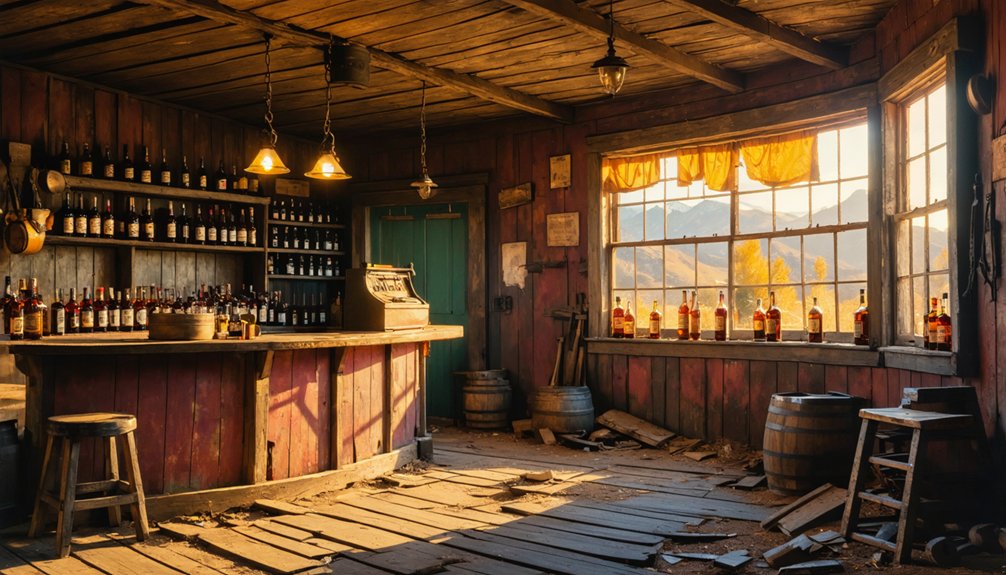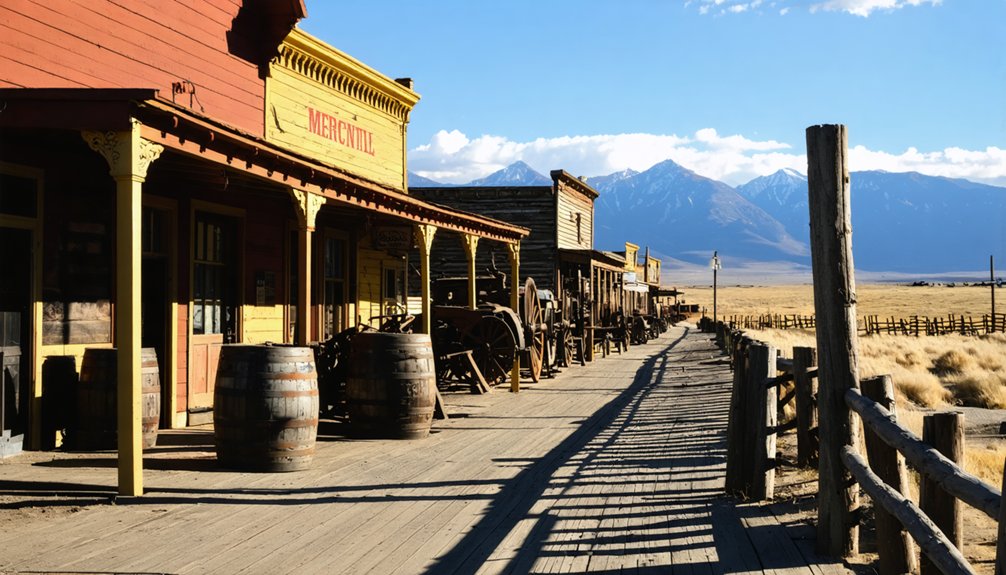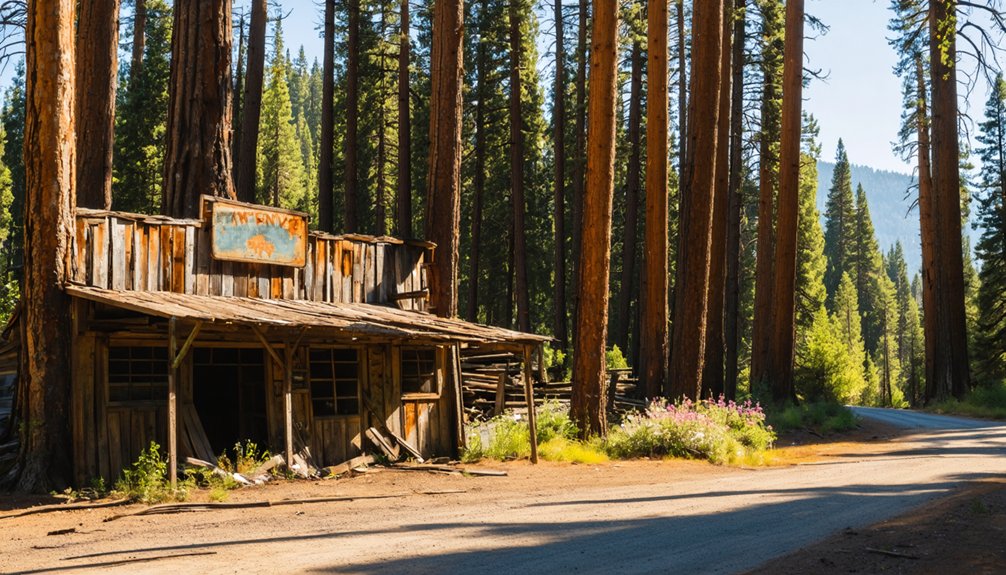
Planning a ghost town road trip to Forest City, California means trading modern convenience for crumbling storefronts, gold-era silence, and weathered relics frozen in time. You’ll drive deep into Tahoe National Forest, where cell service vanishes and 1800s-era buildings still stand untouched. Combine your visit with nearby stops like Downieville, Alleghany, and La Porte for a 770-mile Sierra Nevada loop spanning three to six days. There’s far more to uncover about this forgotten boomtown than its quiet exterior suggests.
Key Takeaways
- Forest City, a preserved Gold Rush ghost town in Sierra County, is accessible via a remote drive through Tahoe National Forest.
- Plan your visit between late spring and early fall for the best road and weather conditions.
- Bring offline maps, sufficient fuel, food, and water, as no modern amenities or cell service are available.
- Combine Forest City with nearby stops like Downieville, Alleghany, and La Porte for a fuller historical experience.
- The full route forms a 770-mile loop through Northern California’s Sierra Nevada foothills, spanning three to six days.
What Is Forest City, California?
Once a booming Gold Rush settlement, Forest City, California now stands as a quiet ghost town tucked deep within Tahoe National Forest in Sierra County — its 1800s-era buildings still intact, its resident population barely a whisper of what it once was.
Once a Gold Rush boomtown, Forest City now sleeps quietly in Sierra County — preserved, forgotten, and frozen in time.
While urban development reshaped much of California, Forest City slipped into a different kind of time. There’s no cell service here, no grocery stores, no modern amenities softening the edges of its rugged past.
What you’ll find instead are preserved structures that still carry the weight of boom-and-bust history, surrounded by forest silence.
Historian Glenn Sundstrom helped protect what remains, ensuring you can walk through a landscape that California’s rapid growth never swallowed.
This place rewards the curious and the adventurous.
What Makes Forest City Worth the Drive Into Tahoe National Forest
When you push deep into Tahoe National Forest and finally reach Forest City, you’re stepping into a Gold Rush settlement that’s barely changed since the 1800s — preserved structures, mining-era relics, and all.
The remote forest setting strips away every modern distraction, leaving you with nothing but the atmosphere of a town that once boomed and then quietly faded. You won’t find grocery stores or cell service here, and that absence is exactly what makes the experience feel genuinely historic rather than staged.
Preserved Gold Rush Relics
What waits for you deep inside Tahoe National Forest isn’t a manicured museum or a polished heritage site — it’s the raw, time-worn remnants of a Gold Rush town that never quite let go of its past.
Forest City strips away every modern amenity and replaces it with something rarer: authenticity. The urban decay here isn’t decay at all — it’s preservation.
Structures that survived the 1800s still stand, shaped by weather, ambition, and abandonment. You’ll walk through a place where boom turned to silence without apology.
Thanks to local historian Glenn Sundstrom’s preservation efforts, these relics remain intact and accessible.
No crowds, no interpretive signs cluttering the view — just you, the forest, and the physical evidence of California’s wildest chapter.
Remote Forest Setting
The relics draw you in, but the setting keeps you there. Forest City sits deep inside Tahoe National Forest, wrapped in timber and silence that amplifies every rusted mining artifact and weathered plank of historical architecture around you.
Three reasons the remote setting elevates the experience:
- No cell service strips away distraction, forcing full presence in the landscape
- Four-season terrain shifts the atmosphere dramatically depending on when you arrive
- Forest isolation frames the historical architecture in natural context no museum could replicate
You’re not viewing history behind glass here. You’re standing inside it, surrounded by towering pines that have quietly outlasted the Gold Rush itself. That’s worth the drive.
Authentic Ghost Town Atmosphere
Few ghost towns earn the label honestly, but Forest City does. There’s no urban decay dressed up for tourists, no modern amenities softening the edges of history.
What you find instead are 1800s structures standing exactly as time left them, preserved through intention and isolation deep inside Tahoe National Forest. You’re walking through a genuine Gold Rush remnant, a town that once boomed with prospectors and then emptied just as fast.
The silence here isn’t staged. It’s real. No cell service interrupts your thoughts. No shops pull you back into the present.
You move through the landscape on your own terms, reading the past through weathered wood and rusted relics. That’s the freedom Forest City offers — unfiltered, unhurried, and entirely worth the drive.
The Gold Rush Boom That Built Forest City
During the mid-1800s, gold fever transformed Sierra County’s dense forests into a roaring boomtown almost overnight. Ambitious prospectors carved an entire community out of wilderness, chasing fortunes beneath the Sierra Nevada soil.
What they left behind tells a remarkable story:
- Mining artifacts scattered across the landscape reveal the raw intensity of extraction-era life.
- Historic architecture from the 1800s still stands, frozen in time against the forest backdrop.
- Boom-and-bust cycles shaped every structure, every abandoned claim, every silent street you’ll walk today.
You’re stepping into California’s unfiltered past when you visit Forest City. The same ambition that built it ultimately emptied it, leaving behind weathered buildings and ghost-quiet trails where thousands once hustled, dreamed, and disappeared into history’s margins.
What You’ll Actually See When You Arrive
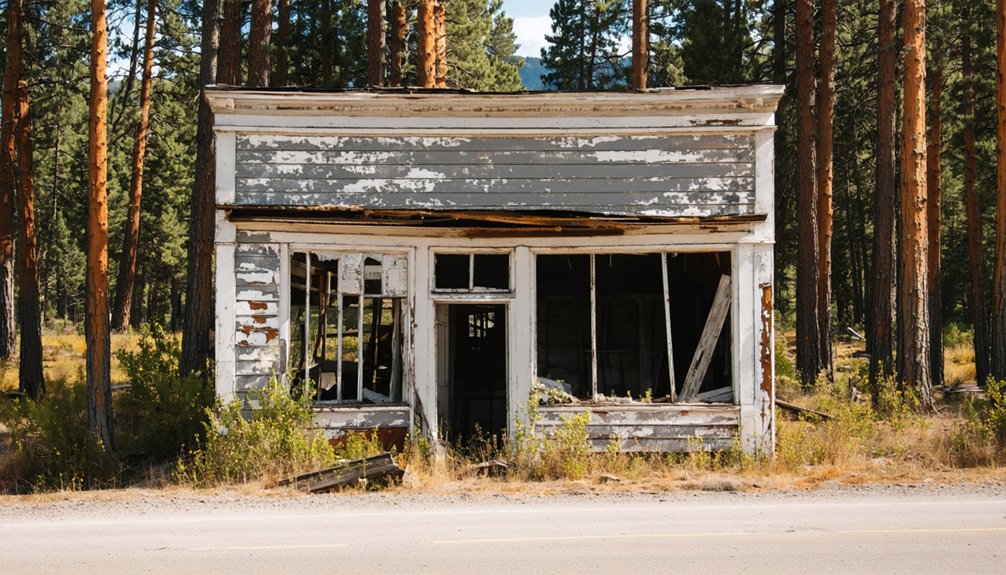
Arriving in Forest City, you’ll find a town that time has gently preserved rather than completely reclaimed. Unlike typical urban decay, where neglect swallows everything whole, these 1800s structures still stand with quiet dignity beneath the Tahoe National Forest canopy.
You won’t find modern amenities here — no stores, no cell service, no postal routes. What you’ll find are weathered buildings that once hummed with Gold Rush ambition, mining-era relics scattered across the landscape, and an atmosphere that rewards the historically curious.
Glenn Sundstrom’s preservation efforts mean you’re walking through something intentional, not accidental. The forest frames every view, silence replaces the old stampede of prospectors, and the whole site invites you to read history directly from the landscape itself.
How to Reach Forest City Without Losing the Route
Getting to Forest City means committing to the kind of drive that filters out casual visitors before they ever arrive. You’re leaving urban development and modern amenities behind the moment you turn onto the forest roads threading through Tahoe National Forest. Download offline maps before you lose signal.
Before you go, lock in these three essentials:
- Fuel up completely — no gas stations exist near the route’s final miles
- Save offline navigation — cell service disappears well before arrival
- Check seasonal road conditions — four-season weather can close access without warning
The reward for that commitment is silence, solitude, and a Gold Rush settlement frozen in the 1800s. Few travelers make it this far, which means you’ll likely have the whole ghost town to yourself.
The Best Time of Year to Visit Forest City
Knowing when to make that drive matters just as much as knowing how.
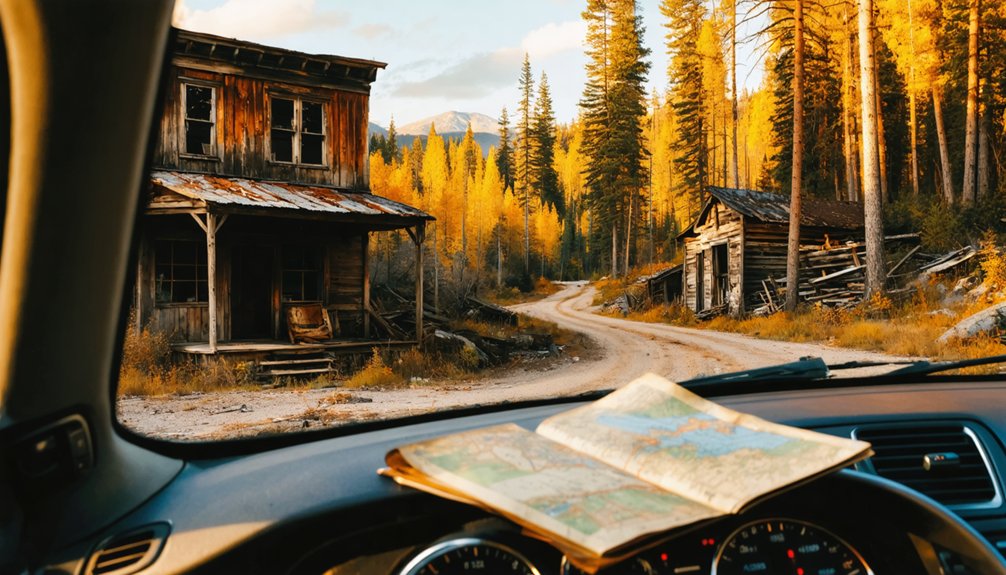
Forest City sits inside Tahoe National Forest, where four distinct seasons shape everything from road conditions to visibility. Late spring through early fall gives you the clearest access and the most rewarding experience.
Summer opens the forest roads fully and rewards you with long daylight hours perfect for exploring 1800s-era structures without racing the clock.
Changeover delivers stunning seasonal foliage that frames the old mining relics in burnt gold and amber, echoing the Gold Rush colors that once defined this place.
You’ll also find wildlife encounters more frequent during interchange seasons.
Winter can close routes entirely, so avoid it unless you’ve confirmed conditions.
Plan for spring or fall if you want both access and atmosphere.
How to Add Forest City to a California Ghost Town Road Trip
Forest City hits hardest when it’s one stop on a longer Northern California ghost-town circuit rather than a destination you’ve driven hours to reach alone. You can anchor it within a route that weaves through deserted settlements, abandoned mines, and historic rail remnants across 770 miles or more of California’s rugged interior.
Start mapping nearby stops now, because the remote driving segments between these forgotten towns demand a route built with intention, not improvisation.
Nearby Ghost Town Stops
Why stop at just one ghost town when Northern California’s Sierra Nevada foothills are scattered with the bones of the Gold Rush era? Pair Forest City with these nearby stops to build a route worth remembering:
- Downieville – A preserved mining town with local cuisine, river access, and urban legends tied to California’s roughest justice.
- Alleghany – Still home to active small-scale miners, where history feels less like a museum and more like a living pulse.
- La Porte – A remote Sierra settlement carrying whispered urban legends and faded storefronts frozen somewhere between ambition and abandonment.
Each stop deepens the story.
Together, they map the full arc of Gold Rush boom, bust, and beautiful silence across the northern Sierra.
Planning Your Route
Adding Forest City to a California ghost town road trip takes some deliberate planning, but the payoff is a route that reads like a chapter pulled straight from the Gold Rush itself. Build your itinerary around Northern California’s Sierra Nevada foothills, where mining history runs deep and historical artifacts surface at nearly every stop.
Because Forest City sits inside Tahoe National Forest with no services nearby, plan fuel, food, and water well before arrival. Download offline maps since cell service vanishes on approach.
A 770-mile loop connecting multiple ghost towns over three to six days gives you the breathing room to explore each site without rushing. Treat Forest City as a centerpiece stop, not an afterthought, and the surrounding route will fall naturally into place.
What to Pack for a Remote Ghost Town With No Cell Service
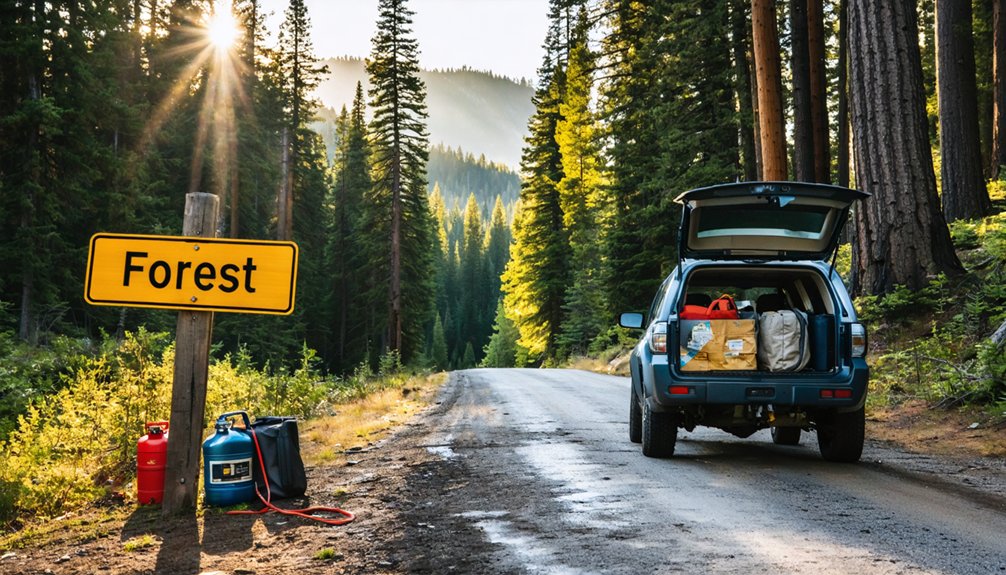
Because Forest City has no cell service, no grocery stores, and no postal services, you’ll need to arrive fully self-sufficient. This isn’t a town that coddles visitors — it’s a raw, preserved relic where local legends and historical myths still echo through 1800s-era structures. Pack smart, and the freedom you’ll feel stepping into California’s Gold Rush past will be worth every mile.
Forest City doesn’t coddle — it demands self-sufficiency and rewards you with unfiltered Gold Rush history.
- Offline navigation and paper maps — GPS dies out here, so download routes before you leave.
- Food, water, and fuel — there’s nothing to buy once you’re deep inside Tahoe National Forest.
- A journal or camera — the atmosphere demands documentation, not scrolling.
Dress for four-season conditions and embrace the self-guided, rustic experience that makes Forest City unforgettable.
The Man Who Kept Forest City From Disappearing
When you pack that last supply bag and prepare to step into a town the modern world has largely forgotten, it’s worth knowing that Forest City didn’t survive by accident. Industrial decline gutted countless Sierra Nevada mining settlements, leaving nothing but splinters and silence. Forest City nearly joined them.
Local historian Glenn Sundstrom refused to let that happen. He worked to preserve the town’s 1800s-era structures and push for its historic landmark status, ensuring the buildings you’ll walk past today still carry their original character. His efforts transformed what could’ve become rubble into a living record of California’s Gold Rush era.
Modern preservation isn’t always glamorous work, but Sundstrom’s commitment means you get to experience something rare — a ghost town that actually still stands.
Frequently Asked Questions
Is Overnight Camping Permitted Within or Near Forest City?
The knowledge doesn’t confirm overnight camping permissions, so you’ll want to verify camping regulations with Tahoe National Forest beforehand. Prepare for wildlife encounters, embrace the freedom of the wild, and let history surround your adventure.
Are Pets Allowed When Visiting Forest City’s Historic Structures?
Like Lewis and Clark venturing into the unknown, you’ll find no official historic pet rules here. Pet policies aren’t clearly documented, so you’ll want to contact Tahoe National Forest authorities before bringing your four-legged trailblazer along.
Can Visitors Legally Take Souvenirs or Relics From Forest City?
You shouldn’t remove relics from Forest City — historical preservation laws protect what’s left. Souvenir regulations prohibit taking artifacts, so embrace your freedom responsibly: capture memories through photos, not pockets, and let future adventurers discover the same raw, Gold Rush magic.
Is Forest City Accessible to Visitors With Mobility Limitations?
Forest City wasn’t exactly designed with mobility accessibility in mind—surprise! Its rugged, remote terrain makes it far from wheelchair friendly, so you’ll want to prepare for uneven, wild ground before you chase your Gold Rush adventure.
Are Guided Tours Ever Available at Forest City?
Guided tours aren’t officially established, but you’ll find that local historian Glenn Sundstrom’s historical preservation efforts may open doors to personal storytelling encounters, where local legends breathe life into Forest City’s gold-rushing, freedom-chasing past.
References
- https://www.barbaranusselphotography.com/blog/2017/4/20/wildflowers-and-ghost-towns-a-road-trip-through-central-california
- https://www.youtube.com/watch?v=ElbXVNDurPc
- https://www.visitcalifornia.com/road-trips/ghost-towns/
- https://www.onlyinyourstate.com/trip-ideas/california/creepiest-norcal
- https://www.ghosttowns.com/states/ca/forest.html