Cobre, Nevada is a desert ghost town born from copper and railroads, and it rewards those willing to seek it out. You’ll find the remains of a Nevada Northern Railway junction — an engine house, a handcar shed, and scattered relics from a bustling copper transfer point that defined the region in 1905. Plan for dirt roads, no services, and no cell coverage. Everything you need to visit Cobre safely and confidently is just ahead.
Key Takeaways
- Cobre, Nevada, founded in 1905, served as a copper ore rail transfer point and is now a sparse but historically significant ghost town.
- The most notable surviving structures are a large cinder block engine house and a handcar shed, with scattered relics throughout the site.
- Access requires traveling dirt roads in Elko County, suitable for 2WD vehicles during dry summer and autumn months.
- Winter snowfall can make dirt roads unsafe or impassable, so verify road conditions locally before departing.
- Bring extra water, a full fuel tank, and a spare tire, as the remote site has no services or cell coverage.
What Was Cobre, Nevada?
When the Nevada Northern Railway pushed through the Nevada desert in 1905, it created Cobre — a railroad interchange town whose name, Spanish for “copper,” revealed its entire reason for existing. Its historical significance rests on a single, focused purpose: transferring copper ore from the Nevada Northern to the Southern Pacific Railroad for shipment outward.
Mining influence shaped every structure, every resident, and every dollar that moved through Cobre. The copper mines near Ely drove demand, and by 1910, the town supported a store, hotel, saloon, mercantile company, and depot serving roughly 60 people. It wasn’t built for permanence — it was built for production.
Once you understand that, you’ll read the landscape of what remains today with far sharper eyes.
Why the Railroad Put Cobre, Nevada on the Map
When you trace Cobre’s origins, you find the Nevada Northern Railway at the center of everything. Built in 1905, the railway existed to haul copper out of the mines near Ely.
Cobre emerged as the critical junction where those shipments transferred to the Southern Pacific Railroad. The town’s very name tells the story — *cobre* is Spanish for “copper,” and without the ore trade, the settlement never would have existed.
Nevada Northern Railway Origins
Founded in 1905, the Nevada Northern Railway put Cobre on the map for one reason: copper. Built to move ore from the mines near Ely through the open desert landscape, this line wasn’t about passengers — it was pure mining history in motion.
Cobre became the critical transfer point where Nevada Northern met the Southern Pacific Railroad.
Three facts ground the railway’s origins:
- The name says it all — *Cobre* is Spanish for “copper,” leaving no doubt about the town’s purpose.
- Ore drove everything — Shipments connected Ely’s copper mines to national markets.
- Construction created community — The railway’s 1905 build sparked Cobre’s immediate settlement and commercial growth.
You’re looking at a town born entirely from industrial ambition and rail-era momentum.
Copper Shaped Cobre
By 1910, the town had a store, hotel, saloon, and depot — every element a working railroad hub required.
None of it existed without the copper pull. You can still feel that industrial logic standing at the site today.
The desert landscape swallowed the town, but the reason it ever existed remains etched into the land itself.
Rail Junction Role
What made Cobre worth building in the first place wasn’t a mining strike or a water source — it was geometry. Two rail lines needed a meeting point, and this stretch of open Nevada desert became that connection. Railroad infrastructure drove every nail and every ambition here.
The Nevada Northern Railway used Cobre to move copper from Ely’s mines outward to the wider world.
Three things made that junction essential:
- Copper ore required transfer between rail systems
- Mining history in the Ely region generated consistent, high-volume freight demand
- Southern Pacific’s mainline gave landlocked mines a national route
You’re standing where two railroads shook hands. That handshake built a town.
What’s Left to See at Cobre Ghost Town Today?
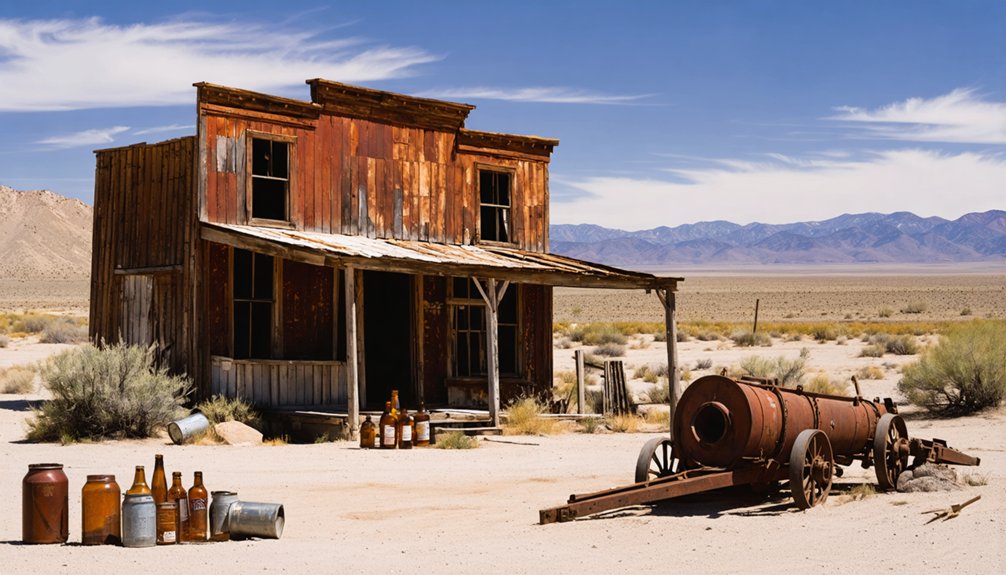
When you arrive at Cobre today, the large cinder block engine house dominates the site and stands as the most substantial surviving structure from the town’s railroad era.
You’ll also spot a handcar shed and scattered rail-era relics that speak to Cobre’s former role as a busy copper-shipping junction.
Don’t expect a sprawling ghost town—what remains is sparse, but the open desert setting and industrial remnants make it a rewarding stop for railroad history enthusiasts and photographers alike.
The Cinder Block Engine House
Though little survives at Cobre, the cinder block engine house still stands as the site’s dominant structure, and it’s worth the detour for anyone drawn to railroad history. Its archaeological significance extends beyond mere ruins — it’s a tangible link to Nevada’s copper-hauling past and the local legends surrounding the Nevada Northern Railway‘s boom years.
When you visit, keep these three details in mind:
- The engine house is the largest remaining structure and your primary landmark on site.
- A handcar shed sits nearby, adding context to daily railroad operations once conducted here.
- Federal law protects all relics — photograph everything, but leave it exactly as you find it.
Respect the site, read the landscape, and let the silence tell the rest of the story.
Remaining Rail-Era Relics
Beyond the engine house and handcar shed, Cobre doesn’t offer much — but what’s left carries real weight. Rail-era relics scatter across the site, quietly marking where copper shipments once moved through this desert interchange. You’ll find remnants that speak directly to the Nevada Northern Railway’s working history, grounded in open land that’s since become wildlife habitat reclaimed by local flora.
Walk the grounds and you’re reading a timeline written in rust and cinderblock. The desert doesn’t apologize for what it’s taken back. Federal law protects everything you see, so leave it exactly where it sits. Photograph it, study it, absorb it — then move on.
Cobre rewards the curious traveler who values raw, unrestored history over polished tourist attractions.
Site Character Today
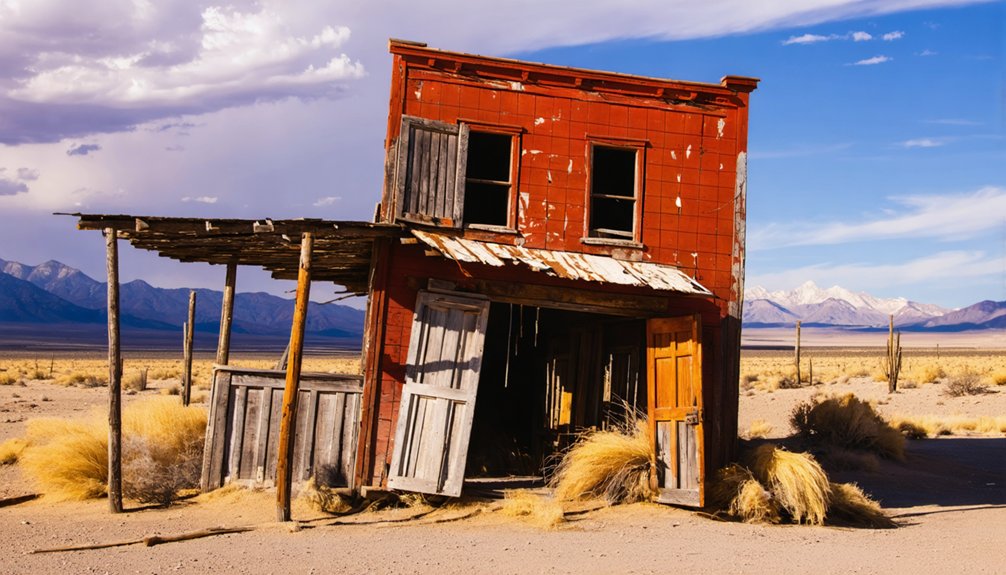
Cobre today is a site defined more by absence than presence, yet what remains still anchors the imagination. Desert local flora presses close against crumbling edges, and shifting weather patterns — brutal summers, snowbound winters — accelerate the decay.
You’ll find no crowds, no interpretive signs, just open sky and honest ruins.
Three features define the site character now:
- The cinder block engine house — the dominant standing structure, still photographically striking
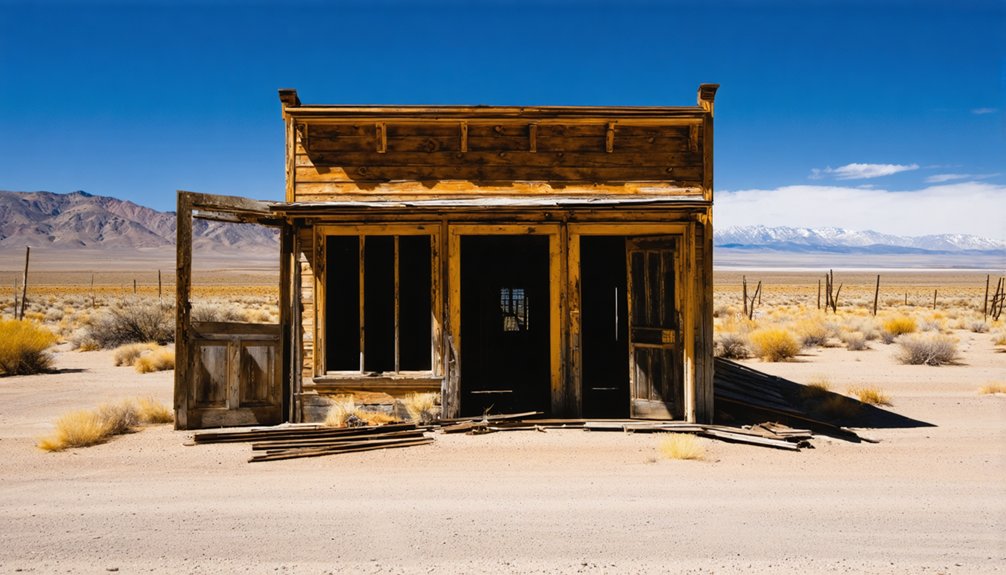
- The handcar shed — smaller, rougher, but intact enough to read its original purpose
- Rail-era debris scattered across open ground — fragments that reward a slow, observant walk
Treat it as a thinking space. You’re standing where copper once moved an economy, and the land hasn’t forgotten.
How to Get to Cobre, Nevada
Tucked into the open desert of Elko County, Nevada, the ghost town of Cobre sits near coordinates 41.1119, -114.4009 and is reachable via a dirt-road approach that’s manageable in a standard 2WD vehicle.
You’ll want to check weather considerations before heading out, since winter brings heavy snow that can make the dirt road treacherous or completely impassable. Summer and autumn offer the most reliable access and the clearest long-view desert scenery.
Watch for local wildlife crossing the open terrain, particularly during dawn and dusk hours.
The former railroad interchange sits in a remote stretch of Elko County, so top off your fuel, carry water, and plan your timing carefully.
Cell coverage is limited, and the site offers no services whatsoever.
When Is the Best Time to Visit Cobre Ghost Town?
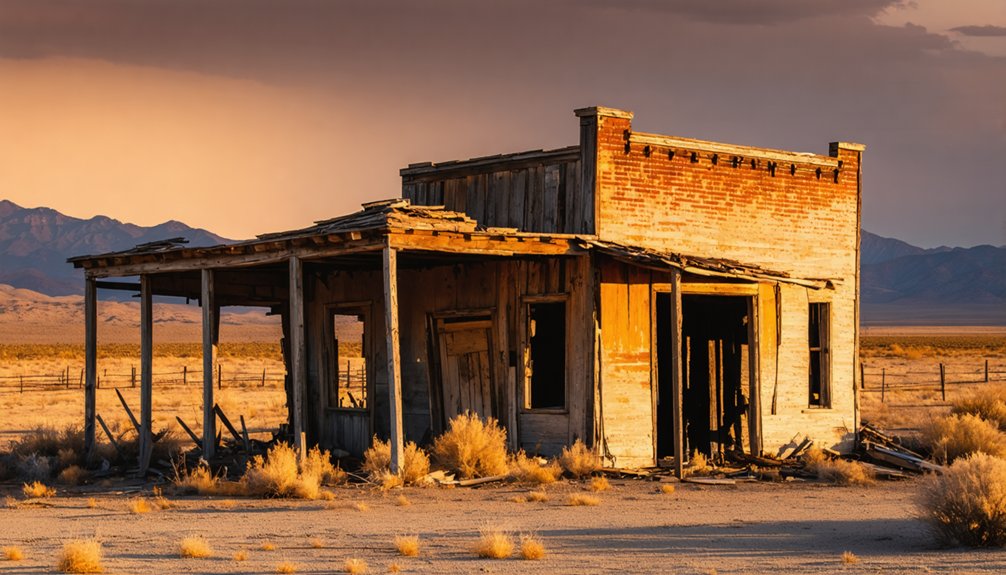
Summer and autumn are your best windows for visiting Cobre, when the dirt-road approach stays dry and the desert stretches out in long, unobstructed views. Seasonal weather makes all the difference on remote Nevada backroads, and winter snow can shut down access entirely.
Visitor crowds aren’t a concern here — this place sees almost no traffic year-round.
Plan your trip around these three seasonal realities:
- Summer offers long daylight hours for photography, though midday heat demands extra water and fuel.
- Autumn delivers cooler temperatures and sharp desert light — ideal conditions for capturing the cinder block engine house.
- Winter brings heavy snow to Elko County, making dirt-road access unreliable and potentially dangerous.
Choose your window wisely and the open desert rewards you.
What Are the Road and Access Conditions at Cobre, Nevada?
Getting to Cobre means committing to a dirt-road approach across open Elko County desert, but the site’s 2WD classification keeps it accessible to most vehicles without four-wheel drive.
Road conditions can still surprise you, so treat the 2WD rating as a minimum rather than a guarantee. Dry summer and autumn weather keeps the dirt surface firm and manageable, while winter snow can turn the same route into a genuine obstacle.
Before you head out, check recent road conditions through local sources, since remote desert tracks shift fast after storms.
A few practical access tips go a long way here: carry extra water, keep your fuel tank full, and confirm your spare tire is road-ready. Cobre rewards the prepared traveler and punishes the careless one.
Frequently Asked Questions
Are There Any Guided Tours Available at Cobre Ghost Town?
No guided tours exist at Cobre — you’ll explore it freely on your own terms. You’ll discover historical artifacts and seize stunning photography opportunities amid the raw, untamed desert landscape surrounding this forgotten railroad relic.
Is Camping Allowed Near the Cobre, Nevada Ghost Town Site?
Camping’s possible near Cobre’s mesmerizing corridors, but you’ll need to check local camping permits and wildlife regulations with Elko County authorities first. Embrace your freedom responsibly — the open desert rewards those who plan ahead.
Can You See Cobre’s Remains From the Main Highway?
You’ll need to venture off the main highway via a dirt road to spot Cobre’s abandoned buildings and historic artifacts. The site won’t reveal itself without that extra effort — but it’s worth it.
Are There Nearby Ghost Towns to Visit Alongside Cobre, Nevada?
The knowledge base doesn’t list nearby ghost towns, but you’re in Elko County’s open desert, where abandoned structures and historical artifacts dot the region—so you’ll want to research surrounding Nevada ghost towns before hitting the dirt roads.
Is a Permit Required to Visit Cobre Ghost Town Legally?
You don’t need a permit, though historical preservation laws govern visitor regulations—you’re free to explore Cobre’s ruins, but don’t remove artifacts. Federal protections apply, so leave every relic exactly where you find it.
References
- https://en.wikipedia.org/wiki/Cobre
- https://www.ghosttowns.com/states/nv/cobre.htm
- https://en.wikipedia.org/wiki/List_of_ghost_towns_in_Nevada
- https://hisandhersphoto.com/ghost/hhghostn_014.htm
- https://www.nvexpeditions.com/elko/cobre.php
- https://forgottennevada.org/sites/riotinto.html
- https://nevadahiking.org/loc/cobre/
- https://kids.kiddle.co/Cobre
- https://www.nvexpeditions.com/elko/currie.php
- https://www.onlyinyourstate.com/trip-ideas/nevada/ghost-towns-nv