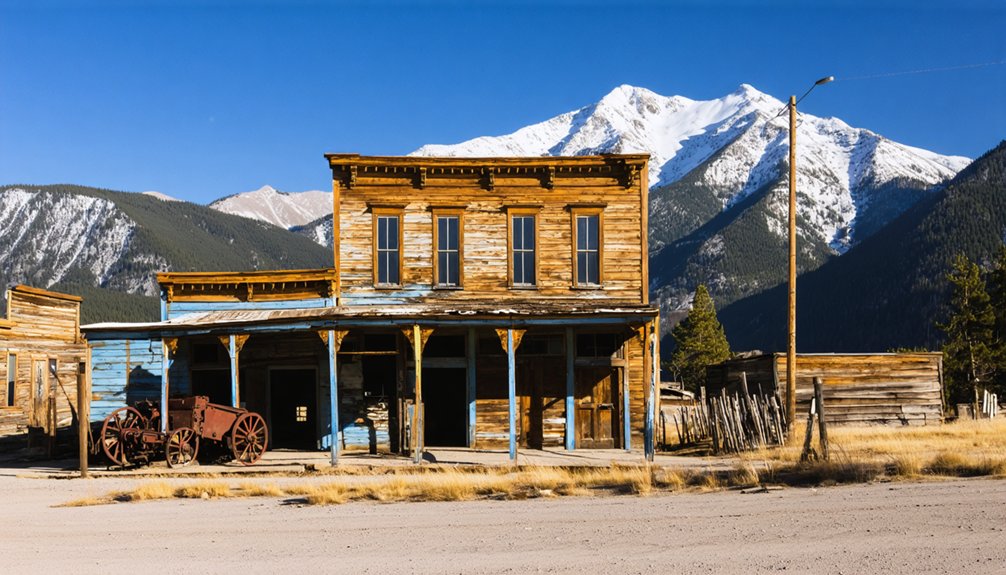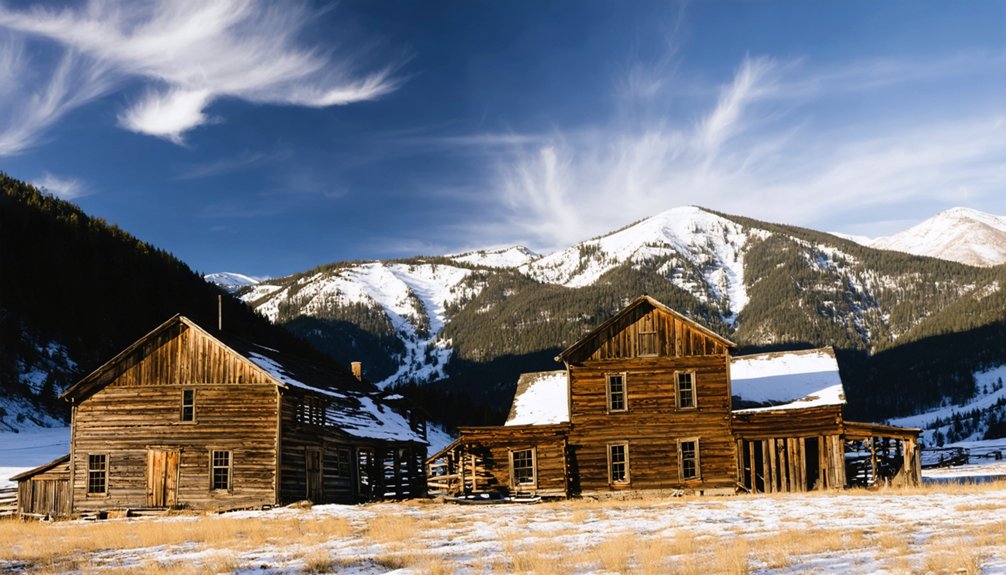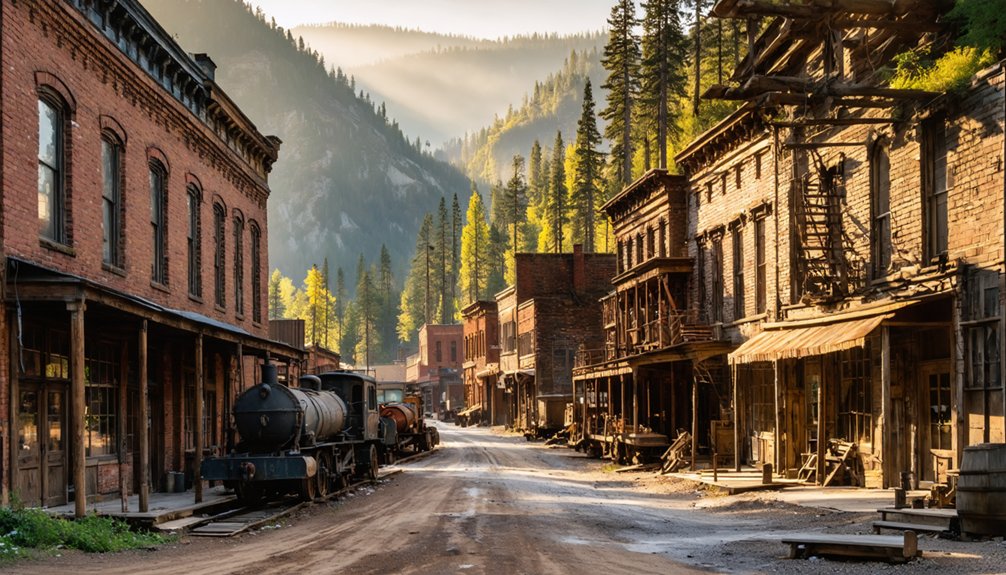
Planning a ghost town road trip to Black Hawk, Colorado means stepping into a place where gold rush history, industrial ruins, and modern casinos collide. Start at Gregory Gulch, where John H. Gregory struck gold in 1859 and ignited an entire era. Explore nearby ghost towns like Nevadaville and scattered mine ruins across Gilpin County. Fall’s golden aspens make the scenery unforgettable. Stick around to uncover everything this mountain town’s remarkable past has to offer.
Key Takeaways
- Black Hawk, Colorado, rooted in the 1859 Pike’s Peak Gold Rush, blends historic gold-rush landmarks with modern casinos for a unique road trip destination.
- Nearby Nevadaville offers an authentic ghost-town experience, featuring largely untouched abandoned structures from the Gregory Diggings era.
- Scattered ghost towns like Russell Gulch, Apex, and Perigo reward explorers with crumbling mines, stamp mills, and rich mining heritage.
- Self-guided walking tours through Black Hawk and Central City pass 19th-century architecture, shaft houses, and ore processing remnants.
- Visit from late September to mid-October for golden aspens, fewer crowds, and atmospheric scenery ideal for ghost-town exploration.
Black Hawk Was Once the Richest Mining Town in the Rockies
When John H.. Gregory struck gold in Gregory Gulch on May 5, 1859, he sparked one of the Rocky Mountains’ most explosive economic booms. You’d have witnessed Black Hawk transform almost overnight from wilderness into a thundering mill town, processing ore from surrounding mines and shipping gold across Gilpin County.
The Central City and Black Hawk area earned its legendary title — the “Richest Square Mile on Earth” — through relentless productivity. In 1868, Nathaniel P. Hill built the district’s first successful smelter, cementing Black Hawk’s industrial dominance.
That era represents extraordinary economic resilience, as the town adapted from raw mining camp to sophisticated processing hub. Today, historic preservation efforts guarantee you can still trace those remarkable origins through the surviving architecture and landmarks scattered throughout the district.
The Gold Discovery That Triggered Black Hawk’s Founding
When you trace Black Hawk’s origins, you’ll land on one pivotal moment: John H. Gregory’s gold strike in Gregory Gulch on May 5–6, 1859. That discovery ignited the Pike’s Peak Gold Rush, pulling thousands of prospectors into the Rocky Mountains almost overnight.
The settlement that formed around Gregory’s Diggings eventually became Black Hawk, first known as Black Hawk Point.
Gregory’s Gulch Gold Strike
Two days in May 1859 changed the Colorado Rockies forever. On May 5th and 6th, John H. Gregory struck gold in Gregory Gulch near Clear Creek, igniting one of the most significant rushes in American history. Thousands abandoned their ordinary lives and flooded the region, gold panning along every creek bed they could reach.
You’d have witnessed raw ambition reshaping wilderness into boomtown streets almost overnight. The Gregory Diggings became ground zero for Gilpin County’s explosive growth, eventually giving rise to both Central City and Black Hawk.
That original strike didn’t just produce wealth — it produced towns. Today, you can still walk streets framed by historic architecture that survived from that frenzied era, connecting you directly to the moment Colorado’s destiny shifted permanently.
Pike’s Peak Rush Origins
How does a single rumor transform an entire nation’s direction? In 1859, word of gold near Pike’s Peak sent thousands westward, armed with gold panning tools and raw determination. They weren’t wrong.
John H. Gregory struck gold on May 5–6, 1859, in Gregory Gulch near Clear Creek, igniting one of the Rocky Mountains’ earliest major discoveries.
Prospectors flooded the gulch, refining their mining techniques as they pushed deeper into Gilpin County’s terrain. The rush demanded infrastructure fast — mills, settlements, supply routes.
Black Hawk emerged from this urgency, growing from a rough camp called Black Hawk Point into a functioning town. When you visit today, you’re standing on ground that once redirected thousands of American lives toward one desperate, golden gamble.
Birth Of Black Hawk
Before Black Hawk had a name, it had a moment — May 5–6, 1859, when John H. Gregory struck gold in Gregory Gulch near Clear Creek. That single discovery ignited one of Colorado’s most electrifying gold rushes, pulling thousands of prospectors into the Rocky Mountain foothills almost overnight.
What began as a raw, chaotic camp called Black Hawk Point quickly evolved into a functioning mill town, shaped by mining legends who carved opportunity from raw rock. The relatively flat terrain and reliable water supply made it ideal for stamp mills and ore processing.
As you walk through town today, the historic architecture quietly tells that origin story — brick facades and stone foundations that once supported an industry worth more than most people dare imagine.
How Decades of Decline Nearly Erased Black Hawk Entirely
As you trace Black Hawk’s history past its mining heyday, you’ll find a town that slowly hollowed out as the ore played out and the population drained away.
By the 1920s, only a few hundred residents remained, and the threat of full ghost-town status loomed large.
Floods compounded the damage, battering the already fragile town and pushing it even closer to total abandonment.
Mining Collapse Empties Town
What goes up must come down, and Black Hawk’s collapse was as dramatic as its gold-rush rise. By the late 1890s, the richest veins were exhausted, triggering a mining collapse that gutted the town’s economy overnight. The economic downturn hit hard — mills shut down, workers left, and entire streets emptied out.
Around 1918, nearly all mining operations in the district suspended completely. By the 1920s, only a few hundred residents remained, and flood damage compounded the misery. Buildings that once buzzed with ore processing and gold shipments stood hollow and deteriorating.
Black Hawk, once celebrated as part of the “Richest Square Mile on Earth,” faced the humbling reality that boomtowns die fast when the resources driving them disappear entirely.
Floods Worsen Abandonment
Flooding delivered the final blows to a town already staggering from economic collapse. Black Hawk’s position along Clear Creek made it dangerously vulnerable, and repeated flood impact accelerated abandonment reasons that mining decline had already set in motion. You can still feel that history when you walk the gulch today.
Key factors that deepened Black Hawk’s abandonment:
- Floodwaters repeatedly destroyed mill infrastructure and supply routes
- Damaged roads cut off remaining businesses from outside trade
- Rebuilt structures often flooded again, discouraging reinvestment
- Residents abandoned property rather than rebuild repeatedly
Population dropped to only a few hundred by the 1920s.
What mining weakened, flooding finished. By the time the dust settled, Black Hawk teetered dangerously close to becoming just another forgotten Colorado ghost town.
How Legalized Gambling Pulled Black Hawk Back From the Edge
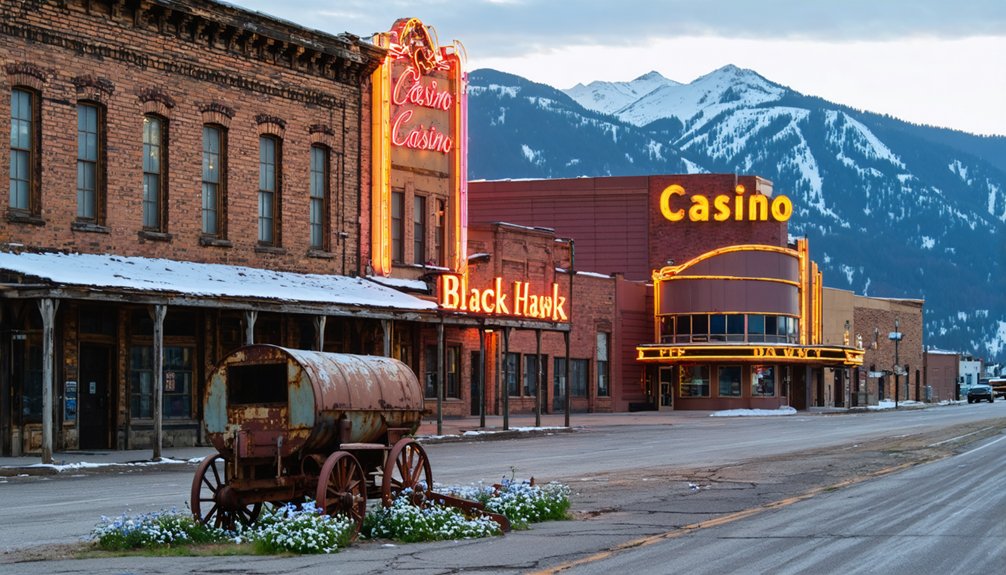
By the early 20th century, Black Hawk had nearly faded into obscurity, its population dwindling to a few hundred residents after mining operations largely shut down around 1918.
Then Colorado voters changed everything in 1990, approving limited-stakes casino gambling. By 1991, the casinos opened, triggering a remarkable economic revival that breathed new life into streets that had gone quiet for decades.
You’ll notice the transformation immediately when you visit. Historic storefronts now stand alongside modern casino towers, proving that cultural preservation and commercial development can coexist.
The gambling industry attracted investment, rebuilt infrastructure, and drew visitors who otherwise might never have discovered Black Hawk’s rich gold-rush heritage.
What nearly became another forgotten ghost town transformed into a thriving destination, giving you the rare chance to experience both history and modern energy simultaneously.
The Gregory Monument, Opera House, and Other Black Hawk Landmarks Worth Stopping For
Standing in Black Hawk, you’ll find yourself surrounded by landmarks that tell the story of a town that once shook the Rocky Mountains with its gold-rush ambitions. Architectural preservation efforts here give you direct access to genuine history, not recreations.
Stop at these cultural highlights:
- Gregory Monument – marks the exact spot where John H. Gregory discovered gold in 1859
- Lace House – an ornate Carpenter Gothic structure showcasing remarkable craftsmanship
- Black Hawk Opera House – reflects the cultural significance of a once-thriving mining community
- Gilpin County Historical Sites – connect the mining era to modern memory
- Historic Mill Buildings – remnants of Black Hawk’s ore-processing industrial backbone
Each stop rewards your curiosity with something real, raw, and worth the detour.
Don’t Skip Nevadaville, the Real Ghost Town Nearby
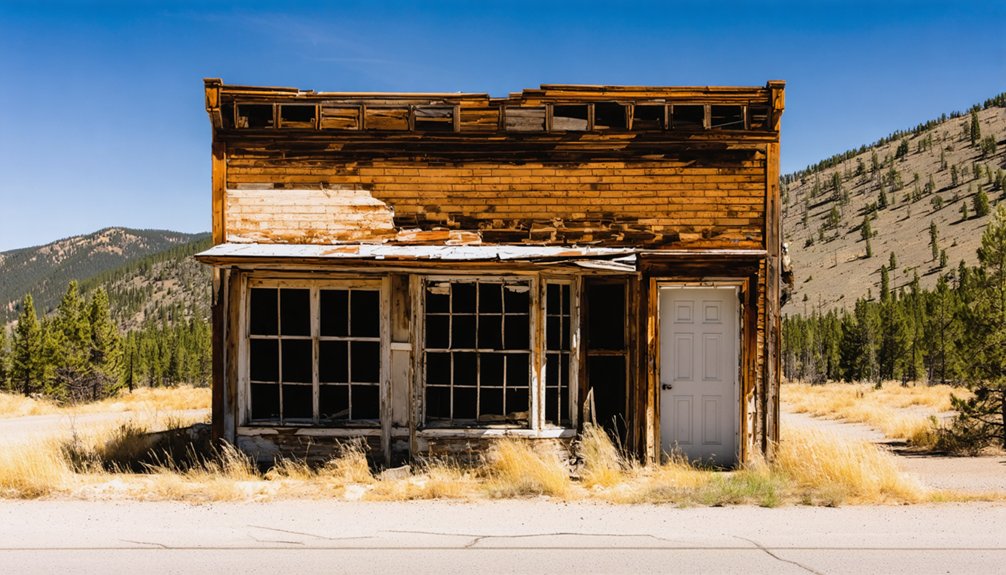
Just a short drive from Black Hawk, Nevadaville sits quietly as one of Colorado’s most authentic ghost towns, offering something the casinos can’t replicate: genuine abandonment. You’ll find abandoned structures scattered across a landscape that time largely forgot, remnants of a mining community that once thrived alongside Black Hawk during the Gregory Diggings era.
Nevadaville offers what casinos never could — genuine abandonment, scattered ruins, and gold-rush history time forgot.
Unlike Black Hawk’s gambling revival, Nevadaville never bounced back. That’s exactly what makes it worth your time. Walk through what remains and you’ll feel the weight of those empty decades pressing in around you.
Haunted legends follow the town, adding an eerie layer to an already atmospheric stop.
If you’re chasing real gold-rush history untouched by neon lights, Nevadaville delivers the unfiltered version you’ve been looking for.
Other Ghost Towns and Mine Ruins Within the Gilpin County Circuit
Gilpin County doesn’t stop at Nevadaville. Scattered across the hills, you’ll find crumbling mine ruins and forgotten camps tied to ghost town legends that rarely make the tourist circuit. Old mining technology — stamp mills, ore chutes, and engine houses — still dots the landscape if you know where to look.
Pack curiosity and sturdy shoes, then explore these stops within the Gilpin County circuit:
- Russell Gulch — a near-ghost town with surviving historic structures
- Apex — a remote camp with scattered ruins deep in the trees
- Perigo — a forgotten settlement with faint remnants of its mining past
- Missouri City — a near-abandoned area with strong gold-rush roots
- Chase Gulch — accessible mine ruins ideal for photography
Each stop rewards the adventurous traveler willing to roam freely.
Historic Walking Tours, Mine Ruins, and Trails Near Black Hawk
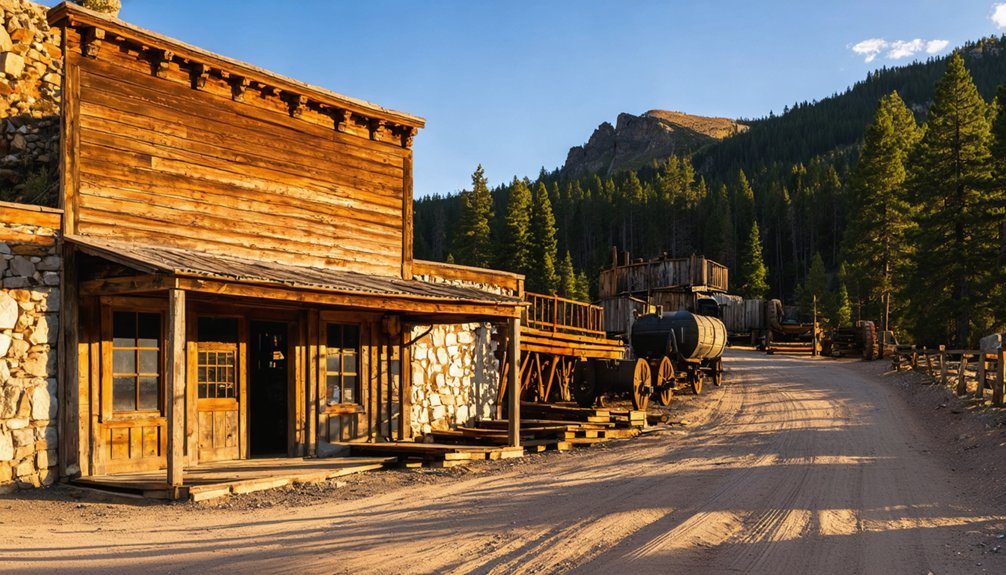
Once you’ve explored the ghost towns and mine ruins of Gilpin County by car, lace up your boots and hit the trails on foot.
You’ll find historic walking tour routes threading through Black Hawk and Central City that wind past preserved 19th-century architecture, old shaft houses, and ore processing remnants.
The surrounding hillsides hold crumbling mine ruins and hiking trails that put you face-to-face with the raw landscape the gold rush transformed.
Historic Walking Tour Routes
Black Hawk’s streets tell a layered story of gold-rush ambition and industrial muscle, and you can read that story on foot. Self-guided routes wind past examples of historic architecture that survived decades of decline, connecting you to authentic cultural preservation efforts still shaping the district today.
Focus your walk on these key stops:
- Gregory Gulch corridor, where John Gregory’s 1859 discovery ignited the rush
- Main Street commercial facades, showcasing 19th-century brick craftsmanship
- Nathaniel Hill’s smelter site, marking Black Hawk’s industrial turning point
- The National Historic Landmark District boundary markers, anchoring the area’s protected status
- Nevadaville Road trailhead, linking Black Hawk to nearby ghost-town remnants
Wear sturdy shoes, bring water, and move at your own pace through Colorado’s most storied mining corridor.
Nearby Mine Ruins And Trails
Venture beyond the walking routes and the terrain itself becomes the exhibit. Scattered across the hillsides surrounding Black Hawk, you’ll find collapsed headframes, rusting ore carts, and stone foundations that silently document 19th-century mining technology. These remnants aren’t fenced-off curiosities — they’re open-air classrooms demanding exploration.
The trails threading through Gilpin County connect you directly to Gregory Gulch, where John H. Gregory’s 1859 discovery launched everything. Nearby Nevadaville sits just a short drive away, offering crumbling structures that escaped modern development entirely.
Historic preservation efforts have stabilized select sites, letting you read the landscape without losing its raw authenticity.
Wear sturdy boots, bring water, and move carefully around unstable structures. The freedom here is real — and so are the hazards that make it worth respecting.
Why Fall Is the Best Season to Road Trip Through Black Hawk
Fall transforms Black Hawk’s mountain landscape into something almost theatrical, with golden aspens lining the canyon roads and crisp air cutting through Gilpin County’s rugged terrain. Seasonal foliage peaks between late September and mid-October, making scenic viewpoints along Clear Creek Canyon genuinely breathtaking.
Golden aspens and crisp mountain air make Black Hawk’s fall landscape feel genuinely cinematic.
You’ll also find thinner crowds, meaning more freedom to explore at your own pace.
Here’s why fall earns the top spot:
- Cooler temperatures make hiking mine trails comfortable
- Seasonal foliage creates striking contrast against historic stone buildings
- Scenic viewpoints along Canyon Road offer unobstructed mountain panoramas
- Fewer tourists mean quieter streets and easier parking
- Nearby Nevadaville feels even more atmospheric surrounded by autumn color
Don’t wait — fall’s window is short, and this landscape rewards those who show up ready.
A One-Day Black Hawk Itinerary From the Mines to Nevadaville
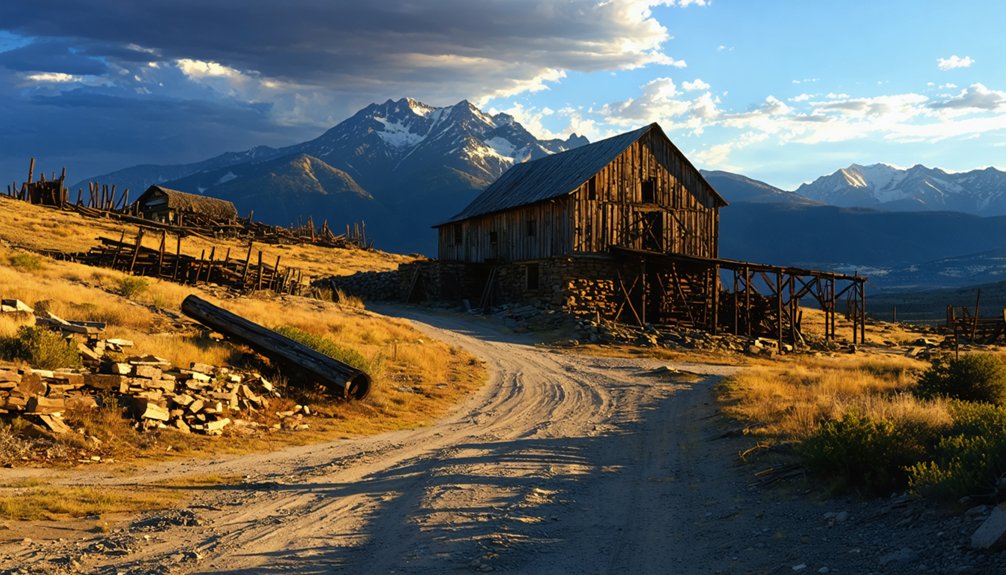
One day is enough to trace Black Hawk’s full arc — from its gold-rush origins to its quiet ghost-town edges. Start at Gregory Gulch, where John H. Gregory struck gold in 1859, triggering a rush that built an entire civilization in months.
Walk the historic district, studying architectural styles ranging from Victorian commercial fronts to industrial mill structures, each reflecting the cultural influences of miners, merchants, and immigrants who shaped the town.
By midday, explore the casino corridor where gambling revived a dying town after 1991.
Then drive up to Nevadaville, where weathered cabins and collapsed structures sit in near-silence. That contrast — booming casino towers against abandoned wooden frames — captures Black Hawk’s restless, unfinished story better than any museum could.
Frequently Asked Questions
Is Black Hawk Safe for Families Visiting With Young Children?
Black Hawk’s a double-edged sword for families. You’ll find family-friendly activities amid casino-heavy streets, so follow child safety tips: stay alert, supervise kids closely, and explore the historic mining district’s outdoor landmarks together.
Are Pets Allowed Inside Black Hawk Casinos or on Trails?
Casinos don’t allow pets inside due to strict pet policy regulations. However, you’ll find trails nearby where restrictions vary, so check trail restrictions beforehand and keep your furry companion leashed for everyone’s safety.
What Is the Elevation of Black Hawk, Colorado?
You’ll find Black Hawk sitting at 8,042 feet above sea level, where you can breathe the crisp mountain air while exploring historical landmarks and soaking in breathtaking scenic viewpoints throughout this legendary Colorado gold-rush destination.
Is There Public Parking Available When Visiting Black Hawk?
With over 40 casinos operating, you’ll find public parking available throughout Black Hawk. Several garages and lots charge minimal parking fees, and public transportation options connect you to nearby Central City, giving you the freedom to explore effortlessly.
Are There Hotels or Campgrounds Near Black Hawk for Overnight Stays?
You’ll find casino hotels offering comfortable stays near historic landmarks, plus campgrounds in the surrounding mountains. Explore local dining options after a day of adventure, giving you the freedom to fully experience Black Hawk’s fascinating gold-rush heritage.
References
- https://coloradosghosttowns.com/Black Hawk CO.html
- https://en.wikipedia.org/wiki/Black_Hawk
- https://gilpincounty.colorado.gov/explore-gilpin/the-history-of-gilpin-county
- https://thegilpincasino.com/history/
- https://wheninyourstate.com/colorado/black-hawk-how-colorado-turned-a-ghost-town-into-a-gambling-goldmine/
- https://en.wikipedia.org/wiki/Central_City/Black_Hawk_Historic_District
- https://coloradoencyclopedia.org/article/central-city-black-hawk-historic-district
- https://www.vaildaily.com/news/road-trip-black-hawk-and-central-city-draw-historians-and-high-rollers/
- https://en.wikipedia.org/wiki/Manhattan