Planning a ghost town road trip to Crystal Springs, Nevada means heading to the junction of SR-318 and SR-375 in Pahranagat Valley, where Nevada Historical Marker 205 anchors a site that once served as Lincoln County’s first county seat. You’ll find the original spring still flowing amid quiet desert scenery and open skies. Visit in late spring for wildflowers and cooler mornings. There’s far more to this crossroads than first meets the eye.
Key Takeaways
- Crystal Springs, located at SR-318 and SR-375 in Nevada’s Pahranagat Valley, was established in 1866 as a Mormon Trail watering stop.
- The site served as Lincoln County’s first county seat before declining into a ghost town, with Nevada Historical Marker 205 commemorating its history.
- The junction marks the southern starting point of the Extraterrestrial Highway, blending frontier ghost town history with modern UFO legends.
- Late spring through early fall offers the most comfortable visiting conditions, with mild temperatures, wildflowers, and increased wildlife sightings.
- Accessible via standard 2WD vehicles from U.S. 93, the site requires extra water, sunscreen, and awareness of muddy post-rain road conditions.
Crystal Springs, Nevada: A Ghost Town at the Start of the Extraterrestrial Highway
Where State Route 318 meets State Route 375 in Nevada’s Pahranagat Valley, you’ll find Crystal Springs—a ghost town that punches well above its weight historically. This junction marks the southern starting point of the Extraterrestrial Highway, making it a natural launch pad for open-road exploration.
What you’re stepping into isn’t just abandoned structures surrounded by desert flora—it’s a former Mormon Trail watering stop and Lincoln County’s first county seat. Established in 1866, Crystal Springs briefly served as the region’s civic center before the county seat relocated to Hiko just a few years later.
Nevada Historical Marker 205 identifies the site today. It’s a compact stop, but its frontier legacy gives you a powerful sense of how much history can compress into a single desert crossroads.
Why Crystal Springs Became Lincoln County’s First Seat
When you stop at Crystal Springs, you’re standing on ground that once quenched the thirst of Mormon Trail travelers pushing through the Nevada desert in the mid-1800s. That reliable water source made the spot significant enough that when Nevada carved out Lincoln County in 1866, officials named Crystal Springs the provisional county seat.
The honor didn’t last long, though — the seat moved to Hiko over concerns about the local population base, leaving Crystal Springs to fade into the ghost town you’re exploring today.
Mormon Trail Watering Stop
Before Nevada’s highways carved through the Pahranagat Valley, travelers on the Mormon Trail were already stopping at Crystal Springs to water their animals and rest in the desert heat. The spring offered something rare in this arid stretch — reliable water surrounded by local flora that signaled life in an otherwise punishing landscape.
Mid-19th century pioneers recognized that value immediately, turning the site into a dependable campsite along an alternate trail route. That same strategic importance later made it a natural choice for Lincoln County’s first seat in 1866.
While historical artifacts from that era are scarce today, the spring itself remains a direct connection to those early travelers. You’re fundamentally standing where frontier survival decisions shaped an entire county’s foundation.
Lincoln County’s 1866 Founding
Nevada created Lincoln County in 1866, and territorial officials needed a county seat fast — Crystal Springs had the clearest argument for the job. It already had water, trail traffic, and name recognition among settlers moving through the Pahranagat Valley. Designating it the provisional seat made practical sense, even if the population couldn’t sustain that status long-term.
The county seat eventually shifted to Hiko, leaving Crystal Springs to fade into local legends rather than lasting infrastructure. That *change* also accelerated the preservation challenges you’ll notice when you visit today — little survived the abandonment.
What you’re really standing in is a political footnote, a place that briefly held outsized authority in a raw frontier county before the desert quietly reclaimed it.
County Seat Moves To Hiko
The shift from Crystal Springs to Hiko tells you everything about how frontier counties actually worked — population pressure, not history, drove the decision. Crystal Springs earned its seat through sheer early relevance — a trail watering hole surrounded by desert flora, where travelers and settlers paused before pushing deeper into Lincoln County’s raw landscape. But relevance fades fast on the frontier.
When officials questioned whether Crystal Springs could support a growing county government, Hiko offered stronger numbers. The seat moved, and Crystal Springs began its quiet retreat into ghost town territory.
Today, local wildlife moves through the valley undisturbed, and the spring still flows where those first county decisions happened. You’re not visiting a failure — you’re standing where Nevada’s frontier priorities played out in real time.
Where to Find Crystal Springs Along SR-318 and SR-375
You’ll find Crystal Springs at the junction of State Route 318 and State Route 375 in Lincoln County’s Pahranagat Valley, marked by Nevada Historical Marker 205.
If you’re traveling U.S. 93, the junction sits just to the northwest, making it an effortless detour on any Lincoln County drive.
That same junction doubles as the southern starting point of the Extraterrestrial Highway, so you can roll directly from ghost-town history onto one of Nevada’s most legendary scenic routes.
Junction Location Basics
Sitting at the junction of State Route 318 and State Route 375, just northwest of U.S. Route 93, Crystal Springs anchors itself perfectly for open-road explorers. Local legends tie this desert crossroads to Mormon Trail travelers and frontier county governance. Preservation efforts remain modest, but Nevada Historical Marker 205 marks the spot clearly.
Here’s what makes this junction worth your stop:
- Easy 2WD access from U.S. 93 keeps the approach simple
- SR-375 begins here, launching you onto the Extraterrestrial Highway
- Coordinates 37.5316° N, 115.2338° W help you pin it before leaving cell range
- SR-318 connectivity links you to broader Lincoln County destinations
You won’t need special gear — just fuel, curiosity, and a willingness to chase Nevada’s forgotten corners.
Nearby Highway Connections
Crystal Springs sits where SR-318 and SR-375 cross paths, making it one of the most naturally connected ghost town stops in southern Nevada. From here, you can head northwest onto the Extraterrestrial Highway, SR-375, where local legends about unexplained lights and mysterious craft have drawn curious travelers for decades.
That same stretch rewards patient drivers with wildlife sightings, including pronghorn and desert birds crossing open range land. SR-318 pushes you through the Pahranagat Valley, linking Crystal Springs to Alamo and other Lincoln County landmarks without backtracking.
U.S. Route 93 runs close by, giving you a fast corridor north or south. This junction fundamentally offers you three directions of genuine desert adventure the moment you step out of your vehicle.
Arriving From U.S. 93
Reaching Crystal Springs from U.S. 93 is straightforward, and knowing the exact turn keeps you from blowing past it at highway speed. Head northwest from U.S. 93 toward the SR-318 and SR-375 junction, where the Extraterrestrial Highway begins and the ghost town waits.
Watch for these landmarks as you roll in:
- SR-318 junction — your primary turn off U.S. 93 heading northwest
- SR-375 intersection — marks the exact site of Crystal Springs
- Nevada Historical Marker 205 — confirms you’ve arrived
- Scenic overlooks and local wildlife — expect open desert views and roaming desert fauna along the approach
The drive rewards you with wide Pahranagat Valley scenery before you even stop. Keep your speed reasonable — the junction arrives faster than the open road suggests.
What the Crystal Springs Site Actually Looks Like Today
Though it won’t overwhelm you with dramatic ruins, Crystal Springs still delivers a genuine sense of place where history quietly lingers at a desert crossroads.
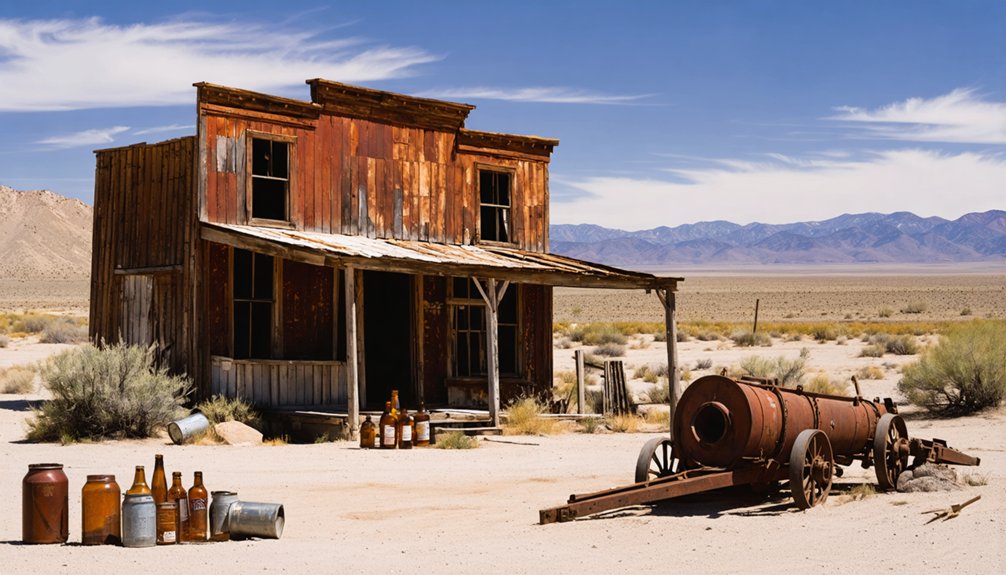
What you’ll find here is modest but meaningful: Nevada Historical Marker 205 marks the spot, and the original spring remains, feeding a patch of greenery that stands out sharply against the surrounding Mojave desert flora.
Look closely and you might spot local wildlife drawn to that reliable water source.
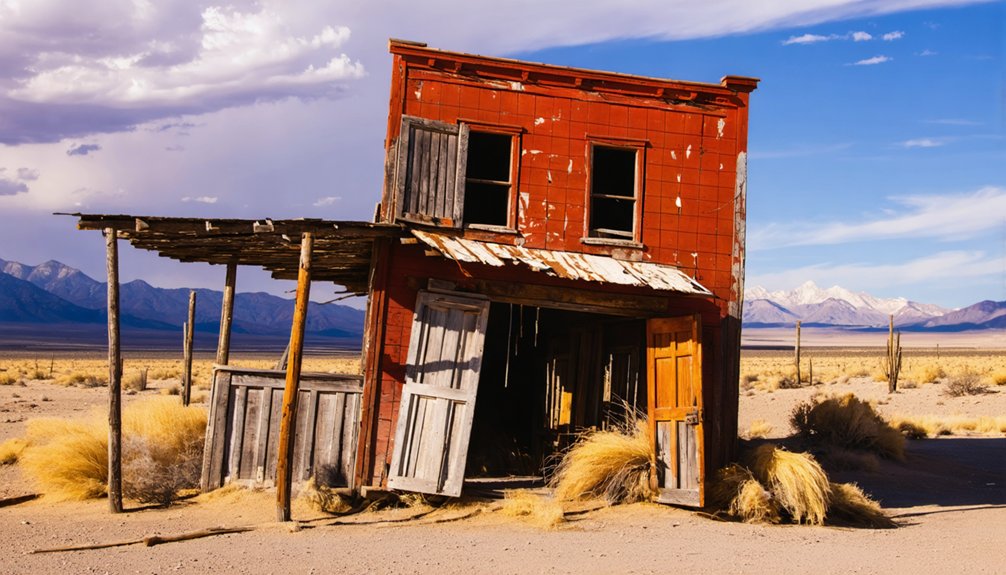
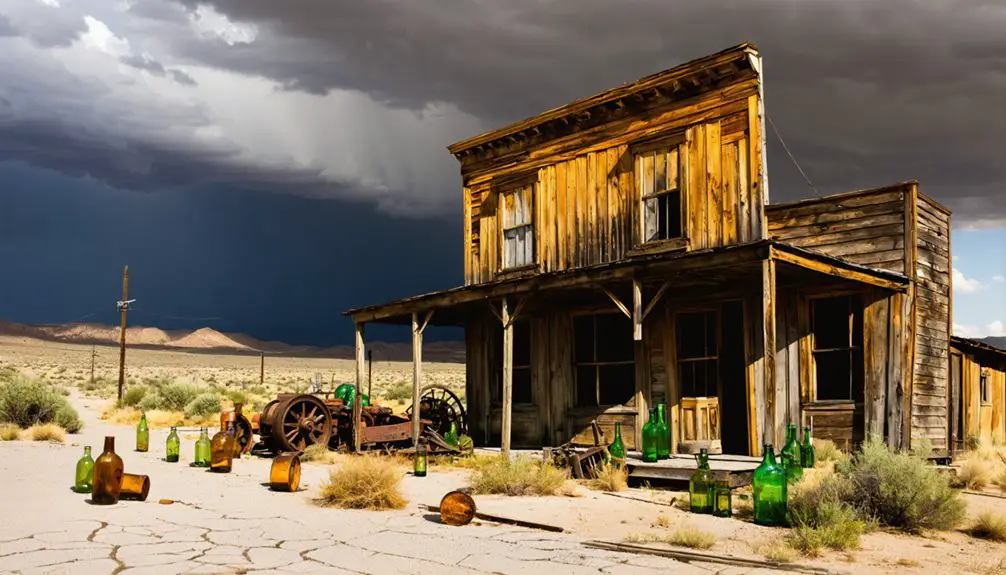
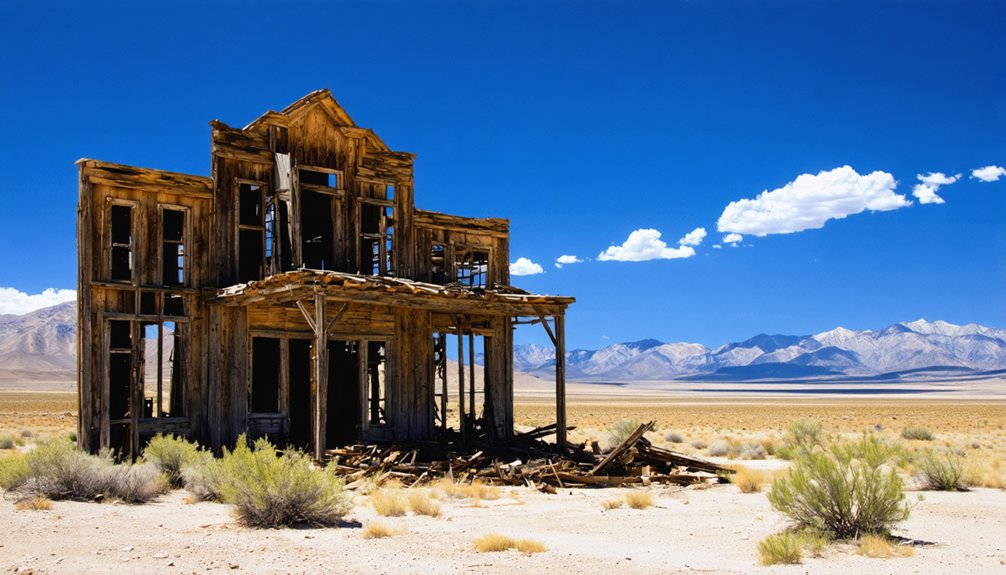
The old buildings are largely gone, leaving open sky and quiet road junctions as your backdrop.
It’s a ghost town best experienced through imagination and historical context rather than standing structures.
Pair the marker with the sweeping views at the SR-318 and SR-375 junction, and the stop earns its place on your itinerary.
How Crystal Springs Connects to the Extraterrestrial Highway Drive
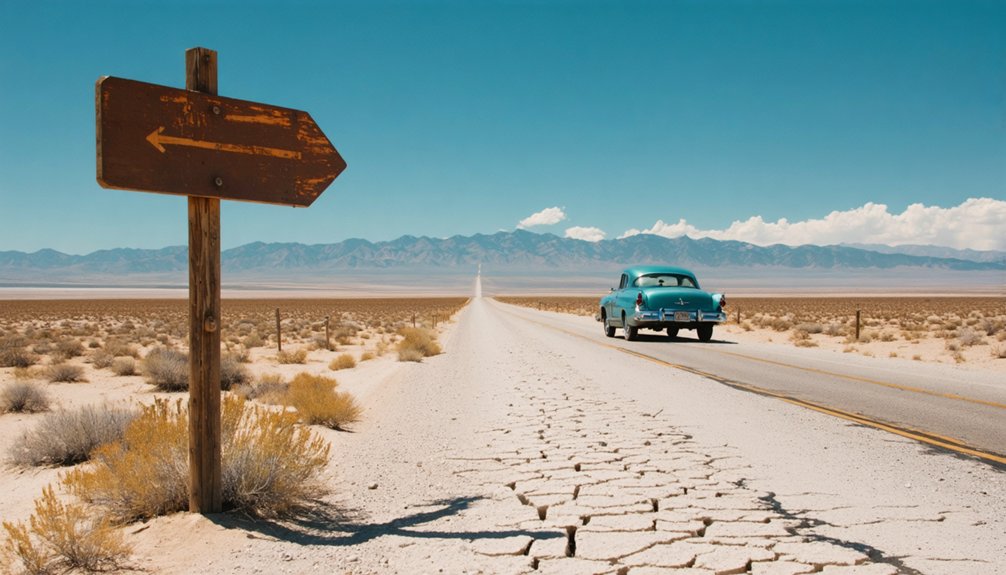
Standing at the SR-318 and SR-375 junction in Crystal Springs, you’re already at the official starting point of the Extraterrestrial Highway. From here, SR-375 stretches northwest through open desert, connecting ghost town history with local legends that draw road-trippers from everywhere.
The SR-318 and SR-375 junction isn’t just a crossroads — it’s where the Extraterrestrial Highway officially begins.
Crystal Springs makes the perfect launch point because it layers meaning onto your drive:
- Mining history and frontier settlement give the route cultural depth before you hit open road
- Local legends of UFO sightings intensify as you push deeper along SR-375
- Nevada Historical Marker 205 anchors the junction as a documented stopping point
- SR-318 and U.S. 93 access lets you customize your loop without backtracking
You’re not just passing through — you’re following a corridor where desert history and modern mythology collide.
The Best Time of Year to Visit Crystal Springs
Late spring through early fall gives you the best window to explore Crystal Springs, when mild temperatures make desert travel comfortable without the brutal cold that grips the Pahranagat Valley in winter.
You’ll find desert flora in fuller bloom during spring, with wildflowers pushing through the arid soil around the historic marker.
Wildlife sightings increase during cooler morning hours, so arrive early if you want to catch movement near the spring.
Summer works, but pack extra water and expect intense midday heat.
Avoid winter visits unless you’re prepared for freezing temperatures and potentially muddy access near the spring itself.
Sharp rocks and seasonal mud can challenge even 2WD vehicles in wet conditions.
Plan your stop as part of a longer SR-318 or Extraterrestrial Highway run for maximum payoff.
Road Conditions and Access Tips for the Crystal Springs Stop
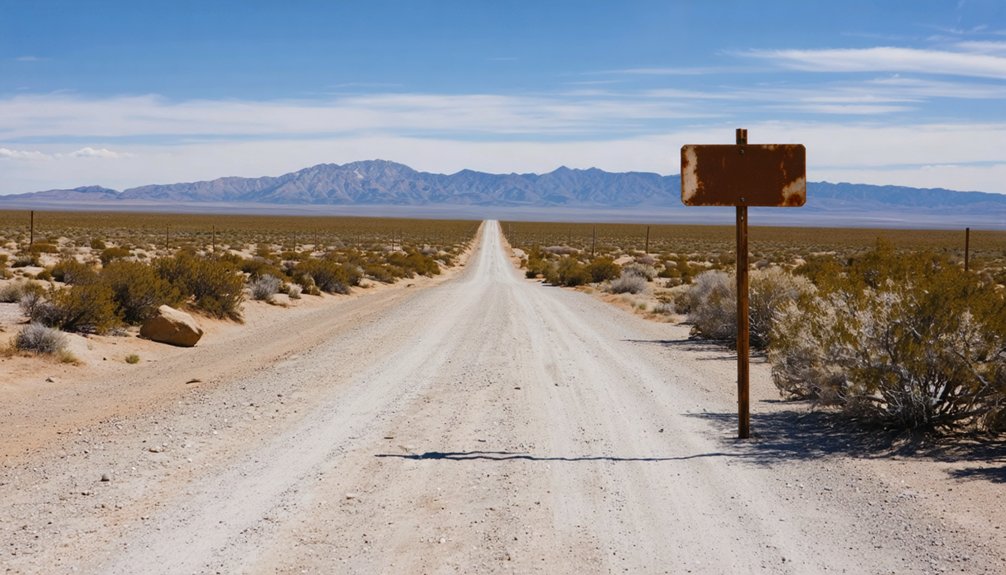
Crystal Springs sits right at the junction of SR-318 and SR-375, just northwest of U.S. 93, so you won’t need a high-clearance vehicle or 4WD to reach the historical marker. That said, desert roads demand respect year-round.
Keep these access tips in mind before you roll out:
Keep these access tips tucked in your back pocket before the desert swallows your signal and your plans.
- Watch for mud and sharp rocks near the spring and any dirt side paths, especially after winter runoff
- Pack extra water and sunscreen since shade is nearly nonexistent at the junction area
- Slow down for wildlife sightings — desert animals cross these open roads unpredictably
- Scout photography hotspots early — morning light hits the valley beautifully before heat haze sets in
Stay flexible, read conditions as you go, and treat this stop as your launchpad into wider Lincoln County freedom.
Frequently Asked Questions
Is There a Fee to Access the Crystal Springs Historical Marker Site?
You’ll find no fee to access Crystal Springs’ historical marker! It’s free to explore this site of immense historical significance, where preservation efforts honor Nevada’s frontier past at the open SR-318 and SR-375 junction.
Are Pets Allowed When Visiting Crystal Springs Ghost Town?
Like a lone wolf roaming open desert, you’re free to explore Crystal Springs with your pet. No specific pet regulations exist, but prioritize pet safety — the rugged, shadeless terrain and sharp rocks demand extra caution.
Can You Camp Overnight Near the Crystal Springs Junction Area?
Camping regulations aren’t clearly defined for the Crystal Springs junction, so you’ll want to check with local authorities before pitching a tent. Stay alert for wildlife encounters while exploring this remote, adventure-filled desert crossroads!
Is Cell Phone Service Available at the Crystal Springs Junction?
Roughly 22 million Americans visit ghost towns yearly—you’ll likely find cell service spotty at Crystal Springs junction. Don’t count on strong digital connectivity here; embrace the freedom of disconnecting while exploring this remote, historically rich Nevada desert crossroads.
Are There Restroom Facilities Near the Crystal Springs Ghost Town Site?
You won’t find restroom facilities at the remote Crystal Springs junction, so plan ahead! Nearby amenities are scarce in this desert stretch, meaning you’ll want to stop in Alamo before venturing out to explore this rugged ghost town.
References
- https://en.wikipedia.org/wiki/Crystal_Springs
- https://de.wikipedia.org/wiki/Crystal_Springs_(Nevada)
- https://www.ghosttowns.com/states/nv/crystalsprings.htm
- https://www.destination4x4.com/crystal-springs-lincoln-county-nevada/
- https://shpo.nv.gov/nevadas-historical-markers/historical-markers/crystal-springs
- https://nevadahiking.org/loc/crystal-springs/
- https://www.nvexpeditions.com/lincoln/crystalspring.php
- https://fr.wikipedia.org/wiki/Crystal_Springs_(Nevada)
- https://ecos.fws.gov/docs/recovery_plan/980526.pdf
- https://en.wikipedia.org/wiki/Lincoln_County