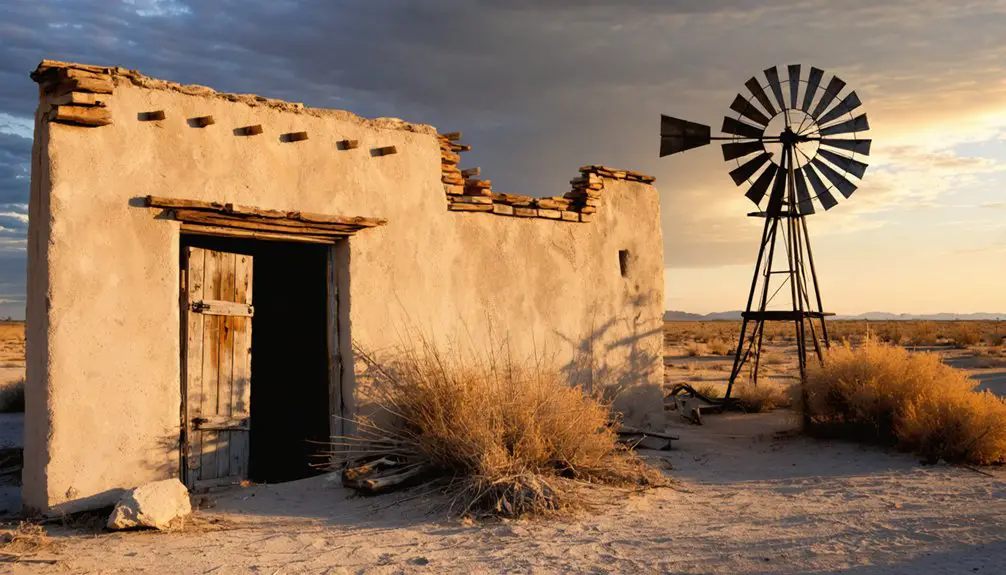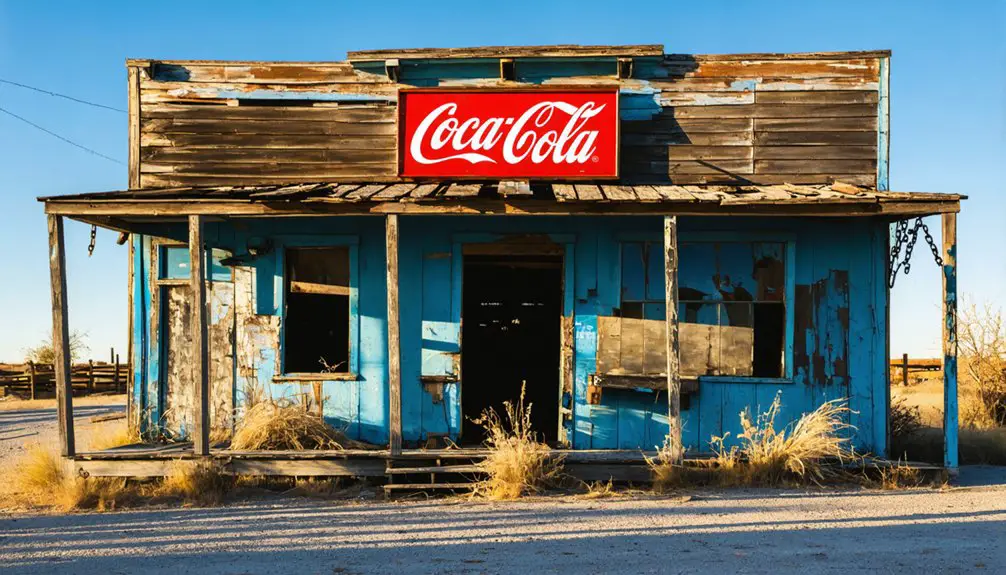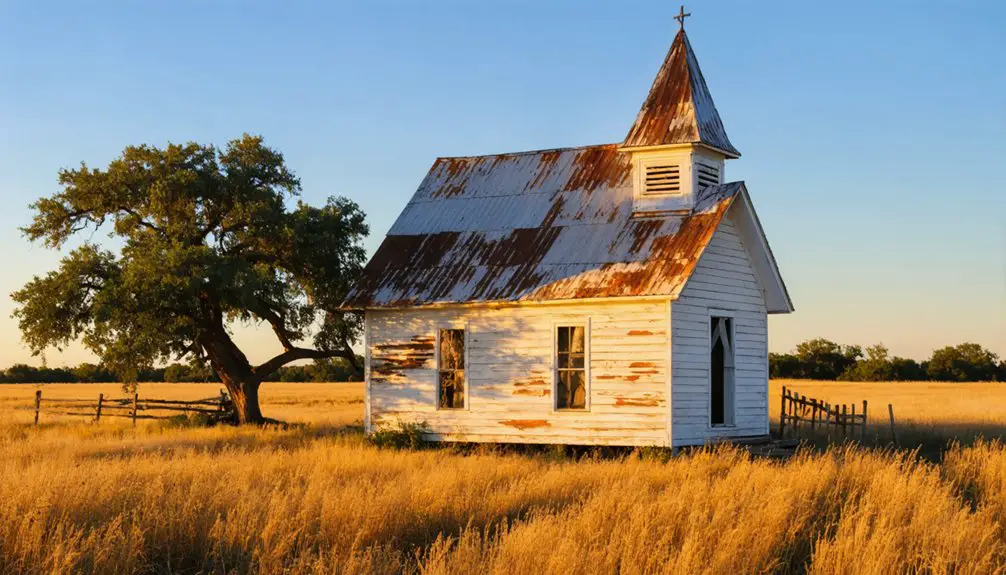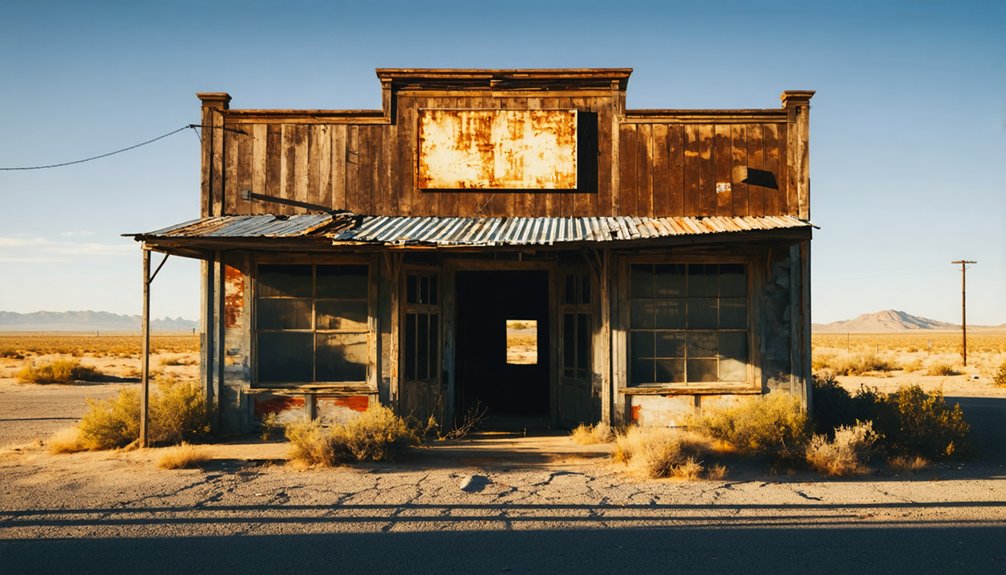
You’ll find Merle, Texas exactly where history left it—at the crossroads of county roads 201 and 270 in southeastern Burleson County, sitting quietly on Bethel Creek‘s south bank about three miles south of Snook. This Czech and Italian settler community peaked at 25 residents and never recovered after its post office closed in 1919. Bring detailed county road maps, since rural signage is sparse. The full story of what remains—and how to find it—runs deeper than the crossroads suggests.
Key Takeaways
- Merle sits in Burleson County near the crossroads of county roads 201 and 270, approximately three miles south of Snook on Bethel Creek.
- Bring detailed county road maps, as rural roads are poorly marked and backtracking through farmland is common without advance planning.
- Two original unrestored structures survive: an old store that served as post office and filling station, and a historic calaboose.
- No interpretive signs exist at the site; researching Merle’s Czech and Italian immigrant history beforehand enriches the visit significantly.
- Pair the stop with nearby Snook and Caldwell to explore surviving examples of Czech, Italian, and German settler heritage in the region.
Where Merle, Texas Is and How to Reach the Townsite
Tucked into the fertile Blackland Prairie bottoms of southeastern Burleson County, Merle sits on the south bank of Bethel Creek, roughly three miles south of Snook. The former townsite developed at the crossroads of what’re now county roads 201 and 270, where cultural influences from Czech and Italian settlers once shaped a thriving rural community.
Merle rests quietly on Bethel Creek’s south bank, where Czech and Italian settlers once built something worth remembering.
Economic shifts gradually drained the town of its significance, leaving only scattered remnants behind.
To reach Merle, you’ll want detailed county road maps before you go. Rural access roads aren’t always well-marked, and missing a turn means backtracking through open farmland. Plan your route from Snook heading south, confirm your county road numbers, and give yourself extra time.
The reward is unfiltered Texas prairie history waiting quietly at a forgotten crossroads.
Why Merle Belongs on Any Central Texas Ghost Town Route
Merle earns its place on a central Texas ghost town route because it tells a complete and documented story of prairie community rise and collapse.
This story is anchored by the 1883 post office opening and the near-silence that followed its 1919 closure.
Czech immigrants and Italian farmers shaped the settlement’s early character, giving the site an ethnic and agricultural depth you won’t find at every forgotten crossroads.
When you arrive, the surviving calaboose and store give you something tangible to photograph and interpret, grounding the history in physical evidence rather than memory alone.
Documented Prairie Town Decline
Few ghost towns offer the kind of clean, documented arc of rise and fall that makes Merle such a compelling stop on any central Texas backroad route.
A post office opened in 1883, anchoring the community during its most active years, then closed in 1919 as the town’s momentum quietly faded.
By 1931, only one business remained. Population figures tell the rest: 25 residents in 1933, the same count still recorded in 1948.
Local legends tied to Czech and Italian farming families give that decline a human face, reminding you that real lives shaped this crossroads.
Preservation efforts have kept the calaboose and store standing, giving you something tangible to stand beside.
Merle doesn’t romanticize its own disappearance — it just shows you exactly how it happened.
Immigrant Roots Shape History
What sets Merle apart from dozens of other faded Texas crossroads is the story baked into its soil — Czech immigrants and Italian farmers carved this community out of the Blackland Prairie bottoms in the early 1890s, bringing distinct agricultural traditions to a stretch of southeastern Burleson County that most travelers pass without a second glance.
Their cultural influence shaped how the town grew, how its single store functioned as courthouse, post office, polling place, and filling station, and how tight-knit farming networks sustained daily life.
That economic impact kept Merle breathing through its post office years, from 1883 to 1919.
When you stand at the crossroads of county roads 201 and 270 today, you’re reading the quiet legacy of people who built something real from raw prairie ground.
Surviving Buildings Anchor Visit
That cultural backbone carried Merle through decades of slow fading, and what’s left standing today gives you something rare on a ghost town route — actual physical evidence you can walk up to and photograph.
Two structures define the site: the old store and the calaboose standing beside it. Together, they represent ghost town preservation at its most honest — no restoration, no signage, just original historic architecture holding its ground at the crossroads of county roads 201 and 270.
The store once pulled triple duty as post office, polling place, and filling station. The calaboose kept order when the town still had enough people to need it.
Frame both buildings carefully, read the silence around them, and you’ll understand exactly why Merle earns a place on any central Texas backroad itinerary.
The Rise and Fall of a Texas Prairie Crossroads Town
Merle didn’t spring up overnight — Anglo-American settlers had been pushing into this corner of Burleson County since the early 1830s, but the town itself didn’t take shape until the late 1800s, when a crossroads in the Blackland Prairie bottoms became a genuine community anchor.
Czech immigrants and Italian farmers built their lives here, adding rich community stories to the Texas prairie landscape. The 1883 post office marked Merle’s active peak, but by 1919 it had closed.
Cultural preservation efforts remind us what the numbers reveal:
- Only 25 residents remained by 1933
- One solitary business survived into 1931
- The Merle school merged into Snook ISD by 1934
That steady unraveling turned a living crossroads town into the quiet, scattered remnant you’ll explore today.
Czech Immigrants and Italian Farmers Who Settled Merle
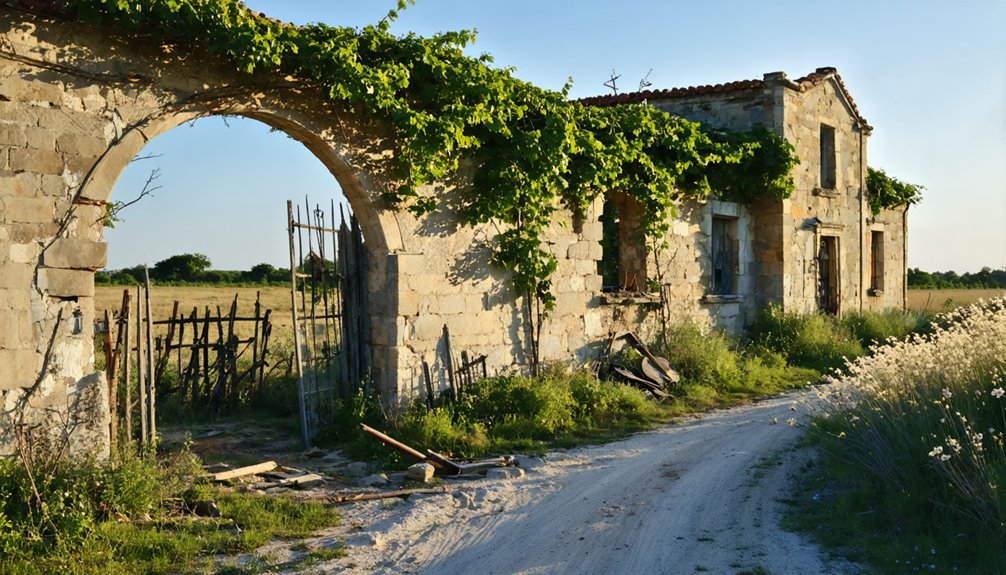
When Czech immigrants and Italian farmers arrived in the Blackland Prairie bottoms during the early 1890s, they didn’t find a blank canvas — they found a crossroads worth building around. These settlers carried deep agricultural heritage into Merle’s fertile soil, planting roots in a landscape that rewarded hard, deliberate work.
Their cultural influence shaped how the town functioned — not just economically, but socially. They built community around shared labor, land, and local institutions like the post office and school.
You can still sense that layered identity when you stand at the old crossroads of county roads 201 and 270.
Merle wasn’t a company town or a railroad boomtown. It grew because determined immigrant families chose it, worked it, and made it briefly, quietly their own.
Merle’s Post Office Years: 1883 to 1919
A community doesn’t fully exist on a map until it earns a post office — and Merle earned one in 1883. That designation gave settlers, Czech immigrants, and Italian farmers an official address in the Blackland Prairie.
For 36 years, mail tied Merle to the wider world — until the post office closed in 1919.
Explore what those decades meant:
- Railroad development rerouted commerce away from small crossroads towns like Merle, slowly draining their purpose
- Local folklore suggests the post office doubled as a community hub, where neighbors exchanged more than letters
- The 1919 closure marked a turning point — residents still farmed, but institutional life quietly collapsed
When you visit, you’re walking through the silence that followed those final years of connection.
The Calaboose and Store: Merle’s Only Surviving Ghost Town Buildings
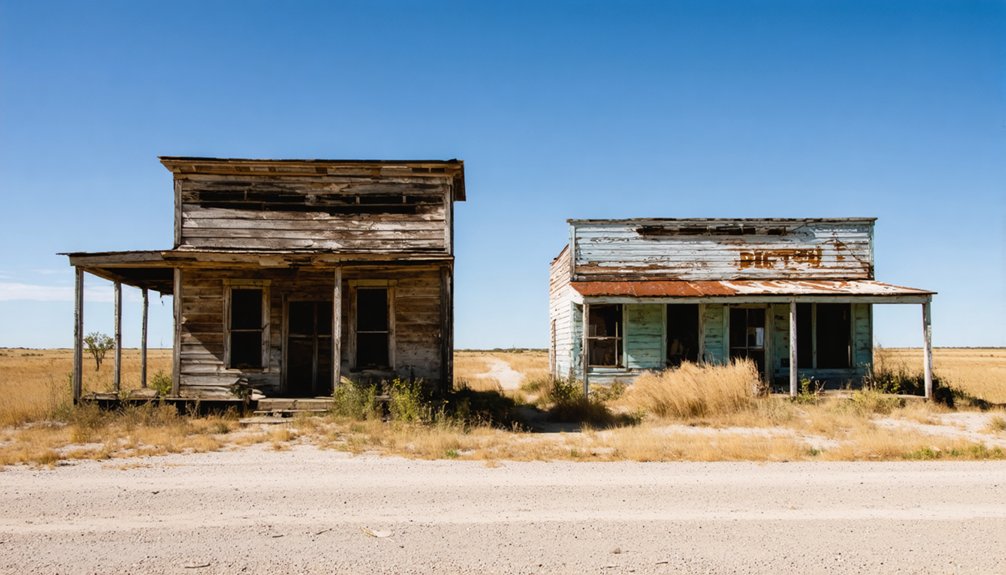
Standing at the crossroads of county roads 201 and 270, you’ll find the last two buildings that prove Merle ever existed — the calaboose and the store. These structures aren’t polished museum pieces. They’re raw, honest remnants of a community that once held a post office, a polling place, and a filling station all under one roof.
At the crossroads of 201 and 270, two raw buildings are all that’s left to prove Merle existed.
The calaboose stands beside the store, a compact reminder of how self-sufficient small prairie towns had to be.
Together, they carry the full weight of community storytelling — representing justice, commerce, and daily life in a single glance.
For anyone serious about historical preservation and ghost town exploration, these two buildings are the entire destination.
Photograph them carefully. They won’t stand forever, and Merle’s story deserves to be witnessed before it disappears completely.
What the Merle Townsite Actually Looks Like on the Ground
Beyond the two surviving structures, the Merle townsite returns almost entirely to open land — flat, quiet Blackland Prairie stretching in every direction with little to announce that a functioning community once operated here. You’ll find no markers crowding the crossroads of county roads 201 and 270, no interpretive signs pulling local folklore into public view.
Historic preservation here is minimal, leaving the landscape to speak on its own terms.
When you visit, expect to encounter:
- Open farmland replacing former lots and pathways
- Scattered rural dwellings near the original townsite boundaries
- A crossroads intersection marking where civic life once centered
Bring your own research, walk the perimeter near Bethel Creek’s south bank, and let the silence fill in what the buildings can’t tell you anymore.
Nearby Backroad Stops Worth Pairing With Merle
Once you’ve walked the Merle townsite, you’re only about three miles from Snook, where a compact historic downtown rewards a short detour before you head back to the main road.
If you’re ready to extend the trip, Caldwell sits close enough to fold into a half-day loop, offering courthouse square architecture and a stronger sense of what a Burleson County seat looked like at its peak.
Pairing these stops turns a single ghost town visit into a fuller backroad portrait of the region’s rural past.
Snook’s Historic Downtown
Just three miles north of Merle’s crossroads, Snook’s historic downtown gives your road trip a living counterpoint to the ghost town you’ve just left behind. You’ll find historical architecture still standing along its quiet streets, rooted in the same Czech and Italian immigrant culture that once shaped Merle itself.
Walk the blocks and you’ll pick up local legends tied to farming families who worked the Blackland Prairie for generations. Snook rewards the curious traveler who slows down.
Pair your stop here with:
- Czech heritage sites reflecting the immigrant communities common to both towns
- Agricultural landmarks that echo Merle’s rural economy
- Local gathering spots where longtime residents share stories that no historical marker captures
Snook keeps the region’s past alive in ways Merle no longer can.
Caldwell Day Trip Options
Caldwell, the Burleson County seat sitting roughly fifteen miles from Merle‘s crossroads, pulls your road trip into a fuller picture of the region’s layered past. Its courthouse square anchors ongoing preservation efforts that keep Czech and German settler stories alive through architecture and local museums.
You’ll find local legends woven into nearly every corner — immigrant families who carved farms from blackland clay, merchants who built storefronts still standing today. Pair a Caldwell stop with your Merle visit by hitting the Burleson County Czech Heritage Museum, then driving the backroads connecting both sites.
The contrast sharpens your understanding: Caldwell survived while Merle faded. That tension between persistence and abandonment is exactly what makes this stretch of central Texas worth exploring on your own terms.
Photographing the Merle Calaboose and Store: What to Focus On
When you pull up to the crossroads of county roads 201 and 270, the calaboose and the store will likely be the first things that catch your eye — and they’re the only things left standing from Merle’s active years. These two structures represent historical architecture worth documenting carefully before preservation efforts or time claim them entirely.
Focus your lens on:
- Weathered exteriors — peeling wood, aging brick, and worn thresholds tell the story without narration
- Spatial relationship — frame both buildings together to capture how compactly Merle’s civic life was organized
- Surrounding landscape — the open Blackland Prairie bottoms provide essential context for how isolated this crossroads community truly was
Shoot during golden hour for texture and depth. Let the silence of the townsite do its work.
Frequently Asked Questions
Is There an Admission Fee to Visit the Merle Townsite?
No fee’s required! You’ll freely find Merle’s ghost town history waiting at this quiet crossroads. Follow these travel tips: drive rural county roads, explore the surviving store and calaboose, and soak up southeastern Texas’s storied, stunning past.
Are the Calaboose and Store on Private or Public Property?
The knowledge doesn’t confirm whether the calaboose and store sit on private property or allow public access. You’ll want to contact Burleson County locals before visiting, so you’re not accidentally trespassing on someone’s land.
What Is the Best Time of Year to Visit Merle?
Pack your wagon and hit the road in spring or fall — you’ll find Merle’s seasonal weather mild and inviting, with golden light that maximizes your photography opportunities among the old calaboose and store.
Is the Merle Townsite Listed on Any Historic Preservation Registry?
We don’t have confirmed details on Merle’s official preservation status, but its historical significance is undeniable. You’ll discover a townsite where surviving structures quietly tell the story of a forgotten Texas prairie community worth exploring.
Are Restroom Facilities Available Near the Merle Ghost Town Site?
You won’t find restroom availability or facility amenities at Merle’s remote, wind-swept townsite. Plan ahead, stop in nearby Snook before venturing down those rural county roads, and embrace the untamed freedom of off-grid exploration.
References
- https://www.tinytexasjails.com/jails/burleson-county/
- https://blog.aptamigo.com/merle-atx/
- https://en.wikipedia.org/wiki/List_of_ghost_towns_in_Texas
- https://www.treetexas.com/sawmill/3639/sb/58
- https://sandiegohistoryseeker.com/2014/03/17/merle-an-enchanted-city-by-the-sea/
- https://themerle.com/neighborhood/
- https://postidavisitare.com/merle-stati-uniti
- https://www.linkedin.com/company/accent-glass-resurfacing-llc
- https://www.linkedin.com/company/all-american-flags-&-banners
- https://www.trulia.com/building/the-merle-on-howard-2500-e-howard-ln-manor-tx-78653-2738986028