Planning a ghost town road trip to Dewey, Utah means heading deep into Grand County’s canyon country, where the Colorado River still flows past the remnants of a frontier ferry crossing that dates back to the 1880s. You’ll find weathered wooden structures, stone foundations, and rusted relics without crowds, fences, or admission fees. It’s an authentic, self-paced desert experience unlike anything commercialized. Stick around to uncover everything you need to know before you go.
Key Takeaways
- Dewey, Utah, sits along the Colorado River in Grand County, offering an authentic ghost town experience without crowds, fences, or admission fees.
- The site features weathered wooden structures, stone foundations, and rusted frontier-era remnants tracing back to its 1880s ferry crossing origins.
- Use coordinates 38°48′37″N 109°18′06″W to navigate, as the remote location has limited nearby services and no marked trails.
- Pack water, sun protection, offline maps, first aid supplies, snacks, and extra fuel before heading out to this rural desert site.
- Dewey rewards self-paced exploration, letting visitors independently uncover pioneer history, river travel heritage, and the story behind Dewey Bridge’s 1916 completion.
What Is Dewey, Utah and Why Visit?
Tucked along the Colorado River in southeastern Grand County, Utah, Dewey is a ghost town with a surprisingly rich backstory — one that’s easy to visit and worth including on any historic road trip through the region. Its historical significance stretches back to the 1880s, when a ferry crossing defined daily life and connected frontier travelers across the then-named Grand River.
That early infrastructure shaped the broader settlement patterns of southeastern Utah. When you walk the sparse, quiet landscape today, you’re stepping into cultural insights about pioneer life, river travel, and the gradual shift toward modern transportation.
Dewey isn’t a polished tourist attraction — it’s a raw, accessible slice of the American West that rewards curious travelers who want history without the crowds.
What’s Left at the Dewey Site Today
When you arrive at the Dewey site today, you’ll find a quiet, sparse desert landscape that speaks more through absence than presence.
A few weathered remnants of the old town still stand, offering tangible glimpses into its frontier past.
You’re fundamentally stepping into an open-air relic where the silence and scenery do most of the storytelling.
Remnants Still Standing Today
Though nature and time have worked quietly against Dewey, a few remnants of the old settlement still stand to reward a curious visitor. You’ll find scattered historical artifacts and traces that preservation efforts have kept from completely vanishing.
Look around and you’ll spot:
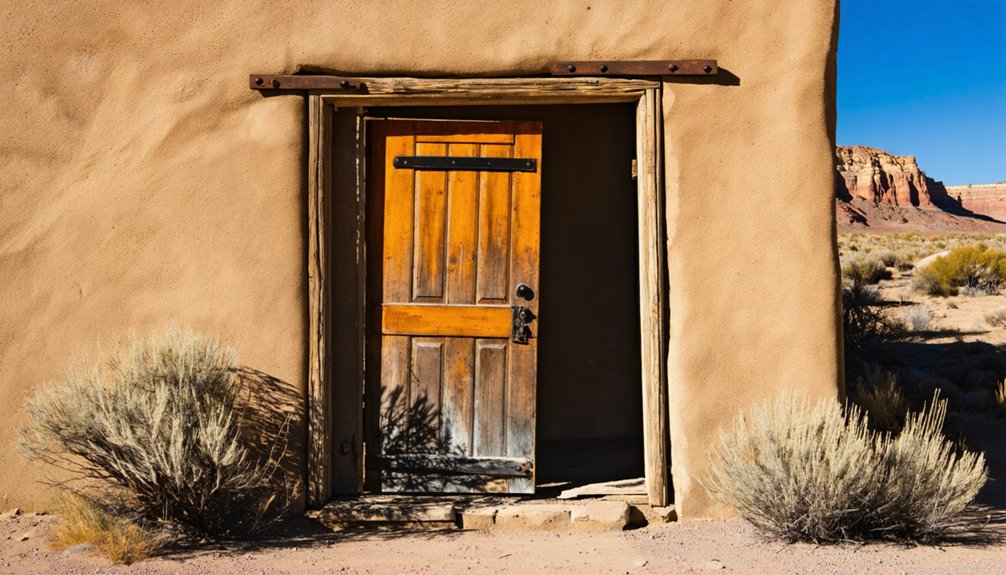
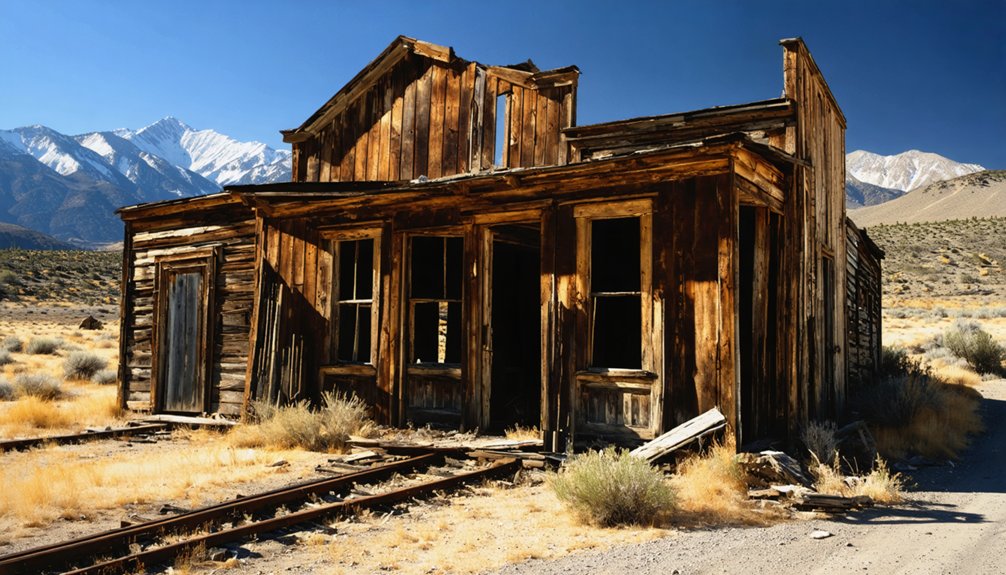
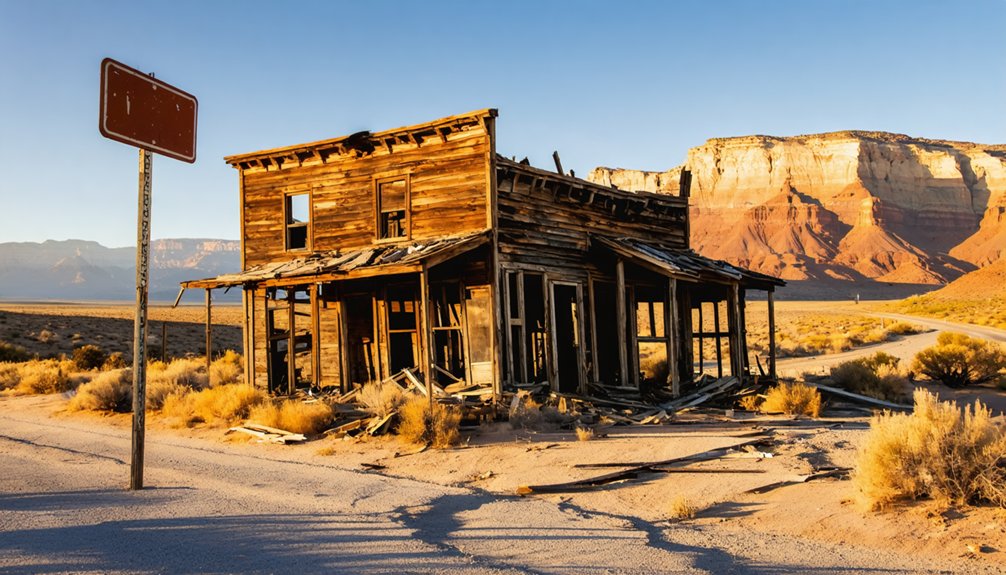
- Weathered wooden structures leaning against the desert sky
- Stone foundations marking where buildings once stood
- Rusted metal fragments hinting at frontier-era tools and equipment
- Remnants of wagon-era infrastructure near the old crossing
- Crumbling walls that frame the silence of an abandoned community
You don’t need a guided tour to feel the weight of history here. Just walk the ground, read the landscape, and let Dewey’s quiet ruins tell their own story on your terms.
A Sparse Desert Landscape
Beyond the scattered remnants, the Dewey site opens into a wide, quiet desert that swallows most of what the town once was. You’ll find yourself standing in open terrain where sparse desert flora — scrubby sage, desert grasses, and drought-tolerant shrubs — has reclaimed the land that settlers once worked.
The Colorado River still moves nearby, giving the landscape an unexpected energy against the surrounding silence.
This stretch rewards patience. You’re free to wander without crowds, fences, or admission fees. Wildlife observation comes naturally here — keep your eyes open for hawks circling overhead or lizards darting through the brush.
The emptiness isn’t a disappointment; it’s the point. Dewey’s sparse desert landscape tells its own story about time, isolation, and how quickly the frontier fades back into the earth.
How Dewey Went From Ferry Crossing to Ghost Town
Before the Dewey Bridge changed everything, this quiet stretch of the Colorado River was all about the ferry. Back in the 1880s, Samuel King built a historic ferry river crossing that sparked an entire settlement. Here’s the quick timeline you need to know:
- The site started as Kingsferry, named after Samuel King himself.
- The river was called the Grand River back then.
- A small community grew around the ferry crossing.
- The Dewey Bridge, completed in 1916, replaced the ferry entirely.
- Once the bridge opened, the town’s purpose vanished.
That shift from ferry-based access to bridge-era transportation fundamentally sealed Dewey’s fate. Without the ferry drawing travelers in, the community faded, leaving behind the sparse ghost town you can explore today.
How to Get to Dewey, Utah?
You’ll find Dewey tucked into southeastern Grand County, Utah, hugging the banks of the Colorado River at coordinates 38°48′37″N 109°18′06″W.
The site sits near the historic confluence with the Dolores River, where Samuel King once ran his ferry crossing back in the 1880s.
Fortunately, Dewey’s a readily accessible stop, making it an easy addition to any ghost town road trip through the region.
Dewey’s General Location
Tucked into southeastern Grand County, Utah, Dewey sits along the Colorado River near its confluence with the Dolores River, placing it squarely in some of the region’s most rugged and scenic desert terrain. Its cultural significance comes alive when you understand what once thrived here.
Key location highlights:
- Coordinates: 38°48′37″N 109°18′06″W
- Situated along the Colorado River
- Near the Dolores River confluence
- Located in southeastern Grand County
- Readily accessible as a historic preservation roadside stop
You won’t find crowds or developed facilities here — just open desert, weathered remnants, and raw frontier history.
That accessibility makes Dewey ideal for independent travelers who want to explore Utah’s past on their own terms, without restrictions or guided tours slowing them down.
Accessing The Site
Getting to Dewey is straightforward once you know what you’re looking for — and that simplicity is part of the appeal. The site sits along the Colorado River in southeastern Grand County, Utah, at coordinates 38°48′37″N 109°18′06″W, making it easy to pinpoint before you hit the road.
You’ll approach through open desert terrain, following routes that reward you with scenic viewpoints of canyon country long before you arrive. No complicated trail systems or permits stand between you and this historic crossing.
Dewey is a roadside stop in the truest sense — accessible, unhurried, and honest.
Come prepared for rural desert conditions with limited services nearby. Your visit contributes to historical preservation simply by showing up, bearing witness to what remains of this quietly resilient frontier settlement.
What to Bring for a Remote Desert Site Stop?
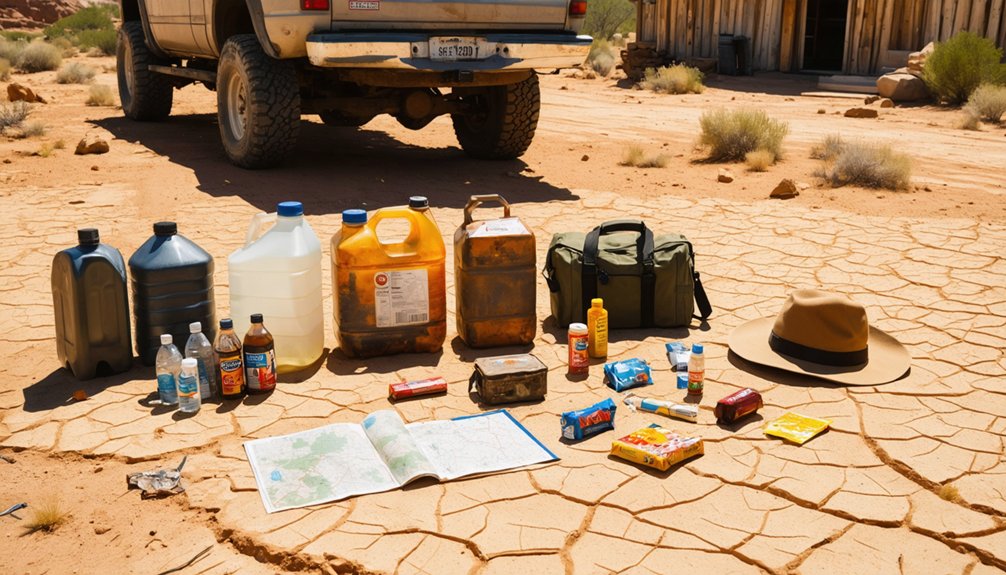
Since Dewey offers no developed facilities or nearby services, packing smart makes all the difference for a comfortable visit. The remote desert terrain demands solid preparation, so treat these packing essentials and safety precautions as non-negotiable before you head out:
Dewey’s remote desert terrain demands solid preparation — treat these packing essentials as non-negotiable before you head out.
- Water – Carry more than you think you’ll need; desert heat depletes you fast
- Sun protection – Bring sunscreen, a hat, and UV-blocking sunglasses
- Navigation tools – Download offline maps since cell service is unreliable
- First aid kit – Handle minor injuries on the spot without waiting for help
- Snacks and fuel – Nearest services are miles away, so don’t arrive running empty
Pack these items and you’ll move freely through the site without worry holding you back.
Other Grand County Ghost Towns Worth Adding
Once your pack is loaded and Dewey’s weathered landscape has satisfied your curiosity, Grand County gives you plenty of reasons to keep driving. The region holds several ghost towns that reward curious travelers willing to explore beyond the main corridors.
Each site carries its own local legends — stories of settlers, river crossings, and ranching communities that shaped southeastern Utah’s identity. Historic preservation efforts have kept some remnants standing, giving you tangible connections to frontier life rather than empty fields.
Treat each stop as a chapter in a larger story. Research ahead, note coordinates, and approach every site with respect for what remains.
The freedom of a self-guided road trip through Grand County means you set the pace and uncover history on your own terms.
Frequently Asked Questions
Is There an Entrance Fee to Visit the Dewey Ghost Town Site?
You’ll find no entrance fee at Dewey’s historical preservation site — it’s freely accessible to all! Visitor amenities are minimal, so pack your own supplies and embrace the raw, open desert freedom awaiting you there.
Are Pets Allowed When Visiting Dewey and Other Grand County Ghost Towns?
Where the wild desert roams free, so can your pets! Pet policies at Dewey and Grand County ghost towns aren’t strictly enforced, but you’ll want to check animal restrictions for specific sites beforehand.
What Is the Best Time of Year to Visit Dewey, Utah?
Spring and fall offer you the best visits for historical preservation exploration and wildlife encounters. You’ll dodge brutal summer heat, enjoy mild temperatures, and experience Dewey’s sparse, rugged desert landscape at its most inviting and freely accessible.
Is It Legal to Collect Artifacts or Souvenirs From Dewey’s Remains?
You shouldn’t collect artifacts or take souvenirs from Dewey’s remains. Federal artifact collection laws protect historic sites like this one. Respecting souvenir rules guarantees you’re preserving the ghost town’s rich, irreplaceable history for future explorers craving that same freedom.
Are There Any Guided Tours Available for the Dewey Ghost Town Area?
No formal guided exploration exists, but don’t let that stop you! You’ll uncover Dewey’s raw, untamed history on your own terms, honoring historical preservation while freely roaming this hauntingly beautiful, forgotten frontier crossing along Utah’s Colorado River.
References
- https://moabmuseum.org/dewey-utah-exploring-the-ghost-town-along-the-colorado-river/
- https://en.wikipedia.org/wiki/Dewey
- https://jacobbarlow.com/2016/05/03/dewey-utah-originally-kingsferry/
- https://blackhillsvisitor.com/learn/dewey/
- https://moabsunnews.com/2023/10/12/moab-museum-grand-county-ghost-towns/