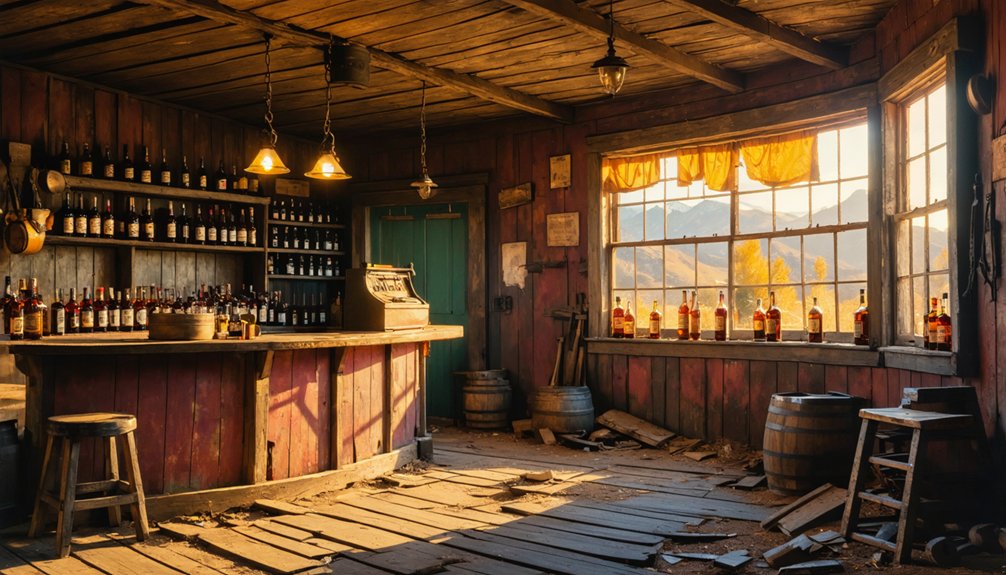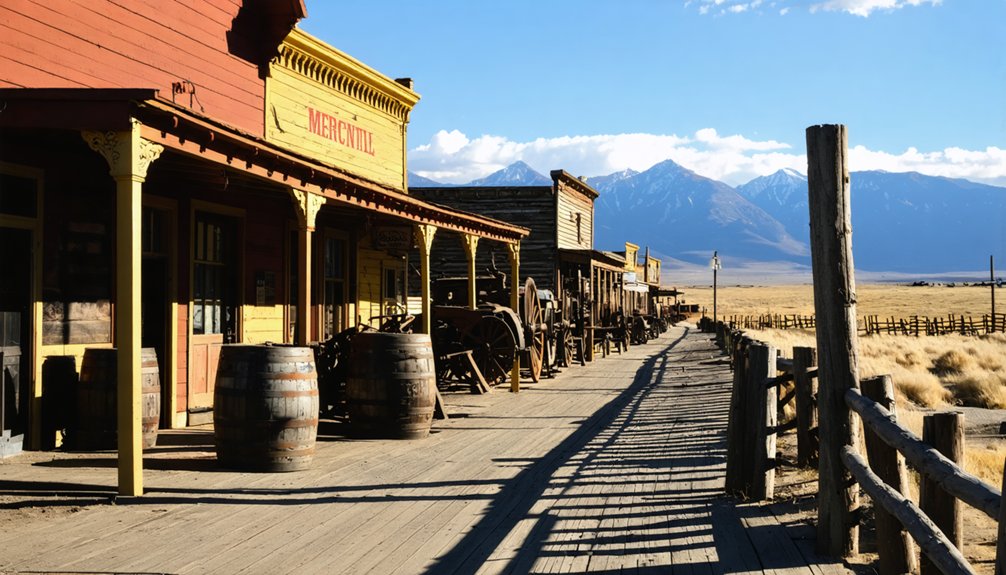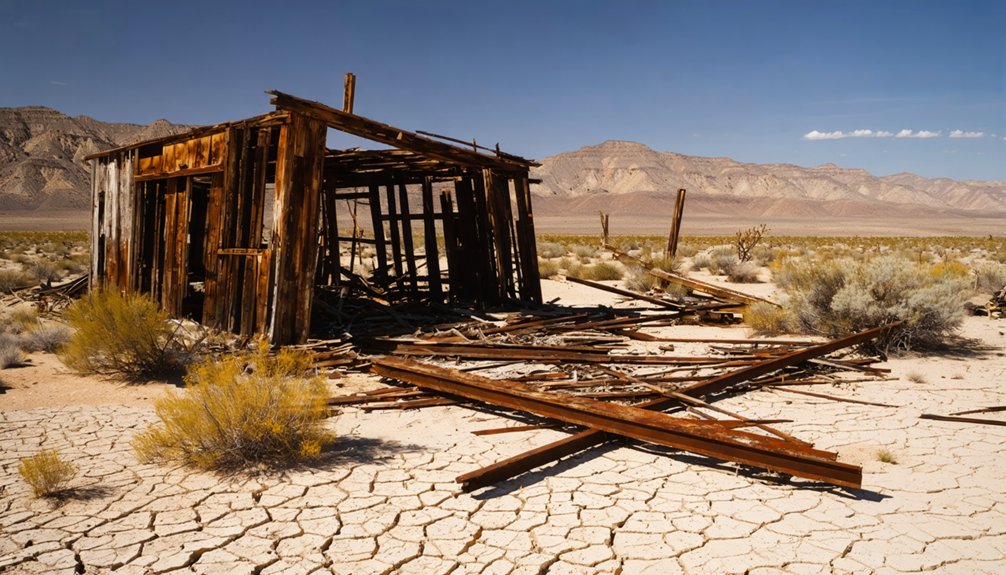
To plan your ghost town road trip to Masonic, California, visit between June and September when the dirt roads are dry and passable. From Bridgeport, it’s about 12 miles northeast into the Bodie Hills. Bring water, sturdy boots, and offline maps—there’s no cell service and no services on-site. You’ll find stamp mill ruins, stone cabins, and sweeping valley views waiting for you. The full story of this forgotten boomtown runs much deeper than it first appears.
Key Takeaways
- Masonic sits in the Bodie Hills, about 10 miles northeast of Bridgeport, featuring stamp mill ruins, stone cabins, and aerial tram remnants.
- Visit between June and September for dry roads and accessible terrain; winter snow completely blocks access to the site.
- The 2WD route from Bridgeport spans 12 miles, while the rougher 4WD Sweetwater route covers approximately 8 miles.
- Pack water, snacks, sturdy footwear, and offline maps, as Masonic has no services and limited cell coverage.
- Combine Masonic with nearby Bodie State Historic Park and Chemung Mine for a full-day mining history road trip.
What Makes Masonic, California Worth the Drive to Bodie Country
Tucked into the Bodie Hills about 10 miles northeast of Bridgeport, Masonic, California rewards the adventurous traveler with stone cabin ruins, a standing stamp mill, and the remnants of an aerial tram system — all set against sweeping views of the Bridgeport Valley and the Nevada borderlands.
These historical landmarks carry real weight. Gold fever struck here in 1860, and by 1902, the Pittsburg-Liberty Mine was pulling ore from the Eastern Sierra’s rugged terrain. You’re not walking through a curated museum — you’re standing inside a raw, largely untouched mining district where the silence tells the story.
The scenic viewpoints alone justify the detour. Pair Masonic with a Bodie visit, push into the backcountry, and you’ll understand why this corner of Mono County still pulls people off the main road.
The Mining History That Built and Buried Masonic, California
When you trace Masonic’s roots, you’ll find gold was first discovered in these rugged hills back in 1860, though the settlement originally carried the name Lorena.
The real turning point came on July 4, 1902, when partners John Stuart Phillips, Caleb Dorsey, and John M. Bryan struck the Pittsburg-Liberty Mine and set off the boom that shaped the town you’re exploring today.
What World War II ultimately finished off, with federal restrictions on non-essential gold mining, the boom-and-bust cycle had already been quietly eroding for years.
Gold Discovery Origins
Though gold was first discovered in the Masonic district as early as 1860, the town didn’t truly ignite until the Fourth of July, 1902, when partners John Stuart Phillips, Caleb Dorsey, and John M. Bryan struck the Pittsburg-Liberty Mine. That Independence Day find wasn’t just lucky timing — it sparked a rush that shaped the historical architecture you’ll still trace across Upper, Middle, and Lower Town today.
Before that boom, the settlement went by Lorena, a quieter name that local legends suggest reflected a more modest, hopeful beginning. The Freemasons eventually lent the town its enduring identity.
When you walk these ruins, you’re standing where ambition literally carved itself into the Eastern Sierra hillside — and where one holiday morning changed everything.
The Pittsburg-Liberty Strike
On a Fourth of July morning in 1902, partners John Stuart Phillips, Caleb Dorsey, and John M. Bryan struck gold at the Pittsburg-Liberty Mine, igniting Masonic’s brief but electrifying boom. That single discovery pulled a thousand dreamers into these rugged hills, much like local cuisine draws travelers into unfamiliar towns — pure, irresistible magnetism.
The Pittsburg-Liberty Mill still stands today, anchoring the site’s scattered ruins. While you’re framing shots for wildlife photography along the aspen-lined path above the mill, let that structure remind you what ambition looks like frozen in time.
- The mill wasn’t operational until a stamp mill arrived in 1907
- Peak population reached nearly 1,000 people
- WWII gold mining restrictions delivered the final blow to Masonic’s survival
Mining’s Final Decline
Even the richest veins run out. Masonic limped through the early decades of the twentieth century, never quite matching the explosive promise of that 1902 Independence Day strike.
The stamp mill arrived in 1907, almost too late to matter. Production stayed modest, and the population — never exceeding a thousand — quietly thinned out.
The final blow came during World War II, when federal restrictions shut down non-essential gold mining across the country. Masonic didn’t recover.
What you’ll find today rewards a different kind of ambition — historical preservation through respectful exploration, not extraction. Walk softly near the ruins and you’ll likely catch opportunities for wildlife observation among the aspens and high desert brush.
The mountain gave what it had. Now it asks you to simply witness what remains.
The Best Time of Year to Visit Masonic
Summer is your best bet for visiting Masonic, when the high desert roads dry out and the Bodie Hills open up for 2WD travelers. Seasonal blooms paint the hillsides, local wildlife stirs across the sagebrush flats, and the ghost town feels alive in its silence. Plan a half-day and arrive early before afternoon winds kick up.
- June through September offers the most reliable road conditions from Bridgeport, roughly 12 miles of passable 2WD terrain.
- Spring and fall bring unpredictable snow or mud, demanding 4WD and higher clearance on the Sweetwater approach.
- Winter closes access entirely, leaving Masonic locked under snow, isolated as it was during its final abandoned decades.
Time your visit right, and the Eastern Sierra rewards you with raw, unfiltered history.
How to Get to Masonic From Bridgeport: 2WD vs. 4WD Routes
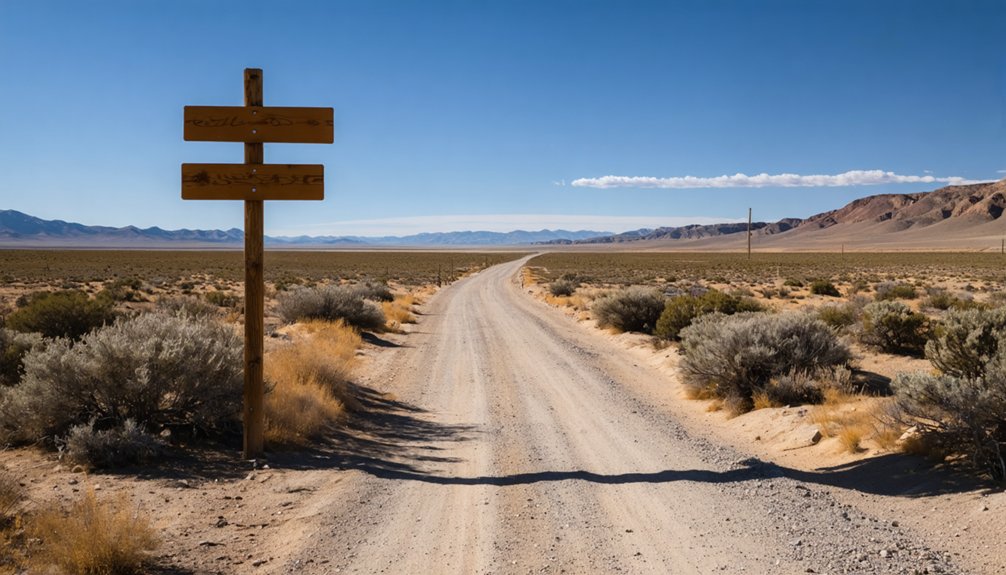
Getting to Masonic means choosing your route wisely before you ever leave Bridgeport.
If you’re driving a standard 2WD vehicle, the most popular approach runs roughly 12 miles from Bridgeport along roads that won’t punish your clearance.
If you’ve got a 4WD rig with solid clearance, the Sweetwater entrance cuts the distance to about 8 miles, though the rougher terrain demands the extra capability.
The 2WD Bridgeport Route
If you’re driving a standard vehicle, the Bridgeport route is your most practical path into Masonic, stretching roughly 12 miles from town across terrain that rewards patience with sweeping views of the Bridgeport Valley. Check weather conditions before departing, as mountain roads shift quickly and can close without warning.
- Start in Bridgeport and follow the Bodie-Masonic Road corridor northeast toward the Bodie Hills.
- Watch for local wildlife crossing open stretches, particularly during early morning drives.
- Plan for a half-day trip to fully absorb the remote landscape and ruins without rushing.
This road suits most 2WD vehicles during summer months, making Masonic genuinely accessible without sacrificing the raw, borderland character that defines the Eastern Sierra’s forgotten mining corridors.
The 4WD Sweetwater Route
Those who want a shorter drive into Masonic can take the Sweetwater entrance route, which cuts the journey down to about 8 miles—but you’ll need a high-clearance 4WD vehicle to handle it safely. The rough terrain demands respect, rewarding those who commit with sweeping scenic viewpoints across the Bodie Hills and borderlands that few travelers ever witness.
This corridor carries its own weight in local legends—whispers of prospectors pushing through rugged country chasing gold in the shadow of the Sweetwater Mountains. You’re retracing those same desperate paths when you roll this route. It’s rawer, more demanding, and honestly more fitting for a ghost town that never softened its edges.
Come prepared, and this road delivers an approach as untamed as Masonic itself.
What Roads and Conditions to Expect on Each Approach
Reaching Masonic means choosing your route carefully, because each approach carries its own set of tradeoffs. The 12-mile Bridgeport road suits 2WD vehicles but demands patience.
The Sweetwater route cuts distance but rewards only high-clearance 4WD rigs.
- The Bridgeport approach follows gentler grades, offering views across the valley and occasional encounters with seasonal wildlife migrating through the hills.
- The Sweetwater route is rougher, faster, and steeped in local folklore about miners who carved these tracks generations ago.
- Both roads share one truth: summer remains your safest window before early snows reclaim the high country.
Whichever path you pick, travel prepared. These aren’t maintained highways — they’re raw corridors into California’s borderland, unchanged in spirit since prospectors first pushed through.
What’s Left to See at the Masonic Townsite Today
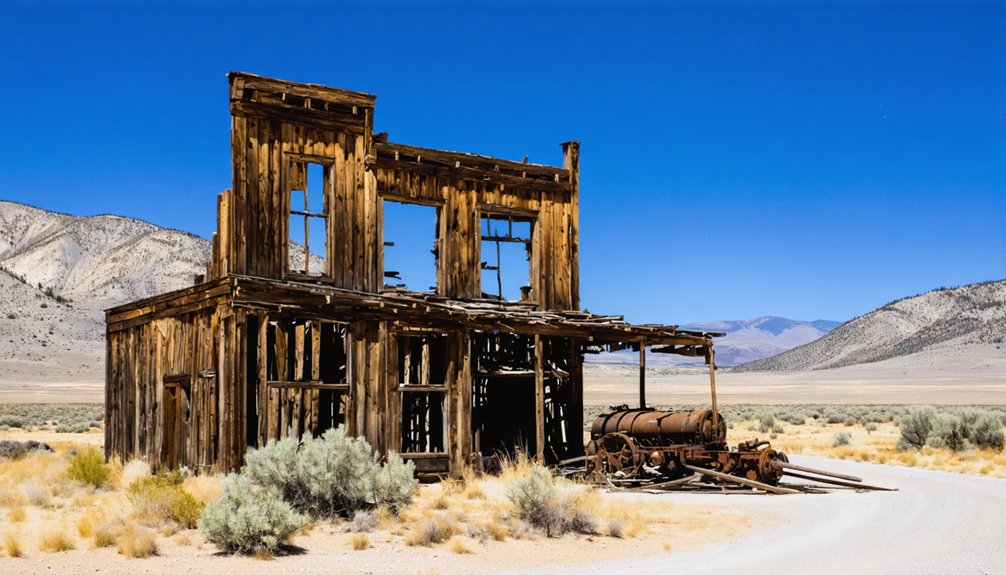
Arriving at Masonic, you’ll find a townsite that whispers rather than shouts its history. Stone cabin ruins scatter across three distinct zones — Upper, Middle, and Lower Town — each telling fragments of a boomtown story.
The Pittsburg-Liberty Mill stands as the most commanding remnant, its weathered frame anchoring the landscape. Nearby, surviving aerial tram components hint at the industrial ambition that once drove this remote camp.
Follow the path near the mill toward the aspen grove, where local wildlife moves freely through the quiet. Weather patterns shift quickly at this elevation, so stay alert and move deliberately.
From the higher viewpoint above the ruins, broad vistas sweep across the Bridgeport Valley — raw, unfiltered country that rewards the curious and the bold.
The Pittsburg-Liberty Mill, Tram Remnants, and Hidden Aspen Grove
Standing at the center of what remains, the Pittsburg-Liberty Mill commands your attention more than anything else at Masonic. Its historic architecture tells the story of a brief but intense era when gold ruled these remote hills.
Scattered nearby, tram remnants hint at the industrial ambition that once stretched across these slopes.
Follow the path beyond the mill and you’ll discover a hidden aspen grove, especially stunning during wildflower blooms in early summer.
- The mill’s deteriorating framework reflects the ambition and collapse of early 20th-century mining
- Aerial tram pieces scattered across the terrain reward explorers who look closely
- The aspen grove offers quiet contrast to the industrial ruins surrounding it
This site rewards curiosity and independent exploration above all else.
How to Combine Masonic With Bodie and the Chemung Mine
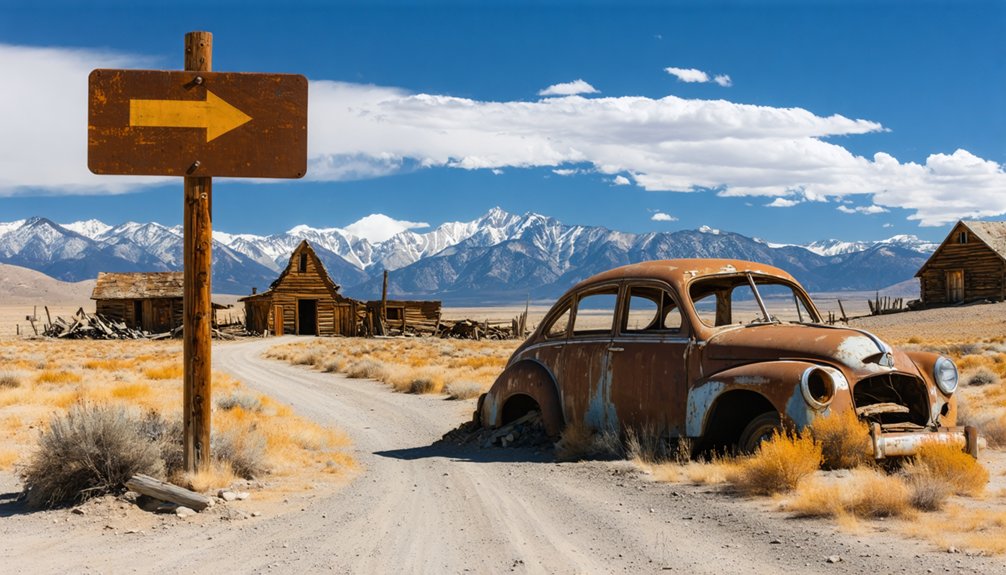
Once you’ve explored Masonic‘s ruins, the surrounding Bodie Hills offer two natural extensions that deepen the story of Eastern Sierra gold mining.
Bodie State Historic Park sits nearby, preserving historic architecture on a scale Masonic never reached — weathered storefronts, a stamp mill, and an entire frozen townscape make it a striking contrast.
Then there’s the Chemung Mine, a quieter stop where shafts and equipment scatter across open terrain favored by local wildlife, from raptors to mule deer.
Linking all three sites into a single day rewards you with a layered portrait of boom-and-bust mining culture.
Bring water, keep your tank full, and embrace the remoteness — out here, the road itself is part of the story.
How Long to Plan for a Visit to Masonic
You’ll want to set aside at least half a day for Masonic, giving yourself time to explore the mill ruins, scan the hillsides for tram remnants, and soak in the sweeping views across the Bridgeport Valley.
If you’re combining the site with Bodie and the Chemung Mine, budget a full day and plan your route in advance to avoid backtracking on rough roads.
Summer’s your best window, when the mountain roads are clear and the ghost town’s sparse bones are easiest to read against the open Eastern Sierra landscape.
Half-Day Trip Basics
A half-day is really all you need to experience Masonic, though arriving early gives you the best light for photographing the ruins and the widest window for exploration.
Plan for three to four hours to cover the mill, stone cabin remnants, and scenic overlooks without feeling rushed.
Local wildlife moves through these hills freely, so keep your eyes open.
Pack smart before you go:
- Water and snacks — no services exist out here, and the remote terrain demands self-sufficiency
- Sturdy footwear — uneven ground around mine structures and tram remnants requires solid footing
- A camera with extra storage — the Bridgeport Valley views and weathered ruins reward every angle
Treat this like the backcountry adventure it is, and Masonic will deliver something genuinely unforgettable.
Combining Nearby Sites
Masonic sits at the center of a broader mining corridor, and pairing it with nearby sites turns a half-day stop into a full day of backcountry history.
From Masonic, you can push toward the Chemung Mine, where historical artifacts and collapsed headframes reward the extra miles.
Bodie State Historic Park lies within reasonable striking distance and delivers a preserved ghost town experience that contrasts sharply with Masonic’s raw ruins.
Along the way, scenic viewpoints across the Bridgeport Valley and Bodie Hills make every mile count.
If you’re running the Bodie-Masonic Road corridor, build flexibility into your schedule.
Roads shift in condition, light fades fast in the Eastern Sierra, and the best discoveries rarely appear on any map.
Best Season Timing
Summer opens the best window for visiting Masonic, when snow-free roads and long daylight hours give you the time and traction to explore properly. Plan for a half-day minimum, though local legends and wildlife encounters have a way of stretching that into a full afternoon.
- June through September offers the most reliable road conditions for 2WD vehicles approaching from Bridgeport.
- Early mornings reduce heat exposure and increase wildlife encounters along the Bodie Hills corridor.
- Late summer evenings cast golden light across the Pittsburg-Liberty Mill ruins, making the site feel genuinely alive with history.
Winter closes access entirely. Spring mud can trap unprepared vehicles.
Come when the land invites you in, move at your own pace, and let Masonic reveal itself on its own terms.
What to Bring for a Day Trip to Masonic’s Remote Townsite
Because Masonic sits far from services in the remote Bodie Hills, you’ll want to pack carefully before heading out. There are no park facilities here — no restrooms, no water, no rangers. Bring more water than you think you need, sturdy boots for rocky terrain, and sun protection against the high-elevation glare.
Carry a paper map or downloaded offline route, since cell service drops off fast near the Nevada border. Pack a camera to capture the Pittsburg-Liberty Mill and the aerial tram remnants still standing against the Eastern Sierra sky.
Notice the local flora as you walk — native grasses and sagebrush frame the ruins beautifully. A light jacket handles afternoon temperature swings, and a snack keeps your energy up for the full exploration.
Frequently Asked Questions
Is There a Fee or Permit Required to Visit the Masonic Townsite?
No permit or fee is required to visit Masonic’s historical landmarks — you’re free to roam! Bring your camera for photography tips: capture the mill ruins and vast Eastern Sierra skies while embracing true backcountry freedom.
Are Pets Allowed When Exploring the Masonic Ghost Town Ruins?
The knowledge doesn’t confirm specific pet restrictions, but you’re exploring open backcountry, so you can likely bring pets. Prioritize pet safety on rugged terrain, near old mine shafts, and along remote trails where adventure meets real hazard.
Is There Any Cell Service or Emergency Contact Available Near Masonic?
Don’t count on a single bar of cell service out here! Masonic’s wild remoteness swallows signals whole, so you’ll want emergency contacts notified before you venture into these historically haunted, freedom-calling Eastern Sierra backcountry ruins.
Can Visitors Camp Overnight Near the Masonic Townsite Legally?
The knowledge doesn’t confirm legal overnight camping near Masonic. You’ll want to check BLM camping regulations before you roll in. Pet restrictions may also apply, so verify rules and embrace the adventure responsibly before sleeping under those Sierra stars.
Are There Any Guided Tours Available for the Masonic Ghost Town?
No guided tours exist, so you’ll explore Masonic’s historical structures and mining history entirely on your own terms. That freedom lets you wander the Pittsburg-Liberty Mill ruins and discover forgotten relics at your own adventurous pace.
References
- https://en.wikipedia.org/wiki/Masonic
- https://sierrarecmagazine.com/discover-masonic-ghost-town-and-so-much-more-4×4-near-bridgeport/
- https://nvtami.com/2020/06/26/masonic-california/
- https://historynet.com/ghost-towns-masonic-california/
- https://www.youtube.com/watch?v=-Rtr16fuipM
- https://www.destination4x4.com/masonic-california-ghost-town/
- https://www.youtube.com/watch?v=DWdqtr-SgMY
- https://www.youtube.com/watch?v=AIiAIjZsIXg
- https://ghost-towns.close-to-me.com/states/california/masonic-ca/